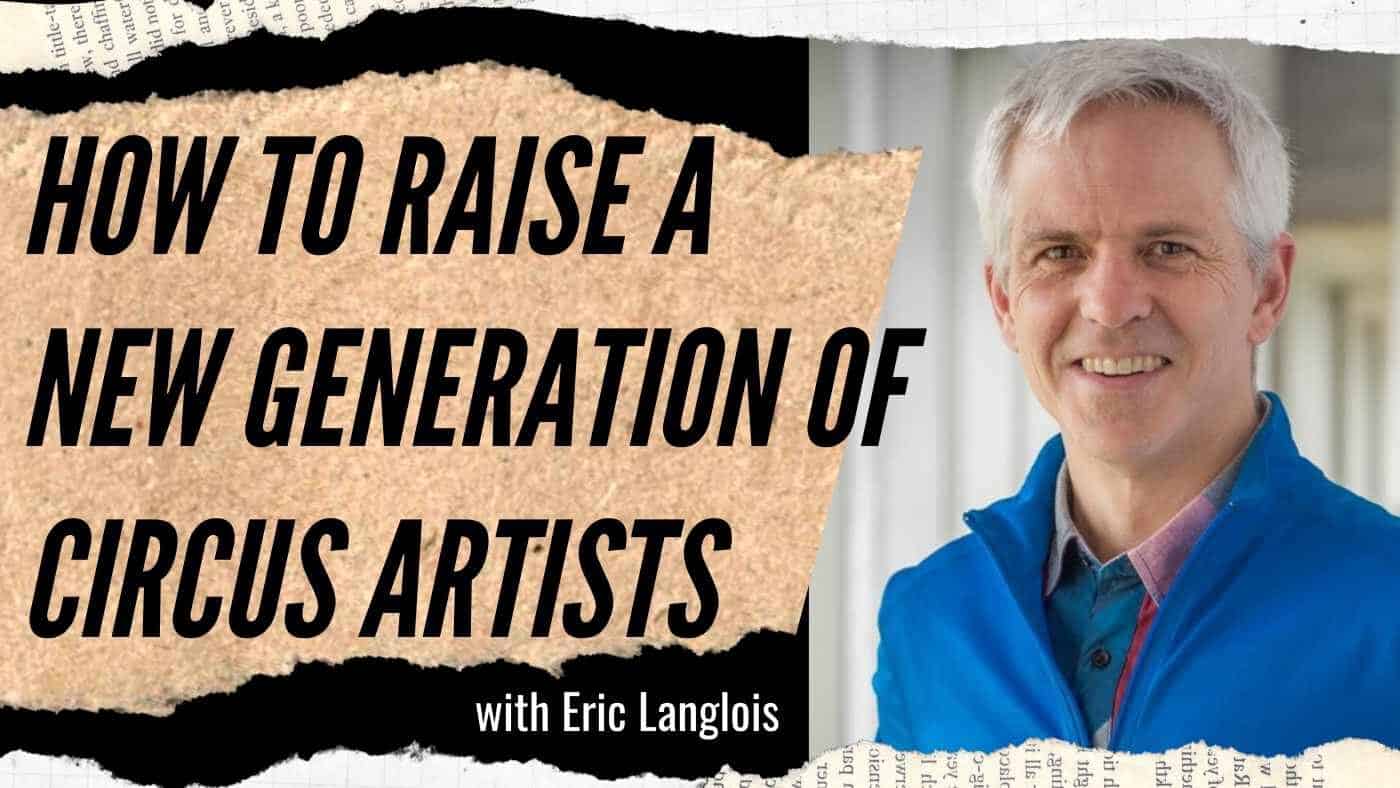
Our Guest Today: Eric Langlois
Eric Langlois is the Executive Director at the National Circus School in Montreal, Quebec.
The National Circus School (NCS) is a school for higher education in circus arts, its circus curriculums also includes courses in dance and theatre.
One of our own podcast guests, Anny Laplante graduated from there and since then she has performed with Cirque du Soleil and Circus 1903 in several highly reviewed traveling shows.
The NCS is the largest North American school devoted to advanced circus arts training to offer professional programs in circus arts. It also prepares professional circus arts educators.
Because it’s unlike any other traditional educational institutions, it piqued our interest to get on board and find out exactly what they do, and why.
Listen
My executive producer, Adam Leffert and I drove nearly 6 hours from Boston to Montreal to visit the school. Across the street is the World Headquarter of Cirque du Soleil. Eric was generous with his time and insights. Joined as a Strategic Director 9 years ago in 2008, Eric worked closely with just about every department you can name at NCS.
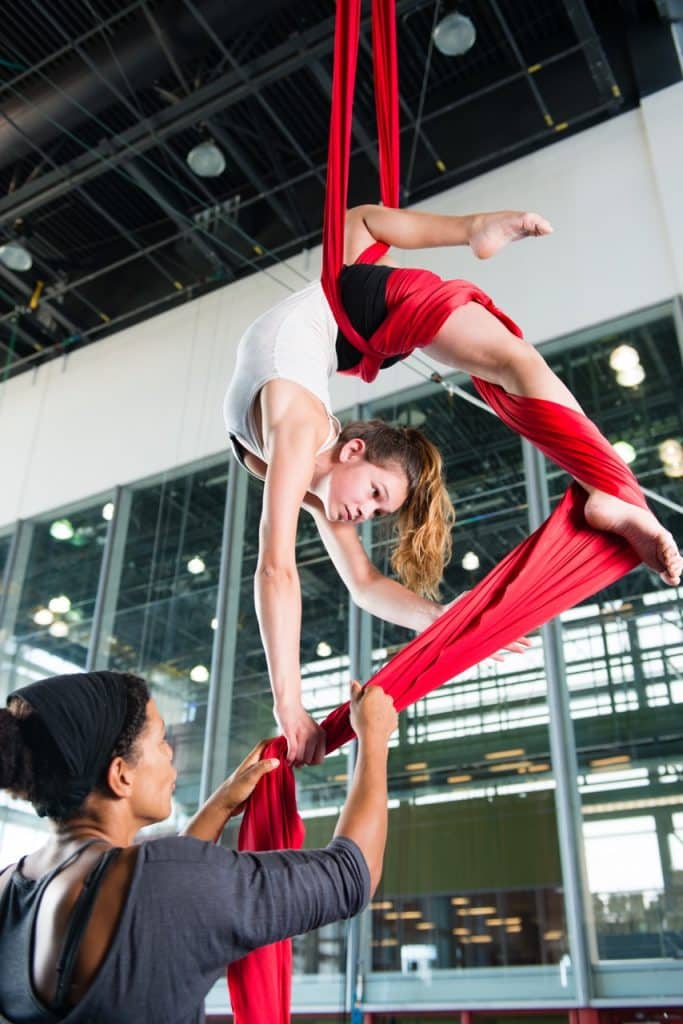
Eric told us that NCS is training more entrepreneurs, not just artists. Students who graduate from the NCS need to perform a final act, created on their own, in front of a public audience. Eric believes that as an educator, he needs to help facilitate artistic talents and innovation. It’s an iterative process. NCS constantly reflects on how they can better support the students, and further develop the right attitude and the ability for students to see.
I just came back from a weekend of altMBA workshop with Seth Godin and 200 altMBA graduates. One of the most memorable lessons I learned was that attitude is a skill, and that skill can be learned. Imagine that, if art schools not only teach students the technical side of things, but coach them to see and think differently, that’d be a world win, wouldn’t it.
This episode is created for those of you who love art, appreciate art and continue to involve in and support artistic initiatives. Even if you aren’t a circus artist yourself (most of us aren’t), this is a window to a world you haven’t seen or experienced firsthand.
To learn more about the National Circus School, please visit their website: http://ecolenationaledecirque.ca/en
Show Notes
- [06:00] Tell us a little bit about your background. Who are you? How did you find your way into this position?
- [07:30] How long have you been working at this school?
- [08:30] What are some of the changes you have seen at the school in the past decade?
- [13:00] (Adam) How do you foster creativity from your artists without taking the joy from what they are doing?
- [18:00] How do students plan their future while still not knowing what they like the most?
- [22:00] (Adam) How do you share your knowledge and experience with the world? You’ve been working on this for many years, how do you spread the word and your research?
- [26:00] How had people resonated with your story and stories from your students? How do you check the progress of your graduates and use that feedback?
- [30:00] (Adam) Younger people (millennials) learn differently and they have a different perspective towards discipline. How is this affecting the school and the market?
- [32:00] Adam and Eric commenting about how the artistic careers have changed, and how the school shifted to adapt that.
- [34:00] Adam, Eric and Fei discussing about how entrepreneurship became very popular among young people, and how that be applied to graduates from the school.
Favorite Quotes
- [07:00] What we are doing is, we are training people that will go out of the program with an act. Mastering the techniques in their discipline with a very strong way of saying things. That’s how the training program is designed.
- [15:00] When we are reflecting on our program and what we provide to the students, it’s a niche, they way we do it, and we still believe we should keep that track. Because they are highly skilled in what they do, but they are also multidisciplinary artists.
- [19:00] I’ve head from experts to say, You can work and live well in circus, if you are highly skilled, if you are a wonderful artist, very creative/innovative, or if you have a charisma. If you have any of those things, you can have a career. Then they’ll master the techniques really fast.
- [32:00] The role of the school is to easy their knowledge of themselves, of where they are, and to provide them with tools.
Transcript
Transcript
Fei Wu: Welcome to the Feisworld Podcast, engaging conversations that cross the boundaries between business, art and the digital world. When
Eric Langlois: we're re reflecting on how our program is designed and what we provide to the students, it's a. The way we do it. Uh, and we still believe that we should keep that track because there are very high skills in terms of their discipline, but they're multidisciplinary, uh,
Fei Wu: artists.
Eric Langlois: I heard twice from experts saying, okay, you, you can. And live well in circus, uh, world. If you're very highly skilled, if you have a wonderful artist, very creative, innovative, or if you have a charisma, if you have one of those three things, you can have a a
Fei Wu: carrier.
Eric Langlois: What we're doing is, Training people, artists that will go out of the program with an
Fei Wu: act. Hello, it's your friend, host for this podcast, Fay w. Unlike the other popular top ranking shows with millions of downloads per episode, we have a much smaller audience who tune in every week, and we know many of them by. Drop us a line on phase world.com or social media, and I will respond to each message personally. If you like what you've heard so far, you'll be incredible. If you choose to subscribe to the show, you can do that on your mobile phone through any podcast app. Search for phase world podcast, F E I S W O R L D, all one word. Then click on search and then subscribe. The Simple Act is a strong vote of confidence for all the unsung heroes and self-made artists on our show. We thank you. Today I'm joined by Eric Long Law, who is the executive director at the National Circus School in Montreal, Quebec, the National Circus School. NCS is a school for higher education in the arts and offers curriculum in music, dance, and. NCS also offers academic subjects at the secondary in college levels. One of our own podcast guests, Ani Lapont, graduated from there, and since then she has performed with Sir Du Sole and Circus 1903 in several highly reviewed traveling shows. NCS is the only circus school in North America that offers professional programs in circus arts. It also prepares professional circus art educators because it's unlike any other traditional educational institutions. It peaked our interest to get on board and find out exactly what they do and why. My executive director, Adam Leard and I drove nearly six hours from Boston to Montreal to visit. Across from NCS is the world headquarter, Ofir Dole. Eric was so generous with his time and insights. Initially joined as a strategic director nine years ago. In 2008, Eric worked closely with just about every department you can name at ncs. He told us that NCS is training more entrepreneurs, not just artists. Students who graduate from NCS need to perform a final act created on their own in front of a public audience. Eric believes that as an educator, they need to help facilitate artistic talents and innovation. It's an iterative process. They constantly reflect on how they can better support the students and further develop the right attitude and the ability for the students to. I just came back from a weekend of L MBA workshop with Seth Goden and 200 other L MBA graduates. One of the most memorable lessons I learned there was that attitude is a skill and that a skill can be learned. Imagine that if art schools not only teach students the technical side of things, but coach them to see and think differently, that will be a whirlwind wouldn. This episode is created for those of you who love art, appreciate art, and continue to involve in and support artistic endeavors and initiatives. Even if you're not a circus art as yourself, most of us aren't. This is a window to a world you have never seen before or experienced firsthand. Hand Without further ado, please welcome. UA to the Face World Podcast. I will see you on the other side. So, Eric, I wanna first learn, you know, a little bit about your background. I, you know, Who are you? How did you find your way into this position here?
Eric Langlois: Uh, I'm an arts manager. Uh, formerly I was in the, uh, classical Music Academy, summer Academy was, uh, an academy and a festival, uh, here in Quebec. I was there for 10 years. Uh, mostly. Um, firstly as administrative manager, then ceo, and then, um, I left the organizations. I went back to school. I did a master degree in, in, in project management and one in in business administration. Mm-hmm. . And then the position open here as administrative, uh, manager in the school. And what was interesting is, My predecessor, uh, Mala alone used to be the executive manager, uh, in a music chamber or. Ooh, came to the festival in the academy. Uh, so that's how we met. And so when the position opened here, we knew each other already. So, um, maybe it facilitated a little bit. Uh, certainly when I entered the position was I was eager to work with him. I knew him from, from, from the past, and that's how I, I got in the position first. It was in 2000. Wow. And I moved to the position of executive manager, uh, a year and a half ago. Uh, only, uh, so I know pretty much about the school and I'm learning in. In your position now.
Fei Wu: Wow. That's my background, . Um, so how long have you been working at this school in particular?
Eric Langlois: I joined in March, 2008. Wow.
Fei Wu: It's almost 10
Eric Langlois: years. Yes, yes, yes, yes. And as a hacking for, uh, until, A year and half, uh, in that position as a, as a administrative director in, has a, a service position in the organization. I was in charge of the, uh, of course the administration, the finance mm-hmm. , the, the it, uh, human resources, almost everything except. Uh, academics. I was in contact with all the departments, uh, in the school, especially as I was in charge of the human resources. I was directly in contact with the academic, uh, director of the school, which is, which is the main employer, main service employer, uh, in the organization we have about, uh, more than 75, uh, teachers in the school. So the acceptance when. I moved to the position of existing manager with, I would say, with ease or was easier, uh, because I, I knew everyone and everyone knew knew me
Fei Wu: already. Wow. You know, so I was thinking 10 years in the span of someone's career and also just the extensiveness of everything. You've touched, you, people you've interacted with. What are some of the changes that you may have seen in the past nine years from the school? , .
Eric Langlois: Very interesting. Question, especially because I'm, I'm living something very interesting. When I arrived at the school, they were first weeks arrived. They were in a process of reviewing their strategic planning. I don't know, it was maybe a week, uh, after I, into the, into the position. We had a meeting, how old they. Uh, meeting to, to reflect. So I knew very little about the organizations. It gave me, uh, it was put me in a bath, you know, and a nice way to learn, uh, about the, the old school. So I remember like if it was yesterday mm-hmm. . And, uh, I, I remember, uh, at that time, the. Big issue was, um, the school was renowned as, um, mastering the, the technique, very strong technician, and that we had to move on to improve, increase the capabilities and the, uh, the, the abilities in terms of. Artistic. Mm-hmm. . And we worked on that through all these years to improve it. Plus there's something specific to the school is that somehow, if you compare, uh, how we're, uh, training program to other schools, uh, around the world search schools, their training is toward. Training artists that will contribute in a collective or in a show, uh, in a, in creations of pieces. Uh, and what we're doing is we're training people, artists that will. Go out of the program with an act. So mastering the technique and their discipline and with, of course, a very strong artistic way of saying the things of living it, which is quite different from the other great schools. And still that's, that's the way where the training program is designed and toward what we're aiming, where, what we're doing, and, but we work through all these years to improve and develop and facilitate and. So we, we kept working on it through all those years. I, uh, today what we're facing is developing their skills in innovation. Mm-hmm. in regards of innovation. So innovate in terms of acrobatic languages, uh, movement from the artistic point of view. Also, you know, being innovative. It has an artist. Um, the former graduates come often. They come to ever here. Someone is coming at me and they say, you know what, I wouldn't have been recruited. I wouldn't have been selected to the addition of the school today. If I had to apply now. Exactly. If I had to apply now. Yeah. Because the level, the technical level is very art. Artistic level is very high. I believe we achieve something .
Fei Wu: Yeah. It sounds like a very iterative approach. Yes, it is. Um, right. It's not about we stand by this rule and that's gonna be it for the next 25 years. No objections, but no, rather, from your position, you know, very high executive director, you are being very flexible, iterative to say, let's adapt and let's see, you know? The best for the students. Yeah. But also in the, you know, sort of what does the industry want? What, what is the audience looking for? So it's everything. Um, so, yeah. So you had, sometimes it's
Eric Langlois: just from, from what you said, I wanna hear more about, you know, how do you structure something unstructured? How do you encourage this thing? That's subtle, but I wonder whether part of the reason for what you're saying, You know, so there was Barman Bailey, and there's a very traditional hundreds of years tradition of mm-hmm. Classical traditional circus. Mm-hmm. . And then now knowing that CI sole is the largest employer, I think in the theater world. Mm-hmm. Worldwide. And that each show is different. One of the challenges is how do you make them each unique in a way that's compelling and distinct. So I'm just wondering whether, because there are so many different shows, how do. You know, in, in the technology of where I come from, we call it herding kittens, like a bunch of cats running all over the place. How do you sort of move them along? Mm-hmm. . Mm-hmm. , you know, how do you, through a very high standard, but without taking the joy out of it or taking the, the creativity of it, how do you foster that super high level of achievement while still being open? Um, thanks for the, for all that . Yeah. What comes to my mind is that there, there's different circuses. Mm-hmm. , right? Uh, and, and in itself is, is one circus. Yep. Not the only one. Okay. Very well defined actually. Even if from one show to the other, it's different. Mm-hmm. , there's a recipe, there's, there's a way it's presented and they invented or they created a, a kind in itself. Some artists, some of our graduate will be interested in pursuing a career in. When you enter in the circus, you come up with your, with your act. And what Circus Jole is looking for is, uh, very high skills hardest. Mm-hmm. . Okay. Mastering an act, mastering their discipline, because that's, that's the way it's built. They built the show. They put together very, very strong hacks. You have circus companies who come up. which shows that don't put the emphasis on the super hyper, uh, technical skills, but had come up with a story with, uh, poetry, with images. With a blend and they have their own signature. Okay. It was interesting to see that they were, they looked at us through, through the last 15 years, and what we can see now is that they say, okay, we have to bring back some basics and we have to develop the, the, uh, technical skills to our students, our graduate. Because they're, it's also needed when we're reflecting on, on how our program is designed and what we provide to the students, we still believe that it's, um, and it's a niche the way we do it. Uh, and we still believe thats, we should keep that track because. Um, they are very I skills in terms of their discipline, but we also give them the basics. Uh, they're multidisciplinary, uh, artists.
Fei Wu: I think you, you brought up about 10 really interesting points just now because the students are still so young. I maybe, you know, an, some other students I, I've seen 12, 13 years old in the elevator just now. Mm-hmm. . You know, as much as the parents say, maybe it's a lot of money a time. By the time you're 20 when you graduate, you should be over there performing for Circ or Seven Fingers. Right? But I think we need to almost revisit that concept because they're so young. How would they know what type of artist they're about to become? Yeah. How do they know they might not? What you enjoy doing the most. And the other point that you brought up that I honestly never thought about before, sir Dule had a very big name for a very long time. I love them very, very much. But they, like you said, They target a very specific type of artists. Mm-hmm. , and that is for 30 seconds or minute you have on stage, whether I'm from China, I've seen a lot of this already, or you're from the United States, we should just be covering out our eyes and just wooing away. Just this is the best thing. I could never do that. Contrasting that with an act of a story. Like, you know, president Obama kind of just taking the stage with so little movements, but he just, there are people with a presence that just dominates and completely command the room. Mm-hmm. and I've seen artists do that. Mm-hmm. without yet the most difficult act. Mm-hmm. . So I think it's so important for students who understand that not one thing you can twist your body eight different. Nobody in this room can mm-hmm. , but maybe there's some quiet, shy girl over there. She can command the room like nobody else with a very simple movement. I never thought about that before as even as an option. And for the children to see that today versus be crying and real wish that they realize, and when they're 50, it's very, you're teaching something above and beyond just the physical act. Mm-hmm. ,
Eric Langlois: I, I heard. From experts saying, okay, you, you can work and live well in circus, uh, world. If you're very highly skilled, if you have a wonderful artist, very creative, innovative, or if you have, uh, a charisma. An amazing work for it. If you have one of those three things, you can have a A carrier, you can, if you have a mix of it, well then you're in exception. So it is related to what you're saying and it's a questions of individual. Then we'll select students candidate that we can. In them that they, they will master the technique very fastly. They have physical attributes. They, you know, it's clear. And, and I think the, the motto, the, the main challenge is how can we be, uh, and how can we provide, uh, to the artists, Those abilities to develop or to be innovative mm-hmm. and you can be innovative in very, in different fields, uh, of your professional practice. Uh, and so that's where we are, that's where we stand and that's our challenge. And yeah. And we have, we, we, we do research. We've been involved in research. Six years now and having. We have structure, we have research in pedagogy, we have research in, in, in disciplines, in in, in techniques, in apparels, uh, all kinds of fields. We have industrial partners. We do research with the companies we do research in, in social, social innovation. Projects. The, the, uh, research project been so powerful. Uh, it gives us visibility. It's, it, it ease partnerships, it brings in, brings in, uh, expertise from outside. Like, uh, we, we had a, a project specifically on the calculation of the. On apro, uh, another project, um, it was all related to propulsion. Uh, so it it applies to like the physics of the performance. Yeah. And it applies to all kinds of discipline. So you can e you can look at it through from this discipline or that discipline or this discipline. Yeah. It's very, it is been very, very powerful and it, it's opening up to all kinds of things. Yeah. I mean, so it's deeply. Bunch of questions left over from the earlier things you said , but on what you just said, I'm, I'm sure some of it of course must be proprietary. Some of it is kind of behind the curtain, but I so wonder, you know, I want to know, is it written about, is it filmed? If I were, cuz we, you know, we have this extraordinary opportunity to meet people like you and to, to meet the performers and to, to kind of soak that into ourselves. But not everybody does. And what you are talking about, I gotta say it's life. I mean, it's what everybody wants. Everybody is looking at the robots and automation and commoditization. Mm-hmm. of their work or their contribution in society. People talking about universal human wage. Should we just give people money already and just let it go? Let the whole wages for everything go. Mm-hmm. . So if somebody were, did not have the privilege to either be part of this organization or performer, or the person from 3M or the person from, you know, IBM materials, whatever it is, can they find out? Do you write books about. How much of that can get out into the world and all that extraordinary thinking and, and research and knowledge. Who from outside gets to see it and how and when. Yeah. That's the, the second step. . Yeah, that's the second material. Yeah. The first, I would say the first five years. Uh, well, we, we did some publication and we did some presentations in, in, in, in specific events and, and specialized events. The second step is really, and again, it pop up through the, the, um, strategic planning process and in, in reflection. was okay. That's the second step in regards of all our research activities. Um, how can we share Yeah. Uh, to the, uh, to the old public, uh, this information, we have to work out a plan specifically, uh, on that. And
Fei Wu: I think to add to that, and there's an opportunity. Because you are at the foreground of you've, you know, a lot of circle schools have now been around since the 1980s and certainly not across the street from Circ. And you know, clearly you have relationship with Seven Fingers and you as a person with that vast of knowledge, That can benefit this organization as well as the physical location, all that. I think that the National Circus School right here has a unique advantage and knowledge to really share out with the world. Mm-hmm. , mm-hmm. . And as a result, in a way, I don't wanna say prop you up, but I think that's the knowledge everybody is
Eric Langlois: looking for. We've been, uh, we're a member of the, um, European, uh, federations of, uh, search. Uh, for many years. That's a platform to share between schools, uh, the knowledge and ease and knowledge. Uh, it's, it's, it's very much powerful. Yeah. We've been sharing and we've been generous in sharing, we've been sharing with Central and South America also, and the other part of the, of the world now is, You know, we've been in contact with South Korea. Mm-hmm. , we're working with South Korea. Yeah. We're open to share Past experiences have, um, thought us that we, we get a lot when we give. Sure.
Fei Wu: I thought one idea at my age, even in my late twenties, I started to reflect upon a lot of things I learned in school in China. Especially here, which I've been since high school, so my higher educations are completed in the United States. I thought about unlearning. a lot from maybe what my parents taught me. They're, they're precious. I mean, they, they're incredibly smart and successful people, but there are certain things I have to unlearn. Mm-hmm. because, you know, work through transitions. I'm from a different generation. Mm-hmm. . But you mentioned something that's so unique and I think we, you quickly mentioned that. But the opportunity for these artists from this very school to be entrepreneurs and to start their own company, a lot of people don't think that, so it's very easy for you to go through an exam, go through a final to say, yes, Joe Schmo, it's a plus, but nobody ask, how is that guy doing now, five years, 10. 20, 30 years from now. Mm-hmm. , very few people actually ask that question to me. I'm not a parent yet, but if I were, that would be a much more important question than what he scored on. See, I think Chinese people and Asian population in general focus a lot on that first career across the street or the final exam, but I think longevity. Of the success of an artist, that's a true marker. Mm-hmm. to what's going on. And, and the fact, if somebody, Is able to start an act on his own, her own, and to turn it into a thing or to work at a local high school to invite, to be able to educate that and pass that on. Mm-hmm. without extreme financial gains. To me that's a huge success. So I think to, to summarize a bit that if there's an opportunity for the student profiles, people such as an LA plan to come out even more for people to see the face, see her story. And see how happy, how successful she is, people are gonna resonate. Mm-hmm. with that and therefore mm-hmm. you don't hear those stories from anywhere else. Mm-hmm. , I think that that could be really interesting. Mm-hmm. Mm-hmm. ,
Eric Langlois: uh, that was, um, through the, the strategic planning reflection that that came out. Plus we do every three years we do, uh, a survey with the, the graduates and see where you are now. Mm-hmm. uh, Your care going. Have you, uh, experienced, uh, major injuries or injuries? How have you managed it? Uh, you know, and they're telling us what is. Is what is missing, what they would like, where they're in their career, what they would like to have as, as training or whether they're taking, thinking of, uh, what will happen within the nine, next five years or 10 years, and how they see them, uh, themselves. Plus the questions a change that we have that I. We're living now, is that in the prison, uh, generation, we see more, uh, interest toward, uh, preneur entrepreneurship. Mm-hmm. , uh, entrepreneurship and plus, uh, they want to express their voice. They have things to say, and this is something we also, we have to work on, especially for, uh, north Americans, uh, is the, their general culture. Uh, it's not the case with European. Certainly not with French. And yeah, generally speaking, for European, their general culture is, is there so they're better tooled to articulate, uh, their, their mind, their what, what they think. Uh, I think we have to support North Americans more, develop that more so. When come the times and if they want to be creators, uh, if they want to go their way to create a company so they can articulate, uh, their speech, what they have to say, then they'll be better tool to. to
Fei Wu: dos. Mm-hmm. Seen
Eric Langlois: that, and we've seen that personally. So I was born in the mid sixties, right? So I have a certain perspective, and then I have a nephew who's, you know, so called millennial, but every time I say that word, I have to feel bad about it because you said we're not all the same. You know, it's, we're not just a, a homogenous group. I find among a couple things, among those people, the younger people, a combination of this extraordinary desire, but then again, kind of a gap, kind of a lack, so, Becoming a thing. Justin Bieber, here's a kid, sort of good looking, nice singing voice and next thing you know, he's a, you know, so they have role model in that they have, but that's also, you know, going back to a few different references, that's a lottery mentality, right? Yeah. So there's a book we often quote, um, Cal Newport wrote a book called, uh, so Good They Can't Ignore You, quoting Steve Martin, who himself started playing banjo cause he said to himself, Hm. If I start playing banjo now at whatever, you know, 12 years old, 40 years from now, I will be playing banjo for 40 years. So that hard work, that preparation, if you're in a market though, where even if it's not about the money, it's just about connecting to fans or being able to do your art, or just being able to pay your rent. If it really is a lottery ticket, if there's gonna be one Justin Bieber for every 4,000, you know, 10,000, a hundred thousand other people. Mm-hmm. , there's that dis. Also those younger people have this super high level of touch of the, the consumer products and of the entertainment products. Mm-hmm. . Mm-hmm . And you know, without being mean to 'em, just feeling well, if I can't be Steve Jobs will I even bother? So that I think frankly, a depression. You know, comes out of that. Yeah. Yeah. So maybe that's why they, they experience so much, uh, anxiety problem. It explains, or it puts what they're experiencing in the school and perspective. Lots of them are experience experiencing anxiety problem. Mm-hmm. . So it's like a, and it's, it's related to that. So, So one of our earliest friends, James Altucher, you know, we got to see in person who wrote a book called Choose Yourself. Mm-hmm . And his point, though it sounds simple when you say it, I think it's very fundamental and people, you don't see people doing it enough. He said, choose yourself. That doesn't mean just love yourself or think that you're great or you're gonna make it. If you're a singer, you should sing. Sing in the shower, then sing in the coffee shop for one person or the thousand true fans, you know, one person hears you saying then 10, then a hundred if you're gonna hit a home run. Touch every base along the way. So we've had that experience with family, with friends Fay and I have, and through, uh, part of the consulting that they do is to take somebody who might be very energetic or extraordinary and say, okay, how are we gonna get there? You want to be at this point where you don't have to work in an office. You don't have to staple cover sheets on reports. But how's that gonna happen? So just going back to what you were saying, that it's not necessarily financial. The studio model, right, where somebody's gotta put up X millions of dollars. Uh, and then you audition, and then if you're chosen, you get put in the show. Mm-hmm. . But if you get, you know, get marked up or you get injured, you might be out of the show. So that whole, the pressure of that model. So what we've tried to do to care about the individual voice is to. , how are you gonna take what you do if you don't go into a, frankly, a studio model? Mm-hmm. , how do you do that? Where do you go next? What are the parts? Mm-hmm. Health, legal. Yeah. Digital marketing. Yeah. So that. Kind of feet are always on the ground. Yeah. And then because you're young, maybe you don't have huge financial pressures yet you can work your way up to a sustainable mm-hmm. career instead of just this trying to be the one in a million. Yeah. Uh, which, which most many people won't make it. I mean, you're not gonna be in the NBA necessarily. So what else can you do to enjoy your life and to do, to be a artist who lives working through their art uhhuh coming our friends, that's an achievement. Uhhuh the role of. of the school, I think is to ease their knowledge of themself. Mm-hmm. consciousness. Yes. Mm-hmm. of mm-hmm. what they are. Yeah. And provide them with, with tools. So they'll be able to navigate through, through, through, uh, and it's a, a very big issue. This, this questions of, uh, anxiety degeneration, anxious generation,
Fei Wu: I would say. And sometimes that comes from the most talented crew of people, right? It, some people have no. Unquestionable physical skills, and I've gone through schools and I still, I see these kids and I can just see myself when I was 13, 15, mm-hmm. and there's so much anxiety, there's so much doubts. So that feeling is almost, uh, relatable even though I look at their skills to think that I've never in a million years could do what they do. I think there's something about the school that's distilling, kind of leaving them with when they graduate from the school that they're going to. Hopefully, luckily some of them are going to carry them through the rest of their lives. I think Anis said on the show that this school allowed her to be an artist and she wanted to do this since she was seven. I think she didn't integrate into the school until maybe 13 or 14 and to make that a reality. And that's the only way for some of the most exceptional artists of this century, of the people that we have seen in the past to become a reality, to become stories that's written in books or to be passed on. There's something really to be said about this, even though some of the most important moments that you can't grasp, you can say you can't. It's that we're talking about that or that's you can't track
Eric Langlois: down. It's a, it's a system. Yeah. It's a. What, what I hear sometimes from people, from inside, from, uh, collaborators, from inside the way we, we support the students. Some people say, oh, we do everything for them. We do everything for them too much. So we do too much in the sense of too much. And when they leave, Then they lose their, uh, so are they well equipped enough to evolve in, in the, in the world. Mm-hmm. , uh, has we support them so much. I hear that. I'm, I'm, I'm sensitive to that. I, I'm, I'm, I'm concerned. I feel concerned about, about this. That's, that's extraordinary. I'm gonna throw in a couple things. Tools are wonderful. You have to have tools, but it could be something so much simpler, which is just to know what the steps are. Sometimes just to be able to say, here are the six areas, here are the quick gotchas, and you can come back. Mm-hmm. , that might be enough. They don't have to have all the tools. They have to have the basic tools. Yeah. Like in my job, I write software. I show up at a client. I know enough to get. If the, if the software's too slow, I've got an approach for that. I don't have the answers and I don't even know what I need to know. Mm-hmm. , but I'm calm cuz I know I can approach that just like a carpenter comes to, to fix your door. So that's one thing is that they don't have to have everything, but it's good if they're at least aware, oh, if I go down this road, here are the major weights. Like a checklist. Checklist. The rest of their, their life, they can go back to you or another resource they. Uh, a friend or that can go on the internet. So to
Fei Wu: add to that, I felt like there's a, a very natural transition, um, since I was in my mid twenties all the way through the past 10 years, so many people not that much younger than I am at work to say, Hey, can we, uh, go to this conference room? Can I chat with you for a second? And, you know, clearly you're three years ahead of me. What is it like or you. So I think there's an opportunity cuz kids are really scared. We watch, you know, Adam's nephews to leave school and to say, oh, we're really tossed into this free world, right? Mm-hmm. with no net of catching us. But I see that if you were to offer your graduates to say, you are all said, You know, let us know. Call us. We need help. Versus someone who's less sure about themselves to say, what if we should check in? Mm-hmm. via Skype, which is check in for 30 minutes every month for the next year. For the next six months. Mm-hmm. , some people may opt in to do that for the next five years. Yeah. Or return when they're 35. You're
Eric Langlois: right. And coach back out to get, yeah. If you felt they present well, if they're very respectable and they know what they're doing, maybe they can Skype with the new students. Yeah. Um, thank you very much. No, thank you. Uh, yeah. And let's, let's, let's meet again.
Fei Wu: Hey, it's Faye. I am back for a few words at the end of the show. I hope you enjoy what you heard. You can visit us online@faceworld.com, where social channels such as Facebook, Twitter, and Instagram, also under Face World. To keep things simple, I personally review and respond to all the messages. Love to hear from you. Thank you, and lots of hugs. See you next.
Acknowledgements/Music
- Song: Johnny Easton – The Artist’s Hands

Written by
Fei WuFei Wu is the founder and CEO of Feisworld Media, a Massachusetts-based digital media company helping brands get discovered by people and by AI. An Adobe Global Ambassador and brand partner to ElevenLabs, Synthesia, and 50+ other tech and AI companies, she hosts the Feisworld Podcast (400+ episodes, 500K+ downloads — guests have included Seth Godin, Steve Wozniak, Chris Voss, and Arianna Huffington) and co-created the documentary Feisworld: Live Your Art on Amazon Prime. Fei writes for CNET, Lifehacker, and PCMag, and her work has been featured in Forbes, Harvard Business Review, and WIRED. She has been publishing on the internet since 2014 — long before AI discoverability had a name.
View all posts by Fei Wu→Stay updated
Weekly insights on content, AI, and digital media.
Keep Reading
Related Articles

Focal Alpha 50 Evo Review: My 2026 Pick for Creator Studio Monitors
Joanne Lipman on Mentors, Untapped Talent and Why Women Should Stop Waiting to Be Perfect