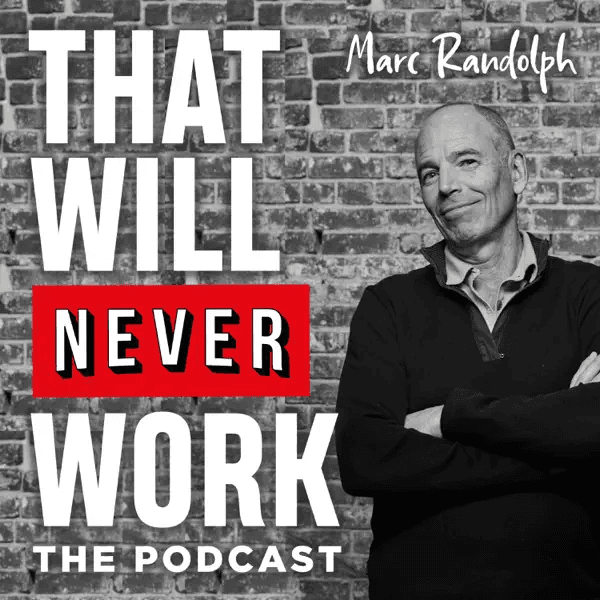
Marc Randolph on Curiosity, Messy Starts and Why “Nobody Knows Anything”
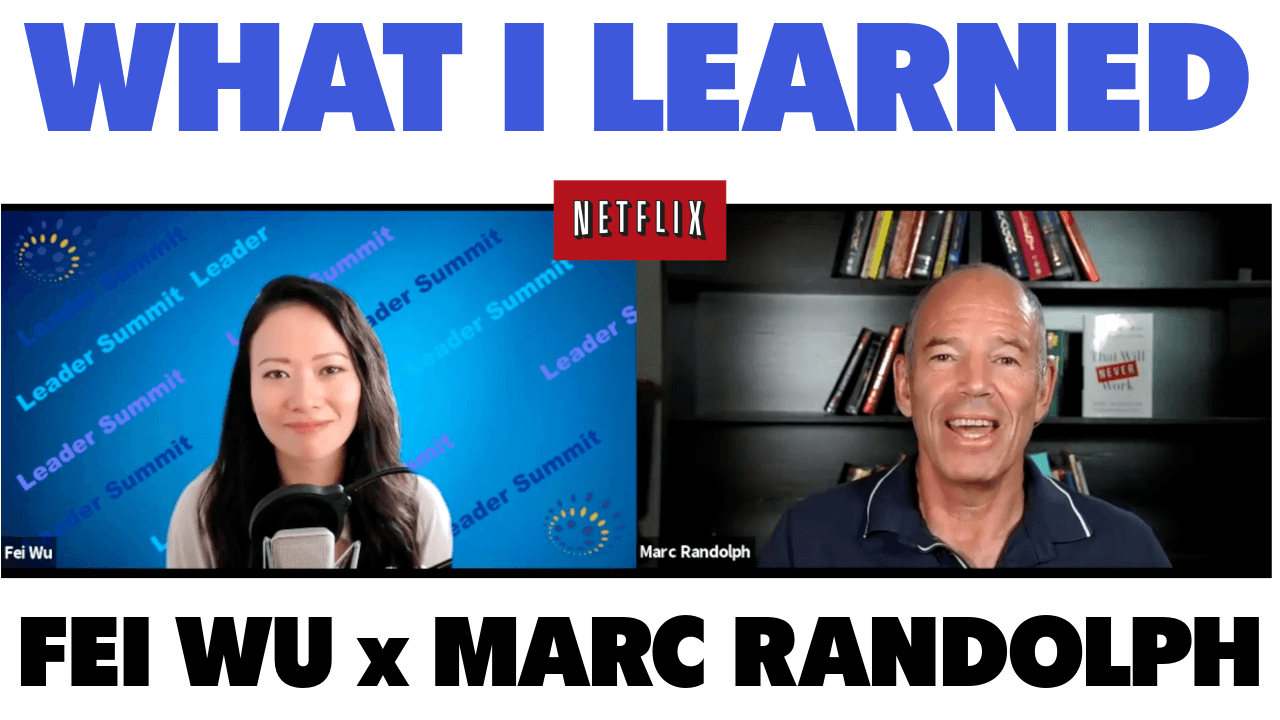
When you introduce Marc Randolph, you almost have to fight the temptation to say “the Netflix guy” and stop there. Yes, he is the co-founder and first CEO of Netflix. He helped design the service that turned red envelopes and spinning DVDs into a global streaming habit. But during our conversation, what struck me was not how big Netflix became. It was how small and scrappy the beginning really was.
Marc is a serial entrepreneur, advisor, investor, surfer, mountain biker and the host of the podcast “That Will Never Work.” He has lived the startup story over and over again, and he is very honest about how unglamorous that story is from the inside.
Our conversation was technically about leadership and entrepreneurship, but underneath all of it was a theme I love bringing to Feisworld: how regular people use curiosity, courage and a bit of technology to create something that didn’t exist before.
Starting Before You’re Ready
I asked Marc how he recommends testing and vetting new ideas. His answer was simple, almost annoyingly simple: you start.
Not by writing a business plan.
Not by raising money.
Not by dropping out of school or quitting your job.
You start by colliding your idea with the real world.
He shared a story about a university student who wanted to build a peer to peer clothing rental platform. In her head she was already picturing the app, the branding, the investors and the network. She came to Marc asking how to find a technical co-founder and whether she should drop out of school.
His advice was: grab a piece of paper.
Write: “Want to borrow my clothes? Knock now.”
Tape it to the outside of her dorm room door.
See what happens in the next 24 hours.
Does anybody knock?
If not, that is data. If they do, that is data too. You start learning about fit, style, trust, turnaround times, dry cleaning, hurt feelings when a favorite piece is damaged and eventually real things like acquisition cost and churn.
Marc calls this a “minimal unviable product.” Not the polished, investable MVP we talk about in startup land, but something so small and ugly it almost cannot work. That is the point. It is cheap, fast and brutally honest.
I could feel myself nodding because I have created courses nobody wanted, offers nobody picked and content that only my mom watched. Things started getting better when I stopped hiding my ideas until they were “perfect” and started testing them when they were barely formed.
Today we have an extra ally: AI. Tools like ChatGPT and other assistants can help you get to that first test faster. You can mock up copy for that dorm door sign in seconds, generate different versions for different audiences, ask for objections people might have and preempt them. But the heart of Marc’s advice still stands. The insight does not come from the model, it comes from the moment your idea touches a real human being.
Fall in Love With the Problem, Not the Idea
If you have ever sat in a brainstorming session, you have heard the line: “There are no bad ideas.” Marc flipped that completely. He said he does not believe in good ideas at all. Every idea is flawed.
He pointed out that no major company he knows of became successful doing exactly what was written in the original plan. Netflix did not. Airbnb did not. Uber did not. The story of “the one genius idea” is tidy, but it is not true.
So what do you fall in love with if not the idea
The problem.
The problem is durable. The problem becomes more interesting as you learn more about it, as you understand the different people who experience it and the nuances around it. The ideas are just attempts to reach the heart of that problem.
This is such a helpful reframe, especially in a tech and AI heavy moment. It is easy to fall in love with the tool or the feature. “We have to integrate AI into this.” “We need a chatbot.” “We need a dashboard.” But if you are not anchored to a real problem, you just end up with beautifully designed solutions wandering around looking for pain.
For Feisworld, I come back to questions like:
Can this help someone communicate more clearly?
Can this save a small business owner time and stress?
Can this help an artist or creator be better seen and understood?
The tools change. The questions stay.
Solving Big Problems by Shrinking Them
When Netflix started in 1998, they were 12 people in an old bank building with green carpets and card tables. Their main competitor, Blockbuster, had 9000 stores and 60,000 employees.
If the problem had been defined as “beat Blockbuster,” they might never have started. It would have been paralyzing.
Instead, Marc and the team broke the challenge into smaller, solvable problems. One experiment at a time. One constraint at a time. One hypothesis at a time.
This is where his idea of the minimal unviable product shows up again. You solve the first small problem, learn from it, then move to the next one. That is as true for a 12 person DVD startup in 1998 as it is for a solo creator testing a new service offer today.
For those of us building with AI or in tech enabled spaces, this is a good reminder. You do not have to solve “healthcare,” “education” or “content overload.” You can solve “how can I draft a clean health snapshot before I go to the doctor?” or “how can I help an artist turn a long exhibition story into a readable blog post in under an hour?”
Big change emerges from a chain of very small, almost silly experiments.
Success That Actually Feels Like Success
I asked Marc about success, expecting maybe a story about Netflix scaling or Looker getting acquired. Instead, he shifted the question to something much more personal.
He said the current culture tends to equate entrepreneurial success with fame and wealth. The TV shows, the startup media, even the way we talk about “unicorns” reinforces that picture.
When he started 35 plus years ago, there were no entrepreneurship degrees, no startup shows, no Instagram highlight reels. People did it because they loved solving new problems and building things that did not exist yet.
For Marc, success is not Netflix. It is the fact that he has spent decades doing work he enjoys and is good at, while staying married to the same woman, having kids who know him and, as far as he can tell, like him and still surfing and adventuring outdoors.
That is such an important calibration, especially in tech and content creation where the metrics are so visible. Followers, revenue, views, deals. AI can make those numbers bigger or faster, but it cannot define what matters to you.
For Feisworld, talking with Marc was a reminder that “success” is also being able to:
Help my mom get her art into places she never imagined.
Work with people I genuinely care about.
Use tech and AI to buy back time, not to burn myself out trying to go viral.
Data, Intuition and the Danger of Static Dashboards
Marc spent the first part of his career in direct marketing. He lived in a world of tests, envelopes, catalogs and conversion rates. He is a data person. He later co founded Looker, an analytics company. So when he says “data is not everything,” you believe he has earned the right to say it.
He gave a simple example. In direct mail, you can test a red envelope versus a blue envelope and know exactly which one performs better. Data can tell you that the red one wins to three decimal places.
But data does not tell you that you should be testing envelope color in the first place. It does not ask whether you should instead test headline, offer or channel. That requires intuition and insight, informed by the data but not enslaved to it.
Marc also admitted he is not a fan of dashboards that stay the same forever. Businesses change. Problems change. The metrics that matter when you are finding product market fit are not the same metrics that matter when you are scaling or when you are in crisis.
His line that stuck with me was this:
Data should not tell you what to do. It should sharpen your intuition.
For those of us using AI, this is a powerful lens. AI can process massive amounts of data, summarize it, extract patterns and even generate recommendations. That is helpful, but we still need a human sense of judgment and responsibility to decide what to measure and when to change course.
Thinking Long Term While Surrounded by Chaos
Marc used a beautiful mountain biking analogy to talk about long term vision. When you are riding downhill on a narrow trail with roots and rocks, you have to look right in front of your wheel or you crash. But if you never lift your head to see where the trail is going, you may be heading in the completely wrong direction.
Leaders have to do both.
When Netflix started, everyone told them DVDs were a temporary medium and that streaming would come. They agreed. The hard part was that streaming was not coming in one or two years. It took about nine years before Netflix actually launched streaming.
They had to build something useful now, while still being relevant later. So instead of defining themselves as “the fastest DVD shippers,” they decided that Netflix existed to help people discover great stories. That identity survives any delivery method. DVDs, streaming, whatever comes next.
For creators and founders today, the technologies will keep shifting. AI will add new capabilities every year, maybe every month. If your identity is tied too tightly to any single feature or platform, you will constantly feel like the ground is moving. If you are anchored in a deeper purpose, you gain more flexibility to adapt the how.
Culture, Trust and Letting Adults Be Adults
We could not talk about Netflix without touching on culture. The Netflix culture deck is famous in the business world for its focus on “freedom and responsibility” and “radical honesty.”
Marc described what that looks like when it is real and not just a poster on the wall.
He compared Netflix not to a family, but to a professional sports team. The goal is not to keep everyone forever. The goal is to put the strongest possible players in every position so the team can perform at a very high level.
At the same time, they remove unnecessary rules. No expense policy, just “use your best judgment.” No detailed travel policy, same principle. No micromanaging of vacation days, just accountability for results.
It sounds idealistic, but it is also demanding. It expects you to behave like an adult, to make decisions with the whole company in mind.
As leaders, Marc says our job is actually quite narrow. Two main responsibilities:
- Put the right people in the right seats.
- Make sure everyone has the information and context they need to make good decisions.
If you are still making or reviewing most decisions, you probably got one of those two things wrong.
This applies at any scale. He told a story about a receptionist whose job description was simply “put the best face possible on the company.” No list of rules about eating at the desk, hour by hour schedules or scripts. The person with the job is often best positioned to know what that looks like.
Even in a tiny remote team with contractors or virtual assistants, I felt this one. Any time I swoop in and “fix” something they are already capable of handling, I accidentally take away their chance to grow and my chance to step back.
Mentorship, Self Belief and “Nobody Knows Anything”
One of my favorite parts of the conversation was about mentorship. After leaving Netflix, Marc experimented with advisory roles and realized he hated the superficiality of “show up every few months and give opinions.”
He moved toward a deeper, more involved model of mentoring. To do it well, he wants to know the founder, the team, the investors, the product, the market and the competition. He wants to be the person a founder can call at 11 pm when they cannot talk to their board, co-founder or team about something.
For mentees, he looks for two seemingly opposite traits:
- Huge self belief, because you are going to hear “that will never work” over and over and you still need the energy to keep going.
- Real humility, because you have to listen carefully when experienced people point out holes in your thinking.
He quoted a line he loves: argue like you are right, listen like you are wrong.
That brings us to his favorite phrase, and the name of his book and podcast
“Nobody knows anything.”
The quote originally came from screenwriter William Goldman about Hollywood. No one can reliably predict which movie will be a hit. You can have an A list team and a giant budget and still flop, or a tiny budget film that accidentally changes the culture.
Marc applies the same idea to startups and new ideas in general. When someone says “that will never work,” they do not actually know. When someone says “this is guaranteed to succeed,” they do not know either.
The only way to find out is to test.
As someone who talks about AI a lot, I find this incredibly grounding. Models can forecast, score, and recommend, but the world still surprises us. Human behavior still surprises us. We still have to run the experiment.
Walking Away From Success to Find the Next One
Near the end, Marc shared that Netflix, in its early days, sold millions of DVDs. It brought in real revenue. But at some point they realized that selling discs was distracting them from building a scalable rental and, eventually, subscription business.
They had to walk away from something that was working “halfway” in order to pursue something with a chance at much bigger impact.
He contrasted that with Blockbuster, which saw the streaming future coming but was not willing to risk its established success to truly pursue it. That hesitation cost them everything.
The phrase that stayed with me was this:
You have to be willing to walk away from your current success to do what is right for the future.
That is true for big companies, but also for solo creators and small teams. Maybe a service that once paid the bills is now eating all your creative energy. Maybe a platform that once gave you reach is now keeping you stuck. Maybe a way of working that felt safe is now blocking your growth.
For me, talking with Marc Randolph was a reminder that entrepreneurship, whether in tech, art or content, is not about having it all figured out. It is about being willing to test, to listen, to adapt and sometimes to let go.
AI, tools, data and dashboards can support that journey. They can help you move faster, see patterns and make more informed choices. But at the core, it is still you, a problem worth caring about and a series of small, brave experiments.
Nobody knows anything.
So start.
You might also enjoy…

Written by
Fei WuFei Wu is the founder and CEO of Feisworld Media, a Massachusetts-based digital media company helping brands get discovered by people and by AI. An Adobe Global Ambassador and brand partner to ElevenLabs, Synthesia, and 50+ other tech and AI companies, she hosts the Feisworld Podcast (400+ episodes, 500K+ downloads — guests have included Seth Godin, Steve Wozniak, Chris Voss, and Arianna Huffington) and co-created the documentary Feisworld: Live Your Art on Amazon Prime. Fei writes for CNET, Lifehacker, and PCMag, and her work has been featured in Forbes, Harvard Business Review, and WIRED. She has been publishing on the internet since 2014 — long before AI discoverability had a name.
View all posts by Fei Wu→Stay updated
Weekly insights on content, AI, and digital media.
Keep Reading
Related Articles

Focal Alpha 50 Evo Review: My 2026 Pick for Creator Studio Monitors
Joanne Lipman on Mentors, Untapped Talent and Why Women Should Stop Waiting to Be Perfect