Jeffrey Shaw: a roadmap to live and celebrate your Self Employed Life (#339)
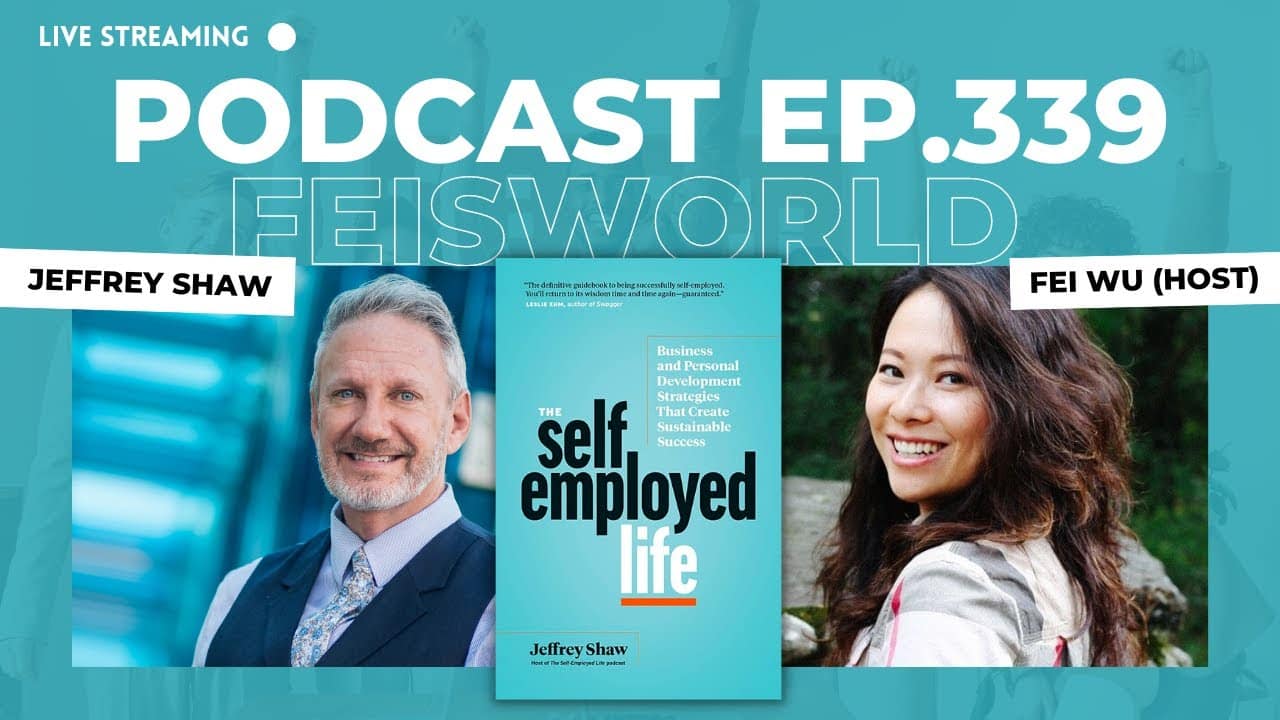
Our guest today: Jeffrey Shaw
Jeffrey Shaw ( @JeffreyShawAuthor ) is often described as an authority and advocate for self-employed business owners, valued for his actionable and “in the trenches” approach to achieving business and life success. Why shouldn’t he be? How many people can say they’ve never worked for anyone else?
Selling eggs door-to-door at 14 years old led to a lifetime of self-employment. In his twenties, he built a portrait photography business and became one of the most sought-after portrait photographers for affluent families in the U.S. for more than three decades. His portraits have been on the Oprah Show, CBS News, featured in People and O Magazine and hang at Harvard University.
Today, Jeffrey is the author of LINGO and The Self-Employed Life, host of The Self-Employed Life podcast with nearly two-million downloads, and founder of the Self-Employed Business Institute.
His TEDx Talk is featured on TED.com, he’s a LinkedIn Learning instructor, contributor to Entrepreneur Magazine and speaks at association events, entrepreneurial groups, and conferences.
Watch Our Interview
Transcript
Transcript
Fei Wu: I'm from Feisworld Media and I'm here with someone officially meeting for the first time, Jeffrey Shaw. Uh, and uh, Jeff, you are from the Rexer Group and I've heard so much about you. But for those listeners who haven't learned enough about you yet, I'm gonna just do a brief intro. I'm gonna kick off, and then today's interview after that. Cool. So Jeffrey Shaw is an often described as an authority and advocate for self-employed business owners, uh, valued for his actionable and in the trenches approach to achieving business and life success. Why shouldn't he be? How many people can say that they've never worked for anyone else? Selling X door to door at the age of 14, that led to a lifetime of self-employment. In his twenties, he built a portrait photography business and became one of the most sought after portrait photographers for affluent families in the US. For more than three decades, his portraits have been on Oprah shows and CBS b s News, featured in people and o Magazine and hang at Harvard University. Today, Jeff is the author of Lingo and Self-Employed Life. Host of the Self-Employed Life podcast with nearly 2 million downloads, and the founder of the Self-Employed Business Institute. His Ted Talk is featured on ted.com. He's a LinkedIn learning instructor, contributor to Preneur magazine, and speaks at association events, entrepreneurial groups and conferences. And also in the description below, wherever you are watching this on YouTube, Facebook, LinkedIn, um, there are also a list of links where you can connect and learn more about, uh, Jeffrey. So with that said, let's get started. Um, by the way, do you go by Jeffrey
Jeffrey Shaw: or Jeff? You know, I, I personally don't care. I of, I often say on AR Jeffrey, just so people can, if they search, you know, online, they'll find me as Jeffrey Shaw, not Jeff Shaw. So, uh, but I don't really, personally, I don't care.
Fei Wu: I love it. We're gonna go with Jeffrey today and, uh, so. I'm so curious because even little before the pandemic, the idea where the trend of self-employment had already become more popular. And at that time, by the way, like I had been an entrepreneur for already four, five solid years, and then the eyewitness, uh, that trend is just going up and up and up. And with a recent great resignation, I mean, oh my goodness, I can't imagine your business must be booming and starting all sorts of new conversations. So I would love to know what it's like.
Jeffrey Shaw: Yeah. So I started writing the book, the Self-Employed Life in 2019, maybe even fall of 2018. So it was pre pandemic. I'm writing this book for self-employed business owners because I had been self-employed as my bio said my entire life. Mm-hmm. And, um, You know, the experience is so very different than what people expect and because I didn't know otherwise. I just know that any time I got into conversations with people from the corporate world, none of it made sense to me cuz it wasn't the world which I came from. So the book came out, of course the pandemic was 2020. The book comes out in May of 21. Um, but here's what's really been interesting about the whole topic of self-employment. The very, all the reasons that it's challenging to be self-employed is what makes it challenging to market a book for the self-employed. Interesting. So when I, when I was doing my research prior to writing the book, uh, working with my publisher, At one point I had a conversation with my publisher. I said, I've got good news and I've got bad news. The good news is, is there's noth nothing else out there. Like this book. When you go to Amazon and you search for self-employed, the books are really boring. They're like, you know how to save money, how to save taxes when you're self-employed, that sort of thing. Mm-hmm. I said, the bad news is, is that I'm realizing as I'm doing this research, I've been in business for 35 years and this is the first time I ever searched to see if there's a book for me as a self-employed business owner. And I said to my publisher, that's gonna be a marketing challenge. And it is a challenge to this day. I mean, the book is doing well, um, but to your point, under the circumstance of the great resignation, we would, we would've thought it would've exploded. Interesting. The problem is independent minded people. Mm-hmm. That are used to. Taken the world by the storm on their own. Or even if people leave corporate, become self-employed somehow people think they have to do it on their own. They don't realize that somebody out there like me has already figured a lot of this a stuff out. Don't try to figure, that's why I created the Self-Employed Business Institute as an extension of the book because I didn't want people wasting time and energy and quite frankly, money trying to figure out what I've already figured out as a self-employed business owner. Um, so that's kind of where the state we're at, I think right now in the world of self-employment, is that yes, due to the great resignation, a lot of people are out there trying to find their way and unfortunately a lot of people are reinventing the wheel. And I would love to, to prevent that so they can just make their business easier and, and get down to doing the work they're really good at. Wow.
Fei Wu: I'm gonna just flash this book real quick here. I mean, it, it just, for me to see this honestly makes me really happy that, like you said, Jeffrey, I mean it took me a little while and I read a ton of books by Dory Clark, of course, reinventing You Standout and a ton of books by Seth Godden. But it's true that, um, those books inspired me, but it wasn't as specific and detailed and action oriented, uh, to become self-employed, especially for the first time. Yeah. So, um, what I love about your book, there are many reasons, but once again, it's extremely actionable and doesn't assume the reader to have these prerequisites and, and have already done it. Uh, you really kind of build up from there, from, you know, mindset. But also there's a section about building your website, like. Facing a blank page, aligning page, selling yourself is such a daunting task, even if you haven't done it before. So I'd love to break it down, have the conversation be about people. Were starting out, but I also wanna just steal this opportunity and ask questions for, you know, from my own perspective, someone who's been doing this for quite a long time. So, uh, so what are some of the questions or kind of blockers do people have or have you heard about when it comes to, uh, you know, becoming self-employed for the first time?
Jeffrey Shaw: Yeah, I think the, um, the biggest blocker is, and this is literally the, the title of my, my latest keynote, which is how to be an Unconventional Business in a conventional world. And I think the biggest blocker is that what we see around us, how other people market, how other people do businesses, whether they are. Big corporations or, uh, you know, just peers. Mm-hmm. We see a lot of regurgitation of the same stuff. And then we try it and it doesn't feel good. We're not, we're not pushy salespeople. We don't wanna be slimy marketers. And that's kind of what we experience. And even the most, what's always strikes me interesting, again, the whole corporate world is, is, uh, unfamiliar to me, but I see people, my and as as a coach for one-to-one clients, all my one-to-one clients are people that are leaving corporate to become self-employed. Uh, that's what I specialize in as a one-to-one coach is helping people, hopefully in the last six to 12 months of their employment, I help them, uh, you know, prepare their side business so that, uh, six months to a year later when they leave, they've already got a business going and, and they've got clarity. And that's what I love to help people do. What's interesting is how often people leave the box mm-hmm. Of being corporate employed only to recreate the box. When they become self-employed because they don't know otherwise. Mm-hmm. And that to me is the biggest blocker. I, you really have to understand, many of our students, for example, in the self-employed business institute, have master degrees, PhDs, really competent, smart people go into business themselves and feel like none of that helps. That's right. You know, and they're so frustrated and they're, they're shocked. I'm like, well that's because it's such a different experience. And other than what I've created, there really isn't any education out there specifically for being self-employed. Mm-hmm. So, I think the biggest blocker is how do you run an an unconventional business? And by nature being self-employed is unconventional, just cuz you're, you're taking a different road. How do you run that business when the world around you wants to put you in a box, when the world around you wants you to market in the way that people have been telling you to market all along and likely doesn't feel good and probably doesn't work? That to me is the biggest blockers to get it through your head that you need different strategies. You need different ways of doing things that work for you.
Fei Wu: Mm. I I love where you're going with this because I think people are feeling really scared about, wait, what do you mean? You know, I went through school is, you know, the schools, our education, modern education still build on the build on the industrial age, the way that we're educated. I mean, where I, uh, came from, I grew up in Beijing and I remember back, you know, in the eighties and and nineties, we're still told to, you know, keep quiet and, and all that. So it was pretty tough for me to always raise my hand trying to be different, especially being a woman just adds another layer of complexity. And, uh, I, there's a question coming in already, so I'm gonna just like, I don't want people to wait for so long as I'm asking my question. I'm gonna park that real quick, but Damon said, good to see you. Uh, I am amazed how many folks are coming into the self-employment world after the pandemic. Uh, how has your work shifted pre pandemic versus now? That's interesting.
Jeffrey Shaw: Hmm. Um, well, in part what I just mentioned, like, I decided as a. You know, for my one-to-one coaching that I just honed in on specializing in helping people transition outta corporate, you know, my one-to-one clients prior to then were more varied. Um, but I realized that this is really something that I cared a great deal about. Um, I also care, you know, everybody I work with, whether they're students of my business institute or one-to-one coaching clients, they're all, as I, I like to say politely, we're all of a certain age, right? You know, I hate to use the word midlife. I don't even know what that means, but, you know, somewhere between 35 and 55 is, or even 60 is my, my kind of target age group of my, my clients. Um, And what I love about working with clients of that age is so many things, but one is they want to get to where they want to go quicker. And I really appreciate the speed at which they want to get there. They wanna make a difference, they wanna do more purposeful work. Um, they don't, we're not in our twenties. We don't want to do all the iterations and experimentation that we did. So one thing that has really shifted for me is just really honing in and helping those folks who are eager to create a life of their dreams, get out of the corporate world, uh, become self-employed. My favorite is when they reach out to me and say, I know I wanna leave my job. I just have no idea what I even wanna build. I love the blank slate of that. Like just I, that's where I thrive, because by nature, as you'd said, I'm a photographer, so give me a blank canvas, like that's my brain goes crazy. So, um, that's one way which has changed is just really choosing to specialize in that. And the other, of course, is the creation of the Business Institute, which was not. Something I thought about doing when I wrote the book, when I wrote the book, the Self-Employed Life, uh, I actually intended on it leading probably to more speaking gigs, um, you know, for associations and self-employed business owners. I had no intention mm-hmm. Of creating a business institute and the way that came about. So I was having a conversation with a friend of mine and, um, just kind of as I, I think you've expressed as well too, just the frustration, people who are really good at what they do. Mm-hmm. And yet they struggle to build a business on what they're really good at. And the one common denominator of all the people I've coached over 16 years is they're all really good at what they do, but the trade they're in doesn't really offer any training on how to make money at what they do. That was my experience as a photographer, as a coach. Great. There's some great coaching institutions out there, but they're not teaching anybody how to make money as a coach. Mm-hmm. And that's the problem. So I said to my friend of mine, I said, somebody needs to solve that problem. To which she said, why not you? Mm-hmm. And I'm like, you're right. Why not me? And that's how he created the Business Institute. So that's been the biggest shift. Uh, post pandemic was actually stepping into this world of creating a, a business education platform for self-employed business owners.
Fei Wu: Wow, this is incredible. Thank you so much for your question, Damon. And, uh, if you're watching us live right now, we can sort of see some of you, but I mean, not see you, see your faces, but we can see the
Jeffrey Shaw: count. We feel like we can,
Fei Wu: we do what we can. So feel free to leave your questions in chat and uh, we'll answer them live. And going back to my earlier question, I think about how I got started. So he, I think the funny thing is the fact that. People tell me, I still have that first generation immigrant mentality. Mm-hmm. In a way that was really hard at the beginning. When I first came to the country from Beijing to the US when I was 17, I was just a, I had no idea what I was doing. I, I didn't have any friends, so I just went out there to talk to people with a little bit of a broken English. And, uh, as you know, time goes by now, I, I tell people I kind of have, have thick skin. They're like, oh, not, you know, there's a more positive word for that, but I'm kind of just really comfortable talking to people, trying things out, getting turned down and just doesn't really, uh, bother me all that much anymore. Um, and, uh, so, but when I think about starting my own business, uh, I think about that same mentality kind of transferred into just. Talking, testing things out. I don't mind setting up different lining pages to see what actually resonates and really pay attention to not just asking, but active listening to say, oh, I have no idea that's what you're struggling with. Like, I wouldn't even come up with those words or phrases and those are the things I end up using. But I know I'm talking kind of in a very general sense. So what are some of the skills that people perhaps can even pick up and start training practicing today so that they can be ready six months a year from now?
Jeffrey Shaw: Well, but you also, I have to go back to, you hit on something really important, which is how you, how you manage yourself when you came to the us. Mm-hmm. Um, and it, it is, it's a tough balance, but there's, there's a balance between putting your blinders on mm-hmm. And. Seeking out good information. It is, it's a, it's a balance. I will tell you as a part of the reason why I built such a successful photography business as a portrait photographer was that I had blinders on for at least 10 years. Where I. I didn't, in that case, I almost didn't pay any attention to how anybody else built a photography business. So I had no point of a comparison. And that was helpful because I created something really fresh. In fact, as I was building my photography business, I never compared myself to other photographers. I compared myself to portrait painters. I looked at how portrait painters were getting very large commissions from affluent families to create a likeness of their children. And I'm thinking, I can do that for half the price. Still a high ticket. Whereas they were paying painters 20,000, like, I can do that for 10,000. Hmm. And it's actually your children in a photograph. And I can do it in a way that it looks every bit as much as a fine art piece. Beautifully framed, hanging next to investment art in their home. Wow. So I didn't pay attention to what photo, what photographers were doing, and that's how I, I created something so entirely different than anybody else in the industry had done so. You know, I'm always careful cause I don't wanna suggest that people don't belong to their trade associations or to pay attention to what other people in your profession are doing, but do so with a very strong filter of discernment. Look, you know, take in the good information that we, in today's internet world, we can't avoid. So take it in, but really have a strong filter for who you are and what's authentic to you. To filter out which what doesn't work, and find a place where you can create something unique for yourself. It's very hard to do, which is why one coach, to another coach, their business looks the same. Why one professional speaker to the next speaker looks so much the same. Because we go to these, we lean on our peers, we go to their educational platforms, we go to their annual conventions. Everybody's talking about the same thing. But next thing you know, everybody's business looks the same. And feels the same. So don't shut it off because those good and valuable information there, but have a very strong filter of discernment to filter out what other people are doing that doesn't feel right to you or doesn't feel like it's unique enough to you. So that, that I think is one skill that everybody can hone. And I'm in that process now. I'm kind of reinventing my platform as a speaker, um, and being extremely selective to what speakers I hang out with and what, uh, trade events I attend. Just because right now it's important for me to keep a little of the blinders on cause I want to create something different.
Fei Wu: That is such a quotable piece. I was like, okay, don't say anything. I don't, don't ruin the audio piece. And I, what you said is so resonating with me because I think, especially when I work with people who are of, uh, you know, immigrants or different heritage and they're sometimes they're very sensitive to talking about their origin. For one, I just thought it would be boring. Like everybody, every show host asking me about what was it like for you to fly to the US by yourself when you're 17? Like, well, it's not that interesting. They're like, but it is. So I was like, oh, now in retrospect it's like, well, I would like to ask as some 16, 17 year old to like, how did you like break new ground? And what were you scared of? What did you learn? Um, what you said. It was so phenomenal because, you know, when we kicked off, I know there's a portrait. Painting behind me, done by my mom on a hundred percent soak panel. And like, everybody ask about that. Yeah. And, uh, my, my mom graduated from the fri forbid city, uh, of Beijing, China, and she's 70. She said, Fay, I don't wanna just do, I don't wanna do any commercial pieces. I've done enough of that. This is who I'm about. I'm here to tell ancient, uh, Chinese empress stories. I'm like, mom, you know, I'm not sure people are searching for that. Like, is there SEO for that? You know, it's like, I don't think I, I, truthfully, I'm like, and I literally start searching. There's search volume is very low and this, and then my mom's like, no, this is my legacy. This is what I wanna work on. 10 years later, she's done 120 emphasis, and now we're getting noticed by these, uh, I can't really reveal much yet, but like, AI companies and, and it just, it's incredible. People are like, nobody's ever done that. Can we interview her? Can we do that? So I. Kudos. I mean, this is like you Yeah. Absolutely. Nailed it. Yeah.
Jeffrey Shaw: It's, it's a really tough balance because you do have to be, I prefer to think of it as findable over searchable. Cause I don't want people searching me. I want them finding me. Right. So there's, you know, and, and this is my challenge as a speaker, because what people really walk away with, and I've interviewed plenty of attendees of audiences, people who became clients and, you know, they, what they walked away with in my talks was so impactful to them that, but it's, it's not, how do you market that? Like it's not mm-hmm. It's not the thing that event planners think that their audiences need. And that's the problem with being innovative. And so the balance is how can you really offer innovative solutions just like your mom did, and do it in a way that. You are findable because if you're too, you know, today's world is, it's the the science and, and art of business, right? There's the art of what we do and, and what we communicate. But you ha you can't ignore the science of it because so much of this is r run by algorithms and search engines. Mm-hmm. Um, very, very hard to, let's say in a way you have to find a category for yourself. Mm-hmm. Which is what the world thinks they want. And then when they get there, they see that you have a different solution to what they want. Mm-hmm. And it's a very, and that to me is one of the, and and we all struggle with it. That's kind of where I'm at when I say I'm reinventing myself as a speaker is exactly the work my team and I are doing is I know we have, I have very unique solutions like, so my latest keynote is, is called How to Be An Unconventional Business. In a Conventional World, nobody knows to search for that. Right. But what bucket can we put it in? Can we put it in maybe customer acquisition, marketing or branding? Mm-hmm. So that people step into the bucket that where they, they think they're gonna find the treasure they want. Mm-hmm. But then when they get there, they find entirely different treasure, which is the one that they really need. That's, that's kind of the key to, to marketing, uh, in this algorithm driven world. It's true to be findable and then give them something different than what they found.
Fei Wu: Oh, I would love to dive in deeper because for people who are not as familiar with your work, first of all, I gotta say, Jeffrey, you're on YouTube. I've seen you on TikTok and when I see, and then on LinkedIn of course, but whenever I see the content that you post, it just makes me so happy because literally I'm thinking to myself, he gets it, that the fact that it's not just a quality, not production quality game. And I know you come from professional photography. I mean, you don't even need me to explain any of this, but the fact that you have also the volume of content, different point of views, perspectives getting pushed out there regularly, people are going to find you. So I wonder. I mean, not to pivot too quickly here, but wonder what you have learned perhaps from publishing so much in the past, you know, six months to a year. What, what surprised you with the light at you? Uh, what didn't work?
Jeffrey Shaw: Repurpose, repurpose, repurpose, repurpose. Um, you know, you mentioned TikTok. I just, I like a lot of people, I tried jumping into the TikTok pool and it just, I just don't have this, the bandwidth for it. Mm-hmm. Um, but my team can take every one of my talks and chop it up into pieces. And as it turned out, they always do better. Like, anytime my team takes a snippet from one of my talks, it does better than when I create original content for, for TikTok. Yeah. Right. So I mean, we've tested it and when I sit down to do a video for TikTok, it doesn't do as well as a clipped piece from one. So there's a formula. I don't, I'm never on TikTok. I have a presence on TikTok and we put out work, but I'm not doing it. My team is just clipping my content. So, um, again, it's working with the algorithm and finding out that this is the, one of the greatest joys in business, particularly self-employment, is when you find out that you can be more effective or even make more money and it's easier than you expected. Right. Okay. So I have a better presence on TikTok. It's getting more views and I'm actually not even doing it. It's obviously my content, it's me speaking on stage. Um, but we tested it and that's, that did better than original videos. So one thing I've really learned is to repurpose, repurpose, repurpose. And so often, um, you know, we can create something obviously, I know you're really big on social media, um, for me with social media, because I'm on all the different platforms. Mm-hmm. And I think this is really important for people to understand when you've gained your most loyal followers. Uh, which in my system that we teach in the business institute, it's called our core marketing system's called the Hug Marketing System. You read about that in the book? Mm-hmm. The outermost ring of hu of, of the hug bargaining system or what we call lurkers. Okay. Lurkers are people that have eyes and ears on you and you don't know they're there. Mm-hmm. The number one problem for small businesses is that they don't have enough eyes and ears in the first place. So what I am getting people to do is. Build your repertoire of lurkers. That's why you're on social media. Don't, don't give up on social media because you're not getting direct feedback. Keep at it because you need to build up a massive portfolio of, of lurkers people that are watching and listening to you and you don't know they're there. And the reason this is the number one problem for small businesses is so many businesses try to convert customers from too small of a number to begin with. Mm-hmm. If you only have 10 eyeballs on you and you want five clients, you're not going to get, have a 50% conversion. Okay. So by building up that huge range of, of lurkers, you gain eyes and ears. So on social media for example, you want to be on as many platforms as you can. We personally, in our team, we do not use any tools to blast posts. Mm-hmm. We, we respect each the lingo of each platform and. When you've, by, by having active lurkers, your best followers are following you on multiple platforms. Mm-hmm. So you don't wanna put out the exact same content at the same time. Mm-hmm. But what you can do is pace it. Right. You can create a great post on Facebook, give it a couple days, and then post it on LinkedIn. The chances are they're not seeing it in both places at the same time. But I think a mistake, I see some, you know, in the, in this very, uh, demanding content wor world, the lazy way is just putting out the content, all content all at once. Mm-hmm. But actually what you're doing is you're, you're, you're running the risk of turning off your most loyal lurkers because they're following you on multiple platforms and they're seeing the exact same thing at the same time. It's no longer, it becomes white noise. Oh,
Fei Wu: wow, that's a mistake. I, I realized that I need to correct, even after I create all these snippets and short clips, maybe we can stagger them a
Jeffrey Shaw: little bit. That's all you need to do, because chances are people are not on the same platform at the same time. So even you take the, that's what I mean by repurposing. Mm-hmm. Like you can get multiple uses out of every piece of content, but just sprinkle it. Yeah. Fairy dust, right? Sprinkle like fairy dust all over the place. Right. But just not all at once, because you actually want to, like I said, the last thing you wanna do is turn off your most loyal followers, and those are the people that have eyes and ears on you, and you don't even know they're there. Mm-hmm. But if they feel like they're getting the same content at the same time across multiple platforms, they start tuning it out.
Fei Wu: So, yeah, this is really interesting. So all we have to do is maybe delay it by two to three days. So day one, you know, YouTube, day two, uh, Facebook and whatnot. I mean, exactly. Awesome. Yeah, I mean, I just wanna clarify for live streamers a little bit different, like we are now, we're going live and where people do wanna be able to watch us on multiple platforms, but I'm absolutely gonna repurpose this episode into different snippets, and when I share those, I just wanna stagger them a little bit.
Jeffrey Shaw: Got it. A hundred percent. Yeah. When you're live streaming and multiple platforms is different, right? You've got, you know, people are on one of the multiple platforms. They're not on Facebook, LinkedIn, YouTube, all at the same time. Sure. But they're on one of them. So for live streaming, yes, it makes sense to, to stream to multiple platforms at the same time, but when you repurpose it, sprinkle it out there a little bit.
Fei Wu: Yeah. I love these tips. I, I have to say that the, the parallel between photography and what you're doing today for some reason just seems like. It's such a wonderful connection because even though I haven't really worked with a lot of portrait photographers in the past, I have been like, for, for my website and, you know, I had a documentary, I have to do all the covers and make me feel, oh, like fancy, interesting. I love work with different people and I love letting them take control. Uh, and that experience has just been phenomenal. Well, literally they will march into my, you know, closet and pick out pieces I really wouldn't otherwise wear or, or combine. And, uh, to see that transformation and to see myself in ways that I'd never saw before. It was really interesting, like what they emphasized on, you know, where like we, I don't know, I think most people are pretty self-conscious, like me and all my clients, people like, oh, I wonder how it will turn out. But I, I wonder what, what are some of the things that you have borrowed from many decades of working as a professional photographer into like really shining a light on people's, like best self? I
Jeffrey Shaw: don't know. Yeah, a hundred percent. I mean, honestly, I've been coaching now for 16 years and so it's been really 16 years that I've been kind of phasing out, doing less and less photography as the years go by. Mm-hmm. Um, it's where I can actually say this will probably be the last year. I'll do any, I mean, I still do a few sessions a year and I've let those clients know that this will be the last year. Um, but over the past few years it's just been a handful of clients, but I've been kind of phasing it out. I continue to have awarenesses of how much being a photographer is like being a coach. I mean, um, For one. You know, and again, these, what's important about this for all of us is there's indicators of your genius there. There's indicators of what you are profoundly good at that other people aren't, and you may even take for granted. Um, one, I think one of my core strengths, and, and by feedback I've received from many of my coaching clients is my ability to all my clients. They're very competent people. They are experts in their fields to begin with, and they're struggling to build a business on what they do. Mm-hmm. And when I work with them and, and that describes all the students of our business institute, um, that's, that's the way they, they kind of come into the business institute as well. What I'm able to do, like a photographer is I'm able to see what they can't see. It's all right there. You know, just as a photographer, I should clarify that. I photographed entirely on location. Okay. So I didn't work in a studio at all. I worked in people's homes. I worked on their own properties or the beach or beautiful locations. So I had to work with the pieces of the element that are there, and that's exactly what I do as a coach. So I always tell my clients the beginning process of working with me is a lot of stirring up dust. Like I'm digging for a lot of information because my also like a photographer, my brain thrives in chaos. So I like the pieces because my brain is naturally starting to compose it as a whole. Whether that hole is your brand image, whether it's getting, uh, clear on your area of expertise, I can already, long before it's obvious, I, my brain has started to process the information to see and compose the final portrait, right? Mm-hmm. Um, so I continue to unpack. I mean, that's definitely one thing I've noticed. Similarity being photographers. I can see in people what they don't see in themselves. To much to me is the truest definition of being a photographer. Um, because that's what they want, right? They wanna see their authenticity come out. Uh, the other is that I see things in pieces, right? So where other people are frustrated in their business cause they feel like they're doing many of the right things that hasn't quite come together yet. They're frustrated because they feel like they're running in a million directions. Um, I thrive in that environment because I know that the potential is there to just connect the dots and give them clarity and set them on their way and, and with clear direction. Um, I, I, there's just more to come. I continue, as I said, all these years later, 40 years being a photographer. Um, I continue to see similarities to what it's like being a coach. And I, and I love it. And, and for me it's, there's a physical feeling when we do what we do. You know, they refer, you know, the zone. Mm-hmm. And if you're, if you pay attention, there's a, there's a physical feeling to being in your zone. I have the exact same feeling in a coaching session as I did on a photo shoot on the beach. Like it's physically very much the same feeling to me of observation. Looking at the elements and my brain processing it to bring it together.
Fei Wu: Wow, isn't that fascinating? I love hearing about that and I, I'm trying to remember the first time we interacted and I didn't really get a chance to kind of express that. Maybe I did, but I remember a year ago, You know, I shared something in Dory's Group and I said, I would love to check out your YouTube accounts, and I'd love to offer some feedback. So I recorded a, that's right. Uh, recording, watching your videos and providing feedback. I remember just, uh, you were sitting, I, maybe it's your bedroom somewhere. It looks really comfortable. You had a really nice shirt on and I, I think it's interesting for me to pre-calculate who's this person, uh, and what he's, what he's good at. And my reaction was like, wow, I really like that shirt. Uh, you know, yet was like really well composed, yet it's very, um, intimate as well. Like, it's not like you're, you're not at a distance. It was really there and I was like, oh, I really like his be his pillows. Like, it looks so beautiful. And, and then to be honest, and when I read, uh, You know, I just imagine immediately envision you growing up, raised and grew up in New York City. Right? Like, you know,
Jeffrey Shaw: actually, I, I grew up about an hour and a half north of New York City, which at that time was a tiny country down. So I am, I am not a city boy. I'm a city boy as an adult, but I grew up in a really small town.
Fei Wu: Y yeah. I was completely shocked when I actually read the book and, and learned more about your upbringing and selling eggs and you working with chicken. I would just, I was so shocked. And, but I actually really liked that. And, uh, um, I do, I mean, I, I find your childhood to be really interesting and I wonder if there are any parallels to your work today. So I love all the childhood stories that you shared. So, yeah, it, it
Jeffrey Shaw: was inter, it was interesting. Um, you know, honestly it's the whole reason why I'm self-employed, you know, I mean, I. I, I was an incredibly shy kid, really withdrawn. I was much more comfortable observing life than actually living it. Um, so it was, everything was a huge stretch for me as far as going outside for stretching myself. Like I was definitely more comfortable observing life, um, which I have no doubt is partly why I became a photographer. I mean, it's all about observation. Plus, there was a protection being a photographer. There was the camera between me and the world. Uh, of course back then we had dark rooms, so I got to spend a lot of time in the dark where people couldn't see you. Um, But the, I think the overriding feeling I had, particularly as I entered my teen years mm-hmm. Is couple, a lot of several things made a strong impression. One is, my father was a, a corporate guy. My father was one of, uh, the first 90 employees to work at IBM's production plant, which is why we lived in this nothing of a town north of New York City, is that it was all farmland and IBM bought up tremendous amounts of the land to start what would become the world's biggest computer production plant. Mm-hmm. Uh, I would say, you know, in hindsight I look back, it was basically just a glorified coal mine. Mm-hmm. Um, you know, it was very blue collar, very, you know, um, demanding. And my father was a corporate guy there, and I don't know that he was happy a day in his life. My mother was an entrepreneur. My mother owned a hair salon, uh, my entire life, uh, up until she was 80 years old. She owned and operated a hair salon. Uh, so yeah, she had the salon for, uh, She had the salon for 60 years f close to it, 50 years. Wow. Um, so it was quite a contrast. And my mom seemed happy. My father did not. Mm-hmm. Okay. So that was one indicator that, gee, I, I think, you know, running your own business seems good. The other thing is though, that I just didn't feel like I had other options. It was a small country town, a ne I was the youngest of three boys. Neither of my brothers went on to higher education. They both just kind of immediately went into the workplace. Mm-hmm. Um, no one spoke about higher education, even in the school I was in. It was just assumed you'd go work for I B m I think. Um, so I just looked at it and thought. I, I don't, I remember thinking, I'm not hireable. You know, I won't have an education. I'm really shy. To me, the only choice was do your own thing. Mm-hmm. So the biggest core message I think I gained from my childhood was one of independence. I mean, I, I always joke, but I think that's true. I think my parents forgot I lived at home from the time I was 14 on, because I had two older brothers and I was such an, I was the kid you didn't have to worry about. Um, So it was just such an independent upbringing that it's without a doubt informed my feeling like no one in the world is gonna take care of you. The world is not coming to you to give you to answer your problems. The world is not spread out as your, uh, at your feet like a red carpet. You gotta do something about this, right? There's a level of personal accountability and responsibility it's gonna take. And in my gut, honestly, Faye in my gut, if I was really honest with myself, I knew I could create something great of my life. I didn't know what it would be just deep inside myself. I truly believed I could turn what seemed like kind of a mess into something.
Fei Wu: Can we talk about that optimism? Is, is really, it's in some people, but it, it's not in some others. Mm-hmm. I wonder why that is. I mean, you, it's not like your parents are talking to you every day about it. Trying to, I used
Jeffrey Shaw: to buy with what little allowance I'd get. I'd buy self-help books by Wayne Dwyer and people like that, and I'd, I'd hide them at my house because my family would think I was so weird if they saw me reading like, self-help books. But you're right. I don't know. I mean, I just had a gut instinct that, and in fact it's been my life's journey and my life's joy to, I can look back my life now and, and I'm nowhere is near done. I'm, a lot of ways I feel like I'm just beginning, but realize the gap between where we start in our lives and where we can end up. I mean, if you actually just stop and look for a moment, like where, look at in your case as an immigrant, like where you started and where you ended up. I mean, it's a phenomenal journey. Hmm. And I think some people have an inkling of that possibility early on. Maybe it's optimism, maybe it's, uh, in her spirit spoken to you. I don't know. But I can, I can legitimately say by the age of around three. I remember thinking as early as the age of three, only because it was before we moved into the house where I spent the rest of my childhood. Um, I remember prior to moving that house, just thinking I didn't think much of myself. I had low self-esteem. I didn't see many possibilities, but I was gonna do something with this. And I felt it deepened my gut that I could turn this into something. Mm-hmm. And that's been my life's work, is to turn this life into something. Wow. Um, I don't know where it comes from. I, and I think it's probably in more people than they realize. I think the challenge is, mm-hmm. How do you put aside the socialized humbleness and the things that we've been socialized to suppressing ourselves, how do you put those things aside so that your truth can really emerge? That, I think is the hard part.
Fei Wu: Oh, I, I'm like taking notes, quoting. I know it's all gonna be showing up in the feed, but I love the idea of a socialized humbleness and it's something I'm still trying to get over. Mm-hmm. For some reason, and I remember when, you know Jeffrey, when I started my podcast in 2014, which eventually became the reason why I was able to start a business because like guests on the show and people, listeners start hiring me to do project that worked really well in those years and I worked, not as well, like these days cuz there's so many more podcasts, but I literally went from going, walking to work and people knowing I'm an immigrant. I have an i, I have an accent if you really know where to, you know, To be able to detect that. Not it really matters by the way, but it just, it was kind of a weird, like, this person never really speak up all that much. Not a senior level person, not a brain trust or whatever. And she's starting a podcast. It was really weird. And, uh, we don't really have a community for it. And then literally a year later, this,
Jeffrey Shaw: I, I started my year in 20, my podcast in 2014. New is the Wild West. Totally agree with you. We couldn't find each other otherwise. There were no paths like that. No. Everybody was just carving their own path. It was really fun. It
Fei Wu: was so fun. Exactly. I watched the most random YouTube videos. I started editing my show. I sounded like, uh, I don't know, A scared Chipmunk or something. And for the first, like, so seriously reading the intro and now it's just like, hi, it's phase from Phase World. And then a year later, of course, nobody had expected me to do anything with it. Like, you go into the family party, it's like, are you making money? Uh, no, I'm not. I'm actually not doing that. I still have my full-time job. And a year later I was like, I'm gonna interview Krisa Tibit. And I was, she's like, yeah, sure. And there, the next thing you know is like, interview the dissing producer. She said, yeah, sounds great. And all of a sudden you, a year later, there's one guy at work is like, Fay, one day he is gonna interview Obama. I'm like, uh, I'm not sure about that. But it's like, I, I don't think I can get there that quickly and I, and no confidence. Um, but it just, you know, step by step. It became something entirely different. And, and today we get invited to see pretty much all the Broadway shows and things like that for free, going to festivals and, uh, being the it, that's just one branch of the podcast, which is about theater and art. Uh, and then, you know, Cirque Dule opened up the, the kind of the, the whole stadium for us and we're like hanging out with artists. But then it really was like, to your point, it was hard to actually talk about in social settings sometimes, like people, we don't talk about it period. And, uh, you know, that's kind of a separate life. So I, I wonder if maybe that's part of the socialized humbleness, like you wanna be able to relate to other people and are you bragging, especially as a woman, I'm constantly questioning and filtering out those things.
Jeffrey Shaw: Yeah, yeah. Oh my gosh. In fact, one of our, um, student in my self-employed business institute, uh, Amazingly, her name is Lisa Bragg, and she just came out with a book called Bragging Rights, like it's so fantastic, but that's exactly what she's doing with her book, and it's fantastic where she's, she's letting us take ownership back to the word Bragg, which has gotten this negative connotation. And she's Canadian. And I only say that because it's even harder for Canadians. You're really not supposed to brag when Australians even worse yet. Um, but I mean, it's a noisy world if you don't, if you're not willing and able to stand up. And let the world know what you've accomplished and what you can do for people. They're not going to hear you. Mm-hmm. Right? I mean this, yes, it can go too far, but we know the difference between, here's one of my favorite, uh, uh, something, a friend of mine who's a specialist and imposter syndrome. Uh, she had said once she has imposters, don't have imposter syndrome. Yeah, right. It's true. Like imposter, don't face imposter syndrome. Just people who are authentic face imposter. And it's sort of the same thing with bragging. Like we can, we can smell the difference between someone speaking up and being an advocate on their own behalf, which is appropriate. Bragging versus braggadocious, right. There's a difference. We know the difference. People will feel the difference. Um, I work with people. That all my, my clients are all just heart-centered, purpose-driven. They're out there, they're out in the world building businesses to make an impact and change people's lives and yes, make money, but they know the money will follow. It's why one of the things we teach, which is so unique, is we teach an impact based business model. Mm-hmm. Not an income based business model. Mm-hmm. Because everybody I work with, coaches, consultants, all our students, they, they are putting money, time, and energy into something that's gonna create an impact on people's lives long before the income catches up. Mm-hmm. Okay. It's just like being a speaker. If you want to, if you aspire to be a professional speaker, you're gonna be working hard for two to three years before you really derive any real income from that. Okay. We lead with impact, so we need a different business model, we need an impact, a business model based on, on impact. But if you're not willing to, you know, to, to speak up and be your own advocate without being. You know, you don't have to be braggadocious about it. You have to be over the top. Um, the people I work with, because they're all heart centered and purpose driven and impact interested, they shy, they tend to lean towards the quieter side. Mm-hmm. So I have to encourage them to speak up on their behalf, to mark on their own behalf, but Mark in a way that feels good to them. Uh, and that's one of my key that, you know, that's one of our, our greatest aspirations is to help self-employed business owners really market themselves, get the clients they want, build the business of their dreams, support the lifestyle of their dreams, and do it in a way that's effective. And it feels good. No creepy sales, no aggressive marketing. It's not necessary. And quite honestly, it works against you today to, to operate that way. So I feel like many ways to kind of loop right back to the beginning of our conversation. That's why it's so good to be self-employed right now. I think the world wants. More people that are self-employed minded where because people are making it, and this is this, Faye, I will say is the biggest change I've seen in the course of my 40 year career is people make more of an energetic decision based on how they feel about you and what you value, whether to hire you or not than they used to. They used to, and a, a quote I use in my keynotes often about this is that you, we don't get hired cuz we're the best. We get hired because people connect with us. Right? It used to be, and as a photographer, building a business on a skillset in the eighties and nineties, we got hired because we are the considered to be the best at what we did. Best skillset, best you know, at, at what you did. Nowadays, you can be the absolute best in your field, but if people don't like you, if people don't have an emotional connection to you, if they feel that your values are misaligned with their own, they won't hire you no matter how good you are. So people to consumers today, and that includes the way you and I work, I'm sure you're the same way. I, there are plenty of brands in the world I won't go to. I won't support many brands in the world on companies because their values go against my own. Mm-hmm. Right? Not for nothing. I'm a gay man. I don't go to Chick-fil-A. I don't like where they put their money. They put their money and agendas against my rights. Mm-hmm. Why would I go spend money on a chicken sandwich for that? Right? Mm-hmm. No disrespect for those that enjoy it, right? But it's, this is how we respond when something doesn't align with our values. So it's more important than ever that you know, you do speak up on your own behalf and you do in a way that you're letting people know what you value. You're letting people know what you're, you're, you know what mission you're on, and if they feel aligned with you, then you can collaborate really well together. I'm sure as a business and client.
Fei Wu: I absolutely love it, and I wanna remind people I know this is, you know, a live dream of an, uh, an hour and there are a lot of tactics you can use in terms of how to talk about yourself, how to build your website, you're a landing page, what language can you use? It's all, there are a lot of, uh, secrets inside this book. I am really impressed because I've read a lot of marketing books. I've just dancing around the ideas who are rehashing, you know, it's just like, oh, I've heard this before, and it's, well, that certainly won't work for me. But you really break it down and, uh, that people not just teaching, not just asking people to do X, y, Z, but you're kind of building up to it in the way that. People once they're conditioned reading the book, I recommend you don't skip any chapters that by the, by the time that it's their action items, you are really making that decision on your own. You're able to think independently on your own. And that's really the, the core value of it. But I, I think what you said is so true about the fact that, and the people now are judging you, not just based, based on your degree, your masters and your PhDs, who you know, it's so much of that they have to trust you. They have to, your vision, vision has to align with, you know, what their beliefs. So, uh, absolutely. And you know, I, I feel like as part of. Uh, running phase world. I, I'm so grateful to have come across like so many different people as clients and people I, I get to work with. And I think, you know, diversity is, in my opinion, what really makes a business stand out. Your, your ability to be able to listen and to learn from everyone, including people with differ in your opposite of opinions. Like, I wonder if you could comment on that a bit, Jeffrey, you probably have a lot of, a lot more experience than I do.
Jeffrey Shaw: Well, it's interesting. I don't know if you're familiar with the company Penk Spices. Okay. So, okay. Um, Pensy Spices, I think they're the biggest distributor of pi of spices in the United States. Um, and is it John Penney? I'm trying to think of the, the owner's name right now and his first name is escaping me. But Mr. Penney, um, is one of the most vocal, politically vocal P CEOs you'll ever come across. Like. He, he has very strong beliefs on who he supports, what he believes in. And unlike we've been told in the business world to shy away from such conversation, he's all in his newsletter, his social media, like really bold, his business has increased multiple ti times over because of that. Now, to the degree that there's no way, it's not just to me, I look at it as a business coach and there's no way his business increased to that degree solely because more people agreed with him. Mm-hmm. I, I believe there's that and there are people who don't agree with him, but respect his voice. And that's why it's a win-win. It's not about having everybody agree with us. I mean, I go through this trauma on Facebook all the time because part of me would love to just, especially when it's, you know, and I am pretty. Vocal on my opinions and particularly politics. Um, and often, you know, you're left wondering cause you start getting blasted on social media when you've, when you speak up. Mm-hmm. And the, and in some ways I think the easy thing to do is just to unfriend all those people or block those people. But then what we wind up with, we wind up with a, a world, be it whether it's your Facebook world or your bigger world. Cause if you're willing to behave that way in Facebook, you have to question who are you in the world? Do you just want to be, do you want your world to consist of people that are only like you and have the same views? I mean, I live in Florida. What more do I need to say? Like, 90% of what goes on in this state is against my values. Right? And I'm from New York and I'm from Connecticut, right? Mm-hmm. I mean, states that we're very easy to live in. Mm-hmm. But you know what? My vote matters here. My opinion matters here. It's not easy. And you get made fun of and people wonder like, why do you live in such, you know, an insane state? I'm like, because it matters. Because if all the people that di disagreed left Yeah. And that's what I fear is happening in the world. That's why I think we've become so divided. Mm-hmm. Because if we only hang out with people who have shared common opinions, we're just ending up with different sides. So, no, it, believe me, it is not easy being a gay man living in Florida when every week there's legislation passed to sweep you under the bus. It is not easy. Am I gonna jump ship and go back to a state where that's, it is easy. There are many times I've thought about it, but it matters. It matters that you stay, it matters that you speak up and it matters that you speak out. So that to me, when you really get to the heart of diversity, Is that it can't, true, true respect for diversity is not going to come about if we keep only staying in our own little spaces that we have to allow things to cross over.
Fei Wu: Wow. I have so much admiration for that because when I literally, I found out, I once again, assume you still live in New York or Connecticut. When I found out you actually live in Miami, I was. There was like a shock to my system. I was like, Jeffrey,
Jeffrey Shaw: I wouldn't. Well, and actually more to the story. So I've lived in, I've lived in Miami for seven years and I moved to Jacksonville, Florida this past November. Wow. All right. Beautiful. Yeah. Beautiful area. I'm glad I did. And I, what inspired is I wanted to, I wanted to kind of have that Connecticut vibe again. I wanted to live in an antique house with a garden and small town vibe. And I live in the historic district of Jacksonville, which is a town almost into itself, cuz Jacksonville's so big. It kind of split up into all these little towns. Mm-hmm. So I live in the historic district surrounded with antique combs, nice little center of town. Mm-hmm. Um, but again, it's, I mean Miami is the pol, the political scene between Miami and Jacksonville is very different. Mm-hmm. Um, so I put myself even more in the thick of it in a lot of ways you could say. But like I said, you know, I mean this to me is just part of being business. It's a very, again, we've talked a lot, I think about fine lines in our conversation today. And this is another one. Mm-hmm. Right. To what degree. Do you stand up for your values, speak up on your own behalf when you're also a leader of your own business and the ri and the risks that come with that? Uh, again, another fine line to decide upon. I'm a professional speaker. I'm sure there are organizations that have chosen to not hire me because of my, my views, because if my political views are against the greater percentage of their members, rightfully so. I have no hard feelings about that. I, I don't wanna be hired. That's true of all of our business. Right? We're not for everybody. Mm-hmm. Um, and I wanna matter. I wanna matter to the attendees. Mm-hmm. So it is a fine line, but at the same hand, I'm not, uh, I'm in, I'm in business to, to, to be an advocate and, and serve those that I can. Mm-hmm. So you don't want to go to the de too, so far, to the degree that, that you're not of service either. Mm-hmm. So again, if I look at our conversation today, there's been a lot of conversations about fine lines. Like how do you decide and welcome to the reality of running your own business. It's an everyday decision, um, on what, what side of that line you're on and what's appropriate and what's effective.
Fei Wu: Yeah, well, I really enjoy this because, you know, because of YouTube, uh, now today with 22,000 followers, the comments, conversations are very different than there are a lot of individual entrepreneurs and business finding me. And I, I know I shouldn't go in with a, with a mindset of, uh, oh, of course people who wanna hire me will be exactly like me. But of course, not very quickly on a Zoom call. Uh, the, you know, I, I obviously, I think we have very similar, uh, probably very similar point of views, but sometimes within minutes of the Zoom call, you hear things, uh, that are like, Oh my goodness. Like, I, I don't know what's, I, I remember, uh, you know, there's one, uh, one guy who hopped on the call and, uh, you know, he had, I think he worked for some sort of political officer and he basically said, you know, you gotta, you gotta respect Trump for that. And I, I imme immediately in my mind, I was like, okay, how do I pivot the conversation? You know, I'm making a lot of, uh, kind of just calculating and all that. And, uh, sometimes I'm, you know, just to see where it goes. But it, I have to admit it's not always easy because mm-hmm. I wasn't used to like, facing so many decisions, like you said, daily dec decisions and daily meetups on Zoom all the time. That was kind of
Jeffrey Shaw: interesting. You know, I, it, it, I think a lot of what you just said hearkens back to the classic phrase in business that the customer's always right. And I'm like, they're not right. And I, and this one of the reasons why I do all I can to get business owners, Financially successful as quickly as possible. Mm-hmm. So that they don't have to live in a space where the customer's always right. Because the customer is only right to the degree that you need their money. Right. Same thing with new customers. You wanna be in a position where you can pick and choose and only choose your ideal clients as much as possible. How you define ideal clients? To me, to me the number one criteria for an ideal client for me is that we can create incredible value together. It means more to me than the money, because what I hate is when people pay me a lot of money and I didn't see it. Anything change for them like that just keeps, that's what keeps me up at night. Mm-hmm. Um, so it's up to each in person to decide what's your criteria for an individual, for your ideal client. But to me, the reason why you want to do whatever it takes, get the support you need to get your business as successful as possible, as quickly as possible, is so that. You can say no to the wrong clients so that the cus you don't have to tolerate inappropriate behavior. Cause the customers are not always right. Mm-hmm. But the customers feel right when you need the money to pay your bills that month. And that is not a good position. You wanna get outta that position as quickly as possible. So that's this, this is the reasons I think, you know, you really want to get your business stable, financially successful. Um, as I always say, create the problems of abundance, right? Mm-hmm. Have, have choice. Mm-hmm. Have choice of who you can work with and who you choose not to work with. Whether it's because they're a difficult client or perhaps you're able to get to the point where you, you choose to not do that work because it's in support of a platform that you disagree with.
Fei Wu: Got it. Um, Yeah, I just realized that we're up, uh, against the, the hour here. I can't believe we've been talking for an hour. Um, Jeffrey, is it possible for us to just stay on a few more minutes? Sure. Do you want to? Sure, yeah. Yeah. I'm okay. Oh, I just have to ask the question about who do you see as your ideal customers, and especially people are interested in working with you after this livestream. I just, I want you to have successful customers and, and leads who qualifies. Mm-hmm. Who's a good fit for your service.
Jeffrey Shaw: So, and I'll, I'll hone in a little bit more on the Self-Employed Business Institute because it represents probably a more specific, uh, audience. My ideal, um, clients are people, they've been in business for at least some period of time, um, ideally two to five years, but sometimes even sooner than that. The reason for that is they come into. They come into their business with some level experience, even if they have been, uh, employed, you know, corporately employment for 10, 15 years. I said, they're not kids. Mm-hmm. They're coming in. So the reason, as I said earlier, my criteria for ideal client is that we can create exponential change. Mm-hmm. So my ideal students and clients are those that come with information. They've been in business for a couple years. They have a sense of what works, doesn't work. They're, they're up against the wall of frustration. They're up against feeling like they've done a lot of the right things and it hasn't come together yet. Or, I love when people say, uh, when they reach out to me, they, they describe themselves as a hot mess. I love that. Um, because that tells to me they're, they're, they're, they're stirring up. Dust, you know? Mm-hmm. They're out there doing things. Mm-hmm. Um, but it's the same vibe, even though it's, it might be a brand new business if they're leaving their corporate job, but again, they've got a lot on the table. They've got a lot of experience. They have areas of expertise. Um, that's what I, that to me is who is ideal, because then I know we can create exponential growth. We're not starting from ground zero. They're people that have been in business mm-hmm. For a year or so, or they're leaving their corporate job and they have a lot of experience. They're going all in. They're, I said, typically people of a certain age we're not kids. Um, and they're really eager to get to where they want to go quicker. Which to me is solely, almost solely the reason why you work with a coach is because it collapses time. Mm. Right. I mean, I can collab when people are, our self-employed business institute, each cohort is five months and we launch a cohort every other month. They're five months. And I describe that five months as collapsing time because I know for certain what you'll learn in five months will probably otherwise have taken you three to five years to learn. Mm-hmm. And our ideal students don't want to wait three to five years to get their business off the ground, three to five years to build the business of their dreams. Three to five years to impact people's lives. Um, so, uh, so yeah, that's, that gives you a good sense, I think of, of who we're looking for.
Fei Wu: Yeah, I love that. And if you're watching this now live or, or later, uh, I would absolutely love for you to check out Jeffrey shaw.com. You can find him on near the, all the social media, uh, channels as well. And to learn more about the Self-Employed Business Institute and I have learned firsthand from people I trust, love from our longtime communities and people who have joined your uh, programs and absolutely love it. And in fact, she loved us so much and. She had to talk about it for 20 minutes straight. And, uh, we're, I, I think it's an, it's just an incredible, uh, you know, I think it's an incredible institute for people to really get conditioned and learn what they need to learn. Because like you said, it's not that straightforward. It's not a linear path. So
Jeffrey Shaw: self-employment is different, to say the least. It's different.
Fei Wu: It's so you're not alone. I think learning with a group of people, it's really fun as well. Um, so Jeffrey, thank you so much for your time. I really enjoyed the conversation. I'm so glad it finally happens and, uh, would love to welcome you back anytime you want to.
Jeffrey Shaw: Well, I look forward to it then. Thank you, fa, appreciate it.
Fei Wu: Thank you, Jeffrey. I'm gonna take us offline now by live audience and, uh, thank you for watching. If you're watching this on replay as well.
Connect with Jeffrey Shaw
Website
LinkedIn
Instagram
Twitter
Facebook
Youtube
You might also enjoy…

Written by
Fei WuFei Wu is the founder and CEO of Feisworld Media, a Massachusetts-based digital media company helping brands get discovered by people and by AI. An Adobe Global Ambassador and brand partner to ElevenLabs, Synthesia, and 50+ other tech and AI companies, she hosts the Feisworld Podcast (400+ episodes, 500K+ downloads — guests have included Seth Godin, Steve Wozniak, Chris Voss, and Arianna Huffington) and co-created the documentary Feisworld: Live Your Art on Amazon Prime. Fei writes for CNET, Lifehacker, and PCMag, and her work has been featured in Forbes, Harvard Business Review, and WIRED. She has been publishing on the internet since 2014 — long before AI discoverability had a name.
View all posts by Fei Wu→Stay updated
Weekly insights on content, AI, and digital media.
Keep Reading
Related Articles
Joanne Lipman on Mentors, Untapped Talent and Why Women Should Stop Waiting to Be Perfect
Marc Randolph on Curiosity, Messy Starts and Why “Nobody Knows Anything”