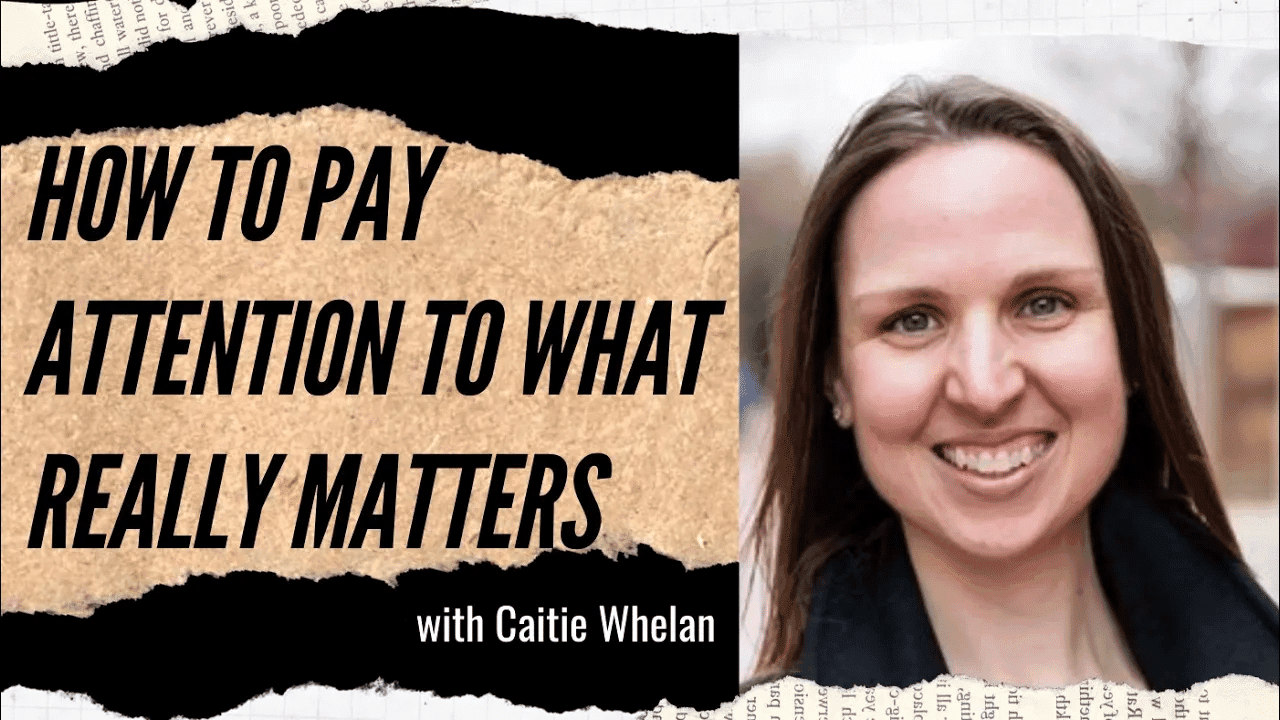
Our Guest Today: Caitie Whelan
Caitie Whelan (pronounced WHALE-in) is the Noter-in-Chief for The Lightning Notes, a website that delivers short daily posts to help us move the world forward. It features striking stories and great ideas to remind us that we matter and improving our world matters. Caitie is not a writer by trade. Not long ago, she worked as a Senior Foreign Policy Advisor in Congress. After four years, she decided it was time to take a dream deferred and make it a reality.
In Part 1 of my interview with Caitie, we explored a life well-lived in DC, including what it was like to work on Capital Hill and be in the trenches with a intellectual community day in and day out. We had the opportunity to dive into Caitie’s routine and daily life as a Senior Foreign Policy Advisor too, a profession many of us know little about. Part 1 is also when you experience a sliver of Caitie’s desire in figuring what she wanted to do next.
In Part 2, we unveil the journey of Caitie’s departure from Washington, D.C. to Brooklyn, New York. Transitioning from a comfortable life, envious career, stable income to what she calls “a total White Belt”. Caitie discovered the magic of having abundance in other parts of her life such as creativity, inspiration, entrepreneurship.
Speaking of inspiration, Caitie gives a lot of credit to the one and only, Mary Oliver. “Mary has written everything people already talked about but Mary said that she pays ‘very, very close attention to the world'” In The Lightening Note, Caitie captivates people, places and things that move her and help her become her better self.
What we discussed and explored:
Part 1:
- What’s Caitie’s creative process for The Lightening Notes?
- What are women empowered to do these days? And how should we go about doing that?
- Why did Caitie transition from a Senior Foreign Policy Advisor to a full time writer?
- What is The Lightning Notes’ origin story?
- What is it like to work on Capital Hill?
- What’s Caitie’s daily routine in Congress? (Cheatsheet: Unlike many other professions, there’s no typical day at the Congress. Lunch can happen at any time.)
- What did Caitie do and test out before fully committing to The Lightening Notes?
Part 2:
- What was the pilot process of Lightening Note Version 1?
- What are some of key changes and decisions made transitioning to Brooklyn, New York?
- What does Caitie mean by “seeking abundance in other parts of my life”?
- Caitie’s belief: how we spend our money is how we spend our values
- The Lightening Notes monetization model
- Caitie’s question for Fei: How to decide on one’s next project? (What to put our limited time and energy into?)
- The magic of NOT knowing
- Caitie’s advice for those who are ready for transitions
Resources
- SCORE – Free business advice, classes and more.
- Maria Popova / Brain Pickings
- Kevin Kelly 1,000 true fans
- Seth Godin Freelancer Course (on Udemy)
- Bill Watterson (Calvin and Hobbes) -“With each decision, we tell the world and ourselves who we are.”
- Penn and Teller “Treating every show like the most important thing in our selves”
- Albert Einstein – “If the idea isn’t absurd, there’s no hope for it”.
To learn more about Caitie or to get in touch, you can always find her on Twitter and Facebook.
iTunes feed and subscription Non-iTunes RSS feed
Transcript
Part 1
Transcript
Fei Wu: Welcome to the Phase World Podcast, engaging conversations that cross the boundaries between business, art and the digital world. Hi everyone. This is Fa Woo, and I am the creator of Face World Podcast. To remind you, face World is a platform where I ignite son and unsung heroes from all walks of life. So about every two weeks, I feature a new special guest and help tell his or her story for the first time or second, third time, with a different lens, different angle. But why phase world? It's about how people think and how they choose to live their lives. Just because we are free doesn't mean we think and live freely. Just because we are rich, we're wealthy financially doesn't mean we are pursuing an authentic, happy, and fulfilling life. Everyone has such a different approach in answering the same questions. Not every person has yet succeeded or reached their goal. Many are still in the trenches, still trying to figure things out. So what I call these conversations to be moments of courage, I feel so privileged to be there with. Sometimes there are tactics, tools, quotes, that are easy to take away, but there are also tips and advice that have to come out of a more extended and intimate conversation. It takes a few pauses, struggles to get to the truth, get to the bottom, the truth of why some people forget everything and run versus some people face everything and rise today on phase world. I would like to welcome Katie Whe. Katie is the Noter in chief for the Lightning Notes, a website that delivers short daily posts to help us move the world forward. It features striking stories and great ideas to remind us that we matter. Improving the world is our matter. Katie is not a writer by trade. We're training not long ago in fact, that she was a senior foreign policy advisor in Congress. After four years of working there, she decided it was time to take a dream deferred and put it out into the world. In part one of my interview with Katie, we explore a life well lived in DC including what it was like to work on Capitol Hill and be in the trenches with other people day in and day. We had the opportunity to dive into Katie's routine and daily life as a senior foreign policy advisor, too. A profession I knew nothing about before I spoke with her. Par one is also when you experience a sliver of Katie's desire in figuring out what she wanted to do next. This is what I consider a foundation piece before we jump to part two. So in part two, we unveil the journey of Katie's moving from DC to Brooklyn New. Transitioning from a comfortable life and vias career stable income to what she calls a total white belt. Katie discovered the magic of having abundance in other parts of her life, such as creativity, inspiration, entrepreneurship. Speaking of inspiration, Katie gives a lot of credit to the one and only Mary Oliver. Mary is a poet, a writer, and has written everything people already talked about, but Mary said that she pays very, very close attention to the world. In the lightning note, Katie captivates people, places, and things that move her and help her become her better self. So without further ado, please welcome Katie in part one of our interview. Enjoy. So Katie Whelan, is that how I should say your name? You got it. Great. So you're the founder and not in chief of the Lightning Notes, which is a short daily pose to help us move the world forward. And what I like, you know, when you describe your mission here, is to remind us that we matter and improving the world is our matter. So tell me a little, little more about sort of your, your mission here and just maybe introduce some of my listeners here to, to who you are and what you. With that statement.
Caitie Whelan: Sure. Um, well, I'll back up just a little bit. So the writer, John Irving, has this wonderful idea that every writer only really has one story in them to write. And I think that's actually really true for a lot of us that, you know, filmmakers or rabbis or preachers, that we've all got this one thing in us that we wanna share with the world. And for me, across every job that I've had, that thing. Reminding people that they matter because I think it's so easy, Fay to walk through life and feel like we're irrelevant. There's so many things. Just the sheer population of the world alone would suggest, like, what is one person in over 6 billion? What kind of a difference does that make? Um, so in the, in the work that I've done, be it a, um, . I did some work in India and co-founded a school there, and then I worked on Capitol Hill in Congress as a policy advisor there. And now with the Lightning Notes, it's all been this like constant effort to remind people that they matter, um, because I think we all hunger to matter and hunger to make a difference. But it's really easy to lose sight of that in sort of the Flo and Jetsam of Daily Life. So the current iteration of that is the Lightning Notes, which is just, as you said, it's a short daily post to help us move the world forward. So what it does is it takes really great ideas and striking stories. To remind us that we matter and, and this is for me, is the really key part, and that improving the world is our matter. Cause I think once we remember that we actually make a difference, that we have an impact on this blue and green planet, then I think we have to use that impact for something that's larger than we are, whatever it might be. You know, it could be being, um, you know, really engaged. Climate change or racial, racial justice or, um, you know, being the best hedge fund manager you can be. I mean, there's no particular form for what it is, but just to contribute to something that is bigger than, um, each individual life. So, so that's kind of the, the lightning notes in, uh, in a bit of a. Frame right there. And it's brand new. It's only been a live phase for seven
Fei Wu: months. I know. It's super exciting and you, you know, I started reading, uh, feedback on it and I could just tell very easily how much passion you've put into this project and it, and it's, you know, what I'm, I guess what I'm trying to say, it's very, very, very personal and I think Seth Godin once said that, you know, like an artist will. Make everything, they create very personal. Um, it's there to have a statement and it's, it's very authentic. It's very purely you. And I wonder, you know, where, where do you typically source, uh, you know, these content from, I notice that you reference a lot of 'em, and then you write a lot of the content, curate a lot of content as well. So how, how is that creative process, I guess at a high level looks like.
Caitie Whelan: Oh man, , that is such a great question cuz it has been so iterative. Um, and I think, um, you know, one of the things is I'm not a writer by, by trading or by background. Like up until, uh, April 1st, um, of this year, I was a senior foreign policy advisor on Capitol Hill. So the writing that I was doing was, um, I was writing memos on Syria. Sad and the refugee crisis and writing a lot of emails about like scheduling meetings. So I wasn't doing a lot of creative writing. Um, and we can sort of speak about about that transition as well. But, um, certainly for me over the past seven months, it's been a real, um, process of discovery. Um, because I think everything that I'm writing about, so the, the main subjects of the Lightning notes are the things that I think hold us back so doubt. Fear convention, comparing ourselves to others, greed, and be all these things that I personally, Katie Whalen, am struggling with. Um, and, you know, I take a lot of, uh, of inspiration from Mary Oliver, who's just this one Beautiful. I
Fei Wu: love her. Oh,
Caitie Whelan: isn't she just the best? Fa
Fei Wu: She was interviewed by a, um, Chris Tibi very recently. Oh. And that was like a magical. I had no idea who she was to be completely honest. And then it's amazing. Have you listened to that one yet?
Caitie Whelan: I have actually. And I thought I was just, she's just such a, um, uh, you know what I don't like, I words fail me in describing Mary Oliver, which is probably appropriate because she is the master wordsmith. Yeah. But I think one of the things, Faye, that she talks about is, so she, her primary palette, you know, her primary I. Subject matter is nature, which has been poet subject matter for. You know, centuries and centuries and centuries. And I remember once an interviewer saying, you know, Ms. Oliver, like you write about stuff that everybody has already written about, but you do it in such a different way. Like, what, what's the secret here? How do you crack the code? And Mary Oliver just said very plainly, she said, I pay very, very close attention. And I, so for me, that's really where I try to source a lot of my material, is just by paying attention. To myself and, um, and my own experiences of walking through the world, but also to other people and paying attention to the things that really move me and like inspire me to be, um, a larger, better, bigger iteration of myself than I am right now. So like one example is there's this. Great story of Johnny Cash and Bob Dylan, where, um, it's the, it's 1960s and Bob Dylan is beginning to make his, uh, transition into like using an electric guitar. And, you know, he is this like folk hero at this point and the folk music community is like really rattled by this. And so, um, sing Out Magazine was, um, was this kind of preeminent publication. Um, in, uh, in the folk music community and the editor wrote this open letter to, to Bob Dylan saying like, you know, in so many words, like, you know, you've walked away from your roots, like, you know, you're following the dollar. How could you do this? And, um, Johnny Cash reads that letter, and Johnny Cash does not know Bob Dylan at this point, but Johnny Cash reads that letter and responds with his own letter to the editor of Sing Out Magazine saying, shut up and let the man sing . And it's just this moment where it's like getting into the trenches with somebody else who's like suffering and walking along someone who's been beaten down or, or beleaguered. So it's just little things like that fae, where I'm reminded. How, um, how astonishing our lives can be and how these little moments like these kind of little, little micro moments where we make a decision to like, you know, put a hand on somebody's elbow or actually to like stop and listen to that musician in the subway and maybe actually even put in like a dollar to her, you know, trombone case or whatever it is. But it's those little moments of human connection that I think are. Transformative. Um, and that I am always trying to pay attention to. Um, because I think, you know, it's easy to be heavy handed and say you need to pay attention to like, connection and how amazing it is that the sun rises in the east and sets in the west. That's like, you know, uh, great. Like that's a great way to lose people. But I think if. If we're reminded of these little, uh, little opportunities that we have each and every day to just be a little bit bigger than, um, than we usually are to, to be the people that we want to be, um, more than maybe what our daily routine allows us to. Um, I think that's really powerful and I think that does remind people that, or my hope is that it will remind people that, you know, you being here matters and it matters to all of us. It's like Barbara King. Talks about, you know, every life is different because you walked this way and touched history. Hmm.
Fei Wu: I really like that. And I think, you know, as you're saying this, it just reminded me of our very brief conversation a few days ago when we were first introduced. And I just felt this urge to introduce someone like you, you know, a young woman, um, who I feel. You know, especially for my podcast, there's a strong theme of, uh, women topics and, you know, women in basically in our generation coming out and daring to do, to be different, to do something, uh, completely different. And to be honest, I feel like we are also empowered to do that because I, uh, you're still in your twenties? I'm in my early thirties. We've had our experience, you know, we had our education and, you know, uh, in, you know, I remember you wrote down about four, four or five years of working in Congress. So you've interact, you've come across, uh, a lot of, you know, sort of different people, different mentors that you can learn from. And from this point on, I feel like you're really in, in a wonderful position to do what you do today. And then today was so funny as I, as I mentioned, Was, you know, had dim sum with family and, and I drove back on store drive in Boston and for the first time I was in the passenger seat. So I, I looked over at the Charles River and there was this bridge that doesn't look fancy at all. It's like not even noticeable. And I saw this huge like flyer banner looking thing across. Bright red and all this said was, I dare you.
Caitie Whelan: Oh, how fabulous.
Fei Wu: You know, and I don't know who it was speaking to, but I almost, you know, I was like, is it to the rowers? I mean, it's pretty cold now, but, uh, and I thought to myself like, one of the reasons that I feel very blessed to be able to connect with you is I'm doing a lot of daring myself in the past year. Absolutely. You know, and podcast being one of 'em. Only one of the many things. Um, but I think daring could really be a theme is the, what my listeners so far don't know is not only you started this project but you actually quit. Uh, I would say a very stable job. Correct me if I'm wrong, very stable, uh, you know, a very proud, a, a very envious job at the Congress. Um, and then do you mind, like, kind of give us, you know, you. Mentioned that you wanna talk about the transition, and I'm personally very interested in that as well, is transitioning from a senior foreign policy advisor in Congress. I don't really know what that job entails to be honest. But then the, what was your daily routine like and how, when I assume you started writing even before you quit your job and then, you know, what was that tipping point like? Just be super.
Caitie Whelan: Oh sure. Oh, absolutely. Well, first of all, I just wanna say like, I think what you're doing with this podcast is so exciting, Faye, and it's such a treat and a real honor to, to be a part of it because it's like, it's this beautiful, I'm gonna butcher this, but there's this wonderful line from the play Sunday's in the park with George. Um, it's something to the effect of like, you know, you put something out there where there wasn't anything before, and I feel like that's what phase world is, and that's like, that's such a beautiful gift of generosity to the world, but it's also like, it's a powerful marker of self respect to do that, Fay, so, I mean, I take my hat off to you big time.
Fei Wu: Thank you so much. I I really, I really appreciate it. And, and the more we talk, I feel like you, you, you know, certainly is. One of my target group targeted audience of, you know, people are a, trying to share the voice, uh, together, trying to create something of meaning together, so. Mm,
Caitie Whelan: absolutely. Well, you know, and just, I just wanna riff on that for a second and then I'll, I'll get to sort of the Lightning Notes origin story. Um, but I think we are. So influenced by the people and the ideas that we spend our time with. Um, and I think for a lot of people who are like considering taking a risk or taking a plunge or like being true to that sign on the, um, bridge over the Charles River of. Doing the dare, like that thing inside you that you know, could eat you alive if you don't do it. Um, I think in those times, one of the most important things is to immerse yourself in communities and environments and thoughts, um, from people who are doing similar things. You know, they don't have to be in the same. Field, but who are thinking on that level, who are respecting those urges that they have inside them to like make a change or make a switch? You know, I'm always struck by how, um, CS Lewis and JR Toki used to, um, be in a writer's workshop together. Um, and I think like it's particularly. If you're going into something creative or even not, maybe if it's just straight entrepreneurship, which is like a massive feat on into unto itself. Um, being with other people who are in the trenches is so important because like they understand where you are. You don't have to explain yourself as much. You guys can kind of like hit the ground running. And one of the things I love about Bay's world is it's like, yes, that is it. It is like this intellectual community. Uh, and really emotional support of people who have like, taken what could be a dream deferred and made it like a reality in the world. Um, and like that's just a beautiful, um, theme I think Fay to have running through your podcast, which has like, Had all these luminaries in such a short period of time. I mean, it's just so
Fei Wu: exciting. Thank you so much. And I, you know, I think what I, part of my strategy as I'm, uh, witnessing, uh, over the past year is to, uh, you know, at the beginning I thought purely I'm just gonna have, people are still in the making of like, still in the trenches by the way. Those are like absolutely my favorite. And people are just so honest about their own stories, and even perhaps some on the surface appear to be very successful, but they're still struggling in certain areas and, and they talk about lessons learned and their own struggles, you know, super raw, authentic on the podcast. So, and you know, at the same time, I, you know, to your point, um, I've interviewed people who sort of legisla made it or like, You know, you've been doing it for seven months. I've been doing it for a year. There are people who have been doing what they do, whether it's podcast or writing, or other things for years and years that you wouldn't even know because you've only known them for the past year or two that they had. They appeared to be successful, but they had already been going at it for five to eight years. So I'm totally, IM, you know, I'm just so excited to kind of catch you at this. Magical moment where I'm sure you're going through a lot and your voice sounds very confident, but I know just, you know, what it, I personally know what it takes to, to do what you do. And um, and I love to obviously have a follow up podcast as well, like a year, you know, six months, a year from, from today. But I mean, this is very special for
Caitie Whelan: both of us. Well, yeah, I mean, it's, it's, it's such a treat and it's great to sort of take some of your wisdom from. A couple months down, down the pike. Um, , but I think so to, to get to your question about sort of the, the origin story and that transition. So, um, I was a senior foreign policy advisor on Capitol Hill. Um, and it's such a great question of like, so what exactly do you do on a daily basis? Cuz my mother would ask me that from part to time of like, what? Is your work? Um, it's, it is a great question. Um, really what your, what my job was, was to take my boss's agenda and I worked for a wonderful man, a really wonderful man with a heart as, as big as they come. Um, but it was to take his agenda and the issue areas that I covered and really like, you know, continue to move the ball on them. Um, You know, we were democrats in the minority over on the, the House of Representatives, and so you didn't have the usual tools that were your, were at your disposal. So you don't control the house floor, you don't control the bills that are coming down. So, so it's hard legislatively to, um, try and push what your boss, boss wants forward. But my thinking is like, you know, if, if I'm there, if I'm working in this environment and I'm committed to this mission, Sort of, uh, taking my boss's ideas around foreign policy and peace and social justice and economic equality. Like, just because I don't have the regular tools at my disposal doesn't mean, uh, that's an excuse to not get stuff done. Mm-hmm. . Um, and so a lot of what my days were, we're trying to figure out creatively how can we still get stuff done given the fact that like, you know, our toolbox has gone from like a full, like a full suite of tools to like four or five hammers and like, you know, some. Mm-hmm. . Um, and, uh, and I love something that I, that I've always loved face. I love building things, um, and I love creating things. I might not be the world's most awesome manager, but I do love starting stuff . Um, and so I, I'm working on my management side, um, and. Uh, and so, you know, I love to look out on the horizon and see where isn't there something, and is there an opportunity to create something that's gonna be beneficial for the mission that I'm pursuing, which is my bo you know, my boss's agenda. Um, as well as to sort of connecting it to some broader causes out there. So, um, you know, an example is, so my brother, uh, my boss was, um, a big Latin Americanist. He had done the Peace Corps in Latin America and a, a piece of his heart lived there. And, um, and Latin America is not a part of the world that, um, much attention was being paid to. And I remember thinking like, well, this is a drag. Like, you know, how often am I gonna get people to care about this? Because everybody's looking at Pakistan, everybody's looking at Afghanistan. You know, if only my boss cared about that. You know, one day walking home from work and thinking, you know, This is actually terrific strategic advantage because there's so many cooks in the kitchen, in these hot button areas of the world, but there's really not a lot, um, going on in Latin or not. There's a lot going on in Latin America, but not a lot of people. Training their eyes on it. So this is an opportunity to like create, um, uh, real leadership for my boss because I don't have to fight all these other people off. Mm-hmm. . Um, so looking for those like little avenues. And so that was a big part of my agenda was like, you know, creating a briefing series and, and really trying to, um, to boost him as a thought leader on these area and the, this part of the world. Um, and. Um, you know, the variety of different issues that came up, be it human rights or refugee um, issues or economic equality. Um, so, so that was a, and then there's a lot of like, um, you know, sort of daily stuff that comes down the pike, be it, you know, we have constituents who have issues, um, that, that need to be addressed or, um, whatever the legislation is that is on the floor and taking stances on that. Um, and continuing, like, just continuing to be creative about finding ways to move forward. Um, you know, my boss's mission, regardless of. Whether or not we're in the majority or the minority. So to break
Fei Wu: that, to break that down a little bit, I think, yeah. You know, what you're describing is. I think it's fair, it's pretty unusual for somebody in her twenties to experience and, and I don't know how many jobs are there in the Congress, but let's just say an average 20 some something year old American probably isn't, whether, isn't, isn't considering that track at all or is, but you know, it certainly is a very competitive landscape to get into. Um, what is. Uh, you know, could you kind of break it down for us in terms of what your daily life was like at the Congress? Like for, for instance, like when do you wake up? You know, how long, how long was the commute? I mean, did you use the computer a lot? Were you in conference a lot? Were you in debates A lot. I mean, What was it like?
Caitie Whelan: That's so, that's so great because I feel like I could get so caught up in it and like forget that it's just such a foreign world Yeah. For other people of which of course makes total sense. So, um, I actually got up at 6 51 every morning, um, because I like 6 51 more than six 50. Um, and I lived right on Capitol Hill, so I loved, um, Faye to go and walk the mall in the morning. And it was, you know, like you'd watch the sunrise over the capital. And, and I actually made this promise to myself when I first came to DC in 2009, which was like, the day that you don't get goosebumps, um, looking at the capital building anymore is the day that you need to step aside. And I actually, I didn't, I didn't quite use that, that language. I think somebody else that I talked to later, um, uh, had sort of helped. Frame it, but it was just a very strong feeling that I had of like, this is an incredible opportunity. Mm-hmm. . Um, and the day that it stops becoming incredible to you or you don't appreciate it as much. you, you gotta step aside and let somebody come in who does. So I would walk the mall every morning and just kind of I, listening, listening to NPR and like seeing, you know, what were they talking about that was relevant to my issue portfolio. Oh, nice. Um, . And then, uh, and then I would get in, uh, I usually get into wor I tried to get into work, try, tried to get into work a little bit before nine, though, like, you know, it was a little bit of wiggle room there, but, but you know, always tried. Um, and, um, it, you know, oftentimes the, there's no typical day. Um, because the thing about working in Congress is that world events can completely tip your day, like the balance of your day. Things change so
Fei Wu: quickly, you know, depending on the
Caitie Whelan: news. Absolutely. Absolutely. So, you know, if, so I also, the, the thing about working in a congressional office is that you handle these kind of, your portfolio is kind of an olio. So like I handled foreign policy, I also handled budget banking, small business taxes and trade. Um, so, you know, there were all like, oftentimes, like a lot of days are just. Meeting after meeting, after meeting, you're meeting with constituents, you're meeting with interest groups around these issue issues because there's almost always legislation coming down that's impacting them. Or there are rumors of legislation coming down that's, you know, on tax, tax reform. Um, Or, you know, whatever the issue might be. So it's a lot of meetings and then a lot of meetings with, um, my boss as well, um, with, you know, different, um, different people in those, uh, who worked on the issues that we cared about. So he really cared about the Peace Corps. So we were oftentimes meeting with, um, people from the Peace Corps or people, um, who are in the Peace Corps Advocacy Association. Um, you know, What a privilege to get to work on something like the Peace Corps like and trying to get as much money as possible for the Peace Corps. I mean, that was just like this unbelievable, um, unbelievable gift, um, to have that in my portfolio. Um, and your, your schedule really is shaped around your boss. So even if I had scheduled a meeting, um, it, everything is back burner to what my boss needs at that moment, moment in time. Um, so the days that we are in session, which is the days when the members are on the hill, as opposed to back in their districts, everything operates around the boss and everything is much busier. It moves much more quickly versus when they're back in their districts, things are a little bit calmer. Um, you know, depending on what time of year it is. Um, so you know, the day, you know, In terms of like the middle of the day, like lunch could happen at any time. You just like, you just have no idea. Right? Wow. Like it depends, like, you know, I remember. . Um, like there were the, this, when Isis first really came on the National Consciousness's radar, like, you know, there was just weeks where it was like lunch was happening at like three 30 or four, just because it was like, that was the only time there was to, to actually like literally digest something.
Fei Wu: Well, do you like bring snacks with you? I mean, what do you do to kind of convers.
Caitie Whelan: Total snacker.
Fei Wu: Total snack. What do, what do you, what did you snack on? Like what are, like naked or what, what are ?
Caitie Whelan: The unfortunate thing is I am a, uh, a very big Apple fan, which is not a quiet snack . Um, so like I would occasionally like duck very briefly out of meetings to like have an apple. I always like, sometimes like. What, what were some I was, I'm a big Snapple fan. Um, I always love, I caffeine doesn't work. Caffeine actually works a little too well on me and I can get too wired. So I would, um, uh, there Snapple, uh, makes this like half and half like this Arnie Palmer that is, has like a little bit of black tea and a little bit of green tea in it, and I think it's probably placebo, but I felt like I would get all wired up drinking Snapple. Um, what, what were some of my other snacks? Uh, I was, oh yeah. Another very loud one. Like I loved baby carrots. Um, and so again, like not super user friendly. Right. Very healthy though. Yeah. I mean, I would try, you know, um, . But, uh, it's, yeah, it's a, I mean, it's a, it's a really, it's an amazing environment to be in. And the, the other thing is like, there's such a high concentration of intellectual capital in DC um, and, and that really is the case on the hill. And while I certainly didn't see eye to eye with a lot of people, like there was a, um, Uh, a real intelligence across most people's staff. Um, you know, I was working on primarily on the staff level, um, staff that, like, even if I didn't agree with them, like I oftentimes, um, would see sort of the intelligence and sort of the underpinning it and what they were talking about. You know, and maybe it's idealistic and maybe it's naive, but I really do think Faye, I can't remember if it was Bill Clinton who said this, but that, you know, everybody. To government because they wanna make stuff better and we might have very different ideas of what better looks like. And I certainly had a very different idea of what better looked like than a lot of the, um, a lot of the, the folks that I was working with by virtue of the fact that we were in the minority. But like there, there were opportunities to find, um, little SLS of overlap, um, with people who like otherwise you might never see eye to eye on.
Fei Wu: How successful do you think you're able to kind of, uh, accomplish your, your mission? Because I can tell right away that you're very good at your job, but, you know, and I feel like I, I honestly selfishly have so many questions for Congress and your previous job, but I certainly wanna kind of, you know, uh, get you started talking about the, the Lightning notes as well. Um, totally. You know, like, what, what was it I guess. I think, you know, I remind everybody that whatever the job that you have currently, it is almost unfair to ask, um, it to fulfill every need. It just won't be, it's not even possible to fulfill every need that you have in your life. And it's so funny how many people actually go to their job and thinking, and therefore I get frustrated and complain that you. My day wasn't as as great as it should have been. But think about like most, most often than not, we're getting paid to solve problems and, and problems are sometimes solvable. And some of the others were very challenging. And you know, we might be limited by resource that it's always these constraints. But to go back to my question is like, you know how, you know. , what did you, I think you describe very well and what you loved about your job, um, at the Congress, but I guess what was that moment of realizing that there may be a need or a set of needs that aren't. Weren't satisfied there and therefore kind of transitioned into your endeavor now.
Caitie Whelan: Oh, Fay, that's like the $64,000 question. Maybe I should say 64 million question. Mm-hmm. , the, so I think I, I thought a lot about this. I don't think there was any one moment. I think it was actually this kind of, I think there was this awareness, um, that I had probably. Starting about a year, year and a half ago, um, that this policy was not the environment that I was the most effective in. Mm-hmm. . Um, but I never really looked at awareness head on, um, because I think, you know, I, I sort of knew on some level it's like, if I do that, then that means I have to make a change and I don't know what change is gonna look like, so I'm just gonna stuff it back onto the rug. Um, but it be, it started to get like this kind of drum beat became louder and louder. Um, And so, um, I, you know, I. I had, uh, had been exploring some other opportunities where I felt like, you know, maybe I can, maybe I can use a different platform to remind people that they matter more. Um, you know, maybe I, I'm, cuz I just don't know if I've got the Constitution for doing that in the policy environment. Um, and, uh, I had this one particular job that I like really had my heart. Um, and it, and it didn't pan out like, I mean, uh, there were many jobs that did, did not pan out. Um, but this one in particular, and so I, I'd gone away. This was in early January, very early January. Was this in or outside of the congress? This was outside of Congress. Mm-hmm. . Um, and, uh, I, I'd gone away for this weekend in, uh, early January to the beach in Delaware. Freezing, I mean really freezing. Um, and I was walking up the, and down the boardwalk and it was, you know, early, early in the morning. And, um, and I just kind of knew it was like, you know, I'm like, and you know, kind of nursing my wounds and sort of feeling sorry for myself. This job didn't work out. And like trying to figure out like, so what, what do I look to next? Cause I pinned a lot of stuff on getting this job and. And uh, and I came home that night and I remember vividly sitting at my desk and being like, just hit by this bus of awareness of like, you've gotta build your own platform. Then. Like, if you can't find a platform out there, That, um, that exists to remind people that they matter. Then you have to build your own. And Fay it was amazing. It was like instantly I started like listing companies that I wanted to work for and I was gonna retailer my, I mean, I was doing everything to avoid this thought, but like, it got bigger and louder and louder. I mean, this was just all in this one evening, sitting at my desk. And so finally I, I was like, you know, , maybe I should actually really pay attention to the attention to this because it's really loud and um, and I don't know if I can walk away from it. And so I sent my mother an email that night and I just said, the email just said like, dear bum, I think I'm going to leave my job love. Katie, um, what did
Fei Wu: she reply? ?
Caitie Whelan: So, that's a great question. I actually can't remember because, so this all started happening very, very quickly. So like the, by the next day, like, I woke up the next morning and was like, really serious, as serious about it. And I, I think I knew, um, I knew it was sort of a, I don't wanna be overly dramatic about this, but it's kind of like this do or die moment because, you know, Langston Hughes talks about carrying around these dreams deferred in us. And I sort of knew, it was like, if I don't respect this now, I might never, um, and I really, there are a lot of things I believe in Faye, but if Onlys is not one of them, like I don't wanna take anything to my grave. I want to have like spent every, um, every bit of capacity that I was given. I want that all to have been blown by the time, you know, my, my life ends.
Fei Wu: I love that. I, I really do. And then I just like kind of, um, you know, that's, that's a great description compared to the other metaphor that I heard. Um, You know, so from this like very successful female doctor, and she says she considers herself, it's like, you know, like a, like a tube of toothpaste and at the end of it, she wants to squeeze everything out. She wanna have nothing left. And which is very, uh, very different than, you know, a different as aspect of a group of my mom's friends who have, um, young daughters who are. Beauty pageants, which she absolutely cannot, and she finds it so difficult to accept, you know, watching them grow up and, and you know, watching them consider not only profession, but a track of life where you're surrounded by people to say that you know what you have on the outside, it's, it's, All you'll ever have. I mean, this is the only things, uh, that actually matter, which I, I absolutely love what you said and also what the, the doctor told me. And,
Caitie Whelan: um, I love that toothpaste. It's like, squeeze it all. Like, um, there's this wonderful choreographer, George Ballen, she who would say like, What do you, he would yell this at his dancers, so it might not have been the world's greatest thing to, to dance with him sometimes, but he'd yell at his dancers like, what are you waiting for? What are you saving for? It's all now. Um, yeah. You know, and, and Martin Luther King would talking about like sort of the fierce urgency of now. And I think, you know, we have these moments where, Um, if we're really honest with ourselves, we know we're at this kind of fork in the road. Um, and it doesn't have to be one moment, but it could be like a series of them, or it can be this like kind of quiet knocking on our soul. Um, and so, so I got up the next morning and I was like, it's, it's gonna, I'm gonna start with writing, like writing is gonna be my platform. I think there's a low barrier to entry. Um, and so I called my mom and I'm like, mom, I'm gonna quit my job and I'm gonna be a. Without missing a beat. My mother was like, that's great. Why don't you try writing first? And I like kind of, I like had this moment of like, oh, she doesn't believe in me. Oh God, I'm never gonna make this happen. And then actually realized that she, what she really, what she meant was like, why don't you, why don't you like wait in before you like dive headlong in and like give yourself a little bit of, a little bit of a runway. And I was like, all. You mom are onto something, which is always the case with my mother. She is like spot on. Um, 11 times outta 10. So, um, so I decided, I was like, I'm gonna write every day from January until March 1st. Um, and if at the end I'm still serious and I feel like I have somebody to, something to say, and I feel like I can write pieces that are gonna do what I want them to do, which. Bring people into their larger selves, enable people to take these dreams out of their guts and put them out into the world. Then, then I gotta do this. I gotta like jump off. So I would get into work fame every day. So I, I would still get up at 6 51 in the morning. Um, but I would walk into work. I wouldn't walk them all. I'd walk into work and I'd go down to the basement, cafeteria. In one of the house office buildings. And while all the Capitol police were down there having breakfast, you know, their egg sandwiches and sort of talking about the day, I would be like typing quietly in the corner. Um, and just writing and writing and writing. Um, and, uh, and then, you know, I, I'd go and I'd kind of walk around the halls and listen to npr and then I'd go and start my regular day on the hill. Um, and, and then like on the evenings I started building a website, which I'd never done before. Um, I mean, no, I, I'd done it a little bit before, but like, not. I had, I had no expertise to bring to this, let's just say that. And like, very much so in the back of my mind, holding this, uh, great Albert Einstein quote, which is something to the fact of, it's like if at first the idea is not absurd, then there's no hope for it. And I was like, this is absurd. This is absurd. There's gotta be hope here. There's gotta be hope here. Um, and so I did this every day and March 1st rolled around and I was more serious than I had been a month and a half ago, or, you know, two months ago. And so I told my office, um, I told my office I was leaving, um, and, uh, and that I was going to move to New York. Um, and I. I think part of where that came from, this need to like leave my job and leave my city, both of which I really cared for a lot, was that getting back to something we talked about before, Fay, is that I think we're so influenced by the people that we spend our time with and. and I decided it was like, I've got so much to learn about writing, about being a creative, about building a website, being an entrepreneur. I wanna go to the epicenter of that. Like I wanna go to like where you have people who are like doing the gold plated standard on that. Um, and then a whole bunch of like, you know, other levels of expertise as well. And like Brooklyn was calling, this is what
Fei Wu: I consider a foundation piece before we jump to part. So in part two, we unveiled the journey of Katie's moving from DC to Brooklyn New. Transitioning from a comfortable life and vias career stable income to what she calls a total white belt. Katie discovered the magic of having abundance in other parts of her life, such as creativity, inspiration, entrepreneurship. To listen to more episodes of the Phase World podcast, please subscribe on iTunes where visit phase world.com. That is F E I S W O R L D, where you can find show notes, links, other tools and resources. You can also follow me on Twitter at Face World. Until next time, thanks for listening.
Part 2
Transcript (Part 2)
Caitie Whelan: Welcome to the Phase World podcast, engaging conversations that cross the boundaries between business, art, and the digital world
Fei Wu: today on phase world. I would like to welcome Katie Whe. Katie is the Noter in chief for the Lightning Notes, a website that delivers short daily posts to help us move the world forward. It features striking stories and great ideas to remind us that we matter. Improving the world is our matter. Katie is not a writer by trade. We're training not long ago in fact, that she was a senior foreign policy advisor in Congress. After four years of working there, she decided it was time to take a dream deferred and put it out into the world. So in part two, we unveiled the journey of Katie's moving from the DC to Brooklyn New. Transitioning from a comfortable life and vias career stable income to what she calls a total white belt. Katie discovered the magic of having abundance in other parts of her life, such as creativity, inspiration, entrepreneurship. In the lightning note, Katie captivates people, places, and things that move her and help her become her better self. So, okay, so that, that's, that's the transition happening. And when, when was that? I think it was April.
Caitie Whelan: Yeah, so I packed my bags on, I wanna say it was like March 27th of 28. It was a Friday. My father drove to dc we packed up his car on Friday night, um, and then, uh, drove to New York on Saturday morning. So I left my job on Friday, moved to New York on Saturday. Um, and, uh, and I had this great idea, Faye, that like I was gonna launch the Lightning Notes on Monday. Which I don't like. There like a few regulatory hoops one must jump through, which I was not entirely ready for, which has just been like a chronic lesson with the Lightning Notes is like, so if, I mean, you know, it's so tried to say if I had any idea what I was getting into, I never would've done it. And it was like ignorance was so blissful, I had no idea what I was getting into. Um, and so like it took me like three weeks to figure out kind of. Um, the, you know, the tax structure that I needed for, uh, for the Lightning Notes and like, how, how it was gonna, like, I, I had a monetization plan, um, but I didn't really, I didn't really have a business structure. I, I sort, I think in my mind I was like, that'll work itself out, which it doesn't like you have to work it out, which is really good. Cause you have to learn sort of the system. And if I could offer a resource to people there, So the small Business administration has this, um, really wonderful program called score, which is free business advice for people like anybody. Um, and you just, it's score. So it's S C O R E, all caps. Um, I can't remember if it stands for something or not, but like you can sign up for their classes or maybe on their email distribution list. Um, and. And like, you know, they'll have classes on like tech structure and like, you know, for, do you wanna be a sole proprietor? Do you wanna have an S corp? Or, um, and, and that was like, I was so grateful for that because those are exactly the kind of tools that I needed and didn't really have a clue how to begin to like, um, I didn't even know what questions to ask. Like I didn't know what I didn't know. Um, so, so before
Fei Wu: I, before we kind of jump right into like the business structure, because now seven, eight months later, you probably have, um, and like you mentioned, it's an iterative process, but you have a, a shape, uh, a you know, sort of a format, a formula to figure it out by now. Um, I'm gonna ask you about that in a second, but first of all, you, first off, you, you quit your job, you probably. Some savings and you know, in the bank and you will be able to live off on, I don't know, six months to a year, possibly longer. And you moved to New York, which is not the cheapest place in the world. So true. And you had, I assume that you didn't apply for another job, so you knew your. You're going at this indefinitely without, uh, you know, consistent, uh, I guess predictable, um, income at that point. Is that correct? That
Caitie Whelan: is 101% correct. So
Fei Wu: how did you figure that out? Like, did you, , did you find, uh, did you have to find a roommate? Uh, What type of apartment did you look for? Did you have to stay with a friend?
Caitie Whelan: Mm. So, um, so I, um, let's see which one, which, which, which part to address first. There were so many unknowns, . Um, so I, um, I had, uh, looked on Craigslist at a bunch of different places. Um, and then I'd come to New York, um, in, I think I'd come in like. February, just to kind of like case out the join and see if any of these places were gonna work. And um, and I had four places on my list and, uh, I looked at the first three and was like, oh God, none. Like, these are like really bad. What have I gotten myself into? Like, I'm like, what am I gonna go live in like a shoebox in New York and like, try and run the, like you just, I like, I was feeling like supremely disheartened, so I went to the last. And it was perfect. It was a sublet for three months. It was just what I needed. Um, and I felt this like real gratitude of like, I really do believe it. I mean it. For lack of a less like, sort of, um, trite and tired way of saying it. Like, I really do think like when you put out to the world's what you're gonna do and what you want, like the world does respond very rarely in the way that we think it will, but like, it does respond. And so it's like, you know, I, you know, whether or not it was true, like I chose to interpret like, That apartment opening up as like, okay, this is, this is a response. Like, I'm getting a little support here. Like, this is really helpful. Um, and I also remember I had this moment say, um, and I'll get to the other parts of your question, but I just thought this, like, this piece always stays with me. So, um, I'd found this. You know, this apartment and I, I signed the lease. I, um, or signed like the sublet agreement. Um, and I had, I had a little bit of time before I had to get on my train back to DC and so I went to this coffee shop and um, little did I know that like everything in Brooklyn is like $5 and under, like you have to pay in cash or $10 under, you're paying cash like. DC didn't really work like that. I don't really carry cash around me. So I go to this coffee place and, and I see this sign. I'm like, oh man. Like I really wanted a cup of great coffee. Um, and, uh, but I didn't have any cash. And the guy was like, well, it's on the house. Just pay us when you get back. And, and I was like, what? The world doesn't work like that. Like what do you talking about? I was like, will you write my name down? And like mm-hmm. , you know, and I'm not gonna be back for three weeks. Like, that's a long time. And he was like, just come back and pay us. Mm-hmm. . Um, and, you know, I just felt, it was like, okay, alright, I can, I, I will take these signs like this, this all sort of works for me. So of course I went, came back three weeks later and one of the first things I did was like, you know, pay them like quadruple for that latte. So, um, so that was the housing side, and I found this, you know, this place that worked for three months and, um, and then, and now in, um, in another place. I have had roommates in both, uh, situations and just been really lucky on that front. I mean, yes. So in terms of like the kind of life that I had in dc like I had a, you know, stable, well paying job in an environment where I was, um, I was very comfortable and now I'm a total white belt in a town that is filled with like experts and sort of masters and, um, folks who are kind of like the best in the business. Um, and that's been like a very. Humbling and important experience to go from kind of being really comfortable and, um, somewhat known in your environment to being like one of like, you know, thousands, tens of thousands of other people out there like writing and trying to, trying to make a living, putting your ideas out into the world.
Fei Wu: So what are some of the key changes? Sorry to interrupt cuz I feel like I, I, I've accumulated way too many questions. I'm trying to inject them at appropriate places. Uh, you definitely lived a very interesting journey. And what are some of the changes you had to make going from, uh, the trans, you know, between the transition of, uh, DC and New York? I mean, specifically like, Do you have to eat differently? Do you have to shop a little less? I don't know what your personal interests are. Like what, what do you have to scale down, um, because of that? Well,
Caitie Whelan: you know, I've, I, I wouldn't say I've always been like a really big spender. Mm-hmm. . Um, but yeah, I'm certainly, I, and, and I, you know, my mother was really big on, um, On financial literacy. So I've always tracked my finances. I am much more, uh, I think attentive to them now. Um, and definitely conscious of, um, I would say it's certainly a frugal lifestyle. But like, I had a, I have a, I have a friend who puts it beautifully, um, you know, Like, she also like is living somewhat frugally, but she said, you know, I, I have abundance in other parts of my life. Mm-hmm. . Um, and for me, I feel like I have this abundance in terms of inspiration and, and, um, hope and like. Uh, and really I, I hope like self respect that like, I'm, I'm willing to, um, step aside from a certain quality of life and, and try a different one. Um, because there's something in me that's like bigger than like being able to like see a, you know, two movies a week at the movie theater or, um, oh, sorry. Were you gonna say something?
Fei Wu: Yeah, I was just, I was just thinking, you know, I think you're going, leading to that conclusion is perhaps it's not so bad because, um, I very recently listened to Tim Ferris, uh, the Tim Ferris Show podcast and the latest one, uh, as we're speaking now, it's called the, the Mindful Practice, which has been talked about so many times, but one of which that he. In just 15, 20 minutes. Some of the, the daily rituals, the techniques, and one of them is, uh, live in poverty. I mean, it's not what you're experiencing, but he said to kind of experience poverty by, uh, for one week, you know, eating rice and beans, wear like white t-shirts and. You know, cheap clothing. And at the end of that, what he had experienced and many of his, uh, listeners as well is like, you know what, one, it's not so bad, and at the same time, you feel so liberated to all the fears and the risk you never thought you would take. Um, so I, I, I don't know whether, do you, do you think that's like, you know, and that obviously is like an extreme of what you're, what you're living through. Um, but I guess you are, I feel like you are, you are managing it quite.
Caitie Whelan: That's so kind of you to say Fay . Um, I mean, I like, I wanna be clear here, like, you know, I, I, I am definitely living on savings and adrenaline right now. Um, and so I'm, you know, I don't, I'm, I'm, I am, I'm so fortunate that like I am in a comfortable and a safe and warm environment. Um, and so the, you know, the, the change, I wouldn't even call them compromises. The changes I've had to make are like, really. Uh, minor compared to the quality of life that, that a lot of folks are, are struggling with. Um, but you know, one thing that's really thrown into relief for me is, um, I think that how we spend our money is really how we spend our values. Um, and like money is such a, you know, there's so much. Stigma around it. And there's so many stories around it. And I think that, um, it's really forced me to look at, look concretely in the numbers and say, is this a reflection of who you wanna be? Like are you spending money on things that are representative of who you want to be as a person? Mm-hmm. And I didn't have to do that as much in DC when I had a very steady income and like, you know, wasn't as attuned to the bottom dollar. Um, and, and so I'm like, I'm very grateful for that. Um, Um, it's been eyeopening for me and, and again, going back to that wisdom from my friend of like finding the abundance in other parts of our lives. And, and I think also, and this this certainly relates to a, a larger theme on the Lightning Notes is not letting somebody else define success for you. Mm-hmm. , um, you know, not letting success just be encompassed by. The amount of money that you have sitting in a bank or in investments or whatever. Um, because if we're gonna do that, then yours truly is like wildly unsuccessful and getting more unsuccessful every day because, you know, I've, the Lightning Notes is not in a place where it's, where it's certainly, um, making massive sums of money. But I think that it's really easy to outsource how we think about success. Um, and to to, um, to accept, and I say this to somebody who has done this to. What society would define for us as success and sort of those conventions. Um, and I think that's a huge seeding that to some outside either be it other people or some outside force, um, is a really big disservice to ourselves. And so I think the past seven months for me, Faye, have been a real reinvention of what success looks like, um, and and what it feels like too. Um, cuz I think. Um, it's a much more generous definition than we might, um, than I might have thought before when I was in the stability of, um, of the job that I had. Um, so I, I, I feel, uh, I feel real gratitude for that, for, for having to, to think about money in a way that. That I had, you know, I could avoid before I, I never really had to, had, had to, to face it before. And again, I do, you know, just wanna be very clear, like I am by no means in a situation that so many other people are where, um, um, it's, it's much more extreme. Um, but, you know, it's, it has, it has, it's certainly been a transition for me. If I
Fei Wu: may make a recommendation is, um, if, I'm not sure if you heard of, uh, the gentleman named James Cher. Oh yeah, absolutely. Yeah. So he's, uh, he lives in a new, uh, New York. Not, maybe not New York City, but he travels there very much and maybe just, uh, um, suburbs of New York. And he wrote several books or old best selling. Uh, and, uh, he and I are negotiating time to be on this podcast at the moment, but I think there's. Two themes. The first one I, I was, uh, waiting kind of to mention of when you mentioned you wanna start your own platform and that decision was made really is what he, uh, refers to as choose yourself. So instead of waiting for other people to choose you, to give meaning, give you that job, give you the money to do what you need to do, or ignite you to say, you are now permitted to go down this path, and you basically created that for yourself. So that's part one. And secondly, I think. Uh, he finally wrote a To Choose Yourself, uh, guide to Wealth, which is, um, a really talking about all things, uh, financially relevant to people like us, but also about multiple streams of income as well. So, you know, I started to think about this lately as in a, what if I wanna go solo one day with Face World? All things Face World, you know, I, you know, Something that we should continue talking about as well is to maybe do something, something else, maybe more than that one thing to fuel, uh, what we wanna do, that creative abundance, like what we wanna do podcast wise, you know, writing wise. So that would be, you know, is there anything that you've explored in that realm yet? Or is it just been overwhelming? Like, you know, there's insane amount of work that you're trying to stay af.
Caitie Whelan: Well, first thank you for those James Al recommendations. Um, I have certainly read some of this stuff before and have taken some real, uh, insight from it. Um, so I will absolutely check out his, uh, his guide to wealth and, and like, and also good on you, Fay, for, for thinking about like what that a possible transition too, because I think giving yourself that space to even think about it like that is, that's like courageous. Mm-hmm. . Um, it, it would be much easier to kind of like ignore. You know, and, and, and walk away from it. But by, you know, as, as James Altucher would say, by choosing yourself and by, I think, honestly, not walking away from yourself, um, which we can do so easily. So I am hot to trot on that. I will, I will check it out. Um, to answer your question, so, so first let me explain sort of what the, the monetization structure is for the Lightning Notes, and then I'll, um, I'll take a dive at your question. So, um, the Lightning Notes has, um, no as, uh, no paywall. Um, I don't like those as a reader and I don't think it's fair to force speed my audience things that I wouldn't want to eat. So it's. It's based on, on monthly donors. Um, if I can get a certain number of folks who'd be willing to give a small amount every month, um, then it's a financially sustainable enterprise. Um, so I definitely stand on the shoulders of giants. Uh, Maria Papo over at Brain Pickings is doing this, and I just think it's. Beautiful. NPR has a somewhat similar model, though obviously they have some other, other revenue streams as well. Mm-hmm. . Um, but for me it's really predicated on this notion of respect, um, that I would like the Lightning Notes to be a respectful and a kind place, um, for people to, um, to spend time online or on their phone or wherever they find it. Um, and I think it's, it's, um, I, I couldn't conceivable way of doing that with like, all these ads and all this, um, stuff like popping up all over the place and like, you can't even read stuff because the screen's moving around. Um, so. Am I anywhere near the number of donors that I need for this to be financially sustainable? No. Did I think that I was going to be there? Like if you asked me seven months ago, Katie Whalin, do you think in seven months you're gonna have the number of monthly donors that you like need for this to be like a financially viable enterprise? I would be like, absolutely. Um, so. That is not the case at all. Um, and, and I think something that you've spoken about certainly before on the podcast day is, um, is ramp up time is, um, Is really important. And I think especially, um, being, um, kind to yourself in that when it's not meeting the expectations that you thought, um, and also being really, um, honest about why is it not meeting those expectations and like, is this some, do I have. Um, a structural challenge here, or do I have more of a hustle challenge, like I'm not actually getting out enough or, um, or is it something else altogether? Um, and um, and so those are real questions that I ask myself. I still very much so believe in this as a model. Um, am I going to have, so I have this idea. Um, crib straight from Kevin Kelly, um, which was, you know, the thousand true fans. Like, if I can get a thousand people who are gonna give $8 a month, then like, you know, you know, after PayPal fees and taxes, then like, we are off to the races. Like this is, this is real. Um, I still very much so believe in that model, but I'm aware that how I thought it was going to, um, come about is not the way that. That it, it actually will come to be that I have a lot more, a lot more work to do in terms of spreading the good word because there's so much great free content out there, um, that people don't have to pay a cent for. Um,
Fei Wu: So like, look. So let me ask a couple questions about how you get the words out so far. So I, you are, you know, we're gonna include, uh, all your contact information, the references to people you mentioned, the books in the show notes. And, uh, I can see you very visibly, uh, very active in social media, including Facebook. Personal page, but you also have a dedicated, um, block page for the lighting notes. And you're on Twitter, you're, you're possibly on LinkedIn. Uh, and you know, I wonder if there's anything else or have you consider any paid media or, so far everything is organic.
Caitie Whelan: Um, it's been organic. I'm not, I, at least at this point, I'm not exploring paid media, but, um, certainly public speaking is one area where, um, you know, where the Lightning Notes, um, I think there are great opportunities for like really expanding sort of the Lightning Notes reach and like, I just wanna be very, very clear here with, with Twitter and Facebook, like we are looking at very modest numbers here. Mm-hmm. . Um, and, and that's actually, you're gonna start some.
Fei Wu: You have to start somewhere, you know?
Caitie Whelan: Absolutely. I mean, and I think too, this, the designer, Debbie Millman has this really wonderful, um, quote, which is, expect anything worthwhile to take a while? Um, and I hold that really close to my heart because it's a part of me that's like, oh my God, I have like 213 Twitter followers. And I remember actually, I was listening to this thing on npr, and I can't remember who they were talking about, but they were like talking about somebody. Um, like some somebody's Twitter account, and they were like, yeah, I mean, nobody followed her. She had 170 followers at that point. I had like 151 and I had fought for every single follower. And I was like, what do you mean? What do you mean she, nobody followed her. 70 people following her. But like the reality is like, You know, 213 is a, is a very small number, but I love those 213 followers. They're people that I care about. They're people that I feel honor it, that they wanna engage with the Lightning Notes. Um, and, you know, it's, it's been a great learning curve for me, Faye. Um, because when I was on the hill, I didn't have a Facebook page. I wasn't on Twitter. I had, I was, I was on LinkedIn and I'd like to think I had a pretty souped up LinkedIn profile, but like when it came to social media, I. Largely illiterate. Um, and so learn that has been a whole nother learning curve unto itself, um, and one that I'm really grateful for. And. So much. It's amazing how generous people are about sharing their insights and their learnings, um, on, um, on that front. Mm. Um, but wait, there was a question that you asked that I did not, I feel like I didn't answer and I, it's alluding
Fei Wu: me, I think you, I think you did. Uh, my, the last question was organic versus paid. Um, and I, I completely agree with you because I think organic content, Content is king. Content always comes first. And, but I think there are smart ways to make paid media not a huge, a lot of money at all to work for your content, where you can see all these sort of, what I call engines start churn together. And we can talk about, we can take that offline, um, you know, to kind of give you some ideas, but. What I also wanna kind of mention is I personally understand how insanely busy we as the founder, the creator, the the scheduler, the personal financial advisor. I mean, it's so overwhelming. You know, I receive emails from people to say, you know, You're a great example, you know, someone I'm so eager to speak with, but I also receive, uh, you know, sort of ideas, references from people to say how Joe Schmo, how about Jane Doe? Like, all these people are so great. Somebody wrote a new book and currently, you know, I'm not staffed and. I had an editor working for me, um, for a number of months, and he was wonderful. Um, but to kind of take everything all in again on my own as a one woman show. There's just so much. At some point, like I'm sure you know how it feels. It's like, okay, enough advice and we, I need to go back to the drawing board and do what I need to do
Caitie Whelan: today. Seriously, I do have. For you, Fay, which is something I think about a lot, which is given the, um, the extreme amount of intake that you have, being a one woman show, which, you know, which I also am, how do you decide, like what is your decision making rubric for, um, what you wanna take action on, what you're gonna back burner or what is never, what's never really going to get attention?
Fei Wu: So it's really. It's, I love how you say I trust my gut. You, you mentioned my gut in, in, I think in the About section, and I thought about you working the Congress and how much I love the show scandal. I was like, oh, that's Olivia's action, right? Mm-hmm. . But really it comes down to it just, I think the most important thing for people doing what we do is about making a decision, whatever that may be, and. If I made, uh, you know, as a result, of course, it's like, oh, I, I say it with such certainty, but you know, of course I go through my own struggles. I turn to my gurus. Uh, again, Seth Godin has, has this, he has a lot of free courses on YouTube, but I recently, um, downloaded a, my first Udemy, uh, u d E M E course. It's called the, I forgot the name of it, but, Seth, God's most popular course, and I, I think you are going to love it. Uh, and, and it's, it's so fascinating. So people ask him all the time, yet this is like the Internet's most famous man on the planet right now. If you go to Google, you type in the word Seth. He's. He's the first one to come up and he gets like over what, 10, 20,000 emails every day with ideas, suggestions, and he has this crazy board at home where he has like at least 50, a hundred new ideas for books beyond like, I don't know, the 50, a hundred. He has already written the past. So the most popular question people ask him is the same one as you just asked me. How do you decide the next book for yourself? What is the next topic? Next theme? He's. I don't know. He's like, I wrote so many books I was so proud of. I thought they would perform well and they went dead and I, I wrote books. I thought they were mediocre and they became best sellers. Mm. At the end of the day, you really don't know, and then you have to, like you said, you have to trust your gut in making the decision because we can so easily spending so much time dwelling on or comparing, prioritizing. Make a decision. And, you know, another idea that I, I thought, uh, was really interesting. I had this, there was this great opportunity of what we call the exchange employees at the companies, our parent companies called Hava Media. And, um, We have offices all around the world, and this year we had a very young gentleman from the Linden office who, uh, came over to my group, a digital production group, and he may be like 23, 24 years old, and he sat next to me and. Was, was so phenomenal because very quickly into our initial interaction, I realized that he was like extremely smart and he's very well rounded, like why is beyond this year? So we sat down and talked about podcasts and kind of my approach and he gave me some of those most phenomenal ideas. Uh, I never thought of on my own.
Caitie Whelan: I think something. That I have found to be really helpful, um, is Bill Waterson, who, um, did Calvin and Hobbs, who is just kind of like a, a great hero of mine. He gave this, I think it was at a commencement address. It might have been at Kenyon College, but he said, you know, with each decision we tell the world and ourselves who we are. Um, and that's been really helpful for me in terms of like trying to make, I remember I had this one moment, and this is as unrelated to the Lightning Notes. Um, my uncle had passed away, um, quite suddenly, and this was back when I was living in DC and he was in South Bend, Indiana. And, um, the funeral was gonna be a couple days later. And so I was looking online for, um, uh, for flights and they were just like, Unbelievably expensive. Um, I mean like really through the roof. Um, and, you know, I called the airline and like, you know, tried to explain and like it was just, you know, kind of, it was clear those numbers were not moving. And so I walked around my apartment and like kind of tried to avoid making a decision. And then I remember thinking about, you know, this, this Bill Waterson quote of like, you know, we tell ourselves and the world who we are and realizing. What matters to me is showing up. Mm-hmm. like it is family. It's being with people and that's worth, you know, sort of getting back to that earlier conversation about money, like, that's worth spending my money on. Mm-hmm. like, yes, it's a lot of money, but that's worth it. Um, and so I, I feel like, uh, Uh, that, um, that has, that's been very helpful for me in terms of trying to figure out, like, you know, is this something, is this something, you know, is this a a relationship I wanna pursue? Is this a business opportunity I wanna pursue? Um, is, you know, and sometimes we just don't have enough information and we just need to explore more. Mm-hmm. . Um, but I certainly think like, you know, and also not deciding is a decision too. You know, so that has been, that's been really helpful to me in terms of dealing with, uh, sort of what you're talking about, like that massive, um, inflow of, of information and suggestions and, and people reaching out. Um, but I will, I'm a, I'm a big set go fan, so I'll certainly check out the, those recommendations. Yeah.
Fei Wu: You know, don't beat yourself up. It's another, I mean, Uh, you know, surrender in yoga's, like surrender to yourself totally. You know, or in this country we say, don't beat yourself up, because at the end of the day, you really, you really don't know. Uh, and even the some for people like Scott Adams who created Dilbert, you know, who has been doing this since the eighties and the comics still performing. He, you know, he shared with many podcasters and many very famous people that he has absolutely no way of predicting which story or which comic's going to resonate well with the audience. Mm-hmm. . Mm-hmm. , no idea. He's been doing this for, you know, 30 years at this point. So, At some point you have to make a decision, give it a shot. And you know what, you know in your case, what you had described going to a, uh, workshop or party and hoping to make the right connection, it doesn't always work out. So, and that's okay. You know, and it's about showing up. So
Caitie Whelan: it is totally about showing up. And I actually think, you know, when Scott Adams has cracked the code, That's when you lose some of the magic, because part of the magic is in not knowing. Mm-hmm. . It is. Because if you know, then it's really easy to pigeonhole your work towards that. Right, exactly. I know this is gonna make people laugh. I know this is gonna resonate with people. Um, but like, you know, and that's like you lose this, um, this sincerity. And also George Saunders, the writer, talks about. You know, this sense of playfulness, um, it's so easy, not so easy, but it's so important to play, um, with, uh, with our ideas and in that space where we don't know. Um, you know, I think that, uh, something else that I, I wanted to mention, which is, is it's loosely related, um, but might not be the closest fit, is, um, that, um, for anybody out there who is, who's thinking about making a transition, who is thinking about. About making a change or maybe leaving their job or, or pursuing something that they've got, they think might be brewing in their gut. Um, something that has been really helpful to me is asking myself, and I love that you talked about Fay, those quiet moments at the top and the end of the day. Cause those are really sacred times, but is asking myself in those times, What do I want to bow to? Like what is it that I want to be beholden to? Um, and it's really easy to be beholden to fear or doubt or convention or despair or frustration. Um, but I think one of the great opportunities when you decide to go out on a limb, Um, is recognizing those, those are all very real. You can't deny those, but it's holding them and not being beholden to them because we have bigger things that we can be beholden to be it like just, I love Mary Oliver talks about. The world doesn't have to be beautiful to work, but it is like being beholden to this sense of wonder and astonishment and just kind of awe at this world that we live in and how amazing and heartbreaking and incredible it is. Um, so. I always think it's important to just ask ourselves like, what are we, who, what forces in our life are we answering to mm-hmm. Um, and, and only each one of us can decide what it is that we want to answer to. Um, but to be as honest as we can with ourselves in those conversations, particularly when we're dealing with things like rejection, which I have gotten plenty of. I mean, absolutely plenty of. And it's like, you know, acknowledging that pain, feeling that pain. Mm-hmm. and like letting it sort of, I think Jack Johnson. The boxer would talk about being knocked down, but not being knocked out. Mm-hmm. , you know, and, and like just, you know, kind of doing that constant like, all right, this hurts, hurts a. But it hasn't destroyed me. Uh, pen and teller before they were pen and teller when they were just, you know, when they were just two guys who had, uh, did some, some really interesting, um, kind of illusion and, and magic, um, would talk about. I remember one of them saying, I can't remember it was pen or teller, um, but one of them saying, we treated every show like it was the most important thing in the world. And we also knew that if we bombed, we'd still be alive on the other end. For the most part, we are always gonna be alive at the other end. So like, take those big ideas and put them out into the world. Put them out because they, they aren't there now and they deserve to be. Yeah.
Fei Wu: Wow. That's, that's really beautiful. Beautifully stated. And, and really thank you so much for sharing these moments. With us and it's so special. And I think, you know, six months, a year, 10 years from now, looking back to this conversation that you will, um, I think you'll thank yourself for taking that step, for showing up to your work every single day in the past seven months and not regret, um, the fact that you made that decision, you know?
Caitie Whelan: Well, thank you Faye. This has been the first, the actual, the very first interview I have done for the Lightning Notes. I interview people for the Lightning Notes, but this has been the first interview I've done for the Lighten notes, so this is such a thrill and a total honor. So thank you for having me.
Fei Wu: To listen to more episodes of the Face World Podcast, please subscribe on iTunes where? Visit face world.com. F E I S W O R L d where you can find show notes, links, other tools and resources. You can also follow me on Twitter at Face World. Until next time, thanks for listening.

Written by
Fei WuFei Wu is the founder and CEO of Feisworld Media, a Massachusetts-based digital media company helping brands get discovered by people and by AI. An Adobe Global Ambassador and brand partner to ElevenLabs, Synthesia, and 50+ other tech and AI companies, she hosts the Feisworld Podcast (400+ episodes, 500K+ downloads — guests have included Seth Godin, Steve Wozniak, Chris Voss, and Arianna Huffington) and co-created the documentary Feisworld: Live Your Art on Amazon Prime. Fei writes for CNET, Lifehacker, and PCMag, and her work has been featured in Forbes, Harvard Business Review, and WIRED. She has been publishing on the internet since 2014 — long before AI discoverability had a name.
View all posts by Fei Wu→Stay updated
Weekly insights on content, AI, and digital media.
Keep Reading
Related Articles
Joanne Lipman on Mentors, Untapped Talent and Why Women Should Stop Waiting to Be Perfect
Marc Randolph on Curiosity, Messy Starts and Why “Nobody Knows Anything”