Dorie Clark on “Stand Out”: Find Your Idea, Turn Obstacles Into Strengths and Meet the World (#43)
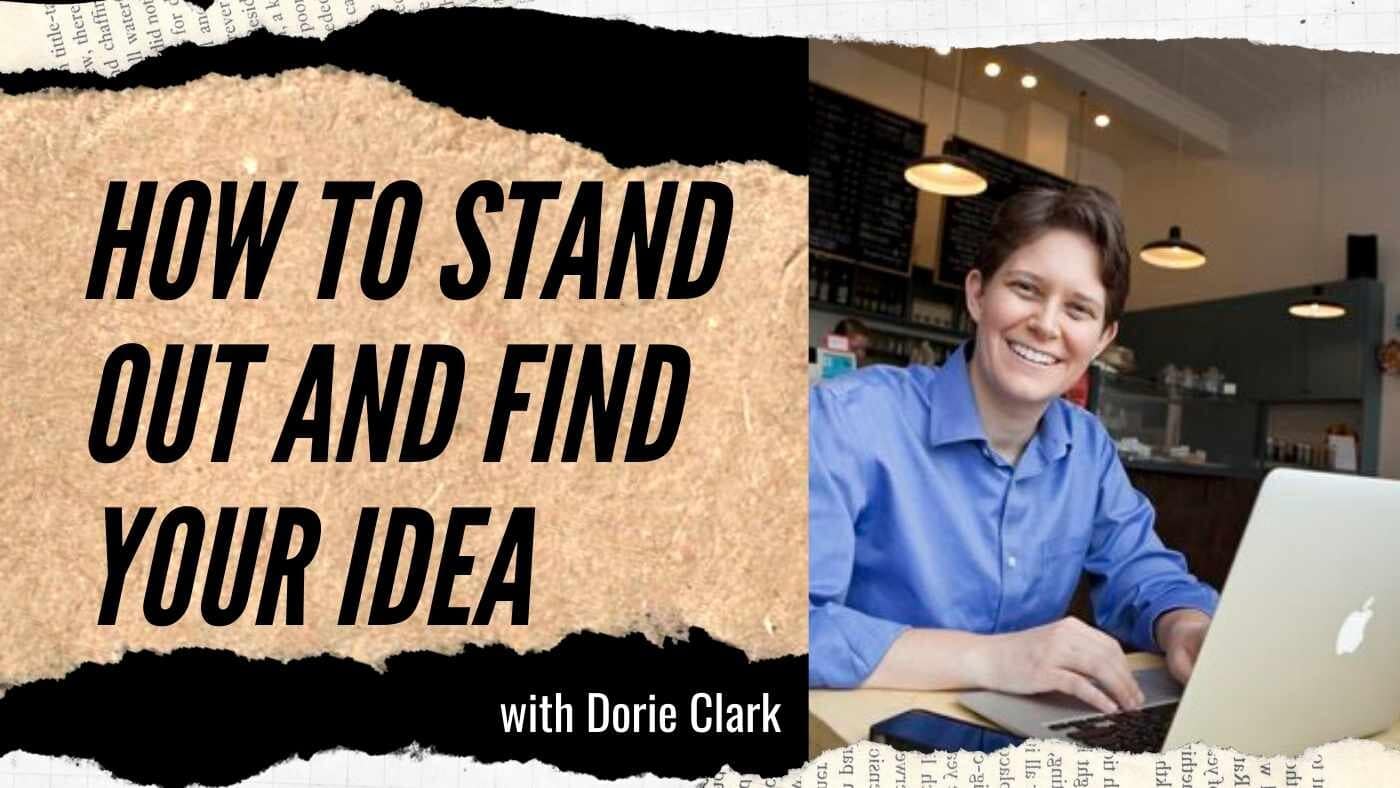
Our Guest Today: Dorie Clark
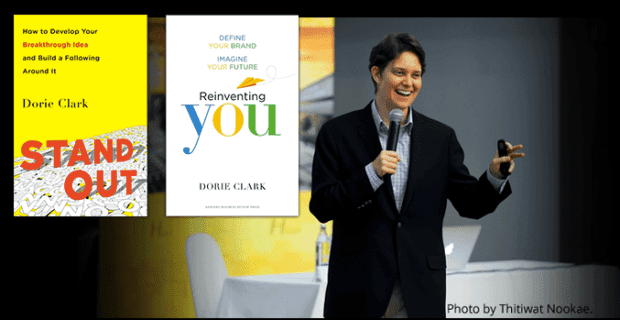
In the past year or so, I find myself increasingly attached to audiobooks. One of the books not only spoke to me emotionally but also offered tactics I am able to apply daily, especially during the creation of the feisworld podcast. Dorie Clark is the author of this book, one of my new favorites, called Stand Out. There’s a very important and useful idea not found in her book that you will hear in this podcast conversation.
Many people jumping into the entrepreneurial world have something different about them. Many people in Silicon Valley (investors, technologists, customers) have a mental image of what a successful startup entrepreneur looks like (i.e. Mark Zuckerberg). If you don’t look like that, they may pass you over because you don’t fit what they are looking for. Rather than sticking on that point, Dorie explains that if you continue to work hard and push through that early stage, to the point where customers, and later the press have noticed the results you created, you will find that you do stand out. People will have an easier time remembering your face, your name and your company because you don’t look like everyone else.
Unlike seeking advice from the world’s top 1% who has established a system that worked for them, 10, 20, or even 30 years ago, Dorie painted a path that’s recent and relevant to people like us who want to stand out, build a personal brand and a legacy that matters in today’s crowded marketplace filled with with influencers, products and information.
How can you get started? Dorie made it easy by offering you this Free Stand Out Self Assessment to do exactly that.
To understand how Dorie got to where she is today, we discussed the turning-point question. In other words, I want to know about the event or person Dorie experienced that doubled or tripled her speed to success. Find out what a bike sale on Craigslist has to do with this [35:00].
Luck can be essential in many situations, but luck alone isn’t enough. When the right opportunity presents itself, are you ready? If not, Dorie’s message via this podcast and tactics offered in her book will help you get ready because she believes that “Fortune favors the prepared mind.” – Louis Pasteur
To learn more about Dorie, please visit her blog https://dorieclark.com, and follow her on Twitter and Facebook.
Show Notes (Times Are Approximate)
- 5:15 Who’s Dorie Clark, in her own words?
- 14:45 How did you seek out an opportunity and realize a framework that’s proven to work?
- 18:45 What is your advice for women?
- 26:45 What are some of the common misconceptions and fears for people working full time but who want to “stand out”?
- 34:15 What do the first 60 minutes of your day look like?
- 36:15 When you mentioned in your book Stand Out:”You need time to reflect upon what you learned” – is this something you do on a regular basis?
- 38:45 What are some of the counterintuitive learnings and experiences you recall? Furthermore, what was the person/event that springboard her on the path of success?
- 44:45 When you think of someone who leads a meaningful and fulfilling life, who comes to mind and why?
- 52:45 What is your take on podcasting? What sort of meaning does it add to your life?
Notable Quotes From Dorie
15:15 A lot of people think that if you’re going to have some sort of big idea, it has to be like a lightning strike.
16:45 If you pick a really broad category… why should someone talk to you? But if you pick something narrow, all of a sudden you have a much better chance.
21:45 In the early stages, yes, being different will make it harder to advance, because there’s a pattern recognition problem.
22:45 However, if you are able to break through and get beyond that, then you are going to be disproportionately memorable BECAUSE you stand out.
28:15 You need to start iterating so that by the time you’re actually ready to make your move, you feel pretty confident that you have a good idea, that you have a little traction, that you know where it’s going.
42:45 I was definitely prepared for luck – I had a lot of pitches ready, posts ready (by the time the opportunity presented itself).
53:15 A million people seeing you for two minutes is not gonna do you a lot of good. But if you have a thousand people listening to you for 30 minutes or an hour, they are the ones who are going to buy the book.
People/Media/Businesses
- 5:15 Reinventing You – book by Dorie Clark
- 5:15 Stand Out – book by Dorie Clark
- 8:00 Claudia and James Altucher
- 8:30 Stand Out Networking – publication by Dorie Clark
- 18:30 Dereck Coburn – networking group called Cadre, and book “Networking is Not Working”
- 21:00 Rachel Maddow
- 23:00 Marissa Mayer
- 24:30 Michelle Phan
- 28:30 Patricia Fripp
- 39:30 The Huffington Post
- 40:30 The Harvard Business Review
- 43:30 Free workbook – Stand Out Workbook on dorieclark.com
- 45:30 Alison Bechdel
- 46:30 Fun Home – graphic novel by Bechdel turned into a Tony award-winning musical
- 49:00 Chris Edwards – author of memoir “Balls – It Takes Some to Get Some”
- 45:30 Jordan Harbinger – the Art of Charm podcast
- 47:00 Transparent – TV show. Faith Soloway and Jill Soloway.
- 50:30 MOOCs – Massive Online Open Courses
To see videos from Dorie, click here and watch them on her website.
Special thanks to Stephnie Shapiro for introducing Dorie Clark to me. Stephnie has appeared on an earlier episode of the Feisworld Podcast remains to be one of the most popular episodes of all time. I highly recommend you check it out.
Transcript
Part 1
Transcript
Fei Wu: The way that I got my book deal, if you trace it back, it's because I sold my bike on Craigslist. When is it a good idea to quit your job? Like pretty much never. Why would I consciously make the choice to cut off the steady stream of income and then go into total uncertainty? If you frame it like that, you're probably never gonna do it because it sounds horrible. If you are different in some way, you know, if you're a woman or if you're Asian, or if you're a big butch lesbian or whatever, in the early stages, yes, it will make it. To advance because they talk about this a lot in Silicon Valley, that there's a, you know, a pattern recognition problem. However, if you are able and willing to persevere beyond that and you actually do manage to break in and get known, then you are going to be disproportionately visible and disproportionately memorable, because in fact, you stand. Hello, my little munchkins. This is Fei Wu, and I am the host and creator of my podcast called Phase World. Welcome to another episode of my podcast, and today you will meet Dory Clark. How did I discover her? You might ask. So basically in the past year or so, I find myself increasingly attached through audiobook because I take public transportation, basically. It's called the MBTA in Boston a lot. It's sometimes very oftentimes very crowded, very loud and challenged to be holding a book and one of my new year resolution. Uh, which has been sort of the goal every year is to read more. And one of the books that I discovered recently, not only spoke to me emotionally, but really offered tactics I'm able to apply daily, especially during the preparation and the making of Face World Podcast. Dory is the author of the book. One of my new favorites is called Standout. There's a very important and useful idea not found in her book that you will hear on this podcast. Unlike seeking advice from the world's top 1% of the people who have established a system that really worked well for them 10, 20, or even 30 years ago, the landscape has really changed a lot. So instead, Dory painted a path that's so recent and relevant to people like you and me who want to stand. Build a personal brand and a legacy that matters in today's crowded marketplace filled with numerous influencers, products, information. So you might ask, how can you even get started? Well, Dori made this very easy by offering you a free standout self-assessment guide to do exactly that, and that is available for you to download on dory clark.com. D o r i. C L A r k.com. One more thing before you jump right into the podcast. I wanna personally thank you all my listeners for supporting me in the past eight months. Uh, the first release of my podcast was on October 29th, I believe, 2014. I have always enjoyed seeing your comments on my blog on Facebook, but please just take a few seconds to a minute to consider a review on iTunes. It will really help recognize my podcast and make it more searchable for other listeners and future. I have also signed up for a Google Voice number. 8 0 3 5 9 7 24 18 for you to leave a message. This way, I will be able to share your feedback directly live on my podcast on future shows. Whether to review your name or not is completely up to you. Just let me know. Without further ado, please welcome my very special guest today, Dory Clark. Some may have already heard of you from me and, um, you know, discovered your presence on the internet. Um, but do you mind kind of just at a high level introducing yourself so they know who I'm speaking with?
Dorie Clark: Sure, sure. Absolutely. So, yeah, I'm, uh, I'm Dory Clark and, uh, I'm the author of two books, reinventing. Now out in Chinese and, uh, and stand out . And, uh, I, uh, basically what I do is, uh, with my consulting work and my speaking work, I help, uh, high level individuals and corporations learn how to, uh, how to be thought leaders and how to get their ideas out there and be recogniz. For, uh, for their true talents. And so I, uh, give a lot of talks. I teach business school for the Fuqua School of Business at Duke, and, uh, I. Yeah, that, that's, yeah, I spend a lot of, a lot of my time on the road, but, but those are the highlights. Awesome. How much
Fei Wu: of your time is spent on the road? I, I'm very intrigued finding out, cuz I know kind of Steven Shapiro's number I was wondering how much time do you have to spend away from home?
Dorie Clark: Yeah, I mean it. It's a little hard to measure because it goes in waves. I was almost continually on the road. There was probably about a week that I was not on the road, uh, for the past two months with my book tour. Uh, so it was very intense. This summer, I'm not traveling at all. I, I've tried to bundle it so that I am not, I'm literally just not leaving my apartment in New York for two months. Uh, but then it starts up again and. In late August, I'm, uh, you know, so I'm gone for about two and a half consecutive weeks and it's great stuff, but it, but it is really busy. I'm going from New York to Brazil, Brazil to Dallas, Dallas to, uh, Puerto Rico, Puerto Rico, back to Dallas, and then back to New York from there. And those are all business talks that I'm giving. Uh, then I'm, uh, I'm gone for a little, I'm, I'm back in New York for a little while. Then I'm down teaching at Duke. Uh, then I have some more engagements in Dallas. You know, so, so it kind of goes like that. Oh,
Fei Wu: wow. That's, that's a very busy life. Um, to some degree, maybe some of the engagements are not as predictable. Maybe is, you know, how, I don't know how much, how early or how much in advance do you, can you plan out sort of your life, your career, or sort of
Dorie Clark: business trips in general? Well, For some speaking engagements. I mean, they actually book them relatively far in advance. I actually have dates on my calendar, uh, literally through spring of 2017. Wow. Um, so certain things are anchors now that I've agreed to do, but, uh, but you know, other, other ones, uh, do come up relatively suddenly. I would say that most of the things that I do don't get planned sooner. Um, so they, they get planned with a minimum of about two months notice. Mm-hmm. . Uh, so I do have some time for, uh, for planning purposes, but, uh, but things can definitely spring up and, and change your schedule. Nice.
Fei Wu: I would love to, um, welcome you to speak at maybe several engagements in Boston as well as, you know, um, our mutual friends, cloudy and James Cher were in Boston just a couple of weeks ago speaking at. the company I work for, Arnold Worldwide. And prior to that, uh, they had another session at our New York City office as well. So, um, to your point, you know, one of the things they requested is also kind of plan ahead of time, like one to two months ahead. So. Very cool. So since we start talking about your books already, and I am, I am a big. And I downloaded the audio book, um, version of standout, which is your latest one. And I just found out that there is a standout, uh, networking book as well that just came out. That's,
Dorie Clark: yeah. Yeah. I did a, uh, an ebook, um, because my, my theory. Was that people who read, uh, mystery novels or romance novels, they, they just sort of like, keep going. They love it. You know, the authors come out with material really frequently. And so the minute you finish one romance, you read the next Romance. And I thought, well, geez, why can't it be like that for business books, ? And so I had this idea that people might discover my work, uh, and like standout and then say, well, what's next? And so, uh, about six weeks after Standout was released, I, uh, I came out with a short ebook just to. You know, keep giving the people what they want. And so it's, uh, it's about 60 pages, you know, not too long, but it's just kind of a nice, a nice little jolt. And it is, um, a, uh, a book, uh, sort of adapting and bringing together my best writing about, uh, about networking.
Fei Wu: Hmm, I, I remember James and Claudia kind of poking into that area of saying that you ran these huge networking events in New York City and you are extremely successful at it. Speaking of, you know, building a tribe, it seems like to you, it comes naturally. Or has it, do you feel like you've always been this way, like since you were a kid? Cause this is kind of how I see you, I hear you talk on multiple podcasts. I see the way you write, you seem to be very extroverted. Um, but have you always been this way? Did you see it coming?
Dorie Clark: Oh, well, you know, I mean, I, I think that the. The, the crucial thing here is that, and this is a point that I make in standout networking, is that it's really important to know what you like and what you don't and what you're good at and what you're not. And so something that actually was a really big deal for me, a really big moment, uh, actually was last summer and I was speaking at a conference in New York. I got invited because I was a speaker. They had sort of a speaker's reception the night before and I thought, oh, I should go, you know, it's probably good, good networking, right? I'll meet some people and it, but it was gonna be in this bar. And I got to the bar and it was so loud and I didn't know anyone. And I literally just kind of had to do the pathetic thing where you go up to people like, hi, I'm Dory, can I talk to you ? And you know, it, it felt horrible and I did it, you know, I made myself do it. I made myself talk to a few people and I'm like, okay. Okay. , but then, you know, I just, I just hit, I was hit with this wave and I thought, you know what? You don't have to do this. You can leave. Mm-hmm. . And I thought, oh my God, that's amazing. And, and I just walked out and I felt so free. And I said, you know what, I'm actually never gonna do that again, , because I don't like stuff like that. I don't like things where it's loud and noisy. It's really stressful for me as an introvert. And so I decided that the, the way that I was gonna do it, , and I think this is, this is the piece that, that sometimes people don't get or, or what holds 'em back, is that it's like they think a networking event is this like, you know, God-given thing that it's like, oh, this is a networking event and then I have to go to it. And it's like, no, actually you can make your own and you don't have to be some special person to create your own thing. Anyone can create their own thing and you make it exactly how you like it and. And then other people hopefully will enjoy it too. But at a minimum, you've created something you like. And so what do I like? I like things that are quiet and I like dinner parties and I like, I like things where people get to know each other. And so that's the environment that I try to create. And so just seizing control in that way. Setting the guest list, inviting the people that I wanna invite, and then tr trying to create an environment that's nice for me and then hopefully in the process is nice for other people. That's something that I think is, is really great and, uh, and that's what I've been doing, you know, by, by organizing, uh, dinner gatherings and small parties. I'm having a party, uh, tonight, actually shortly after this. Um, and that's, A mu This is, this is a new thing for me. This is a musician themed party. Wow. And I, I don't even necessarily know all that many musicians, but I know enough. And the reason that I'm doing this is that I have two friends and I wanted them to meet, and one of them is a jazz composer and a big band leader. And the other one I discovered. Uh, I met him through business stuff cuz he's a business author, but he's also a Grammy award-winning jazz producer. Wow. And I thought, well, geez, these people should meet, you know, like maybe they can work together or something. And I thought, all right, what's the way that I can help them meet? Oh, well, why don't I just throw a party and I'll make sure they both come. So then I decided that I would make a party for all the musicians I knew. And so then I had some of them invite their friends, and then I invited the people that I knew. So I've got, I don't know, somewhere between 12 and 14 people coming, uh, over this evening. And it's just a musician party. And, uh, and possibly a random person from Australia that's in town that I also invited. And, uh, you know, we're just, we're just gonna rock it. But that's the kind of thing that I like because I set the boundaries and I controlled it. So this is
Fei Wu: so fascinating. And, um, I thought of, uh, the woman you mentioned, musicians. I realized I interviewed a, a couple of musicians. Oh no, actually three,
Dorie Clark: uh, professors. So you could have a musician party right there. Yeah. Musician podcast.
Fei Wu: You know, I'm really intrigued by why people are interested in, uh, standout. And I'm sure it's the same effect for, um, the standout for networking is a lot of people struggle to find their niche really. Like, what, what am I really good at? And what if I just have a vague idea? How do I go about sort of starting out and then standing out? So, One of your methodologies, I read through Amazon reviews, I heard you speaking to the podcast, is actually find a niche and then kind of expand out from there. Right. Um, so do you mind speaking to that a little bit in terms of like, how did you seek out an opportunity and in this case really is a framework that's proven to work and I feel like you have a lot of guts because stand. You know, which part of the bookshelf does a sit and it's because there's so many people attempting to write sort of the self-promotion, personal branding books, there's so many out there, and yet yours is very popular. How did you do that?
Dorie Clark: Yeah, thank you. So, uh, so when I'll, I'll take the niche part first, I guess. Um, I, I think that one of the myths that I wanted to combat in writing stand out was that I think. A lot of people think that if you are going to have, you know, some big idea, some breakthrough idea, that it has to be like a lightning strike, that it's just this thing that comes to you, you know, the muse is whisper in your ear and uh, and all of a sudden it's like, oh, that's the thing that I'm gonna pursue. And really what I came to learn is that, I mean, sure sometimes that happens, but the vast majority of time people are. Knowing what they wanna do from the beginning and then executing on that. They actually only figure out what their idea is and what they wanna do by just starting and just iterating, and that is how they find it, because otherwise, It can be very hard to even see. It can be very hard to, to know what to do unless you are in the trenches observing and then seeing for yourself what the shortcomings are with the present methodology and figuring out, oh, if we do it like this, maybe, maybe that could be, uh, a step forward. So with a niche strategy, basically what I did in standout, I interviewed about 50 top experts in a variety of different fields, and I tried essentially to reverse engineer the process by which they became well known and look for commonalities, look for what the patterns are. And so not everybody pursued a niche strategy. This is not something that everybody has to do, but it is one of the tools in the arsenal and it's a fairly effective one. And that is that if you, uh, pick something. Relatively small, relatively. It's, it's just, it makes sense, right? It's a lot easier to excel there. Mm-hmm. , because if you pick a really broad category, oh, I'm gonna be the expert in sports. Well, geez, okay. You know, every, you know, there's, there's so much competition. Why should somebody talk to, to you and not espn? Um, there's just way too much there. But if you pick something narrow, if you say, you know what? I'm gonna be the expert in women's field hockey. Okay, all of a sudden you have a lot better chance because ESPN is not talking about women's field hockey all the time. And if you are, if you're speaking about it, if you're blogging about it every day, Before long, you are gonna have more content about there than anyone and people are are gonna start coming to you. And the secret is once you take that, that niche recognition, you're able to then strategically parlay it into other areas. Okay. We know Dory. Is knowledgeable about women's field hockey will, what about women's softball? What about, uh, you know, women's, uh, soccer and then, you know, oh, well she's good at women's soccer. Maybe she could be a commentator on men's soccer and before long you are an expert in sports, but it's because you started narrow and then went broad. Mm-hmm. .
Fei Wu: It makes a lot of sense for sure. And it's an area, since I started reading standout, I begin to reevaluate my podcast as well. Now I have released 40 episodes. You know, some of my listeners are saying, ask me questions. Um, and then I, at the same time, I have to be centered instead of taking in feedback, um, sort of from everybody. It's like, what is that I'm trying to achieve? And, and sometimes I feel. It can be challenging, but perhaps I am falling into a niche of, um, you know, career ad advice, unconventional career path. And then also women, you know, as you know, I'm not sure if you know this, but it's hard to find women who wanna speak on podcasts. And I was wondering like, what is, what is your advice for women perhaps in your position or doing what I'm doing? Or just, just in general? What's your
Dorie Clark: take on. Well, so I have, I have two thoughts off the top of my head. Um, one of them, it's interesting, I have, um, there's a guy that I know named, uh, Derek Coburn, who runs a networking group in Washington called Cadre. Um, he also wrote a networking book called Networking is Not Working. I love him. Yeah, it's a good, good title and it's a good book. And, uh, one is one that I actually cite in standout Networking. And he told me that, that one of the problems that he actually. Um, in, in terms of his own personal experience booking speakers, um, he said that, you know, for a long time, his group, um, you know, really had by, you know, by a huge, uh, margin, you know, many, many men and very few female speakers, and he was having a lot of trouble he said. because the problem that he ran into, uh, because his audience was a mixed audience, you know, it's a networking group for both men and women. Uh, he said that he kept having trouble, uh, because a lot of the, the women speakers out there, um, certainly not all of them, but many of them actually just focused their message on women specifically. And, uh, you know, they're, oh, they talk about women's networking or about women's leadership or things like that. And so it wasn't appropriate for a mixed gender audience like his. And so I think that's an interesting point that, um, you know, I think it's, it's certainly good and appropriate to, uh, you know, for women to be, you know, talking about women's issues, supporting women. I speak to women's groups all the time. Mm-hmm. , but I also think that in, in terms of, uh, the work that we do, we don't wanna necessarily niche ourselves out that making sure that, that in. Communications and branding that it's clear that our messages are fit for, uh, for all kinds of audiences is really an important thing. Um, so that's one thought. Um, another thought that I have about, uh, differentiating yourself as a woman is something that when I was writing my first book, reinventing You, uh, came to me and. I think is, is to me a comforting thought, which is that, um, I was writing a section of that book and talking about, uh, Rachel Maddow, the, uh, the MSNBC host and, you know, Rachel Maddow now is, uh, is very well known. She's, you know, been on MSNBC for a number of years. She's had a primetime slot. Uh, very popular. But you know, she, when she first was tapped, she was really unlikely. She was really unlikely. She, uh, you know, she's this big lesbian and, you know, not, not even just a big lesbian like Ellen is. You know, she's a, she's a lesbian. This is a really butch lesbian, and this is not what people are used to on television and. It was kind of a bold move for MSNBC to do this. But the interesting part, and I think the, the lesson for all of us is that if you are different in some way, you know, if you're a woman or if you're Asian, or if you're a big butch lesbian or whatever, you. In the early stages, yes, it will make it harder to advance because they talk about this a lot in Silicon Valley, that there's a, you know, a pattern recognition problem that, you know, when people think, oh, who's gonna be a successful entrepreneur? Well, let's look at the people who are already successful entrepreneurs. Oh, they're all people who are 20, you know, 22 year old college dropouts who look like Mark Zuckerberg. Great. I'll fund one just like that, . And so you, you get people who are talented, but who get excluded because it's like, You don't, sorry, you don't look like Mark Zuckerberg, so you're probably not gonna be like Mark Zuckerberg. Um, so that's the challenge in the early days. However, if you are able and willing to persevere beyond that and you actually do manage to break in and get known, then you are going to be disproportionately visible and disproportionately memorable because in fact, you stand. If you were doing a lineup of people, uh, in, in Silicon Valley, and you know, you were, you were just talking to a regular person and you said, all right, well we're gonna, we're gonna line up these people and here's the, the CEOs of box and Dropbox and Airbnb, and here we go. And then there's the CEO of Yahoo. You. Who, who can you name? Who can you identify? Well, I'm willing to bet that a really large margin of people will be like, oh, that's Marissa Mayer. And, you know, because she, you know, she's a th whatever, 38 year old blonde woman mm-hmm. . And she really looks different and is far more memorable than these, uh, than these other folks, you know, who are, are doing perfectly good jobs. But, uh, but they're all white dudes. Mm-hmm. so, I, I think that, um, that's something that's comforting that if, if you can, if you can get beyond that threshold at a certain point, there's a tipping point and I think that your difference actually becomes your advantage.
Fei Wu: I, I think that's, that point is so fascinating because I personally struggle with the fact that, wait a minute, even though I came to this country when I was still a teenager, but I'm, I'm an Asian woman. English is not my first language. I mean, I don't, you know, I don't really drink, I don't party like everybody else was. In terms of networks, I start questioning a lot of these things before I became a podcaster. And if you look around, there are very few women who, um, rela compared to men. Um, relatively small group of women who are podcasters. And if you look at, and then within that niche, women. Podcasters who were Asian, an even smaller amount. Yeah. You know, I was really in, I was kind of intimidated where every single face I, I looked at, or Caucasian male. And all of a sudden, uh, you know, one of my guests reminded me is like, wait a minute. Maybe you could use that to your advantage. Like, As you know, in New York and Boston, there were a lot of, uh, women, I mean Asian, uh, American female entrepreneurs. Um, coming out, you know, Michelle fan is only one of many and now after she came out and everybody is, it's kind of laser focused on, you know, there are a lot of Asian men and women who are extremely, uh, successful and to a certain degree I sort don't get where they come from, whether they were born and raised here, and especially those who are, um, you know, kind of born and raised. In China as well. There's one gentleman, uh, I believes also from Beijing, and he published the book and he was on everybody's podcast. I think it's, um, I think dealing with rejections, that's not really the title of the book, but talking about rejections and all that's really fascinating. Um, But I was, you know, this morning as I was preparing for the podcast, I was gonna tell you how I stood out in, in Beijing in a way that, um, you know, I'm in my early thirties and for my generation, even some of these much younger generations, every kid in China learn how to play the piano. I mean, Oh my goodness. I remember, you know, just in an apartment building, every single child from the age of three and by the time they're 10 or 11, they're into like level six, seven, a master, you know, mastery levels. And I decided, I told my parents, I'm like, that's not exactly what I was gonna do. And they were cool with it, so, wow. Exactly, so like, lucky me, I ended up then, um, you know, I was really into skateboarding. I wanna play ice hockey. I, you know, I,
Dorie Clark: you're like a little badass.
Fei Wu: Exactly like martial arts. And, um, so I. To, it's so interesting because I did something different. I stood out out of a, out of the crowd and sort of an out social outcast for a little while, but then whenever in a two, 3000, um, student school, the teacher have all these different opportunities and sometimes my name actually surfaced to the top because I did diff something different than everybody else did. Yeah, yeah, yeah. I. So, um, I wanna, because a lot of people listening to my podcast are still working full time and I love the fact. You know, there are many people aspire to be, uh, who you are, what you do leading a lifestyle like yours. But let's just say for people who still working full-time and advertising or maybe finance or a law, what are some of, I know you consult for some of them. What are some of the common. Misconceptions and sort of a misplaced fears for people working full time and, and how to, you know, but who wanna be entrepreneur, who wanna stand out? I hear that all the time. I don't know what to answer. to
Dorie Clark: those. Yeah, yeah, absolutely. So, you know, I, I think that, um, You know, one thing, um, I actually talk about this a lot in my, in my first book, reinventing You. I, I think that sometimes people think that it's this all or nothing thing, that it's like, oh, well, someday I'm gonna quit my job and then be an entrepreneur. And, you know, like, when is it a good idea to quit your job? Like, pretty much never. Is it a good idea to quit your job? I mean, if you're, if you're thinking. Um, cuz it, it always sounds so horrible and so dire, like, oh geez, well why would I consciously make the choice to cut off the steady stream of income and then go into total uncertainty? If you frame it like that, you're probably never gonna do it because it sounds horrible. Um, so instead the, you know, the only way that you can actually make it be. A smart decision that you feel good about is if you are simultaneously building up your entrepreneurial venture on the side so that when you make the leap, it's not so dire. It's not so black and white. Um, because. You need to, you need to start testing it. You need to, because you know what? Your first idea might not be a good one. You need to, you know, start iterating so that by the time you're actually ready to make your move, you feel pretty confident that you have a good idea, you have a little traction, you know where it's going. And so one example from reinventing You that I really like is of this woman named Patricia Fripp. And Patricia is a, uh, for many years she's been a well known professional speaker, and I was fascinated. I didn't really know what. Background was. And when I learned about it, I thought, oh my God, I have to include this in the book. Her background was that she was a hairdresser. Wow. And I thought, how, how do you go from being a hairdresser to being a professional speaker? But what, what she started with was she, you know, she was a very sort of friendly, gregarious, uh, hairdresser. And so she started to get, By hair products companies to start doing demonstrations in public speaking about that. So it's like, oh, okay, well I can, I can see that. Right. But that's, that's a really long way still between that and giving leadership talks to. Fortune 500 corporations. And so basically what happened was she, you know, she started doing these talks, these demos, and she was a very different kind of hairdresser. She, uh, she worked in downtown San Francisco where a lot of her clients were executives from the big companies in San Fran, like Wells Fargo and the Gap and, and things like, Hm. And so she said, uh, that, you know, she'd listened to her fellow hairdressers and they'd have these stupid conversations with her clients about, you know, the weather and that kind of stuff. And what she would do is that when she had an executive, she would pepper them for business advice. Mm-hmm. . And, you know, she'd be cutting their hair and, and she's like, you know, I get to, I get to work with the most interesting people in the world. Why would I not take advantage of it? And so she'd ask 'em questions like, so you're a marketing executive. If you were a hairdresser, what would you do to grow your business? So smart and yeah, she was brilliant. And so she grew her business a lot and after a while they're like, oh my God, this woman's really savvy. Mm-hmm. . And, um, and so she had told them that she, you know, did these, these speeches, these hair products, demonstrations. So after a while they started saying, Hey, you know what? Why don't you come in and give a talk? To my company because we could use a little bit of your energy. And so she did, and she started doing just these small talks. You know, it just began pretty, pretty small, but she really liked it and so she began investing more and more in it. She would use the profits from her salon to do all the stuff you need to do to successfully. Lay the groundwork for becoming a professional speaker. So she had a really nice video made of herself. She would get really nice speaker kits. She got extra training so that she was, you know, coaching so that she was really good on stage. And she said that. . She had a 10 year lease on her salon. And the way she described it to me is she said, you know what it's like when you get divorced, you don't just get angry and say, I'm divorcing you, and like, walk out of the house. Right? Like, that would be a bad move. You have to plan for your divorce. You have to plan like, where am I gonna live? How am I gonna support myself? What are we gonna do? And so similarly she said, She took this idea of, okay, I have a 10 year lease, and she took that time to build up and invest in her speaking business so that by the time the lease was up, she had more than replaced her income as a, as a hairstylist with her income as a professional speaker, and she was able to close it down and walk out the door. Mm-hmm. and have a very successful career doing this new thing that she liked.
Fei Wu: Mm. So funny that James Altucher said that the only time he felt suicidal in his life was when literally he quit. Everything just became a hundred percent entrepreneur and it's insane amount of stress, uh, as I've come across in my life as well. Some of my, many of my friends chose to be entrepreneurs, and I'm so the only person who's sort of, uh, working full time. And it's interesting that you mentioned that because at a, at a place, you know, like a hair salon that you really have to. Those opportunities for yourself. I think that's sort of the perfect example for the saying that the best way to predict your future is to invent it. I think. Yeah, in this case, she invented her future at a place where I work. Arnold, believe it or not, it's very popular that we get so many outside consultants come in on a regular basis. I mean, literally sometimes it's every week, sometimes every other week. The CMOs, the CEOs, . More recently, I was able to learn how to present, uh, more effectively on, exclusively on presentation. So, but what I, what I think it's a really interesting observation is when a company creates such an. Environment in a way that there's no way for these individual, like 20 year olds to be able to force someone at that caliber and they create the opportunity to let you know ahead of time. But when I showed up a lot of these, um, events, I realized that there are many seats that are missing because they're on client calls because they're engaged in some other activities. And I now, I feel obligated to tell, especially people who are young or older to say, you absolutely have to optimize on these opportunities. , you know, and, um, so I, I absolutely echo what you're, what you're saying here and then sometimes you have to see that for yourself, um, as well. Yeah. So, Um, I am, I'm still, I gotta say I'm very jealous of your , very jealous of your lifestyle. And I , uh, it's, I wonder for, for me personally, for the past 10 years, uh, as a result of working fulltime, my morning has remained the same. And there's so many things. There's so many things I won't work on. I won't bore you with, cuz it's really very routinely what is the first 60 minute of your day looks like?
Dorie Clark: Well, for me it pretty much always looks the same. I mean, unless I'm traveling and having to catch a plane or something. Um, and for, for a lot of people, I guess it would probably be Hedonistic. Uh, but I like to roll into my mornings. I get super sad. If I have to start work right after waking up, I just feel like, oh God, what's my life? Come to . Um, so, uh, what I, what I like to do actually is I will, uh, make cha in the morning, I'll hand make Indian cha with, you know, real ginger and, and whatever. So it's very delicious and refreshing. And I'll read the paper, I'll read the New York Times. I, I'm very obsessive. I read it every morning for 60 to 90 minutes. Wow. Because I love the news. I mean, I used to be a reporter, so I'm very into it. And uh, I know James and Claudia are like anti news newspaper reading, but I am very pro newspaper reading. Uh, and I find it fascinating and uh, you know, I'll just have a blast like learning about different. Different things, uh, that are going on in the world. You know, I'll inevitably find, um, articles that I think will be interesting to friends. So I'll send them along. Uh, just this morning, uh, there was a study written about in the Times that actually a friend of mine, uh, who's a professor at, at Berkeley conducted and I was like, oh my God, that's a great. Study. So I just, you know, I sent him a note about that. Wow. So, uh, so, you know, it's kind of, it can be like a networking thing too, but mostly I just like a slow start to my morning, uh, by reading and getting well informed. Mm.
Fei Wu: Nice. Do you, you know, oh, one of the things I love about your book, and I wonder if this maybe. Is something that you practice daily, whether it's like meditation or something. One of the ideas that you brought up in your book, which I haven't heard too many other readers reflect upon, is actually the term like reflection. Um, you mention as I was gonna sleep, I was listening to the audio book, I think chapter seven or eight, you start talking about that you should carve out some free time in your. Set of just constantly moving on to the next thing. The next thing. I am terrible at it. I'm always by the next thing. I'm, I'm, you know, midnight comes, I plug into podcasts. Listening to your book, it's like I gotta absorb more information. And I love what you said, um, in that chapter that you need time. To reflect upon what you learned and be grateful and, and to, you know, to take the time. So is this something that you do on a regular basis, perhaps daily as well? How do you go about in a very busy and chaotic life? All of us live in . Yeah.
Dorie Clark: So there's, there's certain things that I've done that, um, that are ways that I like to. Calm things down and compartmentalize them. So, I mean, one thing that I've done, which um, it might sound a little ridiculous, but it's, uh, it's been helpful is, uh, so I have this virtual assistant. and I used to be checking Twitter all the time. I mean, that's, that's something that like, really can be addictive because it's like, oh, there's always more, you know, click, click, click what's going on, . And uh, and then you feel like you need to respond to the tweets immediately. And you know, that's kinda the premise of Twitter, right? It's like, oh, real time interaction. And it's like, oh my God, that's like the worst thing possible for. You know, for productivity mm-hmm. . And so actually what I do, I mean, I'm probably less good of a user now on Twitter. Um, but what I do is, uh, I don't, I actually don't check it anymore on my phone, uh, which used to take a lot of time and energy. And instead, uh, I have my assistant read my feed for me. Nice. And any message that requires a response, like if somebody has said something, you know, like a compliment or if they've asked a question or whatever, he puts it into a spreadsheet for me. And so every morning I read the spreadsheet, I type in my responses on the spreadsheet, and then I have him tweet it back. So, I mean, I'm doing my social media, that's responses from me, but I'm. You know, being hit every two seconds with a message. I do it once a day. I love
Fei Wu: it because I also recently hired an editor and he's this young kid and really talented. I think I'm gonna cream my own Twitter spreadsheet so he can, nice. Yeah, yeah, yeah. I don't have that many pings just yet, but that is brilliant. That is really smart. Um, thank you. Yeah, so I, I think I'm diving into some of the general questions, but I think they're, they're very important. Um, one of which is sort of the counterintuitive. Uh, feedback or experiences that kinda led you to the success that you have today? You know, we all know we gotta work hard and work smart, all of that. What are sort of, you speak to your tipping point and some of that doesn't feel like very conventional. So could you speak to that a little bit perhaps?
Dorie Clark: So like, what, what got me on my path today? That is, A little unusual.
Fei Wu: Yeah, unusual or something you didn't quite, you couldn't quite see coming. Like, we plan out so much, but yeah. Maybe it's a different opportunity and experiences interjected the path you were on that actually led you to the, the success.
Dorie Clark: Right. Well, so one funny one is that the way that I got my book deal, if you trace it back, it's because I sold my bike on Craigslist. What? Um, so, uh, yeah, so I really wanted a book deal and I just wasn't getting one, couldn't get one at all. I got turned down everywhere because I wasn't famous enough and, So anyway, I realized like, oh geez, okay, I've gotta, I've gotta start, you know, from the beginning, I've gotta start blogging. That's the way that I can build up the platform to be able to get a book deal. And so I kept trying to find places to blog for, and eventually I managed to get in at the Huffington Post. But I was trying to get in at these different business magazines, and nobody wanted me. I mean, it was. Offensive, frankly. I mean, I used to be like a legitimate journalist. I was, you know, a paid full-time journalist and I was like waving my hands being like, Hey, can I write for you for free? And they're all just like, no , no. And, uh, anyway, I still remember who those people are and someday I'll crush them . But, uh, but anyway, I was just getting nothing. And so anyway, it's summer of 2010, I think. Yes. Basically, so I was living in Boston and I wanted to buy a new bike, and I thought, all right, I've gotta be responsible. If I'm gonna buy a new bike, what I really should do is sell my old bike first. That's, you know, that is the responsible thing to do. So I put up an ad on Craigslist and I, uh, Selling my bike to a copy editor at the Harvard Business Review. And she mentioned that that was where she worked. And I was like, oh, how do you start blogging for you ? And she offered to introduce me to an editor. And eventually, after some persistence that transpired and I started blogging for them, and my second blog post I ever wrote for them actually turned into an article in hbr. And then that turned into my first book, reinvent.
Fei Wu: Wow. I love that story. And yeah, thanks. You know, and, and I think there's a theme that the, the moment, um, the moment I start talking to you, I realize, wow, I mean, just reading your blog, you just seem, you seem, you seem so kind, so authentic. I mean, you, because of that feeling that I got from your writing, and that's why I was so, oh. You know, so engaged. And then I just feel like, wow, you know, there, there's so much noise in the industry these days. And to put an authentic face and voice next to, uh, you know, the actual content and information is like so, so put my mind at ease. But I also, you know what you said, I have to say it's so true what, you know, I've been working in business consulting and advertising for so long, and along the way you've come across people who are not very nice and you know, there are a lot of really great, talented people, but they're also kind of a small cohort of people who think that, um, based on what they have at the moment, the relationship they could leverage, they could just be nasty people. And to your point, you probably remember the people who could have. No. In a very nice way, but probably didn't. Mm-hmm. . Well, for whatever reason, I completely echo that, is because you really, especially in this particular industry, you don't know where people, who people are, where they come from. In your case, the Craigslist case, I feel like, especially the case, um, you didn't underestimate what the other person could provide and what the relationship could be, um, could mean to you,
Dorie Clark: right? Yeah. Yeah. It was, uh, I mean, I was definitely. Uh, for luck, you know, I mean, I had lots of like pitches ready and posts ready and whatever, but it was just totally luck that I met this woman. It was completely random.
Fei Wu: Mm. But I think it's being who you are. I think that's really important. You know? Um, I think. The energy that you ha uh, you have will actually help you continue to kind of season these, um, opportunities when in cases where other people don't see in first place or don't know how to leverage them. So, um, we have, I have about another 10 minutes of your time. Are there things that you feel like you really wanna talk about but I haven't asked yet?
Dorie Clark: Yeah. Well, one, one thing, Faye, that I'll just mention, uh, to your listeners in case they're interested in this topic of how to develop their own breakthrough idea and build a following around it, is I have a free workbook that I, uh, that I developed. It's a 42 page standout workbook that, uh, that. Literally just walks you step by step through the process of developing and spreading your ideas, and folks can get that for free on my website, dory clark.com, which is D O R I E C L A R k.com.
Fei Wu: Awesome. I have just downloaded that I was thinking to myself, I thought I got my hands on everything you created, but I'm so thrilled, and that particular piece, the workbook is something I think your audience loves because it's very tangible that they could apply. Really exercise that out. I'm so, I'm so excited to do that, like immediately after this. So that's awesome. Thank you for bringing it up. I'll make sure that it's also front and center on the blog I'm going to create for you as well. Cool. Thanks. Yeah, you are very welcome. And I think too, I'm trying to find a question, trying to think of the questions I wanna close on, which is, um, you know, when you think of someone, uh, who leads a meaningful and fulfilling life, Who comes to mind and why?
Dorie Clark: Yeah, that's, that's a, a really good question. And I like, I like the, uh, the framing of it. One thing that I think is, is really hysterical, like, just in terms of like, you know, I don't know if your listeners are like me and listen to lots of podcasts, but one thing that I think is really funny is, uh, you know, just this kind of commentary on our society, but. So Tim Ferris on his podcast, he has a standard question and he always says, well, when you think of successful, who's the first person that comes to mind? And I mean, it's like, it's like this joke because like 95% of the people say Elon Musk . It's like, oh my God. It's just like, is that like the only person in the world doing something interesting? Yeah, so true. But, so I like your question about like, not, not just successful, I guess professionally, but also, I mean, you know, theoretically, I guess you could interpret Tim's question that way, but you know, also, you know, sort of meaningful and uh, and that kind of thing. Like how do you, how do you broaden it out? Mm-hmm. . Um, so yeah, in terms of, in terms of people who are leading a really meaningful, uh, life in, in doing something cool, I, um, you know, somebody who's, who I. Is really impressive to me as of late. Uh, you know, just, she's been in the headlines and so she's, in my mind is, uh, is Allison Bechtel. Um, she is somebody who I've been aware of for, you know, more than 20 years. I mean, this is kind of a, a thing, right? You know, this sort of quote unquote overnight successes. Mm-hmm. . Um, and it's really interesting to see how they emerge. But Allison Becktel, you know, you, you or your listeners may be familiar with her. She, uh, starting in, I. Early nineties maybe, or even late eighties, uh, came to, well, prominence is an exaggeration, but she came to niche prominence in the lesbian community because she had this comic strip, this lesbian comic strip called Dykes to watch out for. And it was just this, you know, kind of funny little comic strip about, you know, lesbian life. I mean, it was like super, uh, you know, re really like underground, uh, stuff that, that most of the world just would not ever have been aware of, but, She ends up writing a graphic novel a few years ago called Fun Home, that is about her own experiences and, uh, you know, her own life and her family and various tribulations. And all of a sudden, you know, that book becomes a musical. The musical goes to Broadway and it wins a fucking Tony . And yes, it's amazing. And, you know, here's this, this woman that, you know, she's not, she's not doing anything different. I mean, , she's been living her truth all along and just doing her thing. Uh, but she is steadily reaching bigger and bigger audiences and, uh, and just, you know, very much continuing to be herself and, uh, and spread her ideas in a, in a very authentic way. And I think that that is really impressive to me. And also a testament just that, you know, it, it does take a long time sometimes for, uh, your efforts to trickle up to. Genuinely known and recognized by everybody in, in the mainstream. But, uh, but it's, it's something that, that absolutely can happen if you continue, uh, pursuing your passions and doing meaningful work.
Fei Wu: Mm. I love that answer. And I, I realize that a lot has happened in the past couple of weeks, you know, uh, yeah. Legalized gay marriage, but to me it's like, why wouldn't be, why would this, this thing take so long? It's like mind boggling. But yeah. You know, I'm so glad it, it finally happened. And do you, do
Dorie Clark: you know my buddy Chris Edwards? No. Chris, uh, used to work at, at Arnold actually. And, uh, and he is, uh, openly transgender and. Has written a book, which, uh, I think, you know, he's in the process of trying to get it published. Uh, it is, uh, it is a memoir, uh, that he's calling balls. And, uh, it has, uh, it has a great subtitle. It says, uh, balls, it takes some to get some . He's very, very funny. Wow. And you know, a really, a really cool guy. He was, I think even the head of creative, maybe at, uh, at Arnold or, or some position that's analogous to that. Um, so he's, he's pretty awesome. And, uh, I just, I was just talking to a fellow podcaster, you may know, uh, Jordan Harbinger from the Art of Charm. Mm-hmm. and I had recommended Chris for that and they apparently just taped an episode. So, uh, so that'll be really fun to listen to. If I could be
Fei Wu: introduced to, to him, that would be, That'd be really interesting. Of course I
Dorie Clark: will, I will make a note to do that. Definitely.
Fei Wu: I, I really love to, and you probably sensed that I was going to, um, I wanted to also introduce my, my friend to the podcast. Um, but at the same time, I, I wanna be, uh, socially aware of the, maybe the pressure, you know, people's comfort level of being on the podcast in general. But I have to say that, Opened my mind. I mean, the, the moment we all received the email and um, I saw men and women kind of walk up to her and giving her the hug because when someone is that close to you, you know, working on the same projects together and actually kind of broke my heart to a certain degree to. To think about, you know, what does she have to go through in high school, in middle school, and just that amount of pressure. Yeah. And I ended up, um, you know, kind of until everything kind of just like quieted down a little bit. Uh, she and I went out to lunch and I have to say that's one of the most meaningful conversations I've ever been in. And, um, how transparent she was, how honest she was, and just simply how. She is and how great she is at what she does. I mean, it just, yeah, I still work with her. She's just unbelievable, unbelievably good at what she
Dorie Clark: does. That's awesome. Speaking, speaking of the word transparent, have you watched the TV show Transparent? I watched
Fei Wu: a couple of episodes. I, I'm not a super TV person, but that's, that's such a solid, uh, a great show. So well
Dorie Clark: produced. Yeah. Really, really well done. And it has, it has a little bit of a Boston connection actually, because one of the writers on the show is, uh, faith. So. Who is the who I think, I don't know if she still is, but she was for a very long time, based in Boston. She's a, uh, folk singer actually in Boston, and her sister Jill is the creator and show runner for Transparent. And so I, I understand that Jill brought her on as a, a writer for the show, but it's, it's really one of the. The best shows that I've seen in recent years. I feel like it's, it's really, uh, emotionally
Fei Wu: nuanced. Mm, I completely agree. I feel like I'm, I have not, I probably watched one episode of death. Uh, What is one of the Real Housewives shows? I'm like, why do these shows even exist on tv? I mean, gives women such a horrendous image and yet everybody is watching it. Um, so, you know, I realize that I promised to close, I have four more minutes and I forgot to ask you that. The impact of podcasting. And that's something every day people say, Fay, this is so meaningful. This is beautiful, but why the heck do you, are you doing this? Like, do you have, do you not have better things to do over the 10, 15 hours on top of your full-time job? But, and then I try to go, I go to your website and I click on podcasts. It's just like scroll, scroll. There's like, you've been on hundreds of podcasts and what, what is sort of your take either I know as a podcaster as well as a. What kind of meaning does it add to your life?
Dorie Clark: Well, I, I think that podcasts, I'll, I'll answer it in two ways. I mean, one is from the perspective of somebody that, you know, has written a book and wants to, you know, get the ideas out there and or sell books, um, it's, it's really valuable because a lot of the other ways that you can, uh, you know, be promoting a book, it's like, all right, well, let's, let's say I was lucky enough to get on the Today Show or something like that. Well, how long are you gonna be on the today? Like two minutes maybe. You know, I mean, that's great, but that's not enough time for, for people to actually get to know you, um, or remember who you are or anything like that. Um, it's a million people seeing you for two minutes is not gonna do a lot of good. But if you have a thousand people listening to you for 30 minutes or an hour and really saying like, oh wow, these are cool ideas. I like what this person is. , they actually are the people who are gonna buy the book because they've been exposed to you, they've been immersed in your world. They're gonna remember your name and they're gonna be, uh, interested enough to take action. So I think that depth of exposure is really important, and that's something that podcasting uniquely provides. Um, so that's one answer. The other answer too is just that I am, uh, I'm a podcast fan. I, I consider them really valuable and the reason that I do, uh, one of the things that's really interesting to me, Lately is, uh, disruption in higher education. And, you know, the question of what education in the future looks like in a globalized, internet driven world. And, you know, I think it's, it's all sort of a foregone conclusion of course, that, that, you know, you can't just stop learning. You have to, you have to keep, uh, taking charge of your career. You have to keep charge of your professional. And, you know, MOOCs are very interesting, the massive online open courses, but I actually think that podcasts in some ways are the, uh, the answer to that. I mean, it's like, you know, when you're a grownup, like who want, you know, who wants to write a paper? Like, I know I don't really wanna write a paper, but do I wanna hear a cool conversation or a cool lecture? Yes. Yes I do. And it's a way that I can learn new things. And so I listen to between one and two hours of podcasts every day. Uh, I'm a big consumer. Oh my God, I listen to a lot of 'em. Um, I'm, uh, you know, definitely I'm, I'm gonna be subscribing to phase world cause of all, uh, I love that. But, you know, I mean, I listen to everything from, you know, the, the really sort of famous NPR ones that everyone's listening to, like Serial and Startup. Uh, but also I am a, I'm a big fan of the, as of the Altucher, I listen to the James Ture show and ask Altucher love. I listen to the art charm, uh, that my friend Jordan does, and that, you know, Chris is gonna be on, I, uh, I listen sometimes to Tim Ferris's one, I, I love my friend John Corcoran's, one called the Smart Business Revolution. Those are probably some of my favorites. I like Pat Flynn's, smart passive income. Yeah. Uh, so anyway, lots of good options of things to learn from. Um, so I. It's, uh, it's an important way that I educate myself and I think that, um, increasingly for other people, it's gonna be a way that they continue their own personal education as. Wow.
Fei Wu: I'm a fan . I love that answer. I'm gonna transform that into an, an article in addition to some of the, the thoughts that I had. Sweet girl power. Um, thank you so much Tori. Please let me know if you're visiting Boston. I will love to get together.
Dorie Clark: Absolutely. Same goes if you're in New York, fa Yeah,
Fei Wu: please do. And I hope you have a great time hosting the party and uh, I will be in touch.
Dorie Clark: Thank you so much. Take
Fei Wu: care. Thank you. Take care. Bye. To listen to more episodes of the Phase World podcast, please subscribe on iTunes where visit phase world.com. That is F E I S W O R L D, where you can find show notes, links, other tools and resources. You can also follow me on Twitter at Face World. Until next time, thanks for listening.

Written by
Fei WuFei Wu is the founder and CEO of Feisworld Media, a Massachusetts-based digital media company helping brands get discovered by people and by AI. An Adobe Global Ambassador and brand partner to ElevenLabs, Synthesia, and 50+ other tech and AI companies, she hosts the Feisworld Podcast (400+ episodes, 500K+ downloads — guests have included Seth Godin, Steve Wozniak, Chris Voss, and Arianna Huffington) and co-created the documentary Feisworld: Live Your Art on Amazon Prime. Fei writes for CNET, Lifehacker, and PCMag, and her work has been featured in Forbes, Harvard Business Review, and WIRED. She has been publishing on the internet since 2014 — long before AI discoverability had a name.
View all posts by Fei Wu→Stay updated
Weekly insights on content, AI, and digital media.
Keep Reading
Related Articles
Joanne Lipman on Mentors, Untapped Talent and Why Women Should Stop Waiting to Be Perfect
Marc Randolph on Curiosity, Messy Starts and Why “Nobody Knows Anything”