John Haggerty: How Broadway Actors Work As Standardized Patient (#149)
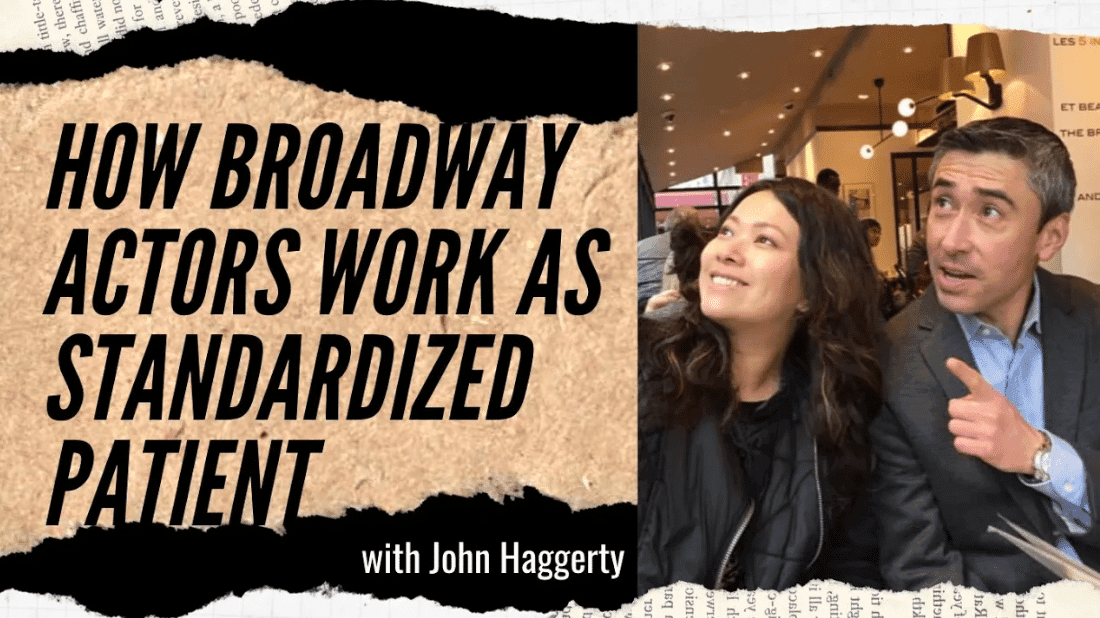
Our Guest Today: John Haggerty
Meet John Haggerty, a Broadway-trained actor who leverages his acting skills to help medical students how to better interact with their patients in New York City.
The name of that job? Standardized patient, and he loves it.
John Haggerty is a long time friend of mine since 2003, who has appeared on a much earlier episode on Feisworld (#7, what?!)
John has appeared on Les Miserable, King and I, Living Room, Yoshimi Battles and Pink Robot. Most recently at the Armory in Portland Oregon, John acted in a play called Kodachrome.
Interactive Transcript
Transcript
Fei Wu: Hey, hello. How are you? This is a show for everyone else. Instead of going after top 1% of the world, we dedicate this podcast to celebrate the lives of the unsung heroes and self made artists.
John Haggerty: All of us, every human being is an artist because we have those questions in our minds about What's great? What's terrible? It doesn't answer anything, it just asks you to ask the questions. Because it's a never ending thing about all of us as human beings is finding some sort of connection with, um, perhaps one special person and maybe with yourself, in a way. We can all admire the, the Picassos of life. That we from afar and admire that but if you have your own personal Picasso is kind of kind of nice to Be in that in in the in the wake of that or to be alongside that as it were You have to know how to do it correctly To understand what corners you can cut as a doctor. So I had to learn all of that stuff. And as a result, I learned so much more about my body, about my health. You know, I went and had my blood sugar checked again because I said, I have all the symptoms. This patient, this simulated patient, this person's backstory. That's me. That's me. That's me. That's me. I think it's a miracle that doctors can walk in, meet a total stranger, in 15 minutes say, get very close to saying, a headache means the difference between a brain tumor and, you know, you went out drinking last night. There's a wide swath between that. And it's by very precise questioning that you can come with the reason why that's happening. I think that's an amazing Art form that doctors can do. That's the part that I can play as a person that can help future medical students become great doctors has been has been very satisfying. And why this is good for the planet is that it gives everyone a chance to have a trial run. We're doing trial runs. We have a week of trial runs before an official opening. Everyone should get a chance to do that, especially people who are in charge of human lives. And if I can be a part of that, then I think that's, that's just a wonderful kind of a psychic payoff.
Fei Wu: Hi there, this is your friend and your host, Fei Wu. And I'm so thrilled that you choose to spend the next 45 minutes to an hour with us. As you know, there are many, many more podcasts these days. So by choosing to stay with us and to spend the time with us, it means a lot more than you think. Today on the show, I will not disappoint you. I have John Haggerty appearing for the second time on Faze World. In an earlier episode, number seven, John Haggerty joined me as a longtime friend since 2003 and shared So many stories of himself as an actor on and off Broadway as a reminder, John has appeared on Les Mis, King and I, Living Room, Yoshimi Battles the Pink Robot, and most recently, which is a new story we're introducing to this episode is his appearance in Portland, Oregon at the armory for Kodachrome. This was a play seen through a photographer's eyes in a small town. It was very fascinating. I wish I could release this episode a little earlier, but due to travel and other phase world obligations, the show Kodachrome in Portland, Oregon has already concluded as of March 2018. By the time we interviewed him, the show was still in preview mode, which was in early February. In addition to Kodachrome and acting in general, this episode gave me the opportunity to explore something John has been doing lately with his acting skills, which has fascinated me really for a long time. John lives in New York, and when he isn't rehearsing or acting for a new show, he helps medical students learn bedside manners and better interact with their patients. The stake is high because the students are graded on their interactions, responses, and overall performance. And for John, he has to be an active listener at all times. In many ways, he sees this as being more difficult than remembering thousands of lines from a Broadway show. In one example, John describes in details how he had to go off script and act out as an extremely difficult patient. He couldn't believe the words that came out of his mouth. For My associate producer, Adam Lefford, also happens to be John's best friend and college roommate, joined us in this conversation. I think when we talk about this, it all made a lot of sense. I can't even imagine why aren't so many other actors to pursue a route like this. It would just benefit so many people. I can imagine, for example, How his skills as an actor could really benefit people in mock interviews or seminars on dealing with difficult conversations. If this sounds like a good idea and you're thinking about exploring a project with John, get in touch with me and we'll be more than happy to make an introduction. Last but not least, we always have young people in mind, meaning people who are perhaps pursuing a career path to become actors or actresses themselves. John knows intimately that this path is not easy. Therefore, as someone who has been in the industry for more than 30 years, John can offer you First hand information on how to overcome fear and pain and perhaps some of the fundamental skills and things that you need to think about while pursuing a career like this. I thought that was so honest and valuable. So if you enjoy this episode, I would encourage you to share it with one more person and hopefully it will light up their day and their imagination. Without further ado, please welcome John Haggerty to join us for the second time on FaceWorld Podcast. So, I'm here with John Haggerty, who has appeared on an earlier episode of Phased World Podcast, much earlier episode within the first 10, and we are now, we just launched episode 138. So pretty unbelievable. I'm also with, um, my partner, Adam Leffert, who also happens to be John Haggerty's best friend, college roommate, and, uh, has really followed him everywhere since then. And, uh, you mentioned that you're in the show, which we happen to have just watched it about an hour ago and it's called Code of Chrome. So could you, could you tell us a bit about the show, what your role is?
John Haggerty: Well, this is a brand new play to the planet. Um, they did this play as a, as a reading. They, they developed this play, uh, a year or so ago. here and, um, they decided to put it into their official season. So I have been blessed to be cast in this play. And, um, I was talking to one of the box office fellows. Someone asked him, what is this play about? And because no one's seen the play, it's not something you say, oh, Hamlet, okay, Danish prince, uh, goes through some problems and he gets killed at the end. We, you don't know the plot, so no one's seen the play and the, the box office person said it in a way that I thought, wow, that's pretty cool. And he told me that he's telling people it's like, uh, Our Town, the Thornton Wilder classic, um, meets Love Actually, the movie. Uh, by Richard Curtis came out about 10, 15 years ago, 15 years ago, probably where these little vignettes of interrelated people talking about how watching them go through their experience of trying to connect. And there's a narrator character, which is what the Our Town aspect is of watching a small town. So Amelie. The French movie of people trying to find each other. Uh, and, and so I thought that was pretty good. So if people want to know what this plays about, it's our town, Amelie love, actually. And you guys just saw the play. You can tell me from your experience as an audience, because I never expressed this to an audience member. If that's pretty close or not. I admit, uh, I saw Emily quite a long time ago. I've heard of love actually. So I can't speak to that, but I think the sense is right. It's about people who want things, want each other, want connection and love and seek it in their own way. And keep seeking it in their own way and the ups and downs of that. Yeah. Well, there you go. And what do we all do in life as, as people? We, that's a constant theme in life. And Adam Szymkowicz, who wrote the play, decided to have a riff. And do a piece of writing on that and it was interesting hearing the titters in the audience about some lines that the narrator speaks out loud as if to the audience and and hearing them respond very viscerally with some sort of reaction, you know, she, she asks is, is, is it, um, Is the point of love to be miserable or not? And, you know, that is that the point always is to learn. And I think that's what the play doesn't answer anything, just asks you to ask the questions. Because it's a never ending thing about all of us as human beings is finding some sort of connection with, um, perhaps one special person and, um, maybe with yourself in a way. I think some of the characters don't actually find that connection because they, they're not able to do with other people. Because they can't find it within themselves. And I'm speaking of actually personally of one of the tracks that I play. So speaking of which, uh, we all play multiple characters in the play, except for the narrator and who is the photographer of the town. As you, if you happen to be in Portland and see this as the premise and all of the actors place a few different characters and I play a perfume maker and a history professor. And I also make an appearance in two quick scenes as a emergency medical technician saving a couple that are overthrown by the throes of love. I don't know how else to put it other than that. But it's been a. You're, you're catching me at the end of a long, long tech week. And I'm so grateful for both of you to come out all the way from Boston to come out and see this play and support the theater and support me. And I, I so appreciate and love you. We'll bring you out to that. So for me over these, honestly, decades, it's been the same. And the same for me in the podcast as well, to have an extraordinary opportunity to connect and kind of insert myself in that life without the talent or the effort to become an actor or an aerialist or a surgeon, um, and to say about the play that we saw, you talk about the, you know, the joy of living your daily life and the small moments and the joy of being an actor and being in the play, the characters are somewhat strongly identified this person, you know, wow. Giving anything away or spoilers or anything, somebody's very shy. Somebody's very bold. Somebody's very persistent. Another person's reticent and sometimes you watch a play or a movie. You think, oh, I'm like that person or I'm like, I'm, I'm, I'm, I'm this guy in this show. But what I felt about the show we saw tonight about Kodachrome was that. We're like, we're almost all those people in any, in any given moment. Right, right. There are so many prisms of experience that I think the playwright was trying to touch upon that we've all had that little feeling of ecstasy. Let's say when you get, you find young love and getting divorced, which I've been through personally and, and separation and then reconciliation. And I longing, I think it's so interesting to be part
Fei Wu: of, uh, what I noticed with my podcast and which is kind of feels in a way kind of selfish is like, I get met up pretty quickly that I always like to ask my guests first about who they are as people, because I don't know many of them as well as I do know you for the past, you know, 14, 15 years. Uh, but I wonder, I want to, I want people to get to know you a little bit more as a person, because in case I haven't listened to it where they don't really know. What is it like to be an actor and you're a very experienced one. So for example, one thing I noticed is that all the shows I've been to, you are, uh, always introducing me to people on the show, but as friends, you know, people you spend a lot of time with. Time with and really to, to be able to learn from, and you're not at all possessive about that relationship and you're always promoting other people. Um, whereas in the acting world and all the academic world and average, you know, all the other worlds, I noticed that there's somehow it's something that we don't talk about is that if I'm a project manager, I don't almost don't. People won't introduce you to someone else in that position or you five minutes ago. You're you're celebrating Also, and you know, they went on to do this went on to do that. Like I wonder you know, why do you feel that way?
John Haggerty: Uh, obviously one degree of separation makes you, you feel more intimately involved in other people's struggles and what they go through and, and, and their, and their victories. And I, I have great love and respect for you and for people that whom I, uh, I've gotten a chance to cross paths with and, and, and I'm pulled in by. And I, we can all admire the, the, the Picassos of life that we from afar and admire that. But if you have your own personal Picasso is kind of, kind of nice to be in that. In, in the, in the wake of that or, or to be alongside that, as it were, continued. Every, every time I, every time I do a, an acting job, I think I really literally think it's the last time I look at these experiences as I get One more chance. One more chance. Because you don't know. None of us know. It might be, it really might be the last one. And so let's try to do it as, as well as we can on that particular day. So we, you know, that's acting and the passions and the journeys of deep. Well, we also did want to talk about things that are happening, uh, outside of this particular engagement in this particular show, other things you're doing. In your life that are related to the arts that are not related to the arts. Um, well, there are very, very few people I know. I mean, personally, of course, we all know who the big stars are go from show to show or from TV show to TV show. Um, For the most part, my circle is pretty rank and file actors in New York and none of us have 365 days a year of employment in our, in, in professionally. So when I'm not doing this, I work for a medical school and a lot of actors do this, uh, in New York anyway. Uh, but I fell into doing something called standardized, being a standardized patient. So I help. Doctors, students in medical schools, aspiring doctors to help them become better with their bedside manner, to help them figure out a diagnosis and, uh, the kumbaya feel good feeling about this amazing kind of side job that I have is. that whatever kind of slip ups they make or, or things that they didn't ask a patient that could cost them their life out in the field when they're gone, I'm able to coach them because I've been coached about how to train them, how I feel like in some ways I'm, I'm saving someone's life down the line. And, There are very, very few jobs I've ever had that you can give someone satisfaction. But to think that somehow what I did today helped this person, they're going to meet a person that I've been asked to portray because we get a case study and we have to portray a certain type of person. When they meet that type of person, if they don't have that training before medical school, they may slip up. They may hear an important piece of information in an interview with the patient. That they were supposed to catch, which told them about a major problem that they missed. So if they do that, then I'm able to say when we have our post simulation and we do our feedback, I say, Hey, you missed that part. We should have asked me about that. And they go, Oh, thank you for telling me that. I mean, that is so great for me. It's that extra beyond. Whatever they pay me feeling that you walk away psychically saying, I, I did a, I did some good for the planet today that someone's mom, brother, sister, brother was father was what might've been saved later in life because
Fei Wu: of hi there. This is Fei Wu and you're listening to The Face World Podcast. Today on our show, meet John Haggerty, Broadway trained actor who uses his acting skills to teach medical students in New York City how to better interact with their patients. I feel like there are also moments where that's even less so than life or death is that. Those few hours that you might feel, I mean, we have all encountered poor bedside manners in our lives, right? Very, whether we are as caretakers or as patients, um, ourselves and could, comes down to really small ailments that really not at all life threatening. But you know, I recently had a friend who was in an emergency room and out of the blue, based on his conditions, he was told that he could have either a stroke or something much more minor, but because he didn't have any symptoms at the time, he was asked to wait in the emergency room for six hours. Every second of those six hours, he thought, you know, about having a stroke or a heart attack, which, um, you know, the way that he was told as, which is very matter of fact, as in, it could be a possibility, but I think. That reminds me that just a one recent experience. I am myself have experienced much more with my dad, with my mom, and so what you're doing really has excited me so much, probably more so than you thought. You probably think we're friends, like. You know, this is something new and exciting for you, but we think that you are really a very perfect candidate for that job. So like, I want to learn a bit more about as a patient, what do you, what are you told to kind of get into the zone where that condition, you know, well,
John Haggerty: it was, it's, it, it changes from case to case. For example, there are, what is it, almost 40 something points, 40 something things for someone to get a full physical, a full physical exam. And I had to learn every single one, how it's properly done. I realized I've never, probably no one on the planet really has had a full physical exam done correctly. Or at least the way the school teaches it. And to the doctor out in the field, to their, you know, to their argument, there's, there's no time that you wouldn't do certain things on certain people because you know, they're not a, that's not a health risk thing. They can bypass some certain things. Certainly my doctor does it. He, I said, you know, I do this all the time and I, you're going to, you're going to miss my popliteal pulse and you're going to do that. He goes, yeah, yeah, I know you do this and, you know, that's fine. But, but you have to know. You have to know how to do it correctly to understand what corners you can cut as a doctor. So, I had to learn all of that stuff and as a result, I learned so much more about my body, about my health. In fact, I went and thought... I may, you know, I went and had my blood sugar changed checked again because I said, I have all the symptoms. This patient, this simulated patient, this person's backstory. That's me. That's me. That's me. That's me. That's med students. So every case is kind of different. And it depends upon what they are training the students to learn that day. Are you, are you looking for high blood pressure that day? And then I have a, like, typically I will, I will have a name, a backstory and I have to listen to very specific questions and I have to give an exact scripted response because the idea of standardized patient. Is that the medical students are getting the same answer every time. So I have to listen very carefully. You know, my answer might be, I feel I have a hard time going to sleep at night. And if that's the answer that they scripted in that the doctors who've written the case have scripted, I can't say, yeah, I feel sleepy. It's they can't be that. It has to be a certain say, I have to say the same line every single time and I have to remember that. So I have to reno the script script dead cold, like an acting exercise. But that same time, my acting partner is changing the lines every time they walk into the room. That medical student is giving me a different line. I have to say now I can say this line. To them, you
Fei Wu: sound like a computer, almost like a binary. I mean, not not binary. Yes or no, but you almost have to function like a computer and calculate in your head all the time. Do it. What's which option? A, B, C or D or E. And then. Yeah. I never
John Haggerty: thought of it that way. You're right.
Fei Wu: It's kind of crazy because in the way that I feel like it's almost like you're taking the test because this is not a free range creative writing.
John Haggerty: Because they're being graded. And if one student gets a different answer, because I screwed up the answer. They can always look at the videotape because all these sessions are videotaped. They can say, well, this person missed that. Sometimes as much as I prepare as much as all of us on the staff prepare, you're only human. And sometimes we make mistakes and if a student challenges, is. What we said you missed what I what I screwed. I gave the wrong information. I may have had that, you know, they said, so tell me about your father's family history. And I said, my, my, my father has diabetes or my, my father had a stroke at a certain age. I missed, I said the wrong thing. That gives them totally different information. That's a blood sugar thing or a heart heart problem. So depending upon the case, they will start diagnosing me in a different way. And that's just not fair to them. And they, I have to be on point as much as I can. Why
Fei Wu: is, why is the consistency of your answers? to be so important.
John Haggerty: Because they're being graded. And they all, the consistency of standardized is that everyone gets the same test. So instead of a piece of paper, I am the piece of paper, the human actor is the piece of paper that they're being tested against. So I have to, even though every human being, every, every interactions a little different, because you can't help that it's energy, I have to still deal with the permutation and give the same verbal response. And sometimes, you know, they have to maintain if I've got a stomach ache, they want my demeanor to be, I gotta go. Uh, sometimes because they want, they say, would you like, can I, would you like me to dim the lights? You want to, you want some water? That's positive points for them as a bedside manner. That's good stuff. They want the students to do that. They want to, Incentivize them to learn that, but a lot of them don't know what to do if the patient, patient, they're just trying to get the, it's gotta be really hard. I think it's a miracle that doctors can walk in, meet a total stranger in 15 minutes, say, get very close to saying a headache means the difference between a brain tumor and you know, you went out drinking last night. There's a wide swath between that, and it's by very precise questioning that you can come with a reasonable. reason why that's happening. I think that's an amazing art form that doctors can do that. So, and I know your family, Adam is in the doc, you know, you're all your family doctors. You know, I, my respect for a great doctor is exponentially just blown out of proportion because it's a very hard thing to do. Not just the medicine. It's the art form of interacting with another human being who's in distress and they're looking at you for, please help me. And You, you have an assembly line of patients all day and you got to figure it out and they're depending upon you. I think there's a lot of, a lot of responsibility. So the part that I can play as a person that can help future medical students become great doctors has been, has been very satisfying and a, and an ancillary kind of career to doing this. And I would, I'd say about half of us or two thirds of us on staff at this hospital. At this medical school are, um, are actors because that's basically what we do. We memorize scripts. We try to maintain a character. So they, they, they do look to the acting pool in New York to, uh, fulfill this position. If
Fei Wu: I were, if they were listening, they, as in the administrator, administrators from New York or elsewhere, I would love. For the actors to get a wild card to say, you know what, you're off script now, you're going to scream. I want you to say you're screaming this person or screaming the doctor or be quiet, shake it up. And I think because that's the, that's the first of all, that's real life. And two, I find it really difficult. Uh, to do that as a non actor, actress to really just be like, snap my finger, you snap your finger. And I be in that zone immediately. It's really difficult for normal people to do. And I think the medical students, hopefully not to be graded on forever, but for them to have that experience and to respond to that, I think it would be tremendously helpful.
John Haggerty: To wit. I was. One of the hardest days I've ever had doing this is that I had to play a psychiatric case, and this was based upon a real person and event, and it was the hardest because of what you were saying, you, you have free reign to do what you want to interpret this character. This is the backstory. It's based. It was based upon a true story. Uh, this very high power and executive. Was accused of perhaps molesting his 15 year old daughter and physically abusing his wife shoving her up against the thing. So she gets the wall one morning and and he was apparently very high up in the ranks in his company and he was used to having things his way. Basically. So they said, this is the guy. He had, he had a very alpha. No, don't listen to me. I'm always in charge of the room and I'm smarter than everybody else. So they gave me a backstory. We have, they took, they chose three guys, three men. They chose me and two other fellows. They briefed us before and they said, you're going, so you're going to being, being seen by a psychologist because the simulation is because your wife called you. Okay. And you were picked up by the police because of what, of shoving your wife up against the wall and she called the police. So you're the first, you are an official, the doctor coming in is a state psychologist who wants to do an evaluation where, where, what are we going to do with you? And you have to be toe tapping, wearing a suit, looking at your watch and saying, I'm missing meetings. I've got things to do. I don't believe in psychologists. Go and whatever, whatever you want to make, whatever you can do to rattle the student, we want you to do it. And I could not believe the stuff that came out of my mouth and they had no idea. All they knew is that this man, all they, they, the students, all they knew was that this man, this is the situation. They had no idea of my personality or anything. They had to find out that I, that I was a high ranking vice president at a company. And, and after the first encounter with a student who had gone to a. Who, who was, uh, had gone to foreign medical school and I disparaged the country. She, she was a woman. I disparaged her gender. I said everything that made her upset. But she, her job was to keep it calm. So they wanted, just like you were asking me, what can you do? But I remember that I had six of them, all in succession. All different people that I had to figure out how to make them upset. And I knew nothing about them. I had to make it up. And... In some ways, there was a satisfying improv actor thing that, oh, yeah, I did that. But after the first day, after the first encounter, after she walked out, I just remember leaning against the door and thinking, I'm going to, I'm going to be sick. I cannot believe I said those things that came out of my mouth. No human being, I, I, I just would never, I wasn't, I wouldn't even think these things, but the, the actor, your actor brain starts, I'm playing this character and I'm going to be this
Fei Wu: guy. Do you feel like, uh, apologizing to the person?
John Haggerty: Oh, I did. I did. If she's out there with John, sorry. I make, I make this, this all make believe. And they actually, the, the medical staff, after the day, this normally doesn't happen, but they brought the three of us in to debrief us, because they knew we had to go through a little bit of getting it out of our system and talk about it. And, um, fortunately, I don't think I could ever do that day to day, because even though we all know it's simulation, We're all playing a role that even the, the, the medical students are playing a role that it's, I walked the line up to reality of trying to play these characters because that's the idea of it. And I just, I said, I'm not this person. I just felt very, very tired and almost like sick inside at the end of it. So people who play. I don't know, playing a character who has to be a really evil person day after day in, I don't know, eight shows on Broadway or in a movie. I, you know, every actor wants to say, I could do it, I could do it, but then I think, could I really do that? Could I really do that stuff?
Fei Wu: It's so fascinating. I mean, this, as bad as it sounds, I believe that it happened, I forgot it was in the U. S. or China, but somebody was playing an evil, very evil role and the guy was, Getting not just hate mails, but like life threatening, uh, messages from, I mean, as, as crazy as this sounds, I mean, that guy must have done a really good job. But what I, what it's interesting to me that I think about all the time is. People like yourself, John, who is, you know, acting your whole life. I know you have other endeavors just like what you talked about, um, but you also happens to be, uh, you can be very dramatic in real life, but for the most part, based on what I've seen, you're very mellow. Like, I don't know if mellow is the right word. But why, I mean, why do you think that is, like, what do you do to kind of offset that energy to be on stage all the time? I mean, especially when you're in King and I, like, Miz, I mean, those are hardcore, heavy duty stuff. Uh, doesn't matter which role you play. Like, what do you do on the side to kind of offset energy enough?
John Haggerty: Um, uh, I. I used to be jogging. It is still jogging, but now in my, my early fifties, it becomes more jogging, walking, jogging, walking stuff, stuff like that. I think we all find some sort of release physically, uh. More, you know, time alone. I think some people have a problem with that, but I actually have, I find a lot of solace. I'm just fine being by myself for maybe not days on end, but hours. Yeah, I don't need to talk to people constantly. I don't need to be surrounded by it. In fact, that's what I. That's what I did between our rehearsal today and the performance for when I was called. Uh, I was, I, I went jogging. I went, I went across the bridge on the Willamette River and, um, just spent all that. I just need, cause I, after I just needed the time to clear my head. So that's my decompression to ask, you asked about. If anything. Getting back to being a standardized patient, I think in some ways, in a very strange way, it's been a very interesting acting class because of where it has, where it's placed my listening skills as a person to. I am not actively trying to remember your responses to me and how, uh, what we're doing. But when I'm at work at that medical school, I have to remember everything they say almost verbatim because sometimes I have to type it out on a computer checklist or tell them back. If I have a 10 minute, 15 minute encounter with somebody, I have to remember my responses plus someone else's. So that requires a lot of intense listening and remembering. I'm remembering, trying to remember what I said and remembering their response. Most people do not do that in life. You just have that one, two, one, two, back and forth, back and forth.
Fei Wu: Hi there. This is Fei Wu and you're listening to the Face World podcast. Today on our show, meet John Haggerty, Broadway trained actor who uses his acting skills to teach medical students in New York City how to better interact with their patients.
John Haggerty: It's even more difficult because like if you go to a job and you park in a similar parking space but not the same one and you're there five days a week, you can't remember where you parked. So to do that once is tricky, to do that with a series of people. Where those half a dozen or a dozen conversations are similar because it's different med students, that's got to be even harder. It's the worst thing is that when the same med, when two, two people look similar, come in back to back and they say almost the same answer, but one or two is different. I go, Oh, Oh, what did they say? That's when you conflate that. That's the, that's difficult for me. That's really hard. That always happens, especially by the middle of the afternoon. Oh my God. Oh, did I get there? Did I get their names right? Did I get their answers
Fei Wu: right? But it's something that you probably get better at, right? I mean, how long have you been
John Haggerty: doing this? Yeah, a couple of years. So it's been, uh, I've been getting better at it. Definitely. And to the credit of the school, they, they don't, they just don't train you and. We all go through some training and simulations before they unleash us to the students, but they check up on us cuz they're always watching us too. Not only in students, but they're watching our performances. And coach, I remember the first time I got a videotape back from my boss's boss and she said, look at your answers. Look at your script. You know, you, you, you, you didn't, you screwed this one up. And I looked, I went, Oh my God, I really, and I'm thinking that was not too bad. I, and I realized they are, I had, I've got to step up. This is their, this is their grades. This is whether or not they're going to get their get the get their degree, whether they can pass the bar or not. And I think about that investment. I have to there is committed to going to school and working your asses off there and being doctors. And I just go in for. You know, whatever, 68 hours a day and, and do my thing and they're, they're up all day and all night for four years. And that's before they become residents. And you, so you're sort of like the control in the, uh, in the experiment, like. The control and the scientific experiment with where the other things are variables. So, you know, knowing you in real life, putting aside all modesty of your own, uh, frankly speaking, what sort of, you know, if it can be answered, what sort of a person should give this kind of a. Job a shot and also to mention it isn't something you do 40 hours a week. So somebody could do it and as part of And who shouldn't do it? Just what kind of person you think probably wouldn't make it and what kind of person like yeah You should investigate this. This could be a good thing for you. Well, there are Not all Actor types have done this. I I know that um, I was interested I had a I have a friend named martin martin sola if you're out there who first Turn me on to the idea. He was doing it for a while and he's now he works. He's always working. So he doesn't do it as much anymore. Um, but then I started applying to schools and and trying to get an audition because they do, they do audition people and they're not slides. Depends upon the demographics of what they're looking for. Look what they need a varied. You know, they need the planet because of different diseases and different things that happen to people. So we're very, very different kind of a staff where, where I'm at. And if, if you're not, if you don't like to memorize, that's one thing, or if you don't feel like you're, yeah, that it's helpful. If you, if you're not good with remembering words, that's absolutely paramount. So that's why the medical schools. Go after the acting pool because there's kind of a discipline and a experience of doing that and also a little bit of a volition. I thought I said, okay, I just a way to make money. But then when I got exposed to it, really about what's going on and the why is this? Why are standardized patients programs there? They're there at the heart for, for, for helping, helping medical students become full fledged doctors and making their, uh, The trip ups in school where it should happen rather than out, rather than out in the field. You don't want to be that patient who, who has a doctor who, who, who's never encountered you. I want in my, in my most. Highfalutin way of why this is good for the planet is that it gives everyone a chance to, to have a trial run. We're doing trial runs. We have a week of trial runs before an official opening and, and we are, there's some mistakes being done in our show that the director's catching and we're constantly fiddling with it. Everyone should get a chance to do that, especially people who are in charge of human lives. And if I can be a part of that, then that's, that's just a wonderful kind of, uh, psychic payoff.
Fei Wu: You know, to close on a tougher questions, but it's going to be a two part question. I wonder what are some of the things that John, you think the, the world at large or the theaters or the sort of the actor communities can do for these. Working actors, you know, whether people are entering into where, where people who are working more on a, uh, part time or full time basis, like what are, there's a reason why I asked the question because I think like what my mom possesses, like there's a certain skillset that I witnessed you on these shows, like Ms. King and I, and I know that art form is disappearing and I know in a way some of the audience, it's also getting smaller. Um, but I think there It's a very precious form of, uh, sort of a human art form that need to be preserved. So I wonder if there's anything that we can actually do. You know, there's no limit by the way, there's no right or wrong answers.
John Haggerty: All of us, every human being is an artist because we have those questions. And our minds about what's great, what's terrible, but watching someone else interpret it either through painting or music or performance or whatever, a computer program, you know, programming, it's, it's all a, it's a way of. You coming back to yourself and recognizing everyone's constant asking of the question. So if we all sat in our own little bubbles and didn't go to museums or concerts or theater or go to movies, rent Netflix, whatever, if we didn't have any access to that and any people doing that, then we'd have to. Live perhaps in our own little islands and redigest stuff over and over and then it becomes incestuous in our brains about who we are, what we're, what we're supposed to be doing here in our, in our small time on the planet. And sometimes when you see something, it just, when you see someone else's idea of something that you've been thinking about, your brain cracks open where your heart cracks open and You, you go, Oh, I get it. This is how I can apply this to my life. And I never thought of it that way. And let's, and I can add this to my life or subtract it. I, I was a fool for thinking that for so many years. So in some ways, when we see something that, that we were moved by or respond to, it's, it's like a. Someone has come up with a way of thinking about it in a very distilled form. Sometimes I think what is the true enjoyment of, of acting or being in a, in some sort of public performance of telling a story. One of the things I find so interesting, so amazing about being in, in, in a play is because we're ex expected to produce some sort of something for people to watch and to experience. Uh, from zero in a very short amount of time. And that journey is when I'm in it, I always find it really interesting. So that's what keeps me going. Certainly it's not the, you know, as, as not being showered with flowers or signing autographs, that's never happened to me and it's never really been interesting to me. And certainly money. I mean, I get paid a living wage and I'm happy to be in Portland, but if it was about that, then I would be very disappointed. But it has to be a deeper psychic reason about being a human being.
Fei Wu: And I think it's, we've talked a lot like in this past hour or so. And I think there is a new future that exists for people with your set of skills and level of commitment and love for the arts is through companies, you know, like medical schools or law firms and If these companies not only need you, they also have the financial means to really provide people with the right opportunities. This is not, again, not charity that they need you in a way more than you need them, right? Because the skills that you have is replaceable. That takes training. And I think that message is so strong. And I think especially for people out there, anybody pursuing any forms of art and putting something that they create out there to say, I made this. You know, until my put my name on it. I think it's such an, uh, uh, such an act of bravery in the sense and that we are so conditioned to not do that, to never do that. Yes, you're right.
John Haggerty: You're absolutely right. Yeah.
Fei Wu: And for you to put yourself out there, I always. I remember precisely that moment where, when I raised my hand, I, when I did really well in school, particularly math, I was really good at math. Until it was about third or fourth grade, I stopped raising my hand because my teacher told me not to. My teachers told me not to, not even my classmates, and said, Don't forget that you're a girl, you're a woman. And your hormone will not even hormone. I didn't know what that word meant, but she said, biologically, you're going to lose that edge very soon. And the boys will exceed you. I mean, this is late eighties. That's crazy. That is crazy. But in one form or the other, maybe not in those exact words, because it's not at all acceptable today's society. And it did happen to kids growing up in the eighties. And I sort of, you know, I, I definitely remember putting down my hands on do that again. So now I'm, so I love talking to people like you to, uh, To relearn. I'm still in the process of, uh, relearning all that, you know?
John Haggerty: Yeah. I'm glad you said something like that. It's, it's always a reminder, the very, every, every show, and certainly last night when we had our first show, we were all, I think the, the cast, we're all so happy to have that audience. This show is not, well, no one's never done that. We had no idea how the audience is going to react. Uh, we had no intercourse with an audience with how, how, how do we, how are these lines going to land? What are they? What's there? How's it going to come across? So there was a, a top spin of nervousness, I would say with certainly with me, I can't speak on anybody else, but I'm sure they had a little bit and it's the first five minutes like feels like when you walk out on stage, I don't say anything for about five minutes I'm frozen, but I feel like my, my blood is ice water. And I'm doing nothing, but my heart, my heart rate is, I'm just trying to breathe, breathe. You got this. It's just say a line. That's all I have to do. And what you're talking about before about you're not being told that you can't do this. You can't do this. I keep forgetting that, that the audience wants you to do this. People want you to do this, be the podcast. People want you to succeed. They want you to, they want to see you fly. It exalts them to see. To see greatness happen, because then we can attach vicariously, we can attach our wings to that. And, I just, but our brains seem to default into, Nope, nope, nope, I can't, don't deserve this, I'm gonna fuck it up. I shouldn't be here, it's all a big mistake. And turning that, turning that switch off, because I think I'm going to be a little bit magnanimous about that. I think human beings want other human beings to do well.
Fei Wu: I think that's such a positive message. And that's really precisely what I needed and what I heard from another colleague to launch the first episode is that he literally said people in this restaurant, they're all eating away their sushi. He's like, they want you to succeed. I'm like, no, I was thinking, no, they don't. They don't care. And I realized. What if he's right? What if it's even a maybe? Maybe I should push that button. It gives you a little, I think we all need a little bit of a momentum, right? I think it means so much that I read stories about people even thinking about committing suicide and then hearing the positive word from another child walking back from school and being able to save their lives. And that's what I think is, um, That is huge. I
John Haggerty: mean, I don't want to. Yeah. Well, that sounds like a, that's like a good coda to all of this. Yeah. Adam summed it all up.
Fei Wu: I think he did. Thank you,
John Haggerty: John. Thank you guys. Thanks for coming out. Thank you.
Fei Wu: Hi there. It's me again. I want to thank you very much for listening to this podcast. Episode. And I hope you were able to learn a few things. If you enjoy what you heard, it will be hugely helpful. If you could subscribe to the face world podcast, it literally takes seconds. If you're on your mobile phone, just search for face world podcast in the podcast app on iPhone or an Android app, such as podcast addict and click subscribe. All new episodes will be delivered to you automatically. Thanks so much for your support
Media Links
To learn more about John Haggerty, visit his website, and he tweets occasionally @johaggs
To learn more about our co-host Adam Leffert (producer and freelance C# .Net Web Developer), visit his website or email him at mindmodel(at) gmail [dot] com.

Written by
Fei WuFei Wu is the founder and CEO of Feisworld Media, a Massachusetts-based digital media company helping brands get discovered by people and by AI. An Adobe Global Ambassador and brand partner to ElevenLabs, Synthesia, and 50+ other tech and AI companies, she hosts the Feisworld Podcast (400+ episodes, 500K+ downloads — guests have included Seth Godin, Steve Wozniak, Chris Voss, and Arianna Huffington) and co-created the documentary Feisworld: Live Your Art on Amazon Prime. Fei writes for CNET, Lifehacker, and PCMag, and her work has been featured in Forbes, Harvard Business Review, and WIRED. She has been publishing on the internet since 2014 — long before AI discoverability had a name.
View all posts by Fei Wu→Stay updated
Weekly insights on content, AI, and digital media.
Keep Reading
Related Articles

Joanne Lipman on Mentors, Untapped Talent and Why Women Should Stop Waiting to Be Perfect
Marc Randolph on Curiosity, Messy Starts and Why “Nobody Knows Anything”