Mariana Glusman: How Everyday Play and Bedtime Stories Grow Love, Connections and Brainpower (#96)
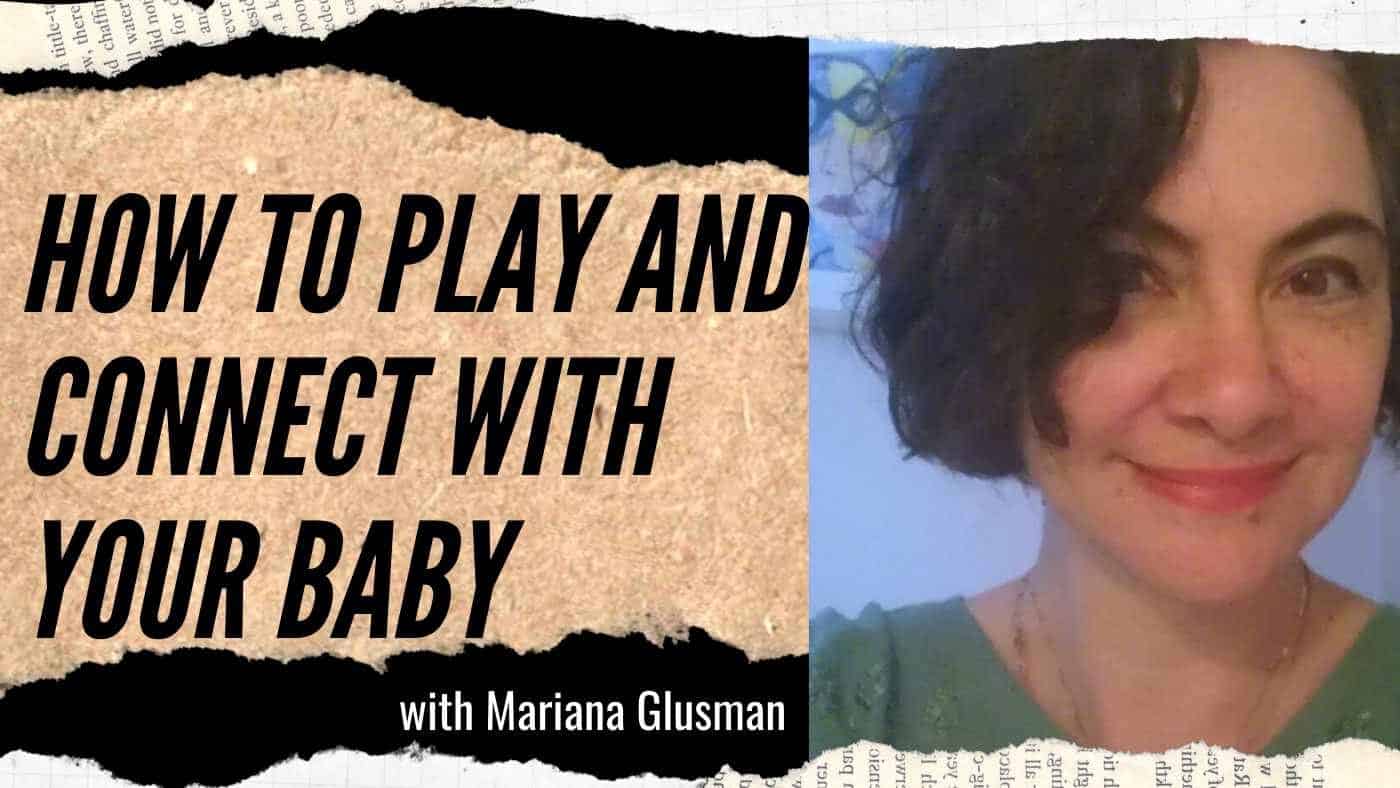
Or Guest Today: Mariana Glusman
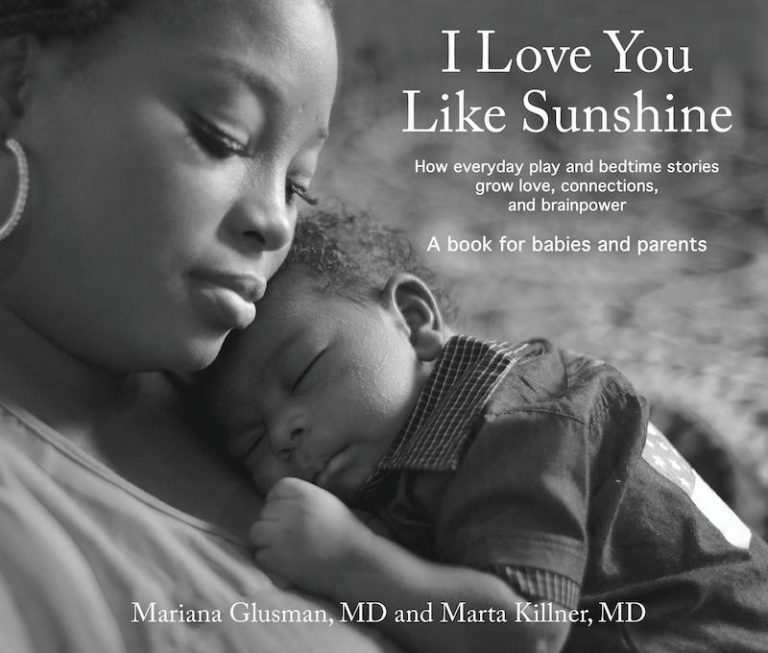
In 2016, Dr. Marianna Glusman co-authored a book with Dr. Marta Killner called I Love You Like Sunshine: How everyday play and bedtime stories grow love, connections and brainpower, a book for babies and parents. Dr. Glusman has been working as a pediatrician for 20 years, who also raised three beautiful children of her own. She has heard hundreds of parents joke about needing a parenting manual. “The usual worries about eating, peeing, pooping, rashes, sneezing and so on are easy for a pediatrician to handle, but many of the questions underlying those practical concerns are not as simple ‘How will I be a parent? How can I prepare my baby for the challenges we all face? What if I miss up?'”
“They actually sent me home with this baby?!” Many parents of newborns wonder about that. This episode will help them gain new perspectives. In Glusman’s own words, “Parents are very stressed out. The more you tell people that they should be doing, the more stressful it is. Whereas there are things that they are already doing, that [if we teach parents] how to do them with a little bit of joy, will be very powerful.”
Reading aloud to your children sounds like a mundane task, yet it is one of the most important things parents can do to help their children succeed. Dr. Glusman noticed in some of her patients were lagging behind in some areas, especially in their language and cognitive skills. She also noticed that not many of them had families who routinely read aloud with them.
I Love You Like Sunshine is a beautiful book and a wonderful resource. In less than 30 pages, it guides you through the process, with zero intimidation. I find the “Did you knows”, “Things to Try” and “Things to Notice” helpful in allowing parents to choose their journey.
Our conversations took us beyond the book and into Dr. Glusman’s origin stories. She speaks English and Spanish, has lived in three countries. Learn more about the book and ReachOutAndRead.org.
Show Notes
- [06:30] Tell us a bit more about the book you just published ‘I love you like sunshine…’
- [08:30] Why did you decide to start writing a book at this point in your career? Have you always been writing along the side?
- [17:00] You were born in Argentina, raised in Mexico and then you moved to the US to study and work. How was that transition? Can you tell us more about that period?
- [20:00] What’s your take about reading to your kids while you are still pregnant? Does that make sense?
- [27:00] Fei’s analogy on how a pediatrician is a mother (or a father) to a thousand babies, and their role in pointing out evident things that we could never reason on our own.
- [28:00] What are some of the stories you hear from your patients? Especially the children of past patients?
- [30:00] How did you get involved with the organization ‘Reach out and Read’?
- [35:00] How does a multi-lingual household impact the development of the children?
- [42:00] How could people get involved with opportunities to read to other children as a volunteer? (e.g. hospitals, daycare, etc.)
- [52:00] Your eldest daughter is pursuing a degree in early education, does that surprise you?
- [55:00] What would you like to say to your kids if they listen to this episode in the future?
Favorite Quotes
- [07:30] I wanted to help parents to be able to read to their children because it’s such an important thing to do for their brains
- [12:30] I didn’t want to create a ‘you should book’, I wanted a ‘You can book’. This is what you can do, you are going to enjoy this, you are going to be good at this. I think that’s really an important message to empower parents: they can do it
- [24:00] Instead of just talking to the parents, I’ll be like ‘oh you are so cute, look at your little toes, let’s count your toes, one, two, three, four, five… and saying look at how interested she is, look at how she’s looking at me. Did you notice that? This is what you should be doing at home because she is so intrigued! And the parents love it…
- [26:00] I feel that I empower them to do something that maybe it wasn’t as comfortable initially, but I know it’s gonna be helpful for the baby
- [27:00] That’s probably the best thing of being a primary care pediatrician: developing those long term relationships
- [34:00] I think of the books that I give out to kids as my vaccines against illiteracy. Just like a vaccine that it’s gonna prevent an illness, this book is going to help open up worlds, and help open up opportunities.
- [37:00] The most important thing is to expose kids to rich language environments. If you are speaking in plain English, without a great vocabulary, that’s not going to help your child be more prepared for kindergarten. The best thing is to speak in a really rich language of your own (i.e. Spanish, Chinese), and that’s going to allow the kid’s brain to develop and English will pop right in.
- [45:00] In the end, parents are very stressed out. The more you tell people that they should be doing, the more stressful it is. Whereas there are things that they are already doing, that [if we teach parents] how to do them with a little bit of joy, will be very powerful.
Transcript
Transcript
Fei Wu: Welcome to the Phase World Podcast, engaging conversations that cross the boundaries between business, art and the digital world. What would be the best book for a parent of a newborn? I didn't wanna create a You should book. I wanted a You can book. That's really an important message is to empower parents that they can do it. You're gonna be good at this. Sometimes you try something and it doesn't work. It's gonna be okay if it didn't work. It's not because you're a failure, it's not because your baby, there's something wrong with your baby. It's because it's hard. Helping parents understand that I think is really empowering and it helps. Feel better about themselves. What reading does, it not only helps kids understand that there are stories and books, it also opens up worlds for kids. Just like a vaccine that is gonna prevent an illness. This book is going. Help open up worlds and help open up opportu. Hello, my beautiful people. Thank you for listening to another episode of the Face World Podcast. Today I have Dr. Mariana Gluzman, who was introduced to me by my associate producer, Adam Leer. They were both at the Common. School back in the eighties. And as you guys know, at this point, Commonwealth School is one of the primary resources for Face World Podcast guests. In 2016, Maria co-authored a book with Dr. Marta Kilner called I Love You, like Sunshine, how Everyday Play and Bedtime Stories Grow, love connections, and Brain Power, A book for babies and. Dr. Gluzman has been a pediatrician for 20 years who also raised three beautiful children of her own. She has heard hundreds of parents joke about needing a parenting manual. The usual worries about eating, peeing, pooping, rashes, sneezing, and so on are easy for a pediatrician to handle. But many of the questions underlying those practical concerns are not as. How will I be a parent? How can I prepare my baby for the challenges we all face? What if I mess up? A few friends of mine recently gave birth to their children. I can't imagine how they feel they actually send you home with this baby. I can't wait to share this episode with them to gain a new perspective. For example, reading aloud to your children sounds like a mundane task, easiest thing to do, but turns out it's also one of the most important things that parents can do to help their children succeed. Dr. Gluzman noticed in some of her patients were lagging behind in some areas, especially in their language and cognitive skills. She also noticed that not many of them had families who routinely read aloud with them. I love you, like Sunshine is a beautiful little book and a wonderful resource in less than 30 pages. It guides you through the process with zero intimidation. I find that Did you nose things to try and things to notice? Very helpful tips in allowing parents to choose their own. Those black and white photos were these adorable babies You want to hold and kiss. Our conversations took us beyond the book and into Dr. Guzman's origin stories. She speaks English and Spanish has lived in three countries. I've included useful links for you to learn more about Dr. Gluzman, the book and resources such as Reach Out and read.org to further explore what you can do for your children. If you have been listening to Phase World, you'll notice a theme about parenthood. After all, many of my guests on the show are parents themselves with children of many age. I love talking to them about parenthood, and I notice that so much of who they are and what they do influence their decisions in how they choose to raise their children. In turn, many of the listeners who are parents themselves find this topic refreshing and informative. We can learn something from every. Hope you find this conversation helpful, comforting. Whether you are an experienced parent, a new parent, or soon to be parent, share this learning with those around you because children are our future. Please welcome Dr. Gluzman to the Phase World podcast. I am so excited to have you on Mariana, and this is such a rare opportunity. This morning I was thinking, you know, I always wanna be a doctor myself growing up. Mm-hmm. , but. Quickly through middle school in Beijing, China, we started studying, uh, organic chemistry. No, it's, it's crazy. For a 14 year old mm-hmm. and I couldn't comprehend that. So my dream pretty much, uh, vanished. But as a result of running this podcast, luckily for me, I've spoken with a number of doctors and now I have you on the show. Mm-hmm. . So thank you so
Mariana Glusman: much. Thank you. I'm excited to be here. I am
Fei Wu: very excited. I'm holding this. Book that
Mariana Glusman: I started reading and I feel very nurtured by it. You know, , I felt like
Fei Wu: I was the baby as well as the parent. I'm going to be one day. And so please tell us a bit more about the book. You actually, uh, released very, very recently in 2016. It's called I Love You, like Sunshine High, everyday Play and Bedtime Stories Grow, love Connections,
Mariana Glusman: and Brain Power, A book for babies and parents. So, yeah, it basically, that's exactly what it is. The title is exactly what it is. It's, uh, a book for babies and for parents of newborns. And it has a poem that parents can read with their baby. It's got a lot of beautiful photographs, black and white that they can point to, that they can sort of, uh, name the, the, and see babies and their parents and their family members. But really it's a book on parent. And the big focus of it is on helping parents increase the amount of talk and singing and reading with their newborns, which has been really shown to be very important in terms of their brain development. And also, which is not easy to do. I mean, if you. If you look at a doll, babies are, newborns are kind of like dolls, right? They, they don't do very much. They, they make little cooling noises, barely. They don't even smile, right? So talking to a baby is not easy or at least a newborn. So I wanted to help parents to be able to do that because it is such an important thing to do for their baby's. Wow. So
Fei Wu: you've been a pediatrician for right now over 25 years. Is that accurate?
Mariana Glusman: Um, I think it's more like 23, 22 maybe , so Okay. Let's just say 20 . Thinking
Fei Wu: about between 20 to 25, because I know
Mariana Glusman: there's that kind of. Gray area where you're still in training and Yes, exactly.
Fei Wu: You know, and, and then here's a question, you know, for me as well, do I count my internship as part of my experience, but. I personally think internship is very, very important, especially for the sort of medical training you're going through. You're not cleaning dishes and talking to people. You're really very hands on. So I think, yeah, so let's stick with 20 years, um,
Mariana Glusman: 20 years.
Fei Wu: In any field these days, as you know very well, is a significant period of time for anyone. And in terms of the book at this moment in time, uh, why now? Why do you feel eager to establish a connection? Or have you always been doing something like this along the side?
Mariana Glusman: So, pediatrics is my, is my everyday job, right? And I love it and it's what I do. General pediatrics, I see patient. Birth to 18, you know. But I've also been involved with an organization called Reach Out and Read, which is a program where doctors give out books to kids when they come in for their checkups and for the past 18 years or so, when kids come in for their checkups, I give 'em a book starting at six months and all the way through five years. And I talk to the parents about why it's so important to read. But in the past couple of years, there's been a push to really start not at six months, which is what we used to do, but at birth because of a lot of new research that has come out, uh, about the importance of those early years on brain development. So, you know, after giving out thousands and thousands of books, I start thinking what would be the best book for a parent of a. And that's kind of how it all came about. And it's just we really at this point, uh, reach out and read as an organization. Now that is everywhere. There's over 5,000 sites and doctors that give out books, so this is a great time to. Give out and to really spread the message far and wide. Mm. I started
Fei Wu: reading the book and as I mentioned earlier, I don't have children yet, and I don't quite remember what my upbringing was, you know, when I was six months old. I guess I don't have too much recollection of that experience, but. Personally, I wanna reflect upon some of the things I love the most about the book, which is mm-hmm. it appears to me that you're really trying to make it incredibly easy to read and accessible to parents of any background or any constraints of time. You know, regardless of how little time they may have, and then the instructions are very easy to follow. Granted, I think one of the things. As a parent, uh, with a newborn of less than six months old, chances are especially, this is the first child, the family, the parents really don't have much experience. And I, you know, I keep hearing, oh, in your intro, I was laughing because I, I heard Krista tip say the same thing. And then Krista was interviewing Brene Brown, as you know, who is, uh, the power of, you know, vulnerability. Both of their first child, uh, are daughters. And they said when they look at the tiny little baby in their. Car seat from the hospital to their home. Everybody's like, who left this baby
Mariana Glusman: with me? , listen, am I, you know,
Fei Wu: and I tried. I remember whenever I visit my coworkers babies, when they're less than 10 days old, I'm so scared, like, personally, I can't even
Mariana Glusman: hold a baby. They're so delicate. I feel like I'm to break them
Fei Wu: and this. Without a baby right now gives me a lot of confidence to say one, really I'm not, or the parents are not, um, alone in this. Most people feel this way.
Mariana Glusman: Yeah, well, that's exactly right. You know, the. I wrote it with my experience as a pediatrician in mind, right? Seeing thousands of babies. But really in the end, it was me in mind. I just kind of dug back to my first experience coming back, you know, from the hospital with my newborn baby 23 years ago, and thinking exactly the same thing. It's like, oh my God. I, I, I was imagining something completely different. I thought I was gonna know what I was gonna do, and then now all of a sudden there's this tiny little thing and, and you don't know what to do. Right? And so I wanted to give parents a little bit of that confidence and empower them. There's so many books out there, and not just books, but also just people, doctors, parents, grandparents that say, you should do this and you should do that, and this is what you should do with your baby. I didn't. Create a, you should book. I wanted a, you can book, you can do this. This is what you can do and this is what you can, this is, you're gonna enjoy doing this. This, you're gonna be, you're gonna be good at this. It's okay. It's gonna be just fine. You know, because babies, although they seem like they're really delicate, they're actually really sturdy little beings. And you should see parents when they bring in their, their brand new one and they, they hand them to me like, like, so they're giving me a piece of crystal, this little tiny thing, and then I grab the baby. And obviously I'm not rough with babies, but I purposely actually kind of jostle them around a little bit to show parents. It's gonna be fine. This is a sturdy little thing. It's not gonna break, you know? And, and I think that that's really an important message is to empower parents that they can do it. Mm, I
Fei Wu: love that. And to give people a flavor of what's written, the book. I happen to be on page one, but you know, I look at you when you're asleep. I can't believe you're. Your tiny nails, your lovely lips, your precious curving ears instantly, you know, with this lovely picture. And even with, you know, with this picture really helps because it zooms in on the little baby and reminds me of all the babies that I have seen and all the commonalities that we have, you know, regardless of your ethnicity, you know, Caucasian, Asian, you know, black, and uh, it's all the babies are just so precious. In their ways. And then you as an adult, you just, doesn't matter if it's your baby or not, you just wanna protect them in some way.
Mariana Glusman: Yes. Nurture them. Yeah. Well that, that baby in the, in the front cover, you just wanna eat him up. He is so gorgeous. You know when to melt into these babies, you know, they're just, uh, and actually all of the babies, it's like you and these were not my patients. These were kids that. Found in different ways. Like my mom's neighbor, my daughter's music teacher, anybody that was pregnant around the time when I was sort of figuring out the book, I would go up to them like, would you like to be in a book? And babies are just gorgeous, you know, all babies are. And uh, I really am so happy the way the pictures turned out that they really came out. So you could really see the intimacy. Through the photographs.
Fei Wu: Yeah, and I think because they're black and white, I feel like everything these days is so overly vibrant and colorful, whereas black and white always gives me the feeling that kind of neutralizes everything and gives a sense of calmness. And also gives you a chance to really focus on the text because as much as the pictures are absolutely gorgeous and what you've written and the choices of your words, and I, I know that you maybe don't see yourself as a purely as a writer, but you know, did you know I come from a marketing and advertising background and one of the things that are really peaking people's interests are the did you knows, um mm-hmm. And then I like when you say things to try things to. So I think that goes back to what you said about you should do this, but you can, you, you're gonna try this, you may notice some of these things you may notice beyond
Mariana Glusman: what you had, you had noticed as an author. Right? Exactly. Exactly. Cause you know, sometimes you try something and it doesn't work. And if as a pediatrician, I say to somebody, this is what you need to do and this is what's gonna work, and it doesn't work. But the fact is that every child is an individual, every parent is an individual, and things that work for one person are not gonna work for another person. So I always talk about things that you can try and then if that doesn't work, there's other things to try. And again, that that's kind of what's keeping with the message of it's gonna be okay if it didn't. It's not because you're a failure, it's not because your baby, there's something wrong with your baby. It's because it's hard and things, you know, that are natural don't come naturally. Uh, they're learned and so helping parents understand that I think is really, uh, empowering and it helps them feel better about themselves.
Fei Wu: This is, I think this approach is powerful in terms of almost learning anything. One of your, one part of your experience that I feel like I'm already gonna start jumping around quite a bit because the way that. I feel like sets you up for success in terms of being a doctor even way before writing this book is because you have such a multicultural background yourself. And uh, part of what I love about this book also preparing this interview is the fact that I can learn more about you. Uh, to me, all my guests background and upbringing, or sometimes I call them origin stories are incredibly powerful and and useful. So you had mentioned that I believe you're born in Argentina and you were raised in Mexico until you were 11. Mm-hmm. . Yes. And before you came to Boston. So, uh, I wonder, you know, what part of that experience from that period of your life that you remember the most and think they're, they're very powerful.
Mariana Glusman: So I don't remember much at Argentina other than the fact that my grandma was there, right. Um, but I do remember Mexico incredibly fondly. I remember my friends sort of growing up in the seventies with, uh, even though it was Mexico City, there's a lot. Freedom in some ways. I remember the food, I remember, you know, more than anything, just childhood closeness. But I think that the biggest thing that shaped me was coming to the United States. You know, all of a sudden I was in a classroom. I didn't speak English. Everybody else around me speaks English. Everybody's standing up to to say the pledge of Allegiance to the American flag. I've grown up pledging allegiance to the Mexican flag, and I was like, Uhuh, this is not my flag. I am not standing up. And the teacher thought that I just didn't understand. You know, and then my mom, I told my mom that I was like, I'm not standing up. And my mom's like, oh, yes you are. This is everybody's, you're, you're respectful to everybody's flags, right? But coming to a classroom and having the experience of not know, not having any friends and not knowing what anybody's saying was incredibly powerful for me. And in. My patients, a majority of them come from countries that are, you know, not just Latin America, but all over the world. And they, English is not their first language. And so I really empathize with them and that that feeling of feeling like you don't belong, like you miss your old country, you miss your old friends, and will I ever fit in here? I think that was a really shaping time for me. Mm.
Fei Wu: I, I can see a lot of empathy in your work, and you brought up a really good point of immigrants and, uh, you know, immigrant families, and we have plenty of them in this, in the States. You know, I, myself, I'm, I'm not even considered first generation because my, you know, my parents weren't in this country by the time I moved here and mm-hmm. which I've sort of stayed in the states for half of my life at this point, and I thought about. Areas, the, the topic of reading to your children is a very popular one. Um mm-hmm. in China as well. Starting as early as before the baby was born. And actually, I wanna kind of, sort of like talk to you about what's your take on kind of reading to your kids while you're still pregnant with them. Does that make sense? Oh, that's
Mariana Glusman: interesting. So I think that babies, when they're born, they can already. Recognize their mom's voice. It's remarkable. It really is, um, unbelievable that they will, even after a few hours of age, they can actually tell the difference between their, their mom's voice and other people's voices. Right. You know, I think that reading with, with a reading to your belly, It's not that you're reading to the baby because they're not gonna really understand what you're reading. It's different than when you're reading to a baby once they're born, where you're actually showing them the pictures and you are interacting with the baby. Cuz one of the biggest things about reading, it's not so much reading the words on the page, it's using the book as a tool to increase your interaction with a baby, right? There's a lot of parents who, although they love their, their. And you know, most parents do, they might not realize that they should be talking with their babies, right? And so a book, what it does is it gives you things to talk about. Sometimes you feel like you're going crazy talking to somebody that doesn't talk back or do anything back. So it's not having something to do, something to talk about. Something to show is a great tool, right? And so, as a pregnant mom, reading to your belly, what you're doing is you're relaxing, you're reading. To yourself, you're beginning to think about the importance that you will be reading with your baby. I think it's, it's a lovely thing, but your baby's gonna already understand, recognize your voice, regardless of whether you read with your belly or not. So it's more about sort of establishing habits and getting into the idea that reading is gonna be something that you do with your. Not so much because it's gonna increase their, their baby's brain development. Although really there isn't a lot of research on that. On the other hand, there is research that shows that reading with, with infants does increase the amount of talking that parents do and does, and that that also increases their brain development Mention.
Fei Wu: Yeah, no, I love the explanation because it's, uh, I think it. What I have learned, especially in Asia, I'm not living there full time, but I do still have friends, uh, college friends. My family's friends can be such a facade sometimes, you know, in terms of the practice itself, which is completely the opposite feeling I get from your book, which is very grounded, very nurturing, you know, unintimidating. It's interesting when you hear things such as parents trying to pick up the most sophisticated book ever. You know, I you're gonna lab in Asia. There are things such as, you know, translated Shakespeare, books that you read to an infant as if as going to somehow elevate their comprehension towards these literatures.
Mariana Glusman: It almost
Fei Wu: sounds like a good idea, but I. The intimacy that I get from, you know, with these simple words. And yet I find that through my podcast and I see how, how people are engaged with these, each episodes really are not based on the technological aspects of things or things are completely that people can't comprehend. But it's really comes down to, you know, we as humans like what we share and how we live our lives and. That's the feeling I get from the context of your
Mariana Glusman: book. Well, there's just so much pressure on. You want. There's baby Einstein, baby this baby that there's, you know, heated baby wipes. Good Lord. You know, I remember one time when, when I went to to a friend's house and I had my baby, my daughter Abby, and her baby had heated baby wipes. And I thought to myself, oh my God, I've been wiping my baby's butt with a cold wipe. What kind of a mother am I? Right? And then you sort of said it hits you. That's. So the key is making things natural. And you don't need special gadgets. You don't need crazy Einstein books. What you need is a loving interaction and a book helps, but it's not just about the book. There are plenty of parents who don't feel comfortable with books. And so really it's about talking and it and responding to them. And one of the things that I've started doing now, When kids come in for their newborn checkup, while I examine, I, I'd ask questions to the parents, you know, are they eating? Are they peeing, pooping, et cetera, et cetera. And then while I was examining the baby, I would be talking to the parents about things to do at home. Now, one of the things that I started doing, and this was a little bit before I, I wrote my book, was to, instead of doing that, trying to be efficient to actually. Interaction with the baby as I'm examining them, right? So instead of just talking to the parent and saying, oh, do you have a car seat? I'll be like, oh, you are so cute. Look at your little toes. Let's count your toes, 1, 2, 3, 4, 5, and you know, just, and saying, oh my gosh, look how interested she is. Look how she's looking at me. Did you notice that this is what you should be doing at home? Because she is so in tune, attuned to you, right? And the parents love it. All of a sudden it gives them permiss. To do things that maybe feel a little unnatural. And the biggest reward for me is seeing them come back like a few days later when I, when they come in for their checkup, like to, to weigh them, make sure that they've gained enough weight. And I see 'em talking with their baby and I was like, yeah, you know, this is something that. Maybe I did, maybe they were going to do anyway, but really I feel like I maybe empowered them to do something that maybe wasn't as comfortable initially, but that I know is really gonna be helpful, um, for their baby.
Fei Wu: Yeah. There are things that are, may seem kind of subtle to doctors, but to the parents, I think it's like almost like an awakening moment. Yeah. Of how special that is. And I feel the same way, you know, in my industry where there is all these technology involved, you know, augmented reality or virtual reality. Mm-hmm. This and that. Mm-hmm. , , but. When I go to the hospital, you know, whether I see a dentist or my primary care to say, you know, I'm not feeling comfortable, and they're like, you know, just try this pill or try this exercise. I think physical therapy is another example. Mm-hmm. . And you do this exercise and then sometimes you feel better instantly. Sometimes you need to try maybe a few weeks, but you realize like, wow, I tell them. I could have never thought of this on my own, and they just laugh. They're like, oh, of course. You know, this is kind of our profession. But I'm actually really stunned to say, because that looks so simple, you know, no appliances involved. There's no complicated procedures. And how could you think of that? I think so much of that's through experience, because in a way I see pediatricians almost like a parent to a thousand babies or a thousand children.
Mariana Glusman: And that's actually how I feel. I really do feel like a parent to a thousand babies now. I'm beginning to be a grandparent to a thousand babies as the, as my parents that my kids or my patients are becoming parents and bringing me and their kids. So it really is a delightful, that's probably the best thing about being a primary care pediatrician is really. Developing those long term relationships. Wow.
Fei Wu: What are some of the stories that you hear from your patients? I mean, in this case they're, you know, very young parents, but they, they still remember you. What is that experience like, ?
Mariana Glusman: Well, so the other day I walked into a room mom thinking, and I look at her, I'm like, you look so familiar. And she. Dr. Gluzman, you were my pa. I was your patient. I'm I am. And yeah, she told me her name and I was like, oh my God, how you doing? How's your mom? And I remembered her. And then I went back to my office and I actually still had a photograph of this mom when she was in third grade that her mom had given me. And I brought it back out to her, and it was, Just the sweetest moment that, you know, she, there she is, this mom with this baby, and she's looking at herself when she's eight years old. You know, it, it was actually a really, really tender moment. It was so, so sweet. And then, you know, these babies that I seek, From when the little tiny thing, little tiny babies, and then they start going off to college and then the mom is crying and I'm crying, oh my God, can you believe how old they've gotten? And they have these big guys with some, with tattoos and then like, just like I still see them as this little tiny little baby, you know, coming out of the hospital. So it is, it's a great privilege to be able to share. And the growth of children. I think this
Fei Wu: is such a promoting the profession of being a doctor. I can imagine people who are listening to the podcast or thinking, wow, I mean, hopefully they're so young enough to pursue that training and profession that I is quite phenomenal. So I wanna actually kind of hop around. I am incredibly. Impress and really intrigued by the program. You're involved for many, many years. Uh, it's, you actually mentioned briefly at the beginning of the interview, reach out, reach out and read. So, r o r mm-hmm. to abbreviate. That was a. Movement, in my opinion, wasn't just initiative. I'm sure it started small, but you were involved fairly early on, I believe in 1996. And you stayed involved. Um, so tell me a bit more about kind of how you were involved initially and how, kind of see how the program transformed over the two decades.
Mariana Glusman: So the way it started or the way I started getting involved with it was, Because of my own experience with my daughter, right? When Abby was six months old is when I started doing my training, my residency. And so that's when I was beginning to learn how to be a pediatrician. And I was at the same time learning to be a mom. And so I was really beginning to sort of see what the pediatrician's advice is like and how do I take the advice and how do I give advice in the best way that I can really help parents? And so Abby really was a great teacher in that sense. But. Really working hard. I was working about 80 to a hundred hours a week at the time, uh, and spending every third or fourth night at the hospital. So I'd come home and I was exhausted. And then, you know, I had the privilege of coming home to a healthy little adorable baby who wanted my attention. And so one of the things that I figured out was that I could read with her and still be lying down, you know, it was in some ways, a little bit of a cheat maybe, but, Soon became something that we loved to do. We just loved being together, cuddled and, and we, I would send for hours, hours reading with her. And her bedtimes were always really extended, but it was something that brought a lot of joy to us. And as I watched her grow and I saw that she was developing beautifully and talking and articulate, I also was watching my patients growing and I realized that they were just not at the same level as my. And I knew that their parents adored them, and I knew that these were healthy babies and there was no reason why these gorgeous babies that I was seeing in my clinic shouldn't be developing as well as na a. And so I started thinking, well, maybe it's that they're not reading with them. And so I, I began asking around and it turned out sure enough, that nobody was reading with their babies. And so, I started sort of thinking about it and reading into it, reading research, um, on it. And I came across, reach out and read, which really validated what I was already doing. And, and there was some research that was already being done that when pediatricians. Talk to parents about reading and about how to do it. Not just, you should read 15 minutes a day, but actually modeling and talking about how to do it and why it's important that parents read more with their babies and that actually even more importantly, their children's language development. Becomes more advanced. And this is particularly important for people who come from low income backgrounds who really, whose kids generally are not exposed to as many words as kids from high income backgrounds. So I really became passionate about reach out and Reed and I started my site in my clinic, and then I became more involved locally and then I became more involved nationally. I am the medical director of Rita, Illinois. Supervise, oversee 130, reach out and read sites. And then I am involved nationally on uhto, which is, uh, translates to reading together, which is the push for reach out and read to do, um, more outreach to Latino families. And, and then I've also been working on this push to start reach other and lead at birth. So it's been a real, a real great ride to, uh, to grow. Professionally as this program has grown from a few sites in Boston to a nationwide program.
Fei Wu: Wow. So it started in, in Boston. With that, I didn't realize, I know that you, your involvement perhaps started around 96. How long had or been
Mariana Glusman: around at that time? Soor started, I think around 96. Um, actually in my involvement with ro r I didn't learn about. No, that's not true. It started 95 or around then is when it started. Right? So it was all happening around the same time. I think it was just the, something in the cosmic scheme of things where, where suddenly people are thinking about literacy and where pediatricians can can help on that. It really was a young program when I started.
Fei Wu: I love your, uh, a vaccine to illiteracy. I love that title. Yes.
Mariana Glusman: Yeah. It is something that I think of the books that I give out to kids as my vaccines against illiteracy because just like a vaccine that is gonna prevent an illness, this book is going to help open up worlds and help open up opportunities. Not obviously, it's not just the book, but the teaching and the helping the. And empowering the parent to read this book and other books is really gonna give the child a leg up. And so that's, that's kind of why I think about it as a vaccine against the literacy. What's your take
Fei Wu: on, uh, you had mentioned in your book when children at a very young age are exposed to different languages. Immigrant parents, uh, you know, in your household, I assume you speak Spanish. And for me it's a little bit different that I had to learn English on my own. You know, I couldn't speak that with my parents. And so how does that impact sort of the childhood development or even like into the teenage years? Mm-hmm. .
Mariana Glusman: So it's complicated and like you. Everybody's experience is different, right? Whether you learn a different language as a, as a teenager, or whether you're learning two languages simultaneously from birth. The research on multi, you know, learning two languages is that babies are able to do that without a problem. Our brains are, are wired to learn to. And in fact, we can learn more than one language if we are exposed to, you know, more than one language. And in many countries, that's the norm. What happens in the United States is that a lot of the people that speak other languages, particularly Spanish, which is what I'm most familiar with, also tend to be in more disadvantaged situations. So a lot of. You know, when people talk about bilingual education or when they talk about should parents start speaking in English so that their kids are able to learn when, be more prepared for when they get to school, it's a problem because there's the whole overlay of socioeconomic issues. So here's my advice to parents who are, for example, speak. Spanish or Mongolian, or whatever language they speak, if that's their first language, and that's what they're most comfortable in, that's the language that they should speak with their child in. If they're comfortable in both languages, then by all means speak in in both, you know, both languages and kids will be able to learn it. But the most important thing is to expose kids to rich language environments. So if you're speaking in a stilted English without great. That is not gonna help your child be more prepared for kindergarten, the best thing is to speak in a really rich Spanish, and that's gonna scaffold, that's gonna allow the kids brain to develop and the English will pop right in. There's English everywhere. So I advise the families that I work with. To speak in the language that they're most comfortable in. Now, I give up books to kids, right? And so I tend to have books in Spanish, books in English. I don't have books in Russian and in, you know, Somalian. And then, you know, so what I do is I say it doesn't matter that words on the page, the important thing is that you're. Looking at the pictures, loving the book, showing the child that reading is really important. That there's little squiggles that make little words, uh, that make sounds, that make make up words. And that reading is something that you wanna learn to do. Um, and giving kids the motivation for wanting to learn to read regardless of whatever the language is that the book is in. It's about the love of the book that parents can give to their child.
Fei Wu: Mm. This reminds me somehow of the interview with Poly Chatfield, who you know, very famil, you're also very familiar with from the Commonwealth School. She told me this story and I had only met her for the first time, but she had a lot of older siblings. There were a lot of children in her family, and she had mentioned. That her parents were actively reading to them well into their, uh, teenage years. So started when they're really young and she was exposed to this very, very rich language environment because the parents had to read to a. Group of children in this case, maybe between the age of three and 15. I don't know. I just made up the age gap there was significant. So her being a younger child, she was exposed to, you know, maybe materials that she wasn't necessarily ready for. Mm-hmm. , but she was eager to learn. As we both know, she's one of the most successful, most, uh, beloved teachers that we I've ever came across. So
Mariana Glusman: yes, for sure. I think that what reading. It not only helps kids understand that there are stories and books, it also opens up worlds for kids, right? So a child that might live in the inner city might not know about cows, right? You might never see a cow, but. Everybody talks about cows. Everybody knows what a cow is, and you know that because of a book. You know that because you've read about it. So increasing your knowledge about the world, knowing about dinosaurs and about backhoe and about princesses and um, and all sorts of things, dragons and fantasy land, those are things that really help kids with the knowledge that they're gonna need so that when they get to kindergarten, they're gonna understand when the teacher. Okay, let's all participate. It is Autumn now, and using words that are maybe not your everyday words. Like for example, once upon a time, you know, when you talk to a to a two year old in your everyday world, in your everyday life, you say Sit down. , you have to keep it short. Right? You wanna keep them safe from themselves, right? Take that outta your mouth. Come here. Don't do that. Don't run industry. There's so much directive language that you need for little toddlers, right? But when you sit and talk around a book, it's a different kind of discourse, you know? Which is what I'm thinking that you were talking about. You know? I can just imagine that, uh, poly Chat Field's, family sitting around and talking. Whatever the, whatever philosopher or whatever it is that they were reading about, it's a different kind of language. Even just the once upon a Time model. It's a huge thing that books open up for kids. Some people call it opening up windows. To the world. They call books, windows to the World. And then also people talk about mirrors in books. Meaning that seeing, seeing themselves reflected in a book, uh, is also really important.
Fei Wu: I was watching the, I think CBS News one day just. Few months ago before we even had the chance to schedule this interview, I saw in Boston, uh, that they were retired. In this case, many women who were retired and they loved brain books to the hospital and mm-hmm. to read to babies and they would, they were babies. Uh, for, depending on their medical condition, they may have to stay back and stay at the hospital for. Somewhat extended period of time and um mm-hmm. parents are busy. And then she actually said this woman probably well into her seventies or eighties, said, the parents are busy, they have to work and they are scheduled to pick up the child at a certain time. And in between that time with busy doctors and nurses, she volunteered herself to read books to these babies and she loved it. Mm-hmm. and I. What are some of the ways for people who are interested in doing this potentially without their own children? How could people get involved and kinda experience that?
Mariana Glusman: So, um, certainly, uh, so for example, with reach out and read, um, there are opportunities, uh, to volunteer. Uh, to volunteer, uh, reading in waiting rooms to volunteer sometimes in hospitals, but reach and re tends to be mostly in outpatient clinics, but there are lots of places all over the country really, because this is a national program where people can go and be. In the waiting room and model for parents interactive reading. So I think that, uh, there are lots of opportunities and of course there's opportunities to read with other children in your life, whether it's cousins or nephews or, and to really. Have books be a part of life in general. And as you, you know, for us who love to read it becomes easy, right? But there are a lot of parents who don't love to read, who themselves had difficulty reading as, uh, growing up who, or had dyslexia or for whatever reason it is that they're, they're not reading. It's important for them to understand that they can do it, right? And so watching a volunteer. Bring a book to life is really, I think, powerful as well. I've had people that have low literacy that will, you know, goodnight Moon, which is like the typical book, you know, very well known book, right? And they'll be like, goodnight Moon, goodnight room, goodnight cow jumping over the moon. And then they'll say, well, my baby doesn't like reading, doesn't like books. And I was like, well, of course they don't, they that that was kind of a boring thing, way to read it, right? You really wanna say, In the Great Green Room, there was a telephone. Where's the telephone? There's the telephone. And really engaging kids, right? And so having volunteers in waiting rooms that are demonstrating to parents that, hey, their kids really are engaged. They really love the books. It's not hard to do. They can do it at home. Everything opens up A lot of people's. Mm,
Fei Wu: there's this new idea. What if there's a mini podcast series of teaching parents how to re, you know, how to do this? Not to replace the interaction. Mm-hmm. , you certainly don't wanna play your radio and then you're just sitting there. But , , that would be too lazy. But I think there are a lot of instructions that maybe overlook. I think there's a lot of pressure to say. I think your patients are incredibly lucky to have you, but at the same time, it's, you know, you could easily spread yourself really thin to have to demonstrate or repeatedly demonstrate the process to other people. So maybe their such podcast already exists. I just never bothered to, to look for them. So I'm gonna do a, like a little mini research after This's.
Mariana Glusman: So intriguing. Yeah. I think the cool thing about podcasts is that they're, it's not visual, right? It's all about stories, and I think. A podcast that would encourage people to tell their own stories. And maybe those are already there and in fact, maybe that's what you're doing also, right? Indeed. Um, , but to tell their own stories to their kids in ways that, that are interesting. That for children and for little children and how to, how to interact in ways that are fun really. Cuz in the. Like we said before, parents are so stressed out and the more things you tell people that they should be doing, the more stressful it is. Whereas there are already things that they're already doing that doing it with a little bit of joy and with, um, and really showing parents that they're already doing things also. All the strengths that they bring, all the, the things that they already know how to do. I think it's also really powerful. We hear as moms feel guilty all the time, you know, it's like, oh, I should have done this if I hadn't done that. If I hadn't drunk that glass of wine before I knew I was pregnant if I hadn't. You know, there's so many different things that you second guess yourself, but to have somebody say to you, you're doing a great job, look at how wonderful your kid is and keep that. Do more. I think that anything that will encourage parents to feel comfortable and confident in their interactions, I think will be helpful.
Fei Wu: I think what you said is particularly powerful because in your book, uh, in the introduction, one of the things that stood out for me is the fact that you are a doctor and you were, uh, raising a very young child while you're still, you know, through training during a very, very busy time of your life. And you're still obviously, and your kids are more grown up now. So maybe it feels slightly different to you at this moment, but I must. Time and time again, I hear what parents are saying and, and then I think they forget what was truly important to them when they were being raised by their parents. Mm-hmm. , um, you know, the fact that it. To me, I feel like I had the same struggle, uh, as well. It really wasn't about, uh, how fancy my parents were or how much money they made, whether were they on the news today, but the very subtle interactions and the, the time that we had ice cream sitting on, you know, on the curbside. Exactly. And at the same time, what's also important to me is to see how happy our parents.
Mariana Glusman: You know that the fact
Fei Wu: that they can pursue their endeavors and you're so, the way you describe, and I really hope your children get to listen to this episode just to see how passion,
Mariana Glusman: how happy you are in your field after all these
Fei Wu: years. That's invaluable.
Mariana Glusman: Yeah. Leah, you know, I was, as you were saying that sort of like thinking back, my parents didn't read to me. Okay. Books were really expensive. In Mexico when growing up, there were no books. It was really, really a stretch. I remember in second grade going with my parents to go to a bookstore, a children's bookstore, and buying two books. And that was a huge thing for me. But what my parents did is talk to me all the time. Right. And I was talking to my mom yesterday about this cuz I was trying like, right, I don't remember this right, did you? Right. You didn't read to me, right. I, she's like, no, we, we talked a lot and in Mexico City people drive everywhere. It's a very Bay city. And we spent a lot of time in the. And so we had a lot of time to talk, you know, and to have questions and to my opinion was always valued. Uh, there was always sort of interesting things to discuss and to talk about and to explore. So I think that's where I learned my love of language and my love of. How, how I learned and how I became an articulate little child. Right? And I think that the same is the case for people who are here who may not have access to books or may not have the money to buy, to buy a lot of things for their kids. As long as they're talking and interacting, that is such an incredible gift. It doesn't have to be something expensive that they're buying for their child doesn't even have to be a. Although books are great, it's really about that attachment, about that bond and about the hearing of language. Of richness, of language and of love that that surrounds you. I think that's what really helps children learn.
Fei Wu: Mm. I love this new way of parenting. I really hope that this book and the essence of this interview perhaps, is translated into Chinese, and I'm clearly a little biased, but I feel like a lot of what we're describing here is unfortunately missing in the way that a lot of children are. You know how parenting works in Asia and in general where there's that. Sense of competitiveness and how you're, you know, uh, how you're behind the moment you're born if you're not following X, Y, and Z. And my mom in particular was this very rebellious. And she said, she said This whole thing is a conspiracy. If I need to follow X, Y, and Z, that means my child will guarantee to fall behind. Because who knows? That's the success. You know, success formula. Who decided that? Right. Right. You know, and then she, again, I remember all my peers, all my classmates were. Taking piano lessons, you know, getting beaten. And when they're 11 they need to reach a level six. I remember all that. My mom's like, my daughter isn't learning the piano, only if she wants to, she's gonna do, she's gonna play ice hockey. Yeah, she's gonna go to the field and play baseball. Didn't even exist in Tina . So in that sense, I feel very, very lucky. But I would love to. You're teaching to be reflected in, in Chinese parenting very soon. I'm really serious about
Mariana Glusman: this. . Well, I had not thought about that. We, uh, are just on the cusp of releasing the book in Spanish. Um, so that, that's exciting. Chinese was not even on my radar, so thank you for that.
Fei Wu: Seriously, I can, I feel like this is one of the books that can be translated
Mariana Glusman: very easily. Thank you. That's, that's awesome, .
Fei Wu: But, uh, I know that, uh, you're very busy. We have just a few minutes left, so I wanna just ask maybe a couple more questions that, speaking with young people, and I, I was intrigued by the fact that your daughter, Abby, your oldest daughter, who is now pursuing a master degree in early education, does that
Mariana Glusman: surprise you? No . She also was always very much a language kind of kid. She loved reading, she loved being read to, um, we played a lot of rhyming words. I remember when she was eight rhyming games and she, when she was eight, she said to me, um, I can rhyme any word. And I said, Uhhuh. Oh yeah, so rhyme orange, right? Because supposedly there's no word that rhymes with orange. And I, and she's like, door hinge. Or Hinge and orange kind of do sound very similar. So, you know, she's always been a very precocious and very articulate kind of kid. And also she loves children. You know, all the babysitting that she did over the years, they used to call her the baby whisperer. She's also very small and she looks like a, like a fairy to me. Of course, I'm her mom, right? She looks like a little princess. And, and, and you should see little kids walk, you know, when, when she walks in a room and it's like a, a fairy just came into her room, so I can totally see she's, she, I mean, she's so smart and, and she really loves kids and she's also really passionate about making sure. They're exposed to rich language environments. So when she, when she was, um, last year, she was teaching in a preschool. And, um, she was so excited about, you know, her kids, kids that she would come home with stories about these little kids that would say these very big words and, and how she was really helping them grow and develop and how, how excited the kids were to go to school and see her every day. So it doesn't surprise me. She's perfect for a preschool
Fei Wu: teacher. I love that. And I think your other two children will, you know, certainly begin to develop their interests as well. But, you know, I was, Really intrigued because Abby has reached an age where I think being in your early twenties is that has a lot of magical moments yet it's also, I remember looking, I still very clearly remember when I was 20, I was struggling with a lot of things internally, externally, validations, and you know, there's just so much going on. Period of time, I think to have not only your support, and I see Abby sort of as, as you mentioned, she was your teacher, and to see that mm-hmm. being flipped around and now she's leveraging her advantage and you know, what she was trained to do to kind of benefit other, other children. I think such a beautiful thing and thanks so much for sharing a story with me. My final question is, you know, if. Kids, three of them, uh, decide to listen to the podcast. I'm pretty sure they'll What would you like to say to your kids?
Mariana Glusman: Well, they know all this, but of course I love them and I'm so proud of them and I'm so grateful for them. All three of them have been incredible teachers for me as well, not just in pediatrics, but in. I think that we are incredibly privileged with our family and with our socioeconomic status and, you know, where we live and the friends that we have, um, and really hope that as they grow older, they find themselves whatever career or endeavor or job that they end up deciding in that it's a job that not only makes them happy, but that it's a job where they're helping others because that really is something. Brings so much joy to me. I mean, I feel very blessed to be able to have that kind of a job and I really wish the same thing for them.
Fei Wu: Wow. Thank you so much, Mariana. I again, just feel so grateful. Hearing you talk about the things that you feel passionate about and your love for your, all your kids, and I couldn't help you. My thousands. My thousands of kids. your thousands of children. Exactly. Not just all of them. Yes. And I just feel very blessed that our path have crossed in this past hour. It's inevitable to wanna smile all the. You know, and how often does life happen to you? That way, especially as we rush, we rush and just get outta bed. Go to our, immediately go to our to-do list. And I just wanna say that like for this one hour, uh, regardless how busy you are, we just, we have each other's full attention and just a beautiful thing. And it's a, I feel like it's, it's a language that's so universal about parenting and yet we are really touching upon so many generations and, uh, so many languages, ethnicities, and I feel like this love is, uh, without boundaries, you know? I
Mariana Glusman: agree. I. Thank you. It's been a pleasure. It's been a real pleasure.
Fei Wu: Thank you so much for doing your work. It's just tremendous, uh, help and wisdom to the world. I really wanna thank you for that.
Mariana Glusman: Thank you. All right, well, take care. Take care. Bye bye.
Fei Wu: Hi there. It's me. I want to thank you very much for listening to this episode, and I hope you are able to learn a few things. If you enjoy what you heard, it'll be hugely helpful. If you could subscribe to the Face World Podcast, it literally takes seconds. If you're on your mobile phone, just search for a Face World Podcast in the podcast app on iPhone or an Android app, such as Podcast Addict and click s. All new episodes will be delivered to you automatically. Thanks so much for your support.
Music Credits
Artist: Christopher Lawton Track: Let it Rain (Copyright Free) Website: https://www.youtube.com/channel/UCPES
Written by
Fei WuFei Wu is the founder and CEO of Feisworld Media, a Massachusetts-based digital media company helping brands get discovered by people and by AI. An Adobe Global Ambassador and brand partner to ElevenLabs, Synthesia, and 50+ other tech and AI companies, she hosts the Feisworld Podcast (400+ episodes, 500K+ downloads — guests have included Seth Godin, Steve Wozniak, Chris Voss, and Arianna Huffington) and co-created the documentary Feisworld: Live Your Art on Amazon Prime. Fei writes for CNET, Lifehacker, and PCMag, and her work has been featured in Forbes, Harvard Business Review, and WIRED. She has been publishing on the internet since 2014 — long before AI discoverability had a name.
View all posts by Fei Wu→Stay updated
Weekly insights on content, AI, and digital media.
Keep Reading
Related Articles
Joanne Lipman on Mentors, Untapped Talent and Why Women Should Stop Waiting to Be Perfect
Marc Randolph on Curiosity, Messy Starts and Why “Nobody Knows Anything”