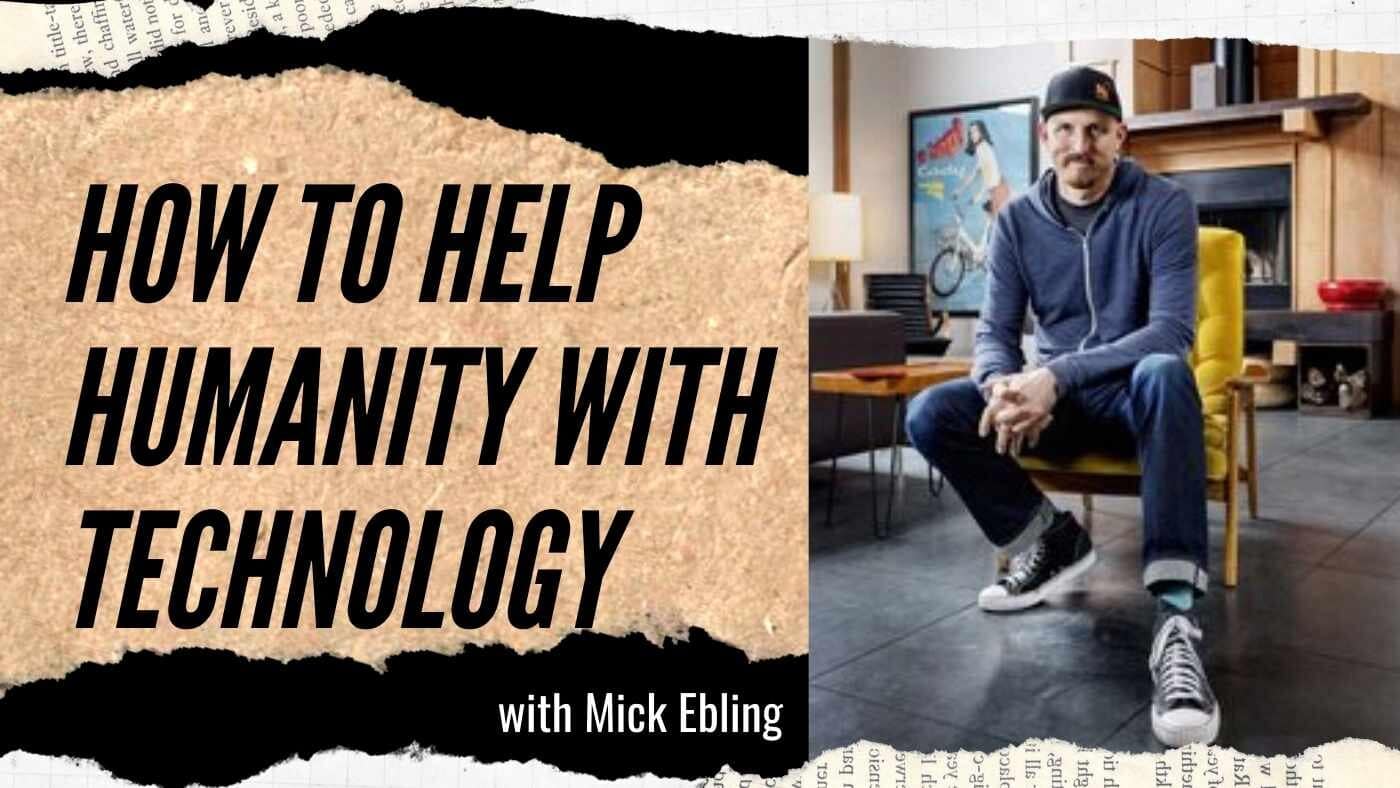
Our Guest Today: Mick Ebling
Mick Ebeling (@MickEbeling) is an American film, television and commercial Executive Producer, author, entrepreneur, and philanthropist. Mick has been honored by Advertising Age as one of the “Top 50 Most Creative People”, also in Wired Magazine Agent of Change, and as the recipient of the 2014 Muhammad Ali Humanitarian of the Year Award.
Mick founded Not Impossible Labs (@NotImpossible), a company committed to creating technology for the sake of humanity. Its two best-known projects are Project Daniel and The Eyewriter.
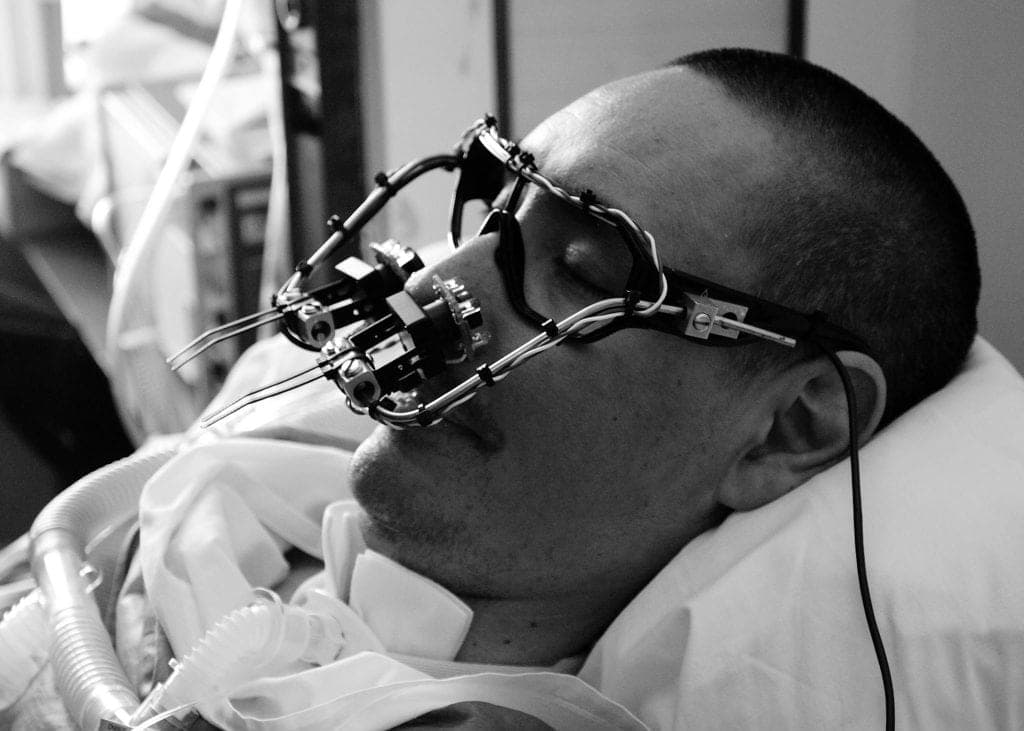
The Eyewriter was created for Tony ‘TEMPT’ Quan, who is a legendary LA graffiti artist, social activist, and publisher who was diagnosed with ALS in 2003. Mick organized a crew of hackers and artists to invent a low-cost, open source DIY device that would let Tempt create art with his eyes. Through trial and error, The Eyewriter was born and Tempt was back to using his creativity.
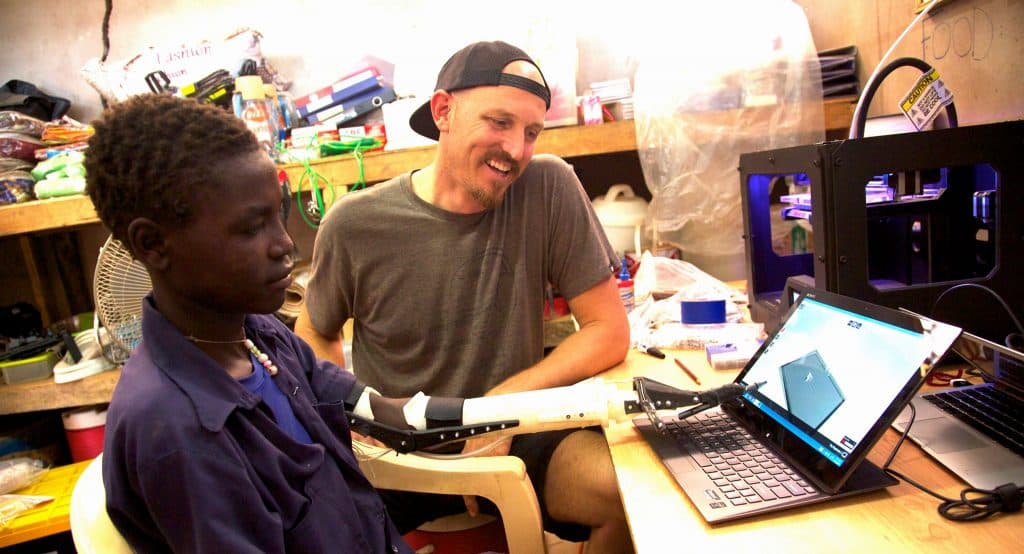
Project Daniel was for by a Sudanese boy named Daniel, whose arms are blown off during a bombing of his village and is incited to help. Mick illegally travels to the Nuba Mountains to find Daniel, make him a prosthetic arm, and teach the locals about the process as well.
I met Mick at the FutureM Boston in November 2015. His story silenced the entire auditorium and drew tears to my eyes. His message “Commit then figure it out” continues to echo in my mind and influences my decisions in choosing what I work on, people I spend time with.
Help someone today and tell us (@MickEbeling and @feisworld) on Twitter using #HelpOneHelpMany
In Our Interview, Mick Addresses These Questions Head On
- Have you ever hit a “low-point” in your career, or during any of the Not Impossible projects?
- What are some of the struggles you’ve experienced, especially at the beginning of establishing the Not Impossible Labs?
- How do you make sure that nothing gets in the way of launching a Not Impossible project?
- How do you see yourself transferring knowledge from your “producer days” to Not Impossible? Is there any overlap?
- What was it like for you to grow up in a nurturing and philanthropic family? What were the important values to your parents that were passed onto you early in life?
- How has Not Impossible influenced you as a parent?
And much, much more…
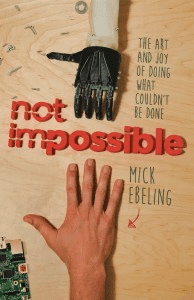
Best Resources to Learn More About Not Impossible
Official website: http://notimpossible.com/
The blog (stories from others on achieving the Not Impossible): http://www.notimpossiblenow.com/
Photos taken at FutureM Boston 2015:
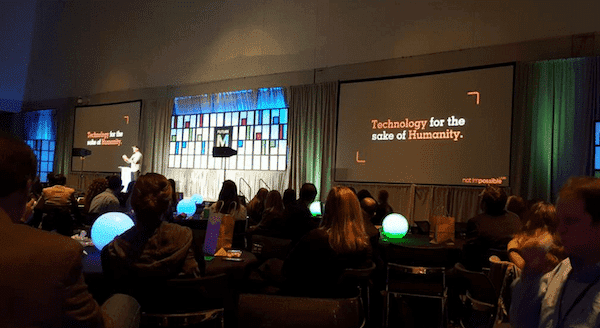
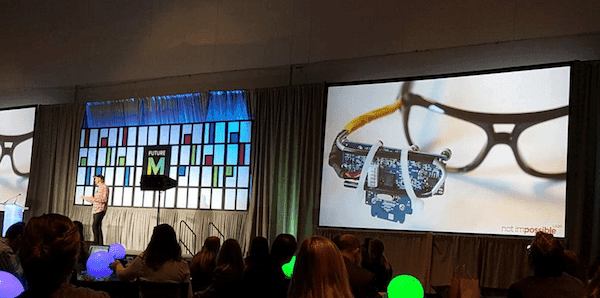
Lastly, Mick Was Featured on Microsoft Onedrive (A Story Well Told)
Transcript
Transcript
Fei Wu: Welcome to the Phase World Podcast, engaging conversations that cross the boundaries between business, art and the digital world. Hi everybody. It is Wednesday again, I, I am so excited to be welcoming this new guest to Face World. His name is Mick Eing. Mick is an American film, television, and commercial executive producer, author, entrepreneur, and philanthr. Mick has been honored by advertising age as one of the top 50 most creative people also in Wired Magazine, agent of Change, the recipient of 2014 Mohammad Ali, humanitarian of the Year Award. Mick founded the Not Impossible Labs, which is a company that is committed to create technology for the sake of humanity. I met Mick at the future. Advertising marketing event in Boston in November last year, 2015. So as you can imagine, Mick's story became a everyday story, uh, to be told at home and at work. Mick was the keynote presenter for one of the three days I was at the event. His story silenced the entire auditorium. And by the way, this is a typical Boston, new England response in case you're not from here or not familiar with the situation. This is how we react to a shock most of the time. So the strategy Mick has taught me is commit first and then figure it out with that message. Mick told us his stories. So first is the iWriter. In April, 2009, Mick flew five programmers and hackers to his LA home in his living room and created the iWriter, an open source DIY device, which enables individuals with paralysis to communicate and create art using only the movements of their eyes. And the second project is called Project. In November, 2013, Mick traveled to Sudan to 3D print the arms for children who lost their limbs in the war. Mick set up what is likely the very first 3D printed prosthetic lab in the middle of Nuba Mountains in Africa, and Mick debuted that project at CES 2014 in Vegas, alongside Intel and many other. The project itself went on to win every single possible award you can imagine. So in this episode of Face World Podcast, you will hear many personal stories directly from Mick sharing his experience with both projects and and beyond. I was rather excited, or to be quite honest, I could barely contain myself right before the actual interview took place on. M was in California, I think was about 60 degrees over there, and I was in Boston exactly 24 degrees that day. And earlier that day, I came down with this horrific cold and my voice crackled a few times. You can probably hear during the recording, and there are times that my mind was so cloudy that I could barely string towards together from time to time. And I was disappointed with myself. But Mick let the way. And help me piece together an otherwise impossible interview. And Mick told me the reality of his very own everyday struggle.
Mick Ebling: The reality is that there's low points every day. You know, and I am, I am just, as I kind of admitted in the book that I, I cry in movies and airplanes. Um, I, I'm scared every single. I'm, every single day I'm like, am I doing the right thing? Did I did, am I going about this the right way? Is this gonna actually make a difference? Am I, am I spending too much time on this? And not enough time on that? If you're afraid, you're in the right place because you're pushing yourself. When you experience that thing that you're afraid of is that you go into it, like you don't avoid it. You go into it and you go into it, you know, head first and, and sit with it and be afraid and feel what it feels like to be afraid. Don't deny it.
Fei Wu: As a digital producer for over 10 years, I had to ask Mick, also a producer by trade. What does he. As the superpower we as producers have, why
Mick Ebling: we've been successful is as a producer, you have to have a relentless commitment to completion and a short memory on failure.
Fei Wu: I love when me told me one of his childhood stories,
Mick Ebling: we would go camping every two weeks, and at the end of that camp trip, he would have us not just pick up our camp. But pick up the camp sites around and my brother and I would complain and we would not pick up trash that wasn't ours. And my dad would come over and say, Hey, there's some more trash over. There's a cigarette, but, and there's some, a beer can, and my and my dad didn't drink or, or smoke. And uh, he would say, well, you know, if we all left the campsite that we stayed in cleaner than when we found them, then the campsite would always be clean and we would never have a lit.
Fei Wu: I hope this slightly more elaborate intro is helpful. Please share your ideas, thoughts with us by responding via social media or the blog post or iTunes. And the handle again is phase world F E I S W O R L D, and I will see you at the end of the show. Please welcome Mick Eing from Not Impossible. Hey Mick, so great to see you again. To see you
Mick Ebling: as well.
Fei Wu: What's happening? I heard it's super nice in California and it's now I think 24 degrees in Boston. Oh my gosh. Yeah. And so I, I apologize in advance if I have to like blow my nose, .
Mick Ebling: No worries, no worries.
Fei Wu: Um, I, if you don't, I know you've met a lot of people. This past year or so, and, uh, so I first heard your story and met you in person, shook your hands after the future end event in Boston. Okay, cool. Yeah, nice to meet you. Nice to meet you again. And I must say that thanks to your story, I am able to tell your story to, I think so far, probably dozens of people throughout the holiday and becomes a topic. That and you should see, I, I, um, I met a group of, uh, new team members earlier this morning. I start, of course, I have to brag about this interview, and you should just see the looks on their faces and everybody, you know, just all of a sudden start paying attention. . And it's, that's awesome. Yeah. I am so, I'm so psyched about this and, uh, thank you for, for having me. And I bought your book and I start reading it as part of my evening meditation and I Wow. Yeah. That, that's awesome. And then to hear that, to hear that, because it's so much more than the TED Talk and what I heard, even during that one hour, maybe two hour keynote conversation, there's so many personal stories, uh, that you talk about When you were, when you mentioned that you would watch a movie on the plane and cry, I was like, I do that all the time. I get exceptionally emotional. So, um, there's one thing I must tell you. That I thought your presentation in Boston was so phenomenal that I, the moment you stop talking, I looked around, which was my mistake. I was looking for it standing ovation, and I realized and asked myself all this time between our conversation realized why did I have to look around? Why couldn't I just stand up on my own? So,
Mick Ebling: that's awesome. That's very sweet of you.
Fei Wu: Thank you. Well, how did you, how did you like the audience? Uh, what was that experience like for you? I know that
Mick Ebling: was, it was a mellow audience. Usually the audiences are a little bit more participatory and, and kind of vibrant. It was a, it was a fairly, uh, reserved
Fei Wu: audience, you know, I feel like maybe that's a New England thing. I know you're not from here. Mm-hmm. , and I was so excited. I was like, wow, look at this. This like a surfer did. Super cool. I don't know what he's gonna talk about, but, um, but I was hoping that you notice the moment you're, you're done with this speech and there's so many people lined up. Two for the autographs of the book. Uh, in particular my company, Arnold invited the people who went to future M and said, you have to come back and present to the company. And all of us turned in our homework. And this woman, uh, Lauren, she basically present in front of like a hundred people here at Aral talking about your story. And so, so many more people heard about that and she was the only one got picked.
Mick Ebling: Oh, wow. Amazing. That's awesome. Yeah. Well, I'm, I'm, I love all, I mean, Pete Fava is a close friend. I was just with him this week, and there's a, there's a bunch of people, um, we're actually gonna do a project with him right now, which I'm really excited about. And, um, we're, I'm trying to, there's, let me hang on. I'll tell you some of the other, the other, Arnold Diets that I'm, um, Arnold. So Spring Clinton, is she still there? Yes. I love Spring is my favorite. She's the most foulmouthed, amazing producer I've ever met. Billy Ne, Billy Ne Dave Register. Uh, Ken Ferris isn't there anymore. He was in Arnold, New York. Um, yeah, those are the main.
Fei Wu: Unbelievable. Yeah, I was just talking to Spring, the, uh, yesterday and Dave David Register just got promoted to EVP Creative. So Nice.
Mick Ebling: Well, please say hi to Dave. I'll, um, actually here, I'll just text him while we're talking, but let's, let's, let's definitely jump in. Well, we've got a lot of different things that we work on. I mean, the iWriter and Project Daniel are the most well known. Mm-hmm. . Um, and for your listeners, project Daniel was, um, a project that I did in 2000. 13 and the, the init, kind of the initial inspiration around this was I had read an article about a young boy in Sudan who had lost both of his arms in the war and um, what got me was when he woke up from his amputation, he realized, Uh, his comment was, you know, if I could die, I would, because I'm now gonna be such a burden to my family. And to me, that was something that I just, I couldn't really fathom. I couldn't fathom my child having that kind of despair. Mm-hmm. . So we, you know, I, I undertook and kind of committed and one of the principles that we live by here is commit, then figure it out, is that we decided to do something. So we, um, in the end, um, and exactly four days, I'm sorry, four months from the day that I read that first article, I was in Sudan. I ended up putting an amazing team together of people to help come up with a great solution. We printed, uh, an arm for this young boy named Daniel, and Daniel fed himself for the first time in two years. Mm-hmm. with an arm that we made in Sudan. And that to me was. N the, the success of that project was not just because he fed himself for the first time, was a, which was a numerical under itself. It was the fact that we left all the materials there and the team, um, that we trained in Sudan in this war torn region of the Nuba Mountains. They were able to continue making arms after we left, and that was the most exciting part. Wow. So that, you know, that's, that project for me ended up being an incredibly incredible example because one of the ways that we. sustaining the work that we do is by working with brands and working with, um, you know, fortune 100 companies and telling these incredibly powerful stories around the, the premise that we live by, which is technology for the sake of humanity. And we go out and we'll make this technology engineer this technology, do whatever we can to make something and then tell the story around it and the project Daniel story. We ended up having underwritten by, uh, Intel and it went on to win literally every single advertising award under the sun from all the way from, you know, the one show, best of show and the can line type. You know, we won the titanium and Can to innovation awards and humanitarian awards, and it was just a, it was just an incredibly, uh, well received. And popular project. So those are, you know, the iWriter and Project Daniel. Those are the two that I kind of cite most often, just because I think they have the most, you know, tangible relevancy to the brands or the companies that we're speaking with. Um, you know, at this point we're working on projects around water. We're working around projects that, uh, deal with music. Uh, Site, there's a whole wide swath of different things that
Fei Wu: we work on. Mm-hmm. , one of the things you mentioned about the 3D uh, printing arm project, which I, I loved, was the fact that you focus on the functionality, the usability. Of it instead of, uh, thinking of how absolutely beautiful and gorgeous it needs to be and yet not usable. And I think you used the metaphor of if Steve Jobs or Apple were to see it, uh, at the beginning you said they might not be their favorite product, but yet this saved, in my opinion, saved somebody's lives. And then it's still producing after the fact. After that you have, um, left Africa. What's your personal take on the production process? Was there, you know, what was your role in that? And to making sure that you can conquer, you know, every level of difficulties and making sure that this ends up being produced
Mick Ebling: well, you know, you have to take all the steps to make sure that you pave the way for success. You can't just. You know, hold your breath and cross your fingers and hope that it all works out. So you take, you take precautions and, and you put in take, you know, very necessary steps to make sure that everything is set up. But then there's also, you can also, you know, analysis paralysis, you can go to the point where you never actually depart or leave or, or actually do it because you're trying to sort everything out. So there's, at a certain point, you have to kind of trust in your experience and trust in your team, and. on you. Off you go.
Fei Wu: Is it possible to share some of the stories sort of after Daniel Project? Um, who are some of the other kids or people who are able to benefit from this technology and what you've left with them, you know, in Africa and the production is still in progress. I believe Intel is involved as well. So what's the level of impact today after the project was initially launched in 2013.
Mick Ebling: I mean, impact today, and this is kind of what we. . What we strive to accomplish in all of our projects is to light the fuse and to set the, set, the set the stage, and, and. Kind of introduce this concept of people being able to, to do these types of things. So, you know, the arm itself was near obsolete probably within, you know, six to 10 months because other arms had come out, other prosthetics had come out. Um, there was a lot of civil unrest there as well, which kinda derailed our plans for expansion there and continued work. Our goal is, um, we will, we will kind of light these fuses and set these projects going and then we use that as, as inspiration and motivation for other people in our community in kind of the non impossible community or people who are familiar with us or just the general public to then go and try to innovate and iterate on what we've created. So many times what we'll do is, we'll, you know, we'll post open source, kind of what is, um, Uh, kind of how we went about something. But even if someone just knows the story, even if someone just knows what we did, but they don't know the specifics, we would hope that that would be the thing that would inspire them to, you know, you talked about it earlier, that the thing that we live by here, which is help one, help many, is that we would want them to kind of hear this story and understand the story and say, you know, I can go do something just like that, or I can do something different. But the process that actually works is actually saying yes. Going forward
Fei Wu: with it. Mm-hmm. , um, I'm a huge fan of Seth, God, and. And I somehow see there's a lot of overlap to what you're doing, your actions in relations to his teaching, which is keep showing up for your work. And like you said, you know, commit and then figure it out. But I think the trick is to, um, really believe in the process and not every day is going to be glorified. You know, not every day is going to be a TED talk, a future m conference, and, and people celebrating your work. I wonder, what are some of the potential, you know, struggles or did you have a low point at any point during the Not impossible? And how did you conquer that?
Mick Ebling: The reality is that there's low points every day. , you know, And I am, I am just, as I kind of admitted in the book that I, I cry in movies and airplanes, . Um, I, I am scared every single day. I'm, every single day I'm like, am I doing the right thing? And did I, did, am I going about this the right way? Is this gonna actually make a difference? Am I, am I spending too much time on this? And not enough time on that? You know, there's a, there's a tremendous, uh, amount of, yeah. I mean, I. Fear would be the most human and most, I guess, specific way to describe it. It's not like, oh, it's not, that's not paralyzing, but there's always a lot of concern there. So it, I think to deny that I think you. if you're, if you're, if you're cautious and not cautious, but if you're, if you're afraid mm-hmm. , you're in the right place because you're pushing yourself mm-hmm. . So
Fei Wu: yeah. To create that, to create that tension. I, yeah. Uh, even, you know, after 51 episodes, like, I feel like whenever I push that published button for a new episode, uh, I, I sense that fear right away of how this is going to perform, you know? And I always feel, I choose my guests very carefully and I feel they always outperform then my expectation. And, but there's always the fear in me somehow to say, look at these people. All of them are way more accomplished than I am. You know, am I doing them justice to really properly, you know, share their stories and, and have them have to have voice and have their sort of experience properly shared. So it's so refreshing to hear from you. . This is a very common feeling in emotions that all of us experience. So instead of taking a step back, you often take a step forward and just phase the fear and address it and be honest with that. So,
Mick Ebling: you know, I think. Um, and I write a little bit about this in the book. It's about when you, when you experience that thing that you're afraid of mm-hmm. is that you go into it, like you don't avoid it. You go into it and you go into it, you know, head first and, and sit with it and be afraid and feel what it feels like to be afraid. Don't deny it. Don't, don't stray away from it. Like go sit next to it. Have a beer. And then, and then get up, you know, get up and move on, kick it in the ass and move on. Like you, there's no reason why you need to try to quell or, you know, or squash the feeling of fear. That's a, that's a real true motivation and um, I think it's just a matter of con containing it and understanding what to
Fei Wu: do with it. Yeah. I am internalizing. A lot of this information and for, for some reason, you know, when I interview Chris Tibit and she said, um, there's so many dimensions to our voices and when I first heard you and what you have shared with me so far, I just feel like there's, you are such a great storyteller and there is that just mentions to your voice, makes your stories, uh, very relatable and very relevant to things. A lot of things we're going through. Um, And really helps me with sort of the thinking process and, and to sit with it and, and listen to it again. And by the way, I listen to your podcast with James Cher twice, and I realized the second time I was listening to it, I was able to absorb on that and somehow identify the information I didn't hear for the first time. It's like watching a really good movie several times. Mm. Cool. Yeah. And then just kind of take that time to listen to someone speak. I. You know, I feel like part of your process, you talk about the iterations of your process and you talk about when the iWriter, and I'm sure that wasn't the only project where things you did at the beginning did not work and you have to try it again and again. And then there these entrepreneurs, I believe was from Korea and complimenting you at first and realizing like, you know, we might have a better software and let's collaborate on this. So I'm kind of intrigued by your back. As a producer and how much of that knowledge, uh, have translated to what you're do, what you're doing day in, day in and day out. Could you share some of that with me as, uh, also as a producer,
Mick Ebling: uh, in terms of the trials and tribulations of every day? Yeah,
Fei Wu: yeah. The skills as a
Mick Ebling: producer, you know, I think as a producer, I don't even think it's a long conversation. I think it's as why we've been successful is as a producer you have to have a relentless. Um, a relentless commitment to completion and a short memory on failure. So you have to just know that it's gonna get done. You don't have a choice for it not to get done. And then as you continue to butt up against obstacles or problems or issues, you just forget about it and hurdle it and go on to the next one. So that, that's really the skill set that I think that it takes to be, uh, a successful producer and a success, not impossible, what it takes to be successful.
Fei Wu: founding, not Impossible. As a company, you certainly have gone through, um, a lot of struggles and, and questions. What are, were there any, you know, setbacks or like significant challenges that you had to, you had to solve?
Mick Ebling: Um, you know, specifically, In terms of launching Not Impossible, this is a business model that we don't really have anything to point to, to compare, right, exactly. Right. Mm-hmm. . And so there's a, there's like kind of little bits of ingredients. Um, there's like, There's a little bit of production company, there's a little bit of of advertising, there's a little bit of strategy, there's a little bit of, you know, innovation and invention. There's a lot of different things like that, but no one that we can tell have combined those into one one pot, right? One offering. And so we operate as a tech company that is out, you know, creating these life, changing, you know, world changing inventions and approaches on, you know, technology for the sake of humanity. Um, but then there's also a very pragmatic part of what we do in terms of the storytelling mm-hmm. . And so I think that that kind of mixture of how we go about it and the different various parts of this have been what has made us successful, I think, and what has really made our, given us our reputation of being able to, to do this the way that we do it. But it's also, you know, in that it, there's a business. That is able to abide by, oh, you're an ad agency. This is how much you charge. Oh, you're a production company. This is how much you charge. Mm-hmm. , you know, but then when you start to mish mash those and take the different aspects of those that you do and don't do, um, it's, you're braving the new path in terms of a model. And that, I think has been, has been the most challenging, the most scary and the most exciting at the same. Mm.
Fei Wu: You phrased my question so much better. I, this is, your answer is exactly what I was going to get at. There was no manual in doing something called Not Impossible, just by, I mean, the name of the company you're doing basically everything that was not done before. Um, and to, to approach it with your unique lens. It's, it's just hearing you talking about the process, it's very interesting to me. Yeah. Um, what are some of. Questions. And as you've, you know, your company yourself getting exposed to a lot of media channels and, and being quoted, um, interviewed, what are some of the questions you wish people asked you but didn't?
Mick Ebling: Um, I think in some of the questions that you've just asked, which is, what are you scared about? Mm-hmm. , you know, that's, we, we're not trying to be superhuman here by any means. We're trying to actually be very much, very approachable and. And real about our work. And I think that sometimes people will confuse the work that we do with having these superhuman powers. Mm-hmm. and, um, we don't want that, cuz that actually does a disservice to what our mission is, which is to, you know, and really remind people that they have the ability. To, to go and do these things as well. So I think that's, you know, as far as the question goes, that the human component of what you've asked, you know, what are we afraid of? What are our challenges? These, these are the things that typically don't get asked. And so I'm, I'm glad you did.
Fei Wu: Have you always been this way? Cuz I had a feeling when I first met you. You know, we, we always, we always judge. And the way I look at you, I assume you're from California, you're a surfer. And I was right about both of them, And I just sense this freestyle and you have so much love, not just for yourself or your family, but out there for the world. And you know, I think
Mick Ebling: it's how I, this is just a manifestation of how I perceive the world. Mm-hmm. and then what we do to address it. So I see the world as an incredibly beautiful magm. Um, inspiring lush place, and I see that the problems that exist, I don't feel that those problems are so garine that they cannot be solved. Like I, I don't believe in littering. I don't believe in, you know, a lot of things, but I also don't get stressed about. Global warming and, uh, and littering and, and, and trash and things like that because I know that Mother Earth is gonna just chew it all up and spit it all out again at a certain particular point. Now, we as humans might not be around to experience that. We might mess it up for ourself, but I always laugh at. That, that we think that, uh, we're messing up the earth. The earth is, the earth is too big to be messed up. , we're messing up the little tiny aspect of the earth that we inhabit. And so that it's something that we should be more selfishly concerned than we are about, you know, trying to be. Um, so I guess worried about the fact that the Earth's never gonna be the same. It's like, yeah, we, the earth survived dinosaurs and ice ages and a couple other things. It, the humans, the frail humans are the ones to be concerned.
Fei Wu: I, I actually wanna find out, you know, for an entrepreneur like yourself, doing these amazing projects, to summarize the two stories I keep sharing are the iWriter, but that, that project really resonated with me, uh, very well. And then following that, the fact that you, uh, I believe you went to Africa to deliver the 3D arm for the,
Mick Ebling: no, not deliver it, make. To make it actually made it out there.
Fei Wu: Wow. What did your, one thing you didn't talk about too much is like, how did your family respond to that? You have three boys and you're going out there on a limb by yourself.
Mick Ebling: Uh, you know, they, they support me and what I do when they know who I am. So there's not a lot of. . Yeah. And I'm not any different than I am all the time, so they're not necessarily surprised. Obviously my wife was worried and concerned, but, uh, you know, she's, she's incredibly supportive of, of what we do at Not Impossible
Fei Wu: because I, I grew up in Beijing and I think about the way my parents raised me, which was considered pretty westernized. But compared to most other parents, you know, the tiger moms and dads, there's so many parents still today trying to live. Through their kids, you know, to help them fulfill that ambition. But while you were speaking, and it made me think about like, well, I wanna be this kind of parent who is just so happy and fulfilled, um, you know, with your own ambitions. And I have a feeling that your kids must be really, really proud of you. Could you tell me about like, what is, what is parenting like for you, given. Not impossible. And, and all these projects, what have you learned as a parent and how, how has that impacted your
Mick Ebling: kids? Um, my favorite thing right now is that my kids will say, um, oh, I always ask them how their day school went or what's going on. They said, well, I broke some rules today, and I'll say, what do you mean? And they said, well, you never follow rules. So, you know, someone wanted us to do something and I decided I wasn't gonna do that. So I love. They're independent thinkers and that they don't feel that they need to subscribe by rules. Mm-hmm. , and I said, listen, you know, just make sure you understand some rules are there for your safety and some rules are there. Because someone thought that they should be there and you need to be able to distinguish between the two. Um, but I'm really proud of them that they, um, they, they all work very hard. They understand the concept of that the luckiest people in the world also happen to be the hardest working people in the world, and they're willing to work towards their goals. And they're willing to not necessarily subscribe to convention. I mean, that's the beautiful thing when you talk to kids. Convention is a, is an adult concept. It's not a concept that they understand or that they've really, there's no preconceived notion or, or definition of what, uh, of what, um, kind of convention might mean. So it's fun to celebrate with them of. Listen, you can invent this however you want and you can pursue whatever we, whatever dream, whatever goal, whatever it might be. You can pursue however you want. And, and, um, my nine year old and five year old just decided that they wanted to get a hamster and we said, great, buy it yourself. And they said, okay. And they went outside and it was a super, super cold day and they sold lemonade outside. And my wife and I looked at each other and was like, no one's gonna buy lemonade on a cold day. And they back in later that day and they made 20 bucks. You know, and see, so they, so I love that they have that kind of, um, just fortitude and drive to, if they want something, they just go.
Fei Wu: Wow. I also love the fact that you didn't just hand them the money and
Mick Ebling: Oh, no. No way. That's, I think that's the worst thing you can do as a parent, quite
Fei Wu: frankly. Mm-hmm. , it seems like they're committed then they figure it out.
Mick Ebling: Exactly. Exactly. ,
Fei Wu: it's something they truly want. Yeah. That's That's amazing. Uh, I wanna hear a little more about your childhood stories, cuz I started to get a glimpse of that through your book and it sounds like you're, you're coming from a very f like an incredible family and parents are always supportive of others. Um, Where did you grow up? What was it like for you?
Mick Ebling: Uh, you know, I talk a lot about it in the book, and I think that those stories are probably the most representative of, of what I consider to be the most influential aspects of my childhood. I grew up in, I was born in Los Angeles and grew up in Arizona, and I grew up to parents who. We're incredibly philanthropic and, and we're incredibly giving. We were, we would go to church every weekend. There was a regularity in a, in a, in a kind of a, a pace to our life. I think we would go to church every weekend. My parents volunteered and either, either volunteered or started charities the whole time. I can remember we would always go to the same place on vacation. We go camping. So there's, there was like a, a really wonderful, I think nurturing and comfortable consistency. To my life. And I think it was, you know, a lot of the lessons that I learned, I learned from those kind of subtle moments. And I, I talk about it a little bit in the book of, one of 'em is the lesson that I learned from, from my father, which is, you know, we would go camping every two weeks and at the end of that camp trip, He would have us not just pick up our campsite mm-hmm. but pick up the campsite around. And my brother and I would complain and we would not pick up trash that wasn't ours. And my dad would come over and say, Hey, there's some more trash over. There's a cigarette, but, and there's some, a beer can, and my and my dad didn't drink or, or smoke. And uh, he would say, well, you know, if we all left. The campsite that we stayed in cleaner than when we found them. Then the campsite would always be clean and we would never have a litter issue. And of course, as a, you know, as a teenager you'd roll your eyes and be like, oh dad. But now I look back at that and that, I mean, that. That plays into my life in the most mundane and, and kind of small instances in a very small example. And it, and it happens in the big kind of not impossible initiative, uh, way of working.
Fei Wu: One of my takeaways from your speech was, you know, I was sitting there thinking, well, this is incredible. When can I ever do that? And, , I, I'm not sure if you remember, one of the, the kind of homework that you left with us is help someone today. Mm-hmm. , or in the next week, next two weeks. And I realized that's something that anyone could do. And that was also, I like when James Cher suggested that use a hashtag or, you know, help someone do something of meaning today. And I decided, you know what? I'm gonna do something, uh, within my control. That's something I'm not already doing. So I, um, I took your advice. At the end of the holiday, I went up to the Arnold receptionist. She has been here for probably more than 20 years, and, And she is someone we, we all admire very much, but oftentimes people walk right by her, only go to her when they need help. Mm-hmm. , so, so I prepare a gift for her and she just, she went around the desk, gave me a huge hug that I just, I've never experienced something like that. And then probably was my favorite moment in all my two years at Arnold. And we ended up going out to lunch and getting coffee. Oh, that's awesome. You know, I, she told me so much about her life and how she supports her sister. Wow. Yeah. She dedicated her life. She's doing what she does into her sixties to support her family and her sister. And, uh, I realize, you know, anybody could do this. This does not require, The extensive technology or a team of people. Um, so thank you for that, for triggering.
Mick Ebling: I love that. Yeah. No, it was really human. I, I love it. It's fantastic. So for
Fei Wu: people to learn more, uh, you know, for people who have never been exposed, uh, to the not Impossible projects, what is a good way to kind. Uh, not necessarily get in touch with you, but kind of share their, share their feedback or learn more about, uh, what you're doing, what you're up.
Mick Ebling: Um, the best way is to go to not impossible.com. You can see some of the things that we have worked on, some of our historicals, um, you to read the book. You know, the book I think is a great example. It's a much more in depth version of the things that we're, that we do, uh, go to Not Impossible Now, which is our blog where we're celebrating the stories of people doing the Non Impossible. Um, those are kind of the three major touch points that I would say to hit and then just, Make sure to like us and follow us on our social media channels so that you can see what we're up to, kind of real time. Awesome.
Fei Wu: Well, thank you so much Mick. I, I have so much respect for what you're doing and, uh, you've really impacted my life personally, and I know so many people I know at Arnold. And, you know, it's our, you know, the, the group's reaction at future m was not an accurate, I guess, outcome, what you might imagine. This is truly something that, that touched our lives and our hearts in a very, very deep way.
Mick Ebling: Um, very, I'm very, uh, honored that you would say that. So thank you very
Fei Wu: much. Yeah. My life has, I feel like my life has, and my ambition has kind of divided into two parts is like, before learning about you and your stories and, and after I started to really look on my personal life differently and kind of challenge myself to. Um, where I can probe and kind of extend myself to make this world a better place, even if just meaning starting with small things like
Mick Ebling: I did, that's incredibly, I'm, I am honored and blessing. So thank you, .
Fei Wu: Hopefully I will get to meet you, uh, in, in person one day. I don't know when you're going, uh, with any upcoming events that you might be coming to or staying in California.
Mick Ebling: Uh, you know, I speak, um, I, I speak all over the world, so I'm always kind of crisscrossing around the globe, but I get, I get out east, I, I'm out west, I'm in, I'm over in Europe a bunch, so it's literally all over the place. So, um, just give us a shot when you're heading west and love to have you come by and say hi.
Fei Wu: That, that would be great. Is there an event calendar? Uh, or what dates I can take a look at? Is that on the website?
Mick Ebling: Uh, there isn't, that isn't, that's an interesting, that's an interesting suggestion.
Fei Wu: Mm-hmm. . So I look forward to, um, just get involved in, in so many things. Um, even. You know, reading about Not Impossible to see if there's anything I can, you know, help you out with. Um, that would be amazing.
Mick Ebling: Well, we always have projects and we're always looking for volunteer project managers and producers to work on things. So if that's something that you want to pursue, you know, by all means, let us know because we are, we are understaffed and, and, um, incredibly passionate about what we're doing. So we always are looking.
Fei Wu: Yeah, please, please let me know. Should I get in touch with Leslie or Yeah. Get in touch
Mick Ebling: with Leslie and ask her, you know, which projects that we need help on, and she can definitely maybe float a couple by you and see what you'd like to
Fei Wu: do. Awesome. Wow, this is incredible, Mick. I, I'm so, I'm so grateful. Hi guys. Thanks so much again for spending this past half an hour with us, and, uh, thank you for choosing us and for letting us have your attention. So I do wanna call out, not impossible.com is a great resource for you to learn more. About the labs and I especially like the blog section where you can learn so many new projects and things Mick and his team are involved in and establishing. And there are great volunteer, uh, opportunities you can find out more. Um, directly by contacting them and read the book. The book is fantastic. It's also called Not Impossible. I have a copy of it where Mick shares a lot more personal stories and the ups and downs, and, uh, if you enjoy this message, I hope you go out there and help one person that doesn't have to be. Big. I hope you then share these stories with others, um, including this podcast and encourage them, everybody around you do the same. And I, we are indebted to mix effort and, and really everybody on his team and best of luck. And, um, I hope you tune in again in two weeks. See you. To listen to more episodes of the Face World Podcast, please subscribe on iTunes where visit face world.com. That is F E I S W O R L D, where you can find show notes, links, other tools and resources. You can also follow me on Twitter at Face World. Until next time, thanks for listening.

Written by
Fei WuFei Wu is the founder and CEO of Feisworld Media, a Massachusetts-based digital media company helping brands get discovered by people and by AI. An Adobe Global Ambassador and brand partner to ElevenLabs, Synthesia, and 50+ other tech and AI companies, she hosts the Feisworld Podcast (400+ episodes, 500K+ downloads — guests have included Seth Godin, Steve Wozniak, Chris Voss, and Arianna Huffington) and co-created the documentary Feisworld: Live Your Art on Amazon Prime. Fei writes for CNET, Lifehacker, and PCMag, and her work has been featured in Forbes, Harvard Business Review, and WIRED. She has been publishing on the internet since 2014 — long before AI discoverability had a name.
View all posts by Fei Wu→Stay updated
Weekly insights on content, AI, and digital media.
Keep Reading
Related Articles
Joanne Lipman on Mentors, Untapped Talent and Why Women Should Stop Waiting to Be Perfect
Marc Randolph on Curiosity, Messy Starts and Why “Nobody Knows Anything”