Nir Eyal: How to Form Habits, Control Your Attention and Choose Your Life (#333)
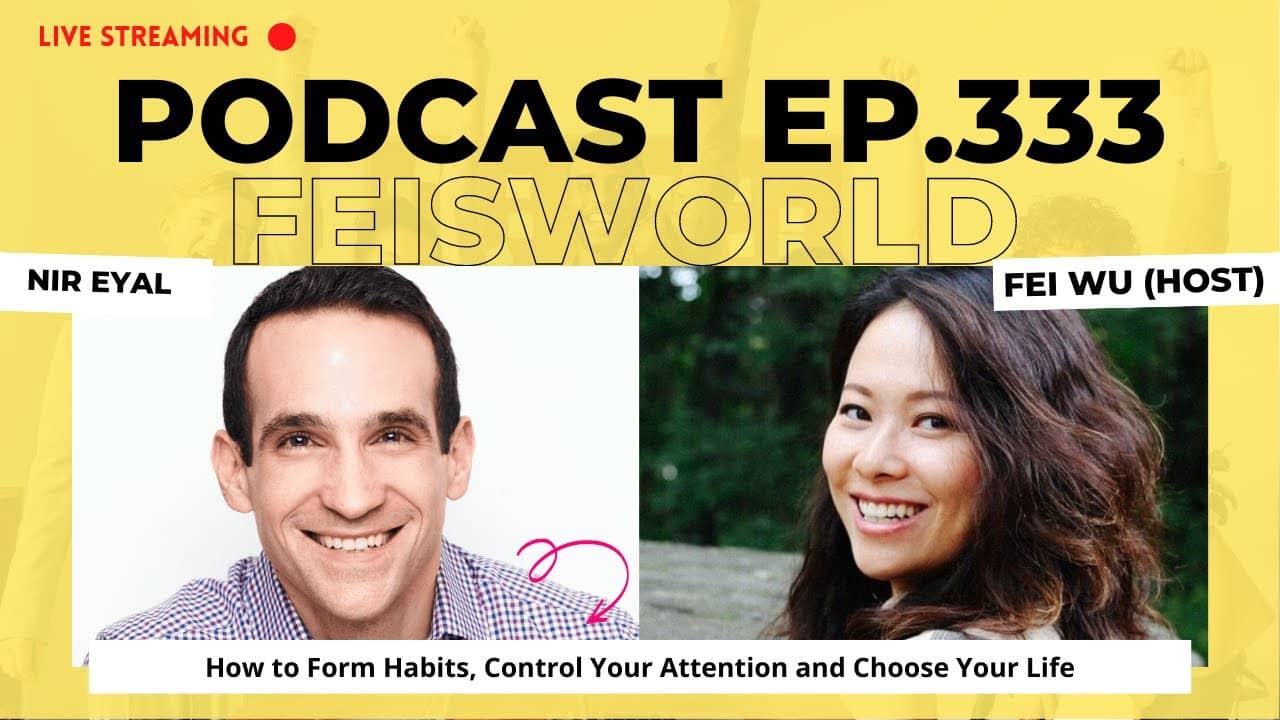
I have subscribed to Nir’s newsletters for the past decade. He’s one of the few people I follow and learn from regularly (besides Seth Godin, for example). So thrilled that this conversation is finally happening.
Nir Eyal writes, consults, and teaches about the intersection of psychology, technology, and business. Nir previously taught as a Lecturer in Marketing at the Stanford Graduate School of Business and the Hasso Plattner Institute of Design at Stanford.
Nir co-founded and sold two tech companies since 2003 and was dubbed by The M.I.T. Technology Review as, “The Prophet of Habit-Forming Technology.” Bloomberg Businessweek wrote, “Nir Eyal is the habits guy. Want to understand how to get app users to come back again and again? Then Eyal is your man.”
He is the author of two bestselling books, Hooked: How to Build Habit-Forming Products and Indistractable: How to Control Your Attention and Choose Your Life.
Indistractable received critical acclaim, winning the Outstanding Works of Literature Award as well as being named one of the Best Business and Leadership Books of the Year by Amazon and one of the Best Personal Development Books of the Year by Audible. The Globe and Mail called Indistractable, “the best business book of 2019.”
In addition to blogging at NirAndFar.com, Nir’s writing has been featured in The New York Times, The Harvard Business Review, Time Magazine, and Psychology Today.
Nir invests in habit-forming products that improve users’ lives. Some of his past investments include Eventbrite (NYSE:EB), Anchor.fm (acquired by Spotify), Kahoot! (KAHOOT-ME.OL), Canva, Homelight, Product Hunt, Marco Polo, Byte Foods, FocusMate, Dynamicare, Wise App, and Sunnyside.
Watch Our Interview
Transcript
Transcript
Fei Wu: Thrilled Media, and I am so, so thrilled to be introducing one of my favorite authors in the past 10 years. Neil El to phase world. So thank you so much for being here. Y I'm just so thrilled. I can't believe
Nir Eyal: you're here. Oh my pleasure. Thank you so much for having me. Great to be here.
Fei Wu: Thank you. So let me briefly introduce you, and we're just gonna dive into today's questions and themes around how to form habits, control your attention and choose your life. So for those of you who don't know, I have subscribed to New's Newsletter for the past decade basically, and I keep saying, keep referring to you as near and far because you know I've been introducing you that way and it's just so memorable and you are. You know, one of the few people I follow consistently for the past 10 years, never unsubscribed and think about the other people I do. Yeah, do follow regularly are like Tim Ferris, Seth Godin, of course, and just handful of other people and. . It really shocked me last night. I was like, I have to keep going back to the older newsletter just to get the exact date that I subscribed. I'm pretty sure it's gotta be at least 10 years at this point. Um, that's, that's,
Nir Eyal: that's about when I started. Yeah, that's about right. . Yeah. Wow.
Fei Wu: We gotta go and I have no idea. I mean, I do, I think my partner, uh, Adam Leer first introduced your work and I was just, So fascinated by it. You're, you know, very science backed, yet your personality is also very much integrated in your content. There's a love of intimacy that I feel like I am, you know, learning something yet, learning something from a friend, and it's very approachable. I quote you very often and you know, I, I keep introducing your work and even creating quote cards and referencing your work. It's been wonderful and thank you for two unbelievable book, uh, two books on, you know, called Hooked and Intractable. For people who are watching right now, please, please go check it out. Hooked is from 2020 14 and instructive from, uh, 2019 and there's so many worksheets, newsletter, and just information and tools on your website. So, That's really my sincere
Nir Eyal: introduction with everything. I gotta say, I gotta start every morning like this. I need to have a cup of coffee and a conversation with Faye cuz this is like the best way to start a day. , thank you. Make this a regular thing, .
Fei Wu: Let's do it. And by the way, you said you were in morning time. I realized you're in Asia somewhere on the other side of the world.
Nir Eyal: Yes, I'm in Singapore, so it is uh, 8:30 AM over here. Wow. That's super
Fei Wu: early. I very. I am ba uh, based in Boston. I've been here for nearly 20 years.
Nir Eyal: Yeah. Oh, okay. Boston, Massachusetts. Yes. We've been very cool. Yeah, we've been in Singapore for about three now, and, uh, we really love it out here. It's, it's a, it's a beautiful country. Wow.
Fei Wu: That I didn't know. You may have written about it. And I have clients in Singapore. Uh, what, what brought you to Singapore?
Nir Eyal: Yeah, so we, we just really like it out here. We, we came initially for a short period of time, and then we fell in love. Uh, we really l we used to live in, in midtown New York, and, uh, we came out here and, uh, my daughter really took to it and I love it. And, um, yeah, we're just, have you ever visited? It's, it's a really great little.
Fei Wu: I haven't, but my mom used to, my mom's an artist who painted the silk panel two, two by four meters. Oh, sh Yeah. So she spent a long time in Singapore and really established her career earlier on. Uh, we're originally from Beijing, so, um, I remember mom being away traveling in Singapore, but I personally have never been. And right now one of my loveliest clients is Elco Global. They're also based in Singapore. So I have a call. With Singapore every Tuesday for the past year,
Nir Eyal: so, oh, wow. Well, well, tell, tell them I'm happy. You know, any friend of yours is a friend of mine, so, uh, always happy to meet good people. It's, it's a, what I really love about Singapore is that it reminds me, Of, um, like New York mixed with San Francisco, but in Asia, uh, it's a very, you know, it's very, very Asian. It's kind of the, the tech hub of Asia. Um, so it's got that like Silicon Valley vibe of a lot of optimism, a lot of, um, you know, everybody knows this region is getting better and better. People are getting wealthier. People are, uh, getting out of poverty like they've never had before. Uh, and it's a massive population, right. Southeast Asia, if, I think it's, I think I read somewhere, I'm not getting this exactly right, but something. The effect of, if you drew, uh, a, a, a circle around Singapore of, I think it's 2000 miles around Singapore, 50% of the world's population lives within that circle. So it's, it's 50% of the entire world lives inside that circle, Wow. And, and this part of the world is, um, you know, in many ways leapfrogging the technologies that the West has, uh, uh, has created because they're, they're going, uh, not, you know, two g, 3g, 4g, 5g. They're going from like two G to 5g , like right away. And they're all on mobile phones. And so it's a really exciting, uh, economic landscape. A lot of growth, a lot of optimism. Mm-hmm. . And then Singapore in particular is kind of this melting pot. So many different cultures. Um, yesterday there was this amazing, uh, Indian Hindu festival, uh, called Thiam, which I'd never seen before, which was just blew my mind. Have you ever seen it? By the way, have you ever you ever heard of Thiam?
Fei Wu: Uh, there I have a lot of Indian friends. Which one is this exactly? I probably haven't seen it. So,
Nir Eyal: yeah, I, I also have a lot of Indian friends in America, but I never heard of this holiday. . Right. I heard of Du never heard of . Uh, is this holiday where it's, it's a, a ritual of Thanksgiving. But it's for things that you already received, okay? So it's not like you're asking for stuff, it's for thanking for things that you already received. And part of what's most emblematic about this holiday is that people will, uh, uh, pierce themselves in this ritual of purification. So they pierce their tongues, they pierce their cheeks, they carry these, uh, incredible, um, , I don't even know how you describe it. They're called, uh, cavities and they are these huge structures that sometimes can weigh a hundred or 150 pounds. Mm-hmm. . And there's like these spears all over their bodies as they're carrying it. It is. Fascinating. And they, they, they say they feel no pain and, um, they, they don't bleed. Right. Even though you can see it's clearly poking through their skin, they don't bleed. Wow. Uh, it's just, it's fa So that's the kind of experiences that you get in, in Southeast Asia that I'm really happy, that I get to be exposed to, but also that my daughter gets to see. Uh, so yeah, highly recommend coming to Singapore to everyone listening. Sorry to get off topic, .
Fei Wu: No, please do. I mean, you, I mean, this is the unexpected topics are what I enjoy the most. And your daughter must be super young, I assume.
Nir Eyal: Uh, not that young anymore. 14. . She's
Fei Wu: 14. My goodness. Yeah. Wow. And she loves it. That was, was it a difficult transition for her because from my god, my friend Ace is hopping on, cuz I was just gonna about, about to text Ace about the holiday. So Ace, please let us know. What you think about the holiday, um, ACEs in Lexington, Massachusetts also, I'm sure a fan of your work. Um, but I was just thinking your, your daughter arrived in Singapore at the age of 11, then to 14 wasn't like a big transition for her. Was it difficult for her? .
Nir Eyal: So she did miss a few of her friends in New York for sure. Uh, but we homeschool, so we've homeschooled since she was in first grade. Uh, so it was very easy to kind of pick up and, and move. And I work from home. My wife also works from home. Uh, so it was pretty, pretty easy to, to come out here. And now that she's here, she really loves it because we homeschool. Uh, she really loves the freedom that she has to. go wherever she wants and, um, you know, see a lot of friends and yeah. So she's, she's really taken to it. It's, so, one of the things that's amazing about Singapore is that it's incredibly safe. Uh, like there, there's virtually no crime here, at least on any kind of violent crime. Uh, you know, they have very strict laws around drugs. They have the death penalty for drug possession, uh mm-hmm. , there's no guns, there's no gangs, there's, there's, it's just a very, very safe place. And so it's great that she can kind of go wherever she wants and, um, you know, uh, have a lot of. . Wow.
Fei Wu: That's just so different compared to, yeah. New York City. And, you know, other than reading, because I uh, heard your episode with Tammy Goer Lobe, I realized that you were not in New York anymore and it just, you know, occurred to me and to think that transition, cuz part of me still thinking like, I'm reading your newsletter, I feel like you're just two, 300 miles away from me and, you know, So, well this is such a big difference in homeschool is another, uh, topic. I feel like it gives you such flexibility cuz education as in general, I'm just hearing a lot of, uh, you know, sort of painful truth from parents of feeling very dissatisfied by the US or Asian educational system. So, but I've, I never knew any of this about you. So was it, what is that like to be homeschooling your, your teenage daughter?
Nir Eyal: It's, it's, uh, it's been fantastic. Now, I will say we only have one daughter, uh, well, only, only one child. So, uh, it would be much more difficult if we had multiple, and I don't think homeschooling is for everyone, right? I think we have the luxury of being able to work from home to dedicate the time towards homeschooling. Um, but if it is an option, um, that you're able to consider, then I, I highly recommend it. I mean, I, I, you know, we, we always let. Choose, so. Mm-hmm. education is kind of one of these funny, uh, products, if you will, where the customer, the user of the product never gets asked whether they actually like the product. Right. ? Mm-hmm. children are never asked. What do you think about your education? Or, or do you, do you like this? Uh, I certainly never was growing up and so we, we actually survey her, like we literally have every six months we have my wife, uh, and I are both techies, so, have this, uh, this, this Google, uh, survey that she has to fill in every six months about how it's going. Right? How do you like homeschool? Uh, because it's for her, right? It's her education. It's not ours. We already got our degrees. Um, so we wanna make sure that, that, that she enjoys it. And of course, for us, it would be much easier if we just sent her to, uh, a, a s uh, traditional school. That'd be way easier, take a lot less time. But we wanted her to kind of feel ownership in that. Uh, the, the biggest motivation for us to homeschool was that, you know, as, as. Technology continues to advance so quickly. Uh mm-hmm. knowledge retrieval is less important than knowledge acquisition and synthesis into wisdom. So it's kind of pointless today to, you know, especially now, recently, over the past few months with, uh, G P T, you know, to, to memorize how to do a particular equation. It's, it's useful, you should know how it works, but to spend the amount of time that, that I felt like I spent doing it, It was kind of silly, uh, as opposed to time being able to acquire the skill of acquiring skill, right? That one of my favorite words in the English language is autodidact someone who teaches themselves. And that's really, I think, more than the skills you learn in school. What's most important, I think, for the next generation, for the kind of jobs of the. Will be to be an autodidact because every few years we're gonna have to retool ourselves. We're gonna have to learn new skills, we're gonna have to learn new technologies, new ways of thinking. Mm-hmm. . And so the most important thing I wanted to give my daughter was the ability to be an autodidact, to teach herself. Um, and so it wasn't about one specific topic, it's about that, that continual ability.
Fei Wu: and your daughter's very lucky. If, um, you know, if I, you know, have a dad kind of with your intellect and your your way of communicating, I think I will be very convinced and think homeschool, you know, will be a really good idea and you'll be so much difficult to argue with because, you know, given the information and then how much you really put out to the world, I mean, it's such a luxury to have you and your. To be the the teachers at home. So I have to ask you about chat, G B T since you brought it up and it's been this hot topic. I'm sure your daughter, everybody has access to it. And then the funny things you write about intractable, and the opposite of that is traction, which I find so fascinating. So what's your take on chat, G B T, distraction, traction, both how to use it correctly? Yeah. .
Nir Eyal: Okay. So a lot of questions folded into one. Let me see how I can break it down. So, I I, in terms of, of, uh, the, the, the impact of, uh, G P T, and I don't actually like to call it artificial intelligence cause I don't, I, there's, that's a, that's kind of a loaded term. It, it's, it's, it's a, a large language model. That's what it is. It's an l l m. Um, and in that respect, it's. Incredible. I mean, it is pretty close to magic, uh, when you play with it. And I think it's, uh, it's nothing to be afraid of. I think it's going to change the world for the good, not only for the good. ESO said nothing vast enters the life of mortals without a curse. Uh, or as Pavio said, when you invent the ship, you invent the shipwreck. So, of course, any product that is used by a sufficiently large number of people, is going to have downsides. So I'm not, you know, I'm not a, a foolish optimist that thinks everything about technology is always great. No, of course not every, uh, technology, everything that, that has a massive impact will have goods and bads. So we need to be aware of that. But I think like the vast majority of technology, the, the good is going to far outweigh the bands when it comes to chat, g p T. Uh, and it's interesting that. I think chat, g p t will be the new web three. Or, or, or not necessarily just chat g p T, but these large language models, um, will be the next phase of, of the net. We thought, you know, web three would be crypto. I don't think it's going to have the, the kind of IPA impact that we, uh, that many people thought. But I think that, that the use of these large language models, this actually does have the ability to fundamentally not only change the I. Of how we interact with technology, but also has the ability to yield profound, uh, productivity improvements. Right. Because a lot of the mm-hmm. the things that we are not good at as human beings, uh, these, these LLMs can do for us. Right. When it comes to mm-hmm. gathering facts, writing an outline, um, answering quick questions, uh, combing research. Right. Think about the amount of time, uh, personally that I spend writing these books. I mean, if you look at the back of each of these, , there are 30 pages of citations to peer reviewed studies, and for every citation, there's probably 20, 30 studies that I read that I didn't cite, that I didn't think were quality enough or didn't, weren't, uh, relevant to what I was writing about. So to have a technology that can comb through the latest research, uh, is, is a superpower that would be amazing. Now what I think these, these LLMs cannot do and won't for the foreseeable future. By their very nature, they will not be able to surprise you. What do I mean by that? That once you are caught up in what's known about a field, okay, once you know the lay of the land, That's it. Like there's not much more than an L l M can do because it's not generating new information. It's regurgitating what is already out there on the web and that's wonderful. Right? That's the kind of evolution that we saw from someone, you know, doing math in their head to going to a calculator. Right? There's a skill we lost for sure. I can't do the kind of mental math that my father could do or that his. Father could do because they, we didn't, I didn't have to right now, use a calculator. Mm-hmm. . Um, so in that same respect, like going out there and finding the information that will be less and less, um, uh, useful because it's going to be commoditized. That's the kind of stuff that an L l M can do really, really well. But once, if you, if you've used chat g p t, once you get the answer to your question, it's, it's only what has already been. , right? Mm-hmm. . But you know, as an author, if I wrote stuff that had already been said before, nobody would buy my books, right? I wouldn't find my books useful if it's already just regurgitating what other people said. And by the way, we've all read these kind of books. They're terrible. Right? Especially in like the business domain books. He said, okay, I've heard that story. Yeah, yeah, yeah. The marshmallow study. Okay. Again, with the marshmallow study, like how many times, like so many times, it's so true. Whatever study does like it just gets regurgitated again and again and for. G p t is really, really good, but mm-hmm. , the key element of what makes entertainment entertaining is surprise, right? This is what I talked about and hooked. When it comes to variable rewards, variable rewards, unpredictability, mystery, uncertainty. That is what keeps us engaged and that is something to date that these LLMs, uh, cannot do. Now, maybe in the future they'll figure out how to do that, and they probably will, right? But it's going to be a much more hackney approach, right? You're gonna to, to figure out, , uh, what resonates with the human mind? Uh, taking into account what's already been said and culture references to, uh, elaborate on what's already been said in a novel, interesting, surprising way. Mm-hmm. , that's pretty tough. I've never seen any line of research, uh, I I, in ai that that gets there. Now, I'm not saying it's impossible. Maybe it can happen someday, but I don't think there's a real risk of that, uh, in the, in the short term. So, if I were to advise my daughter or anyone, like figuring out, you know, what's, what's going. become a commodity and what become rare and valuable, uh mm-hmm. commodity will be the, the, the, you know, the listicles five reasons why you should do this and that, that's commodity, right? Because that's just regurgitating what's already been written and, and, and done. What will be increasingly valuable is what humans do really well, which is synthesis, right? Which is surprise, which is, uh, these, using these variable. Mm,
Fei Wu: wow. There's just so much to unpack there. And honestly, last night I was thinking I gotta use Chad g b t to re-study near, just because, uh, for me what was difficult about preparing for this, because I feel like I know you so well and to me it was never really about you launched the book. I read a book I interview and it's done. It's more. Like a process for me to follow you. Your, I feel like, like you said, you teach people ways of thinking so that I can be more independent on my own. And I asked chat G b T to summarize your, both of your books. And um, I said, okay, give me the best podcast episodes, uh, that your has been interviewed on. And it was just, like you said, it is stopped at 2021 and then have to go back and try to figure out like your other appearances. So, It was really interesting was very quickly reaching its limitation and, and putting, giving, giving me some ideas, which I'm gonna be, you know, proposing as questions later on. But at the same time, I feel like I'm always in that position to, to be forced, to have to think on my own so that we can produce truly unique and valuable content, whether it's podcast, videos or otherwise. .
Nir Eyal: Yeah. Yeah. Very cool. I'm so interested. I've, I haven't actually typed that into G P T myself. I'm so curious what I told you, , if it did a good job or not. Oh, yeah.
Fei Wu: You know, one of the things speaking, which, uh, one of the questions I thought was really intriguing is, please ask near, like, what are some of the, the concepts or ideas you've written that have changed or shifted or evolved since, um, the books have been publish?
Nir Eyal: Yeah. Uh, let's see. So. , I try and write about, uh, perennial topics. So, so things that will come up again and again in people's lives. So when it came to hooked, so just for a recap for folks who, who, who aren't familiar with my books Hooked, was about how to build habit forming products, it's how we can use the secrets of Silicon Valley. If you think about, um, Facebook and Instagram and WhatsApp and Slack and Snapchat, how you can use those tactic. Deeper psychology of how products are designed to be engaging, to build healthy habits. Right? So I didn't write it for the tech giants. They already knew these techniques long before I wrote my book. My book was published in 2014, right? Facebook and Google. These guys were, were, were founded back in 2006 or so, even earlier. Um, so, so I didn't. I didn't invent these techniques. I wish I did. I didn't. I researched them so that we could democratize them, so that we could build apps to help us exercise more. Like FitBot is a case study in the book. It's a, an amazing app that I've used over the past several years since I wrote the book and discovered and, and found this app, uh, which, and it turns out they actually used the hook model to, to, uh, uh, to build the app, uh, before my book was even publish. Blog for quite a while. And, uh, I'm in the best shape of my life actually because of this app, FitBot, which I use several times a week, every time I'm in the gym. Uh, apps like Du Lingo, right? That help get people hooked to learning a new language, uh, health care apps that get people to remember to use a, uh, a medical device or take their medication, um, in every conceivable SaaS products, right? How many products do we use in the enter. That are awful, right? That we feel like we have to use, that we don't want to use. So that's really what Hooked is about how can we build the kind of products and services that people use because they want to, they come to the product because of a habit, not because, you know, the boss tells them to. That's, that's what Hooked is all about and it's been great. It's, it's been amazing to see the, the kind of impact the book has had over this past several years and, pretty much every conceivable industry. The second book intractable, I wrote five years later because I found that there was a, a need in my own life to understand distraction that many of the products we use, many of them tech products, but not exclusively, are so well designed that sometimes we over-indulge and then we look back and we say, oh, I, I kind of regretted how I spent my time. So for me, it came out of a very personal moment. So this was when my daughter was much younger. Uh, we had this perfect. Afternoon plan, just some quality daddy daughter time. And I remember we had this activity book of different things that dads and daughters could do together. And one of the activities in the book was to ask each other if you could have any superpower, what superpower would you want? And I remember that question verbatim, but I can't tell you what my daughter said because in that moment, for whatever reason, I thought it was a good time to just check my phone for a quick second. And by the time I looked up for my device, she was. because I was sending a very clear message that whatever was on my phone was more important than she was, and she went to play with some toy outside. So that's kinda the background on, on why I wrote these two books, uh, in, in Distractable and Hooked were both about my own problem, right? When I didn't see a book on how to build habit forming products, I, I, I wanted to write it myself. If, when I didn't see a book on how to master distraction, I wanted to write it myself. All the other books on this topic say, oh, stop using social media. Stop checking email. Right? Thanks. Stupid. Like I'm gonna get fired. That's not, that's not helpful, . So I really wanted a book that was practical, but science-based. And what I discovered, especially within intractable, is. The, the, the solution wasn't what I expected, right? I, I, I, I want, I, I was hoping it was easy, easy as we'll, just stop using our phones. But when I tried those techniques, they didn't work right? I still got distracted. I would, I would put away my phone. I'd say, oh, but, oh, there's this book on my shelf that I need to check out, or let me just clean up my desk, or let me just take out the trash real quick. and I kept finding distraction in one thing or another. And so I knew the cause had to be deeper. Uh, and of course, turns out it is much deeper, right? It's a problem that that Play-Doh and Socrates struggled with 2,500 years ago. So it can't be caused because of our tech devices, so, mm-hmm. , I think, you know, if you ask me what's changed, um, In, in the methodology. Not much. There isn't there. Human psychology hasn't changed enough for the methodologies that I described in my two books to change. I think what's changed is maybe, you know, public awareness. When I wrote Hooked, I had to convince people that these, the, the Silicon Valley, uh, companies at the time that they didn't just get lucky. Like there was a real debate. I had to convince people, no, no, no. These companies understand what makes. Tick. And what makes you click better than you understand yourself. I had to convince people of this today. That's not the case, right? People know these companies are built to change your behavior. Uh, so I think the, the pendulum has kind of swung from, uh, disbelief that these companies use these, this psychology of consumer engagement to now everybody believes it, and I think now the pendulum is swinging, in fact, too far The other. that now the, the, the, you know, now that there's been films like the Social Dilemma and, uh mm-hmm. Every Day, the New York Times, and, uh, traditional media bash technology companies for getting us addicted and hijacking our brains. Now, the pendulums swung too far because it's a, it's people who don't really understand how difficult it. To change consumer behavior. They're the ones that think, oh, we can put, you know, the screens in front of people and we're gonna make them mindless robots to do whatever we want. No, if you've built product, you know, it's really hard to change consumer behavior if it was so easy to get people addicted to whatever we want. Well, we'd all be using, you know, Strava every day in perfect shape and perfect health, and we'd know a hundred languages. But no, it's really hard to change consumer behavior. So what I want to, to share with the world is a realistic. Portrayal. I think one thing we really miss in the media these days is, That everything has to be black or white, good versus evil. You know, the, the, there's the good guys in the villains, and that's not reality. That reality is gray. But of course, the, the way traditional media likes to tell stories is, you know, and the way the human brain likes to comprehend stories is always black and white. It's always good and bad, but of course, It's, there's a lot of nuance out there. So, so that's, that's real wisdom is to be able to hold two contradictory ideas at the same time, which is why many times people say, Hey, how come you wrote hooked, and then you wrote intracted. Be like, aren't these conflicting? No, not at all. In fact, because I really believe you can have your cake and eat it too. We can build the kind of products that create healthy habits in users lives, and we can stop using the products that don't serve us. But these are different products, right? Mm-hmm. , we want to use more of the fitness apps, more of the learning apps, more of the apps that help us connect with loved ones and bring us closer together, the amazing things that technology does by and large. But the few products and services that, that, that waste our time, that make us regret, uh, how we, we spent our time and attention. That's the kind of stuff that I would call a distraction that we want to do.
Fei Wu: For sure, and somebody absolutely did ask me why you wrote those two books, and I thought it was really interesting, really smart. Um, with that said, I mean, there's one concept I thought it was really interesting. I read it, uh, in multiple places, which is what you call the opposite of distraction is traction. And I realize I shouldn't assume everybody just knows exactly what it means. So if you could break it down and helping people understand better, sure. How to be more productive and how to actually make progress and traction. Fantastic.
Nir Eyal: Yeah, absolutely. So, uh, the place I like to start my research is with words, right? I'm kind of a word nerd. I like to know what these words really mean, uh, because I think there's a lot of language that we just kind of toss around without really understanding what the terms mean. So distraction, okay, what is distraction really? And so if you look at the etymology of the word, you find that the source of the word is this Latin root tahare, which means to. And if you ask people, what's the antonym of distraction? What's the opposite of distraction? Most people will tell you, well, the opposite of distraction is focus, right? Don't wanna be distracted. I don't wanna be focused. But that's not exactly right that in fact, the opposite of distraction is not focus. The opposite of distraction is traction. Okay. Both words come from that same common root tja meaning to pull, and you'll notice that both traction and distraction end in the same six letters, A C T I N spells action reminding us that distraction is not something that happens to us, but rather it is an action that we ourselves take. So traction by definition is any action. That pulls you towards what you said you were going to do. Things that you do with intent, things that move you closer to your values and help you become the kind of person you want to become. Those are acts of traction. The opposite of traction, dis traction. Dis traction is any action that pulls you away from what you plan to do away from your values, away from becoming the kind of person you wanna become. Those are acts of distraction. Now, this isn't just semantics, this is really practical because I would argue that any. Okay. Anything you wanna do is fine, right? We need to stop moralizing and medicalizing and telling people, oh, you on social media, you playing video games? That's wrong. That's bad. But watching mindless television or sports on tv, that's somehow okay. Why anything you wanna do with your time and attention is fine as long as you're doing it according to your values and your schedule, not some media companies. Okay? So by planning for what it is you wanna do in advance, you are turning distraction into traction. . Okay. Conversely, we find that the worst forms of distraction are not what people think. When people think of distraction, they think television, they think social media, they think all kinds of things that might distract them. You know, video games. Turns out the worst form of distraction is the kind of distraction that tricks you. into prioritizing the easy and the urgent work that you have to do that doesn't actually align with what you said you were going to do. Let me give you a perfect example to make it con concrete. So for years I would get into work and I'd say, okay. I'm, I have that big project I need to work on right now. The thing that's number one on my to-do list, by the way, we can talk about why to-do lists are one of the worst things you can do for your productivity. We can get back to that later, but I would say, okay, I have to work on that big project. That's what I have to do this morning. Nothing's gonna get on my way. Here I go. I'm gonna get started right now, but first let me check some email. , right? Mm-hmm. . Let me, uh, scroll that Slack channel real quick. Let me just do a couple things on my to-do list. Some of the easier tasks just to get started, right? Just to get some momentum, right? Those are work related tasks, right? It's okay wrong that that is essentially the worst form of distraction because you don't even realize. , you are distracted. Mm-hmm. , we rationalize it saying, well, I gotta check email at some point. That's okay, right? I gotta scroll this Slack channel. Let me just do this. A few quick things. And then you don't realize that 20, 30, 40 minutes later you didn't do the thing you said you were gonna do. You didn't work on that big project. So just because something is a work related task doesn't mean it's not a distraction. That's the most dangerous kind of distraction because you don't even realize you're off.
Fei Wu: Oh, I, I'm nodding, uh, uncontrollably, even for people who are listening to this later on, because I, you just pinpointed the, the biggest issue I have is I feel like all these things are work related. I need to pay this freelancer. I need to reply to that client's email, and I'm so distracted to resume to the bigger projects that really requires my attention and care.
Nir Eyal: Right, right. Yeah. It's about intent. All right. This, this is what's so important. So now, okay, so you've. Traction, you've got distraction. Those are two parts of the intractable model. So if, if you can't see me right now, cause you're listening to this later, so I'm, I'm pointing my thumbs in, in right and left direction. So traction to the right, distraction to the left. Now you have your triggers. Okay? Your triggers are your external triggers. This is what we tend to blame for, distraction. All the pings, the dings, the rings, everything in our outside environment that can lead us towards traction or distraction. Turns out, even though that's what we tend to blame, external triggers only account for 10% of our distractions. 10% come from these pings, dings, and rings in our outside environment. Our phone, our, our, you know, all these, uh, the notifications, all these things in our outside environment, only 10%. So what's the other 90%? The other 90% of the time that we get distracted, it's not because of what's happening outside of us, but rather 90% of our distractions begin from within. These are. Internal triggers. Internal triggers are uncomfortable emotional states that we seek to escape. Okay. This was, this is really what blew my mind is the science around why we get distracted in the first place. 90% of the time that you go off track, you are going off track to escape an uncomfortable. Boredom, loneliness, fatigue, uncertainty, anxiety, stress. This is the source of our distractions, but if we keep blaming the proximal causes, if we keep blaming our computers, our phones, uh, Facebook, Twitter, the media, our kids, our bosses, if we keep blaming this stuff outside of ourselves, we never get to the root cause of the problem, which is that time management is pain manage. I'll say that again. Mm-hmm. , time management is pain management. If you don't under understand boen that you are looking to escape. I don't care if it's too much news, too much booze, too much football, too much Facebook, you are always going to look for distraction using one thing or another if you don't understand what you're trying to escape from. So the first step to becoming intractable is mastering those internal triggers, or they will become your. ,
Fei Wu: uh, love it. Internal triggers. And I have been following your articles, newsletters and, and all that. And, and first of all, I was so surprised when you mentioned that you were obese. Growing up as a child, I could, since I didn't meet you as a child, I really like, I was. So surprised to hear that. And, and then the way that you broke it down and using myself as an example, also, I realize I'm constantly working, uh, and I do enjoy it. I'm, I'm not lying about it, but I also think there's certain internal triggers that may contribute to that as not feeling enough, uh, the need to feel of contribution. Uh, I don't know what it is, the pinpoint, but I, I. help me kind of analyze and, and really look, look inwardly for the first time.
Nir Eyal: Yeah. And, and, and I wanna emphasize here that, um, we don't want to moralize these, these behaviors. Mm-hmm. , I, I think it's, it's very dangerous, I think what we have in society today that, um, There's some kind of of, there's a lot of mixed messaging around how people should spend their lives, and for some reason we feel it's appropriate to tell people why doing some things are morally superior to others. Mm-hmm. , . . I don't get it. I, I, I think it's really destructive because it, it, it, uh, it makes us perpetuate someone else's ideal. So my point is not to tell people they should eat right or exercise more, or work less or not use social media. Ridiculous. Like you, you don't need people to tell you that. We already know what we want to do in our lives. The problem is we don't live according to our values. Mm-hmm. . So if your values, Faye, are to spend your time. Okay. If that's what you want to do with your time and attention and limited time on Earth, do it right. . And in fact, we know if you look at great artists, great athletes, leaders in business, they work like crazy, right? Mm-hmm. , they are working their butts off. And it's not up to me or anyone else to tell 'em not to do that. That's how they get to greatness. And by the way, many of those people, if you look at their stories, , an uncanny number of these people who are top of the game, they're running from. So, , they're running from something. It's, uh, proving to their father that they're good enough. It's, uh, that they were, you know, in my case, that I was, I was clinically obese as a kid. I'm sure there's some kind of insecurity there that drives me to prove myself capable. Uh, there, there's, there's many times there are these internal triggers. So it turns out that high performers, they still feel the internal triggers. In many cases, they feel those internal triggers more than other people. But here's the difference. People, these high performers, , unlike low performers who try and escape that discomfort, right? They escape it with booze, they escape it with television, they escape it with Facebook towards distraction. High performers use those internal triggers like rocket fuel to propel them towards their goals, to propel them towards the life they want. So there's nothing wrong with feeling bad. I think we're told in our society that pain is bad. Pain is not bad. Pain is a, is a signal that you can interpret any way you. that discomfort can actually be an asset. So these high performers, they utilize these internal triggers to push them, to propel them towards traction rather than escaping it with distraction. The difference is intent. So what I'm trying to help people do is to do the things they themselves want to do. So if you say, Hey, I wanna spend 12 hours a day at work, great, that's fine. Nobody should tell you not to. But if you yourself say, yeah, but that's too much because. I'm neglecting my family. I'm neglecting my health. I'm neglecting my community, whatever the case might be. If you feel like you will look back and regret because you did something to escape the discomfort in an, in a maladaptive, unhealthy manner, then it's a problem. Okay. But if you decide in advance, this is how I wanna spend my time. If you wanna play video games 24 hours a day, hey, I'm not gonna tell you not to enjoy you. It's your life. Do whatever is is, helps you live the kind of life you want. But if you say, you know what? I know I'm capable of more, right? I'm not going to the gym because I don't want to, it doesn't feel good. I'm not working on that big project because it's hard. I'm not able to accomplish my goals and live the kind of life I know I'm capable of living because I keep going off track. intractable as the book for you, because this is exactly the, the, the, the struggle that I had , uh, and why I wrote the book in the first place. Yes,
Fei Wu: absolutely. Guys. Please check it out. I highly, highly recommend both books. Uh, they're different, but they are related. And this is such a, this is gonna be a wonderful addition to your bookshelf. And I think a lot of the concepts, again, in all the content that you're writing near is just, uh, some of that is, A lot of that is really surprising, and it teaches me a way of kind of counterintuitive thinking, like something I've known for a long time. Everybody's talking about it. It's almost like, you know, proven to be true and then you make us kind of uncover something new. Uh, I, I really like, uh, about that, you know, related to your work now in terms of consistency and we just talked about what you enjoy doing. 10 years following your newsletter. It's a really long time and your co your content has always f you know, felt really mature and really, you know, really stands out on its own. And for people who short, if you follow Seth, and there are people who have written for a very long time, but if you look at people who have done. Really well, who are really known for their work. Uh, you're really, I mean, you are very elite. You're prolific, you're, you know, very much in that tier one. So I wanna know, is this something ? This is really not a compliment. I mean, once people discover your work, they'll know exactly what I'm talking about. It's, it's very tier one, and I know that all the, all the attention and then, The love that poured into your work. So I have to ask, is this something you've always wanted to do? Have you ever looked back and said, well, uh, you know, I should have spent more time doing something else, or, what are your thoughts on that?
Nir Eyal: I, I really appreciate the, the compliments. It's, uh, you're really making my day here, but I, I will tell you that. What I found that when I look at other people, like, it's funny that you're giving me this compliment cuz I, I give this compliment to other people who I think have it all together. And, um, once I get to know them, I realize that. We're, we're, we're all struggling, right? Mm-hmm. , like we're, we're all just making it up as we go, in terms of like, what is our life plan and where we're supposed to go. And, um, many times people be, uh, they, they, they're in the right time, the right place, and they add to it, uh, consistent forward progress. So that's, um, that's kind of my, one of my life mantras is consistency over intensity. That if you think about, okay, let me back up. So I remember when I was in business. I had a, a, a professor who, uh, who on the first day of class said, what's the number one reason that a, a company goes outta business? , what's the number one reason that a company fails? People said, uh, you know, lack of customers, uh, lack of product, market fit, uh, the founder problems, uh, you know, suppliers, disruptions, all kinds of reasons. Said wrong, wrong, wrong, wrong. The only reason that a company goes outta business is they run out of cash. That's it. Cash is oxygen. Oxygen is life. That's it. . And then when I, if I use that parable and I use it for why we don't accomplish our goals, what's the number one reason we don't accomplish a goal? What's the number one reason, the number one reason we don't accomplish our goal? Simply put is we quit. We quit. Mm-hmm. . Okay. Mm-hmm. . Not that it's a bad thing to always quit. Sometimes it's, it's a good idea to stop and do something else. But when you ask objectively, why don't we do what we say we're going to do? It's because we quit. Why do we. The number one reason we quit is because we don't want to, it doesn't feel good. For whatever reason, it doesn't feel like we want to proceed. So once you understand that, once you understand again, it's back to these internal triggers, that it is just a feeling. It's just a feeling. It's that I don't wanna go to the gym today. I don't wanna do my, I don't wanna work on that big project. I don't want to be around this person. I don't really like, but I have to because of work obligations or family obligations, right? These. Emotions. Once we learn to regulate those emotions, right? Once we begin to master them, then there's nothing we can't do because not only is time management, pain management, weight management is pain management. Money management is pain management. Everything is pain management. Mm-hmm. . So if you can, as a rule, if there's a big goal you want to accomplish, It's about that consistent effort. Most people don't put in consistent effort. They put in intense effort, right? I'm gonna make a, a New Year's resolution and I'm gonna go to the gym every day. And then, you know what happens? By February people quit. Right, because it's very intense effort as opposed to consistent effort. So, you know, if you want a, a, a great relationship with your spouse or a friend, it's not about, oh, I'm gonna take you out and whine and dine you for a night. No, it's about consistent effort. It's every day putting in the that effort to be the best person you can for your partner and, and likewise in return, uh, if you wanna be wealthy, right? If you wanna have, uh, material success when it comes to business. It's not about, oh, I'm gonna, you know, go to a hackathon and then be rich in i p o in a weekend. No, it's about putting in effort in a very long period of time, suffering through the grind over years and years. And so I think this aversion that we have in society to discomfort is, is really. Counterproductive that I think we need to find that discomfort, but reframe it. And so for me, one of the big breakthroughs that I had, uh, through through this writing career over the past decade or so, is reframing difficulty that it used to be when something was hard that was bad, okay. Like if something was difficult, if something I wanted to escape. And then I started to reframe that, uh, I remember, you know, so I used to get really bad stage. . Uh, and so that's not the kind of thing you want for a public speaker that makes their living on stage, right? So, um, I, but I remember before I would go on stage, Or before a podcast episode or something, I would get real nervous and, uh, my pits would get sweaty and my heart would start beating quickly, and the narrative I would tell myself is, oh, this feels bad because I'm bad. Maybe I'm a, you know, maybe I'm not really ready for this. Or maybe this is above my capabilities, or what am I doing? Trying to tell people, you know, what, what I've learned, you know, what do I know? I, I would have all this self-doubt, all this negative self-doubt, because I was interpreting my discomfort. in a certain way, but that's just an interpretation. So what did I do? I, I, I did what's called a reframe. So now I still get the same physiological response, right? Just talking to you right now, I, I have sweaty pits and I'm kind of nervous, right? . I feel that right now, but I reframed it. But here's what I did, right? I reframed it. So before I would go on stage and I would feel my heart beating, I stopped with that bad narrative that, that, that told me that that discomfort was bad, and instead said, wait a minute, this is a good. That my heart beating quickly means that my brain is getting more oxygen so that I can deliver the best possible talk when I'm writing and it's hard work and all I wanna do is something else, I repeat a mantra that goes like this, this is what it feels like to get better. This is what it feels like to get better. Uh, when I'm in the gym and I'm pushing myself to, to do, you know, to to beat a personal record or whatever the case might be, or on a run, this is what it feels like to get better. So reframing discomfort, I think is the secret. to building that kind of consistency that gets results over a long term, uh, for, for a long term.
Fei Wu: So for some reason, uh, lately I've been loving, uh, your, your topic and really it's a realization for many of us, the consistency over intensity, and I think in, and I even love like quantity over quality these days to watch so many. Mm-hmm. . Uh, content creators out there to dwell on making it perfect. Like, how could you possibly make your first video first? Anything perfect? It's impossible. And they never ship it. And it, it's painful for me to watch and somehow, like I, for some reason, I guess we weren't really brought up that way, that somehow, I guess we were taught to be. Perfectionist or where, where did this all stem from? Like
Nir Eyal: Yeah, I mean, I think it, it's, uh, I think it comes from what's called mimetic desire, which is kind of a hot topic these days. It's kind of become invoked. So Renee Gerard was a Stanford professor who came up with this idea that everything that we want, we want, because someone else, covets. . Uh, and, and, and in many ways, that's evolutionarily beneficial, right? It's a shortcut to not have to think through things yourself, just look what your neighbor does and what they want. And, you know, on an evolutionary basis, 200,000 years ago when we lived in, in, in tribes, that was probably not such a bad strategy. There's an evolutionary benefit to that. But in modern society, uh, it's, it leads to some very stupid consequences, right? That when we think of why do we. One brand of luxury car versus the next right? Luxury cars. If you look at Car and Driver Magazine, if you look at the. Ratings of what are the best, the best cars are never luxury cars, right? They're Toyotas and Hondas , right? Like, or, or now Teslas, right? But not, not necessarily the top of the line, Tesla either. But yet we covet the brand. Why do we covet the brand? Because other people covet the brand. That's the only reason, right? Why do we, you know, so many things that we think we, we should like, we like because someone else likes, that's j Renee Gerard's entire mimetic desire thesis. But of course, if you can pull yourself out of that matrix, if you can ask yourself, what are actually my values? What do I actually like? Uh, it leads to, you have to be pretty courageous to do that. Right. To step out of it, right? So I, I had this experience with alcohol that I wrote an article a few months ago about this, about what, how I gave up alcohol for, for quite a few years now, I, I drink very moderately, but I gave it up for a long time by having this test of asking myself if this experience is not fun without alcohol. then it's probably just not fun. , right? . I was fooling myself by saying, okay, going out and, and doing this thing is really boring without booze. Then what does that say? Like, why am I actually drinking? Like, why do I have to drink to make this experience tolerable? And so, mm-hmm. , I, I kind of stopped, right, because, When I actually stopped and asked myself, wait, a, is this, does this taste good? Like , do I actually enjoy this or am I just drinking for the sake of, of, of getting outta my head so that I don't have to be so self-conscious and self-aware? Well, that's, that's, that's mimetic desire at work, right? I was drinking because everybody else was drinking, so I think. Taking a step back and asking ourselves, what do I really want? What are my values? And how can I live my life according to my values? Starting with turning your values into time. So if you wanna see what someone's values actually are, not what they say, but what they actually are. Look at their checkbook, right? Look at how they spend their money and look at how they spend their time. that's how you figure out what someone's values really are. Mm-hmm. . Uh, so if you spend a lot of time and money on things that aren't consistent with the kind of person you wanna be, it's time to reassess, because if you don't, you're gonna look back at your life with regret. So looking at those mimetic desires and then realizing, you know, one of my favorite, uh, sayings is that, uh, envy is the thief of joy. Envy is a thief of joy, that it's, uh, one of the best things you can do as someone who's creating out there is to not look around. , right? Mm-hmm. , it's hard. I know it's hard. Uh, I have a lot of very successful friends, and it's very hard not to, not to, uh, envy them. Uh, but I've changed my, my mantra. So I have a lot of these daily mantras that I repeat to myself and one of my daily mantras that I made up for myself. You can make up your own mantra. You can use this if you'd like, is, is. True happiness is being happy for the success of others, and I repeat that to myself every day. True happiness is being happy for the success of others, and if you can muster the joy to be truly happy for others, that to me is the ultimate. Happiness. Uh, whether it's happiness in people that you, you hold very close to you, your, your, your, your family, but also others, right? Maybe your rival, if you can be happy at the success of a rival. That's true happiness. Mm-hmm. . Um, so I think by again, reframing that internal trigger, reframing that, that icky feeling of, oh, that person's successful. Why can't I have what they have? Like, what are they doing that's different? That's, that's a, that's not an empowering sensation. That's a kind of internal trigger that when you feel. , you want to go escape, you want go, you know, flick through some TikTok videos or something to escape that Desi that, that sensation. But if you reframe that, that feeling of, okay, I feel that envy, I feel that jealousy, I feel that rival risk relationship, but true happiness is being happy with the success of others. Now I've reframed it. Now I've used that internal trigger to propel me forward. .
Fei Wu: So this is so fascinating because again, I, I'm really not trying to be a fan girl here and I cannot stand listening to those podcasts. But really for the longest time, like on my mind, it's like, You know, the Tin Ferris, Seth Godin, Malcolm Gladwell, and Neal. And you know, that's kind of how I, I see you in that tier. But at the same time, I, I can only imagine. It's probably a little bit painful too, because once you are up there being seen as this prolific, you know, your speaker on stage in front of hundreds, thousands of people, uh, do you ever look at your own analytics and how do you. you know, let it kind of sink in and, and to see your success over the years with living with ups and downs.
Nir Eyal: So it, it. It, it's, I, I can't say I don't, uh, admire others, of course. Right? And there's always more, right? I, you know, think of the most famous person you can, you can think of. I guarantee that person is always also thinking about something, something that somebody else has accomplished that they haven't accomplished. But what I try and do is, is, is follow yet another one of my mantras, which is follow your curiosity. , follow your curiosity. So when it comes to creating stuff, uh, whether it's a podcast, whether it's a book, whether it's a, a, a business idea, if you can f you know, that that spark that we have of curiosity is one of the miracles of being a human being. it's one of the most beautiful thing that, that awe, that interest, that, that drive to, to understand is, uh, is really a gift and it needs to be. , it needs to be, um, cultivated and cherished and, uh, protected because that's your guiding light, right? Your curiosity. Um, uh, Dorothy Parker said, the cure for boredom is curiosity. There is no cure for curiosity. Meaning, if you can stay curious about something that. that becomes the, the, the drive. It's not now. It's no longer envy. Now it's no longer, why can't I be as successful as that other person? Because who cares? That person isn't focused on the question I'm focused on. So that's, what's that what, that's what always drives me to write. And that's, that's kind of my medium is, is the written word. So as long as I have that curiosity, and I'm sure you experienced something similar when you talk to a, a, a podcast guest, it's like, I want to understand. I can already sense it from you. You get energy from answering these question. , right? Mm-hmm. as long as you can keep that in your business, in your personal life, in everything you do, uh, whether it's, you know, can, can I, am I cap physically capable to do something? If you're trying to, to, uh, uh, become physically healthier, uh, that, that, that goes back. Actually now our conversation is going full circle. Why is this so powerful? Why is curiosity such a, such an amazing motivator? It's back to variable. , right? It's back to this uncertainty of not knowing the answer. Uh, and that is hardwired into us. You know, it comes from Skinner, uh, uh, behaviorism. So Skinner was this, uh, psychologist in the 1940s and fifties. He took these pigeons, he put them in a little box. Uh, today we call this a Skinner box, and he gave them a little disc to peck at, and every time they would peck at the disc, they would get a reward. They would get a little food. But one day Skinner didn't have enough of these food pellets, so he couldn't afford to give it to the pigeon. Every time they pecked at the disc. He could only afford to give it to them once in a while. And what Skinner found to his amazement, is that the rate of response, the number of times the pigeon pecked at the disc, Increased when the reward was given on a variable schedule of reinforcement. Meaning sometimes the pigeon would get the, the reward, sometimes they wouldn't. So when there's mystery, when there's uncertainty, that caused us to engage and focus and it's highly habit forming. So when you think about what makes for a great book or a great movie, it's about that unknown ending. Nobody wants to read a, a, a book or watch a movie where they know what's going to happen. That's no fun. Uh, it's all about that uncertainty. Slot machines, right? Why do people like playing slot? It's uncertainty. It's variability. So we can actually use that uncertainty and variability in our own life to propel us and drive us forward. So it's not about, you know, I want what that guy has that's, that's pointless. That's futile cuz you'll never have it. What's, what is a real actual driver is genuine curiosity to discover. Oh,
Fei Wu: this is so much to unpack here. I'm like calculating all the shorts and, you know, snippets and short form content. I cannot distill from this. But thank you so much for sharing your, and I, I know I have to respect your time, but I just wanna give it a, a big shout out to whoever's watching now or later if you are a podcaster. This is such a great opportunity. I don't, you know, you're very busy. But for anybody, I'm just gonna say, if you have 50 episodes, you're really serious about podcasting, please do reach out to near and, you know, to at least invite, you know, invite you on their show. And, uh, you know, that's something, if you don't have a show, don't have a podcast. This is just an invaluable. You know, connection I've had with you today, like you mentioned, I absolutely enjoy doing this. It's such a privilege that I wouldn't otherwise have. So, um, is there anything here that you would like the audience to, to take with? Is there anything we can do for you? I always like to ask that question. What do you need the most after you've contributed so much content? So much of that is free that've nurtured us for the past decade. What can we do in return?
Nir Eyal: Well, I really appreciate it. It's kind of you to, to ask, uh, for, for me, you know, check out my stuff if you haven't already. I blog@nearandfar.com. That's n ni r and far.com. Uh, my two books hooked How to Build Habit Forming Products, if that's of interest, and intractable How to control your attention and Choose Your Life. Oh,
Fei Wu: This is fantastic. Thank you so much everyone who, who are watching us live, thank you so much for the great content. People had a drop off earlier, but please do watch the whole thing on YouTube if you can share it with your friends and colleagues. And with that said, I'm gonna end the live stream and I'll see you guys next time. Bye.
You might also enjoy…

Written by
Fei WuFei Wu is the founder and CEO of Feisworld Media, a Massachusetts-based digital media company helping brands get discovered by people and by AI. An Adobe Global Ambassador and brand partner to ElevenLabs, Synthesia, and 50+ other tech and AI companies, she hosts the Feisworld Podcast (400+ episodes, 500K+ downloads — guests have included Seth Godin, Steve Wozniak, Chris Voss, and Arianna Huffington) and co-created the documentary Feisworld: Live Your Art on Amazon Prime. Fei writes for CNET, Lifehacker, and PCMag, and her work has been featured in Forbes, Harvard Business Review, and WIRED. She has been publishing on the internet since 2014 — long before AI discoverability had a name.
View all posts by Fei Wu→Stay updated
Weekly insights on content, AI, and digital media.
Keep Reading
Related Articles
Joanne Lipman on Mentors, Untapped Talent and Why Women Should Stop Waiting to Be Perfect
Marc Randolph on Curiosity, Messy Starts and Why “Nobody Knows Anything”