Tsering Dolma Sherpa: Invest in and Educate Women Entrepreneurs in Nepal (#74)
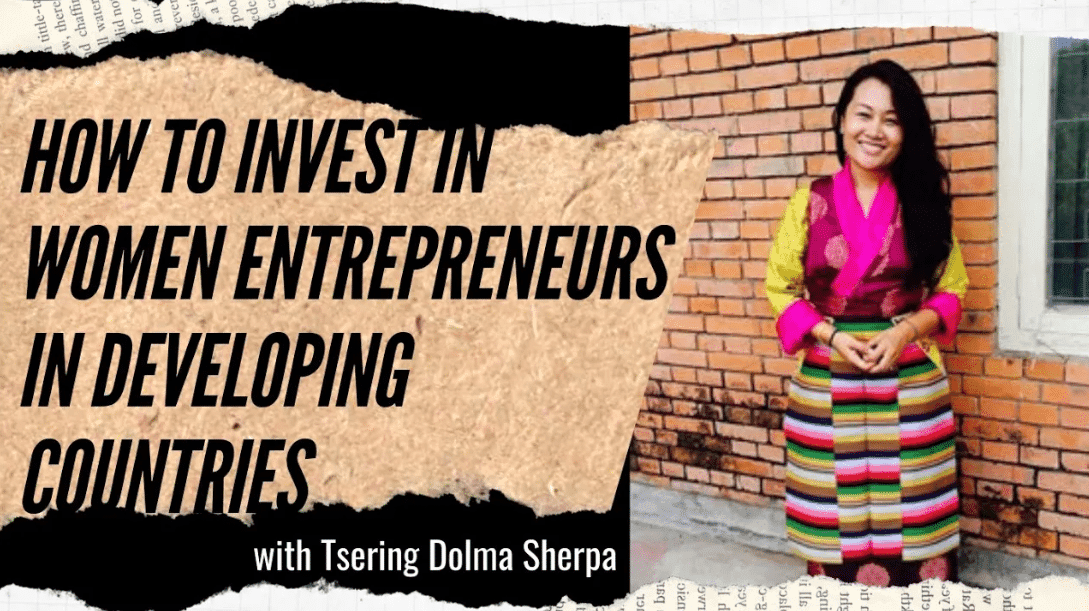
Our Guest Today: Tsering Dolma Sherpa
Tsering Doma Sherpa is a Communications and Program Coordinator at Daayitwa in Nepal. Daayitwa (translates as ‘self-responsibility’ in English). The organization aims to enable a thriving Nepal where all citizens embrace their responsibilities to collectively transform societal challenges into innovative opportunities.
Tsering and I met at Fryeburg Academy in Fryeburg, Maine. She was 15. Unlike the rest of the international students who had known at least a few others from the same country, Tsering was the only one from Nepal. She worked several jobs and was a straight-A student.
Instead of chasing after financial advancement and pursuing a comfortable and stable life in the US, Tsering’s wants to help others, especially people who are underprivileged and underserved. She worked for several organizations including Equal Access Nepal and the United Nations.
In 2014, Tsering became a fellow at Daayitwa. In 2016, she began focusing on a program called WREAP, which stands for Women’s Rural Acceleration Enterprise Project. This program didn’t exist until recently. Tsering and her team discovered that out of the 60 applicants who applied to the regular REAP program, only seven were women. When one woman became one of the five finalists, she expressed this very statement in a video: “Now it’s not just my turn, but 500 other women in Palpa, Nepal.”
With the support of grants and donations today at WREAP, many more female entrepreneurs can participate in leadership programs, technical training, networking, and facilitation of investment.
This episode is not fueled by call to actions for your donations. Instead, we hope to tell a story of how a small group of young people can truly make a lasting impact. Seth Godin often uses the phrase “edges”. Great companies and programs are built around the edges.
“Build something that people will look for, something that people will talk about, something we would miss if it were gone.” – Seth Godin
WREAP has not reached tens of thousands of women in Nepal, but I’m sure it will, just a matter of time and determinations by people like Tsering. Starting with just a few hundred women in 2016, I look forward to seeing many more lives that will be changed by this program.
Wreap L Bimala Bashyal’s Story
Show Notes
- [05:20] As someone with the potential to achieve much success on Wall Street, how did you end up working with United Nations and NGOs instead?
- [11:25] How did you plan your finances when you were 15 and living in the Fryeburg Academy?
- [14:05] What were some of the challenges you experienced when you moved back to Nepal after living in US (for over 10 years) ?
- [19:20] What advice would you give to other young women to manage cultural pressure and expectations (getting married, raising a family, the idea of being a “good” girl)?
- [23:00] How and why were you involved in the rescue process during the earthquakes?
- [12:15] How did it feel to be in such a position to help people during the earthquake crisis?
- [32:05] Tell us about your most recent project, WREAP.
- [32:05] What can a Nepalese businesswoman do with the start up money you grant her?
- [46:55] Where can listeners find you and your organization?
Links and Resources
- Generosity page: Women Rural Enterprise Acceleration bit.ly/donateforWREAP
- DAAYITWA: http://daayitwa.org/
- Daayitwa on Facebook: https://www.facebook.com/daayitwawreap
Favorite Quotes From Tsering Doma Sherpa
It was so important to my parents to give me the opportunity to have the most advanced degree as possible.
We are setting the example that you can go anywhere in the world for advanced education and knowledge, but the most valuable thing is, what do you give back to the community and how can the community grow along with you at the same time.
I try to balance between being a career orientated woman and traditional at the same time.
The top ten applicants receive $250 to support their businesses. They can expand their businesses by getting a loan, they can use it in installments, such as a buy a goat for farming, or invest in land. $250 is equivalent to 250,000 rupees in Nepalese currency. That’s a large sum.
When you go the remote parts of Nepal, you see many young men, even young women nowadays have left their villages for greater opportunities. What Daayitwa tries to do, is show them the possibilities that you can do something in your home country if they have that enabling environment.
Wreap L Purnamaya’s Story
Transcript
Transcript
Fei Wu: Welcome to the Phase World Podcast, engaging conversations that cross the boundaries between business, art and the digital world. Right after the earthquake. I think we were all in the state of shock. Was the government, uh, ready for it? No. We are trying to accelerate women entrepreneurship in Nepal. I would say it's a movement. It's not just a campaign, you know? Hi everyone. Welcome to another episode of the Face World Podcast. This is your host, FA w. Today I wanna welcome cheering DOMA Sherpa to Face World. She's a communications and program coordinator at Dawa in nep. I'm gonna do my best. Dawa, D A A Y I T W A translates as self responsibility in English. This organization envisions a thriving Nepal where all citizens embrace their responsibilities to collectively transform societal challenges into innovative opportunities. Cheering and I met at Freberg Academy in Freberg, Maine. She was just 15 years old. Unlike the rest of the international students, myself included, who had known at least a few other students from the same country, cheering was there by herself. She was the only one from Nepal. She had several jobs on campus. She was a straight A student. Many of us friends assumed that she would be at Wall Street in no time making big money and living the extravagant. She deserves it, but we were all wrong. It was Cheerings dream to serve the community, especially people who are underprivileged and are in desperate need of help and support. She worked for several organizations including Equal Access, Nepal and the United Nations. A few years ago, cheering, move back to her homeland Nepal. In 2014, cheering became a fellow at Dua, and in 2016 she began focusing on a program. Women's Rural Acceleration Enterprise Project. You probably guessed. This particular program did not exist until recently after cheering, and her team discovered that out of 60 applicants who applied to the regular R EAP program, only seven of them were women. One woman became one of the five finalists, and she said in the video, now it's not just my turn, but 500 other women in PPA Nepal, where the W R EAP was launched with the support of grants and donations. Today at W R eap, many more female entrepreneurs can participate in leadership and technical. Networking and facilitation of investment. This episode isn't fueled by call to actions for your donations. Instead, we hope to tell a story how a small group of young people can truly make a lasting impact. Seth Goof uses the phrase edges. Great companies and programs are built around the edges. He says, build something that people will look for, something that people will talk about, something we would miss if it were gone. W R E A P hasn't reached tens of thousands of women, Nepal, but I'm sure he will. Just a matter of time and determination by people like. Starting with just a few hundred women in 2016. I look forward to seeing many more lives that will be changed by this program. I have also included videos of the W R EAP program on the blog post where you can hear the stories told by those talented and strong women. Simply visit phase world.com and you'll be able to learn more about sharing and the program. She's. Without further ado, please welcome cheering DOMA Sherpa to the Phase World Podcast. So hi. Cheering and thank you so much for joining me on Face World. How are you doing today? I am Tsering Dolma Sherpa: doing wonderful. Thank you. How are you?
Fei Wu: I'm doing great. I am so thrilled to be chatting with you because to let my audience know, I have known you for as long as I've been in this country. I have now and officially known you for 16 years. That's a long time for both of our lives. . Yes, it is. It is. It's long. So I remember, you know, when I first met you, and I have this still very clear vision and recollection of you as this, you know, young, hardworking, smart Asian woman. And I knew you were kind of smart, you're smart in the, the rest of us, and you worked hard and you know, you were the only student from Nepal at the. In our entire school, Fryberg Academy. But what's interesting is part of me always thought that because you're hardwork and you're smart and you have such a great opportunity and infinite trajectory to go work, uh, on Wall Street and make your first million dollars with. Very little effort for you and go work at, you know, a corporate company in the, in the US and claim your fame, be on the Time magazine. I had all those thoughts for you. But instead, you know, year after, you know, each year, I feel like we get together. And I was surprised to find that you ended up working at the United Nations. You were helping out volunteering at when earthquake happened and you're now very involved in an NGO helping out women in Nepal. What happened? Why did you decide to do all Tsering Dolma Sherpa: these things? I would like to begin with like how I was brought up. I think that's really. Drove me to where I am today. Um, I remember like when my father dropped me at FRI Academy, that was in 1999 and I was only 15 years old. And I remember, you know, in between that emotional. Journey where he was dropping me off at the boarding school where we attended. I remember him saying like, there's so many young people leaving the country. And, uh, very few return and. He had always said, you know what, uh, if everybody's leaving the country, what remains is the traditional folks that's gonna continue running the country with no innovative ideas, just, you know, they're very happy with what they have going on, but there are no challenges. So the outcomes will always be the same thing. And I wanted to change the mindset of people too, because when I returned in 2009, I think there were not many as many returnee. I just, uh, wanted to kind of look into the possibilities of what I can do in Nepal. I didn't know exactly what, uh, but I knew I needed to give it a chance because. I've always known myself as being a risk taker and. I felt that, uh, being the first to have any kind of education, at least at the master's level, I had somewhat confident that, you know, I would do good in Nepal, I would get a job, um, and so forth. But, um, that was. Wrong of me to, you know, think that way because it was very challenging for me. For the first year and half. I couldn't even get a job. And, um, I, I realized that it's become very competitive and in many ways, uh, um, unfair as well, uh, because I felt I had. Qualities and the potential. But you know, as they say, um, I mean, it's not about what you know, but it's about who you know. So that's when I started building networks, uh, within my close community. Uh, because remember I was away for like a decade. Mm-hmm. . And so who, all the friends that I left behind in 2000. Um, sorry. In 1999, you know, a lot of friends had already gone abroad or you know, they were married or something like that. But so I had to kind of build my own session social network and meet people and kind of, you know, maintain the relationship and attend a lot of social functions. And thereby I was able to kind of hold my place, um, in an organization where I was overlooking the outreach. Of the projects that they were holding that mainly focused on, uh, communications. Um, So that was a wonderful experience. I was there for two and a half years. Um, I got to learn a lot about media and, um, the history of it, and also about going into, uh, ruler parts of Nepal and meeting the locals, hearing out their stories and, um, executing it to the world to know. And that there is a life, uh, beyond the borders. Wow.
Fei Wu: So this was the opportunity called is is this equal access Nepal? Correct? Correct. May I ask, you know, was it through a friend that you met at the time? Did you apply through the traditional channel? How did you obtain that offer at Oracle? Um, Tsering Dolma Sherpa: I saw the vacancy announcement on one of the National Daily newspaper in Nepal, and um, I remember the country director at the time, he asked me, um, questions regarding finance and I remember being very blunt and I was, uh, I didn't even have a. Second thought about how, how to say properly. And, um, my answer was that, you know, I lived in the state for a decade and I lived on my own. And, um, I, I scripted through things to survive and I think I did pretty well. And that was my answer.
Fei Wu: How did you, could you take us back to when you were 15, 16 living in, uh, at Fabric Academy by yourself, and how did you plan for your personal finance back then in order to survive for years on Tsering Dolma Sherpa: your own? Oh, that was such a challenging period, and I was, like you said, only 15 years old. Um, It's, I think it took a lot of sacrifice that I'm still paying off
Fei Wu: such as . Tsering Dolma Sherpa: I mean, uh, I get this reminder from my parents, you know, how much loan they had to take, um, to send me school, you know, and, uh, that still hasn't been paid. But you know, the point of the matter is, It was so important for my parents to, uh, give me the opportunity to have and advance a degree as
Fei Wu: possible. Uh, if I remember correctly, you have a brother as well? I Tsering Dolma Sherpa: do. I have two brothers.
Fei Wu: Oh, two brothers, younger brothers, and. You, you know, you're the oldest in the family, and I'm not sure if it's, is it unusual or untraditional to kind of send the oldest daughter at such a young age to the US taking up a loan instead of saying, Having you settle down, have you take care of your brothers? Tsering Dolma Sherpa: My father, you know, to this, to this day, he always, uh, talks about, you know, woman empowerment. Um, he says, you know, that girls have equal rights to have, um, education as much as. The boys, they, they gave me that opportunity. Um, and it was not, you know, like I wasn't treated extra than my brothers. We were all treated equally. Mm-hmm. And what became, what came out of it is slightly different because I think we all have a different ways of learning and contributing. Um, And, um, my brothers, uh, I mean they're doing well in their own ways. Uh, my youngest one, he is in British Army. Wow. So he is currently based in the United Kingdom. Mm-hmm. and my brother, who also went to Friberg Academy. Uh, he, uh, is now back in Nepal as well. So we are actually setting an example that, you know, you can go anywhere in the world for education and advanced knowledge, but what is the most valuable thing is what do you give back to the community and how do you help the community grow along with you at the same time?
Fei Wu: Um, in terms of living in Nepal, we're kind of. Reliving and migrating back to your homeland. What does it feel, what are some of the, uh, a few top reasons or, uh, does. Does it come easily? Is there any part of, uh, integration back to Nepal other than seeking your first job, which was challenging? Are there any day to day lifestyle changes that you had to consider and adapt? Tsering Dolma Sherpa: Oh, yes. , I mean, I had completely, uh, reverse cultural shock and. It was very hard to make people understand what I was going through, because here I left, uh, at the age of 15, which is a very prime age. And, uh, the part about the struggle adjusting in the states was. Itself a difficult journey. Mm-hmm. , but then I was just doing well and I was independent and, you know, I had my own apartment. I was managing the finances, you know, from fooding to lodging to all of that, you know, entertainment. But then when I moved back here, and uh, as you probably know, uh, you know, South Asian countries, there is this high practice of living with your family until whenever . So even, you know, guys are judged in the west, you know, why is he still living with his parents? But that's very common, um, in Nepal, like many, uh, Asian countries. Um, And so here I ha I, of course I have to live with my parents. Um, that also meant that I have to get home on time. , um, I had to report where I was, uh, who I was with , and when was I gonna get back? Uh, the door's gonna be logged. How are you gonna get in? So there is this whole. Trip, oh, this will kill me. Fall and ask to open the gate. And you know, the security wise, you know, it's not, it's not like, um, I don't wanna name a country, but it's not war zone or anything like that. But here we take security very seriously, just as a prevention. Measure, preventive measure. Understood. Uh, so, you know, you know, girls, if they're out late and you just make an assumption that she's a bad girl, you know? Mm-hmm. , um, if you're home early and you're making meals and you know you're preparing tea for your parents, that's the definition of a good girl.
Fei Wu: Were you good? Were you considered good or bad or mixed of both or too career driven? What cataract did you fall into? Tsering Dolma Sherpa: I tried to balance, uh, between, you know, being a career oriented. And traditional at the same time. But again, um, you can never make your parents happy
Fei Wu: enough. . Yeah, no, I, I completely echo that. It's funny that you brought it up because of, I'm not sure you have seen the most recent SK two video where, uh, the, the commercial itself talks about leftover women, which is this term that are, uh, is commonly referenced and used in China. And finally surfaced, uh, up to, you know, why are we calling women left over between the age of 25 to 30 if she's not in the serious, if she's not married, simply not even in the serious relationship. You know, that you have to be either engaged or married to be qualified as, uh, worthy. So that certainly started an international debate, but I can absolutely imagine as I've gone through that myself a little bit, you know, with, uh, with some of my family crisis. And as I mentioned, you know, my dad was very ill and, uh, he eventually passed away and there was a very tough, uh, number of years decid. Basically, how is my mom going to, uh, is she gonna live on her own? Is she gonna live with me? Uh, so I absolutely understand that just the weight that you had to carry on your shoulders as a, as a woman in this case, as the, uh, the oldest child in the family where. There's so many responsibility that came to bear and uh, you seem to be, uh, doing very well. So for that, I'm very proud of you and I wanted to tell you that myself. Tsering Dolma Sherpa: Aw, thank you Fa .
Fei Wu: You're welcome. Tsering Dolma Sherpa: During, we need that all the time, .
Fei Wu: Really, it's hard and the times that I feel is impossible, and I know that this is something that we could talk about, uh, almost. To no end. But I think if we were to kind of, while we're on this chapter to give some of the young women, uh, women in, in their mid to late twenties, possibly into their thirties, some advice on how to manage our expectation, uh, related to our culture. Um, you know, before we move on to a different topic, personally, and I wanna hear your opinion as well, is. You really have to believe and in what you do and what your life is about. And you have to live a life for yourself, not a life that your parents want for you. Um, Tsering Dolma Sherpa: I completely agree. with what you just said, you know? Um, but, uh, you know about the point of knowing what you want to do is sometime. Not the case or for everyone because you are in this discovery phase, you know? Mm-hmm. , um, and, uh, it's. , you want to be empathetic. You don't want sympathy. You know, you, you don't want sympathy, uh, from your parents. You don't want sympathy from other, you know, people in your life, but you, you want to, I don't know the tradition. Part of me is I'm very empathetic. Mm-hmm. , I'm very empathetic to the point where I feel like I'm overthinking it. Mm. Uh, but I think my advice would be to come to a middle ground, you know, where you are not overdoing it mm-hmm. , um, and you come up with a formula within, you know, your family and, uh, your professional life and your social life where you, you know, say that. Me coming home at eight o'clock should be considered normal. You know that you convince, uh, your parents to make them believe that wherever you are, you are there for the good reason. You're not just there. Mm-hmm. , you know. The other day I was on a bike with my friend, who's my, you know, who I've known since high school. Mm-hmm. . Um, and my dad saw us on the bike and he was freaked out. He was like, you know, why are you with that guy? You know? I mean, it's just like I'm engaged in everything. So they were more worried about if, uh, my fiance's family will see me on some other guys'. Bike.
Fei Wu: Yeah. Oh, that's funny. . Tsering Dolma Sherpa: I know. Yeah. I mean, it's like typical, you know, it sounds crazy. Mm-hmm. . So I had to make them believe, you know, this was solely because I needed to get somewhere and mm-hmm. , he was there and he offered me a ride and that was the quickest way to get to my destination and so forth, you know, so you have a lot of explaining to do at the, a lot. I don't know. I don't know if it's only my case, but you know, I feel sometime I'm not trusted. Mm-hmm. , I'm not trusted. Not because of me, I'm not trusted because of what other people thinks of me, which has nothing to do with me. You know
Fei Wu: what I mean? Uh, Asian parents are just on a much more pronounced, uh, level and exaggerated version, more melodramatic and, but I think universally at there are certain behavior. That are kind of across the board. So, um, we can certainly talk about this forever, but, uh, I do wanna explore some of, um, you know, basically in, in recent years I saw that you're volunteering a couple of times, uh, during earthquakes and then, you know, it was a very, uh, sad in time. In, in our lives. And I have personally witnessed, uh, very traumatic, um, earthquakes in, in China as well. And, uh, you know, it just how it weighs on the nation and the country itself, and your family and your friends. But could you tell me a little bit, How you were involved and why you were involved in the rescuing process? Tsering Dolma Sherpa: I would not say it's a rescue thing. Um, I don't know the word rescue to me links with, you know, like direct life saving. Um, that wasn't really my case. Mm-hmm. . Um, so what happened was, like right after the earthquake, I think we were all in the state of. Um, I think many we had hints, uh, along the way, you know how like every 80 years, you know, with the turn of the history mm-hmm. , uh, we, the earthquake will revisit. Uh, we knew that. I think everybody knew that. But was the government ready for it? No. Mm-hmm. , the preparedness, uh, from the government part was very lacking. But for me, you know, I, I experienced it for the, I think the first time, I mean to that magnitude, uh, it was the first time and I was on the fifth floor of the building. Um, and it just happened. And for me, I didn't see the point of running down the stairs because, you know, generally those are the weakest mm-hmm. , um, portion. Of the building, you know, like if it falls down, you are in greater harm than any other room. And of course you go next to the pillar and all that, um, uh, preventive things. Uh, but you know what? I was with my father and I, we just literally like sat there, like we didn't move an inch like. It was a big room, so we felt that was safe to be in. Mm-hmm. , we didn't like, we just decided not to move out. Mm-hmm. . But soon as it stopped, we just ran out of the building, like the coast was chasing us. Um, so after that period, and with Aftershocks on and off throughout the day, um, it's, we were. Completely paralyzed, like I think mentally, completely paralyzed. Mm-hmm. and not sure exactly what to do. And my mother was not around. She had gone to a monastery mm-hmm. , uh, for some teaching, and we couldn't get hold of her. Uh, whereas my brother, one of the brothers was up in the mountain, uh, very close to Mount Aest. Uh, we couldn't get hold of. Um, and the youngest one who is in the United Kingdom, he sends me a message saying, you know, what's going on? You know? Mm-hmm. and there was no network, nothing. Nobody knew what's going on, you. We were getting reports from people from abroad, like they were saying, oh, you know, this, this got down and that got down and, you know, all these stories, but it was all indirect. You know, we never got to see it in firsthand.
Fei Wu: I was able to see your status update on Facebook, uh, as along with many of the. Of our Facebook friends, understanding that you are safe and you're not harmed. And but then surely after that I saw pictures where you were helping people out. Correct me if I'm wrong, and uh, You're helping out in ways that you can, you know, not as part of the official, uh, rescue team for you to help other people. How did you feel? Tsering Dolma Sherpa: It was amazing. It was amazing. So like after like, I think almost nearly a week, we were just, You know, in a little cocoon trying to figure out how are we gonna do this, whether we should go back into the house, uh, you know, what do we need? And, you know, all the basic things that we always took for granted. Um, and again, you know, there was no network so, We didn't, we didn't know for a long period of time what was going on and we had the radio, uh, but you know, that was not as accessible as well. And, but when we did get access to the internet and the phone and everything, I was so shocked. Like I was. Completely shocked and even angry with myself that I did not act on, and I did not help out people because I was just with my family. And you know, normally that's like your first, uh, state of mind is like, you know, you need to protect your family. You need to be there for them. Uh, but. We were doing fine. I mean, we were comparatively doing fine. So I felt the need to something. And sure enough, you know, my friends who are equally like-minded, even, you know, greater minded people, they contacted me and they're like, let's go. You know, it doesn't matter, like, uh, whether we have the equipments or not, it doesn't matter if we have, you know, funds for it or not. Go and check out places and what's the actual story? Because you know, news, a lot of time is always exaggerated. Mm-hmm. . So we wanted to see for ourselves what's going on. And, um, by profession, my friends, um, some are doctors and some are engineers, and. I'm into communication. So we thought, you know, this is a great team. You know, we can go and give them medical support. We can, um, consult them about how the houses should be framed. Like, because now they were living in a temporary housing. Um, so we, the engineer friends, they could make that kind of, um, professional. And so we did, we just went on bikes and went onto the areas that we heard that had the greater devastation. So we did assessments, uh, here and there. Um, again, you know, this is this group of friends trying to do whatever we can. Uh, to help out people, those in need. So we went to, uh, like five major, I think five major, um, areas that were, uh, hit the most in the nearby, um, area from Kathmandu. Mm-hmm. . And, uh, slowly enough, like, uh, my, uh, friend who's a doctor, he had networks with pharmacies. So he got those, um, uh, over the counter drugs and basic, you know, um, from bandaid to Neosporin. You know, those are the. Most basic things, but again, um, so he had the discounts and everything, so we were able to purchase those and go out on the field and, you know, give an orientation on how to, uh, maintain sanitation and how to prevent themselves from other airborne disease because that during that time it was also rainy season. And you know, these people are all in open land and. You know, there, there's no proper toilet, so on. So my friend was able to give those kind of advice. And so along the way we were just taking pictures and, you know, just posting it because we felt, you know, people should be inspired by what we are doing. And we were not only the one surely, but we just wanted to, you know, have a record of, you know, it, it was, it was a journey of friends, but with a purpose. Um, so slowly enough, like a lot of friends got to, uh, uh, see that from our social, uh, media portals. So they were willing to support us to not, you know, so they were sending us, you know, books here and there. So we just gathered that and we. Went out and got basic needs, even more basic needs from like food, rice. You know, that's one of the staple dishes in Nepal, like many Asian countries. So we got rice and you know, basic, basic, very basic thing that cannot go immediate ruin. But will support for the survival until they can figure out where to go. Moving on to
Fei Wu: your most recent endeavor, and first of all, I need to learn how to say it. Uh, it's d a a y i t w a. How do you pronounce it? Tsering Dolma Sherpa: Da, like twa. Oh,
Fei Wu: like T. Okay. I'm gonna do my . Tsering Dolma Sherpa: We're, but English, it's a Nepali terminology. Mm-hmm. and, uh, the direct translation of it is responsibility.
Fei Wu: Yeah. Yeah. This is much easier to say. It translate the responsibility. And this, there's a whole theme of. Helping other people try to be helpful and, and volunteering. And in this case, you know, I feel like this is a project which really inspired, uh, me to kind of interview you for this podcast. And that's why we, uh, reconnected on this is that string of what I just mentioned plus and. This most recent project, W R E A P, uh, which I'm sure you can, uh, help us understand, uh, what this acronym means. It's a, as a project to help and support women in Nepal. Tell us a little bit about that. It's. Tsering Dolma Sherpa: I would say it's a movement. It's not just a campaign, you know? Mm-hmm. . Um, we are trying to accelerate women entrepreneurship in Nepal, which we believe will be a important supporting factor to economic growth of Nepal. Um, um, We as an organization, we are working in four different sectors, uh, leadership, entrepreneurship. Civic engagement and governance. Uh, today I'll like focus more on the entrepreneurship, uh, whereby we, whereby it is a accelerator program, not an incubator program. So we're looking for entrepreneurs who. Have started a venture who has started an enterprise, um, in some form. You know, it's already established, not established in a sense, like successful, but they, they have a dream. They, they wanna accomplish something. Uh, so we target for people as such, and we hold, uh, district wise, um, competition. And you know, what REAP has become is. Is from those experiences that we, uh, gathered since 2014, uh, where we focused on since then we focused on three districts, uh, ppa. and, and what we do there is we hold a district wise competition where the entrepreneurs will fill out an application, uh, stating their enterprise and what it stands for them and how they want to grow and what they wanna learn, and how can we support them and so forth. So in each district, what we do is. Screen those applications and we pick out the, we pick out the top 40 application, our top 40 applicants. Mm-hmm. and uh, After that selection, after the announcement of the top 40 selection, they are encouraged to advocate for themselves. You know, like how the US president campaigns work. Like they go to states and they share, they, they share their. Goals and they share their ideas and they try to get people on board and vote for them. Similarly, we use the same tactic whereby, uh, they will gain votes through two mediums. One is text messages. We give a code for each. Uh, 40 entrepreneurs and if people like them, if they're convinced, uh, using those codes, they will send in their votes. Likewise, there is a global participation. We do a bio of each, uh, entrepreneurs on Facebook and every like counts as a vote vote. So the combination of the text votes and um, the Facebook votes we screen out. Top 20 out of the pool of 40 entrepreneurs. I
Fei Wu: think it's very helpful and uh, for my listeners, I will be posting some of these videos and links for people to really engage with the content because it was very helpful for me to watch the video and watch the women speak about their challenges, struggles, and excitement, and what this opportunity brings for them. Yeah, please continue. It makes total sense. Yeah. Tsering Dolma Sherpa: All right, so based on those votes, we pick out the top 20. Um, now we feel, you know, these are all becoming, um, exercise of, you know, indirect. Like we want to know them firsthand. So we, we create a pool of jury members who are experts in these fields, who are affiliated with the government, who are affiliated with the private sector, education, you know, academics. And we, we create. Pool and we go on this journey of visiting those 20 entrepreneurs by the house. Like we will go to their houses, we will interview them, we will see what they are doing. We want to ensure that whatever, you know, uh, wherever they have come so far, we want to ensure that it's authentic. Mm-hmm. , we want to ensure that we believe what they are up to. We believe, you know, you know that it's genuine. And, uh, so with these interviews, based on these interviews, we, uh, pick out the top 10. Out of, you know, through from that, uh, screening for through the interviews, uh, which is a very rigorous process because these districts, you know, because it's a district level competition, some places are so remote that it takes you days to get there and you know, the interview process is always long. So it's a very dedicated process. And so the top tens then will receive $250. To support their businesses.
Fei Wu: Wow. So what does that mean? What does a $250 mean to these women? What can they do with the money? Tsering Dolma Sherpa: Can expand their businesses as simply as getting loans. Uh, using it in installment to, uh, say for example, buy a goat for farming. You know, if they're into dairy products, they can, you know, buy a goat and help them survive or enhance their businesses for months. Um, along the way and they can invest on land, uh, so they can expand, uh, their businesses in that manner as well as marketing and, um, distance to travel there if they choose to, they can also expand those avenues. Through the support of $250, that's equivalent to 25,000 rupees in Nepal currency. Wow. And that's, that's a large sum. I mean, people don't even make, um, 25,000 a month in average in
Fei Wu: Nepal. What is an average income of, uh, a nep, you know, and NEP poly family living in rural area? Not, not in Tsering Dolma Sherpa: city. I have met people who are making thousands of dollars per month in the ruler parts of Nepal if they do it right, thousands of US dollars. Yeah. Uh, but what I'm saying is like, if there are people who are making $1,000 per month, what is that difference with people? Who are not making as much, you know? So I feel like in terms of the entrepreneurship angle mm-hmm. , the people who are making that large sum is, uh, has access to the market. They're able to sell their producers and they're doing everything on their own. Uh, but then there are people who are just focused on producing and then somebody else's is making profit out of it. You know, this is, again, this is more like entrepreneurship angle, but there are other. You know, sectors who might be making equally more money, but. If you look at the rate of, um, uh, Nepalese that are going abroad, like Gulf countries for labor job is so high. Mm-hmm. , like when you go to remotes part of Nepal, you don't see any young men, even women nowadays have left, uh, their villages for greater opportunities. Mm. And I think what we Dito is trying to do is show you the possibilities that you can do something. In your home country, if you put an extra effort, if you are, if you have that enabling environment
Fei Wu: based on the, the donor people who are very involved in this project, who, people who have donated, uh, that through generosity.com, do you see who are these people? Are they local? Are they from Nepal? Are they from around the world? Tsering Dolma Sherpa: Um, at the moment we have received funds from 37 people. Mm-hmm. . And these 30, 37 people are mostly from our networks only. Mm-hmm. because we have, um, Strategize to kind of get those people who trust us, who believe in us. Mm-hmm. , and hopefully they can also spread the world for us. Mm-hmm. . So those have been our focus so far. But in coming days, we are focusing on more locals. , um, in terms of, uh, you know, getting their support and I don't mean it always on a monetary way. Mm-hmm. , but also, you know, being part of this journey with us and being an advocate for us, we are designing perks. Uh, I'm sure you know about perks and how. Attracts, um, potential donors to, uh, support our campaign. Uh, perk is way of, uh, giving an incentive to, uh, our potential donors whereby they also get something out of their donation. So last night I was staying up designing these. So what we are trying to do is. Pro, uh, perks can be of products like local products, for example, uh, in the district of ppa, uh, there is a fabric. It's very popular and significant to Nepali culture called daca, and it's, uh, made in ppa and, um, so we. I was designing this perk whereby it says, if you donate hundred dollars, you will get local products, haka products from PPA, and deliver to you by X, Y, Z. Mm-hmm. . So it's, it's a great way of promoting local products, promoting the culture of Nepal, the art of Nepal at the same time. And their contribution is also going, uh, to the women of Nepal particularly. So
Fei Wu: what, so I can imagine that's something not only it's attractive to local people, you know, in other parts of Nepal. Where people won't be able to, uh, access to this material fabrics directly, but I can only imagine. And outside of Nepal, you know, in North America, in other parts of Asia, do you think that. You know, it's in a way that I, I don't want, on one hand, I don't mean that by making a donation, you know, 50, a hundred dollars isn't, isn't, uh, is maybe significant on a personal level. But you know, you also have the balance that with shipping, with running such program. So do you think there, do you think that there may be an opportunity kind of extend that offer to people outside of the. Tsering Dolma Sherpa: That perks is, uh, focused for more people in abroad. Uh, and you are right. The shipping is very tricky because if you end up spending more money than what you are getting mm-hmm. , uh, that is gonna be a loss for the campaign. Correct. So we are figuring out like ways of do doing this. Like, um, I was just doing this research yesterday, uh, that Indigogo has, uh, partnered with this company Amplifier, which, uh, works as a warehouse and, uh, tries to, helps, uh, gives you like 10% discount on shipments. But again, I need to, um, explore this more. I have touched based. The company and hoping to hear back from them today and see how they functions because they had mixed messages like saying warehouse and Designings and stuff like that. So what we want is we have the products we just wanted shift one other way is. Just doing it the old school way, you know, if we know of someone going to the states, we'll just request them, you know, like a pro bono thing where they can, you know, take the material for us in, uh, in, um, wholesale and then they can, you know, help us, uh, ship it from a state to state versus from Nepal to New York, for example. Mm-hmm. . So those were some ways we were thinking, but also, you know, we will always do a calculation of how much, um, uh, what the product is worth because we are also buying those product from these local entrepreneurs. Mm-hmm. . And we are also calculating the estimate shipping cost and then also measuring how much money can we make out of it that goes towards the camp, uh, for people to
Fei Wu: learn more about. W R E A p if they like, they would like to get involved. If they want to learn more of the story, where can they find you and your organization? Tsering Dolma Sherpa: So, uh, we have a Facebook page under the title. D A A Y I T W A. It's only been about 14 days now, and we have already raised $3,000 and there's long to go. If you go on generosity by Indigogo, the title is, um, woman, rural. Enterprise project. Yeah. So those are the ways, and you know, we have our organization website as well, which is D A A Y I T A org.
Fei Wu: This is great. I'll include all the links, um, on our post. As you know that I do create a blog post to go along with the audio piece. So, We will make sure that people visit. But yeah, thank you so much sharing for joining me on Face World and sharing your journey, your wisdom, and best of luck to you and your organization. I hope we continue this conversation to listen to more episodes of the Face World. Please subscribe on iTunes where visit phase world.com. That is F E I S W O R L D, where you can find show notes, links, other tools and resources. You can also follow me on Twitter at phase world. Until next time, thanks for listening.
If you are on Facebook, why don’t we connect there?

Written by
Fei WuFei Wu is the founder and CEO of Feisworld Media, a Massachusetts-based digital media company helping brands get discovered by people and by AI. An Adobe Global Ambassador and brand partner to ElevenLabs, Synthesia, and 50+ other tech and AI companies, she hosts the Feisworld Podcast (400+ episodes, 500K+ downloads — guests have included Seth Godin, Steve Wozniak, Chris Voss, and Arianna Huffington) and co-created the documentary Feisworld: Live Your Art on Amazon Prime. Fei writes for CNET, Lifehacker, and PCMag, and her work has been featured in Forbes, Harvard Business Review, and WIRED. She has been publishing on the internet since 2014 — long before AI discoverability had a name.
View all posts by Fei Wu→Stay updated
Weekly insights on content, AI, and digital media.
Keep Reading
Related Articles

Joanne Lipman on Mentors, Untapped Talent and Why Women Should Stop Waiting to Be Perfect
Marc Randolph on Curiosity, Messy Starts and Why “Nobody Knows Anything”