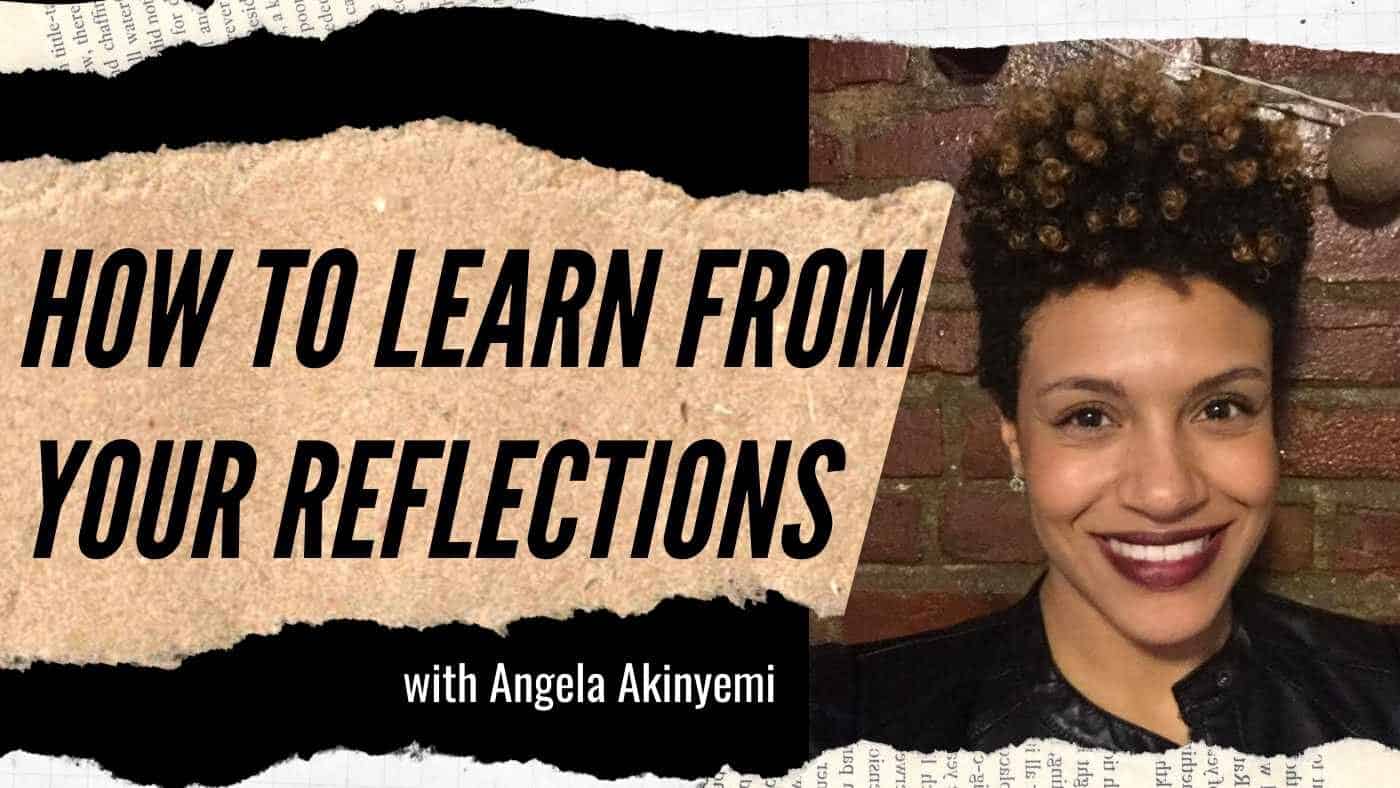
Our Guest Today: Angela Akinyemi
I met Angela Akinyemi during Seth Godin’s altMBA in January 2017. We both belonged to session 8 in a cohort called “Ruby”.
altMBA is “an intensive, 4-week online workshop designed by Seth Godin for high-performing individuals who want to level up and lead.” Previously on Feisworld, I interviewed another classmate named Gustavo Serafini on the show. The episode was very well received.
There’s no physical classroom at altMBA and we tune in daily via Slack and Zoom (a web conference service). Each week, we were dropped into a new discussion group to continue our learning with different people.
Angela is not your typical extraverted, overly ambitious “MBA” classmate. Instead, she was curious and exceptionally good at listening to what others had to say, and always offered thoughtful and supportive feedback.
altMBA, at the core, is all about reflections. Not just feedback for others’ work, but also your own called Reflection Summary (RS). Angela and I both found this requirement particularly challenging.
Here is the pattern that repeats for each project:
- Project due at midnight
- Comments due at 8pm – You’re commenting on the work of 5 people, and waiting for comments from 5 people.
- Reflection summary (RS) due at 8pm – After seeing the comments from your peers, you reflect and write a ‘reflection summary.’
Before we graduated from altMBA8, Angela was awarded one of the most valuable contributors in our cohort. Soon after our session concluded, she was one of the chosen few to be a coach for altMBA10 (she wrote this as an self introduction to her class).
In this episode, we talk about both of our experiences as students at altMBA, and Angela as a coach.
Bonus: Angela and I met up in NYC not long ago and exchanged a few stories of our lives you are going to hear again on the show, including my new diet called Whole30 (Angela first introduced me to Whole30 and it has worked wonders on my body and mind.).
For millennials who are listening to this episode, this is an opportunity to rethink what’s possible. Angela is someone many of you can relate to. What have you learned from this conversation? Share with us in the comments below, or via social media on Facebook or Twitter.
Show Notes
- [06:00] How and why did you decide to sign up for altMBA?
- [09:00] How did you feel when you were chosen the most helpful student of the cohort?
- [12:00] What was the experience like being an altMBA coach, and what did you learn from it?
- [15:00] What were some of the tough parts about being a coach?
- [17:00] What are some of the things that you’d change from the altMBA program now that you have been a student and coach?
- [22:00] What are the projects you are currently working on?
- [28:00] What was it like for you to navigate your life at school?
- [32:00] You mentioned that you like writing and wellness. What would you like to write about wellness, in particular?
- [34:00] What got you into Whole30 and what was your experience?
Favorite Quotes
[12:00] It’s just really interesting to hear how you move through the world, how you affect other people, and I don’t think it is very common to get that. altMBA is such special place where officially part of the program is to get feedback and reflect.
[14:00] What I found challenging being a coach is to not be super involved, but to still be impactful. You are not in the group sessions so you don’t have a clear view of who’s is bringing what to the table and how is everyone interacting, but you still have to deal with it.
[19:00] Who you surround yourself with makes such a huge difference. It can change the way you think about all the doubts.
[25:00] One of the things I appreciate now is this idea of possibilities. If you wanna be a writer then OK, go write, you can start now. It doesn’t have to be about giving up your whole life and go write in the woods.. It can be assigned 30 minutes a day to writing and see what happens. At the time it was this very daunting decision, what do I wanna do with the rest of my life?…
Transcript
Transcript
Fei Wu: Welcome to the Phase World Podcast, engaging conversations that cross the boundaries between business, art and the digital world. It's just really interesting to hear how you move through the world, you know how you affect other people, and I don't think it's very, Common to get that, you know, a MBA I think is such a special place where, you know, officially part of the program and what you do is get feedback and reflect, you know, who you surround yourself with makes such a huge difference. You know, it can change the way you think about, you know, all these doubts of, do I have anything to say? If you have supportive people around you. You know, one of the things I appreciate now is this idea of, you know, just possibilities If you wanna be a writer, okay, like, go, right, you can start now and you know, it doesn't have to be a give up your whole life and go right in the woods or something, you know? It can be. 30 minutes a day to writing and, and see what happens. And at the time it was like this very daunting, you know, decision. What do I wanna do with the rest of my life? And that's the decision that I'm making, you know. Hey. Hello, how are you? This is FA W and I am the host for the Phase World podcast. This is a show for. Everyone else, instead of going after top one person of the world, we dedicate this podcast to celebrate the lives of the unsound, heroes and self-made artists today. I would like to welcome yet another guest named Angela. At Kami and uh, she is a very special young lady. I met through LT MBA earlier this year in January, 2017. We both belong to a session number eight of LT MBA and a cohort called Ruby. So what is lt mba? L MBA is an intensive four week online workshop designed by Seth Goden for high performing individuals who want to level up and lead. There is no physical classroom, so instead we tune in daily via Slack and Zoom, which is a web conference service. And each week we were dropped into different discussion groups to continue our learning with different people. Meeting Angela was refreshing and unforgettable experience. She was not your typical, extroverted, overly ambitious MBA classmate. Instead, she was curious and an exceptionally good listener who could hear the things that are unsaid in any room. Often critical for our assignments. She was the glue for our group that enabled me, and I'm very sure many others, to learn in a comfortable and nurturing environment. Before we graduated from L B A eight, Angela also won an award from our cohort. She was then invited to be a coach for future MBA session. In our episode, we talked about both our experiences as students and also Angela as a coach. When I met Angeline in person, New York City, she mentioned Whole 30 to me. The whole 30 is a 30 day diet discovery that emphasizes on whole Foods, and during that time, participants must eliminate sugar of any kind, alcohol, grains, legumes, soy, and dairy from their diets. And I got on the bandwagon and had a pretty wildly successful run. I couldn't wait to share my experience with Angela. Angela is of African and French descents. We talked about her upbringing, her inspirations when she was a kid, but also her major in college, which completely caught me off guard. For millennials who are listening to this episode, I wanna point out that this is an opportunity to rethink what's possible. The beauty of this conversation, Angela, is just like, We're all still trying to figure out what suits us and we're ultimately responsible for the answer to that question, don't you think? Phase World Podcast is a homegrown podcast launch in 2014, and since then we have interviewed over a hundred guests and listeners from more countries than I can possibly name. If this sounds interesting to you, please help yourself visit phase world.com and check out categories from Arts and Design to social services to performing arts, and much more. And please drop us a line we would love to hear from. Without further ado, please welcome Angela Atkin to the Phase World Podcast. Let's talk about L 10 MBA a little bit and I'm interested in what were you doing before that and you know, how and why did you choose to get into L 10 MBA with Seth goin for those of, uh, my listeners who don't know what it is about ?
Angela Akinyemi: Yeah, so a bunch of things kind of added up and pointed to, you know, it's the right time to do this thing. Kind of logistically how I heard about it is my best friend went through. A year before the exact same session, same time the year before. I think she was Alt MBA three and so I kind of heard, we were roommates at the time, so I kind of heard snippets of what she was going through and kind of the different projects and she raved about it and you know, thought it was really transformative and had such a great time. You know, at the time I don't think I was really ready to do something like that, you know, I wasn't really. In the space where I am now, where I'm really motivated to kind of. Find out more about myself and to push myself and challenge myself and be vulnerable. So it didn't really spark my interest in the same way at that time. And I guess part of the long version is that, and I wrote a little bit about this in the a mba, is that I had a few family relationships that kind of hit a breaking point at the end of last year where it was. You know, kind of an unhealthy balance, and I found myself finding value in the people around me instead of in myself. Um, And had started doing a bunch of development activities and, you know, I started doing yoga more seriously and, and kind of started building my own life and, and what I wanted it to look like. So when my best friend sent me the information about the a MBA and, you know, gave me a referral code and said, just think about it, it was so great. It was kind of the right time and it all clicked and I said, you know what, can I really lose from doing this? And you know, I tried to find out more about it from what I could gather. It sounded really great. But I think, you know, maybe you have this struggle too, where it's kind of hard to really describe what it is. And I have a hard time finding the right words and you know, I kind of, I. My best friend did it on purpose a little bit. Cause I think it's part of the magic of discovering it on your own and you know it being new and, and kind of the open-endedness of interpreting it in your own way. So I think it was partly that, and then partly not really knowing how to describe it and. Even now, you know, I've been in the program and I've coached the program one session and you know, I kind of question is it a class really? Is it a workshop? And none of those sound right really and they can't really communicate what it is. So, you know, I took as much information as I could and and said, the sounds like something that will make me better. And I kind of just went for it. Yeah,
Fei Wu: you. Not only ready for this session, were you surprised as well that when you were chosen to be one of the, you know, most memorable and most helpful, uh, student outta that group, were you surprised when you got that
Angela Akinyemi: recognition ? Yeah, I was, I don't know. I don't, I guess I don't really. Consider myself to be, or I guess I view leaders as being very in the foreground and, and being very vocal, and I've just never been that way. You know, I always consider myself more like I observe a lot and, and I, I participate where I think I can add a lot of value. And you know, it just feels like a non recognition kind of thing. So yeah, I was, I was very surprised, very grateful. Very surprised. You
Fei Wu: mentioned very clearly. In the first, uh, sort of forum where all of us were in, I remember it was almost like little puzzle pieces where all 40 50 of us are on screen. Mm-hmm. , you have to like scroll back and forth on Zoom to even see everybody and you know that you only get to work with a very much of subset of them. I remember you and Luke as well at mention how introverted that you think you are, or at least you're shy. I think shy was the word, and during week two or three out. Four or five weeks we're together. You know, when I saw you, when we start working together, I realized how uh, just that week was really magical. I very much enjoyed all the other sessions, but something about that particular week, it was so productive. Mm-hmm. . And when you and I met up for brunch in New York City, We talked about that dynamic as well, where it's hard for Seth or any of the coaches to predict to the T to figure out if these five people are able to work together. I noticed from the, the session before that and also after, like you said, L MBA tends to attract a lot of very overachievers from my listeners. You know, sort of people from Google, apple startups, entrepreneurs, very vocal, very forward folks, forward thinkers, and everybody had a whiteboard and they can, you know, capture notes and telling everybody what to do and that, you know, I, I'm personally am a project manager. I feel like I'm somewhere energy level wise, somewhere in the middle and where. That session with you, there was such a clear focus. For some reason, you were such a good listener. Like when anybody is speaking, you were always there. You were so present. And uh, when we had brunch, same thing. You're very present and it makes everybody, myself included, Uh, felt really calm. You know, there are other sessions where we had meetings all day on Sunday or on a Tuesday and Thursday from six to 10:00 PM I just sit there and with you there's, there's that, uh, sort of harmony and that was really nice and really memorable for me. Oh,
Angela Akinyemi: wow. Thank you. I feel like that's such a nice thing to say. I mean, it's, so, it's really interesting and, and it was really valuable for me to, Your feedback and others on that because it's just really interesting to hear how you move through the world, you know, how you affect other people. And I don't think it's very common to get that, you know, Al b I think is such a special place where, you know, officially part of the program and what you do is get feedback and reflect. But things like this that are more off the cuff, I think, you know, happen with higher frequency in a program like that. And. We have reviews at work, but no one really tells you that stuff, that that can be really useful for how you interact with other people. So it was, it was definitely insightful for me.
Fei Wu: Yeah, that was a quite an experience and I would like you, I would recommend it. So now that, You have been a coach. Tell me a bit about your coaching experience. And obviously this is not any way, this episode is not sponsored by Alta Via, and it just, you know, I think Seth and the coaches encourage us to share openly, transparently about our experience.
Angela Akinyemi: Yeah, I, I feel like I learned just as much being a coach as I did being a student and, you know, in different ways you're not actually completing any of the prompts or projects, but it's really an exercise in. And working with other people, and empathy especially because in the a MBA coaches don't really have, you know, that typical leadership role. You know, you don't look to them for answers. They're not giving lectures or, or really assigning anything. They're, they're as guardrails, you know, to support you in doing your work. So what I found challenging. Being a coach is to not be super involved, but to still be impactful. And you know, you're not in the group session, so you don't really have a clear view of who's bringing what to the table and how everyone's interacting and. You still have to deal with it when someone says, oh my God, my team member isn't, you know, being very generous isn't a good listener or is, you know, too assertive and or too technical, or whatever it is, and it's, you know, you have to. Still help them deal with that situation without having the full context. And I also learned a lot just interacting with the other coaches. You know, there were other new coaches, there were a bunch of old coaches, and you know, everyone was so. Supportive and open. It's really just a special community where, you know, no one really felt like they had the upper hand. You know, everyone's really just honestly doing this together to try to help the cohort. And if a problem arose, anyone would post in the Slack and say, how would you handle this? Can I have some support? And even though it was a one-on-one interaction with that coach and a student, maybe we all kind of worked on it together. And I never had really experienced working that way before.
Fei Wu: So you mentioned a few words that I thought was interesting. You know, somebody being too technical, too assertive. , these situations all happened. Mm-hmm. , I mean, literally I've experienced them not, no. The good news is nobody had any ill intentions. Everybody was trying to bring their A game. But the dynamics is ask the team, how do you tackle a problem? I think of you guys almost like a dorm parent, right? When we're freshman, freshman year in college, dorm, parents or you know, mentors, I think of the coaches more as mentors, as facilitators, as moderators. Mm-hmm. . So, um, what are some of the issue. in your session that's after mine that you experienced that was like maybe a little bit tough and then you have to talk amongst yourselves or you have to figure out on your own.
Angela Akinyemi: Um, so the two that are really memorable for me, one was. Kind of circles around, you know, being responsible for the work that you bring to the table. And, you know, most people are paying to be in this program. It's not, you know, it's not school, there aren't teachers, you're not gonna get reprimanded for not doing the work, but you do have a responsibility to the group members. You know, you've made a commitment. You know, 95% of the work that we do is, you know, centers around these group meetings three times a week. So, you know, people kind of last minute saying like, oh, I can't come. I have this event, this and that. You know, things happen, but. I think it was getting people in that mindset of, okay, how do I best handle this situation if I can't come, you know, I'll try my best to come or, you know, to do the project and do my part and contribute while, you know, respecting my group members if. Something has to change. Um, so that was one, and I think it's also very memorable cause it's one of the first things that comes up, you know, week one if someone can't make the meeting, you know, and it's, you kind of have to set that expectation early. So it was one of the first things that I had to deal with as a new coach. Right. You know, it was my first time being a coach. Did you have to, to confront. Uh, that first time, not directly. And, and we have co-coach for every cohort. As you know, we had, you know, both Kristen and Connor. So I talked to my co-coach about how to handle it, and we posted in the group. Slack and then people, you know, kind of started talking about it. So once we put that little seat out there, they kind of picked it up on their own.
Fei Wu: If there were something to change, to modify. Now you have been a student as well as a coach, what are some of the thoughts that you have making it
Angela Akinyemi: better? Um, a few things that came up for me that I wish maybe I had been better about over the course of the program. One kind of speaks to the second issue actually, that that came up as a coach, which is kind of the open-endedness of things, and I think that's a big friction point for people. You know, we're not, I think most people aren't really used to that. You know, it's kind of in school, you have a specific assignment and then in work, you know, in these big corporations, you know, the path is clear and the process has been laid out. And so I think there's a little bit of, there's definitely some getting used to that needs to happen to, you know, just take what you're given and kind of run with it and be assertive. Because of that open-endedness, I, I kind of wish that I had more time really to sink into all the different ways that something could be interpreted, for example, and to, you know, talk more about it with, you know, my group members and, and hear their perspectives and just learn more about each topic and give more thorough feedback to everyone and, and take the time to reflect. Um, The other thing is that I feel like I've kept in touch with people who, you know, made a big difference for me in the program. And I feel like that's been really great. I just wish there was more of it. And I know that there are people who, you know, met their week one groups and, and fell in love and have group texts and you know, chat all the time. And I. Part of why the program is set up, the way it is focused on group meetings and collaboration and the cohort is because that's, you know, who you surround yourself with makes such a huge difference. You know, it can. Change the way you think about, you know, all these doubts of, do I have anything to say? If you have supportive people around you who are pushing themselves and pushing you and giving you feedback, you, you can take those steps, you know, more easily and with more confidence. Yeah.
Fei Wu: I think I've never drawn the parallel between L 10 MBA and so much as as broad as life, and I realize, I think that's, we want. To be like that, to be easy in some ways cuz life a lot of times isn't like that. And I think L 10 MBA is a reflection of life because a lot of what I struggle with as well is because there was no clear path. And then there are big corporations, like you said, with the career path. And a lot of that I think is just, unfortunately it's a facade that, how often do you hear? Wait a minute, I've been. For five years, and I worked harder and I got these reviews, but I, I was never promoted. Mm-hmm. . Cause what's going on here? So, with a clear path, it's maybe easier for you to see where the holes are, but you know, what's that story that you're telling for yourself? Whereas L 10 B, there's sort of no clear progress, right? There's no, somebody rating a minus is a plus, right? Or right. Right. If somebody just tells you, Angela, you did a great job. Oh, that feels really good. But what does that, what does that mean? How does that affect my assignment? Or what the eventual outcome's going to be? And that's so fascinating to me because everybody who experienced L 10 BA tells a different story and as they're telling the story, they're figuring out the, what the point of, of it was. Yeah. And they wish they knew then. Mm-hmm. and, um, I'm gonna jump around. I think the. Area on probe is you have had, you know, career shifts and new projects and I don't know the state of where you are right now. What are some of the things that excites you? You know, what did you just finish off? Like, tell me a bit more about that.
Angela Akinyemi: Yeah. Um, okay. Well, I think probably like most millennials these days, I've had a non-linear trajectory since school, so I studied physics in school and minored in French. So, you know, like even further back, I think I always considered myself kind of a numbers person. Like I was good at math and I'm actually not sure if it was because I was initially good at math or if it's because my dad always, he, he's a very math driven person. He was an accountant at the time. Was very adamant that his two daughters be good at numbers . And you know, over summers we would be doing math workbooks and everything to make sure, you know, we're ahead of the curve and we were gonna be good at this, you know? Yeah. So I was always good at math and I think that was kind of, you know, it kind of propels itself after a, you're good at it, you're ahead of the curve and you like it. It just kind of continued that way. And then I, when I took. Physics, I think it was my junior year of high school. I liked the application portion of it. You know, math is kind of just in its own world, and when I started learning, you know, my mechanics and understanding the world around me, that math kind of had relevance. So I really enjoyed that and took two years of. Physics in high school, but I still, it was the same thing where I'm like, do I really like this? Or is it because it kind of comes a little bit more easily to me and, you know, considered majoring in English and considered majoring in a social science. Yeah. And, and since. I really had no other answer at the time. I kind of wanted to explore. I said, you know, okay, fine for now, I'll, I'll do that. And I think that kind of stepped in. I still think now, every once in a while when I say, yeah, I majored in physics, I like wait for the actions. ,
Fei Wu: I like physics, so I support you in that. It is challenging, especially at a college level. Wow. Um, so physics and so. Stuck around for physics. You didn't switch to a different major. You graduated with a degree in physics.
Angela Akinyemi: Yeah, yeah. So yeah, looking back, I think it's one of those times where I was like, but will I finish on time? You know, all these rules, I have to play it by the rules and if I don't graduate on time, then what about finding a job? So I think once I was on the path, it was gonna be really hard for me to, to switch. So I stuck with physics and my engagement kind of dropped with it because it, it just became so abstract. You know, physics, the further you get down that road, it's really geared towards, you know, are you gonna be a researcher? Are you gonna be a professor? And I knew I didn't wanna do any of those things. Um, So I enjoyed some of the classes, like the more tangible stuff, mechanics, like I said, understanding the world around you. I liked relativity and thinking about, you know, how time warps, that's, that's like cool stuff that I like to think about. But generally I knew, okay, what do I wanna do next? Physics is not right for me, and. One of the things I appreciate now, especially after having been having gone through the Alt mba, is this idea of, you know, just possibilities. Like you can do if you wanna be a writer, okay, like, go, right, you can start now and you know, it doesn't have to be a give up your whole life and go right in the woods or something, you know, it can be. Assign 30 minutes a day to, to writing and, and see what happens. And at the time it was like this very daunting, you know, decision. What do I wanna do with the rest of my life? And that's the decision that I'm making, you know, and a bunch of people at Georgetown were interviewing for jobs and investment banking. And I had studied abroad and came back and felt like I was behind and you know, learned. I was like, oh, investment banking. That's something that I should look into. Okay, I'll look into that. got the memo. You did and I did, and I got an internship at Credit swis, so I spent a summer there in equity capital markets. And then came back, I got the full-time offer and then came back and spent about two and a half years there. And I think it was one of those, also one of those things where I said, you know, like I'm in investment banking and, and would wait for people's reactions, especially, you know, coming from me, I feel like people never expected. So I kind of got this like, little pleasure out of people being like, wow. Oh, okay. What do you think
Fei Wu: people expect
Angela Akinyemi: you to be? Um, that is a good question. Well, especially at the time, I don't know what people would've expected. I don't think I was really thinking about it now. I think people would expect some kind of like social science. Which I always had a, a natural interest in. And probably I say that because I, I recently asked like a new acquaintance about this and, and he said, yeah, I would've expected social science .
Fei Wu: So when I saw you on screen just via Zoom without ever asking any of these questions, spending nearly as much time with you on l mba, more like Project Simon Go, just looking at the way that you were and your presence, if, uh, I were to read into it, my. About who you were without looking. Your bio was, I figure you do a lot of yoga for some reason. Uh, maybe with your outfit, just how relaxed and you are. And, uh, you, um, really evoked a lot of these questions and ideas in my head. And when you said your dad said that you're a minority and you'll be very impressive. Mm-hmm. , right? I, I studied math, I majored computer science and math in college, and nobody looks at an Asian phase and think, oh, that's incredible. Why did you do that ? It's like, oh, that's all of you guys, especially math. Yeah. That's. How did that make you feel? Like how, how, what was it like for you to navigate around the world and being a potentially like an A student, so good at something subject, so particularly difficult? Not to mention, Georgetown's, one of the most challenging, most competitive colleges to get into, especially for your age, because I know you're younger and they're. The flood of Asian students and a lot of, you know, Russian students kind of from overseas as well. Yeah,
Angela Akinyemi: I mean I think there, there are obviously a lot of components to this. I think in and of itself doing physics and math and being a numbers type person, I think it always felt like a double edged sword. Where, where, you know, I got that kind. Affirmation of, wow, that's impressive. You know, it's such a cool thing that, that you're doing that, and I wouldn't expect it from you. On the other hand, things like, you know, that'll be so impressive if you apply. With a physics degree. I'm like, well, I wonder if I would've gotten in, if I had put, you know, English or social science or whatever it is that not impressive match, you know, what would've happened? It almost seems like there's no like value really in that association and people are deriving value from it. So I'm like, without that association you. Would you think I was an impressive person, or is it just this association that you have? So yeah, it can go both ways and. You know, the other part of it is that there aren't a lot of people like me, the suburbs where I grew up, there weren't a lot of minorities. And you know, I feel like I'm still trying to uncover how that's affected me and my identity and, and you know, the people I naturally feel close to and, and that I'm drawn to.
Fei Wu: Hmm, that's so fascinating. You know, when you pause, Think about how our life is constructed before we have a chance to be adults and choose our own friends and choose what we believe in. I wonder. You know, you live in your own apartment in New York City, the possibilities are endless and you can choose whatever you want to do. So what do you think that is? Even without a very clear path, and if it isn't or wasn't physics, you know, what are some of the things that you have control over now to say that would really make me happy, even though I might not be the best at it, but I wanna explore that and grow into that.
Angela Akinyemi: Yeah, well, I think on a very large scale, it's just, you know, knowing myself and what I want. You know, if I could go back to college, I wouldn't say, okay, I would've majored in English, or I would've majored in something else. I think I would. Allow myself the freedom to explore, to know what interests me. And you know, maybe it would've turned back and been physics and that's fine too. But I think I was doing it for the wrong reasons and didn't really know what I wanted. And I think I also knew that I didn't know what I wanted. But I think just trusting that and being okay with it and exploring things is part of, you know what I'm still kind of trying to get used to. This past year, which includes the Alt mba, has for me already been a lot of exploration and I feel like I've done so much just in the past year of, you know, what makes me happy I. Committed more to yoga and I started taking guitar lessons and I did Whole 30, you know, and I do, I did all mba. It's hard to really say, you know, what would be a, a concentration for work versus what just makes me happy to have as part of my life. But I think a lot of it centers around. Wellness.
Fei Wu: So what are, we're kind of getting into, naturally transition into wellness and uh, what are some of the topics that might interest you in writing about wellness?
Angela Akinyemi: Yeah, so the more that I learn about each of these avenues, so, you know, yoga is one of them. Meditation is one of them. Nutrition is one of them. The more I'm realizing that they're all connected, you know, and it's this really holistic approach. I think it would be cool to have more people have that view. I think it's seen as this very like woo woo, like hippie alternative thing right now. And people don't realize, you know, like the minute I started Whole 30, I was like, wow. Crazy. It's not just affecting, you know, my actual digestive system, it's energy and you know, my lower back pain and all of this stuff got better. You know, that can help so many people and I think if it's seen in a more approachable way, I think that could be pretty impactful.
Fei Wu: Yeah. I love where you're going with this. There are people out there hundreds, if not thousands of blogs, um, that are already successful. Right. I'm sure. But like you said, it's, there's a place for where you're going, which is making more accessible and coming out as the way that you are very approachable. And, um, they're low key about these things. And I think her name is Melissa Hardwig, right? Mm-hmm. kind of how. Approach this, uh, whole 30, which is a version, or it's very similar to Paleos, but make it way more accessible. And, um, well, we'll get into that, uh, you know, make it, uh, challenging, but yet also you can see the end of the, the light at the end of the tunnel too. Yeah. Yeah. What got you. Whole 30. I'm so fascinated by this program.
Angela Akinyemi: Yeah, well it is kind of exactly the same as your path where, you know, I, it kind of, I'd heard all these tidbits, you know, word of mouth here and there, and then, you know, I guess it was just the, the right person told me about their experience at the right time and it. Kind of stuck and, and still it took me a month or so like you to, to really commit and say, okay, is this the right time? And you know, I waited till the end of Alt mba to be able to like, you know, have the time really to cook and prep and everything. And yeah, so I just, after that person talked, and I think a, a big difference, the person. Who actually convinced me had just finished it. And I think, you know, you feel the impact and the change that it's made when you have it behind you. And a lot of other people had been saying, you know, like, I heard about this thing I heard, it's really impactful. And it was, it was a little too removed. I. And then when I talked to this woman, she, you know, had just done it and was raving about it and can tell me, you know, engage more on the rules and the specifics and how it made her feel and the impact. So that was powerful and, and convinced me to do it and. You know, like you said, you don't really think it's a, it's a diet fad. I feel like it sounds that way. And, and a lot of people say, oh, you're doing that whole 30 thing, and, and it sounds like, you know, just one of those other things that comes and goes. But, you know, I felt even if I don't discover anything, it's a chance for me to be healthier, learn to cook new dishes, and there's no downside to that. So I
Fei Wu: agree with you. Yeah. Maybe explain a little bit around sort of the, the rules. I think it's pretty easy to explain cuz you, you can eat, I find myself to be, you know, explained to others without feeling guilty that, oh, there's nothing I can eat. I can eat pretty much everything except, yeah, .
Angela Akinyemi: The, the thing is, I feel like it's different for people who have a huge sweet tooth. I think. I don't Oh, good for you. I do. So I'm interested to hear about that. But for me it was, you know, giving up the, so I don't drink soda. I, you know, don't really eat chocolate or candy or, or anything like that. So that wasn't a huge deal for me. My mine was the cheese and the bread . That was my big
Fei Wu: sacrifice. yeah. French, right? You're Yeah. Yeah. It's in the blood.
Angela Akinyemi: My mom's like unbelievable So, yeah, and, and you know, aside from that, it's, I think more, it's just getting into the habit of cooking new things. You know, I used to make every meal with quinoa, and since you can't have grains, I started making, you know, Sweet potatoes or other veggies or cauliflower rice, and it serves the same purpose. And I feel like I don't miss the quinoa at all. It's just I didn't even know how, how to make this or that it was a possibility. So just having access to to that stuff, it kind of makes it easy to, to keep doing it. You know, things like that. It's like, well, well quinoa doesn't really taste like anything, so you know, not a big deal to switch. So, yeah, so grains are a big one that I think impact a lot of people. Dairy is another one. Alcohol and sugar, which I feel like even though I don't eat a lot of sweets, I learned that sugar isn't everything. Yeah, it's crazy. It blows my mind now. It makes me so upset. I, the first time I made cauliflower rice at the beginning of whole 30. You put like chicken broth or some kind of broth in the pan, and I bought these cubes to do chicken broth at home and there was sugar in the chicken broth, so I had to throw away the whole batch of cauliflower rice that I made. It was like one of those first hiccups in, in the program, but you know, it teaches you to really look at, at labels and what you're. It's unbelievable.
Fei Wu: I know. I, I couldn't believe I did the same thing and the first couple of days, uh, were difficult. So even for me, a few days in, I realized how much effort, perseverance I put in there. Um, I definitely have my, I love ice cream chocolate, you know, I even had the 23 and me genetic testing. It says, You have a sweet tooth . Really? Yeah. Either like, I didn't know they told you. Stuff like that. It's incredible. I mean, I, I know, I mean, there's some of the other things you're like, ah, maybe not so useful. But this one in particular, based on your genetic makeup, you are either more drawn towards kind of salty or salty tasting food versus sweet. I mean, just these two categories. Yeah, and I'm on the sweeter side, so. Mm. And I, I knew that since I was, uh, you know, two and a half . So yeah, it's certainly challenging, but I think the more time, as time goes by, I realize, oh, now I really have to pay attention because I don't wanna start all over again. Yeah. So that becomes sort of part motivation and it reading labels that I saw something that says zero sugar from the calorie little table, but right underneath that ingredients and their sugar. I'm like, yeah, just told me zero. And what are telling.
Angela Akinyemi: I know. Product labeling. It's crazy. It's crazy. Oh, well I'm so glad that you decided to do it.
Fei Wu: Yeah, me too. You know, I, I just think it's so thankful of, uh, you introducing this to me. Well, I'm so, I'm so glad that we get to do this.
Angela Akinyemi: Uh, really. Yeah, me too. Me too. Thank you so much for asking me to do this. It's been such a great experie.
Fei Wu: Hope you enjoy this episode of the Phase World Podcast. My team and I will be thrilled if you choose to write as a review on iTunes. It really helps to get the word out. Simply search for a phase world podcast in your iTunes app under podcast. Click on readings and reviews tab and then write a review. The star review takes seconds or a brief text review will be fantastic too. Thank you on behalf of me and my team from Phase World.
Acknowledgements/Music
- They Say by WowaMusik
- Creative Commons — Attribution 3.0 Unported— CC BY 3.0
- Music provided by Audio Library https://youtu.be/E6LCO7SH8kA
Written by
Fei WuFei Wu is the founder and CEO of Feisworld Media, a Massachusetts-based digital media company helping brands get discovered by people and by AI. An Adobe Global Ambassador and brand partner to ElevenLabs, Synthesia, and 50+ other tech and AI companies, she hosts the Feisworld Podcast (400+ episodes, 500K+ downloads — guests have included Seth Godin, Steve Wozniak, Chris Voss, and Arianna Huffington) and co-created the documentary Feisworld: Live Your Art on Amazon Prime. Fei writes for CNET, Lifehacker, and PCMag, and her work has been featured in Forbes, Harvard Business Review, and WIRED. She has been publishing on the internet since 2014 — long before AI discoverability had a name.
View all posts by Fei Wu→Stay updated
Weekly insights on content, AI, and digital media.
Keep Reading
Related Articles
Joanne Lipman on Mentors, Untapped Talent and Why Women Should Stop Waiting to Be Perfect
Marc Randolph on Curiosity, Messy Starts and Why “Nobody Knows Anything”