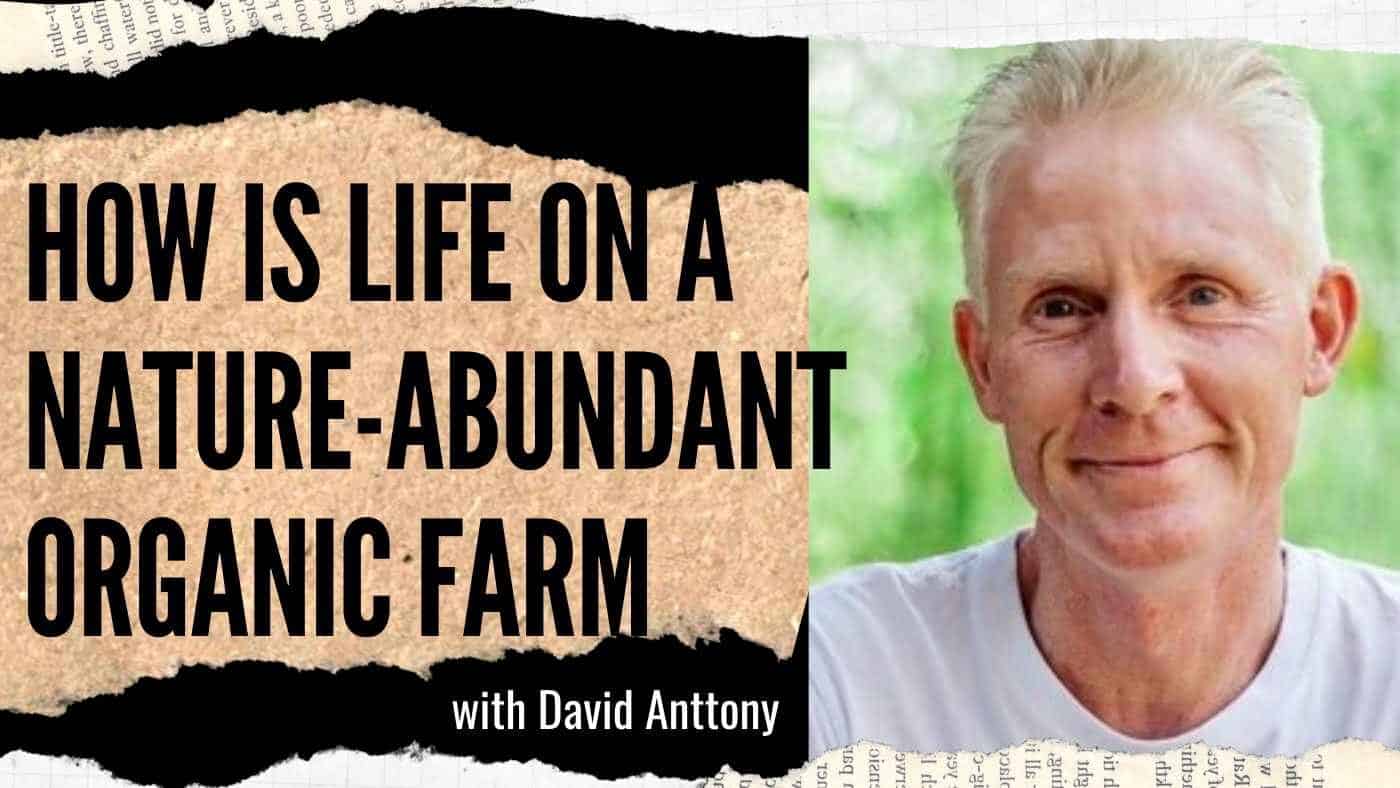
Our Guest Today: David Anttony
David Anttony is a veteran IT and SEO expert who founded companies, worked around the globe before he settled down in Northern Philippines. He and his partner opened up an organic farm called Happy House Farm that has welcomed hundreds of visitors from around the world. Their message and business model “Just relax and hang out in our nature-abundant organic farm, combine with a lifestyle program, or help out casually on the farm as you feel.“
David welcomes guests to be part of his family. “There is a lot to do”, he tells me “Nature walks abound, relax, fish at the farm, have a massage, walk to the beach (and get lost on purpose), catch a fish and have a BBQ, learn about organics.”
All the meals are provided as part of the experience. Think organic smoothie, fresh veggies, beans, fruit based meals. I invited David to describe in great details about the types of fruits that grow on his farm. While talking to David, I thought of the The Martian (film). Some veggies grow easily, some don’t at all. To balance a healthy meal, David has a lot to figure out everyday such as what to grow, how to grow and keep them fresh.
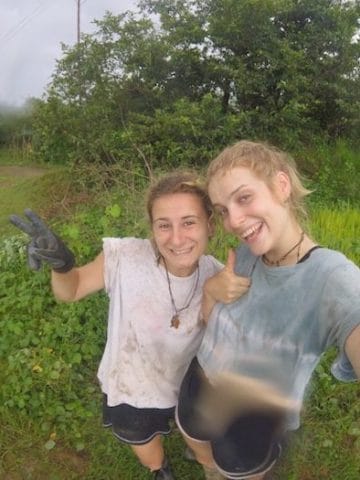
In this extended conversation with David, I also learned much more about his family’s lifestyle. There aren’t dozens of Amazon, Google Express boxes delivered to his door. Instead, David learned to be self sufficient when it comes to living with very little. He barely goes shopping, if any at all. His now 4-year old daughter learned to climb trees at the age of 2. She’s very focused and adventurous. She loves trying new things without feeling scared like most kids do in big cities.
David closes our interview with gratitude on how he thinks one should respond and react when facing challenges and even the fear of losing loved ones.
To learn more, visit Happy House Farm’s official website here to get in touch with David and make a reservation for your visit. You can also find them on Facebook here.
Show Notes
- [06:00] How long ago did you give up on a having a regular/standard routine?
- [06:30] How do you introduce yourself?
- [08:00] Can you tell us a little bit about what you do in Happy House Farm?
- [11:00] What kind of food do you prepare for your guests?
- [12:30] What kind of food do you normally eat? Are you a vegetarian?
- [13:30] What kind of plants do you grow and how big is your farm?
- [22:30] What kind of activities do you do with your visitors?
- [25:00] How long do your visitors stay with you? How do they reflect upon the experience afterwards?
- [28:13] Can you share a bit of your story? How did you become the David you are today?
- [31:00] Why did you end up moving to different countries, including the UK, New Zealand and Singapore?
- [33:00] What is the average household income that can afford a reasonable life in the Philippines?
- [35:00] Can you tell us a bit about your success in Philippines?
- [37:00] How do you deal with things you want to buy that you cannot grow? Do you order them online? Are there shopping malls?
- [40:00] When was the last time you had an office job? How has your life changed since then?
- [43:00] What are some of the tips you would give to people so that they could minimize their lifestyles?
- [53:00] How can people contact/reach you?
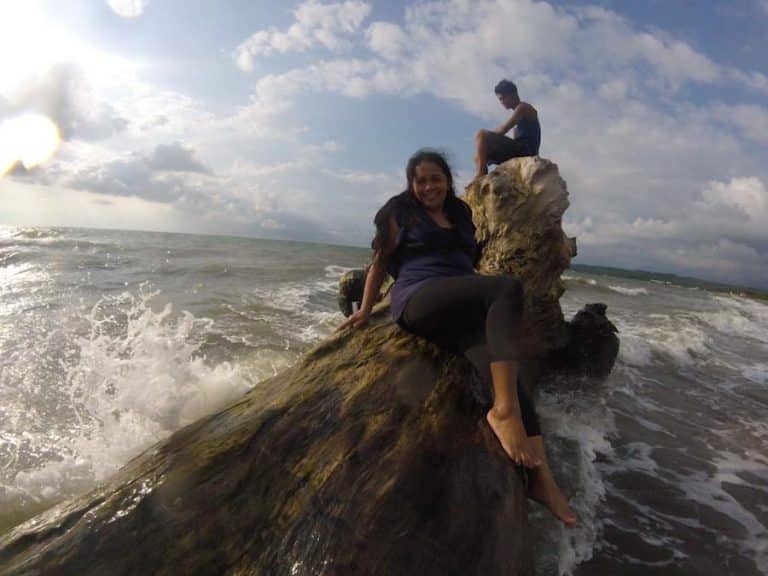
Enjoy the View From the Air Over the Happy House Organic Farming the Summer
Favorite Quotes
- [36:00] ‘Nowadays, on average, ⅓ of our income comes from our farm’.
- [35:00] ‘Basically, with $60 US Dollars we can live luxuriously’
- [38:00] I’m not interested in things that I used to be, and subsequently we don’t spend the money in the same way we used to do
- [39:00] To be honest, we had to simplify our lives. For the first year, it was actually quite difficult to live here all the time, because it is very quiet. But gradually we got used to it. […] My life has changed and basically my lifestyle and cycles have changed based on living in a more natural way.
- [41:00] ‘The greatest thing I’ve ever wanted in my life is freedom. It comes at a cost: the cost is not to have some of the assets other people have in their lives (cars, houses), but the freedom I have has been the most vital thing to my inner-being. I can do what I like, when I want, in whatever way I want…’
- [42:00] I have freedom, and that gives me power, and I have creativity. And I have inspiration. Those energies are amazingly powerful sources to do things, fast.
Transcript
Transcript
Fei Wu: Welcome to the Phase World Podcast, engaging conversations that cross the boundaries between business, art and the digital world. I have no idea how I describe myself these days, to be honest. It had to simplify our lives, and I'm not interested in a lot of things that I used to do. So subsequently, we don't spend the money in the same way that we used to do. My life has changed, you know, and basically lifestyle and cycles have changed based around, you know, just living a more natural lifestyle. And I think, you know, the greatest thing I've ever wanted in my life is freedom. And I didn't realize how to create that, but it's come out of cost. The cost to me is not to have some of the assets that other people have in their lives. We don't have big, fancy houses, big fancy camp. But the freedom I've had has been the most vital thing to my, my inner being. You know, I can do what I like when I want, in whatever way I want. I have freedom and I have creativity, and I have inspiration. Those energies are amazingly powerful forces to do things faster because once our energy increases, our ideas increases and that then gives us the impetus to do something. Hi everyone. This is FA W, and I am your host for the Face World Podcast. Face World Podcast has been a passion project of mine since October, 2000. Since then, we released 76 episodes, over 20,000 downloads, and listeners from over 40 countries. Well, these stats aren't impressive by any stretch of imagination in the podcast world. They helped me tremendously, even in establishing my company Phase World Inc. At the beginning of 2016. Every week I discover a song or unsung hero, and I love talking to people who are just below the radar. Hearing their stories, living through their experiences vicariously have been such a treat and highlight of my week every week. Well, today I have the pleasure to welcome David Antony, a veteran IT and SEO expert who founded companies, worked around the globe before he settled down in Northern Philippines. He and his partner opened up an organic farm called Happy House Farm, and that has welcomed hundreds of visitors from around the world. Their message and business model just relax and hang out in our nature. Abundant organic farm combined with a lifestyle program, will help out casually on the farm. As you feel David welcomes guests to be part of his family, there's a lot to do. He tells me nature walks. Relax, fish at the farm, have a massage, walk to the beach and get lost on purpose. Catch a fish and have barbecue. Learn about organics. All the meals are provided as part of the experience. Think organic smoothies, fresh veggies, beans, fruit based meals. I invited David to describe in great details about the types of fruits that grow on his farm. While talking to David, I thought of the film The Martian. Some veggies grow easily, some don't. At. So to balance a healthy meal, David has a lot to figure out what to grow, how to grow them, and keep them fresh. In this extended conversation with David, I also learned much more about his family lifestyle. There aren't dozens of Amazon Google Express boxes delivered to your door or to his door. No way. David learned to be self-sufficient when it comes to living with very little. He barely goes shopping, if any at. His four year old daughter learned to climb trees at the age of two or three. She's very strong, focused, loves an adventure, loves trying new things without feeling scared like most kids are conditioned to be in big cities. What a refreshing way of living a life I had never imagined. David closes our interview with gratitude and how he thinks one should respond and react when facing challenges and even the fear of losing loved one. I hope you enjoy this heartfelt conversation. Links, tools and resources are available right from our blog phase world.com. Without further ado, please welcome David Anthony to the Phase World Podcast. So David Anthony. Thank you so much for joining me on Phase World Podcast. I really, I really look forward to this conversation. Yeah, it's
David Anttony: wonderful to join your faith. Thank you for the opportunity.
Fei Wu: My pleasure. And since we chatted about this potential podcast and about a month ago, I think I started looking into, um, happy House Farms website and I started looking at it again, the menu items and a bunch of information changed. Even more exciting than . What I.
David Anttony: That was one of my three o'clock in the morning projects. , sometimes I, I just get things done, you know, so I ponder on ideas and then suddenly when I have the energy, I just do it.
Fei Wu: It sounds like me. .
David Anttony: Yeah. Yeah. I don't work normal hours anymore. I, I gave up that many, many, many years ago. Fortunately, I'm very
Fei Wu: blessed. Yeah. How many years ago would that be? Oh,
David Anttony: 25. Yeah, 25, 20 years ago. But, um, yeah. Now I'm, I, I wouldn't call myself retired, but I wouldn't say I, I work less. I actually work more. That's what I'm mean to say. I work more than what I used to do. So, but now I just have the energy to do everything that I want. When I don't have the energy, I just don't do it. So it's quite a simple, um, way to do things really.
Fei Wu: I, I love where you're going with this because most people are probably wondering what is that you do on a regular basis where you live, and uh, actually how do you go about introducing yourself or where you're living? What you're doing is so fascinating. I, I'm accumulated so many questions. .
David Anttony: Yeah. You said psych play is wonder. I have no idea how I describe myself these days. Um, you know, like 10 years ago I would've described myself as an IT person, you know, or as a business person. But these days, you know, I jokingly describe myself as a farmer. But usually if you look at my face, I'm smiling because I'm hopeless as a farmer. and any, any of the real farmers around here know that they just walk past our fields and like just giggle and smile. They're very polite and don't say anything. But, um, I've certainly spent the last five years experimenting as a farmer and I'm a happy farmer, I must admit, making all my mistakes, uh, so many, many. And, um, which has allowed me to really get a lot more focused. So how I describe myself these days, I can't .
Fei Wu: So let me, let me help you out a little bit. Maybe, um, some of my questions will kind of, uh, guide us along the way on your website, which is happy house farm.com. I already posted on my Facebook page and invited a number of friends to check it out because it just looks so fun. I had no idea. And I still don't know exactly what an organic farm entails, what makes it organic? We can talk about that. And then you design this lifestyle program where people from around the world get to visit you, get to experiment, uh, either help out on the farm or stay on the farm for one day, two days. Extended say in some cases, and people love these, you know, shiny reviews that would be equivalent to a five or six star reviews, you know, so what is going on
David Anttony: there? Basically, we've been very blessed with the farm and we started off like two years ago, trying to attract visitors here and we had no luck at first, and we were a bit stuck at the time because we, we ran outta cash, but my business at the time collapsed. So we were basically came to the farmers as a point of what do we do? So we wanted to attract visitors who would get support, and I had a lot of knowledge with, you know, networking and things and, but we, I still couldn't achieve any results. We couldn't attract anybody locally from the Philippines or anybody from overseas. But then we got onto some of the work, uh, work sites on online, like work Away. Brilliant, brilliant site. So we started to tap into a global abundance of people who really wanted to do something different and they were very happy with their simple environment at the. We literally had nothing here. We didn't even have, uh, toilets at the time, and people were happy to camp and it grew from there. Um, so now we get, on average, I get on average about two inquiries a day. Um, and basically just to come to the farm. And we've changed a little because we do, we do charge a small amount for most people because a lot of people don't really want to work, to be honest. Faith the farm, you know, which is great, which is what we wanna do. But of course we have to cover our costs for things, and we want to offer a great opportunity and experience here. We don't charge a lot. It's, um, it's about about $8 a. And that just covers the food and accommodation and then people can help out as you like. But we do offer workspaces where people can come a hundred percent and help out. We have a couple of those every month and we get some great people coming. We've had people from everywhere. I've had to look up on the internet with my daughter, where some of the places are like some of the South American places and I didn't even know where they are. I sort of heard the name, but I wasn't quite sure where they're, um, so we've had some great, great people here and we've been very. And on, on average, we've probably had just over 200 people over the last couple of years visiting from overseas. Wow. And probably about, and about the same locally. But locally it's been very slow because we're still a new concept in the Philippines phase. Mm-hmm. Organics is like something new and exciting here, where the rest of the world, it's like old hat. It's like, it's what you expect from, you know, if you want healthy food, you gotta go and eat organic. We're here. People don't really understand even what organic. So it's a new venture people. We were getting a lot of excited local people coming now, so we are getting excited. That's why we changed the site. That's what you saw the other day, to really be attractive to local people and to make it simple and easy for them to come and visit.
Fei Wu: Mm. There's so many elements, like you said, that I find, uh, conceptually very familiar because, you know, living in the US and where I am based is in Boston where organic farming and kind of work organic food has been around for a while, but not nearly as a really kind of household terms compared to a state such as Portland, Oregon. You know, when I visited, Portland, and I mentioned this to you before where everything is organic and I was so in love with the food. I had no idea what it meant really, but every restaurant that, um, we went to in Portland, Oregon was organic, including, you know, the ketchup and mustard on, on the table. And it just, everything was delicious. So when I saw the website, And I started reading about what you get to include, you know, $8 or some of the more, um, lifestyle programs that the descriptions really resonated with me. And even I think skill wise that you're encouraging people to learn how to, uh, make a family meal with no meat under 10 minutes. I mean, how is that even possible? What are you guys making for your guests? ,
David Anttony: very simple food, very. But, uh, very yummy. It's amazing what you can actually do, especially when you got simple things like, um, you know, fresh vegetables out of the garden and you don't have to walk too far. You don't have to go shopping to buy stuff. You just go into your garden and shop in your garden. . Yeah. It's such an amazing experience. So you can knock a salad together in like four to five minutes. You send the kids off running. We have lots of local kids come here, we send 'em off to the garden, go collect everything. You just wash it, clean it, so you've got half of your meal done there. And then so many other things. We, we tend to do a lot of Asian dishes, um, because of like the two ladies who do the cooking here. And Carol, my partner. Mm-hmm. , um, she's, she's Philipp. So, but we also, I like the western food as well, so they often make sure they look after me, otherwise I go too skinny .
Fei Wu: So is everybody in the house basically vegetarian at this point? Well,
David Anttony: we, we don't actually use the word vegetarian here. A lot of guests come here who actually are vegetarian. They're attractive because of that. And um, we actually don't use that word because I stopped using that word many, many years. Mainly because it's like a box and people who use that word often tend to jump in a box and close the lid and closing the lid to the rest of the world. And other people's ideas. And other people's needs. So really, I just say these days that we don't eat meat and um, we do eat a little bit of fish. So fish is our main thing. We just actually create a fish pond here on the farm so we can have our own organic fish and we can catch them. Guests can come here and catch it themselves. Now we basically eat fish and that's it. We don't cook meat here. We don't have any animals here that we keep for. And, um, we don't cook meat as in non fish food here. Yeah. All our meals tend to be plant. And I just love it because that's what my body needs. You know, as you saw, I'm a little slim boy, but I'm slim, slim faster than me. You know, when I walk across,
Fei Wu: how big is this entire farm area? Because you have guests, 200 people is quite a bit for the past two years. How do you get to feed all of them? I mean, how do you even feature self that you have to grow a lot? Plants, I would assume, right? Well,
David Anttony: sort of, we've, we've got, um, 1.2 hectares, which I don't know what you guys work. I think you're working acres. It's 12,000 square meters. Um, I think that's around three acres. I, I, I'm not good with conversions. I'd have to go and scoot into my Google thing. So it's around three, uh, acres, which is 12,000 square meters here. So in terms of size, it's actually quite a. Size for a little hobbyist farm for us. Yes. Which provides our needs. Cause we're not a commercially produced farm. Um, but commercially, it's actually just about commercially viable for this size of farm. So we are not commercially creating. So all the food that does get created here, basically just to us and our neighbors, we do a lot of trading. So we add a proprietary drop down two days ago in the. So now we've got a lot of green papa pies. So when and nickname is coming, they'll be walking away with two kilos. Each of green papas, each one's about two kilos each. That's why the tree fell over. It was too heavy . So, so then they go green papaya pickle from that. So, you know, we, we, we we're eating lots of different things that are quite unusual, but, and also very local. Like we eat the trees here. I joke with their neighbors. Say, oh, you got enough food, bro. You eating the trees again? , he's called. Yeah. They, they, they get used to my jokes around here.
Fei Wu: Do you eat the trees? So what type of trees are
David Anttony: these? We eat the trees, literally, and the trees are very good for Edison, but one of the, the main trees here is Morga and we are, now, we're propagating it. We're, we're also doing some interesting things, but we learn from somebody else's book, dragon Fruit. Up against the Morga tree. Oh, not dragon Fruit. A thick, uh, trunk and very strong and very stable in the storms. And moron guys last for about 40 years, and Dragon Fruit lasts for a hundred. So they're a good companion. Wow. And, um, so Morga is a local, local tree. You, you see a lot in Indian dishes, but they tend to eat the fruit. But what they're missing out on is the leaves. The lease is like spinach. Wow. So, uh, we go and collect it and it snaps off the tree. Very easy. You don't even need to use a knife. So the, the tree almost sort of just gives it to you. And then we take off the little leaves, like little round leaves, and then we usually, uh, cook that in, in, in a dish. And what we're doing right now is we, we've just recently got our fish, uh, farm going and we're using the wrong way to feed the fish as well. We're cooking it and drying it and do some interesting. It's about to give you one example, I'm wrong. It's got about 20 times the vitamin A of carrots. Wow. So, You know, that's just one thing. It's one of those super foods, but it's sort of, we don't call it a super food cuz it just grows here in our driveway around
Fei Wu: Yeah. Take it for granted.
David Anttony: and our little daughter, Kyra, she's only four, she's very fussy to like a lot she'll, she'll ask for me, I said, Papa, can I have me? I said, where's your green vegetables, Papa? Can I have moron? Okay, we'll get you barong. Let's go . And uh, so she loves it, you know, and she loves it. Eating it herself off the tree. She'll go and pick it herself and then we'll, we'll cook. So that gives you an idea about some of the things we're, we're sort of tried to do as much as possible. Like for example, one of the weeds here, uh, Carol found it on another person's, uh, property just growing as a weed. And she spotted it from a child when she was a child. Her father cooked it and they ate all the natural weeds and the natural vegetables that were growing wild. Cause they didn't really cultivate gardens. It just grew rice in that. So the, the planets came from the, the nature. And she grew it. She says, oh, that's a spinach. I said, wow. Looks very interesting. . Mm-hmm. . It looked like spinach to me. It's a very tall plant. And anyway, grew. It was so amazing and we propagated. We let it just grow wild. Now we don't propagate it directly, we just throw the seeds and let it spread. So we eat that a lot as well. It's amazing. And it costs us nothing to look after, nothing to. So we try to do wild foods as well and just let nature, uh, deliver food to us. It does mean we got a lot more walking though when we wanna collect our dinner .
Fei Wu: Wow. Well, so what else, or do you grow? I'm, I'm trying to like no down, uh, of some variety here because it sounds to me like you haven't been to a grocery store in years. Yeah, sometimes we
David Anttony: can't get stuff like tomatoes, , sometimes Travis season such don't tell everybody, but we try to grow everything we can. But we, we, we were experimenting with basically as many plants as possible. But to be honest here, we're living in an area where we have the water for seven months of the year, and that has caused tremendous challenges for us. And, uh, and a bit of a strain at the beginning. But now we've got water systems in place. Basically, we, we work on like water wealth. So a lot of people invest money in, you know, assets. Our asset here is water. So every year we have a major water project to build our water wealth. And um, basically we've now done a lot more work in terms of water tanks. We've just got a fish pond in that's water system plus a food system. So we've got basically more holding water on the property now so we can grow more through those seven months of buried dry, that's literally no rain, as in two millimeters of rain in seven. So it's really desert conditions. I think we have one picture on our website and I took it and I was shocked how dry it looked. This was from a couple of years ago. This is just for down the road, so that's in the dry season, but it's beautiful then cuz it's so dry and warm. But now we've got the water, we can draw so much more all year round. But we've been experimenting with, uh, some new things that are for you and not new, which is chickpeas. Chickpeas growing here is not being heard of. And uh, so that's one of the things we want to grow here. Lentil. Lentils are so popular everywhere, but to grow them here, nobody grows them here. So we're experiment to try to get them growing. We've, we've been successful in small tests with both of. So some of your common foods are actually totally uncommon here. We have to buy them from, uh, from Singapore or Manila, just chickpeas. It's such a
Fei Wu: simple free, isn't it fascinating? Uh, you know what seems totally normal, that it doesn't even cross your mind elsewhere in the world. And then you're trying to grow, trying to grow for, for the first time. Yeah. Trying to incorporate into, um, what you planned. It's so incredible.
David Anttony: Well, what we're focusing on now is, um, getting some of the things that we've not been experimenting with, like herbs and flowers. So, for example, we don't even have calendula on the problem. Now, calender is an organic, um, is an organic flower. Mm-hmm. , it's, it's very good for bugs and so on. But we, we haven't been growing it because we've had so much focus on other things. So now what we're doing is looking at some companion plants, herbs, and sunflowers. We love to see the sunflowers around. So those type of. Plus all your regular things like aines, um, and you call 'em Ogen? Eggplant. Eggplant, I'm not sure. So we've got, um, eggplant, we have pumpkins, Fay, um, you know, we grow organic. Pumpkins great in the dry season, um, but we don't have enough water, so we've had to be careful when we've plant. But now we've grown 'em in the wet season for the first time, but we've grown off the ground so they don't rot and we're getting great, great pumpkin. So, and we've just experimented now with our new, uh, fertilizing system, which is basically, uh, KPO tea. We ferment, kpu, um, and a couple of other magic ingredients. Um, and we use seaweed as well that we collect from the beach. And we're fermenting that, uh, aerobically. And we are now fertilizing the plants a very simple system, but we've got it now on a pump. So before we're using buckets, which is a lot of work to, you know, to cover a large garden. So we get set up and organized and making things simple. And then when people do come here and when everybody's, it's not too hard work carrying buckets of, uh, you know, um, liquid fertilizer all over the place.
Fei Wu: I think it's, um, it's amazing what you have learned and I feel like you've taken me in a way. It's like I. Underwater. I feel like I'm so deep in the ocean, like playing with the , the different marine animals. It just, this is a world that honestly I had so little exposure to and it's so fascinating. At the same time, I wanna give people, give my listeners some ideas of what people actually can do, uh, activities that you've designed. Wanted to highlight some of them. I just, you know, like, please tell me more. You know, barbecue campfire on last night at the farm or on the beach. So apparently there's a beach nearby and, um, you know, adventure tour walk and wild surroundings, local farms, guided river nature, walk for two hours, make healthy fruit smoothies, yummy salad, homemade dressing, I mean, This is a lot going on. Could you tell me a bit more of how you design these activities and also how people have maybe reacted to some of the, what's popular, what's really resonating with your visitors?
David Anttony: Well, um, it depends on who they are, but the, the local visitors love, uh, the unusual things that. It normal for, for, so a western person is smoothies. Mm-hmm. , they tend to not eat fruit unless it's been cooked or with milk. So that's one thing that's very popular. So we, we show them how to do that and they're amazed what they can do with a simple blender and, um, you know, for example, hummus. They, they don't know how to just basically make something in three to four minutes by pulling something outta the fridge and put it on a piece of, you know, pi bread or something like that, or a make a pancake for themselves with a whole meal flour. Um, so hummus is one of those amazing foods, as you probably know, that you can basically make in about 10 minutes and then you can use it over a couple of days. Mm-hmm. . So they love those types of things and, uh, that's what the local people been liking and. In terms of the tours, things we used to actually send people off to the beach on their own and just to explore. And we've had like about six people got lost. We had one, one group, we had to send out a search party bar when it was going dark . So we decided, we decided okay. We thought it was a very safe area around here, but it is. Nobody ever gets hurt. Um, but they get lost. And getting lost here actually is a good thing, Faye, because the farmers around here are so, They help people. So even though their English is not good, they, they point people in the right direction. We even had our neighbors bring up some of our so-called lost guests from a hundred meters away from the farm just walking in the wrong direction. They were so confused, but they were a hundred meters away. So our neighbors have brought them back. So getting lost here is a really good adventure for people because they get to experience their own own nature. They get to meet people who they wouldn't be. They get to talk to somebody who's totally, um, you know, happy to talk to them and is a so-called stranger, but within two minutes they're like friends. So we've, we've found that the tours are really good for the people who don't want to get lost, and
Fei Wu: I can see that this is an adventure, truly is an adventure. Many people in the western world just have not experienced, and I don't know how. Exactly how kids grow up in the Philippines or maybe in, uh, this particular rural area. I feel like especially in the US these days, parents are incredibly nervous to have their kids kind of even just walk down the street, even if it's in a safe neighborhood. There's a lot of suspicion, anxiety. Around that. And I think therefore kids grow up feeling that way, you know, always feel like the danger is near and, uh, not really comfortable under their skin, you know? So this is such a reverse cultural shock. And what did people say after they leave, you know, after staying with you for a week, two weeks, and how do they reflect upon, you know, what they have learned and experienced? How, how has it changed their lives?
David Anttony: It's a, it's difficult to actually answer that one faith because we don't often hear cuz they've left But when they're here, when they here they give, they give us some interesting tips and we can see it on the faces. We can also see it in the body weight. Uh, funnily enough, not that we don't feed them, they actually, the people start to slim down in a very natural way over about three to four days here. And we start to see people smile. And, um, sometimes I see people coming, especially they've come up through Manila, local people or, or overseas people that come through Manila and they're like, they've got grimaces on their face. And I start to see the face soften. And I don't usually say too much, but I notice over a few days how they've become more beautifully, you know, just looking, their natural, self relaxed and the frowns disappear and they're talking more, they're more communicative, more chatty, more connecting. So usually it takes the local people about one day to do that. Obviously people about three, funnily enough. And um, you know, it's just a wonderful transition to see this. So that's one thing I do observe cuz a lot of people don't ex express a lot of the feelings here. And you. We do get tremendous, tremendous comments about our food, which is an absolute compliment to Carol and the other two ladies who, uh, share the cooking. And so that's, that's what I observe the most, is just people feel relaxed and they start to relax and they, they just, they start to ask different questions and see things in different ways. You know, they, they make comments that I, they wouldn't have made probably before they arrived. And, you know, some people are surprised that we can cook meals with, with no meat and that they're so tasty and so on, and that we can make such simple ingredients as something so amazing. So that's what notice is, just help relax people look in the smiles and the, the losing of weight. People just start to lose weight in a nice, gentle way. We had one lady stay three. Here, um, not too while ago, and I don't know, we didn't put her on any scales anyway, how we didn't ask her, cuz there's no scales around here or anything, but she probably lost about five or six kilos in that three weeks. And you could just see it in her face and her body. And she didn't diet, she didn't do, she just ate the natural food in a natural way. And she didn't binge snack on Coca-Cola drinks and so on. You know, all those things that she may have,
Fei Wu: well, maybe I should, uh, pay a visit. It's really hard. It's really hard to keep your weight down living in the US and, um, I. Don't know what it is, but the, that's the magic and the food supply here. But David, I do wanna kind of get into a little bit more about you and just hearing your voice, your energy, and how excited you are to be sharing your story. You know, I wanna mention that the way that we met is that you've done tremendous work for phase world.com and really teaching me so much about seo. An area I've always, uh, when I use the word outsource, meaning. In these large companies that I worked for, all I needed to do is to know who are the experts, but without having me really learn the nitty gritty stuff. So, uh, everything you taught me made so much sense, and I, that's also when I found out that you were in technology. So could you kind of share some origin stories of who you are, where you came
David Anttony: from? Yeah. Well, the, the pieces of my life puzzle have certainly fit together in quite a magical way, but it's taken many years for me to slot them al. Um, I'm an IT person historically that's, I started off when I was 16 years old in, in an IT job, computer programming back when, uh, you know, floppy discs didn't exist and the computer was actually the size of, you know, it was probably around 15 square meters, just that was the computer. Wow. Um, So that's when I started off and I moved through that into self, self-employed, then went traveling and so on. And then eventually I started getting into business and I've always done it. So I started off with some IT businesses, but then I got into food and, cause I've always had a passion with food and healthy organic food and meat free food. That's been awesome. A passion of mine. So I created a business with my, uh, now, now ex partner. It's probably 12 years ago in New Zealand that has sort of grew into a company called Bouncing all of which transferred to Australia. So I got into a lot of food stuff there, but I still kept the background of it cuz in that business I was doing it. That business transformed completely. We sold it and it transformed into an intellectual property company that's called buy one, give one, B one, G one, and which now basically partners, uh, char. Along with, uh, businesses globally. I'm not part of that now, but basically I was part of that for the first four or five years of that initial project. So from there I went back into it, which is, is basically is where I've made all my money. I've never made money in food . Mm-hmm. , I've never made money in any of my ventures except it. I'm pretty good at it. So, um, I went back to it and created a search engine optimization company in Singapore. I ran that for four, four years and then unfortunately it started to demise because of Google's change of algorithms. And a lot of our cousins were jumping up and down, why am I ranking no good? Why am I no good? They're all Singapore and clients, by the way, , . So, um, basically with that, that change around the company, I decided to actually close in the end before it went. I've never gone bankrupt, but I get a bit smart. I tend to sort things out before. And so I decided to close that down and, um, it was a sad decision, but it wasn't going, we were struggling with cash. A lot of clients weren't paying the regular commitments that were on contract because they were expecting us to do miracles beyond Google. So I realized my mistakes of basically creating a company around somebody else's company instead of having something unique that we can deliver a hundred percent to. It was a big, big, uh, company mistake, and I pay for it daily and cost is a lot of money. And basic, when that that closed down, we decided, you know, what do we do? And that's how we moved to our farm. We had the farm there, but all they had was electricity, water, and a bamboo hub. And literally there was nothing else. We had power that we put in ourselves. We literally run a quarter of a mile power cable with five poles and put all the power pulse in. And we literally dug our own well. So we decided to build the Happy House farm then and uh, develop it into a center, but we didn't really know what to do with it. So that probably fits some of the pieces. Um, so in the last 18 years, I've created nine companies. During that time, I've had a lot of fun with companies and, um, now I thought I've become a farmer .
Fei Wu: Um, and I think you've, you mentioned that you founded companies in New Zealand, and I think we also talked about that, the fact that you lived in the UK and Australia as well.
David Anttony: Yeah. That's, I've moved around a little. I've actually created nine companies in, uh, in six, in six, uh, six different countries. Nine, nine companies in six different countries. , I could, right? I've tended to move around based on what I've wanted to do and what I've wanted to achieve, and sometimes those moves have been an organic move. And sometimes they've been, you know, so a natural part of the progression of the business. That's what I mean by organic. And sometimes they've been very intuitive move. So I move, for example, um, from Australia to Singapore based purely on intuition, purely on instinct. So some of the things that I've done have been quite unusual and quite different. So I've got, I've had a many years in business. And now what I'm doing, I do a bit of the way, the way we met. I'm doing a bit of work online basically to, to create cash for the business, for the project here, for our business here. Mm-hmm. , it's actually not easy creating an organic project. And we, we, we are doing quite well. Now. We're in a lot of context, but it's a slow growing situation. Things are now happening and we're getting local people coming. We, we had groups of 10 people come, you know, a couple of weeks ago. And then before that, you know, we had, I think somebody wanted to bring 30 people here. We emailed us. So we're getting a lot of interest here, which is great, and that's why we're setting up the infrastructure. We've got good accommodation now, and now we, we are doing the, uh, the, the, the tourism thing to actually take us to the next step, which is more focused on education. Organic tourism is something that interests people because it's at the bottom level as in the first rung of the ladder when they get interested in the environment and natural heating. So we can start attracting people at that level who are excited to come to a farm, bring the kids and have fun. Yeah. So now
Fei Wu: I have a, maybe a couple of questions there. Kind of give people a sense of how much on average, you know, to sustain a family of three in this case and living in the rural area. What is the sort of, uh, the average household income that would pertain a relatively comfortable life? That,
David Anttony: that's a great question about the economics here, because, um, basically when we first came here was a big shock to us. But for an average family here in our village, like my neighbor, Will earn or create through their, um, through their farming activities around about 50 US dollars a month. So that gives you an idea how little income they have, you know, so that's the average person. If you're doing quite well around here, you're earning around 200 US dollars a month, and you're doing very well. And if you go to some of the local, our neighbors here, you know, they've got mud on the floors. They've got, uh, they, most of 'em got steel now because it's more practical than, um, grass and, and bamboo houses. Our neighbor, for example, who works here a lot, uh, queen Marshall, you'll see him on a lot of the pictures. He does a lot of the plowing for us, for us. He's our next door neighbor and he didn't have a floor in his kitchen till recently, just dirt, and he had all his chickens in there as well.
Fei Wu: Wow. So it's quite eyeopening. So give. So I look at the Happy House Farms, I look at your business model and, you know, lifestyle programs, um, based on the number of visits, I would say. Is it accurate to say that, you know, you have been fairly successful in the past couple of
David Anttony: years? Um, we have, yes. And we, we've done everything from here since we've closed our business down in Singapore. We also operation back office in. We've been a hundred percent reliant on just working from here. This very located firm. We've had no income from overseas assets, no nice little, um, money pockets from anywhere and initially many with the online work that I've been doing. But now on average, basically about one third of our income comes from the farm and that doesn't count the actual savings that we get. Like for example, in food and water and electric. We're start to generate our own electricity now, so we could live here now purely on cash. If we had nothing, no, no income. If we had nothing else, we could live here on 3000 pays a month, which is uh, 30 Singapore dollars, which is I think around about 20 US dollars a month. That's what we could actually live on because we've got no food costs. So our costs are actually very low. Now to live on that would mean a very simple life for us. So average about 20,000 a month, about 600 US dollars. So for, for everything that we want, that's entertainment. You know, we wanna go away and stay somewhere in a resort at the coast or something. We wanna go and, you know, go and do things and whatever. We spend 600 US dollars a month for our, basically for our own personal needs and for, you know, the bits and pieces that we do. So we, we are actually living very luxuriously here.
Fei Wu: If I get it correctly, you're saying you could survive on 20 US dollars a month because you have no cost for food, but um, you know, for your, basically for your lifestyle, you're saying as a family for 600 US dollars is usually what you spent?
David Anttony: Yeah. And not 2060 US dollars a month. I got that wrong. Oh, so for
Fei Wu: 60. Oh, 60, so 60 US dollars is a pretty. Oh,
David Anttony: you, you get to do a lot. You without. It's about 3000 pays. Sometimes I get mixed up in the
Fei Wu: conversion. I see, I see. Yeah, I was thinking like, how do you jump 30 times? Like let's talk about that .
David Anttony: So basically 60 US dollars a month we can live on here, which is around 3000 pays a month. That covers our basic living costs here if we wanted to live that way.
Fei Wu: So what about, you know, the way I live it sounds in a way sounds. Crazy, right? We are unplugged into eBay, Amazon, and I'm next door to all these stores and these streets filled with these fashion brands and bookstores and all of that, right? So this is a lifestyle I'm so accustomed to for so long. So, yeah. How do you guys kind of fulfill some of the needs and things you cannot grow? Like things you have to go to a shopping mall for, you know, shipping? I don't know what, what you would get by. I order everything from Amazon. So ,
David Anttony: that's a good plug for Amazon , uh, basically, um, We, we started to get a little bit of stuff from overseas using online shopping like Alibaba Express and things, because we just can't get them. We go to Singapore once a year. I use great every month when I was running the company, my last company, but now we go about once a year. So when we do that, we bring back a ton of dried foods. You know, that's tends to be how we stockpile some of our things. Um, but most of the time we just live with local, local things. And we, we don't miss the shopping malls. Uh, Faye one bit. I tell you, I was in San Fernando yesterday doing some shopping for a water. And, um, you know, so going around all the shops and everything is like, wow, it's so nice to be just in nature and just, you know, away from that type of thing. You know, you save a lot of money being away from, you know, all those distractions. And once you do get, go back to, to be honest, I don't personally want them, you know, I'm not interested in a lot of things that I used to do. So subsequently we don't spend the money in the same way that we used to do. And I'd go and sit in a coffee shop for half a. And I'd, I'd spend probably, you know, 20 US dollars on coffee. Mm-hmm. alone, you know, just sitting in a coffee shop. I used to do that so often in Singapore on beer. I used to spend, you know, just buying two bottles of beer, you know, costing absolute fortune over a month. Um, so those things, you know, all change for us. And to be honest, it ha we, we have had to simplify our lives. And for the first year it was actually quite difficult living here, all the. Because it's very quiet, . Mm. You have, you have the bees, you have the, uh, cicadas At nighttime, you, you know, I have the buzzing fireflies, so, but now I've actually got used to it. I go to bed early, so that's why often I wake up at three o'clock in the morning. Sometimes I go to bed at seven o'clock at night. And it goes dark. I'm feeling tired, I just sleep. And then I might wake up at one or two o'clock and might not start working. So my life has changed, you know? And basically lifestyle and cycles have changed based around, you know, just living a more natural life. So normally I wake up with the sun. And I go to bed shortly after the sun goes down, and it's lovely, you know, and I, I feel so rejuvenated every day. I don't feel exhausted. So,
Fei Wu: in comparison to your previous lifestyle, because I don't think I have too clear of a picture of where you came from, do you remember a time and a place where you had an office job? Could you gimme a, a little bit of what that was like for you so people can see the.
David Anttony: Okay, well the last time I had an office job where I was paid as an employee was probably, um, 20, 20 odd years ago. Um, so, um, so basically, you know, I used to do, I used to be a corporate trainer and IT trainer. Mm-hmm. , um, that was in New Zealand. So I was another jump done. So many different things. I forget what some of the things I've done and, you know, that was a regular job. Started at nine o'clock. Finished at five o'clock, and um, did that for six. And it, it was a great, enjoyable lifestyle. So, you know, the jump from that to now, there's no comparison. And I think, you know, the greatest thing I've ever wanted in my life is freedom. And I didn't realize how to create that. But it's come out of cost. The cost to me is not to have some of the assets that other people have in the lives. We don't have big, fancy houses, big fancy car. We don't have 20 million in the bank. And I should have, with the amount of work I've. But the freedom I've had has been the most vital thing to my, my inner being. You know, I can do what I like when I want, in whatever way I want. So I have the resources now to, and the means to create whatever I want. And if I don't have it right now, I can create it within one to two weeks. So if I want to go off to America right now, I don't have the resources to do that. I would create it in one week and I'd be in America the week. So I can do things now in my life that I couldn't do before, but I don't have a massive asset base. I don't have things, but I have freedom and that gives me power. Mm-hmm. and I have creativity and I have inspiration. So those energies are amazingly powerful forces to do things fast and I really feel for people who are, who do have a job. And it's a hard thing when you're doing something you don't love to do. And you know, when I don't love something, I stop doing it right away. Within one to two minutes I just. , I might come back later, 10 minutes later cause I suddenly love doing it again 10 minutes later cause I've had a break. I just do what I feel to do and I follow my own energy floor and that's powerful in
Fei Wu: my life. That's really a luxury. I agree because you know, there are times since I left my job and I find myself. Working on the podcast, my projects, books, I wanna write, paintings I wanna draw, and there are times where I'm so taken by the energy. It's almost like meditation for me that I forget to eat, forget to drink, but it's just you accumulate so much joy and satisfaction. Yeah. It is almost like a spiritual satisfaction in this case. It's fascinating to kind of exchange that with you. And I also do feel for. People who hold onto incredibly stressful jobs without a good reason sometimes, you know, is that something they do to prove to themselves, their families, their friends, but I, I really like this exchange. So what are some of the tips for how one, someone could begin to minimize their lifestyle, potentially not to the level of lifestyle that you're living in, but how should people go about it?
David Anttony: Stage one really of making transformation and saving cash is to start removing addictions out of our lives, you know? Mm-hmm. , because addictions one of the things that fuel costs. You know, and excitement is an addiction. You know, sugar is addiction and these, these type of things. Basically we have to spend money and we have to spend energy. So removing addictions, that means also we remove food addictions and substance abuse. Our bodies get healthy, so we have more energy. So that gives us the time. So when we wake up in the morning, we're not waking up at eight and crawling to work. We're waking up at six. That gives us two hours in the morning. So those two hours, that's when we can be creative. We can think we can meditate. If we like to meditate. We can ask good questions of ourselves to get inspired ideas because once our energy increases, our ideas increases. And that then gives us the impetus to do something and take actually, cause so many people have ideas, but they have no energy. So getting rid of addictions is the step one. Transferring across. For example, instead of eating meat every single day, reduce the meat consumption that you eat every day or cut it down to one day a week. So then that gives your body more energy. Meat, for example, uses massive amounts of energy to digest itself. That's why I'm so skinny. You know, I can run around and I have so much energy. Food intake is very, very low, but my body weight is stable and I'm strong. So removing addictions is, is one first step. And that gives you time and energy cuz you wake up earlier and if you've got a job, then you can start being inspired about what, what you love to do. Asking yourself each question, the question every morning we wake up. What would I love to do if I didn't do that? What would I love to do? I'm not, I don't love that, but what would I love to do? How could I love doing more? What I loved, what I'm doing now? How could I love it more? Mm-hmm. . So two different questions. What could I do different, or how could I love what I'm doing more? Because sometimes our next step is right underneath our Knowles. For example, with this farm, I was thinking about doing some other ventures in Manila and doing some business projects again, but I realized that no, this farm project is under our norms here if we focus on it, careful. It will deliver results that we want and we'll attract people. I don't need to go anywhere. If I want to share anything I want, I can show them from, from from the kitchen table You.
Fei Wu: Mm. And connect with people. It's almost like your version of, uh, it's almost like not interviewing people per se, but you get to connect with people around the world. I mean, that you attract them there, the ones volunteer to be in your presence is kind of interesting.
David Anttony: Yeah. And often they pay us. If not, they, they provide the labor which they love doing. Then it's, it's a, it. It's a win-win situation. Everybody wins and everything runs and it's the magic. Mm-hmm. . So that's some of the things that you can do really. And once you start, you wanna trans transform your life element across from a nine to five job. You've gotta start doing those things. You've gotta have more energy and more time. And to do that, you've gotta stop doing some of the other things that don't give you value in. And some of the activities and once you start doing that, you have incredible opportunities to do something different. And what, that's what I did with the farm. Instead of doing something different, I decided to do something different with this project. So a lot of people in jobs, they could probably get paid five times the amount of much, if they five times the amount of the current salary. If they went to work the next day and say, I'm now gonna love this job, I'm now, what if this company is mine? You know, tomorrow when I go in in the morning, this company is mine. What would I. What would I think? What would I say if this company belongs to me? What would I say? If I really love this company, it's the best thing that ever happened. I'm really so proud of this company, what would I do? And guess what? Your bosses will wake up very fast to them. They'll see it in an amazing way. They'll see the energy change and people start making comments. Say, oh, what happened? Why? What's happening in your life? Why are you doing this? And then you'll start getting promotions and you'll start getting opportunities. And if you're in the right place, then you might get some amazing opportunities. If not, you might then move to another company where you get amazing opportunities given to you. But when your energy increases, people notice. Mm-hmm. and energy is what drives life. And a lot of people don't realize that. So the energy, they allow their energy to drain. Mainly with things like coffee and Coca-Cola and simple things that they, they can, they can do something different with, they can have a herbal tea instead of coffee, you know, instead of five coffees a day, drink four coffees a day tomorrow and drink lemon grass. Tea .
Fei Wu: Mm-hmm. . Yeah, I'm, it's so funny because of, uh, some very minor health issues that I experienced in China and with some stomach issues. My doctor, as of a little over a month ago, told me to stop drinking coffee and, and I wasn't really, Drinking it all that consistently. Only a small, very small cup in the morning. So I had to cut that out and I felt painfully for the first week and then ever since then, now I don't even miss it. It's amazing. I don't miss it at all. I don't, it's no longer, uh, desired in my system. You can train yourself, that's for sure.
David Anttony: That's what a lot of people think when they come to change. I think they have big, big changes, but small makes big. And you know, buy one, give one. You know, after I left. That's the thing that they've got. That's what they're promoting. They do micro transactions, so every time somebody sells something like a cup of coffee, Basically the company donates maybe 2 cents to somebody, for example, a child in Africa to give 'em clean drinking water. So it's micro giving, so it's small make it's big. And it's the same in our lives, you know, it's those small, tiny things like this morning and you know, just having a smoothie for my breakfast, some water instead of caffeine. So I've been doing that for 20 odd years.
Fei Wu: What was the smoothie you had, right? Yeah. What did you put in there?
David Anttony: Oh, banana. Almonds. Um, we've got papaya, lots of papaya at the moment, and, um, we, uh, we have lin seed and, um, I think that's what was in. This? Yep. That was what was in the smoothest money. It changes every day, so sometimes I have to taste what's going in. I don't actually see what's going in it. Carol makes it for me, so I'm very blessed
Fei Wu: actually. When were you? Not kidding. When you said that you eat very little. What, what is a typical amount of, uh, food you consume on, on a daily basis with all the farm work too. So you're walking around, you're doing work all the time. What do you eat
David Anttony: per day? Very hard. How, how do you work in terms of measurements and like, I couldn't do it in calories in terms of weight. I'd really struggle. I I, you'd be shocked to how little I eat, you know? But, um, very , hard question. .
Fei Wu: Mm. Wow. So, yeah. Yeah. Do your best to describe it. For
David Anttony: my height and body weight, I probably eat one third of what an average person of my same weight would eat.
Fei Wu: What is your height and weight? Currently ,
David Anttony: um, five, eight and 60 65 kilos. Wow. So, yeah, so basically I'm quite tall and quite. Very difficult cause I, when I eat rice, you know, everybody else like Bert who works on our farm here with us, he's one of our farm support. He will eat twice as much rice as me, so he'll take a big plate to rice and I'll eat half of what he's doing. And we're probably doing the same job on that day as well. Um, so, and he's, he's what, 2026? Mm-hmm. . So I'm 50, so I'll eat about half of what he's eating. And in terms of calories and physical weight and what I tend to eat but other people don't eat is fresh vegetable. Everybody else here doesn't, they don't eat, um, raw foods. Mm-hmm. , everything's cooked. The Filipino diet is cook, so I, I will always have salads, I'll have raw smoothies in the morning and that's an amazing way to increase energy. Just raw food. You know, we, we are building a dryer at the moment, so, and then the not do this in future will be growing our own spirulina. So those type of foods used to and dry 'em or wrong guys. So when you get those foods into your diet on a regular basis, the power foods, so you know, your, your physical calorie input can drop. And that's what a lot of people don't realize, that food is not about calorie, it's about quality. Mm-hmm. , your body has, um, you know, like an ATA in the brain, which actually switches off and the nutrient level has actually been reached. So when you eat to denature foods and white processed foods and white bread, white rice, the app is, that doesn't switch. Hey, boy, I knocked out the nutrients. I need nutrients. So you throw more calories into your mouth because it's looking for the nutrients, because there's so little in the foods that are processed. So I eat, you know, real food, organic foods, so I, I don't need to eat as much, so I never have a weight problem ever. You know, my challenge is if I work too hard, I lose weight. So I have to be careful not working too many. On a regular basis, you know, if I work six hours every day, I lose weight. No matter how much I eat, I cannot sustain my weight. So it's not healthy for me. I try to work around four hours a day maximum on the farm cause it's hot. And my body constitution is not designed for this environment. So, you know, cuz I can't eat enough to keep up with my calorie burning. So I lose weight, but I don't feel lost in energy. I actually have more energy. You know, it's just the way my body works. So, um, so basically that's the trick is higher quality foods, you know, and less, you know, heavy foods and less meat. Meat consumption is one of the heaviest things you can take into your body. Mm-hmm. And then the, from, you know, white rice to brown rice. Just buy rice. Cook very easy to cook. . Mm-hmm. . Yeah. You know, you press two buttons instead of one. You know, it's just, its very. And those small changes, you know, make a big, big difference. So quality of nutrients. So that's, that gives you an idea in terms, I can't really say how much I eat. Right, but it's about half what the other people around here are doing the same work as may eat.
Fei Wu: Yeah. I think people in the US in particular have to work a lot harder because it's not, um, organic food is not always accessible. And also they are. Also much more expensive. So, but I think the majority of the population, I would say are definitely trying to work very hard towards a healthy living, including incorporating fitness, meditation and such. Yeah. Yeah. So this is really fascinating, David. So for people to learn a little more about you, your farm, what's the best way to get in touch and consider a trip overseas to your lovely, happy little?
David Anttony: The best way is email Fay and the, basically that's David happy house farm.com, and you can go through our website as well to peek at some of the pictures. And we've got a lady coming in from Malaysia in about a month. I think she's gonna do some videos, so that will help people see. More of what's going on here as well because it gives more visual impact. Cause we don't have much video at the moment, so that, that's the best way of getting in touch with me. I'm, I'm pretty hot on email. You can go through Facebook and I pick up the messages, but usually it takes me a couple of days and, uh, don't try to ring me. I don't pick up the phone. , I, I work very well on email. I usually reply within a few
Fei Wu: hours. This is wonderful. David. Thank you so much for sharing your story with me and, and it's, you sound so happy. Mm-hmm. when you talk about this, so I think it's will be such an interesting episode from my listeners. To kind of
David Anttony: explore and it's been great, um, sharing some time with you as well today, today, but it's been a great opportunity and I've really enjoyed it. Thank you,
Fei Wu: and take care. Okay, you too. Thanks. Bye-bye. Bye bye. To listen to more episodes of the Face World Podcast, please subscribe on iTunes where visit phase world.com. That is F E I S W O R L D, where you can find show notes, links, other tools and resources. You can also follow me on Twitter at Face World. Until next time, thanks for listening.
Written by
Fei WuFei Wu is the founder and CEO of Feisworld Media, a Massachusetts-based digital media company helping brands get discovered by people and by AI. An Adobe Global Ambassador and brand partner to ElevenLabs, Synthesia, and 50+ other tech and AI companies, she hosts the Feisworld Podcast (400+ episodes, 500K+ downloads — guests have included Seth Godin, Steve Wozniak, Chris Voss, and Arianna Huffington) and co-created the documentary Feisworld: Live Your Art on Amazon Prime. Fei writes for CNET, Lifehacker, and PCMag, and her work has been featured in Forbes, Harvard Business Review, and WIRED. She has been publishing on the internet since 2014 — long before AI discoverability had a name.
View all posts by Fei Wu→Stay updated
Weekly insights on content, AI, and digital media.
Keep Reading
Related Articles
Joanne Lipman on Mentors, Untapped Talent and Why Women Should Stop Waiting to Be Perfect
Marc Randolph on Curiosity, Messy Starts and Why “Nobody Knows Anything”