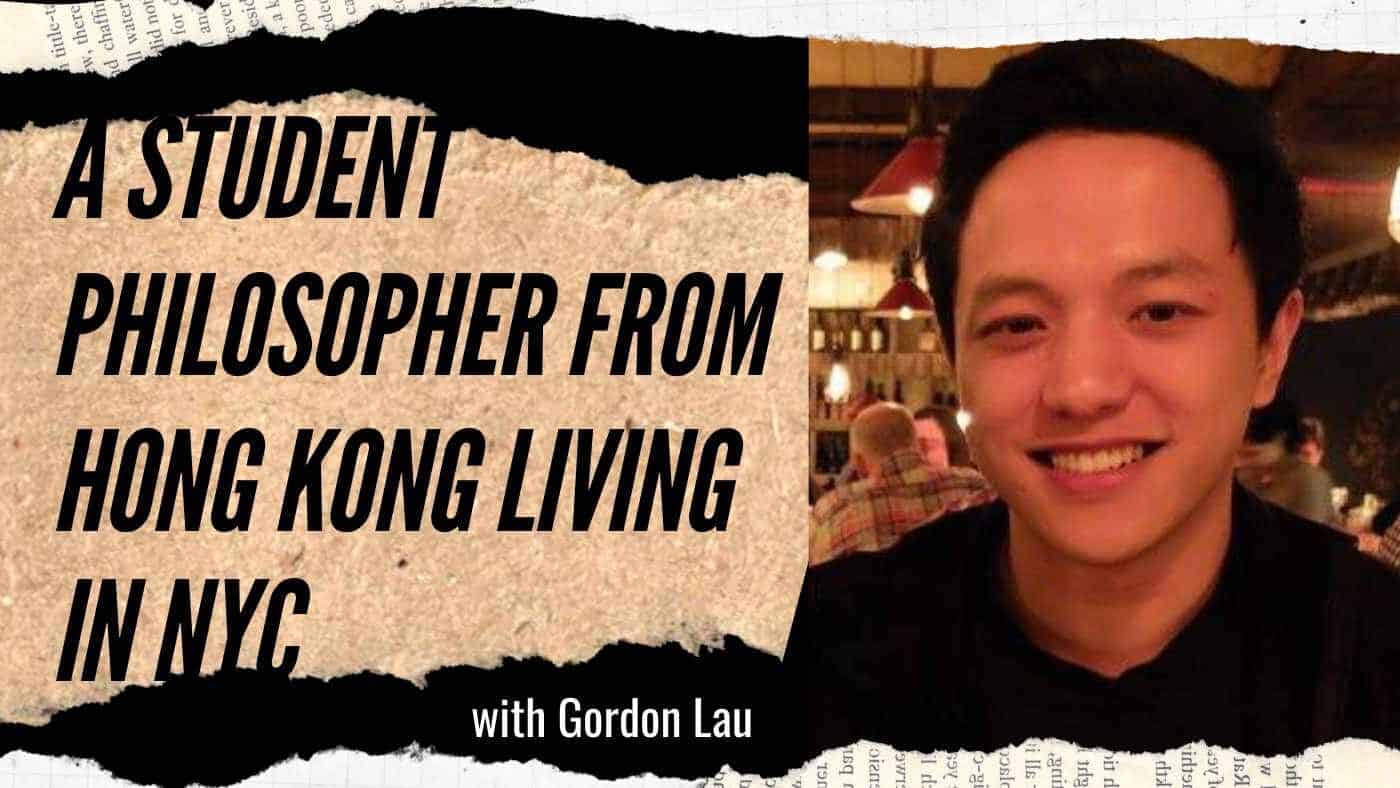
Our Guest Today: Gordon Lau
Gordon Lau recently graduated from NYU with a degree in philosophy. Compared to a student philosopher, I find Gordon much easier to relate to as an athlete, a musician, a master-level scuba diver.
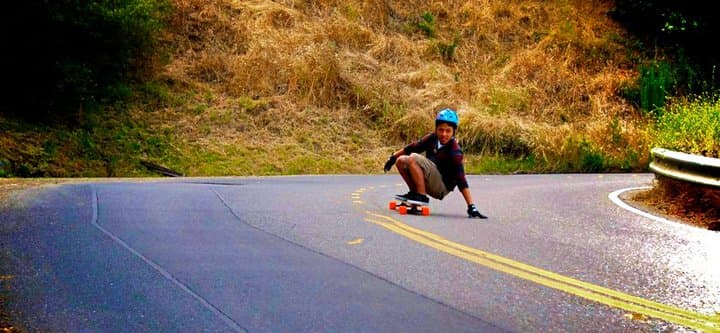
At age five, I took Gordon skating for the first time. He furiously got up after after each fall and didn’t want to leave for hours. At age ten, he won a Ping Pong Tournament in Hong Kong, played Rugby for the Hong Kong National Junior Team against some of the most competitive leagues in the world. He’s a skateboarder who self started several skate camps to help others learn.

Gordon and his family moved to Toronto when he was three. He didn’t speak any English and was enrolled in a Montessori School. Just before middle school, his family moved back to Hong Kong, when Gordon experienced reverse cultural shock. He then enrolled in the brutally competitive Hong Kong International School (HKIS) through high school.
I have known Gordon since he was born and we’ve stayed very close regardless of the distance between our families. Our moms are very good friends and Gordon spent a few summers with my family in Beijing and in Boston. Through the years, I was surprised to witness Gordon’s transformation from a kid to an intelligent young man.
What will you get out of this interview?

Beyond my own reflections for Gordon’s upbringing and recent development, his story isn’t unusual for millennials today. Many children grow up in multiple continents as a result of their parents jobs, choice of immigration. I find it intriguing and often educational to connect with people like them. They have all faced and overcome fears and struggles at an early age.
When you have to move around constantly as a kid, the lost of friendship and familiarity of the life you once had can be difficult to manage. People who experience these transitions early in life are often more calm and resourceful as they get older.
Feisworld Podcast has tapped into an interesting theme about change, because all of us go through changes frequently. Very few of them are unnoticeable. Many are uncomfortable and intimidating, or even scary at times. We are not alone in this most human experience. Hearing other people’s stories on Feisworld has painted a vivid picture for me to understand just that.
Show Notes
- What was it like to study in a Montessori school?
- How would you describe your experience of confidence?
- How do you find a passion that will allow you to continue to grow?
- How do your scuba diving and your philosophy interests intersect?
- What are the books that have had the most impact on you?
- What are the current news channels you’re following?
- Who are the philosophers that you find most inspiring, living or dead?
- If someone wanted to get into philosophy, what are some of the books or resources they could start with?
- What is your view on how to live a meaningful life?
- Who is successful in your eyes?
- What’s your take on nutrition, fitness?
- Fashion
Media Links
- Friedrich Nietzsche (philosopher)
- Michel Foucault (philosopher)
- Arthur Schopenhauer (philosopher)
- John Macky
- Google News (aggregator)
Favorite Quotes
I am just going to express my instinct right now, which is that I’m attracted towards products or services, or things that people do, that are not without a blemish. I kind of like vulnerability.
I got introduced to underwater world through scuba diving and the philosophical part of me was just kind of angry, actually, that we know so god damn little about this ocean that’s on our planet, and we’re trying to send people to Mars.
I was in psychology class and I was just unsatisfied. Everything the professor said, I was like, there’s this bigger context to it than what you’re providing. And not to be snobby or anything but it seemed like I was missing out on what psychology was trying to get at. Things branch out of philosophy, but when these branches try to reference the trunk that it came from, it’s almost as if the limb is floating, detached from the trunk. Because they really don’t want to admit that it came from it.
Transcript
Transcript
Fei Wu: Welcome to the Phase World Podcast, engaging conversations that cross the boundaries between business, art and the digital world. That was the good thing about the Montessori school. They're very accepting. So even though my English was pretty bad the beginning, they accepted me and then they brought me in that I'm attracted towards products or services or, um, things that people do that are not without a blemish. I got introduced it underwater world through scuba diving and the philosophical part of me was just. Kind of angry actually that we know. So cut little about this thing that's on our planet and we're trying to send people to Mars. Hello everyone. This is your host, FA W, and you're listening to the Face World Podcast Today. I wanna welcome Gordon Lao. To phase world. Gordon recently graduated from nyu, which is New York University, with a degree in philosophy Compared to a student philosopher, I find Gordon much easier to relate to and to describe as an athlete or as a musician and a master level scuba diver. Um, he received his certificate, I guess when he was just 14 years old. And at age five, I took Gordon skating for the first time. He furiously got up after each fall and didn't want to leave for hours. I remember my mom and his mom were both stunned and I found courage and bravery just witnessing him learning something new. And at age 10 he won a ping pong tournament in Hong Kong and he also played rugby for the Hong Kong National Junior. And what else? He's a skateboarder, uh, still and he skateboards everywhere. Gordon is his family moved to Toronto when he was just three years old. He didn't speak any English and was enrolled in a Montessori school. And just before middle school, his family again moved back to Hong Kong and Gordon experienced major reverse cultural shock for the first time. He was then. Without many options. Um, had to enroll in the brutally competitive Hong Kong international school, h k I s, all the way through high school. I have no born, literally since the day he was born, and our family stayed close regardless of the distance. He spent a few summers with us, with my family when I was still living in Beijing, but also after I moved to Boston. In Boston. I remember dropping him off, picking him up at m i t, you know, at several basketball camp, you name it. And he was maybe around 10 years old. Later on, uh, in our interview, he described an experience of going to uc, Berkeley for summer camp. I remember that was me who brought him over there. So throughout the. Uh, I have been really surprised to witness Gordon's transformation from just a little kid to an intelligent young man. He's very into fitness, so, uh, I ask him to give away quite a few tips towards the end of the podcast, and he's also a flawlessly, well-dressed person, so some fashion advice was inevitable as well. So, what's the point of this interview? Beyond my own reflections for Gordon's upbringing and recent development, his story isn't so unusual for millennials today. I find that many children grow up in multiple continents as a result of their parents' jobs, choice of immigration, and I also often find these people to be really interesting to talk to and not. Because they were able to take pictures from around the world, but rather the amount of fears and struggles and self actualizations they had experienced at such a young age. When you move around a lot as a kid, the loss of connections to friends can be really difficult. People who experience these transitions early on in life seem to be more calm and resourceful as they get older. These kids are also more likely to become entrepreneurs and doing their own things. Face World has tapped into an interesting theme about change, and I think all of us go through changes constantly. Very few of them are unnoticeable. Most of them are uncomfortable, even scary at times. You might ask yourself, is it really all that scary or are you just making yourself scared? you don't know the answer until you come through the other end. But meanwhile, my friend, I hope you know that you're not alone out there. And hearing other people's stories on Face World has painted a vivid picture for me to understand just that. So I hope you enjoy this conversation, this interview with Gordon and I. I feel very blessed to have him and his family in my life. Without further, do you please join me and welcome Gordon Lao to the Face World Podcast. I'm here with Gordon la, someone I've known for, uh, his entire life. And, um, for the past 22 years. You just turned 22, right? Yeah. Great. And then who is, uh, very lucky to be a soon to be graduate from, uh, nyu, New York University, majoring philosophy in psychology. And you have a very interesting life. Someone who grew up in Hong Kong for, uh, a number of years. Well actually till you're. Three or four and then moved to Canada and lived there till your 10 or 11 attended International, international school, and now you're in the us And so you've got quite a path to how, how do you, how do you feel? I mean, do you ever think about the fact that you lived in so many places and.
Gordon Lau: Being in Canada was, I mean, looking back, it's probably the most influential part of my life, not because I got my citizenship, and it's much easier to go to university in the US because of that, but rather something simple is because of the Montessori school I went to there. I went there too. Um, it was called tms, Toronto Montessori School. And at the time I didn't know what I was doing. Their system of education was very different from anything I've ever encountered, and that was my first grade. Um, so I thought education was gonna be like that forever, where, um, all the activities were set out on the side and every student was given a syllabus that they was specially created just for them, and they had to just create, uh, finish the test by the end of the week or a. And you just check in with the teacher every time. Um, you finish an activity, you get graded on it. Um, but secretly graded. I know we actually had grades, which was the craziest part. surprise. Yeah. Um, so. In the beginning, I didn't know what to do because in Chinese culture you basically just listen to the adult or whatever
Fei Wu: you have to figure out. Sounds like in, in Canada, you have to kind of figure out, were you given tasks and things to expectations to meet, or you're saying that you kind of have this free range education.
Gordon Lau: Um, there were tests you had to do. So like there were grammar tests, there were like math tests. Mm-hmm. . And you just chose what you wanted to do. I didn't know we were being grade. I just did only the stuff that I really liked doing. So geography, I mean, as a kid the activities were intriguing cuz he had to move pieces around. Mm-hmm. . Um, and the thing I'm trying to get at is when I moved back to Hong Kong, I didn't know how to. Analyze what was going on because I moved from Montessori school setting to a traditional, um, school setting, which is based off like the French industrialist, um, classroom setting.
Fei Wu: So international Hong Kong International School, . Yeah, it's interesting because to someone like myself who went to like a real local school and felt that was the many aspects, you know, my abilities were constrained and my, my own thinking was kind of, uh, You know, in, in a way that expectation was set for me. There was nothing I could really set for myself, uh, or for anybody else. But, you know, by the time you came back, when you're at the age of 10 or 11, you felt in a way that, wow, this is, there's a lot of structure that was put in place, kind of very different. Um,
Gordon Lau: yeah, I saw all these structures, all these systems of control, and then now if I'm gonna put some like words to it here, It was a reverse culture shocks somehow. When I went to Canada, it wasn't a shock to me because I had no experience of what schooling was like. Mm-hmm. , so that became my norm. But then when I moved back to Hong Kong, I was confused because I didn't, at that point, I didn't know Montessori school was that different and mm-hmm. and thinking back now, I would definitely send my kids to Montessori school for as long as possible. And I think that was a big part of my life now that look back on it. And it didn't seem like that for years. I mean, only just two years ago did I really reflect and see mm-hmm , how much of an impact it made on my life. So
Fei Wu: fundamentally, like fast forward now in your very early twenties, what are some of the recent events or thoughts or experiences you've had that you reflect upon that Wow, there really, it could be. Someone or some experience, uh, I had back in Canada. You know, what are, it doesn't have to be super specific, but what are some of the things that you feel that you go through life reflecting upon
Gordon Lau: your life in Canada? I don't know what drew with me to philosophy, but partially it might be a disconnection I felt throughout my upbringing because I grew up in Hong Kong, uh, grew up until like three years old or so. Mm-hmm. , I learned a bit of Cantonese, little bit Mandarin, but then I was at a three year old. Um, which isn't that good. It would've been fine if I had stayed there for the, uh, rest of my life. But black was, I moved to Canada, like you said, and there I had to learn English. I had no idea like how to speak it, uh, when I got there. So that was the good thing about the Montessori school. They're very accepting. So like, even though my English was pretty bad the beginning, they accepted me and then they brought. and that was really helpful. So difference I'm trying to draw is when I went back to Hong Kong from Canada, the schools there, my, I were more rigid and they wanted to kick me down two grades in order to join their school. Oh, in Hong Kong? As in Paul, yeah. Wow. Yeah, the disconnection. So like it's about language really, essentially.
Fei Wu: um, you know, it's just like I noticed that you are absolutely passionate about philosophy, which is your major versus, you know, some, you also notice some kids are like, I'm on the side, I don't know what to do exactly. And perhaps I will choose the major, you know, uh, marketing communication. Sometimes I hear the themes of philosophy and psychology as well, even though it's like there. A lot of work involved, uh, at a place like nyu. Some kids may worry that I'm truly passionate about this, but what is the, what is the guarantee? What is the security beyond graduation? Would you like to share some insights to, you know, what you have learned? What are some of the areas you've been exploring, even though you know nothing may certain were fully defined yet.
Gordon Lau: So, yeah, perfect example. Actually, segueing into this, what I was talking about before, um, How things will just suck you. And that's what happened to me. Um, that's how I can speak. So not vividly about it, but like from the heart, because I originally went to nyu, uh, as a psychology major. I declared it, um, on my application and I mean major. But after the first year or so, it's not that psychology is shallow, but. It seemed like a sub part of philosophy, and when I started taking philosophy courses as a potential minor, I eventually started caring more about my work and philosophy and then mm-hmm. , at some point, I, I passed the point of no return where fatal mistake as we're so with saying, um, mistake. Yeah. Uh, and I just completely embraced philosophy as my major. What time,
Fei Wu: um, during your study did you switch over?
Gordon Lau: The seed of doubt started even before I started planning for colleges actually. Cause everybody has like their philosophical start point. And then for me it was either reading nature, which is very stereotypical one. Um, but for me, I think looking back now, um, it was when I was at a summer camp in Berkeley, um, sophomore year of high. Oh yeah, I was there. I brought you there. Yeah, exactly. . Exactly. And the experience. The very last day of the program, I handed in my essay with the professor, I think she was called Rhonda. She talked to me about my paper. The grammar was good, syntax was okay. But then she asked me this one thing about the content, which was about, uh, a statement I made in that paper, which was that I don't remember what the paper was about, but what I said was, blah, blah, blah. This is happening. But then at least this is adding to our progress. To society's progress. And then professor asked me, what, what do you mean by progress? And at that point I didn't really, uh, think about stuff like that. So I was just like, wait, are you saying I used the wrong word? Like, do you mean I should have used advancement or something? But no, she was talking more philosophically, um, she was saying that making claims like, yeah, we're making progress. It's, it's a truism. Truism, just basically nothing statements because like what progress as in like every second is passing and then that as progress to progression of time. Mm-hmm. and then she's not, she wasn't even just pointing at like the potential ambiguousness of the difference between passage of time as progression or like progress that most laymen might think of it. Things are getting better. Um, she was talking more about relativity. I mean, I haven't really thought of the best word for it, but relativity is it.
Fei Wu: I think that you know this. I think I know exactly what you mean by that. I think progress is for, as you know, for my upbringing, especially the first secondary education that I had up until 10th, 11th grade, you know, we, we keep talking about the result. The result being your brain, the result being whether you received an award or not, or some sort of indication. Oftentimes the external, not internal validation, but external validation. So I'm a huge friend of this, um, this psychologist word, actually, I don't know her exact title. Um, Carol Dweck talks about the education system in, uh, some parts of Europe to say that they have two grades. One grade instead of fail is just not. She thought it was magical. You know, it was saying you haven't arrived yet. You haven't, you haven't gotten there yet, but you will. Is that indication of a growth mindset versus a fixed mindset? It's really quite, um, amazing that for you to be exposed to the level of thinking at the age of whether that the time 1516, which I had no access to that at all, and thinking about like if someone were to express that idea to me, it could have changed. You know, earlier on too. So I don't know whether that's, you know, piggybacking on onto what you were talking about or potentially philosophically much deeper is, uh, where you're trying to convey.
Gordon Lau: Yeah. Uh, actually remember some parts of it now. So she was wary of the idea of seeing like, we're making progress on our goal of getting to somewhere. When is this somewhere? And like the basic question was, what the fuck do you mean by progress? Like yeah, you're okay
Fei Wu: to swear here? So yeah,
Gordon Lau: kick everywhere. It's just like throwing words around that people like will validate. It's like, I know that word progress. Yeah, sure. Like, yeah, we are making progress. It's bunch of these nothing words really. Mm. Yeah.
Fei Wu: I mean I think that that sense of, uh, you know, in a way that it's like false urgency and um, you know, this arbitrary checklist, right? That doesn't quite go away when you are, um, in your late twenties. And for me, early. I feel like when you're a kid, that whole idea of progress is almost magnified to a degree that you know, grade by grade, right? Or which grade are you in, which semester of the grade you're in, versus like, how many people truly care about what year, how many years I've been working, right? So now I'm personally being measured every five years as somebody who has, I have 10 years of work experience. Just a little bit different than the five years of experience. And then beyond that, think about it. 20, 25 versus 30 years of experience, nobody cares. So I think it's really interesting that the indication of where we are in life changes. And then there comes to, have you gotten married yet? You know, have you had kids? How many kids have you had? Is it too few or too many? Is it? Um, but to. You know, I, I wanna kind of jump around a little bit because I think we can talk about philosophy for a very long time, but I do wanna also give people grounded advice and some, some of the experience that you, you've led up to this point, you know, what people haven't heard about you is that you're a very well rounded, very thoughtful person in terms of, you know, your experience in, in sports. You know, you played rugby on a very competitive team. You're very good at ping pong. Being good at ping pong in, in China, not just, not just anywhere in the world. Okay. And, and in your experience in music, you started a band, you're interested in art and you're, uh, master diver, and which part of like, or maybe all of that really matter to who you are today? Or do you think anything I've mentioned just now kind of jumps out to say, wow, that really gave me a much unique and unexpected experie.
Gordon Lau: Okay, so two things. So like for some self-validation here, I'd, I'd say all of those things that you mentioned, especially scuba diving philosophy, I would suggest let anybody try it. Like those two things have been such an integral part of my life. Um, Scuba diving. Yeah. Scuba diving and philosophy are related. I think it just, in the very same world, you just go down a few meters in the water and you're already in a different world. I mean, not to speak so figuratively, but that's what it feels like. Um, but the other thing is, You speak of me highly and I, I appreciate it. It makes me feel better. Um, but the thing is, I'm not so sure what to say about, um, confidence and also the breakdown and confidence and what you get from the breakdown and confidence that you once had before. So like, what I do value a lot right now is how in college or like the end of high school, and even especially right now actually, um, seeing all these other people. Better than you in specific things, or you might even think that they're better than you in general. Mm-hmm. , like a lot of people probably have this feeling. Um, and that gave me a new perspective on life. I mean, I was typical teenager thinking that knew everything and like had answers that were unmovable. Um, but as I'm getting slightly older now, as a 22 year old saying that's funny, but, okay. So to begin with breakdown confidence. You start to learn lessons like, oh, okay, maybe I shouldn't make such absolute statements all the time, or like, I shouldn't, um, always act as if everybody should care about what I do. Mm-hmm. Those are very important lessons, but at the same time, the breakdown confidence can be very trapping.
Fei Wu: I mean, it's so funny, I started to realize this about myself. I'm kind of. Retrospectively that just like what we talked about five minutes ago of how we're now measured differently, you know, there's a cutoff almost when you're 21, 22, you bounce from a school that you could be proud of, like Ivy League or something. You, you are then dropped into the real world. And all of a sudden, what do people use to measure you as a person? Traditionally in the Asian society, how much money do you make? Right? And I've heard many parents lie about their kids' salary almost constantly when I was growing up. And then, you know, secondly, which company do you, and then so what does that mean, you
Gordon Lau: know? Okay. Yeah. Um, so for me, this breakdown of confidence, it's more internal. Not, and I see, I see that my life needs to be seen through others for me to experience like human animal experience, but like my sense of value I think is separate from that. I mean, not just try to sound like a badass, but like if people say shit to me like, and say shit about me, it's just, it sucks cuz I'm an animal. And then like invalidation is. Painful because it's just trained into you evolutionarily, but like beyond that, it means nothing to me besides passing memories of like the pain that was inflicted at the moment it
Fei Wu: was said. So, okay. So let's break that down a little bit more because that's, that's certainly a conflict, internal or external that many of us are living. Living with still, regardless of the age, you know? Um, so even, even for me, you know, working at an agency where, you know, I question, do I fit into the culture socially? What I mean, you know, you know me, I don't drink, I don't really party that much, but whatever. That's what everybody else cares about. You know, that's social pressure. When you go to work the next day, I mean, literally you are no longer part of that circle a conversation. You have no idea what happened the night before. It's interesting. I, I thought about. How, you know, how much used to impact me to, towards the end, how little that impacted me that I decided to use, utilize my time to do other things. I truly enjoy that I, I felt liberated, that I no longer have to fit in because I think it breaks down to the people that you're
Gordon Lau: listening to. . I mean, it's not a good or bad difference, but there's a difference between what you said and what I said because the way you said it was it, it seems, I don't know. I'm gonna ask you like the, are you implying that you still do care about what other people think, but then like you know that it's more better for you to do what you wanna do instead of going out?
Fei Wu: It's not that I don't care about any of that at all, and I still certainly send some of that, but it's about five to 10% of the intensity that usually experience. So there's growth and progress there, by the way. You know, at
Gordon Lau: the same time, right, exactly. The growth and progress again, like, you know, the thing is like maybe 50 years from now, like that's not so much progress then cuz maybe 50 years from now you're like, oh, maybe I should have gone through those clubs or
Fei Wu: everything's somewhat arbitrary and relative. Mm-hmm. . And so, I mean, the thing is, you know, looking at the, uh, my podcast as an example when I first recorded, when I recorded the first episode and. After that was done, I recorded the intro. Just the love of an anxiety was something I kept talking about on my podcast and at some point people were like, you need to get used to it at this point. I mean, you're at least 10, 20 episodes. When are you ever gonna overcome that fear?
Gordon Lau: I think actually that's what I would like for you to not keep in your podcast, but like, that's what I would say separates it from like the masses out there, um, of all the other podcast. Because I really dislike it when people like get into the flow of things. I don't, I'm not saying that because I want people to fail, but like when you get into the flow of things, it's not so much you cuz, cuz then like a lot of the times you're just being pushed forward or patterned by something that you're not really conscious of. Yeah. So like, When I see people, I mean, it's a psychological fact. It's just when you see people struggle, you can connect with them more. I really don't want some kind of, um, hipster bullshit, some guy on NPR saying like, yeah, I know everything, so I'm just gonna bring people on here because I'm the person who knows everything. I know how to talk to people best and like, that's why I never stutter, but like everybody goddamn stutters at home or with their friends or with their family, and then that's what we want. Like we don't want the packaged McDonald's. We. The mom and pop like burger that might have like that is a bit undercooked, a little bit too oily. This is just the battle between what's authentic and what's not authentic, and even that can be questioned. But say, I'm just gonna express my instinct right now, which, which is that I'm attracted towards products or services or, um, things that people do that are not without a ble. Like I, I, I kind of like this vulnerability.
Fei Wu: That's why people like, uh, you know, the, the book Power of, uh, vulnerability is incredibly popular. Uh, and I think it's really well said that when there is that sea, sea of saying this, whether it. People or behaviors or clothing or you know, anything that we do or food, you know, you start to, I noticed that people started to steer away from that quite some time ago, but two come out and say that that is not what I want and this is what I want. And I feel like that has been a phenomenon. That I've witnessed in the past, especially like three to five years. It, in itself, it intensified. You know? And I, that's why since you're visiting Boston, I, I got really excited of talking to people through your generation, as I saw the sneak peak of that when I was graduating 10 years ago. But to see that, wow, it's, it's true that people. Going after, you know, smaller companies and going into, you know, uh, underprivileged, uh, neighborhoods to really help people out to get their hands dirty. There are many, many, many graduates even before you are no longer saying, I'm staying in New York City because of hip and cool, and I'm going to work for these Fortune 100 companies.
Gordon Lau: I mean, as I'm still young, I have a really love hate relationship with a lot of things cuz so much energy made that might come out as passion, but like it's just opinion. Mm-hmm. . Um, so in terms of helping people and like doing these other things, um, if you're actually helping people, Great for you. I'm not gonna say like it's the way you should spend your life, cuz that's up to you to decide. But if you're just a tourist, I mean, I'm gonna like shit on H Guest a little bit here. Like we had these interim trips and you could either choose an adventure one or you can choose a service. One thing is like people look down on the ones who chose the adventure ones because like why? Why didn't choose the service one? Because you'd be helping other people. But things, I went on a few of those. It's just a lot of back patting like, oh, we're building this volleyball court for like this school. And then we finished half of it and we were there for a week. Like we should have finished it. But then the thing is like, we're a bunch of tourists. So like we helped out for a few hours and then like pat ourselves on the back going to those classes, teach them ABCs as if it's gonna like benefit them that much and like that's what I dislike the tourist version of social work. Mm-hmm. . And that dilutes the value that, or supposed value. People who actually do wanna help people and do help people like put out in the
Fei Wu: world. What are some of the observations and experience that you look at, whether it's from yourself that you experienced right then and there or somebody else, family or friend that you look at and say, wow, that that's meaningful impact. That's there's a meaningful measure against
Gordon Lau: it. The idea is just whatever it, pain, whatever pains you and you're not doing it, that's, that's probably what drives you and that's probably what you should pursue. Okay.
Fei Wu: Yeah, I mean, we met with I and d, uh, Atherton and soon you'll be meeting his, uh, twin brother, um, Kevin from Sir Dele and, uh, during our Paramore show on Broadway. One of the things that Andy said that just stayed with me since I connect with them, , the fact that they're moving to New York and everything inside themselves are telling them, look, we, maybe we should just settle, maybe. And they did it. And I think that's a great example. Pursuing something that that pains them, that they, they're scared of. That's another description. Pursue something that really scares you. And it's a saying of like, do something that's, that scares you every single day and you continue
Gordon Lau: to grow. There's this philosophical point, I forget who it's from, but it's just, he said that life is just the long journey of finding out what you want to kill you. So like you find what you love and let it kill you. Mm-hmm. . So like, you may not let it kill you as in like, oh, I like trape. Um, alright, so I'm gonna just do it, do it over concrete with no net. No, I think the gist of it is just let it consume you. I mean, yeah. This, this is the problem though because as I said before, um, with the vulnerability thing, like when you go into auto drive, it's dangerous. But then right now I'm saying that you should find something that makes you wanna be put into autopilot for it. Again, from the beginning. As I said, it's to each their own. Just look closer and see whether it's autopilot that's put on by somebody else or external factors, or if you willingly, uh, flip the switch yourself.
Fei Wu: Mm-hmm. , I mean, I think it, when you say it's interesting that sometimes I have these conversations on my podcast and there's something very definitive, there are a quick action items is and giveaways to say, try doing this today. Right? But I think what you are offering is also definitive in a way that it's about. Uh, asking or inviting people to think differently. I wish I had more opportunities in school, not just in college, but also in secondary schools that someone teach me how to think, how to approach certain situations, especially, especially not necessarily the terrible ones. But when things don't go your way, and as simple as something I learned most recently, uh, Josh Witkin on Tim Ferriss podcast about how Josh is now a parent, a father, and uh, and. He talks about whenever there's a snowstorm, um, storms of any kind, most parents, they stay in house. We're not gonna go anywhere. We're pissed. But instead he would take his young boy less than four years old to dance in the ring. So I want, um, You know, in a way, if I, if I'm a teacher or in a way that I'm teaching little kids, as you know, in my Techon Middle school, I invite people to kind of experience, address the pain. Don't ignore it. You know, don't, don't pretend that it doesn't exist to experience, but still be able to function, you know? And how many times. Uh, you know, do you recall that your, something happened in your life, big or small, you know, that's, that's painful. A varying, uh, you know, scales and degrees, and then that you just don't feel like yourself. You might slow things down. Or for some people, it, it, it really impacts their lives for an extended period of time that they're not being themselves, they're not productive. So I wish there are. there ways that are kind of built into our mechanism. Um, you know, and then since we're a young child to be able to handle that, I think that will be really
Gordon Lau: powerful. Yeah. Um, there's definitely value in that, but at the same time though, being able to brush anything off, brush things off of rapidity. Mm-hmm. , I mean, I'm not gonna go into the, the obvious consumerism, uh, analogy, but it's just when you can brush things off or like take the hits. Become less human. It's kind of like dating a lot of people and then actually becoming in infatuated with them, but then, uh, being able to brush them off really fast. I think that's a sign
Fei Wu: of, uh, much insecurity. You know, it's when people are really shielded up to say that I really, I can't, I don't wanna fall in love with anybody. And you know, you know, like people say love is a bitches that when you lose yourself, you know, you lose your, some of your senses. It's, it's in a way that, you know, just like find your, you know, it's a difference between passion and and opinion. Once you find something that truly feel passionate about, it's, to me it's scary. Like, you know, it's like finding podcasting is so much fun to be able to connect with people on such a deep level. But anything at that level also comes with, uh, a great amount of responsibilities. You know, just like you said, you know, you fall in love with something, then you have to. you have to be responsible for, you know, that downstream impact. So let's, let's talk about something, uh, to close on this last night we started talking about ocean studies. What's the right word for, uh,
Gordon Lau: that domain? I think that's the thing because there hasn't been much activity in that sector, really. Um, so there's no like household term for it. Even right now, like when I'm thinking about it all, I can think. It's just oceanography or like ocean serving. And that's the issue because it's just not in the conversation right now. And
Fei Wu: so that interests you. Could you, do you mind repeating and just telling our audience a little bit about what's involved, what you're interested in? Sort of the
Gordon Lau: math, I mean the whole scuba a plus philosophy thing is, would pretty much sum it up cuz I got introduced it underwater world through scuba diving and the philosophical part of me was, Kind of angry actually, that we know so goddamn little about this thing that's on our planet and we're trying to send people to Mars. It's actually easier to go to Mars because there's no pressure out there. It's much less so like going down and, uh, deep into the ocean. That's when materials really, really get tested and that's what's really hindering development in that area. So, I mean, I can't really get that angry, but like at least I'm annoyed that we know less than like, I think the last estimate was like 5% of the ocean or something. I'm not exactly sure. It's something really low.
Fei Wu: Yeah. If you could be anything in that industry, what, what are some of the things that you, you would
Gordon Lau: consider doing? Oh, actually though I do wanna be part of the whole big picture planning of that kind of stuff. I do also really, really desire, um, to be the person on the ground, well, in this case, in the water. Mm-hmm. , um, in the contraption going down deep. Do dealing with whatever or doing the tech diving, uh, involved. I mean, and that's actually a point, um, that might invalidate everything that said before about not just doing things and gaining into the flow of things. Cause for the people like me who's listening to this podcast like you, you might be nodding you at risk of invalidating everything I've said before, like, just advice for those people, which I've found becoming more and more relevant is just when. Actually just do something. And usually it just pertains to like music or like more conversational things, like mm-hmm interacting with humans. Just get your head outta your ass and stop thinking about the details. Stop thinking about like what the smartest thing to say in a conversation is. I mean, this podcast, it's a great example of it because I haven't been interviewed before. So in the beginning of this interview I was trying to say some smart shit, but . Exactly. So case in point, really just be yourself. I. The review or summary of this interview is nothing said here is true nor false. It's just you take what's gonna be useful for you and then like, like let's say you're an asshole and you succeed, you're gonna rationalize everything that you did saying that like, oh, that's how I'm successful or not, because all those things I did, because that was me. Whether or not whether you're an asshole or not, you're gonna rationalize your story. You're gonna create your narrative. That's something that's completely outta my control. I can't even fathom what kind of narratives you guys might come up with,
Fei Wu: but, which is kind of the, the point of a lot of people, again, this is not specific to Face world, but you know, young men and women are, are coming out to say, you know what? I have a microphone. I'm gonna record this conversation. And not to validate anything, but just simply to.
Gordon Lau: No, it's great. Yeah, I mean, what I said wasn't saying I, I didn't mean like this podcast is you trying to be smart. Anything that, oh, no, I know, I understand. I'm saying like the experience of the people who might be being interviewed for the first time on your podcast. It's, I'm expressing my feeling of it, like literally right as I speak right now. So throughout this whole podcast, I try to like show value, demonstrate value or whatever, but.
Fei Wu: You kind of get in your own way, right? So, so let's talk about a quick few hits, just quick q and as and you can provide shorter answers. So you're super into fitness and you constantly grab protein shakes or snacks on the go. So what are your go to snacks and or protein drinks
Gordon Lau: in the beginning? Go for the protein shakes and stuff. Sure, that will help you. But in the end, if you wanna develop a better discipl, Of fitness, it does help to force yourself to eat natural foods. So like get your protein from meats and like vegetables if you want, because it, it's not just because like, oh, that stuff, that vitamin or protein you're getting from meat is better than WHE protein. That's truly not the case. Like a lot of the times. Yeah. But rather what it gives you is this regimen of, oh, go to the supermarket, choose out which food you want, and then like through the process, Doing those things, you develop a habit and like an intellect about what it is to be healthy or fit, like according to you. So like when you go choose your meat, you're like, okay, in the middle of that steak, there's a bit too much fat, so I'm gonna go for the skin one. And then over time you're just gonna. Build that into yourself. I mean, I also disagree with that kind of like friendship because it can make you a robot if like all you do is eat, uh, grilled breast, like chicken breast mm-hmm. and then, uh, broccoli. That's, that's gonna mess with you. Oh yeah. And also more importantly, is, People should stray more away from the whole, oh, I'm in college and there's a gym here. Let me get huge. Let me get into like the whole body building thing. I mean, it's attractive in the beginning. I mean, physically you're gonna look better and also like you're gonna feel better, but there are way better options out there, such as more natural. Like movements, like the most mainstream one I can think of is yoga. But then you can move on to like IO Patal or Move Nat. Mm-hmm. . I'm not being paid by those two people. I just really think that that's the next step for human fitness at least. Yeah. I'm
Fei Wu: going to put these resources out now. On the, on the blog post, so not, I know you're very into that. Um, okay, so I'm not sure how into fashion you are these days. Your mom is, you know, one of my big heroes here. What are some of the, um, where, where do you shop these days? What are some of the, your, what's your
Gordon Lau: current style? I don't have a specific story, but my buy policy is, will last me more than five years. And like, am I only getting this because of a trend that's happening this month, this week, this year? And that's not a reason to not like get the item, but like understand it. And if you understand it and you still want it, then get it. Maybe,
Fei Wu: maybe have that be a, like a slightly smaller percentage of your closet, you know? Yeah. Some people are like, oh, I'm 89% of the trends,
Gordon Lau: like we're simply speaking. Get more basics. Mm-hmm. and get some nice jackets and then I think you're set, you can mix and match. Mm-hmm. , no need to, cuz then the thing is like, if you're worried about people recognizing that thing, the thing that you're wearing has been worn like recently. However, like whatever recently means to you, people don't really get. Interested by basics. So like they're not gonna remember Yeah. Like, oh, that black shirt, I saw you wear that yesterday or half a year ago. Why are you wearing it again? Like, I always gonna say that. Yeah.
Fei Wu: No, I'm, I'm all about minimizing things. Um, three more questions. What are, what are some of the books you're reading currently or for books that have, uh,
Gordon Lau: much impact? Uh, niche is beyond good and evil. That's a must read for me, really. Michelle Le Fuko, um, truth games. I forget which book it's from, but that, that one was really not eye opening, but the way he presents it is done very well. Mm-hmm. great.
Fei Wu: Currently, the current people you are, you're following where news channels you're,
Gordon Lau: Oh, oh man. Yeah. Um, just for general news, um, I don't think you can really beat the aggregator of Google News. It's just you get a piece of everything. So like, let's just say you do like a certain very esoteric, uh, news source, like cushion science monitor. Mm-hmm. . Um, it will be on, uh, Google News as well. Mm. Interesting. So like, you will be exposed to. Of different perspectives on the very same issue and there's value in that. Oh, and in terms of video news, one really suggested to those fan of Heart Lively that really opened my eyes up Live leak. Yeah. I don't know if you should really suggest this to any of your, uh, readers with the Can't Stomach cuz it's some of the stuff on there. It's really graphic and that's why it's eye opening because it's the news that was decided to be unpalatable for. Normal news.
Fei Wu: Got it. So I'm sure we'll attract a lot of people. what attracts most, uh, what's most attractive about philosophy to you? Because apparently there are many aspects of that mm-hmm. I didn't know
Gordon Lau: about. Um, as I mentioned before, what really drove me to do it was that I was in psychology class, um, and I was just unsatisfied. Mm-hmm. , um, it was everything the professor said. I was just like, well, it's in a bigger set of. There's bigger context to it than like you're providing and not to be, it's not to be snobby or anything, but it's just that it seemed like I was missing out on what psychology was trying to get at. I mean, it's weird because things branch out of philosophy to get out other things, but at the same time, like when they, when these branches try to reference the trunk, it came. It's weird. There's almost, it's almost as if the limb is like floating, detached from the trunk, uh, because they really don't wanna admit that it came from it. It's what I enjoy the most, and it's also what I think is most contentious and the most. It's funny, the most valueless of of values. So what,
Fei Wu: who are some of the philosophers that, uh, you find most inspiring living
Gordon Lau: or dead ? It's obviously nitche for me, but I'm also trying to like deviate from that because nietzche means so much to so many people. Um, a lesser known one. Chop Panina. Mm-hmm. . Um, and Nisha, uh, learned from, well, not learned from him, but says that he learned a lot from Chop Panina, but eventually Nisha sits on Chop Panina, but I think his stuff is a little bit more nihilistic. in a good way for some people. Some people think that Nisha was wrong in criticizing Chop Panina. Um, so I think those who do like reading Nisha, which I know is a lot of people who are like even just barely interested in philosophy. Even. I even got my mom to read a Chinese version of Nisha's, the Space Big. So if you are interested in like Ntha, I think you should read a Bishop Panow and see how you feel. If
Fei Wu: somebody wants, let's just trigger another question. If somebody wanna get into philosophy maybe for the first time. Mm-hmm. , you know, what are some of the beginner's
Gordon Lau: book? Or, I wouldn't go from there. I would go from think about what it is that drove you to like, potentially a thing about philosophy and then find a paper on that. Mm-hmm. . So like, let's say you've gone to philosophy. Think that there's some hypocrisy in saying that animal lives matter. And then there's these mass slaughterhouse, and then you can go look into nature values. So like you can look up a paper on morality. So like if you think that morality isn't really real, I would read John Mackey's Error Theory. That ones pretty good. Cool. Um, so start with the issues. You're interest away. Not, don't go with the intro, the philosophy books, cuz that will, that will bore you, you to death. Really? We almost
Fei Wu: said it the same. So, la last question. Um. It, it doesn't have to be meaningful for the next 20 years, but what is your, uh, what is your outlook and view on living a meaningful and fulfilling life? What does that mean to
Gordon Lau: you? I don't know so much that you can live a meaningful life, but fulfilling life is more pr probable because fulfilling. You could. I mean, feeling can be like done through physical means, and that's like much easier. Mm-hmm. . And that's the thing about being somewhat of a nihilists, um, don't believe in meaning really. Mm-hmm. . And that doesn't stop me from like, doing things as if I think they have like value. Is this the human thing? Um, I'm an animal. I, I'm gonna actually go desire things, but I don't think that's, , you can't aptly say that's meaning like mm-hmm. to better achieve what you desire as a human animal. Mm-hmm. So
Fei Wu: there's one question I personally dislike when, when it was thrown around on a podcast is, uh, you know, what's the, who comes to mind when you hear the word successful?
Gordon Lau: right now. The easiest example I can, I can give is Elon Musk. Mm-hmm. , um, too easy of an example cuz there's a high one. He just, yeah. He just dreams up these things and goes and somehow does it. And he doesn't come. I mean, he wasn't like poor, he came from decently well, a family and then, I don't know. I usually don't look up to people and he's like one of the only people I do look up to. Maybe that's a figment of my imagination. I'm creating some kind of person that doesn't exist in my mind, which is very likely. But looking like at this, looking at the empirical facts is just mm-hmm. amazing person. He's
Fei Wu: quite, he's he's quite awesome. Yeah. Yeah. And not just draining up these solutions, but actually. Transforming into reality. Yeah. You know, a physical product people can actually use and, and make their lives better, so, Thank you so much for being phase world. This is quite an intense conversation. To listen to more episodes of the Phase World podcast, please subscribe on iTunes where visit phase world.com. That is F E I S W O R L D where you can find show notes, links. Other tools and resources. You can also follow me on Twitter at Face World. Until next time, thanks for listening.
If you are using Facebook on a regular basis, we welcome you to connect with us there.

Written by
Fei WuFei Wu is the founder and CEO of Feisworld Media, a Massachusetts-based digital media company helping brands get discovered by people and by AI. An Adobe Global Ambassador and brand partner to ElevenLabs, Synthesia, and 50+ other tech and AI companies, she hosts the Feisworld Podcast (400+ episodes, 500K+ downloads — guests have included Seth Godin, Steve Wozniak, Chris Voss, and Arianna Huffington) and co-created the documentary Feisworld: Live Your Art on Amazon Prime. Fei writes for CNET, Lifehacker, and PCMag, and her work has been featured in Forbes, Harvard Business Review, and WIRED. She has been publishing on the internet since 2014 — long before AI discoverability had a name.
View all posts by Fei Wu→Stay updated
Weekly insights on content, AI, and digital media.
Keep Reading
Related Articles

Focal Alpha 50 Evo Review: My 2026 Pick for Creator Studio Monitors
Joanne Lipman on Mentors, Untapped Talent and Why Women Should Stop Waiting to Be Perfect