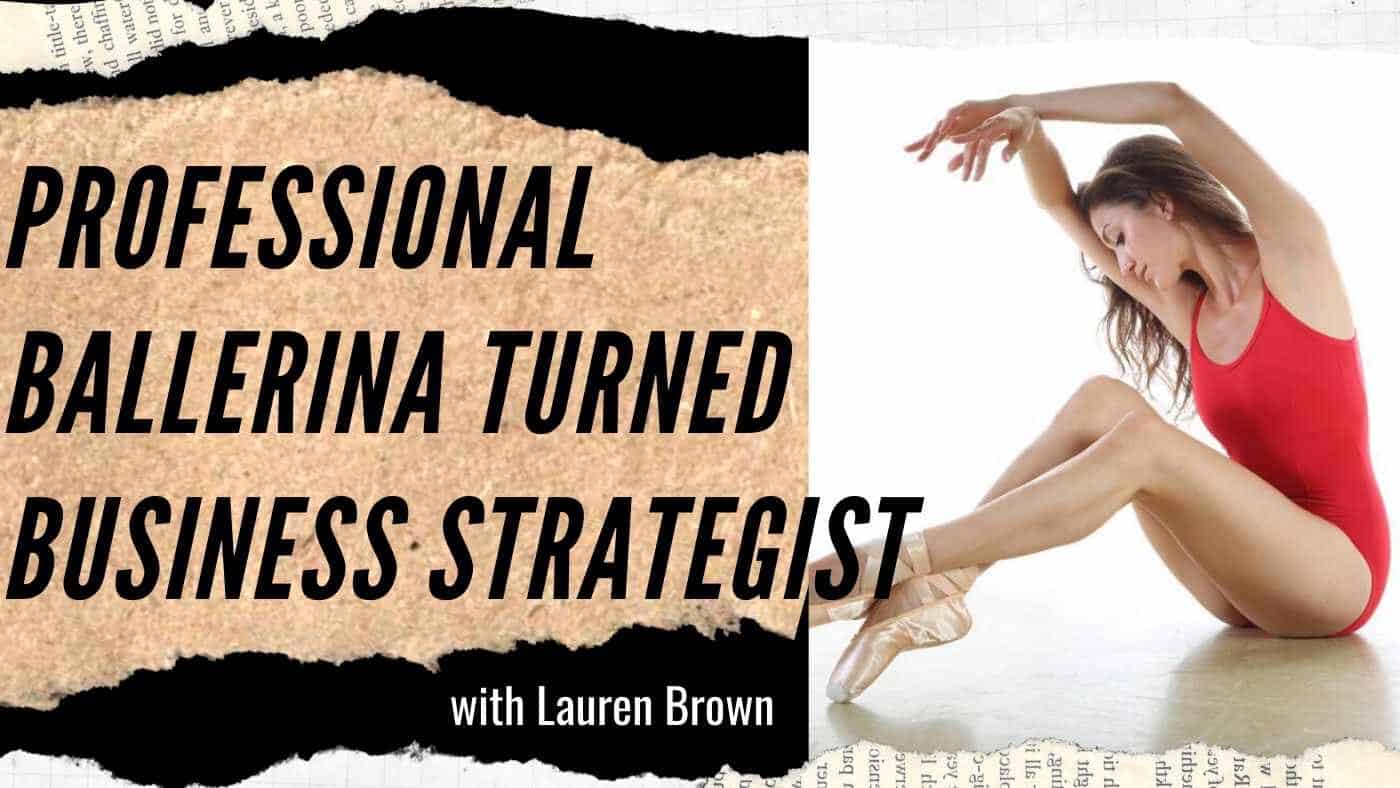
Our Guest Today: Lauren Brown
Lauren Brown (@lobro423 on Instagram) is a Brooklyn-born, Duke grad with a passion for brand insights, digital strategy, and challenging the body and mind through exercise. She is a retired professional ballerina, who performed with The Pennsylvania Ballet and New York City Ballet at Lincoln Center before receiving her degree in Psychology at Duke. She was also a State and National Yoga Champion (#1 in MA-2015; #21 in USA-2015).
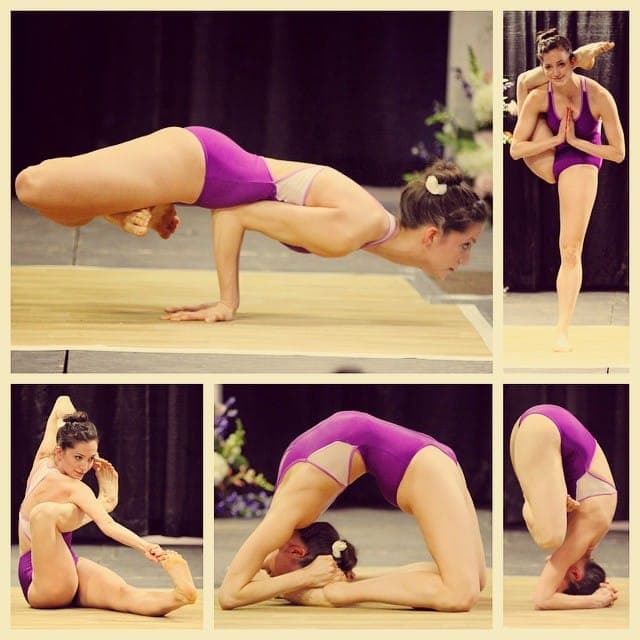
In 2015, she and her team competed in the UBS & OpenIDEO Challenge and was a winner for their project called UnBroke.
So what will you get out of this episode? Inevitably you’ll learn a few things about Brand Planning and Marketing. More importantly, this is a story about change. What is it’s like for someone to transition from professional ballet (or the performing arts) to a 9-5? Why did Lauren make this decision and how has her life changed since then?
Show Notes
- [05:20] With so many titles attached to yourself, how do you introduce yourself?
- [07:05] How old were you when you worked on the street asking marketing questions and surveys?
- [08:05] What made you decide to stop dancing and pursuing other aspects of life? How was the transition from being a professional dancer to figuring out what’s out there?
- [10:00] How prone are you to injuries? How much recovery time did you have between shows?
- [14:50] How does your beauty and your training helped you in the professional world?
- [19:10] How was your transition from being a dancer with a very active lifestyle to a sedentary advertiser? What advice would you share with other people?
- [23:15] What are some of the things a dancer need to watch out for? I.e. setbacks, liabilities, etc.
- [25:15] How has your experience been as a strategist?
[27:00] What is the IDEO project about and how it started?
- [33:15] What was delivered to the IDEO project?
- [37:50] What’s the current status of the project?
- [40:20] How did you get into Yoga and Yoga competition?
People and Resources :
Mick Ebeling (https://en.wikipedia.org/wiki/Mick_Ebeling)
OpenIDEO (https://openideo.com)
Favorite Quotes
- [05:20] ‘My identity is something I always struggle with […]. For a long time it was ballerina, when I graduated I started to figure out who I was as an adult’
- [06:30] ‘[my first job] made me realize I was A PERSON, whether I was a ballerina, passionate about the environment or curious about marketing or psychology’
- [08:10] ‘My whole life I always had a lot of interests. [As I grew up] I quickly got rid of many of them.’
- [08:35] ‘There was actually a real turning point, where I felt somebody else controlled my body. [I reached a point where] I was dancing over 13 hours day.’
- [10:30] ‘Your limit is an injury. Your limit is not the pain, it’s the fact that something literally won’t work.’
- [17:00] ‘[With my friend] we went to see Black Swan and both of us felt that that was exactly how it was like to be a dancer: we did anything it took to excel, succeed and it didn’t matter, your mind was the only barrier.’
- [20:00] ‘It’s mainly about confidence. I think anyone can do anything if they just put their intention there. So often we think that people are successful because there is this element that will make them successful.’
- [21:15] ‘There are so many things where whatever the skills are that we all have from our different passions, we can apply them in a lot of different ways.
- [21:00] ‘There’s a huge benefit in collaboration. A lot of dancers tend to think ‘if I spend more time on this I can get it to be perfect. I would encourage dancers to embrace that collaboration, […] to be conscious about where you fall short and who can fill those gaps.’
- [28:30] ‘I think it is really important to embrace failure as much as success’
- [29:30] ‘I realized I felt very passionate about education and basic health care.
- [30:00] ‘Mick Ebeling’s main takeaways from FutureM’s talk: 1) First commit, then figure it out. 2) Surround yourself with people that make you feel stupid. 3) Seek out morsels of approval.’
- [33:45] ‘We delivered three ideas that were interesting, disruptive and helped reduce the cost of education.’
- [40:30] ‘It’s I think what helped transition me from a ballerina to a person. When I use my body I’m able to express myself in different ways. I really like the meditative aspect of ballet, and Yoga had that.’
- [41:30] ‘To me originally it felt very similar, but then I realized how different it was, because it is less about the end-result, it’s all about the process. There’s no such thing as perfection, there’s only intention, and this notion became more and more embedded on how I approach things.’
- [50:00] ‘I think it is so cool when you walk down the street and you realize that everyone has a story and you have no idea what that story is. I think it’s fascinating’

Transcript
Transcript
Fei Wu: Welcome to the Phase World podcast, engaging conversations that cross the boundaries between business, art and the digital world. I think anyone can do anything if they just put that intention there, and so often we think. People are successful because there's this element. Your limit is an injury and that's it. Your limit is not the pain. It's the fact that something literally won't work. This notion that there's no such thing as perfection and there's only such thing as intention. I felt suffocated by perfection. You always fall short of this notion of perfection, however you define it. Sometimes it's not even falling short. You prevent yourself from going as far as you could out of fear of failing. I. Think it's so cool, like when you walk down the street and realize that every person has a story and you have no idea what that story is, that everyone is their own protagonist. I think it's fascinating. Hi everyone. Welcome to another episode of the Face World Podcast. Well, today I wanna welcome a very special young woman named Lauren Brown. Lauren is a Brooklyn born Duke graduate with a passion for brand insights, digital strategies, and challenging the body of mind through. Laura and I met at Arnold Worldwide, an agency based in Boston. You have at this point heard many other guests who have also met me this way, but you know, these days when young millennials especially ask me about if they should pursue a career in marketing and advertising, my answer is often yes, but not for the reasons you. So instead of focusing on big brands for your resume of what, worry for your brag wall or somewhat of a decent salary, I personally think the biggest return is more about the people you meet and the stories you hear. Those are invaluable lessons for life. Lauren is certainly one who has had a story that will never be forgotten. She is a retired professional Ballina state and national yoga champion number one in Massachusetts in 2015, and that same year she was ranked number 21 in the United States. She recently competed in the UBS and Open IDO challenge and was a winner with her team project called unbroke. Unbroke unveils the issues with higher education in America today, particularly around student loans. Lauren and her team took a number of steps forward and actually proposed a system that could make students' lives better. This is one of the main topics during our convers. We then also chatted about Lauren's career as a professional ballerina performing with the Pennsylvania Ballet and New York City Ballet at Lincoln Center before receiving her degree in psychology at Duke. So what will you get out of this episode? You will learn a few things about brand planning and marketing of course, but more importantly, this is a story about. What is it like for someone to transition from professional ballet or the performing arts to a nine to five, and when Lauren finds it rewarding? A full-time job aside, Lauren shows you how she can continue pursuing her dreams in other areas, such as her ambitions in yoga. She'll walk you through her journey and stayed in national competitions as well. So lots of goodies to share here. Those things you often hear about millennials today. Turns out there aren't Oh, true. So if you enjoy this episode, please consider subscribing to Phase World Podcast by visiting the iTunes store and search for Phase World Podcast. You can also easily do that with just a single click if you're already listening on your mobile device. So with the Apple Podcast app or app, such as Podcast Addict. Without further ado, please welcome Lauren Brown to the Phase World Podcast. Um, so let's jump right in. I am here with Lauren Brown, who is, you know, is professionally trained classical ballet, and now our, uh, your yoga practitioner. And actually yoga competitor and also a strategist that aren't old worldwide. With so many titles attach to your name, does it, does it feel natural? How do you typically introduce yourself? Well, I
Lauren Brown: think it kind of depends on what situation I'm in. It's kind of interesting because my identity is something that I've kind of struggled with quite a bit throughout my life, and for a long time, my identity was the baller. Whether I was in middle school, high school, or even in college after, um, I had taken time off to dance ballet, professionally, everyone knew me as Lauren, the ballerina. And when I graduated I kind of had an identity crisis. . I didn't know who I really was, kind of beyond that demure dancer and I really sought to figure out who I was as an adult. Um, outside of that, so, The thing that actually really helped me figure that out was I took one of those jobs where, on the street, uh, in New York, I waved people down asking them if they had a minute for the environment. And of course, no New Yorker did . So that's kind of how I got into marketing. But, I would have people that would yell at me telling me how I ruined their day. It really toughened up my skin. It made me realize that I was a person and being a person meant all of that. Whether it meant that I was a ballerina and had an interest there, or whether I was. Passionate about the environment or just curious about marketing and psychology? I was me. Sorry, that's, this is kind of a loaded question that you ask cause I've given a lot of
Fei Wu: thought to it. Yeah, no, I'm so glad you're talking about it because I think that truly is the cream of our conversation. And I have to ask, how old were you when you were on the street asking marketing questions? Surveys like 22, 20.
Lauren Brown: So this is actually between high school and college. So well after ballet, so I guess 19.
Fei Wu: So I was reading this article, you have this bio on uh, on a website. I think it was one of the dance association that you're associated with. And it was heartbreaking for me to see the word with retirement. And you know, I was thinking you must have been like 19, 20 years old. Did that hit you? You know, we started talking about this when I was still working at Arnold. What made you decide to perhaps stop dancing and pursuing other aspects of life? Knowing that you started dancing at a very young age and have so many questions about the school in London as well. It's like you're American. What are you doing in England? But it's been a long time. What was that transition to going from a full-time professional dancer to say, let's figure out what's out there,
Lauren Brown: Yeah, so I think, I mean, my whole life I've always had a lot of interests. As you grow up, as any child does, you have to select which outside of school activities you focus on. So I quickly got rid of many of them when I was dancing and not even in school at the time. You commit your entire life to it as a profession, and it's very different to go after your passion professionally. Versus have it be your passion, but maybe not what you're paid to do. And for me, there was actual actually a real turning point, , and it was. When I felt like somebody else controlled my body. So I'm a, I'm tall, I'm five foot nine, and in 0.2 I have big feet. So in 0.2, I'm six foot three. So in order to have any tall dancer, you need tall men. In a ballet company, all companies are very selective with the number of tall dancers they have, and they oftentimes have them doing many different roles. So it was Nutcracker season. We did something like 30 shows in two weeks. Um, oftentimes dancing three shows every day. And I had three parts in each of the three shows. Uh, so nine different roles in a day. Um, and as a new dancer in a company, you have to take class. Before the shows as well, so not even exaggerating. I was dancing and in point shoes for over 13 hours a day, which is a lot
Fei Wu: Wow. It's so interesting when you talk to somebody who actually comes from an industry being an insider rather than an outsider like myself. You know, I've been through a couple of shows. I have a couple of friends, but not in depth conversation. I realize that there are a lot of misconceptions and now that, you know, after introducing you to someone like Hope Davis, I went to see her show. I just realized how much mile, how many mileage that you put on a body, whether being a man or a woman, and how prone you are to injuries and how little recovery time you have in between, you know? Yeah, that's actually,
Lauren Brown: I hadn't thought about the mileage put on a body, but. It's almost like it doesn't matter. Um, and that's kind of what the turning point was for me. So I think I had my first cortisone shots, my hip. At like age 14, 15. Oh God, .
Fei Wu: I thought you were gonna say 24.
Lauren Brown: Wow. So your limit is an injury and that's it. Your limit is not the pain, it's the fact that something literally won't work. So the time I realized that I wanted to move on from ballet is I was dancing so much. Of course your body is, uh, it needs to be well cut so it can perform. Uh, well fueled, but when you're dancing that much, the only thing that I could really eat was trail mix in between the ballet class and then the performance and then the next ballet class and the performance and you know, it's just, you can't really have a meal cuz you can't have a rock in your stomach. Mm-hmm. and you're burning through so many calories that there was a point when I was on stage that it was during snow and there's a scene in snow where all the. Twirl around really fast, really fast, and then all of a sudden stop. It's very dramatic. And then they all go to the corner and dance information all together. So it's just like so dramatic and it's an amazing moment. And I remember twirling and then stopping and thinking, oh my gosh, I'm gonna faint. Should I run off stage and faint, or should I stay on stage and faint? But everyone will notice that there are only 15 and not 16 people in the formation. What do I. And I decided to stay on stage and thank goodness I did not faint. But at that moment, I realized that I was almost like a marionette and that the puppet master controlled my body because I didn't want to be considered un dedicated. And one of my best friends, Cameron, he dances with New York City Ballet and he and I went to go see the Black Swan together in theater. I don't know if
Fei Wu: you've seen it, but Yes, I have.
Lauren Brown: So it's, it seems over the top, but the only thing that fell over the top to us was the actual fantastical part of it where, you know, maybe things are kind of growing out of her body or also the, did she kill herself? Sorry if I just scrolled
Fei Wu: that in. Oh no, not at all. I feel free to, I mention swear and say whatever you want on the show too. So I feel like you're holding yourself back. get carried away.
Lauren Brown: Yeah. Okay. Sounds good. Uh, yeah, it's, it's funny cuz like I totally, speaking of Black Swan, I think in all of this you really have that white swan, black swan tension. So the cursing versus not curs. Sometimes I find myself being absolutely like a sailor, but then other times I find myself identifying back with like, demure dancer self, you know? So it's just, it's funny how you say that, but um, but yeah, like we went to go see that movie and both of us felt like that was exactly what it was like to be a dancer, that you did anything it took to excel and succeed, and it didn't matter. There were no barriers in your mind. Your mind was only barrier really?
Fei Wu: It's so funny because after the show, I know there was a, a number of years ago when I was still working as sapien, so make it at least three to four years ago. I spoke with a dancer like yourself who very serious up until 17, 18, and then quit and was telling me how realistic that movie was to her, which is watching, and it's like, what? That's pretty real. That's exactly what we went through. Yeah. And then there's, you know, also as a dancer, but what I thought was interesting is when you put yourself in such an extreme situation, imagine you're a little girl, you've been immersed in that world for so long in a way that. Part of you, your life and your own identity, but then all of a sudden you become a grownup. You're then immersed in other friendships and people and you know, all of a sudden you look at life, it's like this is kind of metaphorical in a way that, well, is this truly me? Is it the real life? Is there another life, more real life outside of this? You know, what is the actual human interaction? And I start thinking about this quite a bit of, you know, like, Showcase your picture and all that. The first time I met you, Lauren and I was, became very clear to me that you were a dancer where you have been for a very long time. And even in, even though in a business setting, you're tall, you're very thin, you're fit, you have the perfect posture, you're very beautiful. So, you know, last night was thinking that I love interviewing as a woman, going through careers even as a young girl through, uh, being a young professional and later more seasoned professionals. How does sort of the beauty and your training serve you in the professional world? Like that really intrigued me because sometimes it can be kind of annoying, I have to say. Like what has it been like for you? Yeah.
Lauren Brown: Oh, I'll go into this question, but maybe for answer the very first question you asked me, which was how do you identify yourself? And when I left ballet, I didn't know how, what my identity was and what has become increasingly important to me. Not to be what I do, but to be who I am. Because so often I try to fit, I try to figure out what's the title that like encompasses who Lauren is, you know? And I think all of us are so dynamic and that's one of the reasons I love advertising cuz you'll meet people with so many different interests. I mean like yourself, the. You have this entire blogging website and your interest in traveling and karate as well. You know, you have so many interests and I think we all have so many interests, but it kind of recently has my granddaddy's 90th birthday, so I had to write him a note. And what was upsetting to me was how, just like a note to say, I love you and you're awesome, and stuff like this. And my mom gave me inspiration, but it was all about his accolades and his accomplishments, but not about who he. And I think that's why it upset me so much because I wanted to tell him what he meant to me as a person as opposed to how I was in his accomplishments. You know, I'm proud of him, but it's more about who he is. So when it comes to my height and kind of things I do, or kind of my outward appearance, I try to, like, I have my style, you know, but I try to play away from that if I can. And I'm aware that people are aware of my. And that I'm a ballerina or like I might come off as a, um, whenever I can, I, I kind of combat it. So I like to be a tomboy sometimes, or, uh, you like wear army clothes and when I was young, I always wore my hat backwards, maybe to combat the, the ballet sweet little girl type attitude. But that's funny also, I, it wasn't a huge ordeal, but one of the very senior men would comment on my height and my. And it made me feel really uncomfortable. And then one day I said, well, and I figured out like what a good response would be and I said, well, you know, I did read somewhere that every inch you are tall equates to a $5,000 raise. So watch out next week. I might be in five inch heels, .
Fei Wu: That's so funny. Yeah.
Lauren Brown: But it's, it's interesting to me cuz a lot of men, I, I actually think are a little bit threatened by the fact that I meet them eye level. But I try to play into.
Fei Wu: I think you answered it really well and I, I really like the transition, what you said about your grandfather and coming from my background, as you know, I grew up in Beijing, China. It's spent about half of my life, it's so funny, half of my life split between China and the US and just seeing that distinction, especially today, and I feel like the two worlds or the two cultures are trying to collide and kind of meet each other some way, way or the other. And to realize, oh, There's the tiger moms pushing her kids to go to the Ivy League schools and have a steady, stable salary right away, fresh outta college. There's many extreme stories told, uh, among the two cultures, but one thing I sense very intensely is the fact that even when my parents used to brag about me, it's always titles. I mean, it's a funny thing is like by a happy coincidence, People chose me to be the prom queen in, in high school. The high school I only had been for nine months and there were really not many Asian looking faces there at all. And then there are many, many beautiful young girls. And, uh, in a way that was like, okay, okay, you know, maybe it's a small town. Maybe because I was a tomboy, played hockey, but now how many, oh my God. That was like a. More than a decade ago. Right. So my mom still brags about it, and that always offends me too. It's like that's, that's not my identity. That's an event. You know, that's a title that's now a plastic crown somewhere that we can never find against. There's so many interesting aspects and stories about you and you know, I love to talk about your professional careers as. Other people, and especially women in this case, to kind of transition from being a dancer to being in advertising. I mean, you make it sound like a walk on the park, but in reality I'm sure there's some of the challenge mentally and physically and going from a very active lifestyle over exhausted to a very sanitary, like sort of sitting at a desk. What was that transition like for you? What are some of the advice that you share to other people? So, I
Lauren Brown: mean, I. First of all, I'm so proud of dancers who have made that transition because I think it really is just about confidence by if for 30 years of your life you're told that you're not perfect, therefore you're nothing. It's very difficult to have confidence , uh, but I am proud of the dancers who make that leap. Um, I think anyone can do it. Kind of going back to this idea of titles versus kind of your medal, I. Anyone can do anything if they just put that intention there. And so often we think that people are successful because there's this element, uh, that they have that will make them successful. But I think so often it's just a matter of, it's a numbers game, right? And that you possess the qualities already. So dancers, we are so detail. That will be really helpful in many careers you are use performing. In fact, I remember my first job outside of school, I had a, uh, my neuro marketing research. I worked really hard on it. Um, and I presented it to the leaders. I was really nervous. And when I presented, he said, you know, you have the most graceful way of presenting, um, and you were able to quickly go from one slide to the next. There's like a performance and, um, he even talks about the motion of my arm showing it's hard from, uh, a line that went from the bottom left hand corner to the top. I was doing a port of broth, . But there's the performance aspect where if you get in front of a room, you'll be able to say exactly what people need. And if someone asks you something on the spot, you'll be able to answer in a way that makes sense, you know, you can perform. So, I mean, beyond ballet, I think there's so many things where whatever the skills are that you create and that we all kind of have through our different passions, you can apply them in a lot of different. And maybe that's why it seems like I have a lot of titles, but I think it's more because I'm title averse and more skills focused. So for example, I mean I have like my ballet and yoga competing, and then I have my interest in neuromarketing and EG research that I've done. And then more recently kind of doing this competition through IDO and UBS focusing on education. I think at the end of the day it's that I am passionate about helping people realize their intrinsic brilliance, whether that's myself or them. And that manifests in a lot of different. So in ballet and in yoga ballet's more the personal aspect, yoga's more of a community aspect. The neuro marketing stuff I did was more about kind of my community at my old company and collaborating and kind of for us all to create something brilliant together. And then this more recent initiative in education is about helping people find their own brilliance and setting them up for success. Cause I do really believe. And this is kind of, I think, the narrative that will be of my life. I do believe. That everyone is brilliant.
Fei Wu: Yeah. I think I'm really interested in diving in a little bit deeper in terms of idea and the project you've been working on recent, very fresh and top of mind. Before we get to that, I have to ask like sort of a, like a yoga pose, like a counter pose. There are many aspects and never apologized for an interesting life and you know, people used to ask me the same thing or going from a developer to a business analyst to a pm Well, life is too, And nobody should ever be quizzed or question the age of 22 to say, clearly you don't know what you want. What is that trajectory in your passion? Yeah. But as a dancer being sort of a perfectionist in many ways, and the physical beauty intensive training, what are some of the things a dancer or someone similar in that position need to watch out for as. Maybe could be setbacks or liabilities based on that training going into that professional world as a strategist, as a producer. Yeah. I think
Lauren Brown: the, I've been in the spotlight a lot and I've always been jealous of people who've worked on sports teams or like been in high school sports. Cause I think there's a huge benefit in collaboration. You can never do anything yourself, and I think a lot of dancers. If I spend a lot of time doing something, I can get it to be perfect or of my success. So I can't rely on anyone else. And I would really encourage dancers who make that transition to embrace collaboration and embrace leaning on other people for support and knowledge. And, and actually, so I know you spoke with MCG and he said to surround. With people who feel dumb and not dumb in a bad way, cuz we're all smart in our own respects. But to be conscious of where your talents fall short and to find people who fill those gaps, I think that would be probably my
Fei Wu: biggest piece of advice. Well said. I have to say, thanks for sharing that. It's, it's very deep. It's like teamwork and, and collaboration. In some cases, collaboration maybe overrated it, but for most of the time, asking for help, it's really noticing. So I think we can transition right into ido, but perhaps before we do that, I think it's an interesting question to ask. You know, how has your experience. Been Arnold and as a strategist, like first it's what, what do you do exactly and, uh, how are you enjoying your experience so far? To
Lauren Brown: quickly give background on how I got into business strategy, my first job was writing code for websites to collect, um, data on ads to broader data. I wanted to prove that I could be not artsy . And then I started to realize that it was way too data intensive, not necessarily big picture, which attracted me to business strategy because at Arnold's business strategy, um, is essentially business consulting for creative, which is very difficult to execute. Able to measure the business impact of any sort of campaign tends to be quite the laborious process, but I thought it was a really fascinating challenge. So we work closely with a department called Planning, and they focus on representing the voice of the consumer. So by working with them and then also the creative team, what we focus on is basically the voice of the ceo. So combining the voice of the ceo, the voice of the consumer, um, and then working with creative being to create some really effective advertising. So, Yeah, it's been really fascinating.
Fei Wu: So I think that transitions really well into, uh, IDO. I know you're very, very busy at Arnold, but then there it was, uh, an opportunity that's, you know, basically that you're, you know, in your way and you sound very passionate when you began to describe it to. Could you gimme a sense of how that came about and uh, and also give us a sense of the project you're working on and the status of it. I think you, there's a recent recognition that I love for you to
Lauren Brown: talk about as well. Yeah, of course. So the way that it came about, or sorry, came to be about, was I think first just being open to having that experience. Um, and I don't want to kind of discount that step because I think so often, And this is something my dad has taught me, that it really is numbers game when it comes to excelling and that that's really important. So I had applied to something at Arnold called One Young World where you applied to be part of this convening event somewhere in the world and you focus on these global issues. And I applied within having been at oral for a couple of months. And I did not get it. I spent a lot of time on my application. I think I wrote almost seven pages, and I don't think you needed to write more than one, but I was just so keen on going. I thought it was so cool. Oh,
Fei Wu: you're not. It's so funny you share this, Lauren. I did the exact same thing. Yeah. And I did not get in. I wrote literally six, seven pages. Did not get in with, through the interview process. I was told that I was ignite. That I didn't necessarily need this to thrive, and so I took the advantage of started phase World podcast and there you go. Back to you. What did you think?
Lauren Brown: Wow. I love that. No, I think it's so important to embrace failure as much as success. Cause it really inspired me as well. Cause I got feedback. I wanted to understand why I didn't get it. It's such a great learning opportunity. Right. And the main pieces of feedback I got, it's kind of tangential, but in. Being in business strategy, you're very siloed. So, um, being able to collaborate those opportunities don't exist as much. So the feedback was we didn't know if we'd be good at collaborating Interesting. Okay. Good to know. I need to, but the other thing was that one of the questions. That was asked during the essays was, what do you think the most important global cause is? Which is such a typical question to answer. And you start to think, well, if you fix this, then how will it impact that? And what are kind of the repercussions, positive or negative? And so I thought about it a ton. I've talked to so many different people. I got really fascinating responses, and everyone feels passionate about various issue. And what I realized through that question was that I felt very passionately about education, number one, and then number two, basic healthcare. So it was neat that through one Young World's, one young world essay and application process, I realized that about my own interests and passion. So that was the first thing. And then the second thing I went to, Future M, which is a conference, it's in Boston. It focuses on the things of the future and technology and innovation, all that good stuff. And there m Eing, who you've talked to, spoke and his talk was so. Inspiring because as an advertiser sometimes you wonder how much impact you have. Mm-hmm. and how you probably need to know all these things before you really excel. At least that's what I kind of feel like sometimes I'm like, oh, I, maybe I need to go to school, or maybe I need to become an expert in this or that before I can do something big. And I create all these barriers for myself before I allow me to be so, What was cool to me was that Mick, he's very smart, but he works in advertising and he just decided to do something. But the three things that he said that really stood out to me were, number one, first you commit and then you figure it out, which I thought was a good takeaway. Number two was surround yourself with people who makes you feel stupid. In a good way. And then three, seek out more souls of approval. So, so often we hear the no and people are quick to say no to things. No, that can't work. But you know what? I'm sure when someone said, let's put someone on the moon, someone said, no, that can't work. Impossible, which is how he founded the Not Impossible Apps. This idea that anything can be possible just so long as you're persistent and you keep at it. So between the one Young World application where I didn't get in and then the talk, all of a sudden, one day one, my coworkers, Brian, he, he and I want to do something fun outside of work. Uh, work is fun, but we wanna do something fun outside of work. And he mentioned this to. And I actually had this internal monologue in my head and I said, if I had commit, then figure it out. So I said, let's do, it's do it. And I didn't really know that well, and he said, it'd be so cool. Don't you think it'd be really cool if we did this? Because essentially open IDO or IDEO has these open source. Challenges where anyone can try to answer a bigger question. And the bigger question that Brian brought to my attention was how might we reduce the cost of college education and how it's paid for. So, not only the fact that it kind of aligned with my passion that I, I realized I thought to help again people realize their intrinsic brilliance. I think that education and basic healthcare really helped, uh, drive that. Mm-hmm. . So not only with the topic relevant. Kind of learning how to act, learning that I should just commit to this challenge and then figure it out. Then I also told myself in my head, well, I need to, uh, build a team that makes me feel stupid in some ways, whether that's in user experience or in what the customer thinks about or when it comes to more complex financial approaches. Yeah.
Fei Wu: So for people, for some people, listeners probably don't know who Brian is. So
Lauren Brown: Brian is a user experience designer. Sure, sure. For
Fei Wu: ux and who is clearly, you know, a, a very useful resource to have on this type of project. So what, what did you guys end up delivering? And I know the time, you know, the timeframe was, was incredibly short, I would assume. Yeah. Within that short timeframe, what are some of the things that you. Kind of delivered to the project. Yeah, so
Lauren Brown: it was, uh, Tons of fast turnaround. Um, there are three different phases kind of depending on whether or not you got into the next phase, but within the first phase it was just sharing what your ideas were. So what we delivered were as the team, three ideas we felt were interesting, disruptive, and things that we felt passionately would help. The cost of college education and among those three ideas. So we wrote them up and put them on the open IDO website. Uh, probably about a page and a half, two pages long. And then we were really excited because our idea got selected as. One of the semifinalists. So we went through to the next round. So it went down from 300 all the way to about 20 to then we're like, oh, wow. We need to get serious about this. I can't believe someone kind of gave us that more of approval, right? Mm-hmm. . So the idea that ended up getting through is one called Unbroke, and it was based on a consumer insight we found, which is the fact that. Students actually have a lot more buying power than they would imagine, and that it's not really a seller's market, it's a buyer's market. We heard this from students, we heard this from parents, we heard this from teachers, uh, college admissions, college, uh, financial aid programs that colleges are looking to fill seat that 90% of colleges in the. That's 4,900 colleges are looking to break even. Mm-hmm. . So that was really fascinating to us that we found that there was a need that because of kind of how the admissions process was set up that wasn't being met. And what we did is we created a fake company. Um, so it's not technically a company that, that's called Unbroke, and we help create negotiators who negotiate down the cost of tuition at no added cost to the
Fei Wu: student. I'm looking at a website, by the way. It's, it's great because I'm on the Open IDO website and all I did was open IDO Unbroke, which by the way, I'm gonna include the link to this. Yeah. To this article that you offered, which really goes into, you know, what was the tar, who was the target audience, and then the diagram and the images. And I think it really clearly put in a lot of thoughts to it. Yeah. I'm so glad you have this explanation.
Lauren Brown: Thank you. Thank you. But yeah, I mean, I think it was really crucial to get the, the user's voice. Involved and ideo, their whole thing is human centered design. Cause for example, business strategy, we could create an amazing business opportunity, but if the consumer does not buy into that strategy, it's gonna fall short. Right. So really understanding what the. Customers pain points are, so what the students pain points are, how they would use a website itself. Uh, Brian kinda created a wire frame, kinda different types of, uh, evaluation tools for cost effecti schools. So really understanding how someone would use a site go through their decision process was very important. And it was a ton of work, but most of it just manifested in writing. Our thoughts, you know, getting feedback from the community through open IDs platform and refining it. It manifested recently, so we ended up making it to the final round. The company that hosted this is ubs. So we got to pitch the idea to UBS among other people who came to the event. So, you know, you have like the Bill and Melinda Gates Foundation to Apple and IBM to banks and uh, consulting companies. So what was most interesting for us was the fact that instead of being approached by the. The foundations or the tech company. So she thought we'd be approached by, we were most approached by the banks. Wow. Themselves and consulting firms.
Fei Wu: What's occurred status of this project and, and obviously it's a great idea. Some great ideas can be shelved and then who knows, can pick it up later. What is the current outcome and results of this project? Is it ongoing? Is it being
Lauren Brown: discussed still? Yeah, so I think we're still determining that the team itself, out of everyone who was invited to pitch in New York, there were five different. Winners. We were by far the youngest. So the idea of just quitting our jobs and going after this is, uh, does not feel like the most responsible thing to do, but we also don't want to just let it die, so, I think our next step is to collect thoughts from people who we trust and to really understand if it's more than just a, oh, you're young, you did something that was good and, uh, proactive. Mm-hmm. , hey you sort of thing, you know, but really something that could provide value and that is scalable and would. Highly impacting. We're kind of just hunkering down right now and absorbing it all and talking to who we deem as experts to see whether this is something we wanna pursue outside of work, and then we take it from there. I think to your
Fei Wu: point, you know, this is the extracurricular activity. The fact that, you know, you, for people who don't know how busy you can get, uh, in an agency, well, I can assure them that it certainly, there's no 40 hour weeks here. mentioned Tinder. Seriously four, our work week. So it just just shows that once you are, again, you're committed to something you can really grow. And for those job seekers out there, and especially young professionals, all of a sudden, your name Lauren Brown, is no longer just attached to say a personal blog of yours. You know, random rambling. But now your name is clearly closely attached. Open IDO and U UBS in this case, not just attached randomly or it's like a golden child, but there's an initiative, there's a project, something that you thought through very clearly. So I think it's very, very positive. I must admit that we talk about professional careers a lot, and I really like the fact that you share your experience through these stories. Instead of saying bullet points or high level, you're really getting your hands dirty, uh, and your feet dirty as. Um, before I let you go, I, I got asked just a couple questions related to yoga. How did you get into yoga? And perhaps because it's
Lauren Brown: so good for your mind and body, you're able to balance work and even new projects.
Fei Wu: I'm curious how you got into yoga and how you got into yoga competition. So
Lauren Brown: it's, I think what helped transition me from a ballerina to a non ballerina and just a person, , um, and I think being active will always be important to me because I feel as though when I move my body, I'm able to express myself in ways that words as cheesy. If it sounds words fail in a private way, I kind of can't really explain what it feels like just to move my body and carve out. Space and light in my mind. So yoga was a form of exercise that still, instead of it being like running where you're doing the same thing, maybe the scenery changes. For me, I really like the meditative aspect of ballet and yoga. Kind of, it's just you in front of the mirror and that's it. So to me, originally it felt very similar and then I realized how different it was. Because it was less about the end result and more about the process itself. Interesting. And this notion that there's no such thing as perfection and there's only such thing as intention became more and more. Embedded in kind of how I tried to approach things. I felt suffocated by perfection. You always fall short of this notion of perfection, however you define it, and sometimes it's not even falling short. You prevent yourself from going as far as you could out of fear of failing, right? Mm-hmm. . So yoga for me was so liberating because the teacher would always. Lower your leg. Don't go for depth. Go for form, right? Mm-hmm. . So it's don't go for your ego. Go for the intention. And the competitive yoga aspect. Teacher reached out to me because he thought that I had a lot of natural talent. I guess more just flexibility, uh, since I've been stretching since age five, And he mentioned the competitions to me. So USA Yoga Federation is an organization that's trying to get yoga to become a competitive sport and part of the Olympics. It's been around for quite a few years, and essentially you compete on a regional level, state level, the national level, and the international level. And I was interested just because. I'm still a competitive person, I think with myself,
Fei Wu: but the thought was the fact
Lauren Brown: that you get up on stage, you have three minutes to complete something, you have to go through six postures. Every posture is graded on balance form and flexibility. If you fall, you get half the points off and each pose is kind of created. So it very similar to figure skating. And what was interesting to me was it frightened me to be judged. But I, I thought it was good. Whenever something scares me, I kind of go after it. . Mm-hmm. .
Fei Wu: Yeah. Go into it. . Yeah.
Lauren Brown: Yeah. Like I always see it as medicine in a, I'm like, oh, it scares me. Cool. Lemme try it. So I, I went after it. I. Competed and I ended up actually going to nationals and I did well, but I didn't win first place or anything. And then it was interesting to me because the second year I competed was, and the reason why they say yoga competition is you can have a yoga competition. Even though it sounds like it's contradictory, it's because if you're able to get up on. And just a leotard, nothing else. Mm-hmm. . And keep your calm and keep your peace in front of an entire theater of people and not be distracted by the pressure, everyone looking at you. Maybe someone's sneezing. Maybe you feel like your leotard doesn't fit right. Maybe the lights feel like they're affecting your performance. Whatever it is, it really is just all in your mind. Mm-hmm. . If you practice, not in the studio just for the form, but if you practice controlling your mind, then you quote unquote win. You did win. Yeah. I mean I So that's a funny thing though. So, When I moved to North or Massachusetts, I'd only been here for three weeks. I had not practiced yoga or intensely for a couple of months, and so I have three weeks to kind of get back in shape and I thought, you know what? Let me just do it. Cause it's my intention. It's getting rid of my ego. It's good, it's good for me. And then the day after there was a huge snowstorm and I thought, oh, I don't wanna go. And I thought, Lauren, stop making up excuses for yourself. You should drive and go. Mm-hmm. . And I went, oh and mm-hmm. Or not, but creative. So I decided to have fun with it. So my fifth pose was I had, I was standing up with my. Behind my head in something called good goodbye pose, and then with my leg behind my head. While standing, I grabbed my foot and then brought it straight to the ceiling. So it was kind of like a split. Mm-hmm. . So that was a very creative execution. No one has really done it before. Many people would fall and I thought, you know what, let, have fun. Let try this, let do it. I haven't really been practicing anyway, so, uh, I'll just have a time. So I did it and I did it well and I won
Fei Wu: Isn't that funny? When you are speaking of the tension, like sometimes the. I mean, the common saying is the more you want something, the less likely it is for you to get it. And it's really true because you know, when you set your focus almost too intensely, not enough intention, I guess, or focus, you're not paying attention. You were unable to perform. But again, too much of it, it's almost, you know, gripping onto it. Yeah. Really won't help either. And I think we walk through life so often to think. You know, sometimes like living versus, uh, performance, like we sometimes get that deeply confused, you know, and, and, or sometimes, you know, another example I think you probably witness at work, and as we go through different companies,
Lauren Brown: you know, when somebody presents standing
Fei Wu: up there and it becomes, you know, sort of a one way communication in a way that if there is more interaction, if you are just more relaxed, I. only precisely focusing on what you need to do next. Or am I looking good? Am I sounding smart? You do end up not only conforming better because you're able to connect with people in the room, so. Bravo. I mean, I, I saw that via social media updates and if you have a, a unbelievable Instagram as people could imagine doing all kinds of, uh, crazy interesting things that, uh, nobody else physically could kind close to. Thank you. Thank you. Yeah. Thank you Lauren, so much for sharing your stories. And I know that even you're a young woman, but isn't it interesting to kind of compile your thoughts and just talking about a few. Errors, uh, of your life, it feels like, wow, I didn't realize that I live that much. I've done that much. It's kind of stunning.
Lauren Brown: Yeah, no, it's, it's been really, uh, fun reflecting. I hadn't really thought about, cuz more recently I've kind of been struggling with the fact that, or I guess self-conscious with the fact that I probably do come across as having all these. Which I didn't like. . Mm-hmm. . And what talking with you made me realize is the fact that it's, yes, maybe our society focuses on titles, but if you think about my brand or like anyone's brand, if you think about your own brand and kind of how you approach life, What you end up doing with your life is just kind of the results, but what really matters is who you are and what your values are, and kind of the types of things you enjoy doing and the way you like to approach different challenges. For me, it was really fascinating to have that own realization, so thank you.
Fei Wu: Yeah, no, you're very welcome. I wanna say that I absolutely can relate to what you're saying, but in a different way. I've never been a dancer myself, but it is so easy to categorize us, us. As in people, as in products as, and you think about the grocery stores, you walk in, the supermarkets, you walk in, things
Lauren Brown: are being grouped and it's so much
Fei Wu: easier to say, go that way. Go into the store 45 degrees to the right, look at the shelf and you're gonna get what you need. and it's so much easier for an organization, this particularly a big one, right? To say this is the strategy department, that is the design department. Everybody has a very distinct role
Lauren Brown: and don't overstep your
Fei Wu: boundary, but I can see someone like yourself who clearly has lived a life that. You know, in the dances world seems, I don't wanna say ordinary, but seems common, but all of a sudden you transition to a separate world that the majority of the people are living in. I argue, even just part of my podcast, I notice with people that you think you know someone, but you really don't. You
Lauren Brown: know, you really don't. I love that though. I think it's so cool, like when you walk down the street and realize that every person has a story, you have no idea what that story is. That everyone is their own protagonist. I think it's fascinating. Yeah. It's so cool. So
Fei Wu: cool, man. I'm so excited about this. To listen to more episodes of the Phase World podcast, please subscribe on iTunes where visit phase world.com. That is F E I S W O R L D, where you can find show notes, links, other tools and resources. You can also follow me on Twitter at Face World. Until next time, thanks for listening.
If you are on Facebook, love to see you there!

Written by
Fei WuFei Wu is the founder and CEO of Feisworld Media, a Massachusetts-based digital media company helping brands get discovered by people and by AI. An Adobe Global Ambassador and brand partner to ElevenLabs, Synthesia, and 50+ other tech and AI companies, she hosts the Feisworld Podcast (400+ episodes, 500K+ downloads — guests have included Seth Godin, Steve Wozniak, Chris Voss, and Arianna Huffington) and co-created the documentary Feisworld: Live Your Art on Amazon Prime. Fei writes for CNET, Lifehacker, and PCMag, and her work has been featured in Forbes, Harvard Business Review, and WIRED. She has been publishing on the internet since 2014 — long before AI discoverability had a name.
View all posts by Fei Wu→Stay updated
Weekly insights on content, AI, and digital media.
Keep Reading
Related Articles
Joanne Lipman on Mentors, Untapped Talent and Why Women Should Stop Waiting to Be Perfect
Marc Randolph on Curiosity, Messy Starts and Why “Nobody Knows Anything”