Justin Awad: Premed student with 1M+ followers on TikTok, Instagram and YouTube (#335)
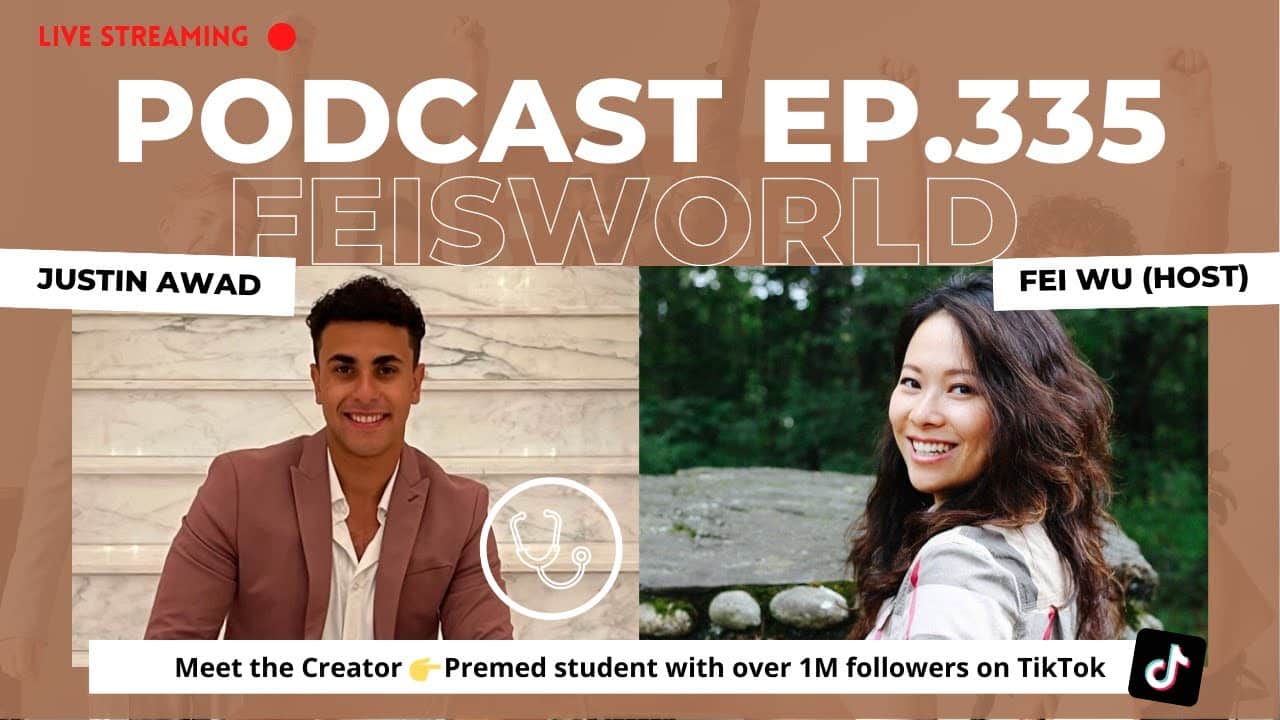
Our guest today: Justin Awad
Justin Awad is a 20-year-old premed student and social media influencer. He’s on a mission to bring smiles to people’s faces while entertaining and educating them in his unique ways
Check out his clothing brand: https://www.bonfire.com/store/yesco/?fbclid=PAAaZLtDTav2iUJilQLE3fcCnfT66HD9PxBJmEXP-va9pbOgkRbpDHN9Bj7g8
Watch Our Interview
Transcript
Transcript
Fei Wu: This is Fei from FeisWorld Media. I know it's a Sunday afternoon for those of you on the east, on the east coast of America. Um, but I'm here to introduce you guys to what, who I consider a really interesting character now, Justin Awad from TikTok, Instagram, YouTube, uh, your work was introduced to me, Justin, through one of your connections and I've really enjoyed it, it over the past few weeks. So welcome to
Justin Awad: the show. Thank you so much for having me. This is,
Fei Wu: So I know that this is like your second or maybe your third interview now, and you haven't really had a chance to share your personal story, your journey so far. So tell us, like, you know, what, why are you interested in now creating different types of content and then doing this type of collaborations?
Justin Awad: Yeah, I've, I've, uh, I love social media and I love entertaining people and making people smile and laugh and stuff, and. If we go back all the way to the beginning, it's not like in my head I was like, oh, I want to go do interviews. It was like, oh, like I wanna have fun with my friends and make my friends laugh and stuff. So it all started from that. And, uh, always meeting new people, like that's the best part about it. And seeing them smile and laugh and that's the whole purpose of social media to me. It's. to bring joy, you know?
Fei Wu: Mm-hmm. . I love it. So you mentioned that you're making your friends laugh Oh, actually, before we even get to the origin of your, at the beginning of your creative work. Yeah. Um, could you maybe tell us about, you know, kind of maybe the first occurrence of realizing that social media maybe interesting, maybe workable for you?
Justin Awad: The first instance? That's a good question. Um, well, when are the first ? Yeah, I think, I think that would go back to like the origin, cause it was during Covid when everybody was locked down and I couldn't see my friends and you know, like it wasn't a good time like mentally or emotionally for anybody. But we all had phones, we all had like Xboxes computers and all that stuff. So that was a way to really connect with people, like close friends and even people that were, weren't friends. So the initial. Spark of like, oh, like I can do social media. Started by making and wanting to make my friends laugh and wanting to see my watch, my mom scroll through all my videos and just stuff like that. It, it's, it's, it was good. .
Fei Wu: Oh, love it. So before we actually dive into your friends and your little sister, your mom's reactions, for instance. Yeah. Tell us a bit about your channel. What is your channel about what types of content, you know, before people scroll away. Give us a sense.
Justin Awad: Yeah. So, uh, my page, I go around, uh, New York City in the malls here in, uh, tri-State area. And I ask people very, very basic questions that you would assume is common sense and common knowledge, but based on the video, Uh, you can tell that they're not. Uh, so yeah, I go around ask. , how many stars are on the flag? Or when was the US founded? Or even like simple math problems. Like, uh, if you make $10,000 a month for a whole year, how much money do you have? And some kids think they have millions of dollars. , I
Fei Wu: saw that $1 a day. How many a year? Yeah. Know a few thousand .
Justin Awad: I hope we you would've a few thousand .
Fei Wu: That's awesome. So a lot of street interviews. I was so excited. Chat with you because literally recently I saw, you know, all the gurus out there, um, the, you know, talking about the, how quickly you can go viral just by doing street interviews, like reaction interviews. Yeah. So did that contribute to your decision to do street interviews? Like was that that format like attractive to you from somewhere else?
Justin Awad: Honestly, no. I had no idea about any of that. It, uh, it started by like, one of my friends that we think he's, um, we're all unique in the, to say nicely. So, uh, we wanted, me and my, some of my other friends wanted to ask him a couple questions to see, uh, where he was on the totem pole and, uh, he didn't know some things. Mm-hmm. and, uh, yeah. So it's, it's kind of start stemmed from there. I had no idea about the whole space and how much, uh, Street interviews actually like get views and how much people en enjoy them. And even like, I'm sure we'll talk about it later, brands, they find that very, uh, like attractive for you to go out and mm-hmm. talk to real people on the street and stuff like that. But yeah, it was, uh, I had no idea about the whole, it was like the tip of the iceberg. Let's just put it like that. I had no idea what was under the.
Fei Wu: Yeah, that's, isn't that interesting? And for those of you who are tuning in now or later on, listening to this as a, uh, watching this as a video podcast or listening in as an audio podcast, I just wanna call out that this is such a unique opportunity and I'm just grateful that you get to share your origin stories, uh, Justin, but also. You know, you started out during the pandemic, so it really wasn't so long ago, and you know, working with brands, what is it like to, not conquer, but just even understand the creator economy for someone your age? I know you're just 20 years old. Yeah. So you're officially now the youngest person. The second youngest person. Eli Schrom was interviewed by me when he was 16. Now he's 25 at Harvard Medical School. So you guys should probably
Justin Awad: really Wow. Good for. I know.
Fei Wu: Go Eli . Yeah. That's awesome. Um, well, speaking of we, Justin, you are a pre-med student. You are still in, you know, going through your undergrad degree. So to a lot of people who are watching this, maybe thinking, man, that's a busy lifestyle. You're, you're busy student. Could you tell us about maybe at the age 20 pre-med and then doing street interviews, what is that like?
Justin Awad: Yeah. Uh, I, I would say the hardest part is like when the people closest to you are saying, just drop out. Just drop out of school when you're like, oh, like maybe I sure did, puts like little thoughts of doubt in your mind, but I'm not, uh, planning on doing that at all. I'm planning on, uh, sticking to it, I'm riding it out, but it's, uh, all about scheduling and being disciplined in that sense. Where. , you know, you have a test coming up, you know you have homework coming up, so you have your calendar, you have whatever, like I use my iPad. I say, okay, I'm gonna study from this time to this time. Mm-hmm. . And then I'm gonna take a break. I'm gonna brainstorm ideas for videos, questions, stuff like that. And then study, study, study. Hopefully do well on my exam. And then after the exam, which is usually on like a Friday or whatever, I won't have anything to do for that weekend. So I'll go shoot some videos and edit some videos. So it's all about scheduling and time management and stuff like that, but there's always like a school and then videos, you know, like I always have to put school first.
Fei Wu: Interesting. Yeah, I mean that's, that's some priority right there. And in case people don't know why you even consider what your family and friends considered encouraging you to drop out is because you have significant followers on TikTok. Uh, you know, over 1,000,430, 38,000 on Instagram. I just checked close to 40,000 followers on YouTube. So really wanna dive in there, uh, a little bit about first of. You know, are you like a recognizable figure now when you walk down the street, ? What is that like and where, where's uh, you know, the popularity versus frame? Yeah. Uh, you know, frame fame have
Justin Awad: done for you? Yeah, no, it's the weirdest thing. It's so weird to say the least. Um, like I'll just be walking in the mall and like some kids will be like, oh, like, are you the guy that says yes? Or like, that's usually what they say. Like, are you the guy that says yes, not like my name, but sometimes they say my name. Oh yeah. And they're like, oh, like can I have a picture or whatever. And even like when I was smaller, I didn't, I think I had like a hundred K followers on Instagram or whatever. A kid asked for an autograph and I was like, dude, I'm not that cool. Like, I'm just like, I'll take a picture with you, but I'm not gonna ruin your hat by signing it. Like not. I'm not that cool. I promise I'm just a normal kid, whatever. But yeah, it's so weird even walking around like campus, like on like college. Like, you know, you have your headphones and you're walking into class and you just see people like looking at you and you're just like, I can see you. Like, hi. Like if you wanna talk, like we can talk, whatever. It's, it's funny, but it's, uh, everybody's so nice and it's just like, , it's, I want to portray to them and tell them like, I'm not like, cool, I'm not special, you know, I'm just another person like you. Like yeah, we can sit and talk about anything and just like, like I'm having a good day or I'm having a bad day. You know, like cuz it's not like I'm superhuman or have superpower, like nothing like that. But yeah, it. It's a good feeling when people come and say hi and ask for pictures and stuff. Yeah. You
Fei Wu: know, that's interesting. Cause you know, I've never really had a huge following. I think currently, to put things in perspective for people who are watching this, I currently have a little over 21,000 followers on YouTube and. you know, much smaller everywhere else. And most of my audience and the clients I work with are kind of in the business world. So pretty serious stuff. But yours is just like, it's unbelievable and the growth is just exponential and you know, but I think, you know, earlier bef. Before we started recording, I was just thinking for US creators there is so much learning, it's like drinking from a, a fire host for even the short period of time that you've been on social media. So I wonder if you could talk about and reflect on some of the things that you've learned, some of the patterns that you recognized. Yeah.
Justin Awad: Oh yeah. I, I would say I learned so much just about. like business and about other people and negotiating like prices and what videos do well and why they do well and what videos don't do well and why they don't do well. It's kind of hard to distinguish that, and in the beginning it can be discouraging when you put a lot of effort into a video and then you go and you see that it's not near what you expect it to do, you know, so. Mm-hmm. , I think it's, uh, I learned a lot. About life to say not, not that much about the space. Yeah, I learned definitely a lot about the space, but as about like character things like not getting discouraged and even when there's road bumps you just keep pushing and keep going and that we can talk about negative comments all day if you want, but those definitely, in the beginning, they affected me a lot more and I even took like a little hiatus from posting because of some comments. It just like didn't stick well. But you know, in in life there's always gonna be people trying. Push you down or people who just aren't into what you're doing, and that's okay. You know, not everybody has to like you and not everybody has to follow you and stuff, so you just brush him aside and keep going.
Fei Wu: Yeah, true. Even Seth Goden yesterday commented on one of the podcasts and he said, you know, he's one of the most popular marketers and writers and thinkers in the world, and he calculated, you know, over 10,000 posts as he's done. Still less than one. Of the people in the world know anything about him. He's like 99% of the, the people never heard of him still, and he's seen as extremely successful in what he does. Um, could you tell us maybe at the beginning of how, what, what made you overcome, whether putting words in your mouth, if you were to correct us anxiety or, and, you know, self-doubt or things like that when you, when your content isn't get, you know, isn't getting any views, any traction. What, what was that self-talk like for you to kind of keep going and you're still here? Yeah. 1, 2, 3 years later.
Justin Awad: Uh, I would say there's two main things and one of them is definitely better than the other one, but one, the good one I would say is like my family and my dad and stuff. He helped, he really helped a lot and he was like, when you see that there are negative comments that shows that what you're doing is. like, you're big enough and you're doing well enough for people to take time out of their day to try to like put you down. Mm-hmm. . So that shows that you're actually making progress and you're actually growing, and the bigger you get, the more negative comments you're get. And he's like, I promise you that's exactly what's gonna happen. And so I was like, all right, like that makes sense cuz when you have like 200 followers or 300 followers, you're not getting these like hate comments and doing, it's just so, it reflects your success in a way actually. Mm-hmm. . And so that like, put it into perspective like, oh. , you're right. Like, so that helped a lot. And then the second thing was, all right, I'm in school. Like if I wanna drop social media and just be a doctor, like I'll just do that. So it's, I'm not riding on this, it's not ride or die. And that's the second one that's not so good. But it was always like, it was always number one, my dad. And then number two, it was like, okay, like if these people like really hate me that much mm-hmm. then I'll just stop posting. And that's that. But I don't like that.
Fei Wu: I love the family and friend support because I remember when I started podcasting doing purely audio shows, uh, back in 2014, really was a lot of, you know, love for my family, friends, colleagues who referred other guests to me. There was so much help that you could borrow you need from the beginning. So don't reject them. Open, welcome them with Open. Open arms. Open heart. And uh, you know, a lot of us really wanna hear about numbers, and I just wanna preface by saying this, like, it's rarely, I mean, it's not rare, but a lot of the creators may not feel comfortable talking about revenue, multiple streams of income, or some for a variety of reasons. Maybe it's like, you know, everything flow and it's not stable. . And I also wanna say that I have done, uh, a number of brand deals, sponsorships, and we absolutely cannot reveal like, amount versus what the client paid is just on paper that you cannot talk about that specifically. But, um, Justin, if you're, you can maybe walk us through like the first brand deal without revealing the brand names Yeah. And things like that. That would be really
Justin Awad: helpful. Yeah. I think the, the first brand to ever like reach out, it was. , it was some like, uh, boxer brand or like under underwear brand or whatever, and I was like, you want to pay me money to post a video on my page? Like, awesome. Like sure, like whatever, whatever. And, uh, whatever amount you want to gimme, like I'll take anything cuz mm-hmm. , I, I like did some numbers and I was like, all right, if this video does really well, then I'm gonna make whatever, not that much. Mm-hmm. money just from the views based on the CPM of TikTok and stuff like that. So, The offer that they gave me, I think was like 200 bucks or 300 bucks. And at that time I had like over a hundred K on TikTok and stuff like that, so I mm-hmm. snatched that up right away and I was like, I'll take that all day. Pretty cool. But um, yeah, that was the first one and that's when I was like, whoa. , like,
Fei Wu: what did you have to do for that video? Of course, not interviewing other people in your underwear, but, uh, no what, what, what did you have to post to give us
Justin Awad: a sense? Uh, so I, they wanted me to go out into the street and ask people, uh, what type of underwear they're wearing. , like what brand? That's funny. And like half the time people are like, dude, like, I don't know. . Yeah. But, uh, Like the, at the end of the video was basically like, oh, like Hanes or whatever they said. And then I was like, all right, if you get this question right, then I'll give you this free pair of whatever the brand was. And then so they, they got the question right, and I gave it, I gave him the pair and I was like, all right, go try 'em on and I'll give you like a hundred bucks or whatever and can give us a review. So he went to the bathroom, tried them on, and then gave a review, and then I gave him whatever money. And how was the video first ever? .
Fei Wu: So you get, wait a minute. So to break it down, you get paid $200 for doing this. Um, this video, how many people did you have to interview for that engagement?
Justin Awad: Um, not that many. Like five maybe. Yeah. Before, because like usually like, I'm not gonna go target like a dad with like a family or not. I'm not gonna go up and ask him like, what, don't know where he is wearing. So it was more like kids and stuff at the mall, like high schoolers or college, like my age, stuff like that, who are like more open to it. Mm-hmm. . So I asked, like I went to a couple of them. Some of them are good, but other people are just like, this is another problem. It's so hard doing like the sponsored street videos, because not everyone's comfortable in front of a camera. True. So they, they can say yes, but then they'll be like, staring at the camera like this, or like, so awkward and like, make hard movements and you're just like, all right. Like, it's okay. Relax. So it's always, it's always good to get a couple people, but it didn't, it didn't take that long. Mm.
Fei Wu: Wow. So I, man, I have so many, uh, interview related questions. Actually, let me get it in there. How do you decide by walking towards someone or waiting in a corner that someone wouldn't freak out or would be good on camera? Because that's a skill like the Blue Men Group has to do, you know, they're a performance Yeah. Um, group. They have to identify from the audience. They have a technique. I wonder what yours is. Yeah.
Justin Awad: So I think that the, the best way to get better at it is just time. Mm. Like over time you can. , you can look at people and like the way they're acting and walking and doing stuff, if they're gonna say yes first of all, and if they're gonna like be entertaining in a sense. I remember like all the way, not all the way in the beginning, like it was still 2021. So I would say over a year ago I wanted to do like a little like episode about like, cuz all, like most of my videos are about on like younger people, like my age asking them questions. So I wanted to do like, People or seasoned people, if you would like to say a little thing where I ask those people about these basic questions, see if they can get it right, and stuff like that. And that was the worst episode ever. The worst videos I've ever made. Because why? I would say 90% of them say no, cuz they're just like, who is this random kid? Like wanting to videotape me? Cause they're not comfortable with that. Interesting. And then the second, second reason was I would ask 'em the first question and then they would answer it and it would be right or wrong, and then I'd ask 'em another question. like, do you think I'm dumb? Like, do you think I'm an idiot? Like, what are you trying to do like outta here kid? Like, stuff like that. It was very like, it was hostile to say and I was just like, whoa. Like it's a completely different demographic and completely different vibe. Whereas when I'm interviewing kids or high high schoolers or college people, it's always like giggling and laughing and like, oh, did I get it right? Did I not? And like they want to, oh, ask me more questions, like stuff like that. Where is it getting posted? It. Much more engaging and entertaining and like a much better vibe with those people than with uh, the older people. But yeah, it's, if you see someone who's like loud and laughing or group groups of friends are the best, cuz you can ask multiple people and they all want to compete. Oh, what'd you say for this? What'd you say for that? And I make them like, stand away so they don't hear the questions. So usually groups of friends are great and uh, yeah, it's trial and error. People still say no all the time. People say, yeah, it's. . It's definitely a skill I've gotten better at, but there's still no like fir fireproof, like bulletproof, like.
Fei Wu: Isn't that fascinating? Because I think about, uh, at times, usually when I schedule an interview like this or I always ask people for permission, oftentimes I am kind of inbound. I know why I want to interview someone and I go in and, you know, they say yes or no. Over the years, I mean, I really couldn't care less. To be honest, but like when you're face to face, not that it's confrontational, but it's like you're facing the situation in real time. It's a, it is a lot different. And you being a guy, I don't know how you're build, I can never tell anymore through Zoom, like everybody's the same height, same everything to me now. um, you know, maybe some people will feel intimidated. And the third thing is for those of you who are watching this, like why, as we get older, why, why do we all of a sudden take ourselves so seriously? I mean, we get one of the questions wrong. So what I think when I hear about people even commenting on social media, like somebody gets a new job or I try something new, people are so hesitant to comment. And sometimes my, some of my friends will say, How don't, we don't wanna come across as being rude or inauthentic or not smart or things like that. Like how do you feel about content and people's fear of being on camera? The fear of being wrong, being judged, uh, or like just preferred to hide in general for, for most
Justin Awad: people. Yeah. No, I think it's, I think it's a little bit sad to show like, these people are like so scared to try something that. In reality doesn't have that much backlash or doesn't have that much harm at all. Mm-hmm. , they're missing out on so much like fun and excitement and like, people get, people see my videos online, like of themselves, and they send it to their friends and their teachers. It's like mm-hmm. , it's something that you, like, you want to do, or like something that I would expect people wanna do, and I feel like it's a whole experience and they're being so like sheltered. , like on guard, and obviously everybody, whatever you want to do, as long as you're happy, then do it. But I think that they're missing. Yeah. Yeah,
Fei Wu: absolutely. Oh, we gotta get back to the brand deals. I know you only talked about the first one. Yeah. And again, you know, you have such a significant following. So before we get into the second brand deal, I, I wanted to ask you which of your platforms you like. The best or most for what reason? So again, TikTok, Instagram, YouTube. YouTube is absolutely my favorite. I try to post on TikTok really, frankly, so far hasn't really worked for me. Mm-hmm. , um, the, the social dyna dynamics are very different. So what's your take on, on your platforms?
Justin Awad: Uh, I would say my favorite's Instagram, by far. I'm way more comfortable with that and it's the most steady. Mm-hmm. , like, you post a video and you can say, okay. , even if it's not my best video, it's not gonna get lower than like X amount of views or whatever. Whereas TikTok, a video could get 50 K and then the next video can get 20 million. And whereas on Instagram it's way more steady. Like my averages are they even out way more there. And I also, I like YouTube too. I feel like YouTube is very, uh, it's very like, uh, what's the word? Maybe personal, like it's because people are like actually investing time to watch a 10 minute video or a five minute video. Instagram and TikTok, it's just like 32nd to a minute video. So it's less like, uh, personal, like I said. Mm-hmm. . So, but Instagram's still my favorite cuz it's the most, uh, it's the most expected. It's, it's not volatile and the messages and personality. Yeah. I like Instagram.
Fei Wu: Oh, interesting. You like kind of the, the steadiness and you know, it's expected. Okay, so let's talk about brand deal sponsorships. In relations to these platforms. I know that they vary drastically from, you know, the brands, how much they're willing to pay, what's considered small, micro, nano, micro, small, medium, large, extra large. Uh, And for, for people who are watching listening now, just so you know, they, they mean such different things on different platforms and the payments as a result is also very different. So Justin, what do you, what are your thoughts?
Justin Awad: Yeah, it uh, like you said, it varies so much cuz there's so many different brands with so many different budgets that have so many different goals. Like the last brand deal I did, their goals were downloads, not views. Whereas another brand I did, they wanted a certain amount of views. does the brain want exposure or do they want you somebody to click your link or do they want someone to download their game? Stuff like that. And it's so hard, especially like me, like a 20 year old kid. Like I don't know anything. I don't know pricing and I don't know, like negotiation, like I don't know any of that stuff. Mm-hmm. . So it was definitely, that was also a big learning curve. But um, yeah, it's, my favorite is to go. not my favorite, but I feel way more comfortable going with like these, like bigger brands that are more like steady because they don't, like, they understand the platform more. Whereas a smaller brand, cuz I've done some smaller brand deals, they, they think that they're, I'm gonna post a video and make their company like, go public on the market the next day or something like that. True. So it's a little bit more and they, they ask a little bit more like stuff like that and fine tune details. And I understand because they're spending a lot of money. It's easier to go with bigger companies who already have, like, they send a PDF and they're like, okay, we need you to do 1, 2, 3. I go do 1, 2, 3. Send us the video. All right, you're good to go post like that. , that's my favorite right there.
Fei Wu: Yeah. Oh, I've gotta say that. Uh, you know, being in a different industry, uh, much older, being much older than you are, I feel the same way. You know, I've spent, uh, nearly two decades in business now, and I notice the same thing is as much as I wanna empower certain smaller companies doing brand deals, it's usually in a much more, being much more troublesome. They won't fine tune everything. They have a very specific. Subtle things, they wanna maximize the money they're spending on you because there's a lot more to them versus companies who realize, you know, anywhere between 800, a thousand, a few thousand dollars. It's like, okay, it's, uh, it's noticeable, but it's part of their, it's a small fraction of their marketing budget. So, yeah. All right. So I would love to, for you to maybe describe without the brands once again, like what are some of the brand deals about and how, roughly how much you would charge
Justin Awad: for it. Yeah, sure. So, uh, The brain deals, they all are centered around the public interviews and talking to other people on the street. Mm-hmm. , uh, the, I'd say my favorite video to do was, uh, I'll say the brand name. I'm not gonna say how much they gave me, but I, I did a video with Feeding America. Mm-hmm. . And that was a very awesome video to do. I gave them a deal cuz like, I, I love what they're doing and, uh, helping give out meals so people are hungry and stuff like that. So for that video, I. Went out to the street and I, I centered my questions around like the food crisis. Like, all right, how many people in America do you think go hungry every year? How many meals does it take to like, feed a family of like, stuff like that? Like questions like that, which I really thought brought awareness in. That video did very well. It got like a couple hundred thousand views on like to TikTok and stuff like that. Mm-hmm. . So I think that was my favorite, uh, sponsored video to do. But then there's the other videos that. I got paid $22,000, 222,200 or $22,400 for a brand, uh, over in a different country to do videos, uh, street videos in New York City, uh, asking people about like sports questions and stuff like. and, uh, it was, it was unique because it was not, there was a set number of videos to do, but they gave me like a time span. Mm-hmm. , like from this month to this month, I think, I believe it was like September to December 31st. Mm-hmm. , we want like two videos a week. Uh, ask about like the Nicks and the Nets or ask about the Yankees and then ask about the Giants, like all about New York based, uh, sports teams. And that one was a lot of fun cuz there. There's no real, real pressure. And usually when I, I forgot to bring stuff, when I ask people like, oh, do you wanna do an interview or whatever, they're like, what is it about? Mm. And I found that when I say sports, people are much more willing to do it. Oh. They're like, oh yeah, I know nothing. Like, ask me. I don't care. Or like, oh yeah, I'm really into it. People give really in-depth answers and stuff like that. So that was a very good deal. And I think, and my latest one, uh, I got paid $4,000 for a video on. Instagram and, uh, TikTok. So that, that one felt a little good too. Mm-hmm. . So, yeah, right now I'm, uh, I'm charging between like that three and $4,000 per platform. Mm-hmm. , but not YouTube. I haven't gotten anything. Oh, no requests for YouTube's, uh, what's it called? Uh, sponsored sponsorships, but, . We'll see. Wow.
Fei Wu: I mean, thank you so much for being so transparent. So if somebody just heard, oh, $22,000, I was well, totally shocked. I, I thought for a moment that's for a single video, for a very small transaction, but I just did the math while you're talking about it. So, if you're doing two videos a week, that's four weeks, roughly. Four weeks a month. So let's say eight. Eight videos a month, times three months, September to December, maybe a little bit. Uh, so 20 to 30 videos for $22,000, it's still very good. I know it takes you to break it down. I mean, your videos are relatively short. I think most of them are under a minute, but it takes many different shots, right, to, to get it, to really get it done. Like they're, you not just B roll, but you interview multiple people. So would you say. You know, roughly a thousand dollars per video. Was it worthy of your time?
Justin Awad: Uh, yes and no because it was, it sometimes it was a little difficult to, uh, actually get these videos done because like I said, it's so hard to do these. Interviews with people on the streets cuz they don't like, it's so you, it's unexpected. You don't know what people are gonna say. Mm-hmm. Uh, you don't know if they're gonna curse or be inappropriate or if they're gonna give good answers or be genuine or just trolls. Like you have no idea. So sometimes I would go out to film and I'd ask a couple people and all of the videos are useless. So that's, Me spending a couple hours going and actually doing it, gas money, paying someone to videotape it. And I, I didn't send it to my editor, but I, I have to pay my editor to edit the videos besides like the videographer. And so it's a, it's actually like a lot of time and a lot of effort goes into the, like, the man on the street videos, which is like what I do. So I think it was, it definitely was good money. Uh, I'm not sure if I would do it again. It was definitely a good. Because like those, like I listed earlier, like the, the, the boxers. In the beginning it was just like, all right, I'm gonna go to a mall and I'm not leaving without getting this one video done. I got the video done and I got my money and that was it. This was a more long term kind of thing, but I would say it was worth it. .
Fei Wu: Nice. Nice. Okay. So definitely have some questions about your creative process, like who's editing, who's launching all that. Just just a second. We have a question from Adam. Thanks for sharing your experience. Justin, do you believe that anyone could do what you do where there are spec, uh, special skills, personality traits that they need?
Justin Awad: Yeah, that's a great question. Uh, I think that, I don't think anybody can do it, but I think a lot of people can. , so I'll expand on that a little bit. I think that being in front of a camera, it's so obvious. If you're comfortable or if you're not comfortable right off the bat, even for any, the average viewer, like you can just look and be like, oh, this guy's a little uncomfortable. This guy's not a little, like he, he's not like too happy to be there, to say the least. But um, I think that a lot of people could do it if they want to do it. And in the beginning, if you watch my early videos, They're not too good , like I'm very, uh, stiff in front of the camera and it's hard to like keep like a conversation going, uh, to a stranger, like somebody you've never met. You have to really step outta your comfort zone. And so if people are willing to do that, I think that they could do it. Yeah. But then again, the hardest part is asking people if they wanna do the interview. That's the hardest. For me, that was the hardest thing, just going up to strangers saying like, hi, do you wanna do an interview with us? Can we record you like asking you questions like that was the hardest thing. Like the amount of looks you get and the amount of times people just don't even answer you and you're just like, all right, like you can say no .
Fei Wu: Interesting. I wonder, yeah, great question. I wanna just dive a little bit deeper. It can be a little daunting. I wonder. , do you think being an uh, being a man, being a young man, could be, uh, could make certain people nervous? I wonder if gender even plays a role in this. Yeah, like being on the street, um, people are more, probably more, less, a lot less threatened by me. Like something could happen. I mean, especially on the streets in New York, it's, yeah, New Jersey, it, it's not like anywhere. Yeah,
Justin Awad: no, you're a hundred percent right. There definitely is like a discrepancy and. Even like sometimes, uh, my videographer wouldn't be able to come film and stuff, so I would wanna bring my little sister and my mom would say, no, like, you're not bringing your sister to Times Square at 11:00 PM to go interview. Like people like go talk to strangers. Like, no, you're not doing that. And like, I agree with her cuz it's like, nowadays you, you have no idea like who's doing what and what their intentions are, anything like that. But there have been a couple situations where, I've gone and asked like, like a group of girls, like, oh, like, do you guys wanna do an interview? And then like, their mom or dad would come running and say, oh, like, get outta here. Like, they're, they're in high school or something like that. And I'm like, all right. I don't like, I don't care. Like if they're in high school, I just wanna see if they wanted to ask a video. But, uh, it's, I think it's good and bad. Like it's good because I, I'm a male and I'm in relatively good shape, so I'm not in a sense, afraid to talk to strangers and to like, See people like sitting on the street and be like, oh, like, do you wanna go ask a question? Which can be a little nerve-wracking, but mm-hmm. , uh, I have gotten some, like I said, Nos to interviews, I think because of just the situation and like, not many people get asked by a stranger if they can be mm-hmm. asked questions on video, so yeah, there's a little discrepancy.
Fei Wu: What, what would happen if you branded yourself a little bit? If you had like a TikTok logo, or I'm Justin Awad from TikTok. Do you think more people would be feeling like, oh, this is a content creator, not just some random guy off the street?
Justin Awad: Yeah, I, I never thought about that, but I think, I think that would be a little different and. I film all my videos on my phone. I have like the new iPhone, so the camera, the quality's great. So it's a little bit scuffed to these people on the streets. I don't blame some of them for saying no. It's just like this random guy holding an iPhone and then me wearing whatever T-shirt I'm wearing with my iPhone, like recording stuff like that. It's a little bit scuffed, but I think if like, like you said, if I wore like branded stuff or like mm-hmm. maybe even wore. , like, I don't know, like look nice, like cleaned up and stuff. And my camera man had a real camera. It would be like a little bit more different. I do think that, but mm-hmm. , I do think that it would take away a little bit. I'm not sure. Maybe it would take away, uh, some of like the authenticity behind my videos. Like I feel like it's just like the camera and me, like a normal guy in the street asking another normal, random person on the street a. . And I think like part of that is like wearing a backwards hat or wearing a t-shirt, you know, like normal. It's not like set up and staged. It's nothing like that, you know? Yeah.
Fei Wu: We're talk, we're getting into the kind of our direction. I, I do appreciate you saying that because I do feel like if you are, uh, you know, overly branded and it feels, definitely makes it look more staged. I, I was only thinking about it from a safety, uh, standpoint or people more likely to say yes if you know some somebody's wearing a CBS shirt. Well you probably. Shouldn't wear that. Not that shirt, . It's something true to your own brand. Yeah. Yeah. Um, let's talk about your creative process and, uh, you mentioned you have a cameraman for sure. I mean, who's gonna bring a tripod that, that's, that's kind of the beginner's mistake of thinking these devices just gonna operate and work well on a, on their own. They don't. You could be like doing the most incredible interview and you'll be out of battery, out of frame and you can't really get it
Justin Awad: back. , don't even, you done that? Don't mind me. Don't even, no, I've had, I've had my camera. Hold the video. The video, it should have been I think between like seven and eight minutes long. He didn't click record. Yeah. And was just holding the camera . I've had that. And then another time, uh, I had a mic, and the mic, it said it was turned on and connected to the phone. Mm-hmm. , it was not. It was not, and so I did. Five or six different interviews, like with different people. And then at the end of the day, I was like, all right, good. Like I have good content, I record it or whatever. And I go home and none of the videos have audio. And I literally, I almost wanted to cry. I was like, I know. Just wasted three hours doing it. It was, it was brutal. It's the worst feeling. It's the worst.
Fei Wu: It's the worst feeling. How did you overcome or better prepare yourself for these like live recording sessions at which, based on my experience of years of doing this, it's absolutely the hardest, especially in the uncontrolled kind of natural environment, times Square. Like what do you double check now? Is there a checklist to avoid these things from happening?
Justin Awad: If you have a check, let's send it over . But, uh, the only check that I do is before I start asking people questions, I say, alright. Take the video. I'm gonna test the mic. Testing, one, two, testing, is it working? And the video. Make sure the audio's good. Hope for the best. Yeah.
Fei Wu: Yeah. What about the editing? Uh, you know, immediately after that you transfer the files. You mentioned you have editors and some YouTubers, Instagrammers, they only edit videos themselves and they have a whole process. And not to mention, they're also publishing. So could you talk to us about, you know, shooting? I think we have a good idea, but what is editing and publishing strategically? Yeah, like for you.
Justin Awad: Uh, in the beginning I edited everything, all my videos. Mm-hmm. , and I would go to iMovie, I would drag it and I would drag the audio, and then I'd cut it, it, it was mm-hmm. so, so draining and took It was, I would spend more time editing the videos than I did shooting the videos. Yeah. But it was so draining and so like time consuming and stuff like that. So, uh, some guy reached out and he actually, he lives in Romania, , my editor. So, uh, all I do now is I just, The videos, I have the audios on them and then I upload them to Dropbox and he cuts them up and puts words on the screen and all that stuff. Mm-hmm. , he sends them over via like a different Dropbox file. I download the video and then the publishing is, I have my Instagram and Facebook linked, so a post on Instagram is also opposed on Facebook and then I post on YouTube and yeah, that's it. You
Fei Wu: post everything once the videos are done?
Justin Awad: No, I post like one video a day.
Fei Wu: Oh, okay. So basically you, so somebody is helping with editing, but the publishing process is something that you take on yourself.
Justin Awad: Yeah, yeah. I'm, I publish everything.
Fei Wu: Yeah. Is that by choice? Does it, uh, do, do you mind that process? Cause, because I know sometimes creatively it's like little draining, like the final stretch, ,
Justin Awad: it is a, it is a little draining, but you know, that like the, the finish line is right there after you click like post or with stuff, whatever. But also I like, Have a little bit control because like I said, there's a little, like a, like a vibe around my page that I'd like to keep consistent. I don't want it to be like staged or over edited or like, stuff like that. I want it to be like raw and natural and stuff. So I think that has a little bit to do. And I told my editor this, like, we, we, we obviously talked and stuff like that. And uh, I think if you have these videos and then you just like, Boom, boom, boom, boom. Posting, posting, posting, posting. People are like, all right, like, like, these are his friends, or these are whatever. It's not real, but it show I think like the, the spacing out of the posting. And it even goes down to the people in the videos like, are they. the same people over and over and over again, or are these actually like random people? And so if you're posting like 10 videos in a row of somebody I interviewed two days ago, even though it's real, people think it's fake, they, they got a lot of questions wrong. So I have a lot of content. But if you see their face over and over and over again, it's like, , it's real, but people think they're, it's fake
Fei Wu: people. So interesting how, what they choose to detect. So you figure out the frequency quite a bit at this point. Um, so what is the frequency that is why strategic but also sustainable for you?
Justin Awad: Uh, well, right now in school it's a little bit different than in summer, of course. Uh, this past summer I saw like the biggest growth ever. And with that, I was posting every day on TikTok and Instagram, which was. Draining. I'm sure. You know, it was very, very draining. But now I post like two to three videos a week. I try to do, yeah, like sometimes two, sometimes three. If I'm an exam, it's like one. Yeah. It's just like I'm kind of in a, like a. A sustaining mode, not like a growth mode right now. Just during school and MCATs and stuff.
Fei Wu: Hmm. Oh yeah. I mean, come on. Um, MCATs, that's not that serious. , so it's very during, yeah, definitely. It takes up so much of your time. So roughly, I know it's depends on the video, roughly how many hours from shooting, traveling, shooting the footage, intervening people. Editing, I know it's done by somebody else. But then publishing, well, like roughly how many hours are we talking about for a single video?
Justin Awad: A single video? Mm-hmm. , I would say probably between four and five hours A video. Mm-hmm. , but that's, that's like four and five hours between. Just, I mean, not between just editing, whereas like say I film a video on Friday. Mm-hmm. , like I go out and shoot on Friday. I don't think I'm gonna be able to post before maybe Wednesday, Thursday of like the next week. So it's like there's always like a four to five day lag just because. I need to get all the videos, chop them up, and then send them over. He has to edit them all and then puts them in the list and like, it, it's definitely, it takes a lot of time. There's definitely a lag between filming and posting, but the, the editing, it's, it's gone. It's cut down, but I would say around four hours. Yeah.
Fei Wu: Wow. That's a lot. Could you possibly batch some of the work, like going out and have three video ideas and shoot story of them in, in one day? Yeah. Yeah, yeah.
Justin Awad: Yeah. I mean, uh, with my questions I kind of have like a whole. Yeah, so everybody, I ask everybody just the list and sometimes people are like, all right, I'm done. I'm like, all right, I understand. Like I'll see you. Yeah, whatever. But, uh, yeah, I try, I try to go out and get a lot of content mm-hmm. and then just sit and cut up it and edit it. And then space, like post them, like spaced out.
Fei Wu: Mm-hmm. . Yeah. Gotcha. All right. I think it's, Time to talk about negative comments. This is something a lot of people who have not. It's so interesting. People have not started creating anything that's their number one fear and they often ask me, and the truth for maybe my type of content, which is different than yours. Uh, a lot of software tutorials. Business type of content. I rarely get negative comments. People are usually asking a question and you know, and you can easily tell who the trolls are, so it's easy to overlook them. Mm-hmm. and, um, so, but people can, you mentioned that people can misunderstand your intention, so Yeah. W what are they, like, how do you deal with them? .
Justin Awad: Yeah. No. If people, uh, especially the negative comments, they have a way with their words, They very, they know how to hate home . Oh. But yeah, I don't,
Fei Wu: what are
Justin Awad: some of the words? Yeah. Uh, some of the words is just like, terrible human being, waste of oxygen, , uh, yeah, whatever. I forgot some other ones. Like, that's good. Whatever. Just, just, yeah. That's good. Yeah. , yeah. Just, just a lot of name calling and negativity and saying like, oh. you think you're better than everybody Asking them questions, like, uh, you probably don't even know the answers. Stuff like that. And I'm just like, you're missing the whole point. The whole point is to have a laugh and have fun. Like these people are laughing like they messed up. They got a question I mess up all the time. Like, I'm sure you mess up too. We're humans. You know? So they definitely miss the intentions. They think I'm like bullying people or trying to bring people down or like stuff like that. And, . I don't know why they take it upon themselves to try to stand up for everybody against me and get rid of this terrible guy. But, uh, that's it. And there's also a, a thing in psychology that I think it's around a hundred positive comments is equal to like one negative comment. So that the negative comments, they stick with you. If you ask me for a positive comment. Right now, I don't really have one on the top of my head, even though there's, those are the ones that you get all day long. Yeah. But the negative ones are the ones that stick with.
Fei Wu: Yeah, isn't that crazy? I think we need to train our. To really, to not, number one, not to remember them. And I think one of the things that I have done is like, I used to have the tendency to look at, for instance, my email list and I go to my unsubscribers, like, why do I need to do that? I don't know these people. Mm-hmm. , they probably unsubscribe for whatever the reason. And it's better if they don't find your content helpful that they should unsubscribe. And, but we're talking about these folks like, why can't you just like, not follow me, not subscribe to this channel. It is, I know you're very young and you're probably gonna be facing a even bigger volume of these folks later on, is that there's truly people in this world who are extremely negative, who can possibly think that you are out there trying to educate, entertain, and trying to have a good time with other people. That can be possible because it's not possible for them. So I'm really glad that you just continued on and, you know, uh, with your.
Justin Awad: Thank you. Thank you. I'm glad too.
Fei Wu: Yeah. So we've been talking for like 45, 40, 45 minutes. Uh, at this point I, I know that I'm like coming at you with a ton of questions on creativity and all that. Yeah. But what are some of the questions that, some of the, the answers or stories that you wanna share with my audience on yours?
Justin Awad: Uh, like, like, uh, street experience, like answers that I've, .
Fei Wu: Yeah. Street experience. Anything, anything you've learned, like what it's like, uh, you know about your origin stories and you know what? I don't know what your family dynamic is like. So far it sounds like they're all very supportive. Is this, is this concentration normal to them, to your family? Yeah.
Justin Awad: Not at all. I'll tell you that much. In the beginning, my mom was like, what are you doing? Like, you're just wasting your time. And then even my dad was like, oh, like what do you like, you think you're just gonna post for the rest of your life and do this and do that? And. Dude, I'm having fun. Yeah. . Yeah. But, uh, after they saw that I was starting to get some views, they were like, oh, okay. Like, so this, this kid's serious, I guess. Mm-hmm. . So then they became very supportive. And even right now they're very supportive and my friends are very supportive. Everyone's, I have a great circle around me, which is, I'm very, very grateful of. I don't think I'd make it this far without them. . Mm. But, uh, yeah, it's definitely, it's, it's not easy. It's scary. But the, what I tell other people when they ask me, like if I have any tips and stuff, I say like, you're your own worst enemy. All right. If you post a video and other people don't like it, like, so what? Like you wanted to post a video, go post a video, like mm-hmm. , everybody is so, focus arou about the around themselves. They have like the spotlight effect, which is our natural human tendencies to think that we're the center of attention, whereas you're not like mm-hmm. , I can't tell you a single video I watched on TikTok or Instagram today, and I know that I've watched a bunch of videos and I've liked videos and other videos. It's like, oh, this is stupid. And I kept scrolling, but I can't tell you one of them. Mm-hmm. so. Like, don't be your own worst enemy. Don't let, don't limit yourself when other people aren't limiting you. You know, all you need to post is just like your iPhone or whatever phone. So go do it and, uh, chase your dreams and don't be afraid to say yes.
Fei Wu: Yeah. Don't limit yourself and other people are not limiting you. I like that. And what are your, uh, what are some of the things that you would like to share with other 20 year olds? Like, let's say 20, I don't know, 15 to 30 year olds who are thinking about, oh, I heard about this creator economy. I wanna be a content creator. YouTuber. TikTok, or like mm-hmm. . What, what are some of the things that you've learned you think is gonna help them understand the landscape a little bit better?
Justin Awad: Yeah. I mean, I, there's two things I would say. do something that you genuinely enjoy doing or you have a passion for or, uh, can tolerate the most and to be consistent. Mm-hmm. . So if you're doing those two things, and I promise you, you'll blow up and you'll get, gain some followers and you'll actually build something out of this because, all right, if your first videos don't do well in the next month, how do you know the videos won't do well. Like, you just keep, you have to keep push pushing. You have to. Staying consistent and doing what you like, and I think anybody can be a content creator.
Fei Wu: That's great. I mean, let's say Justin, that you didn't get any of the followers. Let's say right now you got a few hundred and a thousand here and there, is this journey still worth it to you? .
Justin Awad: Uh, yeah, cuz it's, like I said, it's something that brings me joy and the people around me, joy and I started with that intention, with those intentions and mm-hmm. if they, if those intentions still stood true and my friends are still laughing and my parents are still enjoying it and I'm having fun making it, it's not a burden for me. Then of course that's, it's still wor still worth it and I'd still do it.
Fei Wu: Yeah. So, okay. Question about niche. I know I'm like rapid fire questions right now, but talking about niche. the whole industry, you know, for years, decades. Like you gotta niche down. You gotta know who you are, who you're targeting, and all of a sudden, in case you have a notice in 2023, it's all about opening up the funnel. Don't just focus, you're a niche. You niche down too much. It's like, of course it's like it, it's almost like. Uh, you know, the way that we've been talking about weight loss for the past 20, 30 years, it just keeps on changing. So what's your take on finding or how to use niche expertise to do something? Cuz that's what's holding a lot of people back. Like, I haven't figured out what my niche is.
Justin Awad: Yeah. I would say, uh, for me in the beginning it's trial and error to find out. Mm-hmm. what you enjoy the most and what is at the same time getting views and doing well. So it's the, the hardest part is starting, that's what I say a lot of times. The hardest part is to post that first video to really start, get the ball rolling. Mm-hmm. . But, um, I, I'm kind of stuck in that myself a little bit with just like these interviews and I want to open up more. And that's the plan in the future to start like posting a little different content where, people like get to really see who I am and, uh, go throughout my day with me or do like funny things, like stuff like that really become more, uh, engaged and more personal with my following. But I would say find your, find the niche, whether with like trial and error or scrolling. Get an idea and then just try it. And then after you really build a following, then maybe start branching off seeing works, what doesn't work, stuff like that. And I'm in that stage right now. Well, I'll tell you how it goes.
Fei Wu: That's awesome. You know, the one thing I noticed with the snowball effect of being a content creator you mentioned is that you publish something, you stare at it, it doesn't get a ton of views, and you quit. And that's ridiculous because I've had content who, you know, that just didn't work for the first weeks, months, and all of a sudden it takes off to like three, 400,000 views. And I think the one, there's one video I. Close to like probably the majority of my income that year was, uh, from YouTube revenue was like close to $10,000 from a single video that I recorded in less than 12 minutes. Uh, simple light editing. But with that said, you know, have you noticed, like sometimes you, you publish content and then later on, much later on, even some cases that there's that snowball effect and they start to get picked up and start getting. .
Justin Awad: Yeah. Yeah, definitely. It's like, it's, uh, you're establishing your page in a sense, I believe. So if you, if you're posting, like if you're a dancer or something and you post dancing content and you have a one dancing video that does really well, people are like, oh, like this is really cool. Let's see what they're about. And they go and they swipe and they go, look at your profile. And then some. Some videos are dancing, some videos are playing basketball. Some people, some videos are studying. Then I think that they're kind of less likely to actually follow because they resonated with this one video that did well. Mm-hmm. . So I think there needs to be a little continuity in your page, but yeah. .
Fei Wu: Hmm. Very cool. I'm so glad we shared this conversation and I will be publishing this everywhere on Apple Podcast, Google Spotify podcast, and hopefully this will give your audience, uh, a definitely behind the scenes look inside your life, how you think, how you create. Yeah. And, um, so super glad. So is there anything else Justin, you'd like to cover before we, uh, wrap up?
Justin Awad: Uh, No, I think I'm good. Just, uh, I like the don't limit yourself. I just came up with that right now. But I like that. Don't limit yourself when others aren't limiting you .
Fei Wu: Exactly. Why would you do that? The, the, the world is a hard enough place to live in. So, yeah. Thank you so much for sharing. I'm gonna take us offline now. Bye everyone. Thank you so much. Please enjoy the rest of your Sunday, your weekend, wherever you are, and I'll see you next time. Bye.
Connect with Justin Awad
You might also enjoy…

Written by
Fei WuFei Wu is the founder and CEO of Feisworld Media, a Massachusetts-based digital media company helping brands get discovered by people and by AI. An Adobe Global Ambassador and brand partner to ElevenLabs, Synthesia, and 50+ other tech and AI companies, she hosts the Feisworld Podcast (400+ episodes, 500K+ downloads — guests have included Seth Godin, Steve Wozniak, Chris Voss, and Arianna Huffington) and co-created the documentary Feisworld: Live Your Art on Amazon Prime. Fei writes for CNET, Lifehacker, and PCMag, and her work has been featured in Forbes, Harvard Business Review, and WIRED. She has been publishing on the internet since 2014 — long before AI discoverability had a name.
View all posts by Fei Wu→Stay updated
Weekly insights on content, AI, and digital media.
Keep Reading
Related Articles

Focal Alpha 50 Evo Review: My 2026 Pick for Creator Studio Monitors
Joanne Lipman on Mentors, Untapped Talent and Why Women Should Stop Waiting to Be Perfect