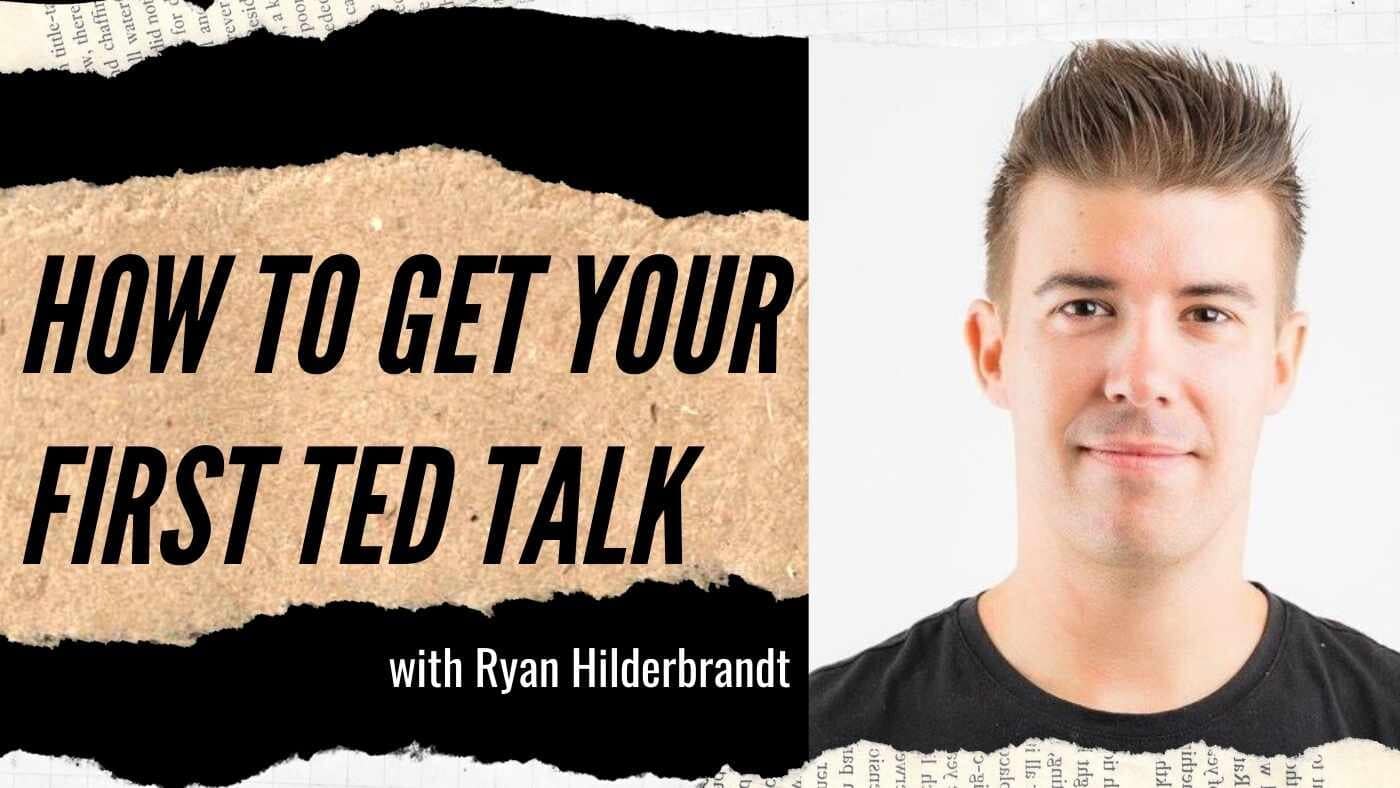
Our Guest Today: Ryan Hilderbrandt
Ryan Hildebrandt teaches other people how to get their first TED Talk.
Most people won’t pitch or promote themselves as speakers if they had no prior experience, or feel as if they don’t have the right connections.
For those of you who have been contemplating about being part of a TED Talk to spread your message, this episode is for you.
Ryan started a brand new TED event in a small town in the UK. Most TED locations are situated in very populated areas, often where universities or companies concentrate. Even then it can be difficult to draw a live audience together. But Ryan worked his “magic” and helped people come together. This is his version of A Thousand True Fans.
Ryan joined me in this conversation from his AirBnB. He had been location independent and traveling around the world for 6 months. If this is also a topic that interests you, listen on.
To learn more about Ryan and to connect with him, visit http://ryanhildebrandt.com/
Show Notes
- [06:00] Tell us a bit more about your life before the activity you are doing today.
- [08:00] For how many years have you been an engineer before getting into TEDx?
- [10:00] How did you get involved in TEDx, what was your motivation?
- [11:00] You started the TEDx event in early 2015. How did this process start?
- [12:00] What was your focus when you were organizing your first event? How did you decide on the name and the theme of the event?
- [14:00] Could you describe the overall process of applying and hosting a TEDx event?
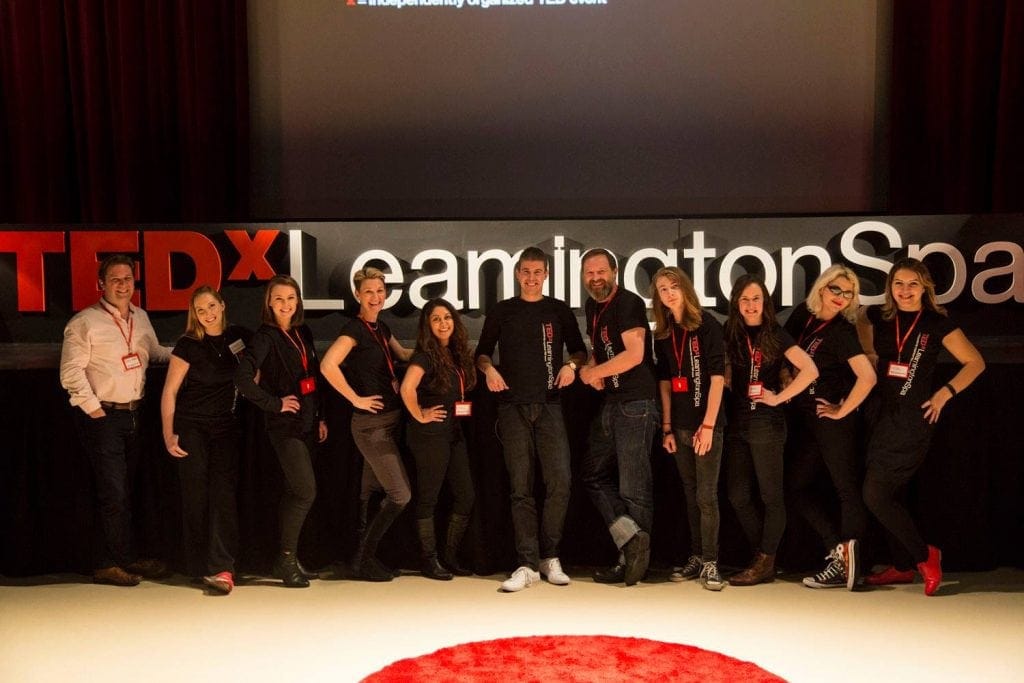
- [16:00] How many people did you have to support you and help out with the organization?
- [17:00] Who did you want to attract as guests/speakers, and who did you end up getting?
- [19:00] How did you eliminate speakers that applied, how was the selection process, and what percentage of speakers finally were selected?
- [20:00] How did you manage to sell out the event? How did you price the ticket?
- [24:00] How did you grow your email list to over 1,000 subscribers?
- [29:00] What was the transition into coaching to apply to speak at TED talks and your ongoing business?
- [35:00] How do you write about your ideas, what have you learned over the years?
- [39:00] Have you achieved your own financial freedom?
- [41:00] Where have you been lately, and how long has it been since you left the UK?
Favorite Quotes
[07:00] Being an engineer, you learn very quickly about the difference between making something that is correct, and something that people actually like, and explaining a very complex to somebody.
[13:00] I wanted to celebrate the fact that to make something is really cool, I wanted to bring those people together, but also recognize that to make something that doesn’t exist it takes a lot of courage…
[21:00] I wanted people to come to the event, and if they have been to some other TEDx event, I wanted them to think that this one is much better. For that, we had to have really good food, a gift card, and filmed in a high-quality event.
[28:00] I realized that, for a TEDx event, people don’t attend because of the speakers or ideas. If it’s only about that, they could watch them on YouTube for free. Most TEDx events are very much focused on that. Instead of that, we focus on the experience. It’s going to be this memorable thing that you’ll cherish for the rest of your life.
[34:00] Marketing a thing that nobody wants is almost impossible, but spreading something that people love and is valuable to people is ten thousand
time easier.
[46:00] The world is like a TED talk, there are things that appear to be scary. They are not easy, but when you start looking at them, it’s actually not that bad.
Transcript
Transcript
Fei Wu: Hey. Hello. How are you? This is a show for everyone else instead of going after top 1% of the world, we dedicate this podcast to celebrate the lives of the unsung heroes and self-made artists.
Ryan Hildebrandt: You learn very quickly about the difference between making something that is correct and making something that people actually like and explaining and, and explaining a very complex process to somebody. I wanted to celebrate the fact. To make something is really cool and I wanted to bring those people together, but also recognize the fact that to make something that doesn't exist, it, it takes a lot of courage to, to do that for a TEDx event. It doesn't make logical sense, like people don't actually attend 10 X events because of the speakers, the ideas. If it's not the speakers or ideas, why instead we focused on, uh, not the speakers, the ideas, but the experience. Like you're gonna be in this room of the smartest people in the town and it's gonna be this memorable thing that you will cherish for the rest of your life. Marketing a thing that nobody wants is almost impossible, but spreading something. People love and is valuable to people, and people want to hear from you is 10,000 times easier. The world is not, it's like a TED talk. Like it's, there's things that appear to be scary and they're not easy, but it's not like this is impossible thing. And often if you start to look. The individual steps that are actually required. It's not that bad.
Fei Wu: Hi there. This is Fei Wu from The Feisworld Podcast. Welcome to another episode of Face World. Today on the show, I'm joined by Ryan Hildebrant. Ryan reached out to me via email late last year. I found out through his introduction that he teaches people on how to get their first Ted. That's both clear and niche enough. I thought perhaps I could change up phase world for this episode and make the content more tactical and less meta. Ryan and I explored precisely that how to Get Your First TED Talk. It's a systematic approach and literally anyone can do it if they follow these steps. This is rather counterintuitive because most people won't pitch or promote themselves as speaker. If they had no prior experience or they don't have time, the excuse can be infinite. So for those of you who have been contemplating about being part of a TED Talk or at any other speaking engagement and spread your message, this episode is for you living in Eastern Europe. At the time Ryan was inside an Airbnb when we recorded this conversation via Skype, he was location independent, which make me quite jealous to be. Ryan is traveling around the world and has been for the past six months or so. I thought immediately how this episode could resonate with some of the millennial listeners. Ryan was very honest about both the pros and cons of that very decision and what he hopes to do next on his journey. What makes Ryan uniquely qualified to speak about this topic? You might be wondering, he didn't just speak at a TED event. He actually started one, organized one in a small town in the uk. Wow. I thought to myself, how is that a good idea? Most TEDx locations I know at least, are situated in very populated areas, often where universities or companies concentrate. Even then, it can be very difficult to draw a live audience. Ryan proved me wrong. There was a ton of work, of course he told me, but what he discovered was spreading the word through a small tribe turned out to be so much more effective than reaching out to tens and thousands of people, quote unquote, as listeners, through a popular radio show. Speaking of providing value to people, I have developed a series of eBooks to help podcasters. They're all free. You can visit face world.com/ebooks and discover free tools tactics. My personal favorite and also the most downloaded ebook is called How to Make a Living Without Counting the Downloads. I spend the past three and a half years developing and also refining the ideas and the execution plans from this ebook. Definitely check it out. I would love to hear from you, as I've already heard from other users who have tried these very methods and was able to make money the exact same. That's it from me for now. Please welcome Ryan Hilderbrand to the Phase World Podcast. You know, one of the topics we wanna talk about today is TEDx and how to give your first talk. I'm very intrigued because I've followed that community for, I guess, more than 10 years at this point. And I have, I, I've also attended several TEDx events, not the TED event. Um, I've. Interviewed people from TED Talks, and so I'm glad we're connecting. But before we get started on that, I noticed on your profile that you are a professional engineer. So tell me a bit more about your life kind of before the current version you're in
Ryan Hildebrandt: right now. So I graduated, uh, mechatronics engineering in Canada at, uh, university of Waterloo. And then I went into developing software. So, I mean something you know, all about for manufacturing companies. So, um, walk into a factory and they would hand, they would hand us a, a drawing, a mechanical drawing or electrical drawing of, um, the factory. Or there something they were going to build and say, okay, we need software that makes this thing do something. So from that, I, you know, you, you learn very quickly about the difference between making something that is correct and making something that people actually like and explaining and, and explaining a very complex process to somebody because you have to explain how. Factory works or maybe how a specific technology works that you've chosen to someone who they're, they're smart and they've, you know, maybe they've got their, their project manager or something, but they don't necessarily need to know or, or want to know about how the technology works at the deeper level cuz it doesn't matter. So, yeah, that was that. And you know, the, it's interesting. How a like technical study makes you ready for other things because doing TED Talks, for example, um, the process of how you teach somebody else how to craft a great idea. Whether that's for a TED Talk or not, doesn't, it doesn't actually matter cuz the process is the same. But the way that you would do that and break that complex thing down is, is really similar to how you'd break down a piece of software or someone said, okay, here's the factory line. How do you make this? This complex thing into simple parts so that it's easy to communicate somebody else or easy to communicate to a computer. And a computer is pretty dumb, actually. Like they're, they're way dumber than you and I are. They, you have to be, you have to tell like explicitly what you want it to do. So, yeah, that, that's, that was my, that was my life before. Before now. And right now I'm traveling actually. So I'm traveling around. I'm right now in the Czech Republic and yeah, I've been traveling for the last year. Year and four months.
Fei Wu: So you were an engineer. I'm doing the Cal Quick calculation here. You graduated in oh nine and then you are, you started, um, TEDx,
Ryan Hildebrandt: um, Lemington Spot. Lovington Spa, yeah. And 2015.
Fei Wu: Yeah. So you were an engineer for roughly about six years. Five, six years, yeah.
Ryan Hildebrandt: Yeah. Cool. Um, and it was still, you know, while, while when I started the event, I was still doing engineering work as well. I see. Um, running a TEDx event is a non-profit thing, so, Everybody that organizes a TEDx event, they're not, that's not their job. They have a normal day job. They do pretty much anything else that you could imagine? And, and like, that's actually kind of important to understand from a, a speaker perspective, like if you wanna get selected for an event because it means that they have different motivations. Like their motivation is not, I have to do this because I'm getting paid. It's, I wanna do this and I'm not getting paid at all. So therefore, what are the other motivations? These people have, and I like that. I think that's true, even if someone's getting paid to do it. Like those motivations are still there, but it's things like people wanna create something that's really cool and amazing.
Fei Wu: So what are some of the motivations? I think it's interesting to talk to you because you're not just a speaker or an event sponsor or you know, sort of a volunteer for the day. So you were very involved in starting this, I call it a branch or of um, a TED talk. So how did that come about? You know exactly what, what was your motivation in joining
Ryan Hildebrandt: them? Well, yeah, I mean, for me, I wanted to create something really cool. I mean that for engineering, the same reason I do engineering is I like making things that didn't used to exist before. So creating an event is, is just like another thing. So you get to create, yeah, you get to create something that just that didn't used to exist and have an impact like that in the community, which is a really satisfying thing. So I. You get to meet all these different people. So one of the reasons I did it was to, to meet all the people that are into, into watching TED Talks in the local community. I was, so the event was in England, I was Canadian and I was new to the place and I wanted to figure out where all the cool people were in that. And organizing an event and being at the center of it is a nice way to, to meet those people. Oh, wait a
Fei Wu: minute. You didn't even start a TEDx event in Canada. This was actually
Ryan Hildebrandt: in England. In England, yeah. I lived in England for three years before coming, traveling, so yeah, no, I was, I was in, yeah, in England.
Fei Wu: Oh wow. So you were new in town, so this is a great way to socialize with people and Yeah. That's so fascinating. So you started the event in 2000 early, very early 2015.
Ryan Hildebrandt: It was, yeah. So remember I couldn't, so you have to apply for a TEDx license from Ted and. I remember being at, I was in Canada for Christmas and I couldn't apply for the TEDx license because their offices were shut for this for Christmas. So it was, I applied as soon as I could in 2015. And then the event itself, I was actually held in late 2015, so like November 21st. Oh, wow. 2015. Yeah, it was the first one. And then, and then the team is still running actually without me, which is kind of cool. And yeah, their third event is happening. Wow. So
Fei Wu: what was your focus? Because you know, Ted has been around for a long time as an event, and I remember, you know, around, oh. Oh nine, even just in the Boston area, there's so many, like Boston College, Boston University had one, the Beacon Street, I don't know why it's called Beacon Street. That became very popular. Um, how did you decide on the name and also maybe the themes and the topics that you wanted for your particular event?
Ryan Hildebrandt: Right. Um, yeah, so I was lucky in the sense that the town that I was living in Lemington Spa, it was the first time that there was ever a TEDx event in that place. So we got to choose the name. The place name, which is great from a branding perspective, rather than picking a neighborhood or a street or a, something like this. Um, yeah, so there's, you can have a TEDx event at a university, in which case it would be called after the university and it would be organized by students. But yeah, we got really lucky in the sense that we had. The name for the, the place itself, the city. And then in terms of a theme, I talked about liking to make things. So I kind of selfishly chose the theme of, uh, something called courageous creations, which is I wanted to celebrate the fact that. To make something is really cool, and I wanted to bring those people together, but also recognize the fact that to make something that doesn't exist, it, it is, as you know, it takes a lot of courage to, to do that.
Fei Wu: So selfishly, like when you said that instead of just learning about how to be in an event, I, I bet there are listeners out there, especially from communities where either they're new to or communities that don't have TEDx, where TEDx like events, they might. Thinking about starting one. So could you give us some like logistical setup, uh, things that, you said there's a license involved, but what is the kind of the overall process like?
Ryan Hildebrandt: Yeah, so you first apply for a license from Ted and it takes them, they say up to eight weeks to get back to you. I think they responded to me in five weeks. And once you get the license, then you're off to the races. So they don't give you money. Connections. They, they connect you with, with a community of their TEDx organizers. So you can ask them for tips and things, but it is up to you to make this event happen. And, and I mean that in every sense of the word. So that means you have to find a venue and book the venue and pay for the venue somehow. So you can pay for it with your own money out of your bank account, or you can beg and get it for free, or you can do any, whatever, whatever, however you would like to do that. Just make it, you make it happen, right? That's just up to you. And if that sounds hard, it's because it is to, to get all this stuff together. It, it's not easy. I mean, it's like with any big project, if you make a list of the things you need to do, Figure out a way to do them either with, uh, a volunteer you recruit or with a sponsor, or you just pay and make the problem go away. That's, that's kind of it. So, I mean, in terms of the, the months as they went by, the first thing I did was like, I start, I made a website and I made a, you know, Twitter profile and. Facebook and started like reaching out to people and telling them that this event was gonna happen. I think I, I put up a volunteer application form and I, truthfully, I just, I accepted everybody who applied, but I wanted to have the form there to make it feel like people had to like, have a reason for wanting to help. That was a good idea. I had a, yeah. Speaker application form and then, you know, we started thinking, Getting a venue and that took, that took a little while. We ended up getting the venue sponsored. So I got a theater venue for free. And then we got videography and photography again. We just, we made the videography company a sponsor and, and I knew them so they agreed to, to do it for us. Cuz at that point we didn't have any money. And then as the volunteer team, like people applied to help out with things. Then we started organizing that together and some of them went off and kind of managing the speakers that we selected, and some of 'em went and helped with like marketing and. Just, you know, telling people about the events and we had a, a graphic designer and all these, all these people came and, and helped. So yeah, if you don't have a team, I mean, just, you can't do a TEDx event on your own. It's just not, it's not even possible. How
Fei Wu: many people did you have? I mean, part-time versus full time-ish? I mean, I guess they're all part-time. Did you have to support.
Ryan Hildebrandt: Um, it was probably, the team was probably nine, eight or nine by the time all was said and done. And that was, I mean, that was a good number. If we would've had a bigger event, like the audience would've been bigger, we would've needed far more people to help out. And now the, so the event has, I, I'm not involved in running the event. Anymore, but that team, like I could just see from what they do that they have some people that help during the year and then some people that only help on the data set up and and things like that. Who did
Fei Wu: you wanna attract as your initial guest speakers for the event and who did you end up getting? Ooh.
Ryan Hildebrandt: Um, yeah, I remember reaching out to Richard Branson's son, . Good one. Good one. And he just didn't reply to like my email at all. I reached, so there's some people we reached out to. So of the speakers that we had it, one of 'em was one that I found and it was listening to a podcast actually, and more or less I reached out to him cuz I wanted to meet him and I thought he had a cool story. And then the rest of 'em, we had an application process. So the way that we did it, and this like not every TEDx event does it like this. In fact, very few do it like this. We had a staged application process where stage one was an application form. And that was due in, I wanna say, early July, uh, July 1st, and then August 1st. We took those people that filled in the application form and said, okay, give us a, a one page summary of your idea and a a little video talking about it. So we could get, we could get an idea of how they communicated. So at each stage, we eliminated some, some speakers, and then the final stage, which was. September 1st we had the people that were left, which was, remember we had 17 people left. At that point we said, okay, give us a full first draft of your talk and, and then deliver that. Talk to just a webcam. We didn't care about production quality, but we did that because if you have very little information about somebody, like they don't have to put in a lot of effort to, to give you that, but also you have very little information to go on in terms. A selection process. So how do you select people if everybody gives you one sentence, like that's really, it's hard to know if you're making the right decision. So that's why we did it in, in stages. So there was some people that applied that were from across the world, or their topic was just, was way, way, way off, or broke the TED rules for content. Like they wanted to talk about a plagiarized idea or something like that. And so we, that was, those were easy to eliminate. After that, it becomes really tough. And it took us a long time to, to go from the one page group and, and do like a final, final list.
Fei Wu: So what was the, the elimination percentage like, uh, from the initial one page application? I mean, how many did you get? How many guest speakers did you end up having?
Ryan Hildebrandt: We had 85 people apply, like fill in an application form. 65 of those people actually ended. Doing the one page summary and, and actually that was higher than I expected. I, I fully expected the amount of work to like put in a page of effort for us to eliminate a more than that, but we had 65 people actually do that. And then from 65 we went to 17 people and then we went from 17 to. 14 that we invited to speak, and then one of those speakers dropped out and another one I tried to convince both of the speakers that said they were in dropout to stay in. And one of 'em. I couldn't convince in the other one I could. So yeah, in the end we had 13 speakers and we also had two performers as well, and we had probably 25 people apply to perform. And we selected two, I think. Yeah, two.
Fei Wu: Hi. You're listening to the Face World Podcast and I'm your host, Fay Woo. Today on Face World, Ryan Hilderbrand teaches you on how to get your first Ted Talk. You know, before we switch over to how do you apply for one, how to be selected, I also notice two parallels. One is the way how you manage and run the TEDx event versus kind of how I gather and hustle some of the podcast guests. As well. And I also noticed you have this very, um, a very strong marketing, digital marketing and event marketing skills, which allow you to not only make this happen, you know, a venue that you got for free. And also you had said that in a small town like that you're able to, you know, really get the audience, people, attendees who showed up for the event. You sold the tickets, uh, they were sold out. So tell us about your approach there.
Ryan Hildebrandt: Yeah. So in terms of the details, so Ted has some rules about the price that you can, you can sell the tickets for, and it's a hundred US dollars. At the time, that was about 60 British pounds. This is before the whole Brexit vote thing. And the, and so I, I wanted to, so I, you know, you work out how much this is gonna cost you to, to do what you wanna do in terms of an a, an event. And then I just, I just increased the price. Like I wanted to be a little bit more courageous in terms of, How much I charge for this, because I wanted to create an event that was like really, really good. So my goal was for, for kind of again, a little bit competitively, I wanted people to, to come to the event and if they had been to another TEDx event before, I wanted them to think, oh man, this other event was kind of crappy. Like this is the one that was really, really good. And that meant that we had to have really good food and like a gift bag and. Filmed in a really high quality way and also price it such that people place importance on attending the events. If you price it really low, people feel like they don't have to attend, like they can just skip it and it's not a big deal If it's expensive, people place a lot of value on it. So that was the thought process. Price it at 55 pounds, which is five pounds shy of what we were allowed to do. And I was really scared. Honestly, I didn't, I wasn't sure if people would buy tickets because there was other. You know, 20 minutes down the road driving that were, I think 18 to 25 pounds. So half or other events that were in like the 15 ish pound range, so less than the third. Um, so yeah, I was truly nervous. But to do that, we had to be really careful about, one was building the email list. So we weren't afraid to put the little, you know, the little popup thing that says, Hey, like if you want tickets, we're going to announce tickets to our email list a week sooner. So put your email address here. And I started building the email list in February for a November event. Um, I also knew the benchmarks for what we could expect in terms of how the email list size would correlate to how soon you sell out. So I talked to another. They were also a first time event in a, a little bit bigger of a city, but not that much bigger, and they sold for 25 pounds in I think four or five days. And I knew their email list size, their email list size was like 150 people or something. So I knew that if I could get 150 people that I could sell out in the same amount of time, roughly with that price. So I just knew I needed a bigger list to be able to, to sell for what we wanted to sell at by the time we sold the tickets, our list. Just over a thousand people. So that was one thing was the list size and, and that and the other things did,
Fei Wu: did, how did you grow your list to a thousand
Ryan Hildebrandt: people? Yeah. Um, well, started early. It was the one thing and having a really obvious, easy way for people to subscribe is the other thing. We also re, so we selected only local speakers, which was. Strategic marketing thing because we wanted every speaker to be part of our marketing force. So if you have a speaker and they're not local, that means that all their friends, they tell their connections, everybody. Are also not gonna be local, and it's really unlikely they're gonna travel. I mean, maybe your like partner would travel with you, but you're not gonna get 10 friends that would ever come to the event. Right. Oh, interesting. But if the speaker's local, all of their friends are local and all the speakers are local, and their friends have been talking and everyone's talk and like it's this little. This little bubble of people that are all talking to each other and everyone's saying, Hey, have you heard about this TEDx event? Oh yeah, I heard that too. Oh, and yeah, my friend's talking. Oh yeah. Someone that I know that knows someone that's talking and, oh, I know someone who's a volunteer and they keep on hearing about, even with each other, they keep on hearing about the event internally. So there's a lot of reminders to people to, to make sure that they sign up for the email list and they're reminded about it all the time. So that was, I mean, that was one thing we were pretty careful about tracking. What was working in terms of marketing, what wasn't working? There was a couple times I was on the local BBC radio and I thought, for sure, Aw, this is gonna be great. I'm gonna go on the radio. I'm talking for like an hour about things and then all these people are gonna subscribe and it's gonna be wonderful. I was even in a bigger city, you know, it was like a several hundred thousand people in this city. I thought for sure this is gonna be marketing gold. And I looked at our, in MailChimp, I looked at our subscriber numbers and basically nobody subscribed, right? And so I thought, oh, that sucks. Like I really thought that was gonna work. And so the next time they said, the BBC said, Hey, do you wanna come on the radio again? I just said, no. Like I didn't need to. We knew it wasn't gonna work, so there was no need to. But surprisingly, we, we had a feature in a local newspaper. And like who reads the newspaper anymore? Right? Like I, I mean, I don't, but we got the day that the newspaper article ran, we got 50 subscribers. On that one day, which is it's way, like way more day to day than we were used to. It's so
Fei Wu: counterintuitive, and I love these examples of, um, what I see as misconceptions from people to say, you must appear in these world renowned publications and you know, yeah. And you have to be so prescriptive in terms of what you can talk about, the way you talk about them. And the conversions are surprisingly low. And this is not the first time for me to hear about that. But when you get local, when you meet people in person, and just incredible, you know, I, I have similar experience as well, um, going through Seth Go's, L 10, B hundred. People who have gone through that program, many didn't really study with me at the same time, somehow all believed in the message and you know how we can come together to learn more about podcasting. So this whole close community idea really works. The a thousand
Ryan Hildebrandt: true fans. Yeah. Yeah. And just like, just try something and see if it works. Right. I mean we, another thing we tried was like where the traffic was coming from, where subscribers were coming from and I looked. A few months into marketing, like maybe where our subscribers were a few hundred at this point. I looked at where they were, like where traffic was coming from in terms of Twitter, LinkedIn, and Facebook. and I said, okay. Like let's just see how subscribers correlate to all these things. And basically all of our growth was coming from Facebook. Oh, wow. And I think that's because your Twitter followers probably aren't necessarily in the same city. Uh, your LinkedIn people aren't necessarily in the same city, but your Facebook friends probably are for the most part. And if you've got a local, like for our case, we had a local event, so it didn't matter. Like if someone knows about us and they. A hundred miles away. It doesn't matter. That's irrelevant. But if someone knows about us and they're, they live a block away, that's a lot better. Yeah. So we just stopped, we just didn't pay attention to Twitter anymore. It wasn't, it wasn't something we focused on and said, we said, okay, let's just double down on Facebook. Mm-hmm. . So yeah, all those things were key in terms of growing the email list. And then the next thing. Selling to that list. Right. So the thing that I realized when writing the sales sequence for this thing was for a TEDx event, it doesn't make logical sense. Like people don't actually attend TEDx events because of the speakers, the ideas. Because if it was only about the speakers or ideas, logically, you would just stay home and watch 'em on YouTube for free. So if it's not the speakers or ideas, why. And most TEDx events, they say the, the way that, if you look at the marketing, it's very much focused on, these are gonna be great speakers, we're gonna have these amazing things. These people are so qualified and and incredible, and blah, blah, blah, blah, blah, blah, blah. Instead, we focused on. Not the speakers, the ideas, but the experience. Like you're gonna be in this room of the smartest people in the town, and it's gonna be this memorable thing that you will cherish for the rest of your life. Like it's 55 pounds for a once in a lifetime experience, by the way, the speakers will be in the room too, and you get to meet them, and you get to meet the other people and won't that be amazing? But the, the, the underlying story was basically, This will be a memorable experience, and you, you'll surround yourself with the smartest people in the entire city, and I wonder what's gonna happen.
Fei Wu: Mm. I I love this whole approach and, and thanks for breaking it down. You're, uh, you clearly found the niche. So why did you leave the. The idea or, or the work of organizing these events and kind of transition into a new niche that you knew found niche actually, which is for you to coach other people or teach other people through various podcasts, through your blog post on how to actually sign up. To be a speaker at these events. Tell me about that transition. How did you
Ryan Hildebrandt: Yeah, figure that out? It initially came to mind from seeing a bunch of like applications come in and think, oh, we were getting a lot of applications of people that really, really want this opportunity. And a lot of them just aren't. They're just not doing a very good job. Yeah. They just weren't doing a very good job of communicating why. Their particular idea should be spread or why they should be the person that gets selected. One of the things that I've noticed about myself is that I need something mentally to keep my, like, keep my mind occupied. Otherwise I go insane. So this was a nice, uh, a nice challenge. Nice, nice little side project.
Fei Wu: I would love to be able to talk to you about traveling as well. So I think, well, there's a lot of materials. We covered a lot of materials that are not on your blog. Uh, difficult to find Right. The marketing of an event. Yeah. Um, but I, I wonder if we could do like a few minutes on. Um, what are some of the tips and sort of suggestions on how someone could apply to an event? I also noticed you and focus kind of zooming in a little further on women too, like how women can apply to different s events designed for women. So maybe walk us through that process a little bit and then I will include a, a link for them to read further.
Ryan Hildebrandt: Yeah. Well, I'll start with, um, I'll, I'll, I'll back up to a, a more strategic level for a second and, and get people to think, like if you're, if you're considering this for you, think about why you want this opportunity. Most people want to speak at a TEDx event because they want, they want their message to spread. They want the credibility that comes with it. Uh, they want to raise awareness for a specific thing. And all of that. Getting selected for an event is one part of that, but it's not the entire thing. So really most of the results come, uh, most of the effect of what your results are come from marketing the thing afterwards, like you just, just starting a pod, like, you know, this, just starting a podcast doesn't really do anything unless you tell other people that you have a podcast. And unless your podcast is good to begin with, because it's a, if it's a crapp, Podcast about things that don't, people don't care about marketing. It is really difficult, but if it's a good podcast people, it just, it goes easier, right? And the results that you want, which is what people kind of really want, is they want the results from the TED Talk. All that comes easier. And so there's one part is marketing the talk afterwards, which. I think is a step that a lot of people think will happen automatically. Like the, the whole build and they will come thing is, is not a, is not a thing . It's just no one. That's just not, that's, that's a lot. It doesn't work until it doesn't work, so you don't build it and they will come, you build it and tell people about it and then, and then that works a lot better. The next thing is that, or that, that rewinding a little bit is. Every TEDx event is not created equal. Um, there's some that have better video production than others, some that have worse. I have a, actually, I have a, an a blog post on, on the three parts of this, and I, I show there's one speaker who's the same person speaking at two different TEDx events, and the video quality is drastically different. And in one, he. Like just a professional speaker. Uh, the same images like him on stage. He's got his, his Facebook profile picture or his like banner thing, and you can see him on stage in this like, massive audience. And he just looks, he looks like a champ. And then this other event, it's like, it's, it's looks like it's like a middle school and the video is a little like, you can see the camera moving around and the audio quality isn't as good. It's kind of echoy and it looks, it makes him look amateur. So picking the right event or picking a high quality event is one thing, and then picking an event where, yeah, picking a high quality, uh, videography and then rewinding back even further, which is, I alluded this earlier, but having a message and an idea that like marketing, a marketing, a thing that nobody wants is, is almost impossible, but spreading something that people love and is valuable to people, and people want to hear from you. Is 10,000 times easier,
Fei Wu: and I love you. Your, um, blog post where you mentioned that one idea, right? What is your one idea you can actually convey? There are good ideas out there, unfortunately not being talked about as a good idea, almost as if there were bad or just unclear. Like I can imagine. Uh, I think where you're going with that article in particular is how you even, how you go about writing about your ideas yourself. And so that. Surface very quickly to the
Ryan Hildebrandt: top. Yeah. And I guess to like, for people hearing this, they're like, well, how do I know? Like, what do you mean? Like what's a good idea? How do I sit? How do I sit? Have something pop into my mind that's good. And how do I know that it's good? Because people, like really smart people have this problem where, They have stuff floating around in their head all day and they think about it all day long. And to them it's just the normal stuff. Like it's just normal knowledge. It's like it's, they're right next to like buy more cheese. Like it's in that spot in your brain. And they're stuck in their own head in, in a sense. Like they don't know how other people think about their idea, but it, the one thing I'll say is like, it's not up to you. To decide if your idea is good or not. It's up to other people. So I have this process, uh, I have a course on this that teaches you how to basically do like market research on your idea and, and start with the knowledge in your head, the fuzzy, messed up knowledge in your head, and extract topics from that and evaluate them individually and then, Test them for clarity and test for fascination and find the, let's say, the most fascinating thing about your, your idea. So I'll give you an example. This is like a really simple thing. When I first started the, the event and I was telling people about it for the first time, I would say, oh, I'm starting a TEDx event here. And I found basically nobody knew what that was. Right. And I had to explain, I was like, oh, well, it's like Ted and there's, you know, there's like, it's an acronym and this happens every year in North America. But then they have these like little, like regional ones that are all over the place. And, and people were kind of like, they were confused and I had to explain it more. And I showed them like the logo of a TED talk on, on Netflix. And they said, ah, you mean Ted Talks? I love Ted Talks. And so that was the thing that I let in with. I said, oh, have you heard of Ted Talks? And they would say, yeah, of course. And I was like, fantastic. So we're starting a local version of that in this town. And if I would've stuck with trying to spread this idea of a TEDx event, it would've, I mean, people would've got it, but it wouldn't have taken off in the same way that, if I would've explained it in that way, saying, do you like Ted Talks? If, yes, okay, great. We're starting a local version of that and it's gonna be, in this day, here's the website. In the same way, there's ideas in your head that the way that you describe them in like very simple tweaks to them. Will have drastically different reactions from people.
Fei Wu: And I think what you did there is also relating to other people. This is something I I thought about a lot, which is, you know, to be a good listener to actually figure out, trying to figure out what could interest this person. Yeah. Um, based on, there's always gonna be a set of. Assumptions based on the way they look, the, the things that they've said about themselves. Um, but that is so important. I think a lot of people come across. Um, so you said if they say yes now, if you say, okay, I'm starting a TEDx event, do you like, do you know TEDx? If they say no, do you filter them out? I mean, how do you modify your story
Ryan Hildebrandt: then? Yeah, I mean, if, if, if I was trying to find a sponsor, so actually one of the things I did was I talked to other TEDx organizers and said, Hey, what were the, the hardest things? Organizing this event and they, they said a few things. One was you select a speaker and they procrastinate and then the quality of their talk sucks. Two was finding sponsors and three was finding volunteers that actually do things and don't just wanna have it, you know, on their cv. Yeah. So I said, great, like, what was your what? What's the 80 20 of finding great sponsors, for example? And they said, well, pretty much if someone's hurt, if the owner of the company has heard of TED Talks, then you're golden. If not, it's basically, IM. Because they don't know what they're sponsoring. And so that's what I did, is that, that was my filter. I said, if you, if you haven't heard of Ted Talks, it's a conference and like, I wouldn't really be bothered about explaining and like yeah. Trying to sell the thing. It, it was just like, oh, okay, cool. Yeah. Yeah. Totally agree. Yeah. If they asked about it, I would say, yeah, check it out on Netflix. You know, like you can. You can go off and do that. Yeah, that,
Fei Wu: that's super cool. Hi there. You're listening to the Face World Podcast, and I'm your host, fou. Today on Face World, Ryan Hildebrandt teaches you on how to get your first.
Ryan Hildebrandt: TED talk.
Fei Wu: How have you achieved or have you achieved your own financial freedom?
Ryan Hildebrandt: Um, well, so I had a lot of savings. I was, I'm really good at automating my savings and I, I've been saving money for a long time, so that, that really helped. Um, yeah, and like running my own, doing engineering and stuff as well. But while I've been traveling, I've been working on more or less this part-time, but it's, most honestly, it's mostly been savings. So it's not like I'm, I'm making tons of money and driving a Ferrari around. Uh, I travel pretty frugally. Like I'm not staying in hotels. I'm staying in a hostel right now. You know, that's, that's okay. I don't need to be doing hotels and and fancy restaurants every night of the week. Cause that gets old anyways. I would rather like cook normal food that's not crazy heavy and I don't drink a lot either, so that helps a lot. And most of my trip has been in Southeast Asia and. That's, it's, it's cheaper to exist there than, you know, say Western Europe for example.
Fei Wu: I, uh, there there are like five different mini episodes we could go on about based on what you just said. But I'm a huge fan of saving money. Uh, when you say you're a young guy, so when you say you've been doing it for a long time, I mean, the way I describe. You know, it's, I've time's gonna go on anyway. Right? So I turned 34 this year and I've been saving money religiously since I was, since I was in college. But let's just say that the, the bulk of the money didn't get saved until I was 22 when I had a job. So, you know, I wanna say to listeners, especially millennials, I anticipate will wanna listen to this. Um, Start when you're 22, 23. Don't ignore 401k. You know? And you said automation, uh, which Rami sat had this whole,
Ryan Hildebrandt: how do you do it? I bought his, so I've been following his blog since basically it existed. Oh my God. No way. And I, so I was in university, I had a spreadsheet for, I didn't do the automation thing in university cuz I wasn't making any money. But I had a like a spreadsheet of, okay, I'm working this term, I know I'm making this much money. For this long, and then at this month I have to pay for textbooks and rent and all these things for the next univer. Like it was, it was elaborate. Um, but yeah, noit SAT's got a great book. It's called I Will Teach You To Be Rich, and that's exactly what I followed. Um, I've been saving money for a long time. Yeah. Um,
Fei Wu: I wanna hear a few minutes on where you have traveled and how long it's been for you.
Ryan Hildebrandt: Ooh. Okay. So I left the UK. So I've been homeless since July. No, July? No, no, no. June 19th, 2016. Oh, wow. Over a year. And yeah, then I, so I spent a couple months in Canada, uh, at my, so my sister got married in the summer, so I spent some time there, and then I, yeah, had an interview with Google, so I went down to San Francisco for like a week for that, and then I went to Asia. So I booked a flight to Taip. . And then I went to South Korea, or sorry, I went around Taiwan and then South Korea and then Japan, and then Singapore, Malaysia, Myanmar, Thailand, Lao Cambodia, Burma, or sorry, no, uh, Borneo rather. So Malaysia, but, and then Indonesia, and then Vietnam, and then England, uh, for my buddy's wedding. Yeah, some like cool adventures along the way. So I spent, did like a four day motorcycle trip in Lao and yeah, like went surfing in Indonesia or sorry, tried to surf in Indonesia. I'm not very good at surfing and you know, I did, yeah, like drive around a motorcycle and try this stuff. I spent New Year's Eve at the full moon party in Thailand and Christmas on the beach, which for me, Really new cuz I'm Canadian and it's cold in Canada for Christmas. So in Canada, if it's cold, everyone stays inside. Right. And you don't, you don't, you don't do Christmas with the community. You do Christmas with your family and close friends and that's pretty much it. In Thailand, it's 35 degrees in Christmas and you do Christmas with like the entire city, which is kind of cool. And yeah, then I, I came to Europe for my buddy's wedding. And I've been in Europe ever since I went to Ukraine, which is cool. I went to
Fei Wu: Cherno. When did you land in, uh, Europe? I mean, how long was
Ryan Hildebrandt: the Asia trip? Oh, okay. So I landed in Europe on June 5th. I landed at Heathrow and I didn't own jeans at that point. Like I had worn up my jeans in Asia and just toss them. I'd run up my shoes and toss them. So I landed a heath throw with a thin jacket like this. Oh my little, my god, you know, jacket and a t. And shorts and flip flops and it was 11 degrees in England and I figured I needed to buy some shoes and like pants. This is so, um, yeah, that was good.
Fei Wu: So you were in Asia for about a year for Asia. You traveled around like 12 countries or so?
Ryan Hildebrandt: I left Canada in August 24th, and then, yeah, so June, so yeah, like what's that, 10 months or something? 10 or 11 months. So
Fei Wu: you were traveling, I mean you're, I have, I have, you know, girlfriends who travel to Asia the same manner, which I find to be really astonishing, especially for women to travel within from a suitcase for men I think is a little bit easier, but
Ryan Hildebrandt: still, oh, I got a backpack. I have my 15 kilo backpack and yeah, everything is a carrot.
Fei Wu: Wow. So jacket and, oh wow, you should really write about that. I think it would be so interesting, right, to really get rid of, that's kind of the state that I'm trying to get to with some success, but not significant. When you live in a house, you know, you just, you just accumulate more
Ryan Hildebrandt: crap that fills the house, doesn't it? Yeah. Um, yeah. I did a, I did a, oh, I got, I was in rga, in Lavia, and I stayed at this place, this host for so long that I knew all the staff and I went, I went back there then again, and one of the staff said, Hey, what are you doing on August 21st? I said, I have no idea. Like that's like a week out. I don't even know what country I'm gonna be in, but what do you got? And she said, oh, I'm doing this kayak trip. And I thought, well, I'm Canadian. I know how to kayak. This is no big deal. And it turns out for her kayak trip means, uh, an over. 90 kilometer kayak trip, um, which I don't know if anybody is like kayak before, but if you were to kayak for an hour, you would get maybe a kilometer Yeah. Oh God, if you like, slowly. So, yeah, it was a, it was 16 hours. We started at 9:00 PM and we ended at one o'clock the next afternoon. I couldn't move my arms for a couple days at all. But, uh, yeah, so I did that kinda stuff is cool. Wow, that's super,
Fei Wu: that's super cool. Um, thanks a lot.
Ryan Hildebrandt: The world is not, is not as, it's like a Ted talk. Like it's, there's things that appear to be scary and they're not, they're, they're not easy, but it's not like this is impossible thing. And often if you start to look at. The individual steps that are actually required. It's not that bad. What if
Fei Wu: you get sick? I think that's the only thing people worry
Ryan Hildebrandt: about. Right. If you get, oh yeah. Okay. So I got food poisoning pretty bad in, in Myanmar, and I just laid in bed and there's, you know, you can get health insurance, uh, as well, or you just, you can just pay for it. Like, I went to the dentist in Thailand. Paid cash, like 20 bucks. He was, yeah, it was nothing. So yeah, you get sick and you're in, in Thailand, you just go to the dentist and pay him cash and it's not a big deal. Um,
Fei Wu: Yeah, I think people stay at home for way too long. I mean, that's, there's that extreme of that. Yeah. You don't have to live outside of your home for a year, but the idea of, to be able to travel to places instead of just reading books and watching movies, to me, there's just no replacement for that, so. Right. Yeah. Thank you for sharing your, your trip tips and ideas, and you're very interesting to talk to. So, first of all, thank you so much for being on my show. I really
Ryan Hildebrandt: appreciate it. Hey, you're welcome. It's my pleasure. Yeah, it was. It was awesome. Yeah. Thanks So, Cool.
Fei Wu: Thanks so much, Ryan. Uh, we'll be in touch. All right.
Ryan Hildebrandt: Bye. Talk to you later. Bye.
Fei Wu: Hi there, it's me again. I want to thank you very much for listening to this episode, and I hope you were able to learn a few. If you enjoy what you heard, it'll be hugely helpful. If you could subscribe to the Face World Podcast. It literally takes seconds. If you're on your mobile phone, just search for Face World Podcast in the podcast app on iPhone or an Android app, such as Podcast Addict and click subscribe. All new episodes will be delivered to you Automat. Thanks so much for your support.
Acknowledgment/Music
- Track: LFZ – Popsicle [NCS Release]
- Music provided by NoCopyrightSounds.
- Free Download / Stream: http://ncs.io/PopsicleYO
Written by
Fei WuFei Wu is the founder and CEO of Feisworld Media, a Massachusetts-based digital media company helping brands get discovered by people and by AI. An Adobe Global Ambassador and brand partner to ElevenLabs, Synthesia, and 50+ other tech and AI companies, she hosts the Feisworld Podcast (400+ episodes, 500K+ downloads — guests have included Seth Godin, Steve Wozniak, Chris Voss, and Arianna Huffington) and co-created the documentary Feisworld: Live Your Art on Amazon Prime. Fei writes for CNET, Lifehacker, and PCMag, and her work has been featured in Forbes, Harvard Business Review, and WIRED. She has been publishing on the internet since 2014 — long before AI discoverability had a name.
View all posts by Fei Wu→Stay updated
Weekly insights on content, AI, and digital media.
Keep Reading
Related Articles
Joanne Lipman on Mentors, Untapped Talent and Why Women Should Stop Waiting to Be Perfect
Marc Randolph on Curiosity, Messy Starts and Why “Nobody Knows Anything”