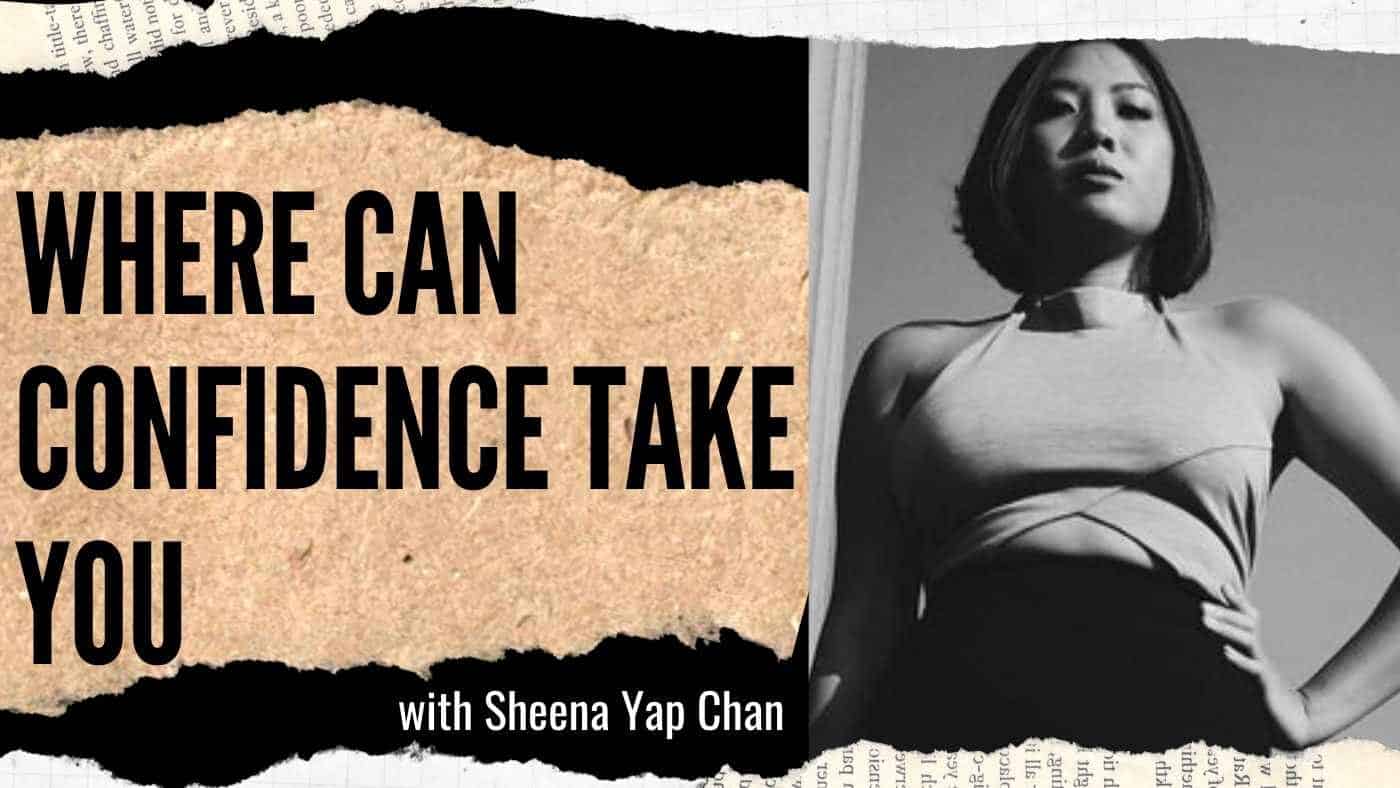
Our Guest Today: Sheena Yap Chan
Sheena Yap Chan is the founder & host of The Tao Of Self Confidence, a 15 – 30 minutes daily show packed with ways to build up your self confidence in many areas of your life. Sheena believes that Self confidence is the most important trait to have in every aspect of your life, yet so many people struggle to find it. After launching her own podcast project just a little over a year ago (first episode released on August 28th, 2015), Sheena welcomed a community of women as guests and listeners who are loyal followers for the Tao of Confidence.
How did I meet Sheena? In April 2016, she discovered me on Facebook and invited to the Tao of Confidence, Episode 164: Build Self Confidence Through Podcasting With Fei Wu. My favorite moment was when Sheena turned off recording and we leaned into a conversation like two best friends.
Self confidence was also an issue Sheena had to deal with in her own life. Coming from a traditional Asian family, she remembers being told to never make a noise, always be a good girl by following the rules. Sheena’s desire to break away from the life she was living grew strong, then desperate after a family tragedy.
We often say that we should live everyday as if were your last. But many people won’t take action until much later in their lives. If you are listening to this episode, I hope you take ten minutes, write down what you’d like to do and start doing. The rule of 10 minutes a day never fails. Anyone can commit 10 mins (or even 5 mins). That’s how I started Feisworld.
Show Notes
- [06:00] How was to start your podcast? How do you feel about such journey and being able to connect with so many women.
- [07:30] How was it like to grew as an asian kid in the US?
- [10:30] Can you tell us a little bit more of your transition from a 9-5 job to full time podcaster?
- [13:30] How was your upbringing? Can you share some details about your childhood?
- [16:30] How did you feel about having to move back to the Philippines for three years and then back again to the US? How was that experience?
- [18:00] What type of businesses your parents had in the Philippines and how was, for them, the transition to working in the US?
- [20:00] What were some of your biggest dreams and wishes when you were a child?
- [23:00] Can you tell us a bit of the behind the scenesof The Tao of Self Confidence? How does it work and how you organize it?
- [24:00] How do you find your guests, considering that you need to find a lot of women for a daily show?
- [26:00] How do you organize your day?
- [28:00] How do you engage your fans?
- [30:00] How is the podcast funded and sustained?
- [31:00] If you were a beginner, where would you start? Do you provide any resources for them?
- [33:00] How long has it been since you were able to monetize the services you provide together with your podcast?
- [37:00] What are some of the daily challenges that you have experienced?
- [40:00] What’s your reaction to feedback?
- [41:30] How are new listeners finding you?
Favorite Quotes
- [08:00] ‘That’s just someone thought process, it is not how you are supposed to live, you live how you want you. […] Some things I never thought were possible, gives me hope, gives more people out there hope. Literally everything is possible.
- [11:00] I just knew there was something more out there
- [12:00] “When I realized that life is so short we never know what’s gonna happen to us, we can be gone in an instant, at least I wanna be able to look back and say ‘I lived an amazing life’”
- [18:00] I think people forget that, because they are too busy chasing other things, like money or status
- [24:00] When you have a big purpose you are willing to do anything, and when you speak your purpose, more people are drawn to it
- [37:00] I believe confidence is just a key to everything… to be successful… to live your life… it has to take courage.
- [38:00] We live in a world where we feel there’s only one way of doing things, not realizing there are so many more ways out there […] and failure is a part of the process.
Transcript
Transcript
Fei Wu: Welcome to the Phase World Podcast, engaging conversations that cross the boundaries between business, art and the digital world. When I realized that life is so short, we never know what's gonna happen to us. We can be gone at an instant. At least. I wanna be able to look back and say, you know, I lived an amazing life. Lived a life where I can be happy. I just. Knew there was something more out there. And I think people forget that, right? Sometimes the quality of life people are, you know, too busy chasing other things like money and status. And Sheena Yap Chan: when you have a big purpose, you're willing to do anything. And when you speak your purpose, More people are drawn to it. I believe confidence is just a key to everything. To be successful, to live your life, it has to take courage. We live in the world where we feel like there's only one way of doing things, not realizing that there's so many more ways. And failure is a part of the process.
Fei Wu: Hi everyone. This is Faye Wu, your host for the Face World Podcast. Welcome to another regular episode with Sheena Yip Chan. Sheena is the founder and host for the podcast name The Towel of Self-Confidence, which is a 15 to 30 minute show packed with ways to help you build your self-confidence in all areas of your life. Sheena believes that self-confidence is the most important trade to have in every aspect of your life. Yet so many people struggle to find. After launching her own podcast project just about a year ago, first episode released on August 28th, 2015. Sheena welcomed a community of men and women who tune in on a regular basis. I could tell just by reading comments on her podcast website. So how did I meet Sheena? In April, 2016, she discovered me on Facebook and actually invited me to the Tower of Confidence as a guest in episode number 164. Build Self-Confidence through podcasting with Faye W My favorite moment was when Sheena turned off recording and we instantly lean into a conversation like two best friends. We are very similar in age and cultural back. Self-confidence was an issue also for Sheena, and she had to deal with it in her own life. Coming from a traditional Asian family, she remembers still being told to never make a noise and always be a good girl by follow the rules. Clearly, Sheena wasn't satisfied with that at all. Her desire to break away from the life she was living grew stronger than desperate after a family tragedy. We often say that we should live every day as if it were our last, but most people don't take action until much later in their lives. If you're listening to this episode, I hope you take 10 minutes and write down what you would like to learn and do. Don't doubt yourself. Just get them out of your system. Then one at a time where you can drop them all in a box and randomly pick out one over the weekend and just start exploring the possibilities. Give yourself a chance to dip your toes without going into the deep end. What that means is find a few friends, find a support network, and start seeing what you can make of it. Trying out new things and allowing yourself to fail is the main message we hope to get across this episode. Sheena is working on her podcast at this point, and she's constantly experiencing new tools and resources to make her life. Remember her show is five days a week, something I can even begin to imagine while releasing Face World Podcasts just once a week. I try to capture as much information as I can from this conversation, and you can find all those details on face world.com. By the way, a quick new announcement on Face World. I am developing a series of eBooks that aim to help you develop and launch your podcast. These are quick guides and real learnings from running Face World for the past two years. Titles such as Publish Your Podcast in one Week or Spend less than a hundred dollars to set up and Produce. These eBooks are being released one at a time, and you can find all of them on Face world.com/ebook. Without further ado, please welcome Sheena Yip Chang to Face World Podcast. Sheena Yip Chang. Thank you so much for joining me on Face World Podcast. How are you Sheena Yap Chan: doing? I'm doing well. Thanks for having me.
Fei Wu: Oh, thanks for having me, uh, and reaching out to me and really started this journey. And lately I have learned much more about you. I have to say that I've had Face World for nearly two years at this point, and I was looking at your website, looking at your approach, strategies of running a podcast. I was. Able to learn a number of things, and I am not kidding. I'm happy to share some of that, and some of those will naturally become questions as well. But the Tale of Self-Confidence Podcast as you're hosting today is a 15 to 30 minute show packed with ways to help other women build self-confidence in all areas of their lives. And, uh, you've been doing this for quite some time. How do you feel about, you know, starting this such an incredible journey, being able to connect with so many women? Sheena Yap Chan: Um, for me it was, honestly, I just really wanted to start at a platform where, you know, women can go, and get that support and also celebrate women. One of the things that really bothered me was I'd go to these, uh, marketing events and I always just saw men on stage, you know, and I got sick of it and it's like, you know, there's so many amazing women out there who are doing great things. Why aren't they putting them on stage and congratulating them and celebrating them? And that's when I. Realize if I wanted to do that, it had to start with me. So first I wanted to start a blog, but it's like nobody can read a blog while they're driving . So, um, that's when podcasting came out. And it's funny because I didn't even know what a podcast was, um, like so many people out there, right? Mm-hmm. , uh, I just knew that it was a platform that would work, um, just cuz. People can download them anytime. They can listen to them, whenever they're stuck in traffic or if they're stuck on the bus or just running or doing chores. You know, they have this on the background and ever since I started this, it's been amazing just connecting with women from all over the world, hearing their stories, knowing that they too have faced so much self-confidence issues and it's issues that we all can relate to, especially, you know, growing up as an Asian.
Fei Wu: Yeah, I can relate to that for sure. So tell us more about that . Sheena Yap Chan: Um, you know when, when you're Asian and a woman, it's like your, your path is already laid out for you. You know, you grow up, you go to school, you take a course in college that is. Whether a doctor, a lawyer or something, you know, with a profession that's stressful, you get a job, have the white picket fences, get married and never rock the boat. And you know, so many women actually suffer through that because they feel like they know they're destined for something more. But if they go outside that path, it's like they're deemed as crazy. You're the bad daughter. This the disobedient daughter, not realizing. That's just someone's thought process. It's not how you're supposed to live. I mean, you live how you want to and you know, as I interview more and more women out there who do you know, some of some things that I never thought were possible, um, gives me hope, gives more people out there hope that literally anything is possible. Like literally if you just go out there and get it done, and it's not like it's easy, you know, there's an easy flow to it, but there's gonna be challenges along the way, but, All in all, it's worth it in the end when you can wake up in the morning and know you have a purpose, know that you're doing something that you love, um, you never have to work a day in your life. For me, I'm not a big believer of hustling and grinding, cuz I did that in my job and all I got was like a $3 raise every year. , you know, we wanna be able to do something we love, go out there and do it, and have things to happen naturally. And it's possible because I've seen it before. And if it can be done once, it can be done again. So.
Fei Wu: That's, I think that's a great intro. She, and this is not a random compliment because even though I didn't really know you, let's say before you started the podcast a year or two ago, but I can see just, I'm not even sure if you notice it yourself, but the way that your thoughts are flowing, the way you are articulating this, you know, honestly such sensitive topic is, is very clear and I am now. With many questions. Um, one thing I, I definitely wanna mention is the, the relatability. You know, even coming from my listener saying, wow, you know, you do listen, you do interview the few people who are not quite celebrities, but some of the tier one, tier two, but we really enjoy listening to people. Didn't know before. We have never heard from the people we can aspire to become. So I definitely see a lot of those women with a very wide range of variety and career ethnicity experience on your podcast. And one thing you brought up is the job that you had and last time we connected, we briefly touched upon that transition and I wanna hear a little bit. About that today in terms of the job that you had before and sort of that tipping point in transitioning to running your podcast or building this business on your Sheena Yap Chan: own? To be honest, I really liked what I did as, as a job. I really liked interacting with the clients that I had. They, they really appreciated what I did. You know, I don't know if you've ever seen it, but if you were ever stuck in a cubicle and you just kind of like think to yourself like, is there more to life than just doing this like, I couldn't see myself stuck in a cubicle for the next 20 to 30, 40 years. Even though I loved what I did, I just knew there was something more out there. And part of me was like, well, you know, I have this job, it's comfortable, it's easy, I don't have to like do anything. And I stayed there for 12 years cuz it was like, it was comfortable. Like I didn't have to like, Go out of my comfort zone. You know, I was so familiar to me. It's like day in, day out, clock in, clock out. And the turning point for me was when, actually when my aunt passed away five years ago, she, we got a call one day saying that she passed away. She actually died of a freak accident. You know, she went hiking and pretty much, you know, slipped and fell into like 30 feet of rocks. And, you know, sometimes when I talk about it, I'm still, I still don't believe. These are things that happen in movies, not in real life, and took me a while to, to, to realize like, she's not here anymore. But the impact she's left, you know, made me realize that life is too short. Even though she was in her late fifties, she was doing everything, you know, she was rock climbing, scuba diving, you know, zip lining. And so many people out there told her to like, stop, you know, stop doing that. You're too old. You can't do this. And she never listened to anybody. She's just like, you know what? It's my life. I'm gonna go out there and do what I want. When I realized that life is so short, we never know what's gonna happen to us. We can be gone in an instant. At least. I wanna be able to look back and say, you know, I lived an amazing life, lived a life where I can be happy. Not having approval from others, just from me saying, you know, I was able to go to Hawaii, or I was able to meet so many new people. Or, you know, just, just those, those moments in life where you can look back and just have a, a smile on your face knowing that you.
Fei Wu: Thanks for sharing that story. She, I know it can be challenging to bring up, and I, I remember you mentioned that, and I think the tipping point is to realize that the life that we know could vanish. And if that does happen, what do we wanna leave with the world? What is in this case, you know, it's our voices, it's our impact, our messages. And also in your case, which. Witness on your website that just a level of engagement from women you didn't know, I didn't know before are all commenting on each other, and I wasn't one of those one or two words. Oh, thank you. Was great. Liked it. People are sharing and they're leaving very long, extensive comments. And pointing out, I like the fact that you know your podcast, it's relatively short and people are listening to you throughout and able to take out quotes and be able to elaborate on that and that. I thought that was beautiful. So I wanna dive in a little bit into your upbringing as well, Ash Sheena, or do you wanna tell us a little bit more about where you grew up? I don't believe you grew up in Asia, but you grew up in North America, and what was that like? What was the family dynamic? Well, Sheena Yap Chan: actually I did grow up a little bit in Asia. I was born in the Philippines. My parents decided to move to Canada when I was seven. It's funny, when I was 13, we went back to the Philippines for like three years. Oh, no way. And then came back again. So . . It was insane. . Why was it insane? Just, just moving back and forth. You know, you resettled at one spot and you're just like, you gotta pick up and move again. You know, as a child, you. You wanna be with your friends, you wanna not leave the life that you just kind of settled into. And you know, I had a lot of fights with my parents. It's. Why'd you move here? You ruined my life. I hate you. And things like that. You know, when you're a kid, it's like you just wanna be with your friends. You just wanna live life. And it's like that life was taken away as you're moving back and forth and then you're put back into this new environment. You have no friends, you have no one to talk to, and you're like, oh my God, what am I gonna do, ? Um, but as time went by, you know, we settled in and we've been great growing up here. You know, it's different when you're like Asian and you know, you go to the school and there. Other ethnicities. That was foreign to me when I first got here when I was seven, and I was like a part of me didn't even think I was Asian, you know? It's like my voice didn't sound Asian. I had friends who were Nonas, and then sometimes when you walk by the mirror you forget. You're like, oh my God, I'm Chinese, , . You know, things like that. And then trying to. Live in a Western culture and still having like, you know, your Eastern, your Chinese culture, it's like you can't do this, you can't do that. You know all these rules and it's kinda like if you ever saw Fresh Off the Boat, .
Fei Wu: Oh, I love that show. Yeah. It's Sheena Yap Chan: so funny. I love that show because it's kind of like, you know how I grew up, me and my family, it's just like, you want something, but your parents are so cheap they don't, they never wanna spend anything. I remember my dad would always clip out Burger King, 99 cent Whopper coupons, and that's all we would eat at Burger King. It's like, I'd ask my dad for a chicken sandwich. He'd be like, no, you're getting a 99 cent whopper, and I'll never eat a whopper ever again. , because of him. You know, it was just like, I never wanna eat a whopper. So and I understood why they did that, right? They started from scratch. They wanted to save as much money as they. Back then when you're a kid, you're like, you want the best things in life, but you're, you know, you have to settle for the 99th at Whopper and, and then going to the Philippines. Just living there is a totally different culture shock. I grew up a little bit more well off than most people in the Philippines, and you know, everyone's like, You know, wearing the latest brands, making sure, you know, comparing each other, like who had the best things. And the compare game is like huge there, right? It's like, oh, it's
Fei Wu: everywhere. It's, it's a little bit of a, I wanna say everywhere in Asia. Yeah. And. Yeah, this is really interesting because you did, you know, you were living and continue to continue through your childhood, your teenage years in Canada, and then you have to bounce back and shift back and it's three years by the way, is a good amount of time. And did you find yourself, when you had to move back to Philippines to kind of bounce back to the older lifestyle where part of you saying, oh, I know there's. Timeline to this, and I have to go back. I will eventually go back to Toronto, so let's ignore all that. Wow. How Sheena Yap Chan: did you. To be honest, when we moved back again to the Philippines, we didn't really know if we were moving back or not. Um, part of the reason why we went back cuz uh, my grandfather was really sick, you know, as a family and my dad, he, he just decided to move there so he could spend as much time with my grandfather as possible cuz, Never knew it was gonna happen. And actually when he passed away, that's when I realized that my dad didn't want us to have a life there in the Philippines. Like he wanted something better for us. Um, because he sees what happens too, right? It's just, it's, it's insane. Like people are always judging you like, well, it's stuff people don't talk about, but it's stuff that happens. It's not an environment most people wanna live in. So, you know, for him, That was his decision. It's like, you know what? I wanna go back, I wanna live in Canada. I want my kids to have the, the opportunities that I never had, and be in an environment where they can be more independent and not have to, you know, depend on others.
Fei Wu: Right. You know, I, I find this really intriguing because I do happen to speak with a lot of, uh, immigrants, you know, immigrant families on my podcast, and the kids grow. As much as they definitely try to rebel as they any teenager would as they get older. Some of my guests in there say late twenties, thirties, forties. They really look back and appreciate our parents. But I wonder what your, you know, what type of businesses that your dad, maybe in this case, were your parents did in the Philippines, and how did they transition to a new life, a new way of raising a family in. Well, Sheena Yap Chan: my parents, um, didn't own a business here in Toronto. They just actually worked. My mom worked in a bank for more than 20 years. Uh, my. I'm not sure what he did . He also had, you know, jobs here and there. But, um, but for them, the transition was, wasn't as bad because they, they just love that simple life where nobody bothers them. They watch their tv, they do their thing. Like every weekend they go out to a new restaurant, trout, new food, and just spend time with us. For them, that's, that's wealth to them, right? It's not, The amount of money, it's just the, the quality of life they have. And I think people forget that, right? Sometimes the quality of life people are, you know, too busy chasing other things like money and status and, and you know, material things. They just live simply do their thing, not bother anybody. And just focus on, on themselves and who they love the most.
Fei Wu: Before we transitioned out of the upbringing and childhood piece, one of my favorite questions to, to pitch to all my guests is could you look back to a period of your life at around when you were 10 years old and during this time you were actually living in Toronto. And it's interesting. That's right in between, of coming here at the age seven and moving back at the age of 13. So you are here almost just like any, you know, western. I wonder, what were some of your superpowers, your big dreams and wishes Sheena Yap Chan: at the time? So funny. I don't even know if I can remember anything. I think when I was 10 I wanted to be a singer . Now, that's not . That's not possible. If anyone ever heard me during karaoke, they might leave the room Yeah, that, that was one thing. I just wanted to be a singer, or I guess someone famous. . Mm-hmm. . Now it's totally different. Right. For me, it's. I have a bigger purpose in life. You know, for me it's, I just really wanna help women out there have more confidence in themselves. Cuz I believe confidence is just the key to everything to be successful, to live your life, you know, it has to take courage, right? And even when I was 10 years old, I wasn't as confident, you know, I was actually teased in school and being the Asian kid, , like it wasn't fun. But you know, we go through life experiences for a reason, right? They either. Make us or break us. So, you know, I'm grateful for all the experiences I've had in my life. Were
Fei Wu: you bullied by chance at all, Sheena Yap Chan: verbally or, um, I was, you know, teased a lot in school. You know, it was called different names and stuff, but wasn't
Fei Wu: physical, you know, it Sheena Yap Chan: wasn't, it wasn't physical and I don't, I don't know if it's like, to the extent where I would like cry in bed all the time. It wasn't fun, obviously. But it wasn't. But you ignored it, . Well, I did my best to ignore it. I mean, it's not easy, right? But there were, I still had great friends who were there for me. That made it all worthwhile. Like even though I got teased, there were still people out there who would talk to me, who would play with me during recess, even outside of school, you know, the neighbors kids would go out and play. You know, it's not, not like now, you know, everyone's stuck to their phones and it's very true. Yeah. It was teased, but I don't think it was to the extent where, like
Fei Wu: how it is now. Yeah. Yeah. And uh, well, one of the reasons I I ask this question is I teach TaeKwonDo and I help kids between the. Very young, four to five, but I mostly work with kids between the age of, you know, six and 16. You know, right around that time where early years in elementary schools are not as bad. But even as you transition to third, fourth grade, and all the way through high school can be really bad. And I wanted to find out, first of all, we are different and. Different these days, I guess, but also different parts, you know, of the US possibly in Canada. I'm sure the friction could just be a little more pronounced. So hopefully we can find a solution to that and offer some advice to those. But I think what I notice with you there is a transition between I wanna be a famous singer. Having my voice heard is related to the stories that you shared about your upbringing and now, More recently, I asked Sheena if you produce your own podcast, and you mentioned that you do that because it's very therapeutic. So tell me a little more about this experience, kind of behind the scenes at the Tower of Sheena Yap Chan: Self-Confidence. Well, I do a lot of planning. Um, Google Calendar is my best friend, . I love to plan things ahead of time since I do five days a week. It's all a lot of planning, just getting things ahead of time, especially. In a couple days, I'm actually heading to the Philippines, so it's like I know what I have to do and for me it's like I love. You know, a lot of people complain about the work. Yeah. Sometimes it can get tedious. I'm not gonna lie, there's some days where I don't feel like doing it, but when I hear these women's stories and I hear what's possible for me and other women out there, it just helps me keep going. And when you do something you love, I, you know, it's not considered work. You just do it because you love it so much because you know you're contributing something to the world. Supposed to be fun, right?
Fei Wu: I mean, I echo that completely. And in a way, you know, because when you think about the process, here you are one person, one woman, and you created this platform. You invite these women in and you record their voices, and then they share it out with their family and friends and beyond, you know, out there in space, in the universe, and there are many other women from 40, 50 different countries, some countries you can't even name. They're hearing these voices. So, It's really elevating and promoting the human spirit and human voices. I think it's, in a way, it's leadership. So I would also wonder how do you find these women? How did you find me and how do you constantly seek out. Women on a regular basis. That's a lot. Five Sheena Yap Chan: women a week. Yeah, it is a lot. . Sometimes I don't even know how I do it, but to be honest, you know, I just find them, you know, on the internet, whether it's through Facebook or an article on Google, you know, or just going on a Google bar and saying, you know, Awesome. Asian women or awesome women entrepreneurs, things like that. Some I've had referred to. Um, I think I found you on a group on Facebook. Uh, Facebook groups are great, you know, I just find them everywhere. At first I was scared to reach out to women . It's just like, what if they say no? Or what if they think I'm nuts? But, um, when you have a big purpose, you're willing to do anything. And when you speak your purpose. More people are drawn to it, right? Not like I talk about how many downloads I have or how long I was on new and noteworthy for. I just speak my purpose and when people. Know your purpose. When you speak it often enough, they're drawn to it and they wanna be a part of it as well. So for me it's like, yeah, just going through different social media platforms, whether it's Facebook or Instagram, or whether it's just going on Google. Um, going through different, uh, websites. Just having people referred to me now, which is great cuz then I don't have to find them too. But, um, I actually like searching. You know, women with amazing stories because you know, you never know who you can inspire when sometimes it just takes one spur, one person to be inspired and just go out there and just create the magic that they were meant to do. So, yeah,
Fei Wu: I love that. And what is your daily routine? Because this is an ongoing show, right? I wonder how you carve out time is a consistent day after a day, or, What is that process like working on this? I, in this point, pretty much full time. Sheena Yap Chan: Yeah. Um, I pick certain days to do certain things, so, you know, one day I'll just do a bunch of interviews. , that's smart. Be up to 15 to 20 interviews in a day. And when you do it that way, you know, You're, you're using your time wisely. You know, especially if you're just, if you're doing a show a week or three shows a week, you know, if you do like 15 to 20 interviews in one day, that's pretty much a month's worth of content or more. And that helps me out a lot cuz then I'm not all over the place because before I was all over the place and I was like, how am I gonna make this easier? You know? I do invest in tools that kind of automate, you know, sharing out content to social media. Or posting, you know, Facebook posts on my page. You know, I have tools that will help me do that. Kinda like a And could you share
Fei Wu: some of Sheena Yap Chan: those tools? Um, sure. One tool I just recently got is like, You can find content that's viral. You can schedule posts on your Facebook pages and Facebook groups because it can be tedious when you do it manually. I remember doing it before and it was like, I never wanna do this again. I kind of stopped it. Oh, it
Fei Wu: was so hard. What, what's the name of the tool? That schedule? Um, I can actually, Sheena Yap Chan: I can actually send a list of tools that might help. Your listeners or help you out.
Fei Wu: Yeah, I, I would love that. I know you do have resources page, but I think that focuses more on, you know, the women, the books that, you know, inspire Sheena Yap Chan: you. Yeah. Um, but I can, I can have a separate list of, of tools for everyone. Uh, maybe like a checklist of things that. That will help them out. Oh,
Fei Wu: absolutely. And on that note, I noticed that as you know, Facebook has been more and more challenging to work with today than ever. It's a pay to play model, so unfortunately focused on, you know, large marketing budget rather than some of the quality, more authentic messages and content. But I noticed with your Facebook page, you have a few thousand very engaging fans up there, you know, how do you do that? For me, Sheena Yap Chan: it's. Being myself, you know, engaging with other people. If you ever listen to Gary V, he does, you know, he replies to every person's comment as much as possible. He's huge on social media, and what he does is he just connects with people. He's real, you know, he tells people. You know, when he's having a bad day or, uh, sharing a story or, you know, just having inspiring quotes. You know, I also make sure that the people that I engage with are like-minded. You know, you don't want negative Nancys when you're putting out a positive quote and they're like, ah, that's all bullshit , right? Mm-hmm. , for me, it was just natural. I guess I just. Just started sharing some of my thoughts, you know, and it was scary at first. You know, for me, when I write stuff out, I was like, what if people think I'm an idiot? ? And we all go through that, right? We all go through these weird thoughts. And it's funny because it takes the same energy to think something positive, right? You can say, well, what if I'm amazing, right? What if people do love what I have to write? Um, so it's really connecting, connecting with people, you know, engaging in their own stuff and. Being myself, you know, I don't have to be anybody else.
Fei Wu: I think it's important to really have the time to reflect and listen to your inner voice. And I think it sounds a little bit too yoga, but when you know the lifestyle that both of us are familiar with, where you wake up early, you go to work, and some days you're great, some days you feel like there are a lot of meetings, a lot of undecided task. Or decisions to be made at those situations. You come back and you ask yourself, what have I done today? And I don't feel like that's the energy you're portraying now at all. And speaking, which you mentioned that you are doing this full time and you know, we talked about briefly, uh, monetization model and such. And how do you sustain this effort at this point? Sheena Yap Chan: Well, for me, um, you know, I do offer tools and resources for other market. To help them, like automate their business. So that's what I've been doing. Um, I just really love using tools and showing others why they need it. Right? I mean, a lot of people out there, they're preaching the dream and living the nightmare, and it's like, you know, you don't have to suffer Mm. You know, there's tools and resources that can help you make your life easier and you're in business because you wanna make your life easier, not grind 18 hours a day. And I'm not saying. You're not gonna do that. There's days when you will do that, but like I said, it will never feel like work if you're, if you love what you do. Right? Mm. This is just me and how I feel when I, when people say rise and grind and hustle, hustle, hustle, it's like it has this heavy feeling. It's like, That's not how I wanna live life. I wanna be able to live life on my terms. Everything that was good that ever happened to me, just came out naturally. If that can happen in one aspect of my life, why can't it happen on every other aspect? Right.
Fei Wu: I think you've curated a number of courses, you have memberships on your site. Yeah, and I definitely wanna direct people to check it out, and then there's a lot of information. By the way, could you kind of break it down to. What should beginners look into? What should people new to your brand, your. To, Sheena Yap Chan: um, well, they can check out free membership course. It is on my website, the top self-confidence. You know, there's just videos and, and meditation videos on like how to be more confident, you know, just little video tutorials and you know, there's more downloads and resources that they can invest in to help them out. I've also have self-talk audios because people don't realize when they have these audios, someone talking to them or having yourself talk to yourself like you're training your brain to. To think good thoughts or better thoughts. And the more you do it, the more your brain's gonna realize like, okay, I am this, I am that. I am a goal taker. I am awesome. And so I've provided a free self-talk tape. And then, then I have other ones that you can purchase at for certain things, whether it's. Fitness or business or goal setting? Cause
Fei Wu: I'm scrolling down the page. There's a lot of information I love from a business perspective, marketing perspective. At the top you have these uh, videos, some of them from YouTube and they definitely resonate with me. You know, names and brands I'm familiar with. As you scroll down the page, I see, let's say there's a section for self talk tape for positive risks, managing money sales people. So these. Then there's only information. So by the way, are you recording some of these yourself? Did you hire someone else Sheena Yap Chan: to do that? So it's self-talk tape. I actually recorded it myself. Um, that's awesome. Yeah. You know that I wanted a voice where people can, well, people can recognize my voice and show them like, um, you have to realize too, the voices that. Are recording. They have to be someone who's a little bit more confident than you, or, I'm not saying like, you know, I'm, I'm, I'm a guru or anything, but someone who has more wisdom, I guess, if that makes sense. It's kind of like, you know, you would want Oprah to kind of like talk to you .
Fei Wu: Yeah. I, I, I wasn't introduced to Tony Robbins when I was, uh, at 19 and I must say that I. I had a lot of resistance at the time, but in retrospect, I was able to learn a ton. Sometimes you have to let your guard down, right? Yeah. And say, Hey, maybe this guy where that woman has something really interesting to say, if you just listen. So you've done a lot of work, clearly anybody. Goes to this website, they will realize that the amount of work and passion that you put into your brand, how long has it been since you really, uh, monetize some of these courses? And how do you think you've reached a, a level of satisfaction and I guess success and engagement with your customers at this point? Sheena Yap Chan: Um, for me, you know, um, I guess for me it's never enough. You know, I always wanna do more. I know there's so many women out there who. Suffering. You know, there's so many women out there who don't even know this exists. Um, you know, I've been happy with the results. I'm always happy with every little result that I have, whether it's the first dollar that I made, or you know, the first hundred dollars. Like every little bit counts. And to this day, you know, for me, this is still kind of a passion project, but I know that. Once I put my, my all into it, I know we can create magic. And you know, for the longest time too, when I first started this, I thought like, oh my God, what if I don't monetize on this and I'm a failure? It's like, no. And sometimes you just have to do, you know, you right? This is your journey. You have to realize that not everything is gonna be, um, what they seem. And if, if it doesn't fall into the plan that you have, you have to be okay with. , and I was okay with that for the, but before I was, everyone was like, what are you doing? You're not doing anything with it. It's like, what do you mean? Well, I'm not doing anything with it. It's like, you gotta monetize right now. And it's like, well, what if I'm not ready? And what if I put something out there that's, that's just solely to monetize? Like I, that's not how I wanna do things. I wanna be able to, Make an impact, right? And when you, you know, do things from the heart and with purpose, the money will come. And that took me a while to realize too, I had to do a lot of healing too, to like unlearn a lot of things, you know, whether it's my self worth or programs that have been taught. And it's not easy, right? Cause we're so familiar with them and to unlearn them takes time. But it can be done.
Fei Wu: When you mentioned healing, are you referring to self healing, uh, tools related to meditation? Sheena Yap Chan: It's more self healing for me. I do a lot of energy work. For me, my form of meditation really is running , you know, it's not sitting down, but running and just being out in nature really is what helps me kind of clear my thoughts out, you know, think through things. And we live in the world where we feel like there's only one way of doing. Not realizing there's so many more ways out.
Fei Wu: And we kind of stumble upon some of the challenges you begin to mention, but I wonder what are some of the daily challenges or obstacles you have experienced during your this particular journey and have you overcome them or how do you remedy them? Sheena Yap Chan: Oh my God. So when I first started, you know my, I actually delayed this, starting this podcast like two, three months cuz I was just so afraid. of what people would think. I would ask myself, what if people think I'm an idiot? Or what if people think I'm nuts? Or what if they're not gonna listen to me? What if I don't get any downloads or, and then the technical part too, I was like, oh my God, I'm gonna shoot myself. Like how am I gonna do this? Right? So for people out there who think they can't start anything online because they have no technical background, That's a lie, . So, okay. You know, anything's possible. I always say, and if it wasn't for a mentor of mine who who told me to just put it out there and he just said, you know, if it sucks, it's gonna suck, and then you move on. But if it's good, then you keep going. And I think that's something we have to realize, right? There's some things that we're gonna create. and it's probably gonna suck . Mm-hmm. . And we have to be okay with that cuz those paths are gonna lead us to something even greater. But you know, I'm fortunate that, you know, a lot of people enjoy the podcast. I get emails telling me how it's helped them in their own journey to self-confidence. And I still go through like days where I wake up and I'm like, Is what I'm doing, really what I'm supposed to do? Or am I just, am I crazy? Are people gonna think I'm, I'm nuts, or, you know, maybe I should go back to a job. And then I kind of like shake my head. I'm like, what are you talking about? Like,
Fei Wu: um, what about your parents? How have they reacted to your business so far? Um, at Sheena Yap Chan: first they were not happy. , as any Asian parent, you know, I understand why they do it. They do it out of love. They never want their kids to get hurt or be disappointed or fail. But I think as parents, they have to realize kids are gonna have to learn failure because if they don't, they're never gonna have a backbone, never gonna build character and strength and failure is a part of the process, right? Whether it's failing a driver's test, which I've done , or going into business, um, you know, they just want the best for us, right? And they think, you know, having a job is the safest way. You know, you never get disappointed. But what happens when you know, you get let go or your, the business, you know, that business that you work for. You know, decides to put a lock on the door. What are you gonna do next? Right? And this is why you have to learn to create your own economy. Um, but now they're realizing, you know, maybe this could be another way. Mm. And
Fei Wu: I think you pointed out something really interesting about, you know, working in a full-time job versus running your own podcast sometimes. I'm not sure you get that feeling. You're at work and you might get good reviews and a couple of people might not agree with you, but at the end of the day, if you don't wait for, say every six months, every year to seek feedback from those few people, and some of those people you didn't necessarily choose, you already didn't even happen to work with, right? But chosen by your supervisor or whoever. But here for your podcast, , you are asking for feedback, but it's totally up to the listener's choice. You know, some many are positive, maybe a few here and there are negative. You are connecting with people. They're volunteering their, their time, and their energy to share with you. Isn't that, isn't that something? Sheena Yap Chan: Yeah, it is pretty cool. I never even thought that way, and to be honest, I haven't really had a lot of negative feedback. Some of those things that I got was just. Uh, the sound on, on on one episode wasn't that great. It's like, okay. When you're doing a podcast too, you have to realize listeners are kind of rooting for, rooting for you, right From your first podcast to your 100 podcast. They can see the transition, right, of how you speak, how you interact with guests. Cuz I'm, I'm sure your, for me, my first podcast was like, terrifying . Mm-hmm. , you know, um, it was terrifying. I said, you know, I was stuttering. I was jittery, I was nervous. But as you keep on doing it, people can see like she's improving, she's doing better, she's engaging. Her true self is coming out more, and that's with any medium, whether it's podcasting, video, they can see that transition. And people love, you know, seeing that because, You're just being yourself. And that's what I love about podcasting. You know, you can, as long as you know how to talk, you can talk about anything and just be yourself. Mm-hmm. , you know, sharing your story, sharing your life. Because there's someone out there who can relate to your story and say, you know, because of you, like, my life has changed. Yeah. Greatly
Fei Wu: the actual voice. Sometime I, I think about, All my coworkers, people who have worked with me know this, that I'm absolutely miserable at a bar, and one, I don't drink very much. I drink socially. Maybe, you know, not even one drink a week, but that environment where I always thought that. My opportunity is to really be able to connect with people one on one or me versus a group. You know, people can really share their life and experiences at a bar. It turns out I was completely wrong because one, you can't hear anything. Two, everybody's drunk. Three, you know, everybody's so shield up. If you are still working together, they know that, right? The next day you're going to wear a suit or whatever that may be. So to. It's, it's a place where I almost feel miserable and not myself. And going forward, you know, I did not learn that very quickly, but I learned to step out of an environment. I realized I didn't need to be there. With that said, how are people discovering you? You know, podcasts moving. I think these events are wonderful. And, uh, how are these people finding more about you? Is it through iTunes, your website, word of mouth? Sheena Yap Chan: Um, through iTunes, um, Facebook, um, being in different groups. Um, you know, being involved in certain masterminds, you know, I believe in investing in masterminds and tools too. Um, whether it's getting to know someone of more influence or just learning more stuff, right? Like with podcasting, I invested in a course to help me, you know, start one and realize what is a podcast and, you know, yeah, there's free stuff out there for you. When you're in a tight knit group and people give you feedback from the artwork that you've done to the flow of your episode, it makes a huge difference. Um, people don't realize that people are too, you know, they're too cheap on themselves, and it's like, You. You know, you have to realize, you have to learn to invest in yourself and know your worth. Right?
Fei Wu: Yeah. And unfortunately, you know, I know, I actually know that's not your nature. I just talking to you, I realize you actually deep down don't care about that. But it can certainly be a tactic because I certainly notice that. When you are able to interview certain people, uh, and all of a sudden, you know, one of my, one of my personal favorites and, uh, Chris Tippe from on being I've known for a very long time and she's absolutely lovely down to Earth to incredible to speak with. But having her on the show really attracted, uh, bunch of, especially women in this case, but also other entrepreneurs. Um, you put yourself in a different category, which, you know, again, I think neither one of. Really approach it that way, but it certainly works in some situations. Oh yeah, Sheena Yap Chan: totally. And it's not like, you know, I do it for the fame. You have to realize, especially when you start a podcast and you have no influence and no audience, it's a great way to build up and use other people's audience, you know, spread that message. A lot faster. Right. You know? Absolutely. When someone has 200,000 followers on Twitter and they tweet your name, I mean, just imagine how awesome that is and mm-hmm.
Fei Wu: Yep. Absolutely. It's a vehicle. So you had mentioned masterminds, but you said you invested in a few things. I'm not sure. If they overlap, what are some of the courses and events you invest Sheena Yap Chan: in? Well, so I, I invested in the podcast movement, um, just cuz I've never attended a podcast event. I've, I was just curious as to what they do and, um, one of the people who co-founded it, you know, I've been like in contact with him and stuff, and he was telling me how awesome it is and it's great for, for me to go out there. So it was fun, you know, I, I really loved it. The energy was great and you can just see so many people out there who have a purpose in life, like a, a real purpose to just go out there and do amazing things and just be in the, be themselves in the process. Um, another one was, you know, a podcast course that I got from John Lee Duma, who's the host of Entrepreneur on Fire. And you know that alone. It's worth, you know, every penny.
Fei Wu: Interesting. Yeah. Palin is, is amazing. It's really good guy. Yeah. Very humble. Sheena Yap Chan: Yeah, very humble. I've met him at podcast movements. Nicest guy you'll ever meet . I know. Yeah,
Fei Wu: absolutely. This is, its been a lovely conversation. She, I'm so glad you're very transparent and. You are so comfortable talking about your upbringing, your story, how you have, you know, you've really brought on your own brand without much help, you know, third party, but the teachers in the courses are you feel thankful for. I'll make sure to absolutely link to them as well. How, if people wanna contact you, what kind of stay in touch, learn more about you? What are some of the better ways to do. Um, Sheena Yap Chan: I'm big on Facebook, so honestly, if you search for Sheena y Chan, I'm like the only Sheena y chan on the internet. . Good for you. They can also go to my website, the child of self confidence.com, where they can listen to past episodes. Check out, you know, resources that will help them in self-confidence. Um, some in business, you know, get some products if they wanted. Check out the free membership site that I have, have some free gifts. I do have some free, um, books and like I said, the self-talk audio to help them out. So yeah, they can also check that out. And every other social media platform that I have there is, you know, you can just click the like button or the follow button. And.
Fei Wu: Awesome. Thank you so much Sheena, and uh, I'm so glad you joined me. Thank you Sheena Yap Chan: for having me, Faye. This was amazing.
Fei Wu: To listen to more episodes of the Phase World podcast, Sheena Yap Chan: please subscribe on
Fei Wu: iTunes where Visit phase world.com. Sheena Yap Chan: That is F E I S W O R L D,
Fei Wu: where you can find. Links other tools and resources. You can also follow me on Twitter at Face World. Until next time, thanks for listening.
If you are on Facebook, why don’t we connect there?

Written by
Fei WuFei Wu is the founder and CEO of Feisworld Media, a Massachusetts-based digital media company helping brands get discovered by people and by AI. An Adobe Global Ambassador and brand partner to ElevenLabs, Synthesia, and 50+ other tech and AI companies, she hosts the Feisworld Podcast (400+ episodes, 500K+ downloads — guests have included Seth Godin, Steve Wozniak, Chris Voss, and Arianna Huffington) and co-created the documentary Feisworld: Live Your Art on Amazon Prime. Fei writes for CNET, Lifehacker, and PCMag, and her work has been featured in Forbes, Harvard Business Review, and WIRED. She has been publishing on the internet since 2014 — long before AI discoverability had a name.
View all posts by Fei Wu→Stay updated
Weekly insights on content, AI, and digital media.
Keep Reading
Related Articles
Joanne Lipman on Mentors, Untapped Talent and Why Women Should Stop Waiting to Be Perfect
Marc Randolph on Curiosity, Messy Starts and Why “Nobody Knows Anything”