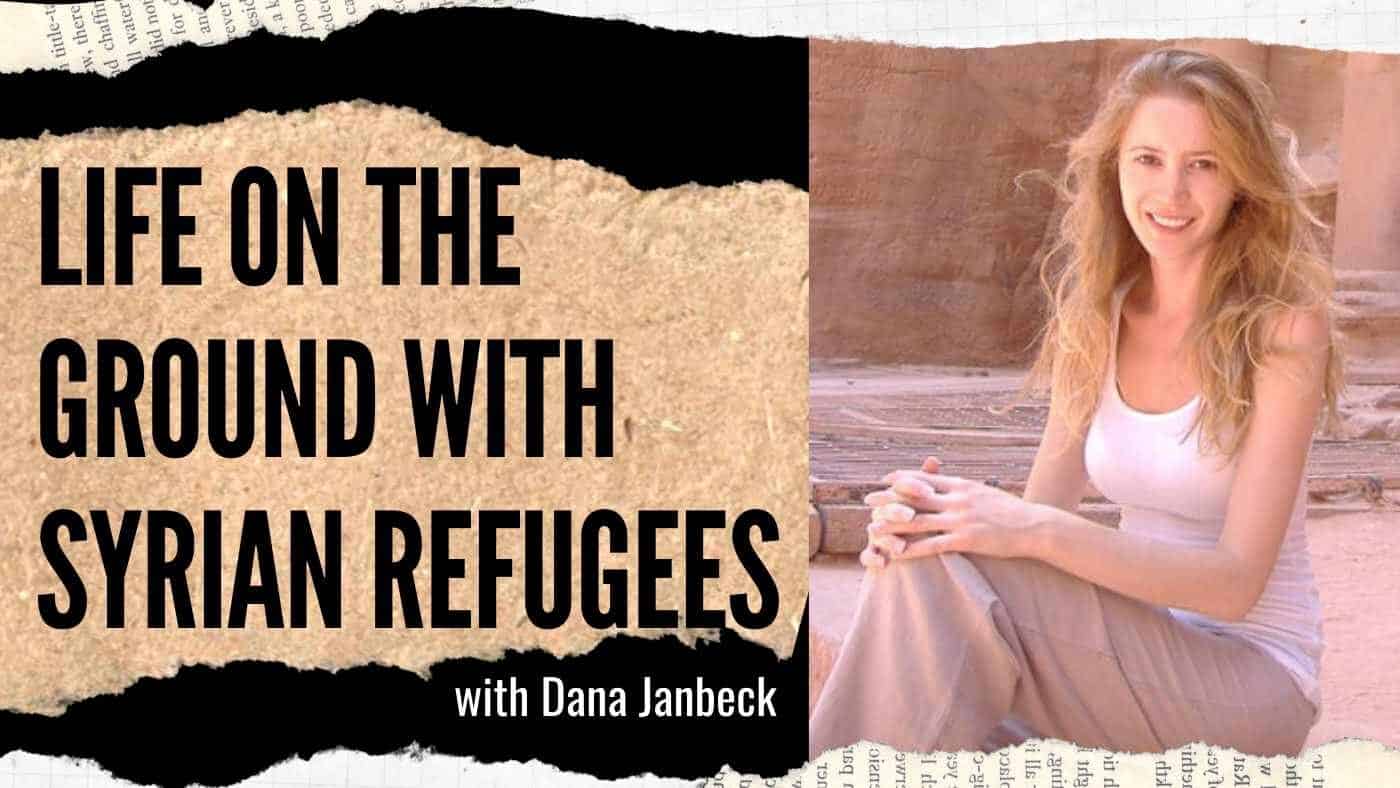
Our Guest Today: Dana Janbeck
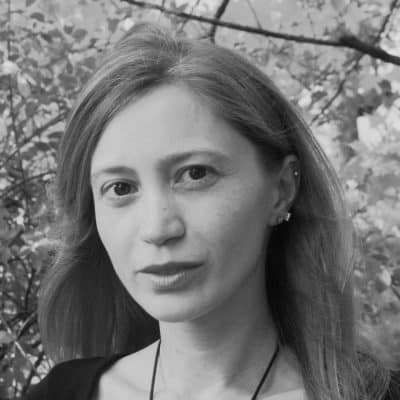
Dana Janbek is an associate professor of communication at Lasell College in Newton, Mass. Her research focuses on the use of information and communication technologies in the Middle East.
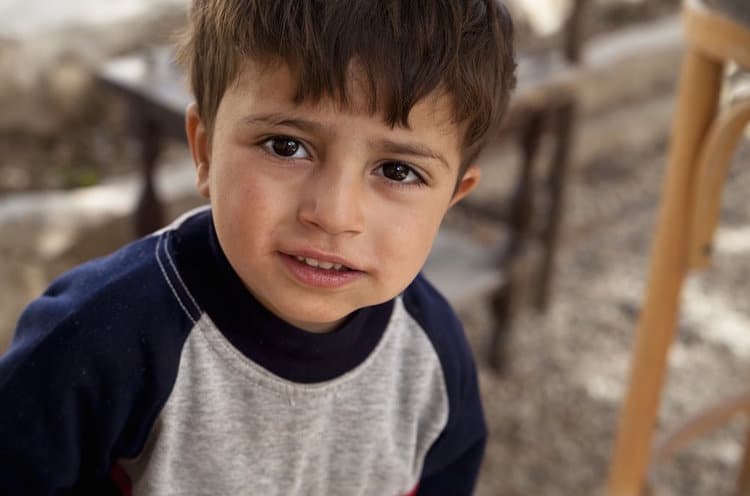
She has recently started her sabbatical and chosen to study the life of Syrian Refugees.
In fact, Dana has been doing this for years. Her sabbatical is just an excuse to spend even more time on the ground, moving forward with refugees and their families.
Not long ago, she started a campaign with her students at Lasell College and raised money to purchase crucial supplies for refugees and she hand delivered them to their homes.
Why does Dana, or anyone choose to work on such a challenging project during a heated political climate we live in today?
As a WBUR contributor, Dana wrote in one of her articles:
“They might think twice before buying a fresh tomato, but they will spend what meager sums they have to purchase multiple SIM cards…”
Who is this episode for? I hope – everyone. I knew very little about the Syrian refugee crisis which started in 2011, and the fact that it’s still going on today. Dana helped me understand the human side of the refugee stories. If you have read plenty of what’s been circulating in popular media, this conversation will offer you something rather different.
Dr. Janbek has given dozens of lectures and media interviews in the Northeast on her research. You can contact her by email at djanbek@lasell.edu
To read more about Dr. Janbek, visit this website. To read more about her research with Syrian refugees, download this article.
To read her op-eds, visit these websites:
- If you are worried about your safety, focus less on refugees and more on guns. E-International Relations.
- Canada’s audacious refugee response. E-International Relations.
- The Syrians are coming. The Hill.
Show Notes
- [06:00] Can you tell us a bit about your project coming up?
- [07:00] Why did this topic interest you so much?
- [08:00] Can you briefly tell us what the current situation is in Syria?
- [10:00] What was your first visit like?
- [12:00] What are some of the primary supplies refugee families need?
- [13:00] Is life as immigrants (outside of Syria) better or worse compared to how they lived in Syria?
- [15:00] Why are cellphones so important for them?
- [19:00] What are some of the things that you have learned from your experience that can help other refugees?
- [21:00] How does the immigration process work around the world?
- [25:00] What do your family and friends think about your project?
- [28:00] How can we teach children better and educate them about the refugee crisis?
- [32:00] When and why did you move to the US?
- [37:00] What are your interests outside of education and your project?
- [39:00] How can people help with the crisis nowadays through donations, organizations, etc.?
Favorite Quotes
- [09:00] ‘When there’s insecurity and instability in a specific town people are forced to leave and that’s what have lead millions of people to leave Syria to neighbor countries and around a million making it all the way to Europe’
- [12:00] The biggest challenge facing refugees is the lack of income, because depending on where they migrate, they usually don’t have access to stable jobs.
- [15:00] The people who have left have all left behind families and friends in Syria. The cellphone becomes their only connection with them. It’s really only through the phone that you can stay in touch with them.
- [20:00] The story of human experience is a story of resilience when it comes to Syrians refugees. I’ve meet people who really went to hell and back, people who have been tortured, who lost their fiances, their parents, brothers, sisters, children, and at the end of the day, they all have persevered. I think that speaks volumes to the ability of humans to move on despite the biggest challenges you can think about. Part of that is really about not loosing hope.
- [30:00] They also came here because they wanted to improve their lives and the lives of their family. And that’s a universal concept regardless of whether you are refugee or an immigrant, whether you are from Syria or from Ireland..
Transcript
Transcript
Fei Wu: Welcome to the Feisworld Podcast, engaging conversations that cross the boundaries between business, art and the digital world. When there is insecurity and instability in a specific town, people obviously are forced to leave, and that's what has led to. Millions of people leaving Syria to neighboring countries and around a million, making it all the way to Europe. The biggest, biggest, biggest challenge facing refugees is the lack of income, because depending on where refugees migrate to, usually they do not have access to stable. Jobs. The story of the human experience is, uh, a story. Of resilience when it comes to Syrian refugees. And I've met people who have really gone to hell and back. People who have been tortured, people who have lost their fiances, their parents who have lost brothers, sisters, children. And at the end of the day, they all have persevered. And I think it speaks volumes to the ability of humans to move on. The biggest challenges that you can think about. Welcome to another episode of the Face World Podcast. We are excited that you're here. My name is Fa w. I am the creator and host of the show, an attempt to connect with interesting people from around the world, regardless of their cultural backgrounds, religion, trades, and belief. It's so liberating for us. So instead of letting someone else decide that the group you should belong to, we've decided that for ourselves, if you are like us, you might enjoy the show and we love your feedback and sometimes we even ask you our listeners, who should we invite to the show Next? Today on Phases World, I invited Professor Dana Jambeck from LaSalle College in Newton, Massachusetts to join. When I saw her last at a party, she eagerly told me about her sabbatical. Congrats. I said, are you going to take a break? You certainly deserve it. She said to me, I am working on the project. In fact, I've been working on that for a while now. So glad I get to dedicate more time during my sabbatical. It's about the Syrian refugees and understanding their lives and stories better. You bet. I was intrigued on a few. Who will work on such a challenging project during a sabbatical. Dana does not just stay in her comfortable and save home here in Boston. She would rather travel to the places and meet with Syrian refugees to hear their stories and offer support. Not long ago, she started a campaign with her students at LaSalle College to raise a bunch of money and purchased some of the most needed supplies for refugees and hand delivered them to their. Who is this episode for? I hope everyone. I knew very little about the Syrian refugee crisis, where the fact that it's still going on today. Dana shared the human side of their stories from an observer's point of view, simply trying to understand and to help without judgment. If you have read plenty of what's been circulating in popular media, this conversation will offer you something completely d. So thank you for spending the time with us. Please consider subscribing to Face World, and it would just take a second on your iOS or Android Mobile phone news stories like this will be delivered to you in your sleep. Let's stay in touch. Please welcome Dana Jeck to the Phase World Podcast. Welcome Dana Jeck to Phase World Podcast. Yeah, I remember when I first met you at. At the party and happens to be a party where I remember all the other women were super dressed up. Everyone wore black. I rem I still have pictures from that party, and, and heels. And I, I don't know, I was, in terms of the stuff I was wearing, I was so off of that scene. Like I did not prepare myself. And I saw you. I remember just even at that party, you were so, you know, fresh faced and then you're wearing something comfortable like I did. And, uh, we started, we sparked the conversation about where. Teaching LaSalle College in Newton and immediately within five minutes we said there's something we can work. Together. So that's how I met. I'm so glad we get to do this. Uh, so, so am I. Um, since then, I mean there's, uh, we met up briefly at Cal Sans, uh, sort of party or uh, farewell party for the restaurant too. I know. Just down the street from you. Uh, uh, we love eating there, but. That's when I discovered a brand new project you're working on, and it's very exciting. Uh, so could you tell us a bit about this project and your sabbatical?
Dana Janbeck: Sure. Coming up. So about, um, almost four years ago, I started going to Jordan, which is where I'm originally from, and meeting with Syrian refugees to learn more about their stories and their experiences and their migration story from Syria to Jordan. Since then, I've been going back and forth again to meet with, um, refugees in both urban areas in Jordan and in refugee camps. And last year I started going to Germany to do the same thing and meet with Syrians who have made the treacherous journey out of Syria through Turkey and eventually made it to Europe.
Fei Wu: Wow. So you decided to, to work on this project and and why is that exactly? I, I just imagine. But instead of going on a trip like most people would for their sabbaticals, or this is even before the sabbatical, um, why did this topic interest you so much?
Dana Janbeck: So I actually read a media story about the condition of Syrian refugees in the Middle East, and it got me really, really interested in learning more. And, um, it drove me to want to see first. What their situation was like. So I recruited a couple of researchers, Melissa Wall from California State University, who's a communication professor, and Madeline Campbell, who works with Worcester State University in their urban studies department. Mm-hmm. and I worked with them to launch this research agenda, which. you know, taken a life of its own. But it was, um, a journalist who initially got me interested in the, in the story. And of course, the Syrian refugee crisis in the Middle East has been, uh, bubbling for many years before it reached Europe in, uh, 2015.
Fei Wu: Mm-hmm. . Wow. You know, because of this conversation, I feel like I had to educate myself on what is happening today, 2000, summer of 2017, in terms of where the refugees have migrated and. And something kind of hit me in a way that when this first happened in 2011, it feels like so long ago. Mm-hmm. and I realized I have personally lost track of what the purpose of the war is. Mm-hmm. , why haven't we resolved the issue or what is the latest, you know, has it gotten better or worse? I, I feel like a little bit lost in the, in the midst of all of. Um, you know, sort of political movements and news mm-hmm. and all that. I'm so glad you can kind of resurface this back.
Dana Janbeck: Yeah. I'm not sure anyone can tell you what the purpose of the war is. Even the Syrians themselves that I've met. Of course, there are many theories. Initially, it's. Started as a pro-government and anti-government protest and movement, and eventually a war. But at this point you have, uh, by some estimates, over a thousand smaller militia groups, uh, similar to isis, but of course they vary in size and in their, um, access to weapons. But you have numerous groups fighting against each other, so it's no longer the Syrian army. Free Syrian Army and isis. There are numerous other groups that are involved in the war, but the result is the same. When there is insecurity and instability in a specific town, people obviously are forced to leave and that's what has led to millions of people leaving Syria to neighboring countries and. Around the million, making it all the way to Europe.
Fei Wu: So you had a number of conversations at this point with the refugees and uh, do you remember what was the first visit like for you when you were first exposed to the experience? So
Dana Janbeck: the first, first visit was actually, Was actually distinct Syrians in urban areas in Jordan. Mm-hmm. the, through the international club at Lasel. The students had raised funds and they raised exactly $666 . Wow. And I took that money and, um, went to Jordan and purchased supplies. And through a local church, we donated these supplies to approximately, 10 families or so. So we went door to door to those 10 families and donated the supplies and really, to a degree, till today. I'm always super conscious of my interactions with, um, Syrians because I am. Extremely aware of my very, very privileged position of coming from the United States in that specific trip with donations, but usually without donations and, um, wanting to learn more about their background. And as with any interview, of course, you need to first establish a relationship with who you're going to interview. Mm-hmm. . What helps me usually is the fact that I speak Arabic, so it's much easier. Strike up a conversation and really explain to them the purpose of my visit. But I do remember it was, um, awkward to say the least because I wasn't sure what to expect. But they always, always made it easy for me because they were always super open and hospitable and did not. Question my intentions of what, why am I here? Why am I here? All the way from the United States?
Fei Wu: Mm. So some of the supplies that, uh, you've gotten, you know, what are, what are the things that people needed at the time, I guess, you know, with $700, roughly $666 per family. $66, what are some of the primary supplies that people. Looking for, I guess I have no idea. Yeah, sure.
Dana Janbeck: So the, the biggest, biggest, biggest challenge facing refugees is the lack of income in most cases, because depending on where refugees migrate to, usually they do not have access to stable. Jobs. So what we ended up purchasing with that money is, um, cleaning supplies and basic food supplies such as canned goods, rice, sugar, flour and so forth. So really basic, basic food items that they could use to cook, you know, any meal. Obviously they need to add. veggies and, and meat to it. Mm-hmm. and cleaning supplies because, um, especially for people who live in, obviously if you're a refugee, your chances are you're not living in a great area and the condition of the apartments is not great. Mm-hmm. . So it's important to keep your area clean, to avoid contracting any illnesses.
Fei Wu: I see. So as you kind of bounce around different locations and meeting different families, do you feel like whether they're in, they're still in Syria, where they've migrated to Jordan, where they're living in somewhere like Germany, are there sort of conditions, live conditions similar in some ways? Are there, are they happier, more stable in somewhere
Dana Janbeck: else? You know, it's um, like everything in life, advantages and disadvantages in any location you move to. So in Jordan, they have the advantage of speaking the language and at the end of the day, you're only few miles away. From the border in Syria, especially if you're living in refugee camps, um, in the northern part of the country. Mm-hmm. , you're literally a few miles away from your, um, country. Mm-hmm. , and generally speaking in Jordan, they may have an extended family network because millions of people have migrated out. The official number in Jordan is 600,000. The unofficial number is over a million, so chances are you have extended family. Mm-hmm. in Germany. Many people have, many people went there on their own in some cases without even their immediate family. So you have men who have migrated on their own, leaving behind wives and children in the hope of reunification, you know, using the legal system in Germany to be able to be reunified. The biggest challenge in Germany, Learning the language, it is extremely difficult, especially for Arabic speakers, cuz they've had, um, zero exposure to German growing up in, you know, in Syria you didn't grow up watching German television, right? So it's really difficult to learn the language. But on the plus side, you have access to resources. So the government does help with housing, it does help with a monthly stip. And so forth,
Fei Wu: maybe even language courses to
Dana Janbeck: They do. Absolutely. Wow. So I should mention, they do have what they call integration courses. So where. Teach you about the culture and they teach you the language, but of course, you are many miles away from home and from people you know and from family and friends.
Fei Wu: Wow. One of the articles that you wrote and I believe was originally published in 2014 and it hit me right away because as I'm reading a lot of these articles, whether it's related to Syria or you know, something else, I find myself feeling often. In, you know, the general news cuz it's always about the latest and the greatest and you don't really see the timeline. Mm-hmm. of an event anymore. Mm-hmm. and you don't relate to the people. So to me, what struck me with the way that you write, it's really coming from the refugees perspective. Mm-hmm. , this is about their life. Um, it's not about anything else but just a family and kind of put me in a situation. Uh, one of the things you said, you will think twice for them to buy the most basic supplies, including canned food, like some of the things that you talked about, but cell phones are, are so important. Like memory cards, cell phones, cell phone chips. Why do you think that is?
Dana Janbeck: I, I have to say, you put it really beautifully that at the end of the day, it is about the people and it is about the Syrians, regardless of the, of the politics. Mm-hmm. , the Syrians who have left have all left. Family and friends back in Syria, and really the cell phone becomes their only. Connection to those that they have left behind. In some cases, you might have an older grandmother who either refused to travel or is unable to travel, or other extended family members, cousins, aunts, uncles, and it's really only through the cell phone that you're able to. Stay in touch with them, make sure they're doing okay. Especially on days where you hear on the news that this, their specific town has been bombed. It's your connection to make sure that you are able to check on your property. Cuz in many cases people have left behind property and cars and, and so forth. Mm-hmm. . Um, so you can check on your belong. Through your family back in, uh, Syria. But it's also a way to connect with family who have migrated to other countries in many, there are many cases where even immediate family members have been, um, dispersed into multiple countries. So you have a sister in Turkey, uh, another brother in Lebanon, and you're living in Jordan, and your parents are in Syria. Mm-hmm. and obviously are gonna use your phone. To stay in touch with all these relatives and to also give advice to them. Should you move to Jordan? Should they move to Lebanon? Where is the best place? Is the route safe today? Can people leave Syria today? Because of course, the, the route from Syria to Jordan is not always clear and, um, and safe. Mm-hmm. . Um, so it's become every single family I met, even though they, in many cases, they don't have an income, they make it a point to keep their phone charged with few dollars. So that they can continue receiving and exchanging this type of news. Oh,
Fei Wu: I kind of put myself in a situation and imagine what it's like right. This phone I'm looking at right now is taken away from me. I don't think I can function even normally right here in Boston, Massachusetts, where resources are everywhere. Plus I have my credit card and my friends nearby, and I feel like at this point, if people are living that way, I mean, Psychology mental health. I mean, these things are not top of mind anymore. It's keeping yourself sane so you can function taking one day at a time. If it is a possibility for people who are experiencing such crisis in their lives right now, what are some of the things maybe you learn from your experience, which I cannot speak to, that you think might be helpful to.
Dana Janbeck: I think the, the story of the human experience is a story of resilience when it comes to Syrian refugees and. I've met people who have gone through, really gone to hell and back. People who have been tortured, people who have lost their fiances, their parents who have lost brothers, sisters, children. And at the end of the day, they all have persevered. And I think it speaks volumes to the ability of humans to move on despite the biggest challenges. You can think about, and I think part of that is, um, really not losing hope that you may have a brighter future. So today you may be living in a refugee camp and maybe you've already been living there for five years since the war started and you're not going to school. And let's say you are, you were a professional back in Syria, you are not currently working. Nevertheless, there is hope that your conditions may improve, that you may be able to find a job, uh, or you may be able to be resettled permanently into a third country like the United States. Mm-hmm. . And even though this happens to less than 1% of world refugees, the this resettlement to a third country on a permanent status, it's still a small possibility and there's always hope that your Condit. May improve.
Fei Wu: So there's one thing for a country to accept the refugees, um, to kind of help each other. Mm-hmm. . And the second part I'm curious, is for you to drop yourself back to where the trenches and where the crisis is. So what are your take on, you know, People and maybe some of the governments kind of trying to help the refugees. I'm sure it's not a walk in the park. It certainly comes with struggles and you need to have, I don't know how many countries out there, you know, in Europe or including United States, are even equipped or have the knowledge and the preparation and process in place to support the number of refugees. Do you have some insights of how that typically works?
Dana Janbeck: Generally speaking, countries like the United States can help in in two main ways and, and I'm here. I'm talking about helping refugees. Obviously the third way is helping end the crisis, which will stop the flow of refugees to begin with. But in terms of helping refugees who are already the millions of refugees who are already in the. Middle East region. The first is helping develop jobs for them locally. And a lot of these programs when they launch, they also have to take into consideration the low income residents of the host country. So for example, if you're gonna launch some sort of a program to help refugees in Jordan, you also have to keep in mind the low income residents and launch a similar program. Helps them as well, because otherwise you can imagine a scenario would develop where resources are being put into helping refugees and that will create resentment from the local, the core locals. Mm-hmm. , um, so often boils down to creating jobs because if you have jobs, you have income. If you have income, You can afford to transport your children to school. You can afford to buy your basic needs. You do not have to rely on donations if you have income. Mm-hmm. . So the creation of jobs is one thing. The second thing is, of course, helping resettle a larger number. Currently over, if you look over the last 10 years in the United States, the US has resettled on average 64,000 refugees a year into the country and of. Refugees who resettle in the us, they're resettled here on a permanent basis, which is a very different scenario than those in Germany who are there on a temporary basis. And those in Jordan who are also there on a temporary basis with the new administration. The number has been lowered to. 50,000. Um, the president sets the number of the, how many refugees will be resettled for this, uh, fiscal year. It was supposed to be 110,000 with the new administration has been cut to less than half at 50,000. And that's, you know, that's, that's significant because that's tens of thousands of lives. Would have whose lives would've been altered. Mm-hmm. by having the opportunity to resettle permanently here and now they don't have that opportunity. And that's huge. Yeah. That has a huge impact on, on those
Fei Wu: individuals. Yeah. And also I imagine if people heard. The prior number, you know, aware of the news or the trajectory of a possibility. I feel like I understand on a much shallow level. I remember when I was applying for green cards, yes, even the quota then yes, really nothing compared to the the refugee quota. Every number really counts and I. I remember seeing some of my friends, I instilled today that it's a lottery system. Mm-hmm. and, um, I've seen fiance's kind of parted ways. You know, I've seen people of a long term relationship have to, you know, try to survive a long, long distance relationship. Mm-hmm. , um, while both of them had jobs offered and accepted here in the States, but here is, um, we're talking about survival and you. So much about this, and I really enjoy this conversation because you are on the ground, you're. Someone who's speculating and you know, just staying in your, uh, apartment, reading the news and, you know, as you are learning about all of this, and I wonder how do your friends, like your, uh, students or you know, family maybe react to your choices in having kind of transporting yourself back to this area, you know, was it safety being one of them? What are some of the implications on you?
Dana Janbeck: Sure the, honestly, I've gotten nothing but support from friends, family, and colleagues. They have been extremely, extremely supportive. I can tell you at first, when I first started traveling back and forth, I wasn't really telling a lot of people that I was doing this, um, this work. I'm not sure actually what changed, but a couple of years ago I started telling everyone who would listen. And I think part of it is because I started giving public lectures. So I've given, um, literally dozens of public lectures on the Syrian refugee crisis, primarily in New England, but also, Places, which I enjoy a lot because it really helps educate the community about what it means to be a refugee today, in today's world. And at that point, and I'm sure you can relate to that, the other day when we ran into each other mm-hmm. , and we said, oh, how are you doing? You know, what's new? The first thing that came out of my mouth was probably, I've been doing this research on Syrian refugees. Yeah. And I found. As I tell people, including, you know, people I'm meeting for the first time, as I tell them, this is what I do for my work. I've always gotten a very, very positive reaction, an interested reaction. Oh, tell me more. And I use that as an opportunity to say few words about the plight of Syrians.
Fei Wu: Mm-hmm. . Absolutely. I think the projects that we're working. To listeners who are out there doing big and small things, I think never feel pressured where people even feel ashamed to say, I don't wanna talk about myself. I don't wanna put myself on this pedestal. I think especially for women, I, I find this to be the case where I'm, I'm not a hundred percent there yet. I don't know, maybe I know about 70, 80% and we should talk about it because in this conversation and even before this interview, Personally, I have learned so much about, you know, this crisis and it's not isolated to Syria alone. It's impacting everybody. And sometimes I think what if something happens to us? You know us, meaning anybody anywhere in the world, and that's an opportunity. For the humankind to really come together and help one another. Because on a level, when I think about the Olympics, I remember growing up right every, every four years and then the Winter Olympics, it's all about our country. It's about the flag that we look at. It's a, we're rivalries and especially people performing very well at the top, you know, Russia, United States, China, and we're educated that way. And on a smaller scale, as a little kid, I. is between the, the classrooms where within the same grade in China we have. 12 classes, each has about 50 students. It's all about competition. Right. And within each classroom we have to compete with one another. Mm-hmm. on a, sort of, sounds a little grandiose, but how do we condition ourselves as adults today? Is it a little too late? What do you think little kids maybe where school children should learn about? You know, I, I think many kids do know at a high level what's happening. But how do we teach children in general to. Help each other and learn from one another and to offer and to nurture this
Dana Janbeck: environment. You know, as an educator, obviously I'm biased and I think everything can happen through education, formal and informal education. Mm-hmm. the, I think you said something really important that today, perhaps we're talking about the Syrian refugee crisis, but Syrian, the 5 million Syrian refugees are part of a larger circle. About 21 million refugees from around the world, and the 21 million refugees are part of a larger circle of approximately 60 million people who are displaced. So it's not about Syrian refugees per se, it's about anyone who can be displaced because of conditions that are completely out of their control, usually, of course, political conditions and. Country of origin and that instability in theory could happen to any country. Mm-hmm. , yesterday I went to the Prudential Center, I believe it's called the Skywalk Observatory. They have this beautiful series of displays about immigration, and it talks about the history of immigration to Boston, and of course the focus is on Irish Americans and Italian Americans, but it's also part of a larger story. and that is mentioned in the exhibit that you have people from all these nationalities, from every, almost every country in the world who today reside in Boston. And the history of Boston is, um, a history of immigration. Mm-hmm. , and of course, it's easy to think of the ancestors of many in the area who have originally come from Europe and the 18 hundreds, 19 hundreds. They also came here because they were looking to better their conditions and the lives of their families. And that concept of bettering improving your life and your condition is a universal concept regardless of whether you're called a refugee or an immigrant. Whether you are from Syria or you're from Ireland. Mm-hmm. that same desire to improve your situation. Is universal, and I believe that was the purpose of the exhibit, to show that from our origins, we've all had many of the people who. Migrated to Boston have had that desire, and I hope that people who see that exhibit can see the connection between the desire of their ancestors and the desire of Syrians and other, um, refugees
Fei Wu: today. That, that's a great idea.
Dana Janbeck: Oh,
Fei Wu: Speaking, which both you and I are, you know, immigrant to the United States. Yes. You just remind, reminded me that. Somehow the, the phase world podcast, the natural progression. Now, as of today, we have a kind of a travel slash immigration category because it's been so popular. Mm-hmm. , um, I really don't think I purposely sought out exclusively immigrants, but. As I'm talking to people, not just people immigrated to the US but also people who are now permanently living outside of the US are immigrants to those countries as well. Mm-hmm. . Um, so let's talk about you for a second. I actually have no idea when you move and why you moved to the United States.
Dana Janbeck: Sure. So both my parents had studied abroad. My mother had studied in Egypt, uh, when she went to college, and my father studied in Turkey. So since childhood, I've always had this fantasy in my head that I too will travel abroad. To go to college and I did. So when I was 17, I moved to the United States. I moved to Louisville, Kentucky, and the reason I moved to Louisville is because I got a scholarship to study at the university I went to, which is Spalding University, and I ended up doing a communication degree. As an undergraduate there, and then I moved to um, university of Louisville around the corner and I did my master's in international in political science with emphasis on international relations. And during those years I actually worked. With immigrants and refugees. I worked for an organization that existed at the time called World Communities of Louisville, and it was an umbrella organization for all the immigrant organizations in the city. So I got to learn, uh, from a relatively early age, the story of immigration to the United States. And after that, I moved to Washington, DC and I worked at the Embassy of Jordan for a few years. And after that I moved to the University of Miami, Florida. And I did my PhD in communication, and that's where I did my research on a completely different topic. I did my research on terrorism and the use of the internet by terrorist groups, and I ended up publishing a co-authored book on the topic. And publishing a bunch of research articles, and again, giving a lot of public lectures on that topic. Oh, after Miami, of course, I moved to Boston to work specifically at LaSalle College, and about four years ago I started, I shifted research agendas and I started looking at Syrian refugees. Wow. For
Fei Wu: you, I feel like the, the path has been, you know, kind of linear in a way that I, when you were 17, did you see. Kind of, did you see yourself where you are today? Uh, or when you were in college studying
Dana Janbeck: communication? I actually started as a computer science major doing coding. Oh. And then ended up We have too much overlap. I was
Fei Wu: also 17 when I got here. Yeah.
Dana Janbeck: But I ended up switching. No, I think, I think I definitely did not see myself doing this. And that's fine. And that's what I tell my students all the time. It's okay not to know what you wanna. But it's not okay not to be interested and curious about things around you and what's happening politically. And I always tell them the same thing. So as long as you're curious, you will eventually figure out what it is. That you wanna do. Yeah. But you have to be curious.
Fei Wu: I can agree with that more. I have always had huge respect for educators and I think you can relate to that coming from your background because in China where I grew up for 17 years, you know, I was, um, I would say that's majority of my education, but the higher education in college, which I think is the most important, did occur in the United States. Mm-hmm. , we have teachers day, September. Um, we knew that as first graders because it's almost like a birthday for all the teachers and you decorate the school and you bow to them. I mean, that's a very, very special day for as long as I could remember. The reason for me to, to mention that is because I listen very carefully and especially the teachers I respect much. Um, At Frederick Academy during my last year of high school and or storm parents, I remember Mr. And Mrs. Haw said, when you get to college, I mean, this is not just to me personally, said, if you walk by a sign on the college campus, a sign, a message board, just. Stop. Stop yourself and take a look. Maybe you'll see something that interests you. And I remember when I was at Northeastern, every corner I turned, whether it was an official message from the school where I don't know what it was, where a student club, I always stopped and gave myself an opportunity back then, didn't have a smartphone, but I would write it down, you know, actually on a piece of paper and I would go check it out. Granted, a lot of the things weren't really for me. If it wasn't for that opportunity, I don't think I'll have the majority of the networks I have today, including the people, you know, more than a hundred of them I've spoken with on the podcast. I'm very happy that, you know, I listened to someone, uh, an educator just like you, and I actually took their advice many, many years later. I realized my life in general is much better because of that. Mm-hmm. ,
Dana Janbeck: that is great advice to stop and read. That is great advice that your professors give.
Fei Wu: So do you find that most of your friends here in Boston are immigrants like yourself? How do the conversations go sometimes and like, what is your network like?
Dana Janbeck: Sure. I think we have my, I say we, because now my husband and I, you know, his friends are my friends and, and vice versa. The, it's a. It's a mix. I did study with a lot of international students at Spalding, so a lot of my friends from that era of my life are international, but not all. And in Boston we have a mix. We have friends who are mm-hmm. from Thailand and we have friends who are. , born and raised in Brookline, so,
Fei Wu: yeah. Yeah. What are some of your interests outside of being an educator and your, and your Syrian, uh,
Dana Janbeck: project? Sure. My interests are, in terms of hobbies, I love hiking and I love swimming. So the summer is the perfect season and I love, uh, painting. My husband got me a painting class couple of years ago and I started taking classes and, and it's, um, oil on canvas painting and I just absolutely love it. It's super relaxing. It's
Fei Wu: relaxing. It's part of, um, very meditative and make me think about. That when I interviewed BJ Miller, he did mention art is a way for people with severe illness, um, even often towards the end of their lives, to be a very meditative, relaxing, you know, our work either to look at or to enjoy, to perform on. That makes me think about that. Art workshops could be a really. , uh, meditative exercise too, potentially for Syrian, for refugees of any kind and to kind of connect with their spirit and soul.
Dana Janbeck: Yeah. I can tell you that in refugee camps, usually they do have centers that offer different types of workshops. Mm-hmm. , and those are generally speaking, short term workshops and whether, you know, some teach skills like computer skills, other may teach. Art related skills, but they are short term. They provide a small escape from the everyday boredom. But of course, you know, they do provide that escape. And
Fei Wu: people, especially, I feel like we live in a little bit of a bubble, Boston Brook kind, Newton, and where people generally are very interested in not just politics, but international politics and just not always clear. How to help and it feels so distanced and mm-hmm. , Syria, or you know, other crisis around the world, even within the United States. You know, donation is one of them, but it feels kind of these days that seems to be the simplest measure. You know, pull my credit card, I am done. What are some of the other ways. So
Dana Janbeck: actually Massachusetts resettles a number of refugees in the state every year. There are many organizations that work to make this happen, and it really takes a village to resettle refugees. The country, us, the country usually provides support. For the first few months and after that, refugees are expected to be independent, have learned English with a job, and, um, you know, self-sufficient and pay back the airline tickets that brought them to the United States. So, needless to say, they can, uh, take all the support that they. Get mm-hmm. . So a lot of times when organizations like Catholic Charities works with refugees, HIAs works with refugees, um, there is an organization called R I A C. There are many local organizations that work with refugees. They all obviously can take advantage of, um, Donations because they always need donations to help them continue the programs that they are running. Whether the programs are esl, English as a second language, or the programs are programs that help people find jobs, but also people can help by donating their time so they can donate their time by. Teaching English as a second language, they can donate their time by helping refugees navigate the mbta. Mm-hmm. . There are numerous ways that people can either work directly or indirectly with refugees. And the best way to do it and figure out what you can do is to really connect with one of those organizations that I just mentioned, or any of the others that I didn't mention. Mm-hmm. and see how can they best. Volunteers.
Fei Wu: Wow. Yeah. That's a great official way. Instead of trying to contact, you know, individuals with, I think with an organization, there's already a structure in place and you kind of see the bigger picture too, to see where are some of the critical areas that, uh, need assistance immediately.
Dana Janbeck: Yeah. Most organization would ask you to fill out a form, and in the form it tell, it talks about your availability and what your skill set is, and they try to match you. You know, quote, unquote job that would, um, utilize these skills. Mm-hmm. to me, talking about Syrian refugees is a window to talk about world refugees and to also, it's also a window to talk about the resettlement process into the United States. And I'll, I'll just mention a couple of things that, from giving a lot of lectures, I realized that there are a lot of misconceptions about, you know, what it means to be a refugee and so forth There. 60 million displaced people around the world. 21 million of them fit the legal definition of being a refugee. Um, the others may be people who are internally displaced, so people who are still living in their country, but they're living outside of their city because their city is, um, the country obviously is a tour and their specific city is one of the cities that has seen a lot of. Fatalities. There are also people who are asylum seekers, so people who may come to the United States as um, students or as tourists. And once they enter the US they are, they ask for asylum. But anyhow, long story short, the 21 million refugees around the world, only 1% of them ever gets resettled. Into a third country. And there are people, I've met people actually in the US who came here as refugees, but they have lived in refugee camps for as long as 50 and 20 years before they were able to resettle to the us. So I say this because it's important to know that resettlement does not happen over. They by many, um, by many. Um, according to many sources, the US resettlement process is the longest resettlement process around the world. It takes about two years to resettle any refugee from the day the process starts. But again, that doesn't mean. That a person had just become a refugee. They may have been a refugee for 15 years already, but then the process may start, let's say at year 15 by year 17. Mm-hmm. , they are able to, um, resettle. I think, um, you know, this is, we may have differing perspectives. Mm-hmm. about. What should their immigration system look like and how many refugees we should let in and so forth. But what I would really encourage people who have, um, who wanna form an educated opinion about refugees as. Speak to refugees directly. And by that I mean former refugees who are now resettled permanently in the US. And ask them about what their experience is like, what family members they have back home, how long did it take them to resettle, what challenges they have faced since arriving here. Um, and so forth. And by that I really mean. I'm encouraging people to talk directly to refugees so they too can form an educated opinion and really understand the wholesome picture. Uh,
Fei Wu: I too agree that talking to people is the absolute best way to understand really what's, what's going through their minds and trying not to rush that convers. There's something about warming up to someone, a conversation, and you get so much out of that experience and you get that natural high. Thank you so much, Dana. Thank
Dana Janbeck: you.
Fei Wu: Hope you enjoy this episode of the Phase World Podcast. My team and I will be thrilled if you choose to write us a review on it. It really helps you get the word out. Simply search for a phase world podcast in your iTunes app under podcast. Click on readings and reviews tab and then write a review. The star review takes seconds or a brief text review will be fantastic too. Thank you on behalf of me and my team from Phase World.
Photo Credit
Feature photo attribution creativecommon.org/licenses/by/2.0. Photo attribution by PhotoForClass.com

Written by
Fei WuFei Wu is the founder and CEO of Feisworld Media, a Massachusetts-based digital media company helping brands get discovered by people and by AI. An Adobe Global Ambassador and brand partner to ElevenLabs, Synthesia, and 50+ other tech and AI companies, she hosts the Feisworld Podcast (400+ episodes, 500K+ downloads — guests have included Seth Godin, Steve Wozniak, Chris Voss, and Arianna Huffington) and co-created the documentary Feisworld: Live Your Art on Amazon Prime. Fei writes for CNET, Lifehacker, and PCMag, and her work has been featured in Forbes, Harvard Business Review, and WIRED. She has been publishing on the internet since 2014 — long before AI discoverability had a name.
View all posts by Fei Wu→Stay updated
Weekly insights on content, AI, and digital media.
Keep Reading
Related Articles
Joanne Lipman on Mentors, Untapped Talent and Why Women Should Stop Waiting to Be Perfect
Marc Randolph on Curiosity, Messy Starts and Why “Nobody Knows Anything”