David Delmar: Hacking the Opportunity Gap With Resilient Coders (#58)
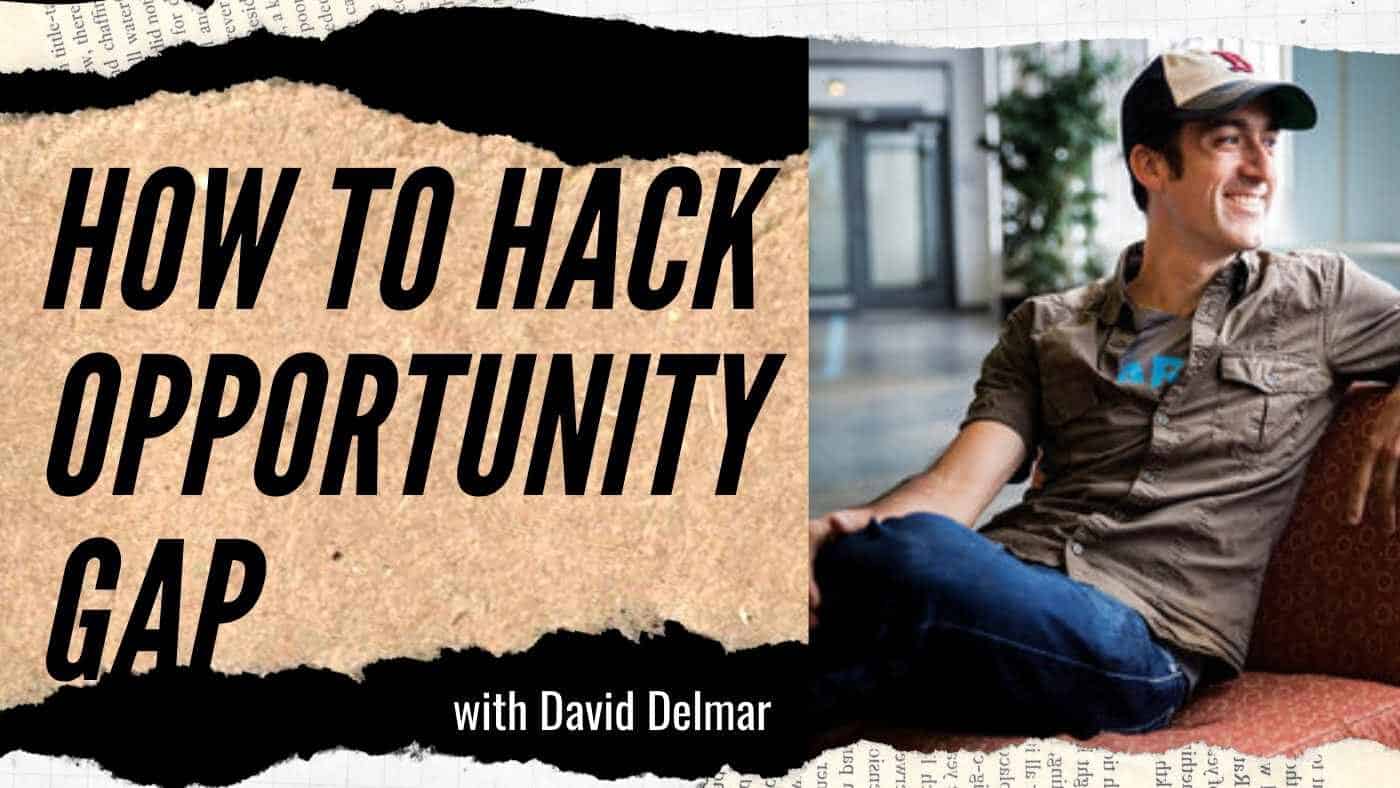
Our Guest Today: David Delmar
David Delmar (@delmarsenties) is the Founder and Executive Director at Resilient Coders (@resilientcoders), an organization dedicated to teaching young people from traditionally underserved communities how to code.

Resilient Coders’ team do this as a way of aligning students with a lucrative and meaningful career path. “It’s a multi-tiered program that funnels students from learning HTML after school, through our downtown “Coworking” sessions, and ultimately, hourly employment. Higher performers participate in Resilient Lab, a web design and development shop with real clients. “
“Life Is Defined by Your Hurdles.”
In this 30-min conversation, David shares his origin stories from leading a team of designers and coders at PayPal in Boston, to creating the Resilient Coders, a startup that may or may not work. He talks about “the importance of getting very comfortable with failures and fiercely pursuing your passions”.
When David was five, he volunteered with his mom at a local orphanage in Mexico. “It reframed the purpose of my life.” He told me.
That story was one of my favorite moments on Feisworld Podcast.
David and his team offer many formats, time availabilities, long and short term engagements for YOU to get involved. (Please note: you do not have to be a developer!) Contact David at david@resilientcoders.org directly.
Please let us know passions you have fiercely pursued in the past / are still pursuing via comments below.
David Speaks at Tedxsomerville
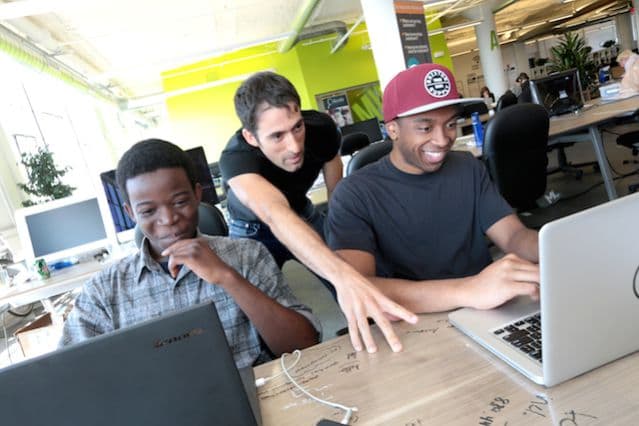
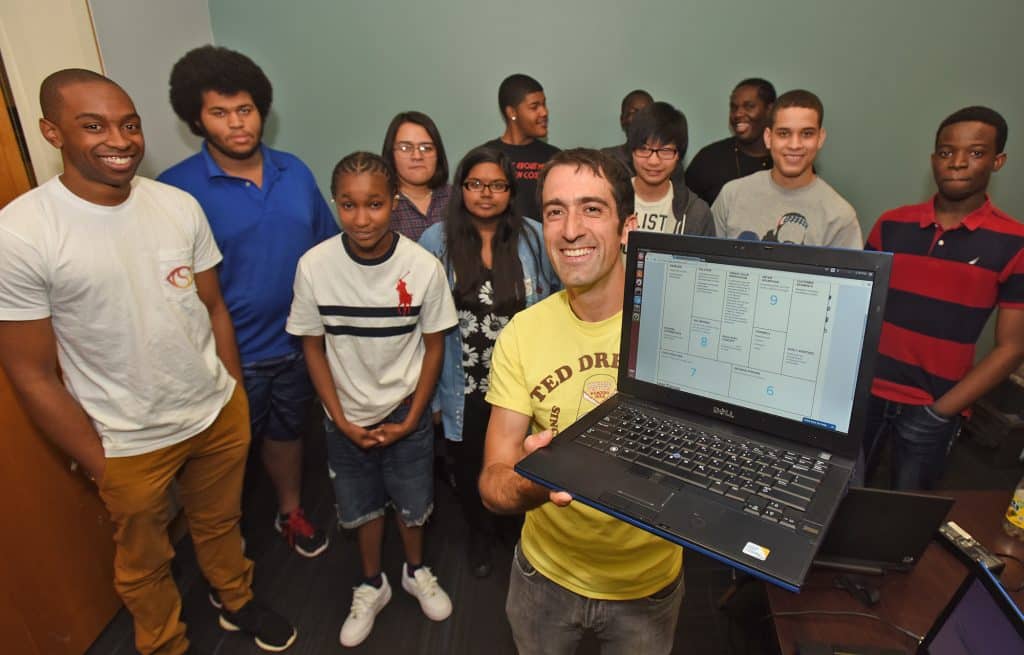
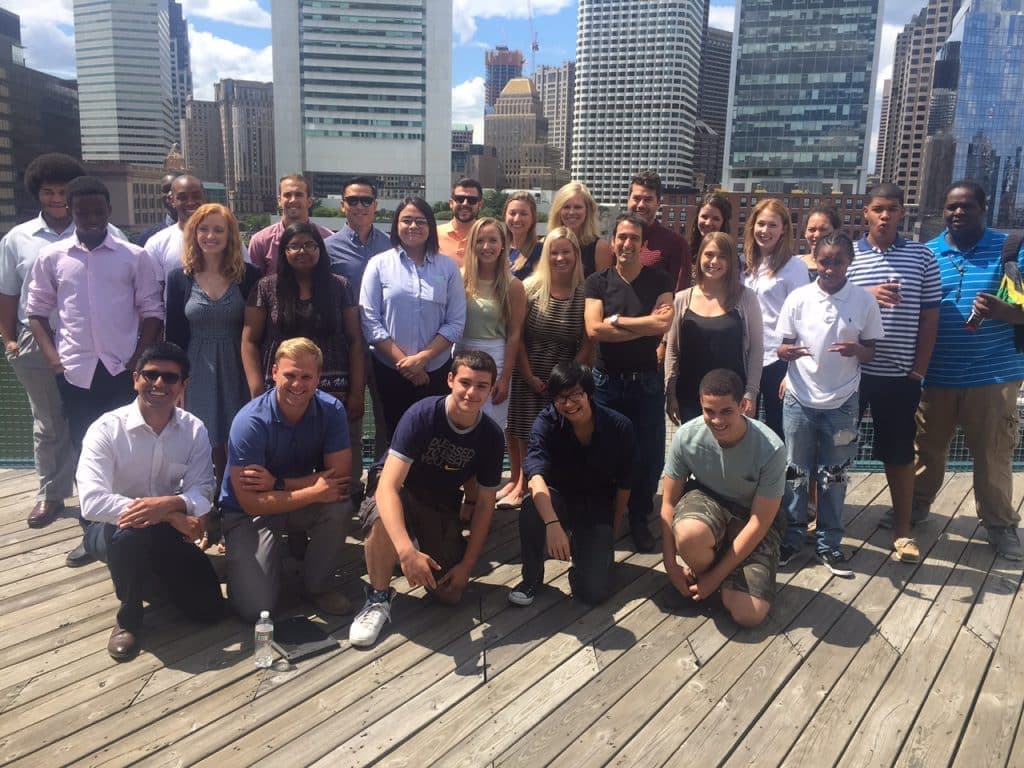
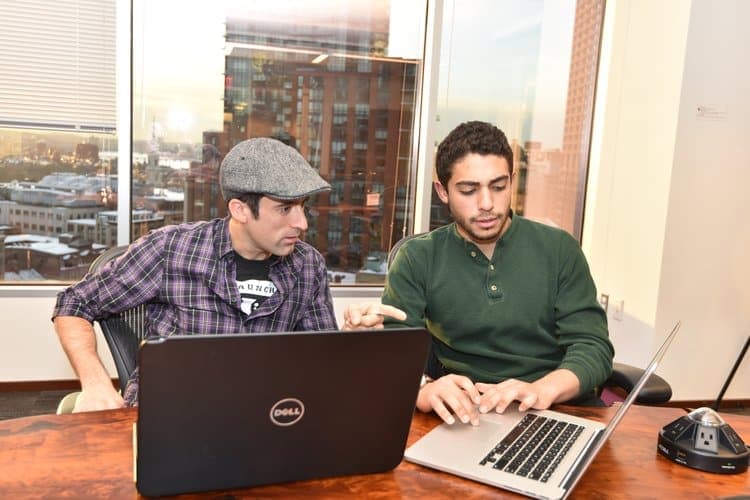
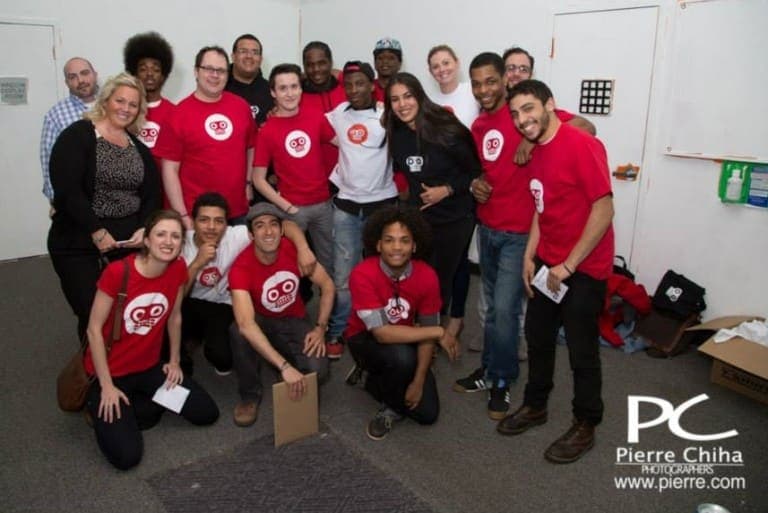
Resilient Coders in Action!
Transcript
Transcript
Fei Wu: Welcome to the Phase World Podcast, engaging conversations that cross the boundaries between business, art and the digital world. Hi guys. It's Faye from pH's World. I am the host of a podcast dedicated to sung and unsung heroes, women, men, and children who carry these amazing stories and voices you may have never heard of. So please connect with me via social media. It's the same handle that is phase. F E I S W O R L d. I feel incredibly privileged and and really lucky to be working with a small team of very talented people. And today I would like to give them a shout out. They are Adam Leer, who is my associate producer and an incredible.net developer, Sarah Wine coop social media strategist who has given me so many ideas in the past and recently joined face. Max Barry, a content and marketing grew. Who can only think of things I never could. So let's get into it. Today on Phase World, you will meet David Delmar, founder and executive director at Resilient Coders. Resilient Coders is an organization dedicated to teaching young people who are from traditionally underserved communities how to code. They do this as a way of aligning them with a lucrative and meaningful career. Their hiring performers participate in Resilient Lab, a web design and development shop with real clients. David and this team offer many ways, time slots, long and short-term engagements for you to get involved. Just a note, you don't have to be a developer to provide value, so, Go ahead and listen to this podcast, and you'll understand a lot more than Resilient Coders does, but also why and how they do it.
David Delmar: They say, I have a problem to solve. If I have this, if I, if I have the capacity to solve it, I'm gonna solve it. And that's it. That's as far as it goes. So Resilient Coders started up as an effort to present sort of a third rail, right? It's not necessarily a school or street. Too many young people see the world as either school or street. And there's a third option here. There's, there's a real genuine meritocracy. And I know that there are folks out there who laugh at the notion that technology can be a meritocracy. And I would agree that it's not accessible to everybody. So that's what we aim to do. Um, you have to come up with a question. Sitting there, coming up with an answer to a preexisting question is easy. Mm-hmm. , you have to come up with a question. So, alright, so what am I gonna build today? I know you tell me. I'm here for the stuff that you can't Google.
Fei Wu: David shares his origin stories from working at PayPal in Boston, leading a team of designers and coders to now resilient coders, which is creating something that may or may not work. He talks about the importance of getting very comfortable with failures. I asked David about what he was like as a child. He shared a story of how the purpose of his life was reframed for him at age five. That was probably one of my favorite moments on phase world, and also the amazing story of his grandfather who was a bullfighter. A lawyer and an actor, and please let us know how you enjoy this episode and perhaps what you have fiercely pursued in the past or are still pursuing. Without further ado, please welcome David Delmar from Resilient Coders. So I'm here with David, uh Delmar from Resilient Code. And we're here at 21 Dry Dock Avenue and this is the Mass Challenge space. It's unbelievable. I'm so glad we decided to record the interview here, but welcome, uh, to Face World Podcast.
David Delmar: Thank you so much for having me. That's really exciting. .
Fei Wu: What you're doing is phenomenal. And what I was getting coffee, I didn't want to give this part away, which is I used to be a programmer. I studied computer science at Northeastern. That's awesome. Uh, you were affiliated with Northeastern too, for some. , why is that? I, I think I saw you.
David Delmar: Uh, so we have, um, the guy who runs Resilient Lab, which is our dev shop mm-hmm. is, is an organization student. Wow. Oh,
Fei Wu: like I remember. Yeah. Yeah. Under the, the list of people. Yep. And if you don't mind, I would like you to kind of share a story with my audience about what you do, who you are, and what Resilient Coders is all about.
David Delmar: Sure. So I, before, um, launching Resilient Coders, I was at, uh, PayPal here in Boston. Uh, and I loved it. It was a great job. It was a lot of fun. I had a fantastic team. Um, and I was once sent to, um, to a tech conference, which was fantastic. It was a, it was a big festival. It was a lot of fun. I went down there and I had this sort of unusual experience of watching all these. , like the, the best and the brightest minds. Right? Startups get up and pitch. Mm-hmm. , uh, but they were pitch. solutions, really elegant solutions to non problems, problems that are not problems. , you know, here's another, here's another app that you can use to stalk someone.
Fei Wu: Solution. Search of a problem. Yeah. Deal.
David Delmar: Exactly. Like these are sort of programmers who would build something and then be like, all right, like, let's see if we can find a problem to solve that we can, that we can sort of shov this into. Yeah. and I was a little bit disillusioned. I have this, this notion of technology is having this role in society, uh, starting with the creation of fire, right? The invention of the wheel, um, that it just improves the quality of life for everyone. That's my vision of technology going back, uh, thousands of years. Uh, and I was a little bit disillusioned with my own generation's contributions to technology and what that means. , I'm at this festival, this, this tech conference listening to these folks. And then I start doing this little, uh, experiment with myself, which is that I started counting, uh, people of color, um, that I happen to see at this, at this festival. Um, and I grew up, so I grew up in a Spanish speaking household, and I'm, I'm listening for folks speaking Spanish. Um, and I counted about 14. Okay. Among thousands of folks who were at this festival, um, they were visibly, notably absent. Um, and I started digging into it. I figured see that that's an actual problem here. Are these the best and the brightest? Talking, trying to find problems to solve and they don't see this problem that is staring us in the face. Mm-hmm. . Mm-hmm. . And so I started digging into the problem. And, um, at the same time I was, I was volunteering with. Couple of other organizations. Uh, and through those organizations I started meeting, um, young people, um, some of whom were, uh, incarcerated, uh, or court involved in some capacity. Uh, and I started realizing about some of these kids, they were really smart. And I don't mean like patronizing. Oh, you know, they're very smart. I mean, like, no, really, they're really smart. Like we would've identified them as a smart kid in our school. Mm-hmm. . Uh, and what's happening is that they're, , they're using those things. They're using the resourcefulness, uh, their ingenuity, um, their creativity to solve the problems that are most immediately at hand, right? So if you, if you have to, if you have to cross gang turf to get to school, if you, uh, if your friend has been killed, if your sibling is hungry, if your mother cannot hold down a job, you are not gonna care about the quadratic equation in school that day. You can either spend that following weekend writing a report on the Warsaw Act, or you can move a bag from here to there and help solve that problem. Or you can participate in a gang and, and, and feel that sort of sense of fraternity, feel like you're doing something. And that's what's in, that's what ends up happening. And so what I discovered, which to me was a total game changer, is that these young people, they don't offend despite their intell. They offend because of their intellect. It happens so often that we say, but they are so smart. But they are so smart and they made this mistake. That's the thing is that they don't see it as a mistake at the time. Mm-hmm. too often they say, I have a problem to solve. If I have this, if I have, if I have the capacity to solve it, I'm gonna solve it, then that's it. That's as far as it goes. And so resilient code has started up as an effort to present sort of a third rail, right? It's not necessarily a school or street. Too many young people see the world as either school or street. And there's a third option here. There's there's a real genuine meritocracy. And I know that there are folks out there who laugh at the notion that technology can be a meritocracy. And I would agree that it's not accessible to everybody. So that's what we aim. take this trade cuz it is a trade. We treat it as such and turn it into the meritocracy that it should be. Mm-hmm. ,
Fei Wu: when I first encountered your company, resilient Coders, I went to the website and I started looking at examples that you showcase some of the student work and I realized that. I had the, I had the preconception of somehow the feelings, like, no way. I mean, these kids did this. Coming from a technology background, I know my training and all the luxury I had in my life for me to be who I am today. And I look at these kids. Some of 'em are so young, I mean like, don't know. Who is, I mean, someone look high school, I mean college age, I realize, but I almost feel like I saw possibly people younger, some kids younger than college age. Am I, am I right? What is the age range?
David Delmar: So we have two programs. Uh, we have a program that is, uh, a high school program, uh, for young people who are, uh, typically between the ages of 15 and 18. I see. Um, And then we have another program for, um, for older folks. Actually, that's what's taking place, um, here that just just wrapped up, um, a minute ago. It's our bootcamp and that's for, uh, your older folks. So they're 18 to 24.
Fei Wu: Oh. So what is a qualification for someone listening to this podcast and thinking, wow, I'm a, you know, I'm also an underprivileged person, or from a family, or I know someone. How do they qualify to be part of your program? How do they.
David Delmar: you know, that's something we keep going back and forth on, and at the moment there's no formal application. I just, I just want to meet them. Um, really the, the one criteria that we try to, uh, um, I guess enforce is too strong a word. The, the one criteria that we look for is grit. Mm-hmm. .
Fei Wu: What is it? Grid. Grit. Grit. Okay. Grit.
David Delmar: Mm-hmm. . Is this someone who's gonna sit through the extremely unglamorous task of debugging? Mm-hmm. to find that stupid semicolon?
Fei Wu: How do you find out if that person has
David Delmar: the resilience? Well, that's, that's hard to do. So we don't really, we don't really filter much out at the very beginning. What we do is that we get in front of the kids and we say, this is, this is the, this is the deal. This is gonna be uncomfortable. Um, you are gonna be overwhelmed. Um, this is gonna be hard and I am not gonna guide you through it. I don't have time to drag you through a curriculum. That's not what this is about. This is about making tools available to you, making our network work of mentors available to you. Um, and you know what? After that, they self-select. Um, we have a, we have a pretty high drop off rate, um, for young people after their, after their, like first week or so with us. Mm-hmm. . Um, and that's to the. Mm-hmm. , um, not this sort of style of learning is not for everybody, but is it
Fei Wu: also fair to assume that once they gain the exposure to such a program, now they know that it exists? People like you exist, um, and then there's a chance for 'em to come back and I see that a lot coming from a martial arts background. You know, it's hard work. Like, yeah, PE kids hate that, you know, they've done enough in school, but I see so many of them coming back, choosing when they come back for the second time. Many of them stay for years. Personally, I stay for. Uh, so, so do you think that's, that's fair to assume. Do you see some of the kids return after saying, forget this by the way, you can swear on my, on my podcast too. Forgot to mention that. Right on. Screw this .
David Delmar: Um, yeah, it's, you know, it's a question of timing. Um, if you, if you reach a kid when he is at an age where he's not in a place where he is willing to sort of put his, put his heart and soul into it, I respect that. I'm, I've. Um, and I would love for them to sort of come back if and when they're at that point. And you know what? They don't need to come back to us. . Mm-hmm. , they can decide that they wanna explore it again and do it on their own if they want to. Um, there are plenty of, uh, free online resources that, uh, that folks can explore now if they want. Get back into coding. Mm-hmm. . Um, and that's sort of what I've said to people who either aren't right for this program right now, or they would love to do it, but they don't have time because of whatever, X, Y, z, they're, they're, they're athletes. They can't come after school. Um, whatever. Mm-hmm. , what
Fei Wu: are some of the most common. resistance that you've seen or, or legitimate, you know, challenges that people are experiencing as a result of not returning or continuing the program. And I guess on the flip side of that, what are some of the courage and surprises you've seen to say, wow, dude, I didn't realize, or girl, girlfriend, I didn't think you could stick around for this, but you
David Delmar: did. Yeah. Um, I, so I'm gonna, I'm gonna make some assumptions around why people split. Um, because I, I don't do exit. Yeah. Um, and, uh, it, it doesn't surprise me at all when people split because it's, it's a very, it's, it's a style of learning that is in athema to the way in which we are raised in this country. Um, right now we are used to, someone gives you a problem and then you sit there and you figure it out and you hand it in and it's graded. Um, we are explicitly not that, um, you have to come up with a question sitting there, coming up with an answer to a preexisting question. Mm-hmm. , you have to come up with a question. So, alright, so what am I gonna build today? I know you tell me. I'm here for the stuff that you can't Google, but if you want, if you want to build, um, a website, I have, I have a student here who's building, his mother just opened a restaurant, so he's building a website for his mother's restaurant. Um, and if he has a question about. Or how do I pull in, uh, an API from Yelp or whatever that I can help you with? Yeah, let's figure that out. Mm-hmm. . But if the question is, so what should I do today? I can't, I can't help you. Mm-hmm. , I can make suggestions, I can point you the direction of tons of things that I think are cool. What are some of the
Fei Wu: questions that you heard kids kind of brainstorming and say, you know what, David? I figure it out today. My problem's going to be this, and I know you have sort. Study hall or like kind of a collaboration approach where you, you're there for that, but you're not, you know, pointing at them to say, do this, do that. What are some of the interesting problems that you've heard so far, possibly today?
David Delmar: Uh, I actually, so I heard one of my favorite ideas. Um, I was, I was sworn to secrecy, um, before I before you build on this project. Um, so I feel like I, I feel like I could speak to it. Um, but we had one student that had the, uh, brilliant. Of, uh, doing something You're familiar with a, you're familiar with drizzly? Sounds familiar. So Drizzly is a local startup that delivers alcohol. Okay. So you can call up and say, I want, you know, I wanna get a whatever, six pack Yeah. To deliver. Um, I had a young man propose bringing that model, uh, to medical marijuana, And you know what I, when he brought. I laughed. His peers laughed and he did not, because to him, it's a question of safety. Yeah. He says, my neighborhood could be so much more, more, my neighborhood could be much safer if we could just, drug trafficking were just not a thing. Yeah. Right. If I could, if people that I know could just sort of safely get access to pot, we're talking just about pot here. Mm-hmm. . Mm-hmm. . Then they don't have to deal with. The sort of folks involved in the drug trade. Mm-hmm. , uh, here in. . Uh, so Randall was a question of safety, which I thought was really interesting, a really interesting perspective. Yeah. And
Fei Wu: then we're talking about a young man or woman in this case trying to make a neighborhood better and safer. Exactly. And that's intriguing to me because that question I've never thought before. One, I've, you know, if this sounds embarrassing here in this country, I actually not tried pot and it's part of me, so almost interested. Um, now I'm older and I'm very responsible. But on the flip side, that question never occurred to me. you know, I live in Newton chest hill. I'm very comfortable, you know, I had never thought about safety as an issue to me. Yeah. Where I live. Um, and when I went to school, you know, Northeastern for a period of time was not very safe. And that whole uh, area downtown crossing where I work now is not very safe. And what I do is I. I can just run away and escape from it after work. But I feel like you are interacting with people every day. Um, based on what I've read. You know, the gentleman, uh, I know his name is spelled like Micah, but it's, it's actually said to Macel Mackay. Yes. Mackay. Why is it different, by the way? Why is the pronunciation different? I don't know. Okay. So the first thing I saw that video, which I'm going to include on my, um, blog post and just kind of embed it. Cool. And first thing he. You know, when I was young, I believe he was 15 or even younger, as family went homeless. Yeah. And I, you know, the resentment that, that he had for his family and, and there's something he said it was, I can't even paraphrase. It was so powerful about, you know, basically tough lessons in life. We really shape you into who you are. And
David Delmar: that's, he shows life is defined by, life is defined by hurdles. Yes. That's
Fei Wu: what he said. I, I love that line. I love that. Yeah. Again, I said, well, how did he come up with such sayings? I only hear from people like Tony Robinson, like Seth Godden. Yeah. And it, it's really, it's really quite interesting the, the way I observe myself as I'm preparing for this interview. I try to remember the first time I heard about resilient coders and, and think about the emotions and the sensations that I felt, and I remember doing that at work and then again at home and sending the link to friends and. I, I realized every time I saw the website, I smiled and I, I don't remember when was the last time for me to see something and smile. Especially if it's a website. You're like, okay, how do I get to the stuff like store locator, you know, get through this task. I just, I smile because I start thinking about someone like yourself and we're the same age, and, and I, I finally took the leap to do something I want to do, but there, you already been running the company for a year or. So I really want to hear about you as well, where you grew up and how long have you been thinking about this? And I feel like this, even before that tech conference, you, you went to tell, tell me about who, who you were as like a little boy. Like, you know, growing up maybe when you were 10. Cuz people believe that the dreams you have when you're 10 years old, Very important in, into how you, how you grow up, how you
David Delmar: shape yourself. Yeah. Um, well, I've never been asked that before. That's a really good one. . Um, yeah. It, it has a lot to do with my, my family. Um, I grew up, um, my, my parents were fantastic people are fantastic people. Um, they, uh, they immigrated here. My family's in Mexico, um, and I grew up with them. I had, they were fantastic parents. I went to a wonderful school. and, but social justice was always very important, particularly to my mother. Um, and she, we were, we were visiting family in Mexico one Christmas, um, and I was probably being a little shit . Um, and she said, you know what we're gonna do? We're gonna bring, we're gonna bring cake to an orphanage because that's a thing that still exists in Mexico in a way that doesn't exist. Like an actual huge, like orphanage. Mm-hmm. . Um, and I did, I must have been, I must have been five or six. Uh, and I remember bringing a cake that was small enough for me to hold, for me to carry. Uh, and I walked into a room the size of the cafeteria that I, at my school, and it was, With kids banging their forks on the table saying, cake, cake, cake. That's so cool. They were so pumped about the cake. And I remember thinking, like looking down at my hands and realizing that I didn't have anywhere nearly enough cake for all the kids. And that was my immediate lesson. And so many things. It was my immediate lesson. And, uh, the fact that some people have and some people have not. Um, the fact. Geez, like 80, 90% of those kids are not gonna have any of the cake, even if we just give them the tiniest of slices. And it made me realize that for me to complain about getting the wrong toy for Christmas, was ridiculous. It was ridiculous and absurd. And it sort of reframed for me, that's even a young age. Yeah. Uh, the fact that there's, there's nothing, there's nothing that goes into the success that I have had in my life. Nothing outside of. . Mm-hmm. , I was lucky enough, born into a family, lucky enough to be born into a certain family. Warren Buffet calls it the, uh, what does he call it? The ovarian lottery. . I love this. I won, I won the ovarian lottery. I was just born to the right people at the right time. In the right place. Yeah. Um, and um, so growing up, uh, I was, I was a kid who was deeply skeptical of school, deeply skeptical. Uh, any sort of figure of authority. I didn't like to be told what to do and how to do it and why. Um, and, uh, but the thing around me is that I, the thing is that I would look around me and I, I would see people going through school and then they went from school to. employment and I, all my, my friends' parents, they could, they could support them. Um, everybody grew up okay. They went through school, they left, and so they got to where they needed to go. And so it became clear to me that whether I like it or not, school was still a vehicle through which I could get from point A to point B. Mm-hmm. , I thought it was stupid. I thought it was broken. I thought it was ridiculous, but I understood the. Of get of smiling and nodding and getting the piece of paper at the end of the story. Mm-hmm. . Um, and what I started realizing is that not everybody has the experience of growing up in a community where everybody is employed. There are so many people here in Boston that look around them at their, at their community, and they see traditional education failing to deliver over and over and over again. And so these kids think I can sit here for 12 years. submit to an authority structure that I don't believe in. And at the end of it, maybe, maybe I'll get to work security and unload Pepsi trucks. And that's it. Now, when that becomes the narrative of your life, why the hell? Why the hell would you invest your time and your energy in school? You might go, you might show up every. , but you're not gonna sit there and then really invest your energy in something that you see as completely futile. Mm-hmm. . And so when I started meeting these kids, one of the things that I realized off the bat is that we are so incredibly similar in some ways, and so incredibly dissimilar in others. We're incredibly dissimilar in the fact that I grew up not ever having to fear for my life. Mm-hmm. , I grew up never having to worry about the police. Um, or whether or not I was in danger or whether or not I was being profiled. Um, and, um, but then again, I also had that skepticism of school and I used to disagree and argue with my teachers. Um, and, and so I get
Fei Wu: it. I, I agree with the, with the education gap you were describing, and because of, because of knowing you and knowing what you do. just found myself spending so much time thinking about this, thinking about the people around me, many of them, much younger, you know, family members who are 18, 19, 20 years old, and. you know, I start asking these questions because these kids', parents are doctors and lawyers, and they know so many more words than I do. I, I originally grew in Beijing and I literally turned to this 18 year old for like these fabulous vocabularies and I realize he's always going to be ahead, um, compared to, you know, underprivileged kids. And then from there, not just how you were raised, but also from there, your parents have these relat. Your parents' friends can introduce you, can kind of springboard you. And then, so there's one thing on your website that really shocked me yesterday was like, oh, that's, that basically encapsulate like what I'm trying to say, which you're, I don't have the website open, but you're really talking about hacking the gap, how to close the gap. How do you say it again? Hacking the
David Delmar: opportunity gap. Right? So, They used to call it, they used to call it the achievement gap. Mm-hmm. . Um, but the thing is about the achievement gap is that it's, it's, it's a little bit, um, it's a little bit myopic mm-hmm. , right? It's, there's an achievement gap. Yes. But there's an achievement gap because there's an opportunity gap. Um, and what people don't realize is that there are, there are real factors that go into that stuff. Uh, it's not something that we can just get up and, and sort of solve. Mm-hmm. But we can sort of chip away at it. Um, I'm, I use the word hack, um, quite a bit. I use it with my students. Um, I call them our hackers. Uh, and the reason I do that is not because they're gonna sort of bust a firewall and steal your money . Um,
Fei Wu: or they could,
David Delmar: yeah. Um, uh, to me the word hacker is, is someone who is able to find an unconventional solution to an obstacle. Um, so in the digital realm, that means that you're able to sort of get Yeah. Get around that firewall. Right. But it could also just mean finding some other backdoor solution that somebody else hasn't thought of. Mm-hmm. . Um, and I think that's, that's what we try to, uh, that's what we really, that's sort of the culture that we try to ferment. Uh, actually this first week of bootcamp, we didn't do anything technical and we spent that entire week just thinking about rethinking how we think about things. Um, and it's, it's just, it's, it's all about like, let's see if we can find another solution to this. Um, that's kind of what, what the pedagogy is built on. Mm-hmm. ,
Fei Wu: I can help recognizing the fact that the people in the room with me by looking at you. You know, not only similarly in a age where we're slu the older millennials, but we're apparently still millennials. Um, you know, come from really good family. You went to be, you, uh, I know you're awarded as a, you know, very innovative alumni contributed to society. And hearing you talk, that passion has never died down. You know, I feel like if not only it just picked up and you were a design lead in PayPal, and I wanna pause on the things that you did actually before you started the company, which clearly set this sort of the groundwork. And there's a lot that goes into, uh, establishing this. How have, of course you thought about this, but how do you manage your own expectation and, and people around you, your family or friends, where it is such a traditional path of going through companies like PayPal, Arnold, I don't know, Microsoft, and then you started this thing that may or may not work. And, and not only that, it's almost like pouring your soul out and the Seth coat always says, you know, here, I made this. It might not be for you, it might not work. There's no guarantee. How, how do you deal with all that?
David Delmar: Uh, by being extremely comfortable with failure, um, I have failed so many times at so many things. I was supposed to be so many other things. Um, and, uh, I think it's those failures that, um, that make you who you are. Um, in a very real sense, one of the most interesting people I have ever known, um, was my grandfather who started off his career, uh, as a bull. Huh. And then he was, uh, then he was a lawyer, uh, and then he was an actor. Yeah. Is he still with us? No, he's not with us anymore, but, um, but he was all these different things and he just, he just sort of fearlessly tried the thing he was passionate about. Um, and I know that's sort of a very Disney thing to say that hey, you know, follow your passion. Uh, you just have to be really comfortable with failure. Um, you know, I, I failed a ton of stuff. I've definitely launched, I, I've launched a startup in the past that. ? Um, uh, yeah, I was supposed to be an artist. Uh, I was supposed to do comic books, Uhhuh . Uh, my plan was to go to school. Uh, I went to art school, the BU College of Fine Arts. Uh, and I was gonna be a comic book, uh, illustrator. That was my passion. Um,
Fei Wu: I wanted to be that too, by the way. That's awesome. That digital producer. So maybe, I don't know, maybe we'll work something outs. That's awesome. .
David Delmar: Um, And there just, there are a bunch of things that I, that I tried that I wanted to be, uh, for like for a minute. I was an art critic. Uh, for like, yeah, for real. Uh, I wanted, did it for a while. I wanted be a writer and I wrote two horrible novels that no one shall ever see again. They're so bad. . Um, I played in a band, we did the whole touring thing, I suppose, to be a rock star that didn't quite pan out. A what instrument? Athlete guitar. Nice. Nice. Um, and. The, the, we we're also really open about this, this notion of failure and this culture of failure and accepting failure with our students because it has its resonance on a personal level. Um, I have, I have failed at many things professionally. Um, but I, I certainly can't, um, my, my students have seen a, a different level of failure or disappointment. Um, one that I can't really touch. Um, but it's, it's one that we still try to kind of leverage and tap. Uh, if only to say, look, failure is just a part of what makes you as a person.
Fei Wu: Okay? Now I really have to go to one, one of your workshops, and because I'm and I, I just love how easily accessible you, you make your classes, workshops to be. And I especially like the, the email you wrote, which I did not tweet, compare . And I am like, please, please don't go crazy on social media. It, it's really good. It's. N you know, sharing an idea and spreading it out. And the way I I find out about you is through, I believe Todd Buffum, who is a digital producer at Arnold, and he sent an email out to digital producer, UX designers and developers. And it just give my audience an idea of some of the things you're teaching. And then I almost felt like I'm unqualified, you know, like to, to teach students. I really felt that way, but I really wanna, now, I don't feel that way anymore. I feel like I could learn something. Pick something up and really, you know, I was thinking I'll be too old to be a student, but, um, really love to explore some, uh, opportunities there. One of the things I, I want this podcast to serve you as well, um, for people to listen to and just, I think all of it's just missing this kind of conversation. And one thing, it's very obvious if you invite your students in, provide a physical space for them to learn not only from you but also from each other. and the fact that, that they can be in the same room together is, is phenomenal because they share, many of them potentially share the same struggles. Mm-hmm. . Um, and so I, I noticed on your website that you're hiring a program director and do you wanna mention, uh, a few things about that? Or has that role been. Um,
David Delmar: uh, so the role hasn't been, actually, the role has actually kind of morph a little bit. Um, the role turned into development manager. Yeah. Um, because I, I just think that I'm more of a program person, the I of a fundraising person. Mm-hmm. , and so we're looking for development manager. Um, the position has not been filled. We do have a, we do have a few, uh, candidates that were, um mm-hmm. pursuing, um, but it hasn't been filled. And if people want to be, um, join the Resilient team, they should definitely email me. David. Resilient Coders.
Fei Wu: Great. And to mention that, that you're making it super accessible for people to get involved on so many levels, uh, including people who are not technical, who are not developers or designers per se. Um, so this is, this has has been absolutely wonderful and I feel so uplifted and I feel like a different person leaving this building for some reason. And, you know, coming all the way here, it's. Oh, thank you. Are there anything that, like the tip of your tongue, like I haven't asked, but there's something you really wanna share? Um, with me or with my audience?
David Delmar: Yeah, so there are, uh, there are a few things that we're aggressively pursuing at the moment, one of which is mentors. Um, so we have instructors, uh, who, who are coming and they're giving um, like 90 minute workshops. Uh, some people bring a PowerPoint presentation. It's sort of, it's very. Structured like that. Um, but even, even more powerful than that is men, like one on one mentorship. So we also have people come in and function sort of as a ta mm-hmm. , um, to help our students make sure that they know, uh, that they're going the right path. Um, now we're also, we're just rolling out a program that's new to us, which is, uh, one on one mentorship. So think like Big brother, big Sister, but with a technical. . Um, so if, if that, if you're listening to this and it sounds like you could be, um, a mentor, uh, to one of these young people, um, that would be fantastic. Please reach out. And, um, and we're also, um, we have resilient lab. Resilient labs are web development shop, uh, and employees are higher performing students. Um, so if you also, if you want some work done, if you need a dev shop, I hope you will think of us. I'm gonna make the plug once. Check out resilient code, resilient coders org slash lab. Uh, there's some information about how that works, um, and how we're able to, uh, maintain a standard of professional quality, even though it's being worked on by, uh, young people who are new to the field. Mm-hmm. , um, we even disclose sort of payment structure. We're very transparent on how that all works. Mm-hmm. ,
Fei Wu: and if we just nerd out for a second, because I'm a, I'm a producer myself, and this is kind of my line of work as. Uh, I saw that, I know that your current website is custom built. So in addition to that, um, do you guys do any, you know, what are some of the computer languages or that you feel like your students kind of excel at and the
David Delmar: CMSs? You know, what's funny about the, the site being custom built? Um, that's, that's just me. I just like, I just like doing it, uh, . Um, so I, I understand I get this a lot from my developer friends. I know that I could save a lot of time using Bootstrap and whatever. Mm-hmm. . Um, but I wanted to just, Um, there's a little bit of a, a cheesy like parallax thing going on that, on the, on that homepage Yeah. And desktop. Um, and so I've actually thrown it out to my students, um, that, uh, there's sort of like an ongoing challenge, uh, which is figure out how that works. Mm-hmm. , uh, and replicate it. Don't just, don't just replicate it by ripping the code, but be able to describe why it works. Um, and no one's answered it yet, but we'll, we'll get there. Interesting. Um, they're also, I think they're not, I haven't, I have to remind them of it. Um, cuz that was like months ago that I made that announcement. Mm. Um, in terms of languages, we're very much tied to what's, um, what the needs of the market are. Mm-hmm. . Um, so we do, everyone does a core with html, css and JavaScript. Uh, and then from there, um, people kind of go down the paths that they parti that they want to explore. We try to make this as self-guided as possible. Um, so we've had, we've had, uh, one student explore a. Um, we've had a handful of students explore kind of backend stuff. Um, most of them kind of stay within the JavaScript realm, which is fine with me cuz JavaScript is like, obviously like a critical thing to be awesome at. Yeah. Uh, and it's nothing, it's something that you, you can't really, you don't really master, or at least not within the first few years of, of your mm-hmm. professional career. Mm-hmm. . Mm-hmm. . Hmm. We do do a little bit of, a little bit of ruby, um, some rails. Um, but that's just, that's just a taste. Mm-hmm. , uh, my objective with our students is not mastery, but rather self-sufficiency. Uh, so what that means is I, I don't have any expectation that, that, uh, our students will leave the program and that there's gonna be sort of crush it mm-hmm. , uh, in rails. Mm-hmm. , my expectation is that, um, as they're leaving the program, they have that spark where they can go home and keep working and, and just keep. Just keep pushing themselves through the process of getting better at this particular trade. Mm-hmm. , um, just like those of us who are self taught all did, are you
Fei Wu: open to letting employers sort of extract some of the students and say, especially the high performers and for them to land the, the job
David Delmar: somewhere else? Yes. Okay. Uh, so we are also launching, uh, an internship program. Cool. Um, we are launching an internship program. This is new to us, um, but we're really excited about it. Um, and so folks who, um, folks who are considering employing some of our students should reach out to me. Again, that's david@recentlyatcoders.org. Um, there are a lot of folks in the city who are really excited about this opportunity. Um, the mayor himself is really excited about this opportunity. Uh, and actually is, is, uh, um, well, he's, he just wants to be as involved as possible, uh, in making that happen. However he can.
Fei Wu: That's great. And. I was just one suggestion if there's a possibility for you. Drag a few students. Uh, maybe just go to local agencies, which for you is only a five minute ride to Arnold, to Mullen and tos. If they could even just do like a lunch on learn, you know, something super casual with some food involved, yeah, I think it'll be, will be great. Personally, I'm such a traveler, you just tell me an address. I'm in over where I'm there. I notice how difficult. I think it's a culture thing that for people to go to another place, even it's really close. There's always a lot of last minute excuses. Uh, if you could drop yourself at certain locations where there are already people there, there are a lot of connections and money, I think that would be an interesting approach as well. That's a great idea. Yeah. I'm into. Awesome. Thank you so much for your time. You're so easy to talk to, and thank you, Fay. Likewise. To listen to more episodes of the Face World Podcast, please subscribe on iTunes where visit face world.com. That is F E I S W O R L D, where you can find show notes, links, other tools and resource. You can also follow me on Twitter at Face World. Until next time, thanks for listening. Yeah.

Written by
Fei WuFei Wu is the founder and CEO of Feisworld Media, a Massachusetts-based digital media company helping brands get discovered by people and by AI. An Adobe Global Ambassador and brand partner to ElevenLabs, Synthesia, and 50+ other tech and AI companies, she hosts the Feisworld Podcast (400+ episodes, 500K+ downloads — guests have included Seth Godin, Steve Wozniak, Chris Voss, and Arianna Huffington) and co-created the documentary Feisworld: Live Your Art on Amazon Prime. Fei writes for CNET, Lifehacker, and PCMag, and her work has been featured in Forbes, Harvard Business Review, and WIRED. She has been publishing on the internet since 2014 — long before AI discoverability had a name.
View all posts by Fei Wu→Stay updated
Weekly insights on content, AI, and digital media.
Keep Reading
Related Articles
Joanne Lipman on Mentors, Untapped Talent and Why Women Should Stop Waiting to Be Perfect
Marc Randolph on Curiosity, Messy Starts and Why “Nobody Knows Anything”