Jaron Lukas (@JaronLukasXYZ): From serial entrepreneur to founding @yumwoof (#338)
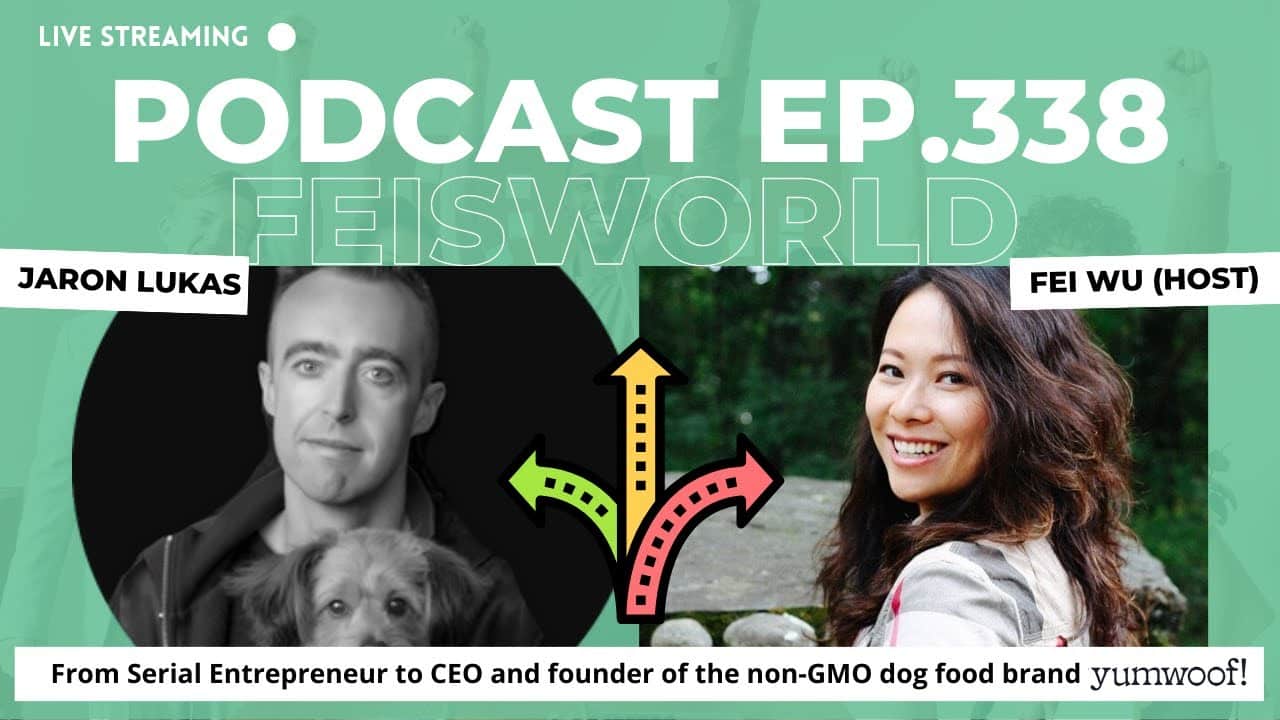
Our guest today: Jaron Lukas
Jaron Lukas (@JaronLukasXYZ) is CEO and founder of the non-GMO dog food brand yumwoof! Their premium air-dried food is personalized for every dog’s breed—driven by data analytics and 250 clinical studies. Previously, Jaron founded VC-backed Coinsetter, which he sold in 2016. He also worked for J.P. Morgan and graduated from Rice University on the Presidents Honor Roll. Besides dog nutrition, he’s passionate about history, biochemistry and daily meditation.
Check out yumwoof! and get the most delicious and healthiest food for your dog.
Currently yumwoof! is offering a special 50% off your 7-day trial offer.
Watch Our Interview
Transcript
Transcript
Fei Wu: Fei from Feisworld Media and coming to you on a Friday afternoon at 3:00 PM and I, you know, I was actually having a, a kind of a very tired day earlier, but I'm so energized to be here with Jaren Lucas, uh, let me briefly introduce you, jar. I'm gonna dive right into today's livestream. Sounds good. All right, so Jaren is the c e o and founder of the non-GMO dog food brand yumwoof! And I absolutely love it. I actually tested the food, the treats on my favorite neighborhood dog, Ben, uh, English Bulldog, and he just lost his mine. He loved it so much, and their premium air drive food is personalized for every dog's breed, driven by data analytics and 250 clinical studies. Previously Jaren founded VC backed Coin Setter, which he sold in 2016. He also worked for JP Morgan and graduated from Rice University on the president's honor role. Besides dog nutrition, he's passionate about history, biochemistry, and daily meditation. So I highly recommend you check out Yam Wolf and I included a link below, so definitely check it out. Currently, you guys are offering a special 50% off of your seven day trial offer, so I think it's gonna be absolutely love. Bye dog, moms, dads owners in general. So welcome Jerem. So glad you're here.
Jaron Lukas: Yeah, thanks for the plug. We're very proud about what we've created at Yum Wolff.
Fei Wu: I am very intrigued as well. I'm so thrilled that you reach out to me. So there's so many different career paths that you've already taken, but we're gonna start with the most recent one, which is Yum. Wolff and I, I don't own a dog as you know, but I love, love dogs. Many neighborhood dogs are really best friends with me. So please tell me about your origin story of starting this brand. Like what triggered this coming from investment banking, you know, ETT and and all that, to a dog food company.
Jaron Lukas: You know, long story short, I was very long crypto in the 2018 boom and crash. Mm, very long ICO tokens. And so after that, that was the, the, the difference between, uh, where I was like in the spring versus where I was financially in the fall that year was so drastic that it was a major hit to my, my ego. And so I basically spent the next year in meditation and uh, came out on the other side of that. I mean, meditation's still a very important, my l part of my life. I meditate 40, 45 minutes a day and sometimes more. And in fact, that's why I was doing right before this. And you know, I think that as I went through that experience and I changed personally so much, I came out on the other side really saying I wanted to do something that was gonna have a positive, tangible impact on the world. And so everything I had done before that was really in tech. Like, uh, I had started one of the first venture capital backed Bitcoin exchanges in 2012, which I sold to Kraken in 2016. Still one of the largest out there today. Wow. Um, but I, I was feeling at that point in just doing tech, even though I think tech's cool. I mean like this whole, uh, AI era that we live in is like super exciting. But, uh, I guess I just wasn't feeling like, uh, tech was having a tangible impact on people's lives. Like in the end, we eat food every day and that is, to me, one of the most foundational things that there is. And so I came out on the other side of this, uh, with a few business principles that I wanted to go by. One was, I want to do something in an industry that's been here. Forever always gonna be here. Mm-hmm. And, and you know, when you look at the state of dog food today, dog nutrition, it's so terrible. Like you, all you have to do is walk the aisles of pet code just to see all those bags of dry kibble, uh, which are super inflammatory for our dogs. And I don't mean that in the way of like a woowoo type of inflammatory thing. Uh, I mean it in like dry kibble is made with crappy ingredients and then cooked in a way that oxidizes all the fats, turning them into free radicals. And that's why there is no such thing as a non-inflammatory dry kibble. And so, you know, I feel like I've made it my personal mission to, uh, really focus on something I care about. Mm-hmm. Uh, that is nutrition for humans and dogs. But dogs have been with us for 30,000 years. They're such an important part of humans' lives. They're really like a deep source of happiness for a lot of us. And so it's my goal to help dogs live longer, and that's really what we're doing at Yum Wolf.
Fei Wu: Wow. I love that message because to be honest, as soon as I, I, I've grown to love dogs at, at a very young age. I grew up in Beijing, China, and as you can imagine, like we live, most of us live in the condo still do today. So there are not a lot of big dogs and, and occasionally run into some big ones and I'm so excited and, you know, there's not a lot of plays really for them to run around. So, uh, I then realized that. Many dogs don't really live a very long life, and especially the, the breeds that we were so excited about, and I discover like English bulldogs don't live, um, mountain dogs, for instance, they live on average like eight to 10 years. It's just like, I can't even fathom like what it's like to, to lose, uh, a dog like that. And then I real realize, By talking to owners that there are a lot of, they have a lot of health issues. And, um, coming from someone who also had a lot of like, digestive issues and things like that, as I mentioned in my email, I, I just find this to be so necessary and something not to be overlooked. And with that said, I'm excited just even looking, the package number one, the design is so cute and everything, but also I noticed you cook, you cook, like you personally cook everything like 170 degrees Fahrenheit, so the nutrition's not lost. So could you maybe talk about like the, the baking and the making process. Like, I literally imagine like jarin start baking in, in your own kitchen and figuring that out. Like what was the beginning
Jaron Lukas: like? Yeah, and, and, uh, we, we, we cook it at very low temperatures through this air drying process that helps, as you mentioned, uh, retain the nutrients. This is a really big concern for pet parents. I almost think people care more about it for their dog than themselves. A lot of times, uh, you know, people get. Very serious about the way that our dog's, uh, food is cooked. And one is like, we want to make sure that like all the B vitamins are still inside. Like mm-hmm. The longer and the higher temperature. You cook something, a lot of these, uh, vitamins and minerals break down and so, mm-hmm. You know, that's one thing is like, it's a very expensive cooking process, but, um, I, I've been kind of obsessive in this company about optimizing our product probably way too much, um mm-hmm. That has made our product pretty expensive. It's about the same price as every other online brand at maybe slightly cheaper than a couple of the fresh food brands, but mm-hmm. You know, We've been very focused on like little things like no peas, no legumes, no rice, no potato. These like really common inflammatory ingredients. And then the biggest one that I care a lot about, and I find a lot of customers connecting with is no seed oils. Mm-hmm. Seed oils is something we're hearing a lot about lately, and it's really a big topic in my book, the Canine Coco Omega effect, uh, in the, in the book. The, yes. There it is. Thank you so much. I, I, man, I'm so glad to have it out. Um, it was a lot of work. Oh,
Fei Wu: we need to talk about that portion too, for sure.
Jaron Lukas: Yeah. Writing a book is, is no joke, but I really wanted to take a lot of the research that I've been doing. I, at this point, I've read over three th 3000 clinical studies since starting the company, and I've been applying my data analytics skills to pet food. Mm-hmm. And so this is like one of the many ways that I think we've been in effect creating the modern dog food. I like to say. Mm-hmm. One of the big parts of it, though, is like the fats that go in it, uh, seed oils like safflower oil, sunflower oil, and canola oil are very high in omega six and are almost in every dog food out there. Mm-hmm. Now, you gotta wonder why this is, and it go gets all into just like the corporate, um, state of, of pet food, you know, uh, Purina invented this machine in the, you know, kind of like the last century, maybe like the 1950s, 1960s, they invented the hot extruder. And so this is what Cheerios are made out of. Two, um, all owned by the same company, Nestle, but, uh, essentially this machine. I, I like to, I, I truly think that this machine is like at the core of. Our current obesity crisis and the diabetes epidemic that we're in today as humans, unfortunately, dogs have twice the rates of diabetes as they did, uh, about 25 years ago as well. Mm-hmm. So, you know, a lot of, a lot of this can be blamed there. It's not the only culprit. Another one is certainly the seed oils that are extremely inflammatory. And so I dive into this a lot in my book. Um, you know, the fats we feed to our dog matter. So like as a company at Yom Wolff, uh, we've really focused on gut health, like you were saying. And so we tend to see a lot of dogs who have either skin allergies or digestive issues and that, and there are so many. Variations of that and diabetes. So like these are things that we've really tried to formulate our food around. Mm-hmm. And ju just really trying to make something better. Um, but it all starts with using natural ingredients. Like if you look at these giant pet food brands, like you'll never find someone who hates Purina more than me. Mm-hmm. Uh, Purina is the absolute worst garbage that we're feeding our dogs and they're doing a true disservice to humanity. Mm-hmm. Um, They also happen to own one of the largest veterinary clinics. So, uh, do I think they're purposefully trying to harm dogs? No. But do they have an incentive to improve the system we're in? They don't. Mm-hmm. And they're not trying to do anything there. So, you know, one, one of the big things that I am hoping to help people recognize is like, in order to meet the Omega six requirements that dogs do need, uh, we don't need seed oils. Uh, like we can include things just like meat. But if you look at the brands who started using these seed oils and their recipes, uh, they. If you look at just the first three ingredients, like the first ingredient might be corn and the second one might be corn, gluten meal. Uh, that's very, very common in these top, uh, just like the absolute largest dry kibble brands. And so, you know, pretty similar stuff that we see in human nutrition too, but it is a lot worse in dog food. Like you're really getting the, a lot of the bottom of the barrel tactics that these major corporations are using. Mm-hmm. And I, and I kind of touch on this towards the end of the book, uh, cuz I really hope to inspire people to start talking about this. Mm-hmm. Uh, it's a major problem that, that we have and. I think we see it all over, like there, there is a sense that we, we live in a a time period that, that isn't like the most wholesome. Mm-hmm. It's sort of like, um, I think it was JP Morgan or something that just bought something like a hundred million acres of, of, uh, of forest land and they're using that to create carbon credits on top of it. And it's like basically just a tax scheme. Uh, the, it, it's just this is way too prevalent. And so I'm hoping to kind of, at least for people who want to kind of like vibe with the Yum Wolff brand, hopefully help create progress that ultimately can lead to something very positive. Yeah,
Fei Wu: I, I think the, the message is very strong here and I do feel, I think it sounds like y you know, there's that level not so much of pain, but, you know, we want to make certain things way more accessible by people, uh, recognizing that it can be more expensive because the process in terms of the quality of the ingredients, I, is the reason why, um, it costs more. And I can say that even just from a, a human standpoint, that the moment that I chose to go gluten free in 2020, I was lucky enough that finally the market had way more accessible, affordable ingredients. But even looking forward a few years before that, a lot of my friends, um, who are Celiac and have to be going gluten free and just couldn't even find anything, uh, you know, there are not a lot of options. And the ones that are there are from Whole Foods, and they're all fairly expensive. So I'm just curious, um, jar, I know you're very technical, you're very creative. Do you see the trends of like, maybe. Quality dog food to that price to come down, not eventually to Petco or kind of store bought food, but, um, do you think like it will be more affordable, uh, by more people later on?
Jaron Lukas: I do. And actually we are going to be launching a new product in a couple of months. Current, currently labeled on our website as Perfect Chow, about to be called Perfect Feast. But, uh, we're gonna be launching that in a couple of months and it'll, in my opinion, it's going to be the best dog food out there period. Like just period, period, period. And it's also gonna be 35% cheaper than. Uh, perfect kibble. And so I attribute that to me getting to meet other millennials who are actually like, innovating in how to cook and manufacture food. Mm-hmm. Uh, when, when you deal with a lot of these, like really old school, uh, manufacturers, they don't want to change things. They don't want to add new ingredients. They, it's like, it's pulling teeth with these co packers. And, and so I, I hope that if my co-packers listening to me right now, like one very thankful to have you, I'd love you, but also please, like, like start making progress. Uh, it, it's very frustrating. Yeah. I, so I think that like, as our generation comes into play and really starts, um, improving cuz we care mm-hmm. Uh, that, that's ma already making a big difference. And then I think what I'm really excited about next is like, For all of these manufacturing facilities that like, are still very manual. That's, that's the hard part about perfect kibble. Not, not only did I get rid of all the cheap ingredients, but were also very manual in our cooking process. Like each little, if, if, if you see them, they're like these, these little, uh, nuggets of like soft and chewy food and it's real food. It's like the number ones ingredient, ingredient is fresh chicken or beef. And then we have eggs and then we have like coconut oil, which is like definitely not the cheapest ingredient, but mm-hmm. You know, it's a very important thing to me to use the right fats and I think that that's a reason why we've seen so many success stories as a brand. Like a lot of dogs, you know, every dog's different, but you know, a lot of dogs will come to us and, and like some have even been able to get off of allergy medication just by switching to our food. Mm-hmm. Um, so it's something that makes me really happy and I think that. When we hit this next level in the next like five to 10 years of actually, instead of trying to retrofit these old school, uh, uh, kind of like cooking environments, but instead we just put AI robotics into it and like mm-hmm. You know, really start to bring down the cost of cooking these things and, and allowing it to be more agile. Mm-hmm. That's when I really think that we're gonna see a lot of these prices come down. So that's my hope. Um, expensive ingredients are always gonna be more expensive though. And so I think that mm-hmm. That, that education can be very, uh, tough. In fact, I've been trying to figure out a Facebook ad to put together around this cuz I'm like, How can I put like, the cost of Purina? Uh, or let's not even go that low. Like, Purina would be like below if, if this is like baseline, like Purina's negative. So like, uh, okay, so like Merrick maybe is here mm-hmm. As like, uh, higher quality, dry kibble still pretty awful. And then yam Wolff's like way up here. And to show people that like the cost, if you really do the math of like, all these middlemen for, for, for most, like Merrick, for any company to be in Petco alone means that they have to pay, uh, 40% to Petco. They have to then pay 40% to a broker, and then they have to make like whatever profit they're making, let's call that between 30 and 50%. So mm-hmm. Back into the math of like what the actual ingredient costs that's going into these, like, pretty terrible cheap foods. Well, when you, when you look at something like ours where it's a more expensive cooking process, uh, people go into that, but also just the flat out ingredients of our food are cost more than like Purina Lo, uh, well definitely more than Purina, but like also Merrick and a lot of these other brands. And so, mm-hmm. You know, I've been trying to figure out this pie chart to communicate it to people haven't figured it out yet, but, um, I think that like, once people really start feeding themselves healthier, food is like, you know, they do tend to like quickly start to think about their dog.
Fei Wu: I like where you're going with this and the, the corner of the conversations that I think we need to tap into, because a lot of our audiences are listening to watching the video podcast, listening to the audio version. They're also small business owners and creative entrepreneurs. And I feel like this, this conversation's very creative. Like, I don't think it, you know, you can't, you won't be able to create a brand like this, uh, if your mind is not in the right place and, and trying to figure out what could be different. This, this is truly revolutionary. And, um, I would love to take a look at the chart, the design that you have, because I realize people are willing to pay more once they're educated. I mean, at least starting with a smaller percentage of the population and they wanna know where things come from, where things are going. Like you said, especially with the millennials. I'm an older millennial, but also I think the Gen Z population quickly, they wanna know everything. Um, including, you know, my, my young cousin who's now 28, you know, she was the one who introduced me to like environmental friendly, eco-friendly clothing. And one thing that I remember struggling with, uh, one thing I love seeing was always on the label that you see where you know who is involved, who's hands touched, and you feel that sense of appreciation and connection and, uh, it's incredible. It just, Sometimes, unfortunately those dresses are like, oh, from recycle materials are like $150 a piece, and it looks very like regular looking. But I think when it comes to food, it's is entirely different. And, um, I'm, I love the message. I think I even mentioned during the intro that you said that nutrition and food and the mix of food is, it's different for a different breed. So like, using my limited knowledge as, as a nutritionist for dogs. So I'm thinking about Ben, the English bulldog across the street, that's Rocky and, uh, who is a, oh, I just forgot the, the breeder. Right. But earlier today I was playing with a German, like a German Shepherd that's less than a year old. And like, how are they different? Like, do you guys actually customize based on the breed or like, uh, Were any, any bags, any kibble Will, will do for them?
Jaron Lukas: Yeah, we definitely do. And uh, we, we've tried to simplify that. Mm-hmm. Uh, so it really depends on like the product direction you want to go. Um, so like if, you know to start, there's perfect kibble and then we're gonna recommend like different toppers that you can put on your food as you go through this personalization quiz that like a lot of research went into it both on, um, the breed. So we looked at to start the top 25 breeds. Mm-hmm. And then we said, what are the most common health issues in those according to research? And then we tried to formulate around that. The other thing is we, if you're moving, so we also have another product called Perfect Dog. Perfect Dog Food Mix. And so that's like a Betty Crocker mix for dogs where you take this bag of powder and then you put it on eight pounds of meat and it'll make an afco complete imbalanced meal across like many different meats. Like I think 10 different proteins like. Chicken, beef, Turkey, fish, uh, pork. We even have an almost vegan recipe. Like we ha we have like lots of recipe. We just launched a, like a bison uh, recipe, an elk recipe, cuz we're, we're like a, in a really interesting spot as a brand. Uh, on the one hand we, we definitely serve a lot. Like I'm based in Austin. Uh, we ha we serve a lot of people who are in cities, of course, as, as like you would imagine. But then we have like, really interesting people who are either part of RV life or they're, they like live out in the open on like a hundred acre, uh, like cool house. Um, we, you know, so like a lot of different types of people we're, uh, we're serving. Uh, and it was this big request like, you know, can I mix elk meat or like other types of meat venison. Mm-hmm. In, uh, with perfect dog food mix. So we just launched those recipes. Very excited about that as well. Um, but you know, That was like another example of me just continuing to create new products for my own dog. And so, um, I, I started during the pandemic getting really into cooking fresh food at home for myself and my wife. And as I really got into that, of course I was like, okay, well what can I do for my dog? So then I started trying all of the different premixes on the market and I hate chopping carrots so much. And, and, and a lot of them are like mixed 10 ingredients and they only work with one meat. I was like, this is so inconvenient. And, and so like, we've made a really easy way to meal prep for your dog. Again, this also costs like 40% less than perfect hile and like a lot of the fresh dog food brands like Farmer's Dog, oie, pet plate, stuff like that. Mm-hmm. So I tried to create it as something, um, to be totally honest with you, not only did I want to have something, uh, that was just like healthier. Like, if you just go into our ingredients, it's like no rice, no potato, no peas, no legumes. That's a company-wide, uh, neverless thing. But also it's like not in this product. The product's also low carb, most fresh food brands online are 40 to 50% carbs, so mm-hmm. That's like one way that they kind of like, I, I, I almost respect them as business people for doing that. Uh, cuz it's like, it's really hard out there. But, uh, but at the same time, like that's awful for our dogs. And so at Young Wolf, we are like absolutely not willing to have high carb food. Mm-hmm. So, um, And, and I didn't even mention like our new sustainability pledge, which I'll have to get to, but like that I just keep racking up the costs here. The, but it, it's honestly just like, I'm trying to like envision what it's like to order from a brand. So I'm saying like, what do I want in my dog's food? Uh, especially as I dive deeper and deeper into nutrition myself, then I'm saying, uh, okay. Like, how do I want it to arrive to me? And, and so that's why we went into biodegradable packaging last year. Mm-hmm. Uh, so perfect kibble and perfect dog food necks both have biodegradable packaging now, which does cost more, but in five to seven years it's like no longer in a landfill. So, um, that's like been a really important thing to me. We just started planting a tree with every order too. So I, you know, I, we have, we have a lot more coming on that. Wow. Yeah. Yeah. But you know, ultimately, um, when we're personalizing, uh, you know, like we have a lot of other recipes that are really personalized around perfect dog food mix, um mm-hmm. Especially for dogs with allergies or, you know, they have like very specific health issues that people are, are facing. Like, we've really tried to kind of make that our like playground for, uh, where we can create, uh, very creative recipes.
Fei Wu: Wow. I mean, I literally opened the bag. It was like that fresh scent of dog food I've never experienced before, and looking at the ingredients literally from the Omega three s sakes. And I was thinking like, oh my God, I think I could eat this myself.
Jaron Lukas: So you, you could, I I wouldn't recommend it unless you really like beef liver, but, uh, definitely made for a dog palate. But, uh, you know, and that's one of the challenges with dog food too. Like, uh, it, it is interesting when you dive into a new industry because, uh, for as much as people, for instance, like gut health, we care about gut health. Uh, I'll just like pull out a random brand. Like Hilma also cares about gut health for humans. Haven't tried their products, can't speak to them, but love their branding. Mm-hmm. Uh, so when you're thinking about like, digestive issues, uh, and like how you communicate that to potential customers For human, it's very personal. So, um, with humans it's like, My stomach is killing me and I, and I woke up at 4:00 AM mm-hmm. Uh, this was both you and me last night. The can't say what's been happening to me over the last couple of days, but hope, hopefully this passes for both of us. Um, with dogs though, you don't have that same like, personal pain. You know, you see your dog in pain, you may maybe see your dog in pain, like, you know, you could definitely smell their gas, but it is a personal pain too, but in a very different way. And so when we're trying to communicate the importance of, of people's, uh, of the health of your dogs and how nutrition can play into that, it can be very challenging and, and. Mo I would like to think that most of the people looking at our brand at this point, um, do recognize dogs as biological creatures. But certainly in a lot of our Facebook comments, we'll still see people who come to us with like, you know, I, I've been feeding my dog the same, you know, some crappy things since, uh, the fifties and, you know, that dog lived to be, uh, 17 years old. And I was like, okay, well, yeah, I too have met people who eat McDonald's every day and live to be very old. But for the average person, like that person is probably gonna have very serious heart issues. Mm-hmm. So, um, you know, a lot, a lot of times people don't recognize that like dogs are biologically. Very, very, almost the same as humans. And, um, you know, one, one interesting tidbit from what I've learned too is I think I, I'm not a proponent of the raw diet, but uh, our new product does, uh, perfect Feast is going to have a. Very, we're, we're taking some of the best parts of raw diet and incorporating it into that. And what I love about that part of pet food is that, um, people tend to be, uh, very anti synthetic vitamins and minerals. Uh, that's like a whole thing we probably won't dive into today, but you can typically get higher quality vitamins and minerals by eating organ meat. Mm-hmm. Uh, and, and that's gonna be higher quality than like plant-based sources usually. And it's all like, we're just talking like from an absorption standpoint, like mm-hmm. Uh, to start, like, um, for instance, if you have, uh, vitamin K one from a, uh, vitamin K one usually comes from a plant versus vitamin K2 might come from like an animal source. So like the, the plant version might be 10 to 20% absorption rate, whereas like the K2 animal version might be like 80 or 90% absorption rate. And then there's all sorts of stuff that we're still honestly, at the very bleeding edge of research on talking about how like, the different types actually flow through the body differently too. So, Hmm. It's, it's very interesting stuff. I mean, it's like obviously a huge passion of mine. I love it. Oh,
Fei Wu: now I gotta ask you something. Beyond dog food, like if you're willing to share, like what are some of the brands or the types of vitamins or supplements that you take on on a regular
Jaron Lukas: basis? I'm always trying new stuff, but, um, K vitamin K2 has been a pretty big one for me lately. Um, you know, I, uh, so I went on keto for two years in, uh, during the pandemic and I'm a big, big fan of keto. However, uh, my l d L did go through the roof. Mm-hmm. And, uh, al also like the small particle L d L did, uh, as, as part of that. And so I was pretty concerned by those, uh, results. So I went off keto. I've remained low carb, but, um, you know, I've been, uh, I, I've tried to be very, like, adamant about heart health type stuff since then. Mm-hmm. Um, so I've, I've incorporated vitamin K2 into my personal diet. Generally speaking, I try to be low carb limit. My, um, I, I just try to eat real foods. I'm by no means perfect, uh, especially on the weekends, but I, uh, like for instance, it. Even if I'm gonna go out like cod liver oil ever since writing this book is like a daily part of my life. Oh my god. I'm taking it every day too. Yeah. Well you're probably gonna live to be like over a hundred then. Oh, sounds good. Just add a M c t oil to it with laic acid. Uh, and that's really like the summary of my book is, um, kind of this trifecta of combining coconut oil, uh, fish oil and fiber, which I call fiber, the carbohydrate super fat. My book's all about these synergistic effects that these super fats have on each other, and so. This is, this is research that's really only a few years old mm-hmm. That I've summarized in. I think I, I've been told in a pretty easy to read way, but I go pretty deep into a hundred, 162 clinical studies talking about, um, you know, one, uh, ju just presenting this case of like, you know, if, if you, uh, feed a dog or a human as well, by the way, this all works on humans. Yeah. If, if we feed dogs, this combination of, uh, fish oil, Uh, o uh, which is like Hyatt typically high in the d h a type of omega-3. So a l a from hemp seed or, or flaxseed also very beneficial for microbiome diversity. Mm-hmm. It, it is not the type of omega-3 that like, has all of these, uh, purported health benefits in, in, uh, heart health and pretty much everything. Like d h a from fish oil is like, it's just like a simple checkbox like going to make you healthier. Mm-hmm. So, uh, I talk a lot about this in my book. Um, you know, when we combine that with coconut oil and specifically, uh, the even better thing to do would be like mc t as long as it contains laic acid, which a lot of people are gonna look like if you're on keto, you're usually looking for the mc t that doesn't have it. Mm-hmm. Cuz it doesn't, laic acid doesn't convert into ketones. So, um, but the thing is, is that the laic acid is actually an important part because what happens is that, Like both of them are anti-inflammatory, coconut oil, fish oil. But when, when you combine them together, you get even additional anti-inflammatory benefits than you would've expected just from like both one plus one equals two. It's, this is like one plus one equals three, so it's very cool. And then when we combine fiber, that actually increases the absorption of the omega-3 into cells. So not only are you getting the, the, the, these core benefits you are getting, um, reduced inflammation, uh, you're also getting microbiome diversity. So, uh, that's really important. Uh, a lot of people like to just talk about like reduced inflammation and kind of c. Call it there, cuz like, let's keep it simple here, but the, the microbiome part is like super important and microbiome diversity is, uh, the most important biomarker of longevity in microbiome research. So, uh, essentially it's, it's linked to lower obesity, lower diabetes, better heart health, um, living longer. So, uh, just like everything good, everything to keep us alive longer. Um, That's microbiome diversity. And so, um, the, when you have the loic acid in the M C t, that's kind of like a, a double effect that each individually they have these positive synergies, even on the biochemical level with omega three s. So, um, it, it's really just boosting the anti-inflammatory effects and, and, uh, really good for gut health overall. And so that's what the book's about. I go into it pretty, pretty heavily. And, um, you know, I think that it's still a pretty easy read, but, um, you know, I really wanted to just like, go deep into the research to support this case and, and like if anyone were gonna come at me, cause we all know how controversial coconut oil is. Uh, as, as an ingredient, uh, I wanted to create a case that Oh yeah. In, in, uh, especially in humans. Um, and that one I think is a lot more complex than dogs. Um, cuz dogs like, Really every study out there shows that dogs can eat, uh, saturated fat and it has like no effect on their longevity, no negative effect. Mm-hmm. So, um, you know, do dogs are like primarily carnivores and it makes a lot of sense that they can eat it pretty, he healthy and heavily and, um, and, and be healthy because of it. Mm-hmm.
Fei Wu: Mm-hmm. Interesting. Yeah, I just as you're talking, I realize I currently have access to all of it. Um, you know, cod liver, I think you said cod liver oil. I think I was thinking about codfish oil, which I have. Uh, and, uh, M C T oil also it's accessible here at home. I never thought about taking them in combination fiber pills as well. So it'll be really cool to combine some of that for and just to see how I feel. And of course, I'm gonna be reaching here. I mean, there's just so much talk about this. I don't, I still don't know how I feel about like, seed in general. It's just like, why is that? So this is the, the daily, uh, the pre and probiotics supplement
Jaron Lukas: that's like, oh, I definitely know what seed is. Uh, but why, uh, why do you feel conflicted about it? Oh,
Fei Wu: it was, uh, you know, I think it's interesting cuz a lot of the, like when you take something new, You get the daily emails, it's beautiful too. And, and it's like, um, I think it took me a little bit longer than what they said, like three to five days to actually get used to it. And there was like some ups and downs. And the other brain that I was taking is called Give Nutrition. I'm trying to find the right, not the perfect, uh, just something that uh, that really works for my body. And I al because I learned that we're supposed to kind of just, um, switch out our pre probiotics every two to three months or so. That's why we start exploring this new one cuz it looks so good and everybody's saying it's perfect. So I'm gonna finish this and see if I, I'm gonna try different things to see how it works. Have you taken this
Jaron Lukas: before? Uh, I haven't. I've had friends who did and I, I haven't heard anything bad. And I think it's like pretty, uh, I, I love their brand and, uh, yeah, I mean the fact that like Bobby Perish from FLA City reps them pretty heavily is like, I. A huge, like, plus, uh, he cares a lot about ingredients. That's why I did
Fei Wu: it cuz I interviewed him way before. He was like, what? Fuck. Oh, no way. I, I interviewed him when he had a hundred thousand subscribers and he, I just knew that guy would take off and he's so serious about this and because of him, I, I think it's lovely. Don't get me wrong. Uh, I, I think it's, you know, like, I guess sometimes when we buy these things we're like waiting for some sort of transformation. They're gonna become
Jaron Lukas: like a super, I'm definitely gonna watch that interview right after this. If I can't find it, I'm gonna have you send me the link. Oh my
Fei Wu: God. I'll send it right away. That's cool. He, yeah, seriously talking to him is like, very much like talking to you. It's, they're for some reason, I mean, not to like pivot our conversations completely, but for me to realize that when people are so passionate about something, it doesn't matter what it is, it's our food, nutrition, food for human, for dogs. And it's like we could carry these conversations forever. And I was meeting Bobby for the first time. Uh, at that time he was still doing, I believe food prep and he was talking about like at a hundred thousand subscribers. Like his wife got this camera. He is like, let's put it to good use and figure out what works. He's like, wow, YouTube really tests your patients and speaking, which I know new one. Wow. Yeah. You and I both are YouTubers as well, and, uh, I just learned, I just like such a humbling experience that that conversation was fantastic. It was unfortunately an audio only. I did record the video, but I, I didn't ask him for permission to, to use it, so he was like pretty laid back on
Jaron Lukas: Zoom. Oh, that's so great. I, uh, yeah, I've started doing more, uh, shorts again and, uh, getting, getting very regimented about that as I talk about these things. But interestingly enough, uh, uh, Bobby's been talking a lot about this new app that's buzzing right now called Seed Oil Scout. Uh, and I'm like super proud to kind of like, uh, drop their name. Oh, uh, I, I heard about it from this girl who's like, the coolest hippie I've ever met. And like, and I mean that in like the, the best, most loving way possible. Uh, but, you know, someone who like really cares about their coffee as, as I do as well, really cares about their coffee and like, Is, is so committed to not eating seed oils that, um, she's using this new app, it's like Yelp for restaurants that don't have seed oils. So you rate restaurants on a scale. Like some are like, this is a gut bomb, like, don't go there. And then others are like, this is a friendly place to go. Mm-hmm. And I'm so happy that this app is coming out, um, or, or out now. Um, but I'm, uh, so Bobby's been talking a lot about it lately. So, you know that it's like, I mean, th this is like what people like on the very, um, low ground of the nutrition space they're talking about right now. Excited to say that Yam Wolff, I've, uh, been in touch with their team and Yam Wolff is gonna be listed as, uh, one of their new products next month. And so hopefully this month actually. Congrats. We're very excited about that. Cause it's, it's such a good overlap. Like, uh, it, it, it's honestly very rewarding for me. Mm-hmm. Because, uh, we've been so adamant through, through this entire journey, um, about not using seed oils. And so to have people starting to care about that now and then to actually, I guess, get recognized enough that we're, there are only like seven brands on this app right now. It's not like there's like a lot, a lot of partners that they have currently. And so very, very excited about that. And honestly, like, it's called Seed Oil Scout. Oh wow. Okayed highly recommended. Cool. I'm gonna
Fei Wu: just drop it in the in node
Jaron Lukas: here. So for quick, quick, uh, other side note about seed actually that I think you'll find interesting is, uh, it it, you, you should look at the people who are behind it because, um, I, I believe her name is Ariana Katz is the c e o, and she is an interesting person herself. She's also married to, um, the son of Michael Ovitz, who is the founder of, uh, C a a, which was like the largest agency, like pretty much in Hollywood. Uh, they pretty much defined our childhood, like all the movies in the eighties and nineties, when you start to see how, like, they were all pretty much packaged by Michael Ovitz at c a a. You're like, dude, you were my entire youth. And, uh, and he, he literally cornered, uh, Hollywood, you might say, like, he cornered the agency market. It's pretty crazy. And, and so, yeah, like if you start to look at the, the history of seed also you're just like, you find a lot of interesting characters.
Fei Wu: Wow, I never thought about that. This is so funny. Like I've, uh, I mean, this is not the first time for me to be chatting with someone or realize that we have all these like, mutual connections and all that. I, I'm gonna go back and say like, ask how you discovered, uh, Bobby again, that you were watching his YouTube channel or,
Jaron Lukas: Yeah, it was, it, I, I first got interested in, uh, I, I think I first started following Thomas DeLauer when I was like, just getting into keto. Mm-hmm. You, you have to remember that like, uh, you know, before, I guess like 2020 before I realized that I have all these food allergies. Mm. Uh, I, I was living the post mate's life. Like I was living my best life. I, uh, lived in New York City for three years running Coin Setter. Uh, that was very fun. Uh, also my three month burger binge was like amazingly delicious, but like, at the end of that, I had to join Equinox. So it wasn't, wasn't necessarily like, uh, doing nutrition right at the time. And, and that extended up until really 2020, uh, when I did this, I, I was essentially like, After I'd been having these, like growing skin allergies for, for like my, ever since I was 18. Mm-hmm. So almost 15 years of like, me going to dermatologists them, uh, recommending like different steroid creams, topical steroids that like work until they don't, uh, and then it, you know, it, you're always like, Going up and up to the next level. So it got to the point where I was even injected with, with steroids, and that worked for nine, uh, for six months. My issues went away completely. It was like amazing, you know? And then like after that six months and the steroids lost their effectiveness, things came back with a vengeance. Yeah. And so that's when I really started to, I think somehow I was just on this path, probably because I started, uh, meditating. Mm-hmm. You know, like, uh, people who are into meditation tend to be more connected to earth and the planet. And you know, they start to think about ingredients, what we eat, cuz we're just like earth, we're like literally made of earth. Mm-hmm. So, you know, as I think I got deeper into the meditation, um, then I was like, maybe, maybe I don't have skin allergies. Maybe I have a food allergy. Mm-hmm. Something no doctor had ever recommended, uh, or even made me think about. State of our current, uh, healthcare system, also vet system. So, yeah.
Fei Wu: What did you dis what did you discover? Because I, we, we, I had no idea where this conversation was gonna go, but I also had like different eczema and then like triggers and like, uh, like sun poisoning. I'm like, what's going on with my body in my early thirties? And, uh,
Jaron Lukas: yeah, you and I are the same.
Fei Wu: Yeah. Like what, what is, uh, you know, what did you discover? What, what were the trigger foods for you?
Jaron Lukas: Oh, man. It was all my favorite ones. As, as I'm sure they always are. So, uh, otherwise we just wouldn't have the symptoms. Right. So, yeah. Uh, so yeah, like basically Mexican food, it was nuts, seeds, eggs were like pri, primary culprits. Um, and, and like a lot of seasoning spices are made out of nuts and seeds. So, yeah, it was unfortunate my breakfast tacos at Torchy's had to go away. Um, and, and you know, like all these things are also cooked in, in seed oils. Mm-hmm. And so, um, you know, another really interesting thing to note is like I recognized after doing a, doing a food elimination diet, that I have all these allergies. But at the same time, um, you're not doing yourself any favors when you're like eating food that you're allergic to and you're at furthering the inflammation with the omega six s. Mm-hmm. So, um, one thing I've noticed interestingly enough is that like you, you can still, it depends how serious your allergy is. So, um, for me, like. I can often eat some of these, like things I shouldn't be eating in moderation. And I do a lot better if I just, um, actually, so talking about part of my supplement mix, we forgot creatine, which is, uh, you know, not. That's like a whole other story, but creatine is like, pretty much every longevity person has registered that as being something you should definitely be taking. Mm-hmm. Um, Peter Atia, people like that. Mm-hmm. Mm-hmm. So, uh, in addition to that, like if I'm gonna go have a crazy night out and go get Mexican food, I will. It's actually Cinco de Mayo as we're recording this, so, uh, we'll, we'll see what happens, but. I will, um, I will actually take, uh, like a coco mega shot now, basically, and, um, that I, I talk about this towards the end of my book. I, I go actually into a deep dive with a vet with a holistic veterinarian, and we have this whole chart showing how these coco mega super fats actually inhibit, uh, the, the, uh, production of PGE two and inflammatory cytokines. So, um, you, you know, like you, you can, uh, you can be a little more bad if you just like, kind of do some things that are gonna inhibit these responses. It. I would equate it to like taking a histamine if you have allergies, so if you have an antihistamine, um, you know, hopefully that's gonna help with your seasonal allergies. This is the same thing, but more related to, um, pretty much any inflammation. So it could be food, it could be environmental allergies, you know, at, at Yam Wolf, if we get a lot of dogs who have environmental allergies, but then see their need for medication go away, um, a lot. Mm-hmm. Uh, and I, I attribute a lot of that to this Coco Omega effect that we have.
Fei Wu: So when you say Coco Omega for like human supplements, uh, is this a combination and I'm like trying to look it up? I don't exactly what. Co Omega entails, it was like omega six and, and a combination of
Jaron Lukas: supplements. Yeah. And uh, uh, the, the reason why the word is hard to find is because I made it up. And so, uh, I, I actually, uh, yeah, I I I, I was debating whether I was gonna call the book the Coco Omega effect or the Canine Coco Omega effect. And, um, I, I chose Canine Coco Omega effect, um, one cuz like I, I'm connecting with dog parents every day. Uh, but the other thing is I did wanna leave the door open, um, to possibly doing a human book later cuz like all the serving amounts I give in this book are, uh, are for dogs. Mm-hmm. Um, they're pretty similar though. Um, we, we operate the same way. So like, I would say that, you know, if you're taking like a teaspoon of cod liver oil every day, that would be like a highly recommended amount. And then you could probably also take another teaspoon, maybe two of uh, M C T oil. Mm-hmm. As long as it has laic acid. And, uh, you're gonna get all these benefits, just eat fiber, you know, like, um, this could be a salad, this could be like, there are many sources of fiber innuendo. You, you want soluble fiber, um, to, to like further promote this effect. And, um, but yeah, it's pretty simple. Like you can, you can do all of this in, in less than a tablespoon, basically. Wow,
Fei Wu: this is so cool. I had no idea. I mean, I can't believe in an hour. It has nearly gone by. And we've been talking about nutrition and you know, how you started the company and. I, I do want people to also know a bit about your background. So, jar, I know that we don't have a ton of time, but, uh, do you mind talking about, like, I know in your, about page, on your own website, you talk about the professional at the beginning, all the struggles and challenges that you had, and, and now you have, you're running this company, it's successful, you're having a ton of fun, but what are, what is your message to people who are maybe working. Full-time job and thinking they really wanna start something on their own, on the side, perhaps still keeping their job versus people who are thinking, I really wanna just create something completely on my own. I become a, a creative entrepreneur. But that just seems so outta reach. Like what have you learned? Um, or what's, what's your words of, you know, wisdom from your experience?
Jaron Lukas: I guess I tend to align with Napoleon's theory of, uh, of not, of giving your men two choices, victory or death. And, and we have to apply this to ourselves. Um, so the, the real takeaway from that is to dive in because like entrepreneurship. We all make mistakes, we all kind of go our own way. And it was many years until I feel like I actually became a, a good entrepreneur. In fact, like I feel like it's only, uh, very recently that I, I do feel that way. Mm-hmm. Um, I, I, I associate these with things that were not even really taught in today's modern world because tech has been such a big part of startup culture. The whole idea has been like, go do something cool and then just like, see if people come. And I don't, I don't really vibe with that. Uh, I'm more like, how do you make more revenue than the money you spend every month? And like, build a business organically, especially if you're in C P G. So, uh, you know, but you can apply that to SAS too. Like, um, it, it can be applied anywhere, especially today. Mm-hmm. So, you know, I think that the, some of the most important things like. I was, um, I, so I started out in investment banking and private equity for my first four years of my career. And I, I, I joke when I, I half joke when I say that I was lucky to be fired from my job, uh, you know, I don't know if I would've ever quit. And, uh, cuz like that paycheck just like always keeps you wanting more, never happy. Especially if you work in finance, like, finance is literally set up to never make you happy. Uh, because you gotta think about like the way that investment banking works, like, If you're, let's say you're making like 300,000 a year as an associate. Mm-hmm. Well, you have a VP above you making like 800 K or a million. Mm-hmm. And then that guy has someone above him, an md, maybe making five to 10 million, and then that guy, Is directly dealing with these clients who operate or own billion dollar companies and are billionaires. So like, it's, it's a very toxic cycle that's always setting you up to, uh, compare yourself to people who are richer than you. Mm-hmm. And so, um, you know, one of the best things that, uh, we can have happen to us is be fired. And I was, I was let go because I was like starting a company on the side called Ticket Oter with my brother and some friends. And, uh, that was me basically taking a hundred thousand dollars of my investment banking money, uh, bonuses and like throwing it into a trashcan and lighting it on fire, making every mistake possible, uh, paying like developers to do terrible work. I was paying like, uh, just like stupid stuff. I threw, I threw an event at South by Southwest, which is cool, but like, Didn't have an roi. Mm-hmm. Um, so, you know, you're, you're learning little by little. Um, you know, I would say that for e everyone's like so different. It's like you just gotta go in and like, you'll, you'll ultimately probably just start like getting advice from people who, um, who like, are kind of saying the things that are at the stage you're at that you need to hear next. And, you know, for me, over the past, um, I would say two years, it's really been about like connecting with my customers. Like I, I tend to be as like anyone who's been listening can tell. Very analytical about our formulations, and so that's great. Like, you know, you end up with like a very expensive product, but, um, and, and qual quality. Let's, let's not call it expensive, let's call it high quality. Mm-hmm. But, you know, there, there are definitely issues when you formulate that way because, um, you know, you, you start to say like, we have more omega-3 S than the others. We have more M C T than the others. We are low carb. And what you find is that, like, that's not what, like connects with people's heart. And so I, I feel like that's been from my personal development, um, and, and as I think about trying to build a brand and learning what that means. Mm-hmm. You know, why, why should people trust us? Why should people come to us? And, and, um, you know, there are other dog food brands out there that, that make high quality products. Mm-hmm. Um, And so like why of those options? Like why are people going to, to come to us? So that, that's been my, uh, exploration, but that's only come on the tail of like, you know, I, I've been doing this since 2012 and really before, I mean, like honestly I'd been dabbling in entrepreneurship for years before that, that mm-hmm. Inevitably got me fired and, uh, and onto this path. And so yeah, I, I, but that's the biggest thing I see people struggle with one once they're there and like working on something like, then it's like there's so many thing, there's always something to learn and, uh, I guess that's what keeps it exciting. Yeah. Oh, no,
Fei Wu: I love the message. Uh, like you said, I've been an entrepreneur since 2016, officially l l C and everything, but podcast since 2014 and years before, like, like that you said, even back in college, working friends on like software companies and building up a TaeKwonDo school and just all sorts of things that, that really got me very excited, very engaged. Um, what's your, I, I'd really like to just have, ask one more question, Jaren. In terms of e even in the entrepreneurial world, uh, it's very easy trying to look around, compare ourselves to others, and seeing people, uh, for instance, I am someone who's always just have my hands in so many different things. That's what's keeping me alive. But at the same time, I understand it's not like I'm replicating the success so that I can make a ton of money higher and you build a huge company. Whereas sometimes you look around, there are a lot of entrepreneurs who are so good at just building this one thing and just multiply, multiply, and then. You know, make more money and, um, and as a result they probably do end up having more time with their friends and family and take time off. Like what, what's, what's your thought on like, these two different models?
Jaron Lukas: You know, uh, I feel like I'm really trying to figure out the same thing to be perfectly honest. Like, uh, cuz uh, the, the question becomes like, just to start, like, do you want to be a solopreneur or like, have 10 employees? And I feel like the lifestyle of like solopreneur or five people or less is so much better than if you're like a hundred people. Like a hundred people is like a whole other thing. But that, that means you're making a big impact too, and mm-hmm. So when you're, when you're a solopreneur, a lot of times like. I think it's easy to feel like you're, you could be doing more for the world. And, and so I, I, I can't say that I have the answer. In fact, this is something that I'm like, uh, working out with, with like my people I work with and like talk about things like this with, and you know, I think that, um, uh, I, I definitely don't think it's worth living life overly stressed. Mm-hmm. Uh, I don't know if you can run a company and not have some stress, uh, that's like really comes with the territory. Mm-hmm. But, um, I think that if it's like chronic stress, like that's what I really, um, that's what I really felt when I was running Coin Sutter. Mm-hmm. So I was here, I was like living in New York City. I had a venture capital backed, uh, company. We raised two mil, 2 million for it. And I would, I would be at my apartment in East Village on the weekend, just like sitting in my bed in darkness. And I would feel this like, pain up here. It's like, it's like a chilling, stabbing pain. Yeah. And, uh, little did I know that's what cortisol feels like. Mm-hmm. And, and so, you know, like that, that was a time in my life where I was, um, really striving for like, things that were gonna be ultimately meaningless for me. Um, you know, you're just like carrying these like, childhood wishes, but like, kind of like more in the way of it's gonna be what other people want more than what you want. Mm-hmm. And so I'm always, I, I like to think about life through like, okay, if, if all of this is just like kind of a. Uh, a video game, uh, and I'm walking through it like, what do I want to experience next? Like, do I wanna play the Yum Wolf video game and go work on that? Uh, do I want to go, like, walk through the forest in my backyard? Mm-hmm. I'm, I'm kind of like trying to find balance there, but certainly. Certainly, like a big part of what I'm trying to accomplish next is growing. Um, it's really like growing my, my impact that I can have on the world and, and trying to expand that. And so, uh, I, I, uh, will let you know on the next time we talk here, uh, what, what I've figured out.
Fei Wu: Yeah. No, I love that. Absolutely. Because I'm hearing and seeing more and more people, even on YouTube like these, um, not ultra successful, these are very successful YouTubers. They're all somehow listening to the same group of people and they scale up so much, including like Ali Abdal, uh, I'm thinking about like, um, a number of entrepreneurs and then they are all end up leaving, not Ali, but several, uh, of these entrepreneurs end up leaving YouTube. You don't see them anywhere anymore. They're the last video. It's like, we're really leaving. They're selling their cars and they're like closing down some programs and I, I see a lot of 'em trying to multiply and then now they just really wanna trim down. And so part of me is thinking like, Why do I have to go? I mean, I, I probably won't go through that path, but I wonder like why so many people do end up going through that path, the bigger, better, more everything, and then realize that they're so much better off where just by themselves or keeping, like you said, keeping a very small team who are not employees, maybe just contractors. So definitely something to allow to think about. Um,
Jaron Lukas: I really respect people who, who can do that. Um, I'm definitely like not the person to come to, to learn about delegation from like, oh man, it's terrible. I, I still run all of our Facebook ads personally because every time I freaking hire an agency or try to delegate it, it out. Not only is that costing like anywhere between three to eight K a month, just like. Fees on top of the Facebook ads, but my hacks always go up whenever I hire someone else to do it. And so that, that's like a whole can of worms. I definitely think that they can be delegated. I definitely think there are people who can like run Facebook ads better than I can, may maybe not the account. I feel like I've gotten like decently good at that. But, um, certainly the creatives, like in an era where creatives, uh, are the thing that matter most, there are certainly people who can create better creatives. So that's something like I've started delegating, but at the same time, I think that if any, like for people who are starting a C P G brand, uh, which is very different from a tech company, um, the, the brand element is super important. Mm-hmm. And I think it really does come onto the founder to figure out like, What your brand is. Mm-hmm. And so, um, for me, that's something I've been working on for about 14 months now. Like, um, you know, I I, we came to a point in the company after a little over a year in business that I was like, okay, we, we really need to differentiate ourselves and figure out what that is. And that, that's a very long road. And, um, and I don't think you can delegate that, but the more that I think we've kind of figured that out, the easier it's been to kind of like, tell other people our message and, and if they're excited about like destroying, uh, seed oils and banning them entirely or, uh, some, some road that gets close to that, I, um, you know, I think that like we're able to connect and then they're able to hopefully, um, share our word. And not even because they're like, um, you know, any, any reason except that like they care about this topic. Mm-hmm.
Fei Wu: Yeah. I, I think the delegation and working with a team until people actually roll up their sleeves and realize they have to do it as business owners, they never fully understand. I think Darren Francis instance, as you were talking, I realized one of my struggles sometimes and, and it kind of comes and comes and goes sometimes is, um, like you said, caring about something. Your brand, whether it's a podcast or documentary, whatever it may be, so much it is. Impossible to find anyone else to care nearly as much as you do. I mean, for you, it's, it's the making of, it's the food itself, like literally. And you can't finally learn, you cannot force or ask anyone to care about as much as you do. It's not even fair and it's not possible. You, you know, so I, I, but at the same time, you still have to find ways for other people to be able to step into different corners of the businesses and, and help you out and, and figuring out what that combination is for different types of businesses is absolutely an art. And it takes trials and errors and then you have to. You know, you have to be willing to not just make mistakes, be willing to, uh, spend money, waste money, and not have things work out all the time. Uh, that is some, not something unfortunately, we will learn in school, not even in college. So, uh, we just have to learn it as entrepreneurs.
Jaron Lukas: You are so right
Fei Wu: as, as painful as it is. But Jar, this has been a great conversation. I really look forward to resuming this. And I would love to know where, you know, yam Wolff is like six months a year from now. I wanna see the, the graph that you're gonna be drawing, creating for your Facebook ads. And, um, yeah, please include me as part of the journey and thank you so much for your time to, to chat with me and with us.
Jaron Lukas: Yeah. Excited to be friends now and we'll, uh, we'll definitely keep you on our journey, especially since you're, uh, such an advocate for gut health.
Fei Wu: Oh, yes, absolutely, please. And I love your way of reaching out to influencers, podcasters, and creators directly and, um, introducing the brand. And it just, it means so much. Uh, you know, I'm running a workshop, um, speaking of which, uh, next Wednesday, uh, for the next two weeks to really help business owners and professionals know how to write for our top, top tier publications without having to hire a PR agency and, and all that. And so people are, my clients are approaching me. I was like, okay, that's it. I'm talking to journalists and then two senior editors on, on how to do that, and people are signing up and learning how to do that themselves. So yeah, we're just excited. I'm literally like writing a lot of like one-on-one emails and those convert so much better than like, ads or you're like a YouTube short or even in, uh, on my email list. So we'll see where,
Jaron Lukas: how it goes. Yeah, definitely. I, I like, I like to joke with a couple of friends right now that it's like I. E email is like still like, I would say like the best way to meet people if you can like. I, I think you and I probably have very similar inboxes, I would imagine where like, it, it's like half of my time is just, um, like deleting random automated messages that people are sending me. So I like to joke that email is being broken as we speak, and like with chat G P T and all this stuff and ai, like, it's about to get way worse. So I think we're actually gonna, uh, it's a very interesting time right now where like you can still, uh, meet people over email. Mm-hmm. Uh, I, I really think that, I mean, people have been talking for 10 plus years about like, oh, email's going away and it's gonna move to messenger and all that. And that still hasn't happened. Um, but something is gonna definitely change with email because of just like how spammy it's becoming. Yeah. So it, it should be very interesting to see like how people meet new people online over the next, like even 10 years from now. I, I, I don't even think we, we can fathom it right now.
Fei Wu: It's so true and I can't, I guess sometimes I try to hire really to work with really young people, uh, that, that, it's so tough. By the way, I'm no longer working with teenagers. You gotta be at least like, I don't know. No
Jaron Lukas: way. Like I've definitely thought about doing that. That's so funny.
Fei Wu: And seriously, it's like, what I, I cannot work with you through Instagram dms. Like, I just can't do that. It has to be through email or a system that's connected to our email. There has to be, I mean, still, like, really the, the easiest way for anybody to get in touch with me is still email. It's my Gmail phase world at Gmail. I'm just gonna throw it out there. Uh, but to your point, it's like the Gmail filter is not great. I don't, sometimes I lose the emails I really need access to. Uh, and, and I try superhuman as well. It's like that, that's really interesting with the shortcuts and everything, but we'll see where that goes.
Jaron Lukas: Uh, we, we could have a whole episode just about email communication. I, I too have like a lot to say about this, but that, that's so funny. Um, that, that you've like even tried high, high schoolers and like, and yeah, like, it, it, it's impossible for me as well to like communicate over dms. It's like, I, I may not respond to someone and for four days if they. Do that. It,
Fei Wu: it's funny that you said four days. Uh, to me, same thing if somebody emailed me about like, working together, whatever, if I waited even 24 hours, I'm like, oh my God. I'm usually like, boom, like, just back and forth. But like, I've tried to work with people, like, especially young people these days, and they go, I do check my email about like once a week and it just, it blows my mind of like how much, I can't even, I imagine like my, don't check my email for a week. Like, all these things gonna come through. And, uh, so that we gotta
Jaron Lukas: continue. My, my wife and I are about to do that in Tulum starting next weekend. We're, uh, gonna spend a week in Tulum and, uh, hope, hope for the best on our emails.
Fei Wu: Yeah, but you know, you already said expectations. You, you know, you, this is pre-planned, but are many people who don't check their emails at all and were at the most once a week. So to be continued guys. But thank you so much Jar, uh, for your time here and I'm gonna take us offline and hope we'll resume the conversation in the future
Jaron Lukas: too. Sounds good. Thanks for having me face such, so much fun being here with you. Oh,
Fei Wu: likewise. Bye guys. We're gonna go off like.
You might also enjoy…

Written by
Fei WuFei Wu is the founder and CEO of Feisworld Media, a Massachusetts-based digital media company helping brands get discovered by people and by AI. An Adobe Global Ambassador and brand partner to ElevenLabs, Synthesia, and 50+ other tech and AI companies, she hosts the Feisworld Podcast (400+ episodes, 500K+ downloads — guests have included Seth Godin, Steve Wozniak, Chris Voss, and Arianna Huffington) and co-created the documentary Feisworld: Live Your Art on Amazon Prime. Fei writes for CNET, Lifehacker, and PCMag, and her work has been featured in Forbes, Harvard Business Review, and WIRED. She has been publishing on the internet since 2014 — long before AI discoverability had a name.
View all posts by Fei Wu→Stay updated
Weekly insights on content, AI, and digital media.
Keep Reading
Related Articles

Focal Alpha 50 Evo Review: My 2026 Pick for Creator Studio Monitors
Joanne Lipman on Mentors, Untapped Talent and Why Women Should Stop Waiting to Be Perfect