Nicole Jansen: Find Your Genius and Create a Business You Love (#157)
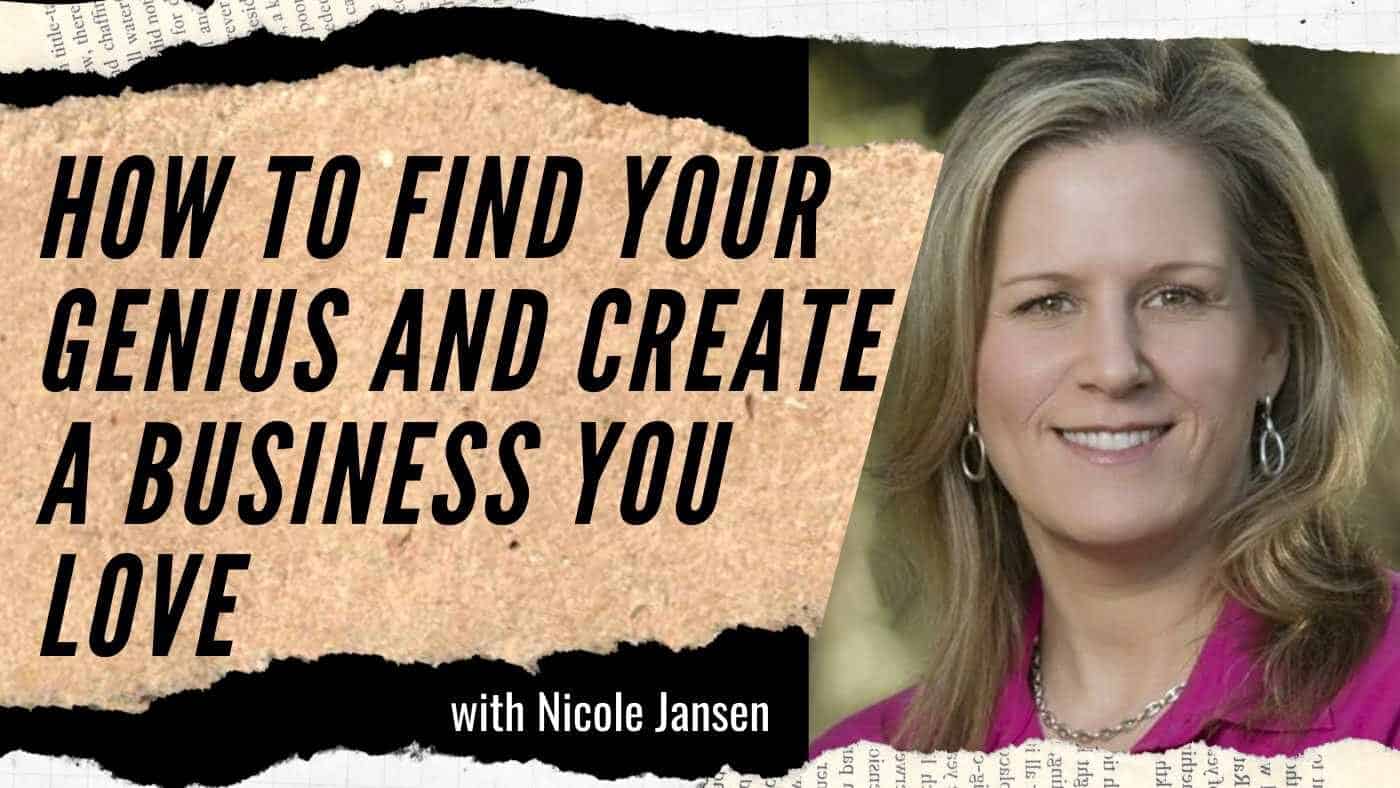
Our Guest Today: Nicole Jansen
Over the past 30 years, Nicole Jansen has coached and trained thousands of leaders, helping them achieve extraordinary results in business and in life.
As a certified Human Behavior Specialist, Business Breakthrough Coach, and Strategic Intervention Coach, Nicole has developed her own special brand of mentorship, which focuses on tapping into your strengths and true purpose, to create lasting success.
On a recent call with Nicole to talk about a Mastermind group I started for podcasters (learn more about altPodcasters here), she gave me a ton of ideas and pinpointed our value-add in minutes. I also discussed Feisworld’s first online course and new services to help English-speaking podcasters launch their shows in China, Nicole’s feedback was equally relevant and helpful.
Nicole Jansen is the founder of Discover The Edge. Her clients are mission-driven and range from start-up entrepreneurs to large franchise organizations.
If you are a content creator, or a podcaster, I think you’ll find this episode helpful in finding your voice, understanding the process, playing the long game.
There’s much to be said about playing the long game, but how do people do it in the field remains a mystery. It’s not as glamours as you think, and it doesn’t start or end with a Tesla.
Nicole I love telling the truth, because it is a privilege to show up for what you love
If you are one of us, I hope you too continue to do this tomorrow, the week after, decades from now.
To learn more about Nicole and her work, please visit:
- Discover the Edge: http://www.discovertheedge.com/nicole-jansen/
- Leaders of Transformation Podcast: http://leadersoftransformation.com/podcasts/
- My conversation with Nicole on her podcast called Leaders of Transformation: http://leadersoftransformation.com/podcast/business/179-fei-wu-how-to-make-a-living-podcasting-without-counting-downloads/
Show Notes
- [05:00] Congrats on having a new website! What was the process like to create a new website? What motivated you to do something different?
- [14:00] What’s your origin story as a coach? When did you get started and why?
- [18:00] You mentioned that you are an entrepreneur and business-starter since very young (age 16). What business were you in?
- [22:00] Did you parents have something to do with you role as a coach today? What’s your take on that?
- [24:00] What are some of the advise you often give to your clients?
- [29:00] How do you decide how to price yourself/your work, and what to charge?
- [33:00] What are some of the outcomes that are reasonable for the businesses you deal with? What do your clients usually expect?
- [38:00] Do people fall into the ‘metrics-trap’ (ask for 3x revenue, 4x downloads, etc)? What are some other examples of things your clients asked you or?
- [43:00] When did you start your podcast? Did you have a clear vision when you first started?
- [47:00] How do you deal with downloads and metrics vs. quality of the episodes? Why is this a wrong driver to move forward?
Favorite Quotes
[25:00] For some people their business is failing. They need cash flow NOW. They need to move forward. And a big thing that it’s holding them back is mindset. Strategy and techniques I can teach all day long, but unless their mindset is in the right place, none of that is going to matter.
[30:00] When you go into a business and you become an entrepreneur you know it’s different, you get paid for results, you don’t get paid for time. You can spend 40 hours into your business and you can make no money.
[34:0] People say to me what’s your hourly rate. Obviously I know how many hours I will spend roughly working with a client to get an outcome, but it’s not so much an hourly rate, it’s about the value that you are creating for them. What is the outcome that you are creating.
[38:00] What I also look at is what are the other areas in their life because to me success is holistic. Even though I am a business coach, I understand that I’m working with a human being, that has a family, that has relationships, health, desires, personal goals as well as business goals.
Transcript
Transcript
Fei Wu: Hey. Hello. How are you? This is a show for everyone else instead of going after top 1% of the world, we dedicate this podcast to celebrate the lives of the unsung heroes and self-made artists.
Nicole Jansen: Like some people, you know, their business was failing. They need, they need cash flow now. They need to move forward and, and the, the big thing that was holding them back was mindset. A lot of times strategy. I could teach strategy and techniques and all that all day long, but unless their mindset is in the right place. None of that's gonna matter. When you go into a on into a business and you become an entrepreneur, you know it's different, right? You get paid for results. You don't get paid for time. You can put 40 hours into your business and make no money. People say to me, how much, what's your rate? What's your hourly rate? And I say, Obviously I know roughly how many hours I'm gonna be working with a client to get an outcome, but it's not so much about an hourly rate is it's about the value that you're creating for them. What is the outcome that you're creating? But what I also look at is what are the other areas in their life? Cuz to me, success is holistic. So even though I'm a business coach, I understand that they're a human being. I'm working with a human being that has a family that. Relationships, health, desires, goals, and their personal goals as well as business goals.
Fei Wu: Hi guys. This is FA W, and you're listening to the Face World Podcast, my World, all the people I love and continue to stay in touch with and to learn from. If you are a content creator. Or a podcaster. I think you'll find this episode helpful in finding your voice, understanding the process, and playing the long game. There's much to be said about playing the long game, but how do people do it in the field remains a mystery to a degree. It's not as glamorous as you think and it doesn't start or end with a Tesla or whatever it is that you, you are into. It's about the privilege to show up for what you love and what you do. And for me and other guests on my show, and hopefully you too, is that we continue to do this tomorrow, the week after, or decades from now. Today on the show, I'm joined by Nicole Janssen. For the past 30 years, Nicole has coached and trained thousands of leaders helping them achieve extraordinary results in business and in life. She is a certified human behavior specialist, business breakthrough coach and strategic intervention coach. Nicole has developed her own very special brand of mentorship, which focuses on tapping into your own strength and true purpose to create lasting results and success. On a recent call with Nicole to talk about a mastermind group, uh, which is the ALT podcasters I started for podcasters since October, 2017. She gave me a ton of new ideas and pinpointed our value add in minutes. I also discussed Face World's very first online course and new service. Scheduled to release in June, uh, this year in 2018, which is to help English speaking podcast launch their shows in China. Nicole's feedback on that was equally relevant and helpful. She's the founder of Discover The Edge and Nicole's clients are mission driven and range from startup entrepreneurs to large franchise organizations. Recently I also appeared on Nicole's podcast called Leaders of Transformation after she reached out to me on Facebook out of all places. It was a delightful conversation and a continuation from our chat on the phone earlier this year. Because Nicole isn't only a coach but a podcaster herself. She brings that unique point of view to our show. Without further ado, please welcome. The lovely Nicole Janssen to the Face World Podcast. So Nicole Janssen, I'm so excited to have you on the show. First of all, I am so thrilled for you because while I was gone and noticed you have a brand new website and so much new content.
Nicole Jansen: Oh, thank you. Yeah, the. I have two websites, so the uh, one that you're referring to is the podcast website, leaders of transformation.com, and that was a lot of work because there was already, as you know, with podcasts, you have all these episodes up, and when we transferred it over, it, uh, changed all the links. We wanted to keep them the same, but for SEO purposes, we, uh, we were advised to, to change them all. So it was just making sure all of that went over smoothly. So, yeah, I'm really excited about it.
Fei Wu: Uh, so tell, I mean, tell us a bit about it. I mean, this is kind of, um, selfish on my side to wanna learn more. Like what, what was, what was the process like? I mean, first of all, what motivates you to do something different?
Nicole Jansen: Well, I, the funny thing is when I started my podcast, I didn't know where it was gonna go. I, I just was like, oh, let's see what happens, right? So, um, I had this divine download, okay, you're gonna do this podcast, but I still didn't know where it was gonna go. So I had some fun with it and thought, yeah, I'm just gonna pull a little website up there. I'm actually gonna do it myself. And so I thought I would challenge myself by learning how to do it, which I did. I don't ever wanna do it again. . So I was like, fun and let's, let's, you know, hire somebody else next time. So. It was a pretty basic website and it was overdue for a new one because 160 episodes up there, it's hard to find things. They were all just literally listed all, you know, in the order that they were released and it was hard to, you know, cuz there's different categories they kind of fall into and stuff. So I wanted that. I wanted a new fresh look. You know, the thing. Any kind of marketing pieces, you know this cuz this is your business. You gotta love it yourself cuz if you don't get excited about it, then sure as heck, nobody else is gonna get excited about it. Right? It's like there's an energy vibe that, that you give off. I remember that from when I had once a, a, a business card with a logo that I was really happy about and everybody said, oh my gosh, that's such a great card. Such a great card. And then, uh, funny enough, the same guy who did my website, this website now, um, is the one that did that logo this back in 2007 and he's. You need a new logo? And I said, no, everybody loves my logo. Long story short, he redos. He redoes my logo and the day that he showed it to me and I was like, oh my gosh, I love it. I was out networking all that week and continuing. I would give out my card with the old logo on it. And nobody said anything. And it was like there was a shift cuz I was excited about something new and I was no longer, I just saw the contrast. And so, you know, it was just so funny how people actually responded and they didn't even know, they just, just stopped, you know, stopped mentioning it anymore and, uh, until I had my new logo and then everybody was, not that our business is a whole lot more than a logo, but you know, we've gotta be excited about our website. We've gotta be excited about what we're putting out there. Cuz if we're not, then it's not gonna resonate with other people. That's.
Fei Wu: It, you know, designing websites isn't anything new in 2018, but I find that, um, for, for my own business, like you mentioned, I've done a lot of really interesting projects with entrepreneurs, solopreneurs, and websites similar to yours. Um, not that I've. Exclusively done podcast websites. It's been so interesting having these conversations and watching the process and learning from it and having, you know, one-on-one conversations with business owners. So, I mean, I really love the fresh look. I think it works so well. Particularly because we, we both run podcasts and one thing I notice about your show is that you don't just talk about one thing, right? Like super narrow and, uh, but instead you talk about spirituality, relationships, health, leadership, transformation, all of that. So, One thing I noticed is that you are laying out all of them and giving a preview into, you know, what some of these people are about, what they look like. And so did you come up with this idea on your own? I mean, how, how did you go about this cuz homepage and just user experience can be really tough on your own?
Nicole Jansen: Well, I do, uh, I do have to say that I did not design it on my own. Certainly, uh, Harv Cra. This is a plug for Harv Craven, uh, from Harv craven design.com. Amazing guy, and I'm so grateful. In fact, I put him on my website. He's actually there under, it's on the, it's the about page. At the bottom and I, and I give a a thank you out to him. And actually, it's funny cuz I, I shared my website before. It was live with a few people and I had a couple people going like, why is he there? Right? It's kind of odd and you know, to have, cuz normally people will put right on the bottom of a website. You know, designed by, and there's just a link. I, I wanted to acknowledge the hard work that he put in, in designing it and taking my ideas of what I wanted and creating that visually. And of course doing all the functionality and everything. And so I wanted him there. And, uh, I thought, nope, no, that's what, as a leader of transformation, and I, I, I've gotta walk my talk, right? So I, I celebrate people's genius. I am excited about what, and I'm grateful for what people are doing out there that even they're supporting me. So, um, yeah, so he actually was the one that designed it. We looked. A number of different websites. There's a lot of podcast websites that are really busy. Um, some big names. You and I both know them well. They're, they're the, some of the biggest in the business, but their website just seems so busy or, you know, or so self. Promoting for the podcast host, and I didn't want that. And, uh, so we looked at some different sites and actually Tony Robbins site, even though of course it is Tony Robbins, so it's promoting, but I liked the design and I liked the feel of, of his. And so he, uh, he worked off of, Some ideas that he had seen there and, uh, and, and what I had said that I really wanted and then developed it from there. So I gotta give the credit to Harv. He's the one who made it like that, so,
Fei Wu: wow. I love it because, You know, sometimes it's a, it's a hard business to be in because a lot of the business owners, once they work with you, they do want take credits for the great work you've done together, which they should. I mean, without them, there wouldn't be a business to begin with. Hence, there's no need for a website. It's tough to be an artist these days. Any kind of, you know, web artist or graphic design artist, traditional artist, and the fact that I think setting, setting it as an example to showcase their work and to really appreciate that, I think will only encourage people to do better work and to do it longer. Yes,
Nicole Jansen: I like. Well, and how many, I mean, you talk about artists, how many artists, how many ghost writers? Yeah. Their, their credits are somewhere buried on a page somewhere or buried in a website, like on the bottom, as I said in the link. But they, yeah, they're the unsung heroes, right? Like this is what you, these are the types of people that you have on your podcast are those unsung heroes that Yeah, they, they don't get acknowledged for their work, and I think they. I think they should get acknowledged and of course, paid for not just a, Hey, thanks Pat on the back. But a, you know, uh, they should be paid for their work. They should be, uh, compensated in so many more ways than just even money because it is their creativity. It's their heart that they're putting into this, it's their union. I mean, they're, they're actually creating it on nothing. So I have a great deal of respect. Uh, artists and, uh, that's written art, like written the written word. Oh my goodness. There is some, there's amazing people that write. I know Jocelyn Duffy is one of the people that I had on my podcast. She's, she's amazing when it comes to writing in the written word. And I'm just, I'm in awe of people being so talented. But yeah, there's just so, so many talented people out there and, and, uh, you know, I, I love seeing the strengths in other people. That's what my coaching business and my training business has all been, uh, based on is discovering and playing to your strengths, building a business around what you are great at. What's your genius? What's, what do you love doing? And then what you can make money at and bringing those three things, uh, together, that's the sweet spot.
Fei Wu: Absolutely. And I really love your show. I love the community you've created. Like you said, I think you really motivated me to start a community instead of thinking everybody has made it. They're already Facebook groups. Tens of thousands of people. What's the point of me getting myself out there and being in your community? Even though I don't even use Facebook much, I could just see the authenticity and the connection and the comments. I mean, people don't even comment anymore, right? Like is the most you'll ever get out of it. The reshare the comments and instead of, and when I say common, Just mean good job, good for you. Uh, congrats. Right? It's specific feedback that I've seen among people who are meeting each other because of you. So I definitely wanna talk about your podcast and the fact that you have so many episodes and the people, interesting people you meet. But first, if you don't mind, I would love to talk about your coaching business. I have. I guess a couple of years ago, always known some of my friends who have been coaches and had have been doing it for a long time and more recent years. I noticed the, don't wanna call it the trend, but there are a lot of people trying to get into that space that you probably know. So I would love to know your urgent story as a coach when you got started, and maybe why you got started.
Nicole Jansen: Sure, yeah. This industry has exploded over the last few years. It's been incredible. Um, and which is exciting cuz that means there's just a lot more people out there that are not only helping others and supporting others in their growth. And having hap, you know, hap their happiness, whatever it is that they're looking for. Uh, but that also means that in order for them to be a coach, they've been through a coaching program and they've worked on their own stuff. So there is this evolution of, of people or enlightenment of, of people really tapping into. You know, their pain, their story, their past, clearing those, you know, those hurts away so that they can actually be clear and empowered and finding their purpose, you know, and so that they can do that. Well, you know, for me, I, I've been an entrepreneur my whole life. I mean, my parents were entrepreneurs. I started my own business. I was helping them in their business when I was very young. How young. I
Fei Wu: would love to get into some of these
Nicole Jansen: stories too. Yeah. So, They actually started a home based business when I was seven. My dad owned a, uh, garage repair shop, uh, an Esso, so we're in Canada at that time. I'm, I'm Canadian and. moved down to the US uh, six years ago. So he had a garage business and it was a, like an Exxon type. This was so station, which is the equivalent of the Exxon Mobil here in US, and worked really hard. They were just on always entrepreneurs. My mother worked in the, in the shop and, but they started a home based business in the network marketing space when I was seven, and I was like, we were. That it was a home team, right? We were all in it together, and that was our culture. My parents are European and that's just what they knew. There's like, Hey, we're all in this together. We all work hard, we all succeed together. We, we enjoy the benefits and the rewards of it, uh, as a result too. So when I was seven, I was like, well, what can I do to help? I was seven years old, right? But I wanted to chip in some way and so I ended up opening boxes and then I was stocking shelves. And by the time I was 12, I was doing a lot of the ordering, the back end, ordering the time I was 14. I was also doing it for our upline as well, cuz they were traveling a lot. They were away for six months outta the year. So, uh, I started my, and I had businesses. I was making jewelry and grade six, you know, selling to my friends. I think it was even grade five, grade five and six. And, uh, you know, so I've always been that entrepreneurial. I had my business, we, my mom and I would go to the flea markets and stuff, but, uh, so yeah, fast forward, I, I, I registered my first official business when I was 16. Um, and in the process of that, and also working in my, in my family's business, I ended. Onboarding a lot of people, entrepreneurs. So I started my own network marketing team, but also did outside of that sales and marketing B2B business, um, sales. And so I was involved. I kinda like, it was like immersion. So I was involved with knee deep into business ownership, entrepreneurship, uh, training, coaching people.
Fei Wu: And for some reason I'm personally very interested in childhood stories. You said you started business when you were 16. What type of business was.
Nicole Jansen: Yeah, so I started a team in network marketing, but I also, I didn't even know what I wanted to do. I just knew I wanted to be in business for myself. Cuz you know, I, we were around a lot of entrepreneurs and so I thought, yeah, this, this sounds good. I don't wanna go have a job and work for somebody else and have them tell me when to go. I can take, you know, lunch and all that. So I went downtown in downtown Toronto and University Avenue and that, this is before the internet, of course, so I went and registered. My company name, and I called it ProNet International, was standard for, you know, stood for Professional Networking International. I had no idea what that business was gonna be. And in fact, they asked me, they said, well, what's the type of business ca you know, what, what category does it go in? And I went, geez, I don't know. Uh, sales and marketing. So that's why I put down sales and marketing. But then, uh, what I ended up doing is actually selling fax machines door to door. That's where I started. What I learned really quickly is that business is, It's real simple. I mean, there's a lot of different components to it, but bottom line, it's having a product to sell or a service and a customer. To provide it to, right? So there's the exchange, real simple. And so I got a line on wholesale, on on wholesale fax machines. They just come out onto the market, $2,500 fax machines. And I was like, great. So I can buy it at this price, sell it at this price, make a profit. Who needs fax machines? My friends weren't buying fax machines and big companies were not. Certainly, that just sounded like it was gonna be a difficult go because they're not gonna let me in the dorm, 16 years old or 17 year old, are they gonna like listen to this 17 year old, 16 year old. So I just thought, well the first, you know, the, the, the shortest path from point A to point B is, uh, is going to the industrial areas and walking in. So I went door to door and started walking. Smaller businesses and getting to the decision maker and sharing them with them. What I had, and I quickly realized I wasn't passionate about fax machines, so I went on for fax machines and, and sold all sorts of things outta the sun, uh, products, services, mostly business to business. And, uh, spent quite a bit of time doing incentive programs actually for employee incentive programs, client gifts, those types of things. And yeah, one time I was actually in, I think. Volvo and they said, uh, I don't know how I ended up there, but I was in my early twenties and. I was, uh, selling them the assistance and center program, these things that we had. And they said, well, you know, this looks good, but what, you know, what's really new these days is baskets. You know, do you sell baskets? And I went, absolutely. How many do you need? And they said, we need 175 baskets for, you know, three weeks from now. I went, no problem. What's your budget? Okay, great. And I left there and I went, where the heck am I gonna find these baskets? But I did, I found them. And so I was now in the basket business . So, But that's just, you know, it's being resourceful and, and, and so yeah, fast forward to that. Of course, you asked me about how I got into actual coaching. I didn't really see any of that as coaching. I didn't see, I just was doing what I was doing. I was helping people launch their own business. I was out there networking a lot, going to a lot of networking events, teaching people what I learned and uh, and then of course through the business that I end up partnering with my parents on and. Developed a very successful, uh, seven, eight figure business there. And so we had a lot of people, thousands of people that we helped to, to launch into business for themselves. So there's a lot of onboarding, training, coaching mindset with, of course, along the way.
Fei Wu: Hi there. You're listening to the Face World Podcast. I'm your host, fa. Today on the show, Nicole Janssen, who has coached and trained thousands of leaders helping them achieve extraordinary results in business and in life. She's also the host and creator for the podcast named Leaders of Transformation. I didn't realize that maybe the beginning and the inception of your own coaching business, um, was, uh, you know, had your parents involved. Um, so
Nicole Jansen: did, well they weren't, yeah, the, that was in the network marketing. Business. So we were doing, so I never thought of it as coaching them. Um, we were just doing what we need to do cuz this was, this was part of the model. Right. But it was later when somebody asked me and I, and, and I started to discover the edge in 2005 and I had someone, shortly thereafter I was doing workshops. I was teaching people personality dynamics cause I'm certified in teaching disc. And I had people starting to come up to me and saying, I want you to coach me. And I would say, I'm not a coach. Like, I, I'm not, I was thinking therapist back then. There weren't that many coaches that I knew. And so I thought therapists, you know, black couch ask, you know, Socratic questions and let them figure it out. Eventually, self discovery, and it just seemed like a very long process to me. I didn't really, you know, I was like, I'm gonna tell you what you need to do. Like, I'm not gonna let you, you know, wallow in it for that. No, no, no. I really want you to, uh, really want you to help, uh, coach me in, in, uh, growing my business, whatever. So I ended up doing that and also did some life coaching as well. Just people from different places started coming and asking me to coach. And so I agreed to coach them and I'm like, well, how do I do this? And I hired a coach, actually hired several coaches and that had formal structures for coaching. And then I realized, oh my gosh, I have been doing this my whole life. And that's, that's where it, it started. But yeah, my mom is actually one of my greatest coaches is my mom. My dad, I would say he's not really much of a, he, he was never much of a coach. Some more, well, he, he actually was, but he's more of a cheerleader. Type of coach. Hey champ, we need both. You know, you'll be awesome. Absolutely need both. Yes.
Fei Wu: So, you know, as you can imagine, I bet there are plenty of people who come to you for two reasons. Ones they're looking for a coach, word of mouth, learn great things about you. But also have you experienced people coming to you because they want to become coaches themselves? And if so, what are some of the advice that you give them?
Nicole Jansen: Yeah, great question. And I've had a lot of, yeah, I've had a lot of both. Uh, certainly as I developed and I wanted to develop my coaching skills. I didn't just go with what I had known and even from what I got from my coaches that I'd hired, although that is a great way to learn is firsthand. I mean, some of these coaches, they're taking a weekend course and they're now certified life coach. Right. And hopefully they have life experience that they're borrowing upon and, and it's a natural gift for them. For me, I, I, what I, what I did is I, I got to the point where I wanted to get better results from my clients. and faster. It's like, what does it take to compress the space for them? Cuz some of them don't have, you know, I'm, I'm a results driven person and, but I also saw the urgency. Like some people, you know, their business was failing. They need, they need cash flow now. They need to move forward and, and the, the big thing that was holding them back was mindset. A lot of times strategy. I could teach strategy and techniques and all that all day long. But unless they have the mind, their mindset is in the right place, none of that's gonna matter. And so I started doing, uh, coaching programs, advanced uh, coaching and leadership programs, honing my skills and saying, what does it take? To, and that's why I do actually enjoy Tony Robbins because, and appreciate him because he's a master at it, right? Some people like him, some people hate him. Whatever you've
Fei Wu: been doing, I've been to his workshop, oh two, day three to, I forgot.
Nicole Jansen: The guy knows what he's doing. I mean, he know you see him when he does intervention. He's very powerful and he's got a lot of techniques. So I ended up. One of the programs I worked with Blair Singer for about, uh, five years. I've worked with, um, advanced Coaching and Leadership Center, uh, did a Tony Robbins one year, uh, strategic intervention coaching program with him. No way. One year with Tony Robbins, you said? Well, it wasn't pri it's a group coaching. It's through Robins Madonna's training, but it's based on Tony's material. And so what they do is they, uh, it's Chloe Madons and Tony Robbins, and it's facilitated by Mark Patia and his wife, mom, Magley Wonder, amazing coaches, what they do through that, through that, um, year, they give you a year to complete it. Basically, you can compress it and do it six months, but it's, it's online work. And then they have buddy partner sessions and different things that they have in, in live calls and stuff where you can ask questions, but it's, it's unpacking his, you know, his work, how he. You know how you can use it in your own coaching. So it was fantastic. One of the best programs that I've, that I've done. And so when you say, like, when people come to me and they, they wanna be a coach, they've gotta realize that, number one, you do need to, number one, deal with your own stuff, right? You gotta get past your own stories. We've all got our stories, always peeling back the layer to, but you gotta get to the point where your stories, your pain, whatever's the upsets are not showing up. in the coaching, if that makes sense. And, and so, because then you, then you're able to be there, fully present with your clients. So what do we need to do to get you to that point? That's number one. Number two is recognizing that it is a business. It's not just you have people go, oh, I wanna go help people. Right. Okay, great. Awesome. We all do, right? I've always been built, I've always built a business around. A purpose and being mission driven. Every business I've ever built, uh, over the years, you know, has been around that. It is kind of funny cuz I hate shopping, whatever. At one point I had a cons, uh, image consulting business, you know, and would go in and teach. And I'm like, why am I doing this? I hate, I hate shopping and whatever, you know, keeping up with all the fashions, but I've done all these, there was always a purpose to it of why I did it, you know, and the passion behind. So recognizing that number one, you gotta get you, you gotta get clear in your own stuff. Oh, number two, of course, you gotta build, develop your skills. So as a coach, and number three, you gotta understand that it is a business and it's gotta be sustainable and profitable because you can go out there and give away free coaching, which a lot of coaches, they, they, you know, they wear their heart on, on their sleeve, right? They want to go out and help people. But if you are not doing it in a way that is sustainable and profitable, you're not gonna be able to do it for very. Yeah, that's such a
Fei Wu: great topic and it's a short list and it's easily memorable. I talk to several coaches and honestly, I've put them, I either have been interviewed by them or interviewed them on my show and friends. That's the most common, I guess, almost like a misconception that come up that people think. A lot of people think coaches are really wealthy, and when they think of coaches, they do think of Tony Robbins and people along that line. I, when I talk to coaches, uh, several of them starting out, they're really struggling to find clients and I would go as far as adding to that. Once they find clients, I think they're not clear on just, not just what they're delivering, but also how to charge. So do you having some insights to how they. You know, sort of go about learning that information and processing all that.
Nicole Jansen: Well, there's some really great programs out there that speak to, you know, what to charge, how to increase your prices. Yeah. The biggest thing is, and this goes for actually all business owners, I find entrepreneurs, I find people that come out of the corporate world, or at least as an employee, and they now transition into business. I, I have been. An, um, an employee over the years technically working on certain projects where I've been as an employee, but I've always been the entrepreneur who I always approached it. And the reason why I was asked to work on those particular projects was because I had a business owner mindset. The reason why I say that is because this goes back to pricing, is that because when you're an employee, you're so used to trading time for money. I work 40 hours, I get paid 40 hours. My hourly rate, I get paid. X number of dollars per hour. When you go into a on into a business and you become an entrepreneur, you know it's different, right? You get paid for results. You don't get paid for time. You can put 40 hours into your business and make no money right into your business. What does that mean? Maybe it's social media marketing, developing content prospecting, right? You can be doing, oops. You can be doing all those things and. Still make no money, right? It's about creating results. So when you're pricing, don't look at it. People say to me, how much, what's your rate? What's your hourly rate? And I say, well, obviously I know roughly how many hours I'm gonna be working with a client to get an outcome. But it's not so much about an hourly rate is it's about the value that you're creating for them. What is the outcome that you're creating, right? And, and price it based on. And of course you're looking at experience. What I always encourage new coaches that are starting out is to get some testimonials. Doesn't mean you have to work for free, by the way, to get those testimonials. That's a, that's an easy way to do it. Sure. But experiences with, with, um, giving away free coaching is people don't value what they don't pay for d So it's a long answer, but it's fundamentally, it's shifting the way people look at the pricing. Structure so that when I say to people, look, this is how much, this is my rate per per month, right? So I do a monthly rate or a program rate based on how long we're gonna be working together, but it's based on we're gonna get you to this outcome. Even to the extent where I will say to people, look, this is the outcome. We agree, this is what we're looking to, to achieve in your business. And if I don't, if we don't, by this time, we both agree, this is reasonable. You do everything I recommend. And this is for the business coaching. Um, but if we get to that point and you haven't achieved, you've done everything I recommended and you haven't gotten to the result that we've agreed to, I will suspend billing until we do, because I stand behind what my coaching is, right? I stand behind my ability to create, help you create results. But of course, that that requires that they. Doing what I recommend. If they don't, then of course it nullifies that because I can't guarantee results if they're not gonna do it. Mm-hmm. , I like
Fei Wu: that I actually start to see some of the online courses even saying a hundred percent money back guaranteed. But you have to show us evidence of the fact that you, you are working on it. So, I find the evidence part to be really interesting because you need to be able to see something and measure something, and I think it depends on the business. That evidence could also be very different. In your opinion, what are some of the outcomes that are reasonable, right? Because I'm sure some clients type A clients be like, I want my business to be, you know, three times or whatever, 10 million. Like what are some of the outcomes that you think are reasonable?
Nicole Jansen: Feasible. Yeah, that's a, that's a tough question to answer cuz it depends on the size of the business and the stage and where they're at. And every business is different, right? So, you know, some businesses I look at, and of course I have to know what is actually going on in the business. They gotta tell me the truth, right? I know I need to know where their financials are. This is not a guesswork, this is not about what they tell me. It's like if you've seen the profit with Marcus Limonis, it's classic, right? He says, look, show me the numbers, then I'll know, right? You can tell me all day long what you think the business is. But when we look at the numbers, the numbers don't lie. So we look at those and we look at patterns and we see where the business is at, and then we look at and I look at and say, okay, where do you wanna go with this? By when? What do you have in place? And I also look at mindset. Where are they at? Like how coachable are they? You know, what market are they in? What product? What is their, what is the potential in the market? So there's different factors that I look at, but you're right, a lot of people are unrealistic. Another thing about when people are hiring coaches, now let's look at the flip side. People that are hiring coaches, I've had people that have said to me, and I've literally coached thousands of people over the last number of years. Have been now 13 years or so formally. Right. Plus even way before then. And you know, you get people that come to me and they'll say, you know, okay, well, you know, I need you to motivate me, or I need you to fix my bus. Well, there's, that's not what a job, that's not my job. Right. So be clear when somebody's, when, so when you're the coach, be clear with the person who's coming to you about what the expectations are, what their expectations are, and what your expectations are. It's a two-way street, so I, I'll interview them as much as they're interviewing me, because if I'm gonna put my, my reputation, my name behind it. I need to know that they're committed, they're ready to, to play, right? Because otherwise it's gonna frustrate me. And there's been, there's been times, not too many, but I have, uh, fired clients because they aren't doing what they said they were gonna do, and they're not taking the recommendations and they're not being coachable. And I'm like, you know what? I can't take your money. This isn't why I do this. I don't do this to make money. Certainly that's part of every, every business needs to be profitable, but I do this cuz I wanna make an impact and when I get can help you get results. I'm happy. And there's been times, even when I've had clients that have been happy with the results. But I don't feel happy with the results because they still are playing very, they're playing small, you know what I mean? Like, they're like, oh no, this is good. And I'm like, no, it's, we're not scratching the surface yet on what, on what we said we were gonna do and or what you're, what you're capable of. And it's not my goals. It's what they want. Right. And getting them what they want. So it's a tough, you know, it took a tough question to answer, um, from that standpoint. But you need to be reasonable. And even as life, a life coach, Somebody wants to transform the look. I mean, I've had, I don't guarantee it. Um, because again, it depends on each person. I don't make guarantees and guaranteed I'm gonna increase your sales by this much money or whatever my average is, you know, been about, well, it kind of ranges between 15 for certain businesses, 85%, 15% to 85%, uh, on average I say between there is about 50% if I average it out all across the board. And, uh, in doing that, within. Three months or so. But to me it's not just about that initial uplift, it's about building a sustainable, profitable business. So my goal is doubling the business year over year. You know what I'm saying? So there's a lot of business. You can supercharge it right in the beginning and then it falls later. So for me it's, it's about great, let's get that initial upswing. And I've helped people increase their sales 150% in.
Fei Wu: Hi there. You're listening to the Face World Podcast. I'm your host, FA w. Today on the show, Nicole Janssen, who has coached and trained thousands of leaders helping them achieve extraordinary results in business and in life. She's also the host and creator for the podcast named Leaders of Transformation. So first of all, thank you for the details because just by. Dissecting the question and making the question better is a great way to answer it. I, you know, I guess I will add to that question. What are some. Other than financials, right? Cause I feel like that's so easy. Like click through rates like, oh, I wanna three times my revenue. Or you know, Faye, I need help with my podcast. Can you three times my downloads, like, people fall into that trap. Mindset is a great, you know, is a great area and also a great area. To some people. What are some others? Could you think of like a couple of other examples where people ask you to, you know, help them achieve X or Y that's outside of those categories?
Nicole Jansen: Absolutely. Uh, but for, yeah, so what I, when people, actually, most of my clients come to me because they do wanna increase their sales, their team performance or their profitability, and. And I, so we certainly do that. But what I also look at is what are the other areas in their life? Because to me, success is holistic. So even though I'm a business coach, I understand that they're a human being. I'm working with a human being that has a family that has relationships, health desires, goals, and their personal goals as well as business schools. So what I look at is, uh, what are the area, like, where are they at in all of those areas of their. And what are the most important areas to them? So I, I actually say to my clients, look, we'll help you increase your sales, make more money. That's fine. We'll do that. Increase your team performance, restore the culture, whatever it is, right? We'll do those things. Absolutely. Well, what I really want you to do is I want you to be able to come back and say, Nicole, I love my life. If you can come back and say, Nicole, I love my life, then I know that we've not only done all those things, but you've got great, healthy relationships. You, you're healthy, you're taking care of yourself, right? Your mind, your mind, body and spirit are being taken care of as well as your bank account. And so for me, that's a metric. So it's, it's also the, those are the intrinsic things. It's like how you feel. Yeah. I mean, I can help increase sales in a business and have them be horribly happy. That's not, that's not what we're going for. So we do need to look at all of those things. And to start off with, it's even, it's just clarifying that for people, because most people, when you ask them, what do you want? They don't know. They know they want something different, but they don't even know exactly what that is. Most people like, they don't come. They may say, I wanna increase my sales. My sales are down. I need to increase my sales. You know, or I'm having a trouble at home with my son, or this or that. They know that they wanna an improvement, they have a pain somewhere. It's like going to the doctor and saying, ouch, I hurt over here. But what that looks like, They're not as clear on that. And so we help them to get clear on that and then based on who they are and where they're at and what their commitment level is and all the different factors, then we, uh, create a plan for them that is reasonable. And I believe in doing it so that it is a stretch. So here is a measurable, right? It's a stretch for them, but it's not so unreal. That they, that their brain literally shuts off and says, that's, this is completely impossible. So you want it in. You knowWe. So it's a stretch. It's not like, cuz if you're, they're just staying in their comfort zone and they're just doing the same thing and they don't have to change who they are. They don't have to change their, you know, they don't have to shift their mindset. They don't have to expand who they are and they can just stay comfort, you know, in their comfort zone. That's really not growth. They don't need to coach for that. Go talk to your friend and, you know, and have a few beers or whatever, and you can talk over some ideas of what you can do to change over that. But if you wanna coach, a coach is designed not to keep, not to let you stay in the same. It's like when you say, I wanna create a new comfort zone, I wanna create something new, transform an area in my life. And so it's so it's gotta be a stretch, but not so far that it's unrealistic. Oh, I'm gonna make a million dollars next week. Well, you could, and there's lots of people that do that, right? There's people that make millions of dollars a day, but if you haven't made more than $50,000 a year, You know what? That, that might be a little bit of a stretch. Yeah. We got some work to, to get you there in mindset. And actually that's the biggest thing is it's the mindset. That's what keeps us all, and that goes for all of us, right? That's why we are where we are, is because of our mind, our mindset. Influence and impacts the, the, the behaviors that we take, which impact the results that we get. Yeah,
Fei Wu: I mean, I, I, I really love the love of details. I think it's really fascinating. People who are coaches like yourself have the ability to interact with so many people. If it wasn't for the business, I mean, this is not the only reason. I can imagine you taking another job and still being able to, you know, outreach and connect with many. But the fact that, you know, for example, you connected more than a thousand people through your coaching program, and I wanna just try to smoothly transition that by saying that in addition to your coaching program, you know, we're connected. I am not currently one of your clients because you started a podcast. Now a lot of people think. Anybody has a podcast, it's easy to do, but when you actually ask someone to do it, chances are 99% of the people you talk to won't start one. I bet they're a subset of that who really tried but then felt like they didn't like their voice. They're not quite sure about the cover art. The next thing you know, they sit on some audio files for three years. I do wanna talk for five minutes or so about your show. First of all, when did you start your show? Did you have a goal or a vision when you first started?
Nicole Jansen: Yeah. So, uh, yes and no. I had this divine download and it was actually in August, it'll be three years. I woke up early one Saturday morning and it was like this divine download saying, you're gonna do a podcast, it's gonna be called Leaders of Transformation. You're gonna interview all these, you know, amazing difference makers and world changers and, and showcase what they're doing, how they're making a difference in the world. And uh, and that was it. And I was like, When are we doing that now? Okay, awesome. So, I, I got on the phone immediately and called somebody that was four hours ahead, cuz it was like four 30 in the morning. So I called somebody in Halifax. And he, uh, he was up cuz it was eight 30 in the morning. And I said, Hey, what do I need to know about this podcasting thing? And he gave me some basic tips. That was Mark Ma from natural born coaches and he gave me some tips and I was off to the races. That was Saturday. So I spent the, the, the, the morning putting it together. And you're right, a lot of people talk about podcasting. And they sit on it, or they start, they do a few and then it, they drop off with it. That vision. So that initial vision, so that's why I know I didn't plan on it and said, Hey, I wanna do this. It was kind of this. Inspiration. And there was a vision that came with that, which was to, uh, showcase the people that were making a difference in the world. And as I started to think about that and, and unpack that, because I, I'm a big picture person, you know, I like, I'm also very good at strategy and stuff. And so I looked at that and said, where can that go? And then I pictured, wow, you know what, for, for years, Purpose has been to transform the way people see themselves, the way they see others, and the way they see the world around them. And so this ties, uh, perfectly into that, and it gives me a platform to do that. And so the vision became, wow, I could, I could actually make a difference. I could, I could speak into that. And then as I went along, Uh, the vision developed itself along the way where now it's like, wow, you know what? I'm crazy enough to think, as I kept talking about, and my mission was the global transformation, facilitating global transformation by inspiring, active, you know, um, elevating conscious awareness, inspiring active leadership. Well, what the heck was that gonna look like and how that, I was gonna do that? I didn't know. But it's starting to come into play. So for those people that are out there, just even thinking about starting a podcast, my gosh, you know what? If you have that inclination, why don't you just do it? Stop thinking about it. Just go out there and do it. What's the worst thing that can happen? You, you do a few and you don't enjoy it. And. But you, you never know the other side of it. The flip side is what if it does work? What if you have a lot of fun? And you know, one of the greatest gifts that I've gotten outta this is the fact that I have met so many amazing people. Like you said, we wouldn't be having this conversation if it wasn't for this podcast. What an incredible gift it has been for me. That's, that's actually been what of the biggest blessings, if not the biggest blessing. Over the last three years are the, you know, the people. Sure. I've learned a lot from podcasting about marketing and communication, all that stuff. All that stuff's nice, but the biggest thing really, And I feel fulfilled. I feel really fulfilled in doing it. But the, you know, just meeting the amazing people that I've met. Oh my gosh, it's extraordinary. I, I wouldn't trade it for anything. I,
Fei Wu: I couldn't agree more. I mean, I honestly keep saying I agree, but it's true. I think podcasting is the best decision I've made in the past three and a half years and transformed my life too. I do. Spend a couple of minutes because something you brought up when we first connected, um, was the fact that you and I echoed when people get on the show. Like, for example, when we invite others, very rarely, but the question does come up is how many downloads do you have? Who are you? I mean, what it's, you know, lots and lots of those questions. How do you. Answer that more importantly, like why do you think, I mean, if a podcaster is listening right now or somebody's considering to be on a show, why is that a wrong question? Why is that question have, why does it have so little value that we
Nicole Jansen: talked about? Yes. Is that it's not about the number of downloads you can have. Thousands, millions of downloads, whatever. It's really about, again, this comes back to what's the purpose of your podcast, right? Are you looking to make a difference and you can have a podcast? It's, it's kind of like I have a friend of mine who has made quite a bit of money actually even getting clients on Instagram. He has Byron Torres, he has 200 and something followers, and he's made over a hundred thousand dollars in the last year on Instagram with 200 plus F followers. That's it. Why? Because he makes quality connections. He's not into mass, into, into strictly quantity. He's into quality. And that's the same thing. That's the approach that, that I've taken and it, that's what you've taken. So it's really not about how many downloads you have, it's about the impact and the people that you interview. Those are the people, like you said, you know, you get clients from people that, even though you're not looking for, but you know, just people get, you just get to know each other. You make connections, authentic connections with people that are on your show. That's like even better value than all the downloads and the people that are listening, cuz you're actually having a one-on-one conversation with people so you can truly grow your business. I don't have millions, I mean, I'd love to have millions of downloads and I'm working. Learning how to do that. Right. But I don't have that. And actually, you know what the, the most amazing thing people don't ask me. I had Bob Berg on my show in January, and you know, he's a world renowned speaker and so forth. I don't recall him asking me how many downloads I had. Right. But that's not a surprise because his book is called The gogi. And he gets it and he's like, absolutely. I reached out to him and I said, you know, I just love your work and so forth, and I acknowledged, you know, and he said, oh, this is great. You know, I'd love to be on your, on your show and serve. So it's much more about the service that we give to others and it'll come back to you. So don't, don't freak out about the downloads. Somebody told me recently that the average podcast nowadays good podcast has like 150 downloads. It's actually decreasing right now because there's so many more podcast. So if you check the numbers like that, you make yourself crazy. It's not about, it's not about that. Just focus on service. Good quality and having fun yourself. If you are not having fun, your listeners are not gonna have any fun. Yeah,
Fei Wu: absolutely. It's all that. It's true. You know, people ask me about my downloads, I'll share the exact same numbers. You know, sometimes my most popular episodes I've been checked, it's like two to 3000 per and the most popular, and then the top 10, 10% we're talking about, you know, 800 to a little over a thousand. And people are like, what? That's it. I mean, what's the point of working on? I'm like, no, those. Better performing ones. And what then they don't know is if we don't have any content out there. You know, every day when I was in China didn't deliver any new content. Every day there were dozens and often over a hundred downloads every day on older episodes. But if they didn't exist then you know, you wouldn't accumulate those things and make new connections. So, Thank you for, for sharing that, Nicole. I, I just remember, you know, out of the blue we connected and you talked about so much truth and I find the truth is so comforting, but also so empowering. I wish there there's more, uh, people who are willing to talk about this and thank you so much for this. I mean, this was wonderful. I really enjoy. Well,
Nicole Jansen: thank you for having me fade. It was just a really fun conversation.
Fei Wu: Hi there, it's me again. I want to thank you very much for listening to this episode, and I hope you were able to learn a few things. If you enjoy what you heard, it'll be hugely helpful. If you could subscribe to the Face World Podcast, it literally takes seconds If you're on your mobile. Just search for a Face World Podcast in the podcast app on iPhone or an Android app, such as Podcast Addict and click subscribe. All new episodes will be delivered to you automatically. Thanks so much for your support.
Sharing = Love
If you find this episode helpful, please share with ONE OTHER PERSON.
Subscribe to Feisworld Podcast with just one click! New episodes are released every Thursday anywhere you get your podcast. Your feedback is always appreciated – please consider leaving a line or two on iTunes. If you include your Twitter handle, we will make sure to thank you personally.

Written by
Fei WuFei Wu is the founder and CEO of Feisworld Media, a Massachusetts-based digital media company helping brands get discovered by people and by AI. An Adobe Global Ambassador and brand partner to ElevenLabs, Synthesia, and 50+ other tech and AI companies, she hosts the Feisworld Podcast (400+ episodes, 500K+ downloads — guests have included Seth Godin, Steve Wozniak, Chris Voss, and Arianna Huffington) and co-created the documentary Feisworld: Live Your Art on Amazon Prime. Fei writes for CNET, Lifehacker, and PCMag, and her work has been featured in Forbes, Harvard Business Review, and WIRED. She has been publishing on the internet since 2014 — long before AI discoverability had a name.
View all posts by Fei Wu→Stay updated
Weekly insights on content, AI, and digital media.
Keep Reading
Related Articles
Joanne Lipman on Mentors, Untapped Talent and Why Women Should Stop Waiting to Be Perfect
Marc Randolph on Curiosity, Messy Starts and Why “Nobody Knows Anything”