July kicked in with new Google Bard updates! Yesterday Google released a bunch of new features for their Bard AI experiment, packed with great functionality. Let’s put them to test!
Learn more
Google Bard Updates (July 13th, 2023)
1. Bard is available in new places and languages
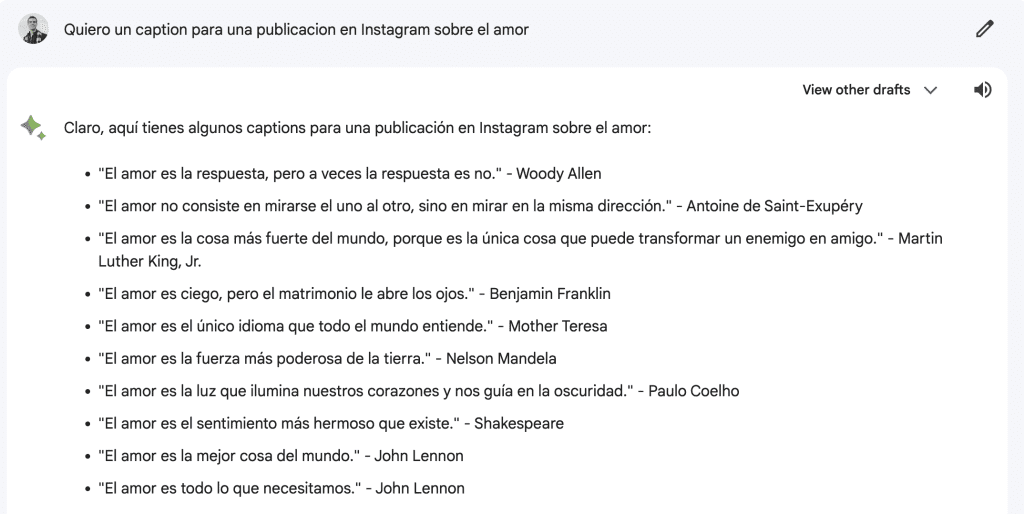
Google Bard is now available in over 40 new languages including Arabic, Chinese (Simplified/Traditional), German, Hindi, Spanish, and more. They have also expanded access to more places, including all 27 countries in the European Union (EU) and Brazil.
I did a quick test in Spanish and works like a charm.
2. Google Lens in Bard
Images are a fundamental part of how we put our imaginations to work. Now you can upload images alongside text in your conversations with Bard, allowing you to boost your imagination and creativity in completely new ways. To make this happen, they brought the power of Google Lens into Bard, starting with English.
3. Bard can read responses out loud
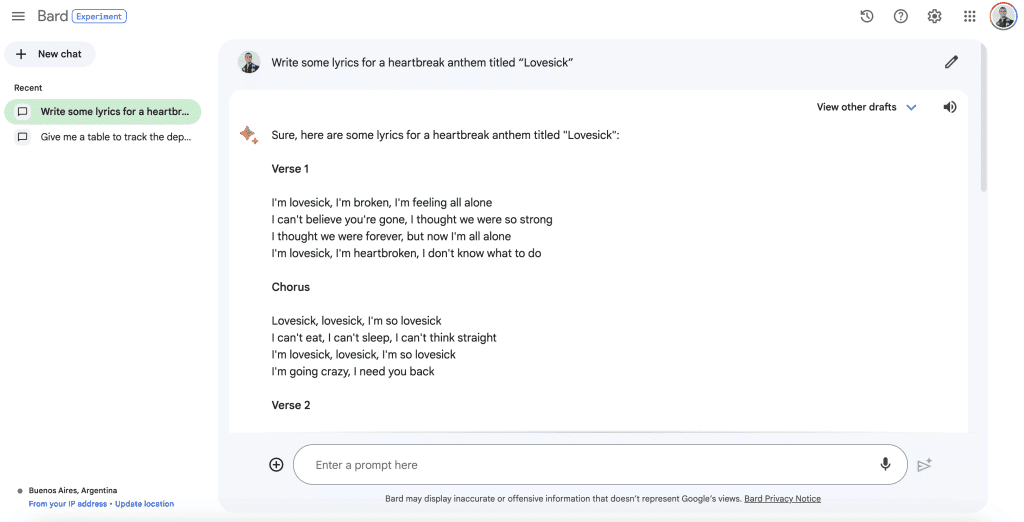
Bard added text-to-speech capabilities to Bard in over 40 languages, including Hindi, Spanish, and US English. Now you can listen to responses and see what it helps you imagine and create!
4. Pinned & Recent Threads
Bard added the ability to pin conversations, rename them, and have multiple conversations going at once. You can now pick up where you left off with your past Bard conversations and organize them according to your needs. Just as you can do with ChatGPT.
5. Share your Bard conversations with others
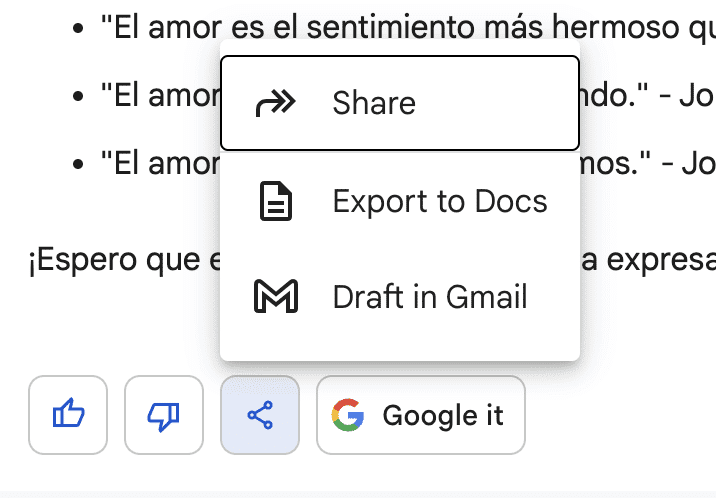
It is now easier to share part or all of your Bard chat with others. Shareable links make seeing your chat and any sources just a click away so others can seamlessly view what you created with Bard.
Just click on the Share button and you get a link, or Export to Google Docs.
6. Modify Bard’s responses
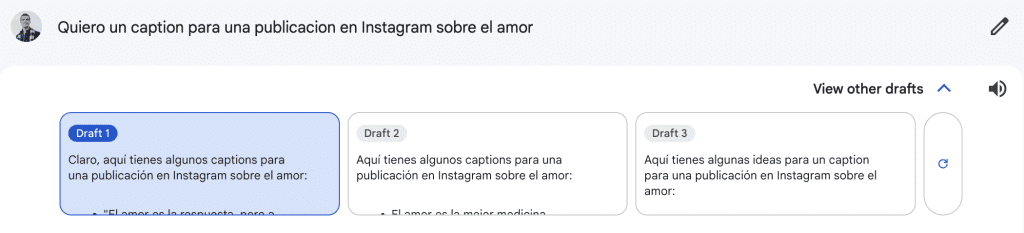
There are five new options to help you modify Bard’s responses. Just tap to make the response simpler, longer, shorter, more professional, or more casual.
7. Export Python code to Replit
To Streamline your workflow and continue your programming tasks by moving Bard interactions into Replit, you can now export Python code to Replit, in addition to Google Colab.
Conclusion: Google Bard Updates
What do you think of these additions, and how are you leveraging the power of Google Bard AI as a creator? Let us know in the comments!
Feel free to check out our guides on how to use Bard to accelerate your workflow as a content creator. Links below.
Keep creating!
Fei
You might also enjoy…
- Google Bard New Features: Google Docs, Gmail, Workspace Automation, Multi-languages (May 2023)
- Google Bard For YouTube: How Can You Use It To Grow Your Channel? (2023)
- Microsoft AI CoDi: What It Means to Creators and Educators
- Disclaimer Templates for AI-Generated Content (Yes You SHOULD Use One) [2023]

Written by
Fei WuFei Wu is the founder and CEO of Feisworld Media, a Massachusetts-based digital media company helping brands get discovered by people and by AI. An Adobe Global Ambassador and brand partner to ElevenLabs, Synthesia, and 50+ other tech and AI companies, she hosts the Feisworld Podcast (400+ episodes, 500K+ downloads — guests have included Seth Godin, Steve Wozniak, Chris Voss, and Arianna Huffington) and co-created the documentary Feisworld: Live Your Art on Amazon Prime. Fei writes for CNET, Lifehacker, and PCMag, and her work has been featured in Forbes, Harvard Business Review, and WIRED. She has been publishing on the internet since 2014 — long before AI discoverability had a name.
View all posts by Fei Wu→Stay updated
Weekly insights on content, AI, and digital media.
Keep Reading