Melissa Kwan: How to Hyper Grow on LinkedIn as Bootstrapping Entrepreneur (#348)
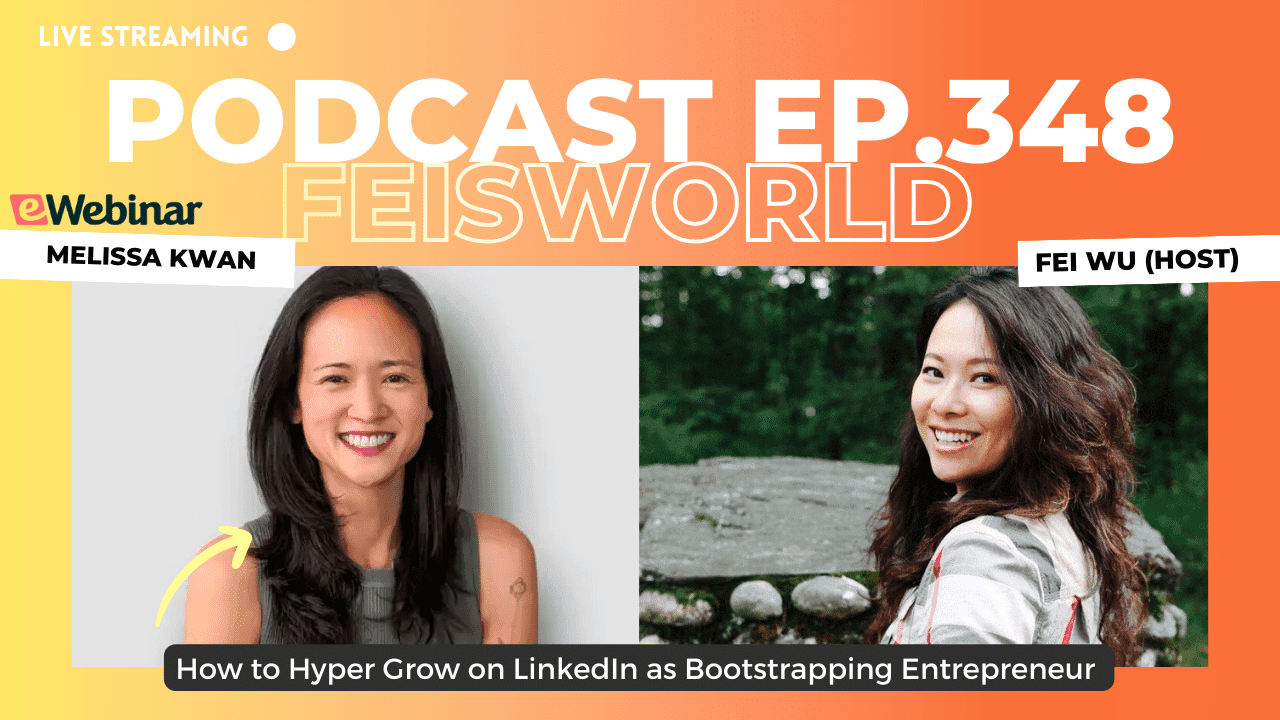
Our guest today: Melissa Kwan
Melissa Kwan is the Cofounder and CEO of eWebinar, third-time bootstrapper, 13 years in startups, previous company acquired in 2019, digital nomad. Giving people back their time through webinar automation so they can grow their business without being there 24/7.
Summary
- Melissa Kwan is the co-founder and CEO of eWebinar, a webinar software company. The focus of her work is to help people save time through webinar automation. Melissa reflects on her journey and the importance of building an audience early on. She talks about her writing on LinkedIn and how she developed her own unique style.
- Melissa’s body of work is a “walking business school.” Melissa is the CEO of eWebinar and has been writing on LinkedIn for 16 months. She shares how she realized the importance of building an audience and the challenges she faced in marketing her product. She mentions discovering LinkedIn as a platform for sharing content and learning from other creators. Melissa discusses her writing style and finding her own voice that resonates with her audience.
- Melissa talks about her journey as a founder and the importance of building an audience for her product. She shares her experience with writing on LinkedIn and how she developed her own unique style. Melissa mentions taking a course by Justin Welch on LinkedIn operating system as a foundation for her content creation. She emphasizes the importance of finding a style that resonates with her audience.
Timestamps
- 00:01:19 Building an audience is crucial.
- 00:05:27. Engage audience with personal storytelling.
- 00:13:50 Be authentic in your writing.
- 00:16:26 Be authentic in entrepreneurship.
- 00:24:00 Advertising can deter potential customers.
- 00:27:22 Content should target specific audience.
- 00:31:27 Different paths to success.
- 00:39:41 Choose lifestyle over business.
- 00:44:56 Purple ocean = untapped market
- 00:47:33 Bootstrap founders should consider being second movers.
- 00:54:34 Embrace chaos for personal growth.
Transcript
Transcript
Fei Wu: Uh, for those of you who are not familiar with Melissa's work, I highly recommend, I mean, even before I go into her actual intro, which is very, very short and sweet is the fact that I find Melissa's work to be like a walking business school. It's a business school that information that you absolutely need. And the simplest way to learn all of that for free is to follow her on LinkedIn. Uh, it's been so transformative for me in the past year. And Melissa has been writing. For years, and with that said, I've listed all her contact information linked in below in the description, wherever you're watching, we're listening to this, uh, briefly, Melissa is the co founder and CEO of E Webinar, one of my favorite online webinar software. I highly recommend you definitely test it out. Um, she is a third time bootstrapper, 13 years in startups. Previous company, uh, were acquired in 2019 digital nomad herself, traveling around the world. Can't wait to get into that. And right now her key focus is giving people back their time through webinar automation so that they can grow their business without being there. 24 seven. That to me is so inspiring. So welcome to the show, Melissa. I'm just really, really thrilled. You are here. Thanks
Melissa Kwan: so much for having me Fei And actually I've only been writing for 16 months. So I wish I had been writing for years because I think that was one of the bigger mistakes that I made is why is that is not building an audience early enough. I just didn't know this existed. I just didn't know that, like, audience mattered. I guess my, my last company, I was selling enterprise, so really a sales led company, not. Marketing led or product led. Um, and it was only until this company that is product led that I realized, Oh, I think marketing is a thing. No one picked up the phone for a hundred dollar product turns out.
Fei Wu: Wow. Yeah, exactly. That, that is such an interesting learning right there. I mean, looking at your writing, how proficient and prolific you are at it. I just assume you probably like Seth Godin has been writing for like 20 years. Uh, 16 months is really impressive, but let's talk about the frequency. First of all, Your posts are long and to the point it's very well curated and, uh, you have a certain style. I also love the fact that you're not really just like everybody else, right? It's not like, oh, this is another Justin. Well, sure. Like, oh, I see the format. They're like, no, Melissa has her own. Format. Could you talk about like writing on LinkedIn, how you got started and how you got inspired to create your own style over
Melissa Kwan: time? That is so interesting because this is my post tomorrow. So you are like living in the future. Um, yeah, so I mean, it's a, I want to condense this, um, to make it useful. But, um, I had this realization that I needed to build an audience. Uh, I hadn't like, I had actually run out of ideas to sell my products. Um, I was doing personal outreach, try LinkedIn outreach, tried email outreach, and it just wasn't working. Like, of course, founder let sales is how you get any company off the ground. But just to give you a context, my software is self serve. It started back then at 49 bucks, but now it's 99. So it's like, it's, it's a low cost product that people come in, sign up for a free trial convert on their own. So. While I probably got the first hundred customers just from my own network and their friends, um, like referrals, it, it only goes so far. So I had actually run out of ideas on like how to get people to come to our website. And then I started looking at what other companies were doing and, you know, and I had logged in onto LinkedIn for the first time in years. So I, I think the first time I logged into LinkedIn was like. January of 2022, like last year. And I was like, this is like a whole new world. It's no longer a resume website. Like, why are people sharing like blogs or like micro blogs on there? And then my friend was like, Oh, you need to check out this guy, Justin Wolf. So then I started following his content. I'm like, Oh, actually this like really resonates. And then I started finding these creators, you know, like yourself that was building an audience just by sharing their. Their experience. And so I wanted to learn how this works. So then I took Justin's course on LinkedIn operating system, which then became the foundation by which I would. You know, make, I guess, create my own, um, like my, like create my own templates and things like that. So, um, actually, so I took his course and then I found a bunch of creators that I, that I followed. I tried different content styles and templates. And, um, it's interesting that you've noticed that I have my own style because. It's called your audience for a reason. It's your audience that resonates with your style, your voice. And I actually, I tried a lot of things that worked and didn't work. And I tried a lot of different templates. Like, you know, a lot of creators also sell their templates. The lowest engagement that I get is through someone else's writing style. Interesting. And you know, like for someone like Justin, like he has a certain authority. So he can just say some motivational quote and. People would like fuck to it. True. Like I'm a nobody, right? So if I use the exact same motivational style or quote, it's just not going to work. So I realized through testing different content that what works for me and my audience is counterintuitive advice, backed up by personal stories. If I don't have a personal story that goes with my own conclusion, it doesn't get any engagement. And that's actually why like all of my writing is personal stories and personal conclusions. I always write in first person. It's never a generalization because also people can challenge a general. Conclusion, but they cannot challenge my personal opinion. So that's kind of how I came up with that. And I was writing four to six times a week. When I started for about a year, um, so I started June last year until June this year, and then I accidentally, um, hit like a viral post that was a really long post, like a listicle style long post. Um, and I was like, oh, that's interesting. So then I just copied that format and I did it eight times in a row. And then it just became this like overnight kind of LinkedIn sensation for like two months. And I think I added like, I think about 20, 000 followers in two months, those posts, um, got like 3. 7 million impressions. And I lowered my frequency because what happens is if you have, if you have content that's Getting engagement and you put out something new, the new one gets like priority by the platform. So the new one actually crushes the old one. So I actually don't put out anything new unless the previous one that I have, like kind of like runs out of engagement, like people stop commenting or things like that. So if you have a viral post that actually you get engagement for four to five days. Um, but you want to stay top of mind, but actually writing like one piece of long form content, which is what I do once a week now, takes about 10 hours. So I don't really have the time because I treat it as an article. So it takes me two to three hours to write like a first draft and then five to seven hours to edit it and then cut it down because it only allows something like 530 words. So then I have to spend a lot of time cutting out things that Are unimportant and that actually forces you to think about the things that are important. So I can only get one of those out per week. And then, so I usually, so that's why I either post Monday, Wednesday now, or Tuesday, Thursday. So the one I do earlier in the week is usually like just to stay top of mind. Um, and then the one I do later in the week is usually like a long form style, like blog style content. And then if, you know, it gets a lot of engagement, then I'll just keep running through the weekend. So that's kind of like. The evolution of what I discovered, like how I discover what works and my own content style and why I've actually lowered the frequency. But now I actually write longer form, more intentional, more thoughtful content than just like. Here's something I, that I did before.
Fei Wu: I want to just, for people who are watching this and we're listening to this, I want to give you an example that most of Melissa's posts are getting from what I can see, like 60 comments or more within like almost initial publication. So I want to compare that and contrast that to people who are CEOs at these so called, you know, very big companies with, you know, sometimes millions of followers, and they don't necessarily get that level of engagement. It just shows that. With your, you know, current Melissa, your current audience, maybe even, you know, smaller compared to these, these folks that, you know, the Bill Gates of the world, still people are really engaging. I noticed yesterday looking through their profiles, nearly all of them are CEOs and founders with occasional, like, uh, director of VPs of marketing or something. So. I thought that was really fascinating, but what you said, I wanted to break down. Cause I have a, like a ton of, uh, follow up questions. One of which is as I'm reading your blog posts, I really don't feel like this is a business engagement. This is a personal engagement. It feels really personal. And the way that you write with simple. English, I know you're highly educated, but, um, you know, very simple language. I feel like I could sit here with a 12 year old, and we could have a conversation about what Melissa just wrote, uh, and their spaces in between them. And in a way that I, you know, I published a documentary series on Amazon. I'm constantly thinking about talking to filmmakers about how to hook people in a very emotional way. So for me, as I'm reading through your post, I imagine a woman, an entrepreneur. You know, kind of walking through life, like I could picture and visualize your story as opposed to just reading it. So I would love to hear like how you put yourself in that mind space to basically kind of craft almost like a film, something so, so visual, so visceral, um, for
Melissa Kwan: your audience. Um, well, first of all, thank you for noticing that. Um, it's like, tell me more. I'm telling me it's awesome. Um, I think it's really important to. Write as if you're having a conversation because that's what you're doing, right? It's how we write our websites It's how we write our help articles like as if we're having a conversation because we are having a digital conversation And, and I don't like, I know people say like, oh, you should write like grade five level, but like, I, I don't really focus on that because I, I want to write for the advanced business reader, like the advanced, advanced business user. But also English is my second language. Like Chinese is my first language. So, um. I need to use simple words and vocabulary because I, my vocabulary is actually quite limited. Um, and I have to like, thank God for texting because a lot of times, like, I'll be texting with someone and I have to look up a word. So I want to make sure that when I put something out there, it's not something that people need to look up. Like it's not a word that's hard. Um. But I also think that, like, to your point about visualization, like, I want, because we, we remember things by connecting with a story and by visualizing by seeing something. I think about all my writing as mini stories, like a mini movie. I want people to be able to connect with that point in time and be able to put themselves in my shoes. Um, so that they can remember that content. A lot of times I'll get like a DM or something like a private message that will, you know, have someone say like, I've been trying to verbalize my own journey. And by reading this, like I really connect with it. It's almost like you're writing what I've lived through. And, and that's awesome, right? Cause that's the, that's the goal is to, um, let people know that there are many faces of success and they're not alone. And all these things are normal and all these things you've gone through and felt and all the hardships and all the failures are normal and here's why. And just in the same way that I always explain a business case to our product people and our developers. I don't want them to be coding for the sake of coding, right? I want them to know why we do what we do and how a customer is going to use it and how they're going to benefit from it in their business. And that's why we chose this over that. So kind of in the same way, I want, um, my team to understand what we're doing is in the same way. I want. My audience to know why I'm writing this and how I drew this conclusion.
Fei Wu: It was so beautifully said. I feel like this whole thing unexpectedly is such a master class for LinkedIn and really for writing and how to be a creator in general, because I don't know if you. When you reach the point, you know, you're able to overcome that, you know, self imposter syndrome, or some people feel like they have to copy somebody else because that's a proven formula. Whereas like for me as an entrepreneur, since 2016, officially, I realized that's total BS, right? We can't copy anybody. Our journey is so unique and, uh, the, you are guaranteed to almost fail if you follow such a formula because it doesn't exist. So how did you. Kind of come to the conclusion or really build that stamina and muscles to be like, I'm going to be myself. This is my story. I'm putting it out there. Agree or disagree.
Melissa Kwan: Um, so it's, it's really like what I mentioned before, like when I try to copy someone else's writing style, because they told me to. Right? Like I downloaded these templates or I follow Justin's, um, you know, templates and I also subscribed to his templates for a few months and I was told to do this and this gets enough engagement. This is the hook line and this is the meat and all that stuff. Right? Like, and then I just never got engagement for those particular posts, but you need to try, right? Because what doesn't work for me could work for someone else. And it depends on your audience and your persona. Like, I don't have that, like, you know, that kind of. Tony Robbins persona, but Justin does so the stuff that works for him is, you know, is for that audience, like your daily quote or your daily inspiration. Like, I cannot do that. I guarantee you because I've tried. So, um, one of my, I guess, hacks for, for LinkedIn, which is what my, my post tomorrow is I never copy anybody because I believe that. It's your audience for a reason and I do, I do believe that by copying people, you can get started because you need to start from somewhere. Right. Um, but it won't get you very far. Um, and it won't get you. People that relate to your journey and a good, I think another story that I can share that's kind of in line with that is, um, when I was in my twenties, one of my first jobs was selling real estate in Vancouver and I had, you know, I was an apprentice to a fairly successful realtor. I didn't know anything, right? I didn't know anything about sales or selling real estate or how to handle an objection. I was so young and. I would copy everything he told me to do. Cause he would say like, if they say this. Um, say this in return, this is how you close the deal. And for nine months when I was following him, I didn't sell a single property of my own. And I also like always felt a little uncomfortable with the way that he was handling objection, but because it was his personality, but I didn't really know it at the time. And then I stopped following him and you know, started selling houses on my own. And in that year I sold 36 properties of my own. So then I realized. I couldn't sell anything because I was trying to be him. I was not me. So everything I said, like was inauthentic because it was, and I like, it was, I always found it a bit cringey. And so I realized from that experience that the market is so big that you will attract your own audience, your own customers, your own tribe. If you're authentically yourself, what people hate are liars, right? People that are inauthentic, people that try to be something else, right? When you try to be over the top or, you know, like just someone who's not vulnerable, who's not you, like that's what repels people. So I learned to be my own salesperson and be comfortable. With people not willing to work with me because I'm too young or too fresh or too inexperienced because there were people that wanted to give me a chance as well. So I think that it kind of parallels, right? Like you can, you can always get started and like learn some things, but ultimately you have to be yourself.
Fei Wu: This conversation reminds me of people with versus without experience. I feel like a lot of the initial fears come from just anticipating the grief, the fear, things that might go wrong. Whereas the way that you come across as yourself, as your posts, and you're just, you're confident. I'm not saying you're overly confident, but it's just like, here's a story. Uh, and it just, it feels so refreshing to. See words written and stories shared in such a way. And I have to ask, I realized we're probably quite similar in age. And I was thinking, looking at your three bootstrap startups, I was thinking about all the years you've spent in business. Like you've been at it for a long time. So if I'm doing my math correctly, you've been an entrepreneur probably since your. Early to mid twenties, if not before that. And I think being a real estate person, that's very entrepreneurial, but I just want to kind of get into your mind to think about like, when did you, as a young woman to go, ah, this corporate path that might not be for me, I'm not going to be a VP and needless to say, coming from a, like an Asian background as a generalization, I know even my parents as creators and artists, they go, you should probably work for a city group or something. I even,
Melissa Kwan: I guess. I definitely have that
Fei Wu: fidelity or something. Uh, so I would love to all my friends, exactly. Something I can actually explain. Uh, my daughter's a podcaster and YouTuber. That's much harder. Uh, so I
Melissa Kwan: went up to you. Why don't you take your life seriously?
Fei Wu: Exactly. This is, this is, yeah, this is not a rehearsal. It's real. So I would love to hear your backstory. I'm like, well, that's really young for Melissa to have done something to have overcome. Probably a lot of things that we're not even, we don't even know, you
Melissa Kwan: know. Yeah. So I just turned 40 in July. Um, and I was, uh, you know, I was an entrepreneur since I got my first company, I was always entrepreneurial, but I was never an entrepreneur. So I always like, you know, as a kid sold origami to my classmates and then like for like 25 cents and then like. Popsicles on, uh, you know, at recess, like, so I was always like entrepreneurial, but I, I did follow a path. My parents wanted me to be a professional. So, um, you know, banker, a doctor or something that I could be like really proud of and explain. Um, and you know, right out of school, I did work for different companies as well. And, you know, in real estate, out of real estate, but they were all like small, medium sized companies where I could still be my own person and be creative, um, the first and last time I ever worked for corporate. Which my parents are very proud of was, was at SAP, like a big company where I like sold software as an inside sales executive, uh, only lasted a year. Um, and that was the last job I ever had. I realized that like, I'm just not made to manage managers and I'm not made for the nine to five and you know, in those companies, you have to be like a gear in the machine and some people really love that, but. Not me. Right. And I think that's why like startup people will never work for corporate and corporate people will never thrive in a startup because the things you value fundamentally are just different. Like in a corporate, you value stability, right? Like maybe. Titles, um, uh, maybe, you know, being a VP or like whatever that is. Right. Like, um, and maybe you don't value freedom sleeping in, like, I don't send an alarm, I love to sleep in me. So, you know, like, that's just like, there's just fundamental differences in how you want to work. Um, but I remember like, I was just. So sick of working for other people, I wanted to try something of my own and I wanted to focus on it. I was, I think, 26, 27. I had some money saved up, um, because I was always in commission jobs. Like I had some money saved up that I thought would last for like two years. It only lasted nine months. Um, but I never had a real company before and I felt like I was ready. So I quit SAP to start my first company. Didn't really know what I was going to do. Just tried a bunch of different ideas with, you know, uh, a CTO contractor who I paid, who eventually became my, my first co founder. And we, we, we did two companies together, but he was my contractor to begin with. Um, and I didn't feel young. I felt probably the oldest. In my mid twenties. I feel young now, right? You know, like, it's like you don't know what you don't know, but like I just felt old. I felt like I was old enough to do something on my own and, um, yeah, I guess I never looked back, but it was like 13 years ago. Wow. And I just kind of powered through, like I never had experience and it was, you know, for, Seven, the first seven years of my 13 year journey was super tough because I just really didn't know what I was doing. Um, but you know, you just kind of power through and my second company, Spacio, I ran for five years and that one was the one that was acquired in 2019. And that really was the one that gave me the confidence and the capital to start the company that I'm running today. Well,
Fei Wu: which is. E webinar. I absolutely love the company. And I just want to say like quickly on E webinar, people were watching. That's going to include a link below. I remember when I found out about E webinar because I was once upon a time kind of prolific when it comes to creating zoom and zoom meetings, zoom webinar related content, and people are like, I need alternatives. I want to keep, I don't want to keep running the same webinar over and over again. I'm like. Oh, yeah, yeah. I have, I have that problem. I, all my clients have that problem. And when I discovered e webinar, it was just literally, I was like, it was such a eye opening moment. And even immediately, you know, I did a YouTube video, um, at the time I didn't know you and, you know, didn't really meet you at all, but it was just immediately to say, these are fantastic alternatives. Uh, and imagine you can see this ad or somebody sends you the webinar and now for the next Four to six hours and they're recurring. You can sign up at any time and engagement is high. Um, and now funny enough, like now I'm engaging with your LinkedIn posts on a regular basis. I just feel like you, you don't, you haven't mentioned e webinar once, not once, but right. Meanwhile, I have become this organically like advocating e webinar. Like I had to mention, I had a prospecting call right before this. I'm like, have you heard of e webinar? That's what's missing. And here's what I'm like, what, what's happening here. And I did, there's like, that's cool. Yeah, I love it. It's just really, I feel like, um, being able to learn from your journey, what you just talked about, but also in a written format on LinkedIn, I feel like I owe it. I feel like I owe it to you for that connection, for the learning. That's free. I'm serious. This is, I don't know
Melissa Kwan: it's working like that because like, I actually have some people that would say, you don't talk about your company enough. And I'm like, well, first of all, I don't have time to, cause I just want to share like my experience. And that's like, that's the joy of, of writing. Um. But also people are kind of allergic to advertising, right? Like more and more, like if I write something about eWebinar, like directly, this is my company, this is what I do. I'll probably get very little engagement. Interesting. Um, and actually there was a report, I think it was like from Trust Radius, the B2B buying disconnect, one of my favorite reports. It actually said like one, one of the questions or one of the surveys that they did was what are some things a company could do to lower your chance of buying from them? Advertising was one of them. Could you believe it? Like was like top five. So people actively don't buy your product if you advertise. Like that's just insane. Right? So, um, but yeah, like I don't talk about that much, but my profile obviously links to my company. I've got, you know, a header image that talks about my company. If people are curious about me, they will come to my profile and they read about the company. So, um, I know. For a fact, um, because this is the question that comes up, like the first question that comes up in my demo, the demo that's delivered through eWebinar. I guess to give people context, like we automate webinars with a video. So you turn a, like, we turn a video into a webinar that you can set on a recurring schedule or make on demand. But what makes us special is we've got a chat component that allows you to hop into respond live or respond later through email. And we have 20 different interact, like interactions that you can build into the webinar. So it's a poll. Um, you know, sales alert question, you know, a tip, things like that. So it's more of like an interactive video experience that you can participate in and not just like a zoom, which is live and like someone's talking at you. So the first question that we have is how did you find out about our company? And at the beginning it was like 10 percent social media and I'm not on any other platform. I'm only on LinkedIn. And then it was like 15%, but now it's like 20 percent social media. So I know it works. I know people come through. I don't ever have to talk about my company because they're going to find me one way or another.
Fei Wu: I completely, this is resonating and this has been validated by a colleague of mine, Sean McDonald, who I have since I kind of brought into your LinkedIn weekly posts. And I'm like, Sean, you have to know about you webinar. He didn't say, but he was like, yeah, we it's great. We've been using it. Uh, and. That's so beautiful. And Sean is someone, you know, based out of New Zealand and running the company board pro as a content director. He does exactly the same thing. Their weekly webinars with four or 500 registrants, they do not mention their software once they don't even, they didn't even mention the word, uh, board pro and yet their revenues up 40 percent over 2 million. So. Absolutely. Don't just start and end with talking about your company. But before I pivot to like this whole entrepreneurship, Melissa, I'm so curious to hear from you in terms of you talk about your personal stories and everybody kind of have their strategy, the corner, the writing that they're comfortable with. But let's just say I talk to companies on a regular basis, like AI companies, usually software company and some small business owners. And if they're not like you without your experience, and they may be. Some of them are just not comfortable talking about themselves and where they find it like not interesting. What are some of the things as like software companies and creators, small creators and small business owners can think about that they can talk about? Like, do you have any recommendations?
Melissa Kwan: I mean, there's just so many things you can talk about, but the most important thing is you talk about something in your area of expertise that appeal to the audience you want to attract. Otherwise it's a waste of time. And that's actually something that Justin teaches as well in his course is like, think about what your niche is in relation to the audience that you want to attract. Right. So I talk about my experience bootstrapping three companies. Cause it's all I know. It's all I've done, but resource strapped companies are our best customers. Like, of course anybody can use our software, but we don't target, you know, the Googles of the world. I'm not an enterprise software, right? Like our product is a hundred bucks, right? Like if I was, if I was targeting those companies, you know, I would write very differently, right? Maybe I would write about enterprise sales and, and like, you know, with a call to action to Book a call with me or something like I would want to position myself as like the enterprise sales deal closer person, right? Um, but because I want to attract companies that are resource strapped Or limited so these are small medium sized companies or bootstrap companies And because those those Make the best customers for us. I talk about bootstrapping companies to attract those people. So I would say like, don't write about a topic that you want to write about. Cause you think it's interesting, right? Because content is so hard that you need to be writing about something where you're never going to be, where you're never going to run out of things to talk about, and that is your area of expertise. And you need to think about creating content with an end goal, right? You're not just like putting things out there and wasting your time. Like if you want to attract, you know, people in customer success, you need to write about your 10 years of experience in customer success. But if you don't have experience in that, the best thing you can do is borrow someone else's experience. So if you want to attract that audience, then maybe you want to interview, you know, the best CS people out there, distill their experience and make those posts. Right. So that's, you know, what I would suggest is like, start with the end goal in mind, who you want to attract and either. Look into your own experience and, you know, start with personal stories and build credibility or build credibility through research.
Fei Wu: Very clear, and I love the advice is really universal, regardless of their vertical, the background that that they have to have an end goal in mind. And I think we talked about this already, but like, before I pivot, I think about like the end goal for Melissa's content on LinkedIn and. You know, for me personally, sometimes, you know, if I'm having a little rough day, if I feel like I don't know what to write about, uh, is this entrepreneurship journey really worth it? I should just get a full time job, which is never going to be a reality, you know, and then I read your post. I just have this, like, I don't know, like, as if I'm going through, like, Sarah Blondin's meditation, I just, like, feel like put me in that state, especially when you said, uh, yeah, resetting the alarm clock. Oh, it just like, ew. I never want to go back there. It's gross. I don't want to say it's gross, but I know it's like, some people just prefer having the structure. Whereas I never did. Is that kind of the end goal is to connect with startups, with founders, with creators and give them peace of mind or something else?
Melissa Kwan: I mean. My end goal is always revenue, right? Like, let's not kid ourselves. It's not a charity I have, you know, I have bills to pay. I want the company to keep growing. I want to double people's salary over time. Like I'm here to build a business, but I'm not here just to build a business. Right. So my end goal, number one is to get eyeballs to my company to make sure it is self sustaining because we are bootstrapped. Um, number two is. I want founders out there to know that there are many different ways to succeed. That success looks different to everybody. That the only definition of success that matters is your own, because if you look at VC back founders, they're all the same. It's an equation. Right? Like I raise money, I got to raise more money. So then I have to hit this growth rate and I build my company a certain way. I hire, I pump the revenue, I raise more money, I get into tech crunch. Like, you know, that's an equation, right? Or I IPO or exit. But if you look at bootstrap founders, like the 99 percent of us, by the way, because only 1 percent of startups are funded, like VC, VC funded, like 99 percent of bootstrap companies. Are all different, right? Like if you listen to Greg Heads, you know, Practical Founders Podcast, every single story is different. Every motivation to build a business, every intention, every exit, every reason for exit is different. So I want founders out there that feel alone because their stories are not getting featured in the media. They're not reading about people like them. Like I want them to know that they're actually the 99%. And they're not alone and what they're feeling and what they're experiencing the, the failures and, you know, feeling like they're not good enough or that they're the only one that's not good enough, like, or actually the 99%, they just don't get talked about. So. Like, that's, I guess the second goal. Um, but the third goal. Is like, and this is just a by product that I didn't expect. Is when you write, um, it forces your, yourself, like your brain into a mindset that like it forces you to think about your business in a different way. It forces you to be more creative. And when I say I spend five to seven hours cutting something down. It's kind of therapeutic because you write something and you're like, everything's important, right? But the post only allows 530 words. So then it forces you to think about all the things that are actually non important. So then you're left with really the thing that's important and the things that you should focus on. And I think that's really interesting. So writing has forced me to be more creative and also. Um, force me to focus on the most important things by like trimming the fat. Whereas, if it just allowed me to write a massive. You know, article, then everything would be in there, but what you're actually seeing is like probably 40 percent of my posts because I've already cut down so much of
Fei Wu: it. Yeah, exactly. I mean, your experience on top of that, you're probably cutting down even more that, uh, I'm friends with a lot of Cirque du Soleil circus artists and they say, what you see on stage is maybe 5 percent and may quickly change. That was probably 2%. And so how do you trim the fat? How do you go from, this is all important to. Only these smaller portion are important. How do you make that
Melissa Kwan: decision? I just read it over and over and over again. So that's like what I do for, I think is most important to get your thoughts down because I want everything that's important about this topic. I want it to be here first. Right. And then, um, I put it in either a Word doc or a Google sheet, depending on like how long it is. And over two days, I just read it over and over and over again. Not like obsessively, but like I'll read it now. I'll read it before bed. I'll read it like in a couple hours. Like when you sit on something and you revisit it, then you kind of see things that you don't like that you don't see after two hours. Right. And then I'll have my COO also read it and proofread it and like just fix the grammar and those things. Um, And then I just kind of evaluate, like would someone benefit from reading this piece or not? Or does this sentence actually add to the story? Or like, if I took this away, would it change the perception or the change the visual of what I'm trying to provide? Right. So that's kind of how I make my decisions, but I just read it over and over and over again.
Fei Wu: Hmm. All right. And by the way, this is, uh, this conversation is like making me feel like that content high on content because I've been so obsessed with writing in the past 18 months. It was like 10, 000 words on the blog and really getting in there. I just want to get the words out there and then trimming the next day. Like you said, and even making a better over time, I've looked back on articles written three, six months ago, be like, Oh, I'm going to need to add something like this. Uh, and it just, it's so thrilling to hear this. And I would say, like, I feel like with your writing, uh, that there's always, first of all, even before, you know, like Justin Welch said that before the first three lines, there's something that's really hooking me and, uh, in a very emotional, very visceral way. And one of which I remember even from probably weeks ago, you talk about choosing. Lifestyle over business and that just hit me right away, but that's like immediately puts all the purpose on it. Maybe I'm struggling a little bit here. I'm a little unsure over here, but I too, that's the first thing I've said on many podcasts. I want to choose lifestyle or business. I want to be able to bring my mom to her doctor's appointment. I want to take a break if I don't feel like it, you know, doing too much work today, whatever. Maybe I want to be there for my friends. So maybe could you, I would love to hear you elaborate on that a bit.
Melissa Kwan: Yeah. So, um, yeah. I actively intentionally chose and will continue to choose bootstrapping, um, because I, when I moved to New York seven years ago, I thought you had to raise money to be successful. Like that's just what you do. Like if VCs don't give you money, then you suck. And it's not a good, it's not a good business idea because all my friends were doing it or my community was doing it. And I tried to raise money as well because my, my previous business wasn't as good as this one. So I was in survival mode for a long time. And, um, Because I was raising money and nobody was giving me money, I also had to build a sustainable business, so I also had to be profit driven. And at the same time, as we were getting closer and closer to profitability, I cared less and less about other people's money, and I was becoming less and less stressed out, because I was able to slow down, whereas my venture back friends were becoming more and more stressed out. Cause they had to raise the next round and they weren't getting the revenue and they weren't hitting those growth numbers. And that was the majority of VC back founders. If you know, not publicly, but that's what we talk about right behind closed doors. And so I saw both sides. And once we hit profitability, I didn't even care about other people's money anymore. And then that's when I left New York to travel full time, did that for three years, um, and just had the best time. Right? Like, and profitability allows you not just to pay your team, but it allows you to slow down, come out of survival mode and think about what you want. The person who runs the company for years to come, what is something that you can do for you that can make this journey a little bit easier or that can make you happier? Cause the healthier you are mentally, physically, the healthier company you can build. So having gone through that experience, I realized that I never want to invite a board and have board meetings and to justify my business decisions to someone else. I'm not going to work so hard to invite someone into my life to tell me what I can and cannot do, and maybe have me fired. If I didn't, you know, hit certain milestones, right? I just can't even fathom that. So I am now like a huge advocate for happiness over revenue and lifestyle over business. There are many things that I do every day that probably lowers the revenue of my company. Like I can work more, right? I can work more. I can probably hire more people. Um, you know, I can probably bring everybody into a same space. Like everyone on my team is remote as a, as a contractor. I can probably bring everyone in the same space and, you know, build a traditional company and have people also work harder and be more creative together. But I don't really want to do that because I also want to work with people who value what I value, which is working their own hours, not being as productive as possible, but working more creatively. Like I'm an advocate for working less, not more. All right, we don't need to work more. We know how to work more. We need to work more creatively. We need to make our, we need to make sure that our time is better spent. So I want not just for myself and my co founder, David, who's also my life partner to have the best life possible while building this company. I also want to make sure that everyone on our team has the same philosophy because that is the company that we're building. And I'm very open about. The trips were on, like, we just took a four day trip in the south of Turkey on, you know, on a yacht with some friends. Like, I'm very, like, I'm not trying to hide that from anyone. I want to, I want to make sure that our team knows that, like, this is why we're doing this. And the benefits that we have for, for ourselves, we also extend to our team. Right. So we don't have a vacation policy as long as a customer comes first. That's number one. Like they don't need to ask for a day off. They just need to tell us like, Oh yeah, I'm not going to be here on Thursday cause I'm traveling. You just need to let someone know where you are, but the customer always comes first. So I think that's just like, you know, this whole thing is hard. Why not make it funner? And why? Not have a life where work is integrated with fun and not compartmentalized. Cause that I think is what makes it sustainable. And by doing that, I hope that we can attract not just the people that fit into this culture, but also the highest performing people. Cause I also believe that you can be most productive if you can choose where you wake up in the morning and when you work.
Fei Wu: Yeah, yeah, when you don't work under fear, which a lot of corporations kind of still thrive on, it's different. It's like you, for me, it's like, I really love Melissa's content. The e webinar software is so solid, which I want to kind of get into, even though people customer comes first, I never had any issues with the software. It's very highly stable. It is completely authentic. Uh, you know, I have no issues recommending it to anyone. And as a result, I think. You know, if we're in a working relationship, I can imagine like being your, you know, contractors or employees, it just feels like, you know, I like the company. I like the founder. I want to work harder. I choose to work harder, more creatively. Uh, so I, that completely resonates with me, even I have a much smaller company. That's kind of the message that I even say to people as soon the first zoom call. This is what I expect. We're all remote. Uh, And I'm just curious, like how many, how many people are currently working for eWebinar and roughly where they're located, because it's, like I said, it's very solid. I never had any customer support issues or something that's not working.
Melissa Kwan: Yeah. So, um, everyone's a contractor, right. Um, which actually allows us to hire anywhere in the world based on skills and attitude. Um, like, and this company just would not be possible if we had to hire locally. Like we just can't compete. Right. Like we'd have to raise money basically. Um, but we hire in places where we can pay people market rate or more. So our, most of our development team is in Vietnam cause we actually love Vietnam and we wanted a bigger reason to keep going there. So we have, um, five developers in Vietnam. Um, David of course is my life partner is our CTO. Um, we have two developers in Ukraine. So just developers, we have, uh, eight full time. Um, and then myself, uh, Todd, who's, you know, our COO, but he's really our jack of all trades guy that like. Owns our content strategy, digital marketing. He's our product manager. Like he proofreads all my stuff. So he's really jacked off, right? So it's just me and him. Um, and then we have like content writers on an as needed basis, depending on what they need to write. So is it a case study? Is it long form research? Is it, um, you know, partner content? Um, And then we have, you know, a designer that we work with also on an as needed basis. So all these people we don't need full time. Um, but so I guess full time we've got, uh, seven, eight, like ten or eleven that are full time. Wow.
Fei Wu: Wow, that's incredible. I mean, I can't wait to produce some micro content out of this. I feel like there's so many lessons packed in this, uh, conversation and I want to respect your time. I think we only have about a little less than 10 minutes left and I want to get into this. You, because you mentioned picking a blue ocean opportunity. I thought I was really intriguing people like purple. Sorry, the blue ocean. Don't make blue ocean. Blue ocean is bad. Purple ocean opportunity. And then I love the kind of the debates on the questions. What is purple? And are you mixing the colors and all that? So, uh, running a, starting a company, sustaining company is really hard. And I feel like you really cracked the code more than once. So. Please talk about, uh, please talk about Purple Ocean.
Melissa Kwan: Yeah. So, um, just to give a background, like a context, Blue Ocean is an opportunity where you are the only company, um, either in an industry, vertical, or like, there's like very, very little competition, but you are basically the only company. Um, Red Ocean is when it's. You know, super commoditized, like CRM, for example, right? Like if you start a CRM company now, like you are probably my hero. Like you must be super special. Um, but that's red ocean. Um, purple ocean is when you take. A vetted, like a business model that works and you apply it to an untouched market or an untouched vertical. So I had my two previous companies, um, in real estate tech were both blue ocean opportunities. So, um, my previous company was like an open house check in. So instead of walking into an open house, you sign your name on a piece of paper, we were the iPad check in. There were like a couple of small apps, like, like side project apps that existed before us. But we were the first real software company doing that. And the first one that was selling to enterprise like brokerages and franchises, it was so difficult because we were the only company in the space. We were constantly educating people. We were never on the budget, right? So if you, it's very easy for a company that's already. That already has a bad CRM to buy a good CRM because there's like allocated budget and they know what this does. But when there's no budget and you've never spent money on this, especially as a company, are you like, well, is there ROI? Why did we never have it before? So where's the budget gonna come from? We don't have a line item. If someone wants to buy us, they had to get rid of someone else. Right. That's how they made decisions. So each sales cycle was an education and then it was really long. And then because we had no competitors, they didn't know if we were cheap or expensive. So then we could never sell it for what we thought it was worth. Like we had to kind of like start with a low price and then over time, like nudge it up. So blue ocean is great. If you know exactly what you're doing, if you have money and time to make this go. So. Perfect, um, examples of, of blue ocean, which by the way, we need, because we need blue ocean for innovation is Uber or like Tesla or Airbnb. Like we cannot imagine our lives without those companies now, but just think about how much money those companies have raised and how long it took to really take over the world. Most bootstrap companies don't have that time and don't have that capital. So what we did, um, and one of my friends told me this, like, after Spatial was acquired, he was like, you know, like, and he was like in, in, he was the best second mover ever. Like he, he wasn't in software. He was in like consumer goods, but he would find a product that he could improve on like 10 times and just sell it right after researching a company that's done it before him. So he opened my eyes to. Being second mover, he's like, why do you want to be first mover when the first, like when the first mover has already done all the research and all the marketing, you could just learn from their mistakes. So with eWebinar, that's exactly what we did was like, we took a product that worked somewhere and we made it 10 times better and we sold it or we're selling it to verticals that never used webinar automation before. And because of that, we were able to cut down. Time to market, like we basically looked at everything that was out there and we. Picked our 10 times feature, which was, which was chat, like a 10 times feature is basically the feature that somebody would switch for, or somebody would sign up for like Jason Lemkin, I think coined that term your 10 times feature. Um, and we were able to research like all their language, all their communities that they're in, what they've done before. Um. Able to do like a product to product comparison. So I think that, like, if you go into like, I think Purple Ocean is probably the best ocean that you can be in. Um, cause it's like, you can still take it into a relatively new market, but you know, the product already works and the customer that you're going after, even though they've never bought it before, can still do their, do their own research and compare you with other products that are out there and they know that this is built more for them. Right. So that's, um, that's kind of my own experience is like, if you're a bootstrap founder and you don't have time or capital to like ride out the blue ocean, it's probably best to pick something that's, you know, already out there, but make it 10 times better.
Fei Wu: How did you convince some of these customers who are really considering, you know, webinar automation for the first time? Like you mentioned, they may not even, they might not have done it, uh, or they don't really, really never allocated budgets. How did you convince them like eWebinar is a solution for them?
Melissa Kwan: Well, I didn't have to convince him that, you know, they needed to, like, we needed to go into, go into their budget because we're a cheap product, right? Like, um, you only like budgeting only matters if you're selling enterprise. So like, if you're like 10, 000 and up, like, yeah, someone has to allocate budget for you, but like. If it's a hundred dollars, like if an executive wants to put this on their credit card and expense it at the end of the month, they could do that. So that problem, like that problem is no longer there. Um, and how I convince them to buy something that they have not never bought before. When someone comes to us, they have a very specific problem, right? Like we don't do live webinars. We only do automation. We, we solve the problem of doing live webinars. So when they come to us. They're sick of doing them, or they're trying to do more of them because it works so well and they don't have the human capital to do it. So they're coming to us with a very specific problem in mind. That's why our conversion rate is, is pretty high. And I personally do not need to convince them because I don't do one on one demos. I just get them to go into our demo. Like our demo is delivered through eWebinar. That's right. So when they're in my demo, they are getting the experience that their customer would be getting. And because the experience is so new and different than what they know, like it's colorful, it's branded, there's things that pop up, there's things that they can do and click on like hotspots and questions they can answer. And you know, a chat that's automated. So now they're envisioning how they can run this and not have to be there 24, seven and not miss a question that comes from their customer. So the product. Itself actually starts to convince them through that demo process, um, which I think is, you know, it's, it's cool. Um, it's brilliant. And yeah, and even when someone, even when a friend says, oh, can you do a demo for my friend? It's like, well, I probably can, but I cannot do a better job. Then what our product can do. So why don't you just sit through that? And if you have any other questions, you can ask me, um, or you can just like, sign up on your own on a free trial.
Fei Wu: This is brilliant. I love it. I realized the product really is selling itself in ways and no other tool can, um. This, this is fantastic. I feel like I'm sitting on a mountain of information right now that's resonating so much. And, um, since we only have maybe a couple of minutes left, Melissa, what are some of the things that, uh, you're, you know, you want to talk about, but I haven't really asked or something that you haven't really talked about on other podcasts?
Melissa Kwan: Wow, that's hard. That's a hard question because I've been on like. In the past year, I've been on a hundred podcasts. Oh my god, whoa. Yeah, something that I haven't talked about. Um, I'm not sure, actually. Or something new. It doesn't matter. Yeah, I think, I think we've touched on a lot of different things. Um, but maybe something that I, I wrote about yesterday, um, is. So I, no matter for three years and, um, found Amsterdam and cause we fell in love with it. And we're kind of sick of not having a home because we were just living out of a suitcase and living out of Airbnbs. We found Amsterdam. I've been here for four years, but I only spent about 2 or 3 months a year in Amsterdam and then we travel kind of the rest of the year. Um, but in a couple of weeks we're, we're going to make Thailand, like Bangkok, our, our second home. Um, we were always going to spend winter there this year, but an opportunity came up to rent, uh, a really nice apartment with a friend of ours. So we decided to do that and going to make Bangkok our second home and going to explore Asia a bit more. Um, and. I think what was interesting that I learned about myself, um, is when work is really chaotic and you're chasing bills and you know, you're in survival mode. Like I realized everything else like in my life has to be stable. Like I can't take any more unpredictability. Um, but as work becomes more stable, as we get closer to profitability, um, I'm actually craving chaos in my life. Like I'm a big city person. Like I love Hong Kong and like that's where my parents are from. I love New York. We miss New York, but. It's too expensive now. So like the joy of living in New York has kind of gone away. And like, we're like, we just hate being in the cold also. Um, but as E Webinar was coming to profitability, I realized I was like starting to get a bit antsy about going somewhere else. And like, I don't think bored of Amsterdam is the right word, but. Getting bored, uh, of where we are and, and just craving a new adventure. So I thought that was kind of interesting as like, I think, I think founders love taking risks and going to the unknown and living in chaos. And, um, as your company becomes more stable, um, one of the coolest things is you, you actually create or free up mindshare to invite more chaos into your life so that you're not. Board, I guess, right? So I thought that was kind of interesting and a new thing that I learned about myself.
Fei Wu: Yeah, I really enjoy reading that part, too. I was thinking about Tony Robbins talking about people crave for certainty, um, but at the same time, there needs to be variety, like people want to be in the also stable relationship, but at the same time, they want something that's a little unknown. So, uh, it was very inspiring. Thank you so much, Melissa. I cannot wait to continue to promote and share eWebinar and also your personal stories, your LinkedIn profile, all the teaching that you've put out there. I'm just so. Uh, happy to be able to not only see your post, but I even start to, started to follow people who follow you. And I find those people inspiring as well. Thank you so much for curating such a wonderful community. Well,
Melissa Kwan: thanks so much for having me.
Connect with Melissa Kwan
You might also enjoy…

Written by
Fei WuFei Wu is the founder and CEO of Feisworld Media, a Massachusetts-based digital media company helping brands get discovered by people and by AI. An Adobe Global Ambassador and brand partner to ElevenLabs, Synthesia, and 50+ other tech and AI companies, she hosts the Feisworld Podcast (400+ episodes, 500K+ downloads — guests have included Seth Godin, Steve Wozniak, Chris Voss, and Arianna Huffington) and co-created the documentary Feisworld: Live Your Art on Amazon Prime. Fei writes for CNET, Lifehacker, and PCMag, and her work has been featured in Forbes, Harvard Business Review, and WIRED. She has been publishing on the internet since 2014 — long before AI discoverability had a name.
View all posts by Fei Wu→Stay updated
Weekly insights on content, AI, and digital media.
Keep Reading
Related Articles
Focal Alpha 50 Evo Review: My 2026 Pick for Creator Studio Monitors
Joanne Lipman on Mentors, Untapped Talent and Why Women Should Stop Waiting to Be Perfect