From CTO to CAIO: Florin Rotar on Leading Avanade’s AI Transformation
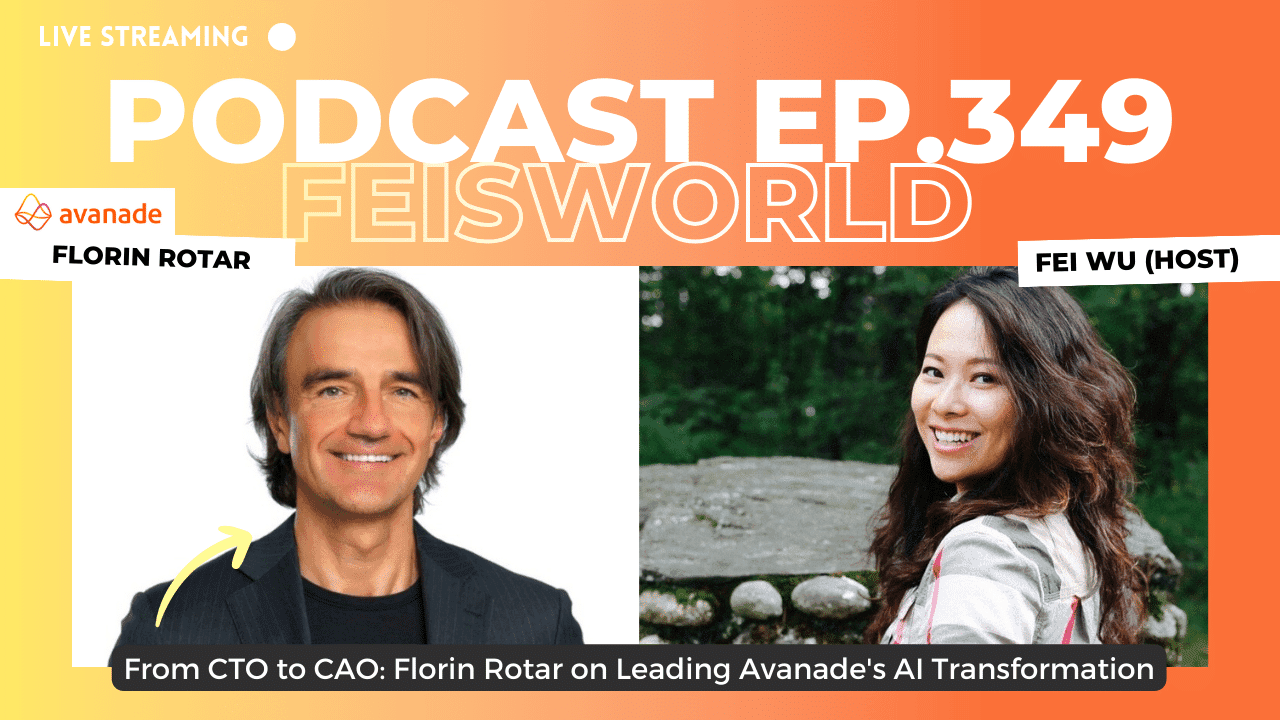
Florin Rotar, the Chief AI Officer (CAIO) for Avanade, is here to share his insights on the transformative power of AI and how it is shaping the future of organizations. Florin’s extensive experience and global perspective make him a sought-after leader in the field, and he has been recognized as one of Entrepreneur Magazine’s Top Ten CTOs to Watch in 2023. From attending and speaking at prestigious events with industry giants like Microsoft to driving Avanade’s own AI-first transformation, Florin’s journey is vibrant, dynamic, and above all, a lesson for us as creators and business owners working with AI.
Florin’s origin story
Florin Rotar, a Swedish native technologist, has led a life that has taken him across numerous countries and continents. After growing up in Sweden and spending a decade in the UK, Florin became one of the first employees of Avanade. Before this, he had a successful career with Procter and Gamble, and created and ran his own business as an entrepreneur. However, his desire to work closely with Microsoft Engineering led him to move to Seattle, where he initially planned to stay for only two years. To his surprise, Florin and his family fell in love with the nature, climate, and people, and Seattle is where they now call home.
Show notes
00:03:41 Technology to people: using AI for good.
00:07:24 AI first: Transforming organizations and industries.
00:10:18 Obsession with what rather than why and how.
00:13:46 AI maturity crucial, human control essential.
00:17:36 Importance of responsible AI and lifelong learning.
00:19:47 AI copilot
00:24:19 How AI-powered Copilot empowers team members
00:29:14 Good training available from Microsoft and others.
00:31:46 Seek learning from others, attend events, and exchange knowledge.
Questions we asked
- How has Florin Rotar’s international background influenced his perspective on AI and its role in society?
- In what ways does Florin Rotar see AI as a tool for collaboration and empowerment rather than a replacement for humans?
- How can organizations align their AI strategies with their mission and values?
- What are some practical ways that executives can gain a better understanding of AI and its potential applications in their organizations?
- How can individuals from different age groups and domains upskill themselves and learn how to effectively work with AI?
- What are some examples of responsible AI practices that Florin Rotar and Avanade are implementing?
- How can the fear and skepticism around AI be mitigated by humanizing it and focusing on its positive potential?
- What are some key insights from the research mentioned in the episode about AI’s impact on jobs and its potential to create value and address societal problems?
- How can prompt engineering and effectively working with AI be valuable career skills in the future?
- Can you share any personal experiences or examples of how AI has been successfully integrated into organizations or industries?
Watch Our Interview
Transcript
Transcript
Fei Wu: In 2023. Very, very recent in September actually. So here in the studio with me is Florian Rar, who is the Chief AI officer for Avanade, who is responsible for driving the global AI strategy and execution across all parts of the business, spanning leadership, sales, solution, delivery capability, and also their partner ecosystem. Additionally, Florian is responsible for his company's own. AI first transformation. Identifying new ways AI can disrupt and improve how we work, operate, and deliver for their clients. He's been named Inside Entrepreneur Magazine's, top 10 CTOs to watch in 2023. As well as Forbes Technology Council official member of 2023, he published and is co-author of the book, we The People, human Purpose in a Digital Age, A Guide to Digital Ethics for Individuals, organizations, and Robots of all kinds. He is passionate, optimistic, and energetic, business and technology leader having lived and worked in over. 10 countries across three continents. Now calling US Pacific Northwest Home. We're now busy raising young, young kids. Uh, he loves running and listening to EDM. So welcome Flor. Just so glad that we're finally able to do this together. I. Thanks,
Florin Rotar: Sophie. I'm slightly embarrassed and blushing by that long introduction. Nice to be here. Thanks for having
Fei Wu: me. Thank you for being here. I gotta like kick off with a warm question, which is, after listening to so many podcasts of yours, recorded with other hosts and seeing you on stage Mm-Hmm. Milless to say the room was so packed. As I mentioned to you, I couldn't even see myself in, so I was really watching from afar. Um, I haven't really heard a lot about your origin story about. Your journey, like where you grew up and how you became the person you are today.
Florin Rotar: Oh, okay. That's a, that's a, that's a long, uh, uh, story, which as you said, spans, um, um, many, uh, many countries and, and several continents. But, uh. Um, I, uh, I grew up in Sweden, uh, hence my accent. Um, uh, spent, um, about 10 years of, of my life in UK as well. So when we established Avanade, I, I joined as one of the first employees there. Uh, I've got a, uh, history in, uh, Procter and Gamble as well, and I've, I used to run my own business prior to that. But, um, moved to, uh, to Seattle about 10 years to um, to be close to Microsoft engineering. 'cause we obviously do a lot of work with and, uh, and, uh, together with Microsoft. So, um, and, uh, you know, I thought it would be, uh, just a two, two year stint. Uh, but you know, we ended up liking the nature and the climate. Mm-Hmm. And the people. And, um, yeah. Uh. We're still there though. I'm joining you from New York today. Wow.
Fei Wu: Yeah, I know you've been traveling a lot. That's, that's incredible to know your backstory, having worked in many different organizations have, uh, been an entrepreneur yourself. So, um, we might come back, ask more questions later on, but I wanna open it up to the questions at hand that so many people are interested in learning about you, which is that you've transitioned. From CTO to CAO at a and is relatively new in the industry. So we're just curious, uh, what was the transition like for you and what are some of the responsibilities associated with being a CAO?
Florin Rotar: Um, so it's, it's been, um, um, an interesting transition to put it mildly Mm-Hmm. Um, because, you know, in my previous role I was obviously. Uh, the chief Technology Officer. So I was living and breathing, uh, pretty much technology all, all the time. Um, uh, but in my new role, um, actually it's more about people. Um, so I. You know, as, as we've, our, as Avanade itself has been working with generative AI now for, for three years. So we, we, uh, picked up the, uh, the signals with the, the Avanade r and d team around what's happening with open ai, um, several years ago. So we've sort of gradually evolved our understanding that this is. Not just about technology, and it's not about data, although, you know, clearly you need a good data and you need a, a robust data platform to be able to have a, any reasonable chance of doing anything useful and durable with ai. But the, the main challenge and the main objective is actually how you get people with you. Mm-Hmm. And maybe more importantly, how you use. And why you use AI as a force for good and something that, you know, you, you use to truly help people enable to be enabled to become the best versions of themselves to mm-hmm. Gain new skills to accelerate their career, to do things they weren't potentially imagining that they would be able to do. So. Yeah, it's been kind of an, uh, a, an an interesting sort of evolution talking from spending, you know, a hundred percent or 90% of my time with technology and now I'm, I'm still obviously spending some amount of time on technology, but it's much more people first centric. The role I. Wow.
Fei Wu: You know, I, last week I actually spent two days, one day at Northeastern to attend their EAI AI event. And then the day after was ai ai, which is AI Accelerator Institute. Mm-Hmm. And something that just came up, which even before I planned these questions, was I think people. Really thought like what would be, uh, what would be like to be a CAO and having just hire someone from outside of the organization, the discussion was that probably would be more challenging. Mm-Hmm. Whereas I feel like for you, the transition may have been more natural because you come from technology, having worked in the organization for a long time as CCTO, so I feel probably a lot of the same responsibility will carry over, but there would just be a new layer of, uh, AI on top of that.
Florin Rotar: Yeah. I mean, I'm, I'm, I am. Uh, blessed and lucky 'cause, uh, you know, it was my sort of the r and d team in the CTO organization, which, you know, picked up the signals around generative ai. Um, um, so I've had a chance to work with it for, uh, at least three years, though obviously we've been doing traditional AI for a decade plus, but then I, I was lucky as, as well, uh, or serendipitous, I should rather say that I, I used to, uh. Look our future after our future of work, practice before. So, um, I do sort of have a, a passion and, uh, and a background on the people side and, you know, uh, how, how to work differently. So this is, uh, it's a lovely combination of tech and people. Oh, that's
Fei Wu: so good to hear. Yeah. Um. You've talked a lot about AI first, leader yourself being in leadership. I feel like there's a lot of influence and, and teaching and learning that you could share with other leaders. So, so if our audience isn't familiar, uh, with this term AI first leader, uh, could you help us understand what it is and maybe how to even become an AI first leader?
Florin Rotar: Yeah, so it's, it's interesting actually. Um, it seems like the, um. The word itself, AI first is a little bit di um, sort of divisive. Um, so, um, because it, it sort of, the immediate knee jerk connotation it, we're putting AI first, uh, above people. And that's definitely not the case. So, uh, the way I think about it is an evolution or rather a revolution of. The eras we've had before with mobile first and cloud first. Um, and, you know, AI First is intended to sort of mean that AI is becoming the new computing platform. Um, uh, for sure. Mm-Hmm. But, um, I think the way we're, you know, we in Avanade are looking at this is that it truly, um, is going to transform the way. Organizations work. Um, and some industries like, you know, our own services industry, but also telco entertainment, financial services, are like really going to be, um, uh, quite fundamentally, uh, impacted by this. And we think that's more an opportunity than a threat. Uh, it will append, you know, commercial models and, and, uh. Sort of the differentiation, the products, the services, the operations of, of the company. So as, as part of my role, and, you know, the way I think about it is that we truly have to look at it as a, as a topic, which. Impacts the entire organization. It impacts people, it impacts finances, it impacts operations, it impacts legal, it impacts sales, it impacts it. Um, it, it impacts, you know, the, uh, the growth of the company, the differentiation of the company. So what I, what we do, what we see is that the, you know, for the most successful companies that we work with, and the way we're trying to. Do this ourselves is that this is becoming a C level and a board level, um, um, uh, priority. Mm-Hmm. Um, and it's, it's, you know, it's fundamental. It's a great opportunity. It also has its risks if you're not doing this right.
Fei Wu: Mm-hmm. Absolutely. Um, I really like what you said at the very beginning of, uh, the Microsoft Envision tour in New York, and I know you've attended so many conferences, but literally the first thing you said, you walked up and before any of the other speakers, you said, you know, when it comes to ai, you know, don't just tell people, show them how it works. Hmm. That really resonated with me. It was very, very short and brief and that's kind of really got me hooked. So could you maybe talk about where that. Philosophy comes from?
Florin Rotar: Yeah, so it's, um, it's a bit of twofold. So, um, I think on, on, on one level there is way too much obsession, I believe, in the industry with the, the what rather than the, uh, why and the how. So I think, you know, you can do loads of things with ai. You can put things into. Production fairly easily. Everybody's talking about use cases, but I fundamentally believe that we as an industry are not asking enough, you know, why are we doing this in the first place? How does this truly align to, you know, an organization's mission and value and, and strategy and objectives. Mm-Hmm. And how are we doing this such that it's responsible, it's respectful, it's human, it's it's humane, so. I think, you know, the show people rather than tell people is a, because I think at the c-suite, there's, there is good theoretical understanding of AI and generative ai, but limited practical understanding. So, you know, what we sort of discovered with our executive team and with our leaders is that when you give them the tools Mm-hmm. Um, when you allow them to use this in their daily life. Um, I think they truly understand the power and the potential. Mm-Hmm. And then the separate dimension is to put it in the hands of people so they truly experience how this is, you know, it's not something which is going to re replace you. Um, it's. Actually, I believe generative AI should be very carefully used for automation, uh, or complete automation, at least because a human needs to be in the loop. A human needs to be in control. A human is the pilot, if I can use that analogy. AI is the co-pilot. And you know the beauty of this, when you have AI and humans where the human is the pilot, the AI is copilot. You know, you're collaborating, you're working together, you're doing things iteratively. It gives you the, that power and enablement to do things you weren't imagining you could do before. I mean, that's kind of wonderful. And that takes away the, the fear and the, the anxiety. So yeah, I'm, I'm kind of a big believer in, you know, just, uh, to ask the why, um, ask the how, uh, and make it real.
Fei Wu: I love how you use the pilot and co-pilot, uh, metaphor and actually makes Microsoft Co-pilot really seems even more intuitive. Mm-Hmm. Because of that. And I love how we transition now a little bit into fear of ai, exactly like you said. And it is almost like the answer, or, you know, one of the solutions to that and is to humanize it to help people understand how you work together. Now, the fear of ai, it's really real. It's, it's everywhere popping up in major media. You know, some people, uh, have this fear because they're concerned with tech itself, AI as a tech itself, or some with privacy. But frankly, AI isn't something any one of us can run away from right now. So we might as well embrace it and learn how it works. So, uh, what, what is your take on that and also have you seen something, anything that has helped people sort of overcome that fear and uncertainty of ai?
Florin Rotar: Yeah, it's a, it's a great question. Um, I. And, and it's, I mean, it's, it's quite serious. Um, and I think we as an industry have tremendous responsibility to do this, right? So I, you know, I, I personally, genuinely believe that we're nowhere near, um, AI maturity where, which is going to be mature enough to be let alone and be unleashed without. You know, human in control, um, and human in the loop. And, and you know, again, the human as the co as the co-pilot, uh, sorry, as the pilot and ai, as, as the co-pilot now, are there organizations and people which are doing the wrong things and, and you know, in my opinion, the wrong things. And, uh, overestimating the power of this and getting, you know, ahead of their skis, so to say, yes, but. Just incidentally this week we, um, we published a, a big piece of research we've done with about 3000, um, decision makers around 10 countries just to survey and do a bit of, quite a lot of research around how, how do people think about this? How do employers think about this, how do employees feel about it? And one piece of statistics with. Really, really made my day and my week, uh, and I think my year is that, uh, about 95% of the, um, uh, employers are not looking at AI to replace jobs, but they're actually believing that their organizations may even increase the number of jobs by up to 9%. So I do, you know, this to me is sort of proof that actually the world is pretty good. People are. Trying to do the right thing. And, and this is going to be such a great, you know, tool to, I mean, to, to create value, to create jobs. And frankly, I mean, it, it just gives us the chance to tackle some of the world's trickiest problems around healthcare, education, financial inequality. Um. Which we've frankly been unable to do before, and we can do that now, and we can create jobs and, and help people become the best versions of themselves. I'm, I know I sound optimistic, but I am generally optimistic.
Fei Wu: I'm with you. I'm also feeling very optimistic, uh, as a creator. There are a lot of. Automation now with AI tools that I can use and apply. Hmm. Uh, even earlier today I wrote an article about how to use 11 labs to create your ai, your own AI voice audiobook, which the cost of so many things that we do, even our mundane lines are so costly, becomes prohibitive for us to even consider it. And so I think ai. In many ways could democratize Yeah. Creativity in the work we do. Yeah. Um, you know, with that said, I, I gotta say like in the past few weeks I've been invited on certain Zoom calls and I've been receiving emails and text messages kind of privately from colleagues I've worked with before. Now that I've been an entrepreneur for nearly 10 years now, I'm still out of the loop or the corporate life, but I'm seeing some layoffs. For sure. And then when I read the newsletters first thing in the morning, I see a lot of these kind of, I don't know, is media rah just like Mm-Hmm. Tech layoffs is so severe. So I'm gonna just pivot the questions to, what do you think is that someone can do regardless of their age and current domain, can really do to future proof their career? Um, or, you know, how to, how do we think about that perhaps in general? If, if future proof isn't the perfect, uh, word for
Florin Rotar: it. That's, uh, an important question. A difficult question. I, I don't think I have, you know, the, uh, the truth, the whole truth and nothing but the truth. I mean, I'm, I'm learning myself, but I mean, just to share some very personal sort of, um, guidelines that I've, I've tried to use in my career, and that's to be. You know, to be open-minded, um, to realize that, you know, the world is changing and you have to be a lifelong learner. Um, and I've always tried for myself to have sort of the profile where, you know, I, I know something about everything, but then I try to know everything about something. Um, and that everything about something, you know, needs to change over time as the world changes and, and re and, and reality changes, but. To be more specific. I mean, um, I think, um, really understanding responsible AI is such a terrific career opportunity because it is not easy. Um, it requires skills and. You know that special something around, in my opinion, around empathy and values and principles. Which I don't think AI will, you know, ever replace, but it, it can certainly help us with it. Mm-Hmm. Um, so I, I, you know, we, as a company, by the way, we're rolling out responsible AI to every single one of our tens of thousand employees because we believe it's one of those skills which everybody needs to know. Everybody needs to understand it's the right thing to do. And it's actually a responsibility we have towards our customers for, you know, everyone in, in our organization to be certified and trained in, in responsible ai. And then another thing, which might sound a little bit strange, but actually I do believe there is an art and a bit of a science around prompt engineering and I, I should say, engineering in, in air quotes. Um, but it, you know, the whole notion of how you work with an AI copilot. In an effective and constructive way, somewhat more iteratively. I think it, it does require a lot of us to unlearn some old habits and learn some new habits. I think it's going to be as important as, you know, sort of basic knowing how to write an email or knowing how to browse Internet is today. We're going to take that for granted a couple of years from now, but I do believe. You know, we all need to, to sort of upscale ourselves and, um, and, and learn that, and. You know, I mean, just to use a kind of a silly or a silly example, and I'm kind of embarrassed I'm going to use this, uh, but I I'll do it. I'll do it anyway. Um, so, you know, we started, um, using Microsoft M 365 copilot way, way back in, in, um, as a very, very early adopter. Um, um. So, you know, personally, I, I started using it and my sort of initial knee jerk reaction was, well, you know, I'm not a native English speaker and sometimes I have grammatical issues in my emails or I, I feel I'm not, I. Writing as good emails as I should. So I started using copilot to help me write more what I thought was more intelligent sounding emails. Uh, but they became longer and more complicated, and I felt pretty good about myself, Ron, only to find out very quickly that my team was using copilot to not read my emails because they thought my emails were, uh, too long and too complicated. So I was using AI to pretend I write emails and they're, uh, using AI to pretend they've read my emails. Right. So, I mean, that's kind of a, a silly example and we, we caught that one pretty early. But it does show that I think, you know, I mean we all need sort of to think differently around how we work with a co-pilot and, and organizations definitely need to think differently around. How they adopt copilots and how they truly get value out of that. So, um, yeah, I don't know. I mean that's, I'm just thinking out loud here, but I, I would say be a long, long life learner. Uh, have an open mindset, a growth mindset. Um, and I do think right now, you know, like really focusing on responsible AI is probably up. It's a, you know, a, a good thing to do. That's what I would teach my kids if they would be old enough.
Fei Wu: Wow. How old are your kids? I was just wondering.
Florin Rotar: So I have a daughter who's seven and uh, a son who's 11, um, who is doubling with Python. Uh, so I'm, I'm starting them early.
Fei Wu: Very smart, actually. That's interesting, uh, for a parent to be the in, in the AI space and how that could have inform how you raise your kids, and that's fascinating. Um, well I think it's,
Florin Rotar: it's actually, I think AI is a fantastic opportunity in education as well. Um, and I'm starting to see some schools which are being really smart about this instead of, you know, fearing. Just sort of the fear factor that students are using, you know, Chad, GPT to cheat. Mm-Hmm. They're using AI to create personalized curriculums. Mm-Hmm. Um, within boundaries of course, and with the right level of management and, you know, avoiding hallucinations and management. But, you know, as a way of. Giving, helping every single student with a personalized learning journey, which meets them where they are based on their interest, their style, their, you know, joys of learning. Um, and instead of having, you know, one teacher to 30 students, you have, you know, one teacher still, or, but with. 30 AI copilots, uh, teachers, which is, you know, helping every single student in an individualized manner. And I've seen some beautiful results with that. Um, so
Fei Wu: that's so interesting. Uh, people in, uh, working in education and who very much pro AI and coming up with quizzes, tests, and interesting exercises for kids, I love just hearing these very open-minded ideas and ideations for sure. Mm-hmm. And I think AI inevitably is already impact impacting education. I think there are a lot of people need to share more positive outcomes as opposed to fear alone. Yeah.
Florin Rotar: Um, I mean, I just again, to, to give you, you know, an, an example around how to, sorry. My, uh, my, uh, app here is, uh, is acting up. So I, the, um. Uh, an example of usage of copilot, um, within our, you know, in, in our organization, which has been so wonderful to see. Um, you know, somebody who's relatively new in the organization who normally might have struggled with how to get started, you know, how do I create a project plan or a deliverable of some sort? Where do I find the right information? Maybe having that sort of fear factor and, you know, at least I, I had the, uh, sort of intruder or imposter syndrome when I started working around, you know, what am I doing here? Am I good enough? Um, well, they found out that, you know, I, I didn't learn anything I should have been learning at, at school or in my previous job. And, and actually to have a co-pilot, which is, you know, reasoning on top of tens of thousands of the work that we have already been doing in the company for the last years or maybe hundreds of thousands of, of, of documents and helping somebody with, you know, a starting point, something which is 50% mm-hmm. You know, done and can, somebody can iterate and, and continue to work upon. And I've seen people really shine and sort of o overcome their fears or, you know, it's really helped some of our team members which have, you know, um, um, dyslexia for example. Um, or just sort of, you know, are struggling a little bit with their self-confidence. And I just think it's so wonderful when you use. AI to truly empower people and people get to see, you know, I'm, this is, this thing is not going to replace me. It's going to empower me, it's going to help me. It's, it's, um, you know, it's, um, it's, it's making me better and, you know, making Workday more. A better experience for me, uh, which I think is, is just wonderful. Yeah,
Fei Wu: I completely agree with you. I know this, I feel like this originally was totally unrelated, but as you're talking about AI and, and people, I remember, um, that also, you know, I didn't grow up in this country, in the US and I, when I first started working, uh, you know, there weren't nearly as many international employees and there was a love of discomfort sometimes with other colleagues. Mm-Hmm. And. I remember having these conversations at, at the very beginning of, well, there's so many foreign workers. How will they impact us, our work and our employment opportunities? It was unfortunate. I have to be in those conversations, but now in retrospect, realize that it's, it's people like us bring a different side of the culture conversation, different way of speaking, looking at, uh, from a different angle. Uh, I feel like now it, it feels a lot more natural, um, and. Yeah, I, it's really interesting. I just had this like, epiphany. So, um, you mentioned the resources real quick and I think it's such a luxury for a company like Avanade and, and of course Microsoft as well to come up with these, uh, internal certifications instead of a broad blueprint. Why labeled something to force onto the employees. So I'm kind of curious, like, uh, you may not have been working directly with l and d or people will create these courses, but what are. What, what are some of the, uh, and that's okay. Like I wonder if, you know, have any insights to some best practices in developing internal resources and internal AI Academy. If not, are there any external sources that you would like to maybe recommend or have heard of? Yeah, I
Florin Rotar: mean, I, you know, it's funny, uh, so we we're, um. Um, we recently announced our, um, Avanade School of ai, which we're rolling out to the entire company. Tens of tens of thousands of people. And, you know, it is a, a bit of, uh, a combination of, um, things which are ready made in the industry, um, and things we create ourselves. And there are some things like, you know, responsible ai, which truly. You know, I mean there's a basic responsible AI framework, um, um, which, you know, are, I mean there are think, think tanks out there, there, um, industrial bodies who've. Worked on this. You know, when we started on this journey five years ago, we had to write the manual ourselves. Mm-Hmm. But, uh, we still believe that a, a really, really good responsible AI framework is something which embodies the company's values and principles and sort of what you stand for. And it takes, you know, it, it. Co the company culture in a good way. So that's the reason I'm saying that is that is, uh, the training course we've developed ourselves. But then again, you know, there, um, there is good, um, training available, um, that pe you know, organizations and people can, um, um, can, can get from, uh, from the outside world. You know, Microsoft has some great resources. Um, they're launching, uh, prompt engineering library as well, um, which is, which is really good. So the best examples from the industry. On how to, how to effectively, uh, uh, use, uh, prompt engineering. And I think we've, we've, uh, contributed to, to a bunch of those. Having worked with copilot for months now, uh, I mean, for me personally, um, I just read a lot. Um, and one of my favorite, uh. Go to resources is, uh, the AI canon from, uh, Andres and Horowitz. Mm-Hmm. Um, uh, so I'm not sure how much has been updated lately, but, um, it's a great collection in my opinion of, uh, you know. Deep articles, uh, a lot of research, um, focuses on both the people side, the business side, and on the technology side. And I actually really, really enjoy, um, uh, uh, ca catching up with that. But I, I. I, I don't know that I have a, uh, you know, a single source. I'm lucky enough is that, you know, we're a joint venture between Accenture and Microsoft. Our friends in Microsoft have a ton of training and content, and our friends in Accenture have even more training and content. So we're taking the best of, of both worlds and, uh, and, and using it both. Wow. Wonderful.
Fei Wu: Yeah. So I noticed we probably only have like a couple of minutes left. I just wanna close on a question. Yeah. Um, it's okay if the, you know, um, I'm not sure if this is the perfect question, but I'm really curious, uh, that you've been speaking at a lot of different events. Hmm. Uh, this is probably, maybe you've been living in the space of your life for a little while now, and people like myself, you know, post pandemic, have finally like stepped out of the house traveling, going to more events. I'm curious, do you have any quick tips on how to make the most of, you know, AI or tech events in general as a speaker, as well as an attendee or as a creator in this case? Mm-Hmm.
Florin Rotar: Uh, that's a good question.
Fei Wu: Um, overwhelming, at least about like, oh
Florin Rotar: my God. Yeah. I mean, I, um, I try to meet people and to learn from people because I don't think anyone out there has the complete story. And I think the, you know, um, value truly happens when you meet different people. And you exchange what you've learned and you're open to learning from others. So I've, I've had the benefit of and privilege, you know, I've been at Microsoft Events and met with a lot of people there from, you know, whom I learned from. Um, had a chance a few weeks ago to attend the Corporate Boardroom Summit and to engage with the board suite and to hear, you know, how they're thinking about this. And it's, mm-hmm. Which is quite different from, you know, what, obviously what, uh, the CIOs and the CDOs that I mostly work with are, um, are, are thinking about this. Um, I got a chance to attend the Hunter Mueller, um, uh, strategy event in, in Silicon Valley last week, which was really useful as well. So I try to, I try to meet people and to carve out time for a. Sort of quality discussion where I hope I can offer them something they can learn from. And I'm definitely looking for nuggets and lessons learned from, um, from others. I think otherwise it's a personal style. So as a speaker, I. Um, you know, I just try to be honest and I, I I dislike sort of the politically correct super scripted presentations. Uh, I have to admit, actually, I didn't read your, uh, questions before you sent them on purpose because I, I, I did want to, you know. Answer from my heart and, and be honest and direct and mm-Hmm. You know, just, uh, share what I, what I feel felt and what I've, what I've learned. Um, uh, and, but I think, you know, just be, be curious. Um, be optimistic. Mm-Hmm. Um, and, and embrace this. And I, I think, yes. I mean, there are risks, um, and there is a huge level of responsibility that we all have. Mm-Hmm. But isn't it wonderful? I mean, we're, we're in once in a generation, or maybe more than once in a generation, maybe once in a hundred years or 300 years, um, point in time where, you know, we finally have some tools that can help us address humanity's biggest challenges in a way we haven't been able to do before. And how wonderful is that? And you know, what a great opportunity to, to be alive too. Be able to learn this and, and, you know, help and participate in solving those challenges. So, uh, yeah, I guess optimism is a good thing.
Fei Wu: I love it. Thank you so much, Lauren. I couldn't find a better way to kind of wrap everything up with that, not with my question, but with your answer. Really. And I wanna remind people who are watching and listening to this also check out all the resources I've included in the description below. To learn more about Florian, please follow him on LinkedIn and also avanade's website as well as a 16 Z, which is, uh, several resources mentioned during this conversation.
Florin Rotar: We're not affiliated with them, I just like what they're doing. So well, well done.
Fei Wu: Absolutely. Microsoft, Microsoft, the co-pilot. I'll include some resources there for sure. And, uh, Lauren, if there's anything I can do. We can do the support. You please do not hesitate to reach out. And with that said, I'm gonna conclude today's recording.
Florin Rotar: Thanks, Faye. It was a great talking to you.
Fei Wu: Oh, likewise. Thank
Connect with Florin Rotar
Your turn! What do you find interesting and helpful about this episode of Feisworld Podcast? Please let us know in the comments below.
Who else do you want to hear from next? Feel free to recommend future speakers to our show. Thank you!
The entire blog post with the introduction, back story, show notes, and questions are created automatically with one of our favorite AI tools called Castmagic in minutes, not hours!

Written by
Fei WuFei Wu is the founder and CEO of Feisworld Media, a Massachusetts-based digital media company helping brands get discovered by people and by AI. An Adobe Global Ambassador and brand partner to ElevenLabs, Synthesia, and 50+ other tech and AI companies, she hosts the Feisworld Podcast (400+ episodes, 500K+ downloads — guests have included Seth Godin, Steve Wozniak, Chris Voss, and Arianna Huffington) and co-created the documentary Feisworld: Live Your Art on Amazon Prime. Fei writes for CNET, Lifehacker, and PCMag, and her work has been featured in Forbes, Harvard Business Review, and WIRED. She has been publishing on the internet since 2014 — long before AI discoverability had a name.
View all posts by Fei Wu→Stay updated
Weekly insights on content, AI, and digital media.
Keep Reading
Related Articles

Focal Alpha 50 Evo Review: My 2026 Pick for Creator Studio Monitors
Joanne Lipman on Mentors, Untapped Talent and Why Women Should Stop Waiting to Be Perfect