Ian Nagy: How to diversify your revenue and traffic to 10x your growth (#353)
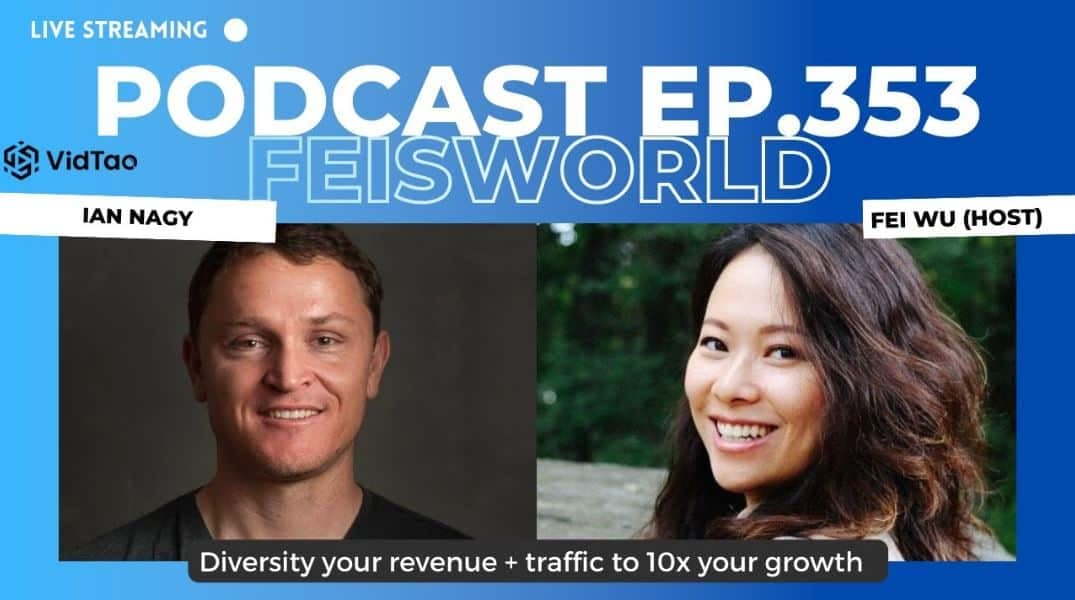
Our guest today: Ian Nagy
My guest today is Ian Nagy, co-founder of VidTao @vidtao8662
Ian believes the key to growing your business to an 8 or even 9-figure is about diversifying your traffic (and your revenue).
He co-created VidTao, a free software for tracking top-performing YouTube Ads, now with over 100,000 users on the app today.
We’ll cover:
How to find & track ad performance in their market (it’s the best database of YouTube ads running right now)
How to quickly script and create high-performing YouTube ads (without any fancy equipment)
How to launch, optimize & scale high-performing YouTube ad campaigns
Moreover, I want to understand how Ian became an entrepreneur in the first place, his success stories but also projects that didn’t work out in the past.
Watch Our Interview
Transcript
Transcript
Fei Wu: Feisworld media. I feel like I haven't really gone live in a little while at this point. So wherever you are in this world, and if you're working, not working, eating lunch, really welcome here. I am talking to Ian Nagy, I like to say his last name correctly, which is Ru uh, I think, I believe you're originally, or you're originally from California, but your parents, your heritage, uh, is rooted in, uh, Hungary. So, um, so Hungarian and, uh, so this is, am I saying correct, Ian is, is, you are Hungarian, right?
Ian Nagy: Yeah, yeah. I mean, I'm. Born and raised in California. But yeah, I'm also a Hungarian citizen and my last name is Hungarian and I can't even say it right. So
Fei Wu: I I was, I was kind of guessing like yeah, uh, nay. So that's also correct. Um, I Works for me, works for me. You're, well, you know, it's so interesting 'cause I interview and, and go live with different people and kind of moderate these webinars. This is the part that I always trying to get right with people. And then yet people are, especially people who are immigrants that come from like very mul multicultural backgrounds are very forgiving. But I always wanna make an effort to say it correctly. So welcome through the show. I'm so glad that we arranged this months ago and today is the day to go
Ian Nagy: live. Yeah. Thank you so much. And thank you for, for being on our podcast and um, I can't wait for our very slow, uh, process to finally. You know, put it live so we can share what we were able to talk about. So thank you so much for continuing the conversation.
Fei Wu: Oh, thank you for your time for being here. And, uh, I wanna quickly introduce you and there's so much I still wanna learn about you, your work, your origins. Um, so for people who don't know about Ian, so check out Vid Tao. That is V-I-D-T-A o.com, is that correct? I hope I use it right. Alright. I know there's a lot of doco and AI these days. It is.com, do com. Mm-Hmm. And I find this, uh, conversation is gonna be very interesting and educational for me is because, you know, Ian has a long history in understanding how to effectively run. Ads in this case, ow is designed to help you optimize on YouTube. So YouTube advertising. Mm-Hmm. And we want to really gear towards this, this conversation towards people who can relate to what Ian has done, what I have done. So you don't have to be a multi 7, 8, 9 figure, uh, business. Instead, if you have something like 300, $500 to spend each month, which isn't a lot for advertising, we still wanna talk to you and welcome your, uh, your questions here and, and see what we can do to help you understand how to leverage and how to optimize the budget you already have. And, um, yeah. With that said, Ian, the reason why I find it super interesting is because I learned about your work through your outreach to me to be on your show. And very quickly, I realized Vidal has now over a hundred thousand users, and you're very transparent, very humble about your beginning. So. I really wanna take this opportunity for people to really listen in. What is it like to start a software company, other types of businesses you've started, how to really live with and persevere through, you know, success as well as failures. And, um, so welcome to the show. Can I drop a first question for you? Yeah, please. Thank you for
Ian Nagy: having me. And yeah, absolutely.
Fei Wu: For the intro. So I would love for you to maybe talk to us at a high level, like when you approach people for the first time. Mm-Hmm. What is it, what is it that you do and what is vial
Ian Nagy: about? Yeah, so I mean, fundamentally, um, I would say that I'm in the business of performance advertising. So basically being able to, you know, take an action and then observe how that action results in other people taking actions. Mm-Hmm. So whether that's putting out a piece of content organically, or a video organically, or a piece of paid content where you're putting money behind it and saying, I wanna show this piece of content to these people on a platform like. You know, Facebook, Instagram, or Google. Mm-Hmm. Um, whatever the case may be. Just essentially it's, uh, observing, making experiments in human behavior and, and trying to, you know, fundamentally trying to provide some value to people and seeing how that value resonates in terms of money coming, taking an action. Mm-Hmm. What kind of act action comes back. Um, and, you know, from the business perspective, what kind of money comes back from that
Fei Wu: action? Yeah, very. I, I like how straightforward you make it to be, and I think there's so many ways to break that down for people who are listening. Number one I did realize last night when I was setting this up is how to diversify your revenue, not diversity. I correct it in the livestream platform, but it's somehow still streaming that way. I'll be sure to correct it on social media. You know, I already did, I think on YouTube, on LinkedIn, so sorry about that. Um, I, I definitely wanna catch up and kind of break it down on this, Ian, about, uh, the content that you're talking about. A lot of people think about ads, they're thinking about purely advertising, but truly is the content that's behind it. When we started working, uh, here at Face World, when we started working with a few clients on advertising for, um, particularly for Facebook originally before that was Google ads these days, a little bit of LinkedIn ads, which I've kind of have very mixed feelings. Mm-Hmm. Um, there that people think. It's just ads or just text. Uh, in fact, a lot of that has to do with videos, short form videos, videos of different, uh, orientations or aspect ratios, you know, vertical square, uh, landscape and cover art and call to action. There's a lot going on. So before our call that you mentioned, uh, the idea where the importance of really knowing how to create content that resonates with people. There's a lot of different practices that, that we have done in different areas, such as email marketing being one of them, but even just creating content where Instagram reels like getting started, creating content that resonates with people. So I would love for you to talk about the importance of content, how to create, uh, you know, magnets or like how to create content that actually sticks and then surface to the
Ian Nagy: top. Yeah, no, totally. It's a great question. I think it comes down to understanding the, the needs of the people who you're trying to talk to. So the more you're. In the space yourself, or if you're coming from outside that space, having conversations, understanding the challenges that people face. Mm-Hmm. And then that allows you to see opportunities to help really. Mm-Hmm. And, um, and then, you know, in my eyes, I mean, so contents been a huge part of our business from on the software side in terms of just building a, a really big email list and a really engaged email list that we can communicate with, understand challenges they have, and then basically provide paid solutions to whether the software or services. Mm-Hmm. Um, yeah, I mean, it starts with understanding the challenges and then, you know, um, trying to be helpful and, and provide, yeah. Provide useful, actionable, interesting. Um, and I would say nowadays as the barrier to entry for content becomes less and less with a lot of ai Mm-Hmm. It becomes more about, you know, cutting through the noise and actually providing unique insights. So. Um, somewhat so it's, I guess it's entertainment and utility together. Mm-Hmm. In the context of understanding your audience's problems. That's kind of the overall framework for, for useful content. And that content can be, uh, simply to build a relationship. It can be to actually initiate, let's say, you know, deepening that relationship, going from viewer to actual subscriber. Mm-Hmm. And then subscriber to customer. And then that content can actually be something that people pay for in order to actually, you know, get a very, um, prescribed formula, whatever to apply and then seek some kind of result. So that's kind of high level how I look at content.
Fei Wu: Yeah, it, it is really interesting. So I'm gonna use Avid Tao as an example because a lot of the questions I get from, uh, entrepreneurs, especially creators and small business owners, is that we are people who are very excitable, have a lot of energy, and uh, you know, many of us are running more than one business, uh, at, at a time. So for me, you know, I have a few that I'm focusing on now. People really struggle. I'm sure you probably remember from, uh, when you were starting out as well to really how to get an idea off the ground. So could you maybe talk to us a little bit about the beginning of it? How has it always been, what it is today? Did you guys have to pivot and how did you find traction?
Ian Nagy: Yeah, so I'll, I'll, uh, I'll definitely walk through that story in a sec, but I just wanted to throw out a, like a public service announcement from my own experience is, um, basically be careful investing your time and your money in. An idea that you think is really good before you get any kind of feedback from other people who are willing to pay for that idea? Um, that, that, yeah, that it has the, has value, you know, if you are intending to make it a business, of course you're doing it for its own sort of benefits and has a passion apart from business. That's a whole other conversation. But, um, every time that I've failed at stuff, it's always been because I've gotten kind of obsessed with my own, you know, my own thing and, and not actually field tested it. Whereas like for ow, um, so OW is a YouTube ad library. It's actually a really simple idea. Basically it's for advertisers on YouTube. And YouTube. As we all know, those annoying ads that pop up before the video, you actually wanna watch. That's, that's what our agency does. We make those ads, we run them, we show them to the audiences, um, who we wanna show them to, and businesses pay us to do all that. So. We're nerds about ads. So we want to understand, hey, who's running what, what is, um, you know, Grammarly running and what can we learn from that and how well are those ads doing? Are there, is there any in indication of how that those ads are doing? So the way we started was just the most simple thing possible. We figured out a way to manually grab these ads and make a spreadsheet for our own internal use. So, super simple MVP, right? The intention was never to, Hey, this is gonna be another business. It was more about this is solving a problem that we had ourselves. So we're documenting all these ads, we're tracking them manually, and then at a certain point, you know, we realize, oh, we should actually make a software that allows us to do this better and at a higher scale so that we have more data and we can understand the landscape even better. So it's kind of like initial step and then the, you know, investment of time and brain power and, and, and money. Um, emerged from a natural need of, Hey, this is for us at least, it's providing some value and we want to make it even better so that we can use it. Mm-Hmm. So that's kind of the, the starting point. Um, back to the PSA. Yeah. Just beware of premature optimization, I guess is, is another way of putting it. Like, don't, you know, it would be stupid of, would've been stupid of us to invest like a hundred thousand dollars that, you know, we didn't have at that point. Mm-Hmm. In making some kind of full fledged slick software. Um, so we just built a little spreadsheet for our own internal use. Literally a Google, a Google sheet, and then that's how we started the, the software. And then from there, you know, we said, Hey, let's make an actual software out of this. And hired, um, an agency, a software agency to help us do that. Made the u user interface and literally in Google Sheets. So like, just use a spreadsheet to kind of mock up what was gonna be where. And then that's kind of how we got started. Me and my business partner, uh, Brett. Um, we sat in his apartment in Valencia, in Spain and, and just, and worked on that. And, um, so yeah, that's high level kind of. The beginnings of, uh, of our, our
Fei Wu: software. Yeah. This is super, super fascinating and for people who are watching this, I know that there are some of you are actively watching on LinkedIn. Sorry, we can't really see you live, but if you drop a question, we'll certainly get to that, is that we are kind of touching upon the concept of, uh, NDP minimal viable product, by the way. That's not just, I don't see that term isolated to, um, software projects alone, but I think about it as a podcast, you know, maybe a an SEO project or you know, in your new blog, whatever it is that you may be doing, even your YouTube channel. So, uh, Ian, could you maybe talk to us about, um. What was MDP look like to you? Because people sometimes struggle to either wait too long or not wait long enough. Uh, you know, waiting too long means suddenly, you know, your idea is no longer relevant or there are too many, there are other people already beating you to the, to the competition. They launch first. So could you help us understand how to balance that too early or too late?
Ian Nagy: Yeah. So, you know, we're streaming on LinkedIn, right? So it's, um, Reid Hoffman I think had this saying it's, if you're not embarrassed with the first iteration of your product that you release mm-Hmm. Then you launch too late. So point, and I don't, I, some people disagree with that now because of certain things, but I, I think it's still a really good rule of thumb and it's just so many of us are perfectionists and, you know, struggle with like, getting something perfectly polished before we feel like it's ready to release to the world. Mm-Hmm. And, um. I do think it's a mistake because, you know, when we release something to the world, it's not really for us. Usually it's for other people. And the only way to really, the real polishing that should be done is actually getting that user feedback and then iterating based on that feedback and seeing how it actually, how it actually, um, you know, exists in the whole Mm-hmm. Ecosystem of whatever it's trying to do. So I think that's how I'd like to think about MVP. And as you mentioned, it's not just about software, um, it's about, you know, like let's say you're doing a, a, a new type of service. Mm-Hmm. A new piece of type of content or even a piece of content like, Hey, I wanna do a, a three part series on this particular topic. What if I just did a tweet about it and saw how the, you know, how the engagement is and then. Based on that, then you can build, decide to continue to build it. Or just pause that for now. Put it on the back burner.
Fei Wu: Mm-Hmm. Uh, I'm curious now you have a hundred thousand users on vidal.com Mm-Hmm. Um, what was that trajectory like? How many years? It just give kind of beat people a sense of how many years have you been working on it? When did the first, uh, MVP launch? Mm-Hmm. And where, when was the tipping point, you know, going from, you know, dripping of like one, two users a day maybe, and then suddenly it took off. What are some of the efforts and um, uh, kind of the tipping points involved in the process?
Ian Nagy: Yeah, yeah, for sure. So it's been a, it's hasn't been instant. So I think 2019, we actually made the first, uh, piece of software that, that nearly five years ago. Okay. Yeah. Almost five years ago. Mm-Hmm. So it was in parallel with our, we have a video advertising agency called Incept that, uh, bra and I. Co-founded and then we continue to run. And, um, so yeah, it was just to kind of assist that. So, and then this year, mm-Hmm. You know, we launched a whole new version of the software, which is total rebuild Mm-Hmm. Uh, it's massively enhanced, all these different things, but yeah, in terms of the user trajectory. So we got an initial, because Brat and I were both really involved in performance marketing, had a lot of, or you know, had some colleagues, other advertising nerds. Mm-Hmm mm-Hmm. Oh, we, we just shared what we were making. Hey, check this out. And then there was an initial buzz for sure. I don't remember the exact numbers, but, you know, we got some, it wasn't, you know, we didn't launch to crickets really. So we, because we had already built these relationships Mm-Hmm. And we already identified this need. Mm-Hmm. And um, so we had a little, I guess you could say a core. Uh, data tester group that really was excited to try out the software.
Fei Wu: And how, how big was that group? I'm just curious. I mean,
Ian Nagy: I don't think more than a few dozen people Really. Okay. So it was pretty small. Mm-Hmm. But, um, and we just, you know, we were in different groups, slack channels, private committees and stuff. We just said, Hey, check this out. It's free. Mm-Hmm. Try it out. It solves this particular, you know, this particular need. Mm-Hmm. Give it a, give it a whirl and let us know what you think really. Mm-Hmm. And, um, yeah. And then from there, you know, it just started growing and growing and, and then, you know, it's become a really, uh, a really incredible organic growth engine for our business because it just sits there and, and we get, you know. Dozens of people every day, if not more than that, significantly. Um, just showing up and signing up to our email list and then we can, you know, they buy now it's, we have a paid part of the software, so we have a total paid component We didn't for several years. Mm-Hmm. Um, but that software just grew an amazing email list that we communicate with. We've had an incredible live event that we did in Oxford University, uh, a couple years back. Mm-Hmm. And, um, so just made a lot of relationships. And then our agency business has really, um, been able to grow in large part, you know, not entirely from the software, but it's, it's definitely helped a lot to, in terms of lead flow and stuff like that. And I just wanna say one thing too, because I know a lot of people on the call are thinking like, oh, you know, software sounds so difficult. And, um, Mm-Hmm. Like, oh, it's not really relevant to me. I would encourage you to rethink that. So, and the whole thing, like what is software anyways? It's a way of, it's a way of solving a problem, um, making it, solving a problem easier than it is to do manually. So, Mm-Hmm. It's just kind of automating something fundamentally and, and assisting you to, um, to, to doing something like, Mm-Hmm. Word, Microsoft Word is simply like, instead of typing it or writing it, it's making all that digital. So it's not conceptually, it's just solving it, solving your problem. So I'd encourage you to think about problems that whatever you're, you're into business wise or personal-wise. Mm-Hmm. Um, think about problems, simple problems like very small MVP. Right. Very small incremental problems that you think would be, could be interesting to solve that might be useful to you and then other people in your situation. Mm-Hmm. And now more than ever, it's easier than ever to, to create software, you know, thanks to ai. Mm-Hmm. Um, explore that I think can be a really powerful. Um, additional leg to stand on to diversify your revenue, really, no matter whatever you're doing. So just something to brainstorm.
Fei Wu: I would love to definitely get into AI in just a bit because I think this past year has been a little crazy. I think the word crazy was used on several phone calls, including one I was on today. There are a lot of instabilities, a lot of changes happening. Um, something that I feel like we are lucky to have lived that life as an entrepreneur for the past 10 years. Uh. Precisely from when we formed the LLC. So we've seen a lot of ups and downs in our own businesses and our clients' businesses. So, but at the same time, right, AI, as in the age we're living in, suddenly people who didn't make a lot of money, they are, you know, becoming, you know, millionaires or, you know, starting their own agencies. And people used to make a lot of money, have very stable, uh, careers and suddenly they now fear that might lose it, not temporarily, but forever. Um, so if you guys have any thoughts or questions, I would love to see that in comments. But before we get into that, I, I wanna just comment on something you said about solving a specific problem. What, what was it about, uh, existing YouTube advertising platforms and tools that were already there? You know, YouTube as of 2019 certainly wasn't a brand new idea. There were a lot of tools on the market today. You know, we, we use from an SEO perspective, we use two buddy. I know Vid IQs out there as well. What made you, what, what is the, the problem that only Tal could solve and what, what, what are some of the pain points that you felt like you had to create this tool?
Ian Nagy: Yeah. I don't think there was, when we launched it, I, I might be misremembering, but I don't think there was another, uh, tool specifically focused on basically spying on YouTube advertising specifically. Mm-Hmm. So it was something that didn't exist. I remember feeling a lot of urgency around, oh, we need to get this, you know, we need to get this out because other people are gonna do it. Um, in the end, other people did it. There are other businesses that, that did this exact same thing that we did. Mm-Hmm. Um, but, um, and which in the end doesn't really matter, you know? I mean, it is what it is. Like, if it's a good idea, it's almost like, you know, I think people are scared of competition, but, Mm-Hmm. I think competition is a good sign that, you know, yes, it's good to be early to market. Mm-Hmm. Uh, blue ocean, blah, blah, blah. Um, but in the end, it's a sign that you're on the right track. Um, so, but yeah, the, the problem we solved was there's no real big index of all the unlisted YouTube, YouTube advertisements. Mm-Hmm. And how they're actually performing. Mm-Hmm. And so, and we wanted to know that for our own good as advertisers, um, is one of, we were the, one of the biggest, um, YouTube advertising agencies around. So, uh, we just needed to know that to actually help our clients get results.
Fei Wu: Yeah. So, yeah. That's, that's super fascinating. And, uh, I don't know, uh, vial well enough. I started playing with it. Since our last conversation, I found a really interesting, especially when you said the spying part, Uhhuh as an. Understanding like what, what these brands are doing, right? Most people, like even for us as people who work in the industry, it would be hard for us to say, okay, you know, Natalie, check it out. This is what Nike's doing. Even, you know, maybe some more relevant brands. I, I wouldn't know what this x, y, Z company is doing. I don't have no idea how to get to those ads they're currently running, or it ran before, uh, you know, what channel they're on. So it's really fascinating. Could you maybe, um, help us understand what are, if there's any AI elements to it, like how you guys leveraging AI or, or any specific tactics or approach, uh, for you to get to the results that you need?
Ian Nagy: Yeah, so, so I would say that, um, I guess you could say the, there, I mean there are a lot of tools that are way more integrated with ai, but I would say one of the biggest things to, that's really interesting that AI has opened up is. The idea of basically quantifying semantic meaning. Mm-Hmm. Um, there's something called vector embeddings, where basically you can take, and I know Fay, you're, you're, you have an AI business of your own. So, and you, you we're all learning, all learning here. So I I, and I'm probably butchering a lot of the, the, the, the terminology and the sort of, uh, concepts. But basically with it vector embeddings, you can, you can take any kind of chunk of text and you can turn it into, let's say like a 1500 string or 1500, uh, place vector. So 1500 different little numbers. Mm-Hmm. That then it quantifies, it basically takes meaning like the meaning of words and then makes a number out of it. And then that allows you to do interesting things. Like say, I wanna search for an ad that has to do with. Like Nike or shoes or something, and then it's gonna pull up all the ads that have to do with shoes, even if they don't say, oh, this is about shoes. Mm-Hmm. Um, and then now with images, the same thing. So it's not just about text, it's about, you know, what's actually in the image. Mm-Hmm. So, um, I guess classification and, and search are, are really powerful applications for that kind of technology on one side. And then also, you know, the gen, the generative AI is pretty obvious. So in our tool we have generative ai, uh, tools where you can basically, for instance, you can take a video and then, um, and there, this is not the core of our tool, but this is stuff that we've built and as to help our, our audience. Mm-Hmm. Basically, for instance, you can take a video and, and. You can generate new hooks for it. So new little five to ten second intros, new ideas for the hooks based on what's there, both visually and also audio. So what's being said and what's being shown. Mm-Hmm. The ai, you know, like GPT-4 vision at this point can look and see what's being shown frame by frame and then say, okay, this is what's on the screen based on what we've seen success with in these other videos. Here are some new ideas for you to test. And then, you know, presenting that to, to our user
Fei Wu: By the way, is that, uh, just so I understand, is that an existing feature from Vidal? Or This is,
Ian Nagy: yeah. Yeah. That's, that's in there. It might be hard to find, um, but yeah, it's, it's in there.
Fei Wu: Oh wow. Yeah. Yeah, that's interesting. I mean, that's such a great use case of ai. I was literally right, right before this I was creating some videos for Adobe Express and to see how generative ai, for instance, could add objects that, that currently do not exist in an image of yours where you can remove elements very easily. And just learning from that pattern was really interesting. Um, so it kind of related to what you just said, giving context even to generative AI is important. So similar to prompts, you know, more context you can give to it, the better output it will be. I noticed when I was playing with Adobe Expresses like generative AI or generative fill tool, um, it was a little hamster running on, you know, in the living room and it was like a remote control. And what I wanted to do was just remove the remote control, but instead of just coloring over the remote control, I actually use a tool brush to cover over the floor. So now AI understands contextually. What is not just that one piece of remote control, but what's near it? It was like repainting it perfectly. Wow. To, yeah, and it was just so interesting, like in my mind is like for I, I think there is always like maybe a little bit of a missing step in education to people to understand like, what does context really mean in this case, how can you really take advantage of AI now? I mean, I certainly, any reflections you have for, for what I just said, but I think a lot of people, and a lot of the content I've been producing on this channel has been about AI is, can be very powerful if you use it correctly. Uh, at the same time, what is your advice or maybe some of the conversations that you've been in, 'cause you've been very open-minded, you're, you know, your software guy now, and this is, uh, the world that you live in. Like when you approach people, someone imagine you care about who is really struggling, maybe currently out of a job 'cause of ai, we we're semi-related, adjacent to the issue that we're talking about. What would be your advice to people that they should maybe think about AI or think about their career, their next steps differently? Mm-Hmm.
Ian Nagy: Yeah. I mean, you know, you mentioned earlier in the conversation, the pace that we're on right now is, it's insane. I mean, if you look at, I. Image generation from a year ago to now and then let alone, you know, what just dropped with, what was it, Sora Mm. And all that last week. Crazy. It's, it's just, it's insane. And it's, it's only gonna accelerate and it's Mm-Hmm. Um, it's, it is scary too. So I would say that, yeah. I'm gonna provide a rambling answer to your question, but basically, so, um, I don't think it's really possible to keep up with Mm-Hmm. Everything that's happening and there's so many amazing minds that are working on so many different things that it's really easy to get fixated on, like a specific use case. Mm-Hmm. Um, and, you know, building some tool and then basically it's obsolete. Mm-Hmm. So, and I've seen it happen myself. I mean, so last, I guess it was a year ago, I started playing around with, um. These sort of chat bots basically, where you, you take, uh, it's called retrieval Augmented generation. I think that's what RAG stands for. Mm-Hmm. Basically, you know, chat g bt is kind of its own, let's say its own kind of black box, or it has been until there's, you know, now you can interact with the internet to some degree. Mm-Hmm. But, um, there are ways of basically taking a bunch of context and then, uh, with the vector embeddings that we were talking about earlier, you can basically like have it pull from, let's say all of Ernest Hemingway's writings, let's say. And you can say, you know, I want you to respond like Ernest Hemingway based on this, you know, this specific. Data set. Mm-Hmm. So you build a chat bot? I made a, a chat bot just make around. It was, um, I know we're not supposed to talk about religion and I'm actually not.
Fei Wu: I'm not. Oh, yeah. It's okay. It's okay to mention that. I just,
Ian Nagy: yeah. So I, and I'm, it's actually my, my friend said, Hey, what my friend who's actually Christian, he said, you know, why don't you make a Jesus chat bot? So I may actually made one that was just for fun. That was like, just ask. It was called Just ask Jesus and you could talk to Jesus based on the, the Bible. Mm-Hmm. And I'm not, I mean, you know, I'm not a, uh, I'm not a Christian, uh, person, but I thought it was pretty cool. And people about, you know, people who tried it, that was pretty cool. Yeah. But anyways, that was just, that was just messing around. Uh, but, but point being that, uh, uh, yeah, I shut that down just 'cause it was, it was just like a little hobby thing. But, um, anyways, point being spent Mm-Hmm. A fair bit of time trying to come up with a use case that we could apply to our business. So Vita Mm-Hmm. And, um, you know, made a few things. And honestly, nothing really. Nothing really, nothing really stuck. I spent a lot of time just. Twiddling my thumbs in that respect. Just building different things. In the end, I think, you know, now with, was it Gemini's context window? Mm-Hmm. Um, it's like a million tokens or something ridiculous. I don't remember the exact number, but it's ridiculous. Basically now you, you know, you don't, I think very soon you won't need the, well, I'm not an expert at any of this stuff, but the, the expanding capacities of some of these large language models Mm-Hmm. Is gonna make a lot of the stuff that I spent many, many hours messing around with pretty much obsolete. Mm-Hmm. So my main point is, um, I think it's really good to stay on top of everything that's happening in AI because, you know, the vast majority of people are com are still very naive to the whole thing. So if you were like, you know, if you were just kind of casually a, you know, a armchair ai Mm-Hmm. Uh, you know, enthusiast, I think that you have. You know, you have a, an entry point to a lot of conversations that can be beneficial to, to new jobs. And I think a lot of more established businesses are gonna be looking for people who are more informed than they are. Mm-Hmm. About this stuff. So even if you've just been paying attention for a few weeks and you're kind of just kind of exploring this stuff, you can be more of a, um, you know, you can provide more guidance than, than, uh, people might be able to do on, on their own. And I had a, I have a friend who's, she's a project manager, and that was, she's, you know, she's, she's saying like, oh, what should I do to kind of level up my, um, you know, my. Yeah. How attractive I am as a, a potential hire to new companies. Mm-Hmm. I said, oh, you should do two things. One is you should definitely think about how you can combine AI with your, that current line of work. 'cause think of all the project managers who are gonna be looking for that kind of thing. Mm-Hmm. Uh, and you should build in public your own skillset. So, um, like on Twitter, share what you're doing to kind of apply to ai, to your project management skillset. So that dovetails into my point that I took a long way to get to, which is I think doubling down on, on relationships. Um, human relationships is crucial. So network and also, you know, creating some kind of community around sharing what it is that you're doing. Mm-Hmm. Um, is a real, you know, obviously there's the, the positive side. It's amazing to be able to interact like this with people and, and, um, have a community. And then also it's a real. You know, life raft, if things really go south, you have people who can go, Hey, you know, I know you, you connected. Um, is there anything that, do you have a job for me? Do any work I can do to help out? Mm-Hmm. So I think doubling down on that stuff is huge. AI can't replace that yet. Mm-Hmm. Um, and then also just kind of, definitely playing around with ai. Mm-Hmm. Um, is, is definitely. Uh, yeah, I highly recommend it. It's can be very interesting, whatever you're
Fei Wu: into. I think the different verticals that you mentioned is, could be so interesting. You know, AI and project management, and we just talked about AI and advertising ads and specifically, you know, we can argue ads for YouTube, ads for Facebook ads for Instagram. And then, uh, that's interesting 'cause I used to be a project manager for a decade. I remember. Um, you know, I was pretty good at it too. I remember just different spreadsheets, different ways of thinking and organizing a very, you know, complex project. Not just simple one projects, uh, plural. And, and having them run differently, uh, in parallel. There's so much you can do. And I think, Ian, you totally hit it. The, the fact that human relationship, I think it's more important now. Than ever before. It's always been important, but now even more so, uh, as of a few months ago, I was so stunned by like the, uh, statistics that somehow still 80% of the people have not even drive most basic elements of ai, like including chat g bt open 3.5. It's free for anyone to use. Like there're a large number of people who refuse to even log in and use it. And then I also have been in conversation with people within certain professions and kind of just like keep their blinders on to say, this needs to go away, this needs to be controlled, uh, to be managed to be eliminated and, and frankly to anybody who probably knows and while watching, this is certainly too late now. So being that pioneer maybe within your own in industry or just being an additional voice to teach people, this is what I've learned, this is what I've applied. And that's when you realize there, there are many gaps between. What people think AI can or should do versus what it end up doing. And that gap is precisely where we can play a very significant role and saving that, whatever, 10, 20% of the time, maybe may seem insignificant to some people, but think about like 10, 20% of your week, four to eight hours, just your, you know, work week that is significant. You can do another side projects, like even based on what we just talked about. So I think they're, um, I, I, I like how open-minded and how some my, some of these ideas are naturally flowing already. Super
Ian Nagy: helpful. Yeah. No, totally. It's, it's, and it's really easy to get, um, you know, see this with our team all the time where we think things are so obvious to us that they're not even worth sharing and Exactly. You know, we're head down what, what we do all day every day. So, um, yeah, it's take time to recognize your own brilliance and don't. Feel shy about sharing the stuff that you're doing, and I think that naturally attracts others. Mm-Hmm. Uh, and yeah, obviously maybe some people are gonna say, oh, that's such basic stuff. Well fine. You know, that's, that's cool. Yeah. It's not for you. It's not for you. Exactly. So, but I think sharing more and I'm like, I'm terrible at this personally. Like I, I have so many fits and starts on my social media personally, but, um, but. You know, uh, just on the whole, as our, our business shares more and more, I just see the, yeah, it's just the more human connections you can build, it's so much. That's where the magic happens, basically. Mm-Hmm,
Fei Wu: for sure. Absolutely. It, it's interesting. Now I wanna kind of go into the origin stories a little bit because based on the people I interact with on a daily basis, which is very much worldwide, and, uh, Ian, you're currently based in Virginia. I know you're originally from California and you are still, I think you're a dual citizen, uh, here and Hungary. And that's super, uh, fascinating to me. And I notice like people who have. Uh, certain struggles, like for, for me as an immigrant in particular, you know, coming here when I was 17 and running around trying to look for jobs and literally walk into the State House in Boston, it would be like, I need a job. And, and ended up working with a mayor. Oh, wow. Or it was so interesting, uh, but like mayor's assistant as well to see all the, like these political issues and these petitions. I knew nothing about it and I fell asleep at the courthouse 'cause it was so boring whenever the debate was going on. But you become very resourceful. Right. And, and you look back and like, I will never, like, why would I ever walk into the State House begging for a job? Um, but I would love to hear your origin stories and, uh, you know. I'm just wondering like how you grew up and, you know, if you had any siblings, did you have someone to look up to that always constantly kind of feel these new ideas, these, these challenges and, you know, all these things into, into your little brain?
Ian Nagy: Yeah, no, I mean, I think, you know, your, your origin story is much more oppressive than mine, but, um, I'll, you know, yeah. I mean, so I'm really fortunate to have, uh, oops, sorry about that. That's, oh goodness, this is random alarm. Um, yeah, there's nothing, nothing important. Um, so yeah, I mean, I'm, I, I'm fortunate I have had two really good parents and um, so I know a lot of people don't have that Mm-Hmm. And, um, they're both. Pretty unconventional people as well. So my, my mom is a like an artist and, um, my dad is a Oh, like mine. Yeah. No, I mean, your mom's does amazing work. It's incredible. It's so cool. And Oh, thank you. Yeah. Yeah. I'm, I was blown away when you, when you showed me that last time. Oh, thank you. That's in, that's super cool. And, um, but yeah, my, and my dad was a, he was a boat builder actually, so he, he moved to California and then basically learned how to build boats. Wow. Like in a, in a boat yard. And then he started that as a business. And then that's actually became, was when I was born, uh, you know, that was where I lived. I lived, I was living on a little boat, my parents, and then they went to, they were sailing around, went to Mexico and with me and as a little tiny baby. And, Mm-Hmm. And actually I don't, I don't remember any of that. 'cause it was, it was until I was about three or so. But, so I grew up kind of around, you know, my, both my parents doing a lot of things and kind of, um, and building things and, and just kind of a do it yourself can do attitude, I think was something. And that I've, I don't know that I maybe have picked up a little bit from them. Mm-Hmm. Um, but then I just, like, I was bouncing all over the place in terms of, uh, I, I did pretty well at school, but, um, I was really into sports, like baseball, surfing. Grew up on, in Cal Southern California. Uh, and did a lot of surfing and, Mm-Hmm. Around the ocean a lot. But, um, yeah, I never really could find my footing academically. I did, I did go to college. I played baseball in college, which helped me with my admissions. I mean, I didn't have, I didn't have terrible grades in, in high school or anything, but good enough to get in. Um,
Fei Wu: wow, that's impressive. Like on a baseball scholarship,
Ian Nagy: basically. Not, I mean, actually it wasn't a scholarship. It was basically I was, it was a factor in getting into getting into school, so, Mm-Hmm. Like, uh, yeah. So actually I got, I, I could have gone, I could have gone to an Ivy League school, so I actually got, I guaranteed admission at Columbia. Mm-Hmm. And I wanted a trip out there, and it was, I think it was about this time of the year, so it was like February. Yeah. And I'd never been to the East coast before or I'd been to Georgia. Mm-Hmm. So south I never been to the Northeast. Mm-Hmm. And it was so cold. And I was, I was said, and I, then I went on a trip to Dartmouth from there too. Yeah. Um, and it was just, it was beautiful, but it was so foreign to me. Oh. So funny. So I said, no, I'm not gonna go, go here. So I stayed in California. Mm-Hmm. Um, but anyways, I took forever to, to finish school. I had a bunch of jobs during, when I was in college, I started working as like a, um, as a. Uh, basically a, a buoy, it was a buoy maintenance technician. So there's all these buoys off the coast of California that measure the waves and the weather. Wow. So I got a job, uh, helping a crew, uh, take care of those buoys. And then that led to my actual job that I got after college, which was, uh, it was a diver and a welder, uh, for this oceanographic institution. So we would, we would survey the coast and then we would build these pieces of equipment in the, um, in the shop. Mm-Hmm. So we would do a lot of, I learned how to weld and machine and things like that. I wasn't, not super good at it, but I did a fair bit of it. And, um, I liked to, you know, claim it. Yeah. Because it was really fun. And then we would dive underwater and actually install it. So we would install it in the That's cool. In, in the sea and stuff. And so just got to do a lot of different things. And then at the same time, just, um, uh, yeah, I wanted to travel a lot, so I did a, a bit of tra surf traveling and stuff like that. And then, um. Then I had sort of a, I decided I wanted to go meditate and learn how to meditate. So I left my job and then went and lived at a meditation center for a couple years. And
Fei Wu: where was this center?
Ian Nagy: It was in, uh, central California. So,
Fei Wu: okay. Yeah. Couple of years.
Ian Nagy: Yeah. It was there for almost, I think it was almost three years. It was two and a half years at least.
Fei Wu: What did you do at this meditation center? I mean, this is serious, this is not like one weekend you decided to, you know, go to Kripalu or something like in New York, so, yeah. Yeah. Three years
Ian Nagy: almost. Yeah. So actually I went on this pretty epic surf adventure to Indonesia. So I, I was sleeping in my office at the job I just described. So I was sleeping there and saving up a bunch of money. Mm-Hmm. Um, and uh, because I wanted to go to Indonesia, 'cause Indonesia's one of the best places in the world for surfing, and I convinced my boss to gimme three months unpaid leave. Um, so I saved up a whole bunch of money to do that, and I went on this trip and it was incredible. I mean, I got, it was just peak experience after peak experience surfing and just meeting people and just having a great time. Um, but at the end of the three months I was, uh, actually it was like two and a half months in, I just had this, I realized like, man, I, I kind of did everything I wanted to do. Why, why do I feel so empty? You know, it sounds, it's just sort of probably eat, pray, love, type
Fei Wu: of, what age were you at the time? Just don't
Ian Nagy: remember. Yeah, I was, I was 27 I think. Okay. Yeah. Something like that. Late, like late twenties. Mm-Hmm. And, um, I actually cut the trip short. I, I said I want to do a meditation retreat. I had a friend who did a Vipasana retreat, which is like a 10 day silent meditation retreat. So, Mm-Hmm. I heard about, actually, I, I had done one at that point when I was 21, and then I came back. I, I didn't meditate one time after that, I just came back. Oh, that was cool. And then I didn't do it again, but. My friend had done it, had a, you know, real amazing experience. And, and I thought to myself, okay, you know what, this whole, you know, hedonism thing, I tried it, you know, I, I felt like I went pretty, um, at least for me, Mm-Hmm. Did you know what I was trying to do. And for whatever reason, it wasn't ultimately fulfilling. So I, I came back early from my Indonesia trip and did a 10 day meditation retreat. And then I, that kind of restarted this whole thing of, um, I got really into meditation and, and, um, spirituality and, you know, and in a certain tradition Mm-hmm. And then, um, and then I thought, okay, I'm gonna keep working a bit, but I want to actually go all in on this. So I kept living in my office as long as I could and started saving more money. And then I actually quit my job and then moved to this place and lived there for two and a half years. Um. Just meditating a lot. I was meditating, I was also like a groundskeeper kind of handyman type of guy, but Mm-Hmm. Just hours in meditation every day. And then we had retreats where I would, you know, meditate for quite
Fei Wu: a while. And so I know that at the beginning I was like, oh, we don't talk about religion. Yeah. There's, oh, I just meant like, wasn't about one, not talking about like, us in one's necessarily than better than the other. That's what I meant. Right. An argument, but it's not like we have to like, not mention it at all. So I'm curious. Mm-Hmm. Uh, when it comes to meditation, uh, who was leading it? Was it like a more California style or was like led by a, a monk or like, uh, someone of uh, uh, like such as Asian culture? Mm-Hmm. I'm just curious. Um,
Ian Nagy: yeah, I mean, it's funny 'cause I, like, I wasn't intending this, I. Okay, so fast forward, I just got, I was in India and Bhutan for over a month. It just got back like a week ago. Mm-Hmm. Um, that's why I have this hat on, so it's like, oh. So I didn't know. Yeah. So, and so it's a fast, fast forward, but, um, and that's just because I was having a bad hair day and it was cold outside. I just wore the hat, but I didn't, I didn't think we'd be talking about this, but I'll Yeah. I'll happily get into it. Um, yeah, so basically it was, uh, it was actually an American, so basically there's a Tibetan guy who came to America and then, um, spawned a bunch of American sort of Buddhist, uh, teachers from that Mm-Hmm. And so that was kind of the, the tradition that I was involved in at that point. Mm-Hmm. Um, and then it's, yeah, so it's basically Tibetan Buddhism essentially. Gotcha. But it was more from an, I would say there was no, the. That tradition, it had been sort of, um, recontextualized Mm-Hmm. Within American culture. Mm-Hmm. Um, so that was kind of the context that I spent, those two and a half years was sort of like, we didn't, I didn't learn Tibetan or anything. It was all in, in English. Mm-Hmm. Um, and then, um, yeah, so that was that. And then basically I, one of the realizations I had in that two and a half years was, um, I need to know how to make money.
Fei Wu: I was gonna ask about that next. Right. Like, it's meditating for two and a half years and had very interesting jobs before. Okay. So now you're in your late twenties, 29, 30. Yeah. And you needed to make money. Okay. We needed to hear that.
Ian Nagy: Yeah. So actually, so I had a ex-girlfriend at that point who was, she had been a nurse and so she had an amazing lifestyle. So she was, I. She would work like six months of the year in chunks. Wow. And then she made, you know, six, six figures a year, and then she traveled a lot. So I thought, you know what, that sounds really cool. So I, I decided I was gonna go to community college Mm-Hmm. Uh, and become a nurse. Mm-Hmm. So, and actually I was on the wait list while I was at this meditation center waiting to get into, to being a Mm-Hmm. A nursing student. So eventually my, they told me, okay, you can start class now to become a registered nurse. So I went, I moved to LA and then I became a EMT. So an ambulance driver. Mm-Hmm. mm-Hmm. Um, and so because I thought, okay, I, I, I want to be like a. I wanna be in the action, you know, I wanna be like a flight nurse, like jumping outta helicopters and stuff. It does sound cool too. Yeah. Yeah. I was really, I was really intrigued by all that. So I, uh, I, I was an EMTI was, which was actually really difficult. Um, it was a really difficult process, even though I think a lot of people do it for me, it was, it was really challenging the amount of material we had to learn and Mm-Hmm. Skills and stuff. So a lot of respect to EMTs, uh, all emergency medical people and, and nurses as well. Mm-Hmm. Um, but yeah, so I was at nursing school for about a year while I was trying to be EMT to pay for it. And then my, my, uh, my schedule was just so all over the place that I got fired as EMT. 'cause my clinical schedule from nursing school kept conflicting with my EM schedule and they could never schedule me. Mm-Hmm mm-Hmm. So they fired me. Um, and then I had to drop outta school. And then, um, basically my girlfriend at the time who became my wife, she funded me. She, she had, um, student loans and so lived off her student loans. And then I ended up randomly getting a job as a direct response copywriter, which is, um, yeah, so, which is basically like a marketing copywriter.
Fei Wu: That's funny. That's the beginning of your current career?
Ian Nagy: Sort of, yeah. Yeah, well sort and it's actually interesting 'cause while, while I was at the meditation center, I had this like real anxiety too about money. 'cause I was barely making any money there nice enough to gimme like a very small stipend. Mm-Hmm. Um, but you know, I was, I was. In debt, like not huge debt, but I was like just hovering in the red. Mm-Hmm. Pretty consistently. Um, but I, so I started just messing around with blogs and things. 'cause there was a lot of people making money with SEO blogs. So I had, I would spend, you know, maybe like one, two hours a day. Mm-Hmm. Um, playing with blogs and things like that and trying to figure out how to make money on the internet while I was, you know, I'd be meditating for hours a day, but then it was like, I wasn't always in strict retreat. I would be, you know, doing housework and stuff like that.
Fei Wu: So What year was this? Is it 2014? 2015? I'm trying to get a
Ian Nagy: sense. Yeah. This was actually 20 I. 10, 20 11. Oh. A
Fei Wu: little little earlier than that. Yeah. Okay. Interesting. That is sort of two. I was, I think it's really fascinating. 2009, 2010. There are a lot of early YouTubers. Were now huge. Yep. And some have left the platform, but that's, that's almost like the wave of when it, it's about, it's still early adopters. Yep. Um, that's, that's fascinating. Okay. Please
Ian Nagy: continue. No, it's, it is actually really interesting because I was, I remember I had some sort of people I met on in these different communities. Mm-Hmm. And they would, they made, they made. Legit businesses out of blogging and just doing affiliate links for fitness products and things like that with blogging wheels and all like SEO wheels and all these different sort of spammy tactics and easy in articles.com, if anyone's ever seen that. Uh, easy. Sorry, which one? Ing articles.com. It was this sort of content repository where you could basically, you make a nice piece of content and then you point it at your site and then it would, it would throw some traffic at you. And at that point, if you did, like let's say you did 20 content pieces Mm-Hmm. Maybe one of them would really kick off and actually, um, throw a lot of traffic to you just because they, they were indexed like crazy. Oh, interesting. Wow. Yeah. So I was like, kind of, I was kind of learning about all this stuff. Mm-Hmm. Um, you know, as much as I could Mm-Hmm. While I was, I guess the, I'd say like the last year I was at the meditation center. Mm-Hmm. Um, and then, um, and then basically I. Yeah. So I thought to myself, okay, nursing is my backup. I really want to make money on the internet. I had read four Hour Work Week when it came out. Of course, yeah. Everyone. And, um, and I thought, okay, this is how I wanna live. I want to be, and I wanna kind of be independent and all these things. Um, but yeah, so I lost my job, got a job as a direct response copywriter at a company that started out doing a lot of education products. Mm-Hmm. And then it became a, like a, a, a supplement company, cosmetics company, but they're experts at selling online, doing ads, email marketing. So I learned all these things. Um, I learned like how to make webpages, how to use Photoshop, and how to write good copy. Mm-Hmm. Um, all these different things just kind of became a sort of MacGyver Mm-Hmm. Um, as best I could. And I was just, I fell in love with it. I thought it was so cool that you could, I. Make something on the internet in this sort of real intangible digital space. And then Mm-hmm. People will get value enough to pay you money. Mm-Hmm. And you could make, you know, you could make, make a living doing that. So that kind of became what I was doing. And then I ended up leaving that job for, um, becoming someone's copywriting apprentice actually, where I was writing all his ad copy, you know, as like a. As his assistant. And that allowed me to work remotely. And that was huge. Like, that was, that was game changing for me to be able to, to, you know, work wherever and all that. And, um, yeah. And then basically that led to eventually me starting this agency with, yeah, it was actually not an agency. We just, me and my, my business partner brat started collaborating on a couple projects and then we got more projects and then all of a sudden we had an agency and then, um. Yeah. I mean, and then, you know, that's the rest is history. Yeah, yeah. That led to, that led to, you know, what we're doing now. So
Fei Wu: I think it's something that you said the, in the end, I think we need to kind of quickly summarize or capture that. I hear a lot of people, especially in the, you know, internet age with ai, a lot of people saying, I wanna hear more about starting an agency. I should have an agency. I am in the process of building one. But what you just said is you and your uh, partner, you basically started this business. You know, I'm sure it was a little challenging at times, unpredictable, but over time you figure out something that does work, word of mouth, and of course through advertising it starts to grow and then you call it an agency. I think we, we can actually take so much pressure off of ourselves like saying, I'm starting a company as opposed to I'm going to experiment some of these ideas. Let's see where they go. And eventually as needed, you can hire other people. I also know like there are a lot of like one person million dollar small business that were small team businesses that are very successful. These days without any headache, you haven't even heard about them at all. I think that's the most beautiful thing. Like one of the reasons Ian y invited you to join this show is because I think most of the people haven't heard about you, heard of you or vial yet. You know, you're running a successful company and you're having so much fun learning while doing this remotely, you know, from anywhere you want. Uh, that is, this is kind of the life that a lot of people would strive for, and, uh, yet they don't believe it's possible. That's why I really wanna introduce some real voices to the show. So, a one hour flew by. So quickly, Ian, what are some of the things that you want to still surface, talk about, or like, want people to remember or take actions on before we wrap up? Yeah,
Ian Nagy: no, totally. I mean, I'm, I'm, I'm happy to, to chat for as long as the time allows. I'm, I'm, I'm down, so, but yeah, I think the main thing that you, that you mentioned that I, is really the main thing that I resonated with that you just said is that, you know, thinking in small bets and Mm-hmm. Taking, just doing little experiments and not, it's so easy to get ahead of ourselves, you know, and then imagining, oh, I'm gonna have this big company, or this, you know, we're gonna be doing this and this and this. And then it's, there's a big vision. But what comes with that a lot of times is a lot of pressure that we put on ourselves. And, um, it's, I think it's really unnecessary because we really don't know what's gonna happen. And, um, you know, I think it's good to take those big picture steps, for instance, just to provide some context. Mm-Hmm. Reason why we got into YouTube was I felt like YouTube was massively underutilized at that point. It wasn't a, it, there were people doing great as advertisers, but it was not. To the extent that it is today. Mm-Hmm. And I thought, okay, I think this is a huge opportunity. I wanna learn more about this. And that led to me, me and my business partner, and then us doing some projects together that then led to like a recurring situation where we built a team and everything else. Mm-Hmm. But I think just thinking in terms of small experiments Mm-Hmm. Being open-minded, um, having a big vision. So like stepping back. And then also like on the granular level, just what's the big vision and then what's, what's one small thing that I can do to see, you know, Mm-Hmm. Um, yeah. Just to, to experiment and see how things go in that direction. And then not being afraid to say, Hey, it didn't work. Like I, we didn't get to all the failures, but I've spent so much of my own money failing stuff that never, you know, saw the light of day or Mm-Hmm. Totally fell on its face. And, you know, and also to this day, it's challenging to, there's. It's, you know, you, you solve the problem of I wanna work remotely, or I want to have my own business and not have a boss. Well, guess what? I got 30 bosses now because I got a bunch of clients, right? Mm-Hmm. I got, you know, a hundred thousand people on the email list that we, that we wanna serve and all these different things. There's always more problems. It's never like, it's, uh, it's not never a perfect situation, but, um, that's true. Yeah. So appreciate what you have too. You know, it's, it's one of these things that, you know, it's nice to have a nice to have a steady paycheck too, especially when you got, you have a team that needs to get paid and they got families that you've met and, you know, wow, if, if we fail, then we're letting down all these people who we really carry about. So it's always like, yeah, the glass, the grass is always greener and, and all that. But, um, yeah. Yeah. I'm rambling at this point, but basically I think thinking in small, like thinking in small bets is really, is really crucial. And, and, you know, trying to have fun with it and also really paying attention to the, to the. What is it? The spirit of the age, you know, the zeitgeist, however they say it in German. Mm-Hmm. Um, what, where things are going. Mm-Hmm. And then also thinking about how you can apply that, how you can combine that. Mm-Hmm. Don't be a, don't be a bandwagon or look, oh, now I'm gonna do this AI thing abstractly. Think about, okay, ai, cool, cool, cool. What is my unique experience? Yeah. That, Mm-Hmm. Only I can speak to Mm-Hmm. Because I think when you combine that with maybe the bigger trend, that's where you can find your own little zone of, um. You know, where you are, the, you are the
Fei Wu: expert at that. Yeah. Zone of genius. Like definitely say that. Yeah. Oh, that's super irrelevant. I'm so glad that we, we kind of arrive at this point. Um, and also, you know, I just wanna call it out. You know, Ian runs tau in sly.com. You know, these clients are really big. These clients are spending, you know, 50, $60,000 or more on ads each month. And, um, whereas, you know, you're running a team for obvious reasons, and there are a lot of demand. There's big budgets come with, you know, bigger demands as well, and, and expected results. Whereas there's also another option, like running phase world. You know, my team and I, you know, it's very small team. We don't have anybody full-time, and it's mostly me, my producer, Herman, and my social media, uh, manager Rose, my partner Adam, and we have Anna, you know, help out as needed as well. So it's a really small team. And sometimes, to be honest, you and I thought about, like for, I think in my thirties, I, I thought about like, oh. Scaling on Bigger, better, faster, and suddenly, I think since I was like. Bought this house like since I was 37 and I was thinking parallel moves. You know, some of the things like I'm really made for a smaller company where I get to be really intimate with my content and that the clients I'm working with, including a lot of the AI companies these days, that's kind of my sweet spot. And what is the cost of me trying to scale, make it bigger, faster, better. Right? Like, maybe it's okay, like you said, it's okay for me to, I think this is the perfect, for now, this seems to be the perfect thing I'm focusing on. Um, we haven't even had a chance to talk about your podcast. I do wanna plug it real fast. Do you mind like, uh, shout out the name of your podcast and, um, the, the people, maybe the guests you're going after Yeah. On your show as well?
Ian Nagy: Totally. I mean, so it's nowhere, nowhere near as good as FA podcast, but, um, but uh, no, uh, me and my business partner, we get on. We just get, we have conversations with the people and we usually, it's a Zoom call and we record it, and it's usually about advertising, sometimes about, it's about other stuff, but it's just Al podcasts. Look it up on YouTube. Mm-Hmm. Um, and we, I think we have 1300 subscribers. It's super small. It's nothing that we focused on. It's more about an excuse to just have really interesting conversations, and I would encourage people. Mm-Hmm. I don't think that, you know, everyone's got a podcast now, but I don't think, I don't think it's, don't worry about things being saturated. It's a great excuse to talk to people and Oh, absolutely. You know, like, just think about, I know, just talking to you babe, last time and this time there's, I've had so many ideas based on what you said, and, and, um, I think it's an incredible way to connect with people and you never know what's gonna happen from that. So. Mm-Hmm. Uh, circling, circling back, you know, use the parlance. Uh, it's, uh, I think that's a good hedge in this ai. It's just the more, the more chances you can have to have genuine conversations and then record it and then use, use space software to, to uh, cut it up. And
Fei Wu: intelligence guys. Yep. You were genuinely like. Plugging not shamelessly, like plugging our different products. Um, sometimes, like you said, Ian, if people find this conversation interesting, even if 30 seconds or a minute that they find that truly resonated with them in that moment where they, you know, learn that one thing or make their day slightly better, for me, it's a win. I'm really glad that you mentioned it's an excuse to reach out to people, because otherwise, like these days, you know, on LinkedIn I still get a lot of, uh, comments, dms of, do you wanna be my mentor? Or, you know, can I pick your brain? Things like that. Whereas this just feels more. Holistic and more interesting. You really get to know someone. And I'm sure Ian, maybe reflecting on your origin stories, there are a lot of things that you, you, like, you haven't really put into words or in that sequence that there was a good reflection for you as well. So, um, I really encourage that. Recently I've been in conversations with, um, two of my dear friends who mentioned, you know, the challenge of monetizing a podcast and therefore they really don't see themselves starting one or they're just kind of no future for it. And it just, and then I kind of have to break into that conversation to say like. Look at the show that you did have for a limited period of time. Think about all the connections you had. I mean, that are ongoing. And, um, so I think it's just, uh, it's just a fantastic way for you, Ian. Like it's not just having conversations, but you're introducing people to the business, um, you know, to your baby, to this, you know, really a pretty gigantic machine that you're running. I think. I hope you'll continue to feel like it's a win-win for you. Well,
Ian Nagy: if I can, I just wanna add something too, as an encouragement to people. I think that, you know, so podcasts are amazing for the personal connections like we just talked about. And I do think that, uh, you know, one thing I constantly kick myself for is, is I think there's also, uh, it's great raw content for building your email list. Mm-Hmm. So if you, you know, you're talking about something that other people are interested in and there's some kind of, I. Adjacent business that is adjacent to all that. Whether it's something you can advertise or something you actually provide yourself. You can repurpose this, especially now with all the stuff you described like retrieval, augmented generation, so rag, there's all these things you can do, use phase software, et cetera. You can make amazing written content that pulls from these, these conversations that you have. And then you have an amazing newsletter that you can, the content that you can put out. And then I just, you know, I know newsletters have really been, they've always been big, um, this last year. I think maybe there's a bubble. A lot of people are really thinking about them in terms of, you know, Hey, I'm gonna make a newsletter, business, all these things. Mm-hmm. But I don't think that takes away from the value they provide. Mm-Hmm. Um, so yeah, business use case for podcast. Have the conversation. Use that to surface interesting content that you can then repurpose in an email newsletter and build up your email newsletter. You can send the content, send them offers. Um, I was at an event. Uh, right before I went to India in Texas, and there's a guy there, he has a, he, he, he skis most of the day, so he skis, he lives in Utah and Chase powder. Mm-Hmm. Everywhere. And he spends like two or three hours a day writing an email to his list. Mm-Hmm. Send the health space. And he, he makes over a million dollars a month doing that. And so, I mean, it's, and that's his business is get people on my list, email them stuff, even though email them interesting content and, and have a, a soft call to action to buy something. Mm-Hmm. And it's not his, they're not his products either. They're products that he recommends. So it's a super simple business model and, um, wherever you, whatever your primary business is, I think that sort of, uh, type of mechanism can fit into. So I just to, that's my spiel on why I think podcasts are also a great, um, yeah. A great thing to have in your
Fei Wu: business. For sure. I mean, we're talking about content at the very beginning of this and, uh, kind of circling back to that, especially if people who are just getting started to say, I really hate or fear facing an empty room, a, a, a page that I don't know what to say. Having another person, like a friend or a guest or someone you wanna learn from, you find interesting to have this like a ping pong back and forth is so much easier. And you know, some people say, I'm not super proud of all the pieces of content. I think we just need to take it easy on ourselves as well. Like totally. We cannot, right. Like, treat every micro content as if it's the Netflix sizzle reel or, you know, some people are like, I I know micro content needs to be like a trailer from a movie. It's really not. Those trailers take millions of dollars to make. Yeah. And you know, there's only one or maybe two trailers per a 90 minute or 102 hour, uh, film. That's not really what micro content is for. I wish like we're not so. Polluted by popular media and thinking about what we see and how we need to reproduce that. Like, you just need to stay true and authentic to your content and you start to experiment, right? Uh, that is so essential. So I hope that we're being like really raw, honest, and vulnerable during this conversation doing touch more people to join in. Please feel free to ask us any questions in the comments, learn more about Ian's business Vid Tao, and uh, just, you know, it's, there's a free version, so sign up and see how you like it. So with that said, Ian, I think we went a little over time. I think it's super worthwhile. I can't wait to start producing micro content out of this and, and send it to you as well to, to check it out. We can repurpose on both our channels and uh, with that said, I'm gonna take us offline. Bye guys. Thanks babe.
Connect with Ian Nagy
Learn more about VidTao
Checkout on Facebook
You might also enjoy…

Written by
Fei WuFei Wu is the founder and CEO of Feisworld Media, a Massachusetts-based digital media company helping brands get discovered by people and by AI. An Adobe Global Ambassador and brand partner to ElevenLabs, Synthesia, and 50+ other tech and AI companies, she hosts the Feisworld Podcast (400+ episodes, 500K+ downloads — guests have included Seth Godin, Steve Wozniak, Chris Voss, and Arianna Huffington) and co-created the documentary Feisworld: Live Your Art on Amazon Prime. Fei writes for CNET, Lifehacker, and PCMag, and her work has been featured in Forbes, Harvard Business Review, and WIRED. She has been publishing on the internet since 2014 — long before AI discoverability had a name.
View all posts by Fei Wu→Stay updated
Weekly insights on content, AI, and digital media.
Keep Reading
Related Articles

Focal Alpha 50 Evo Review: My 2026 Pick for Creator Studio Monitors
Joanne Lipman on Mentors, Untapped Talent and Why Women Should Stop Waiting to Be Perfect