Rob Balasabas @Robertbalasabas: Content Creator, Youtuber, Head of Partnerships at @Uscreen (#332)
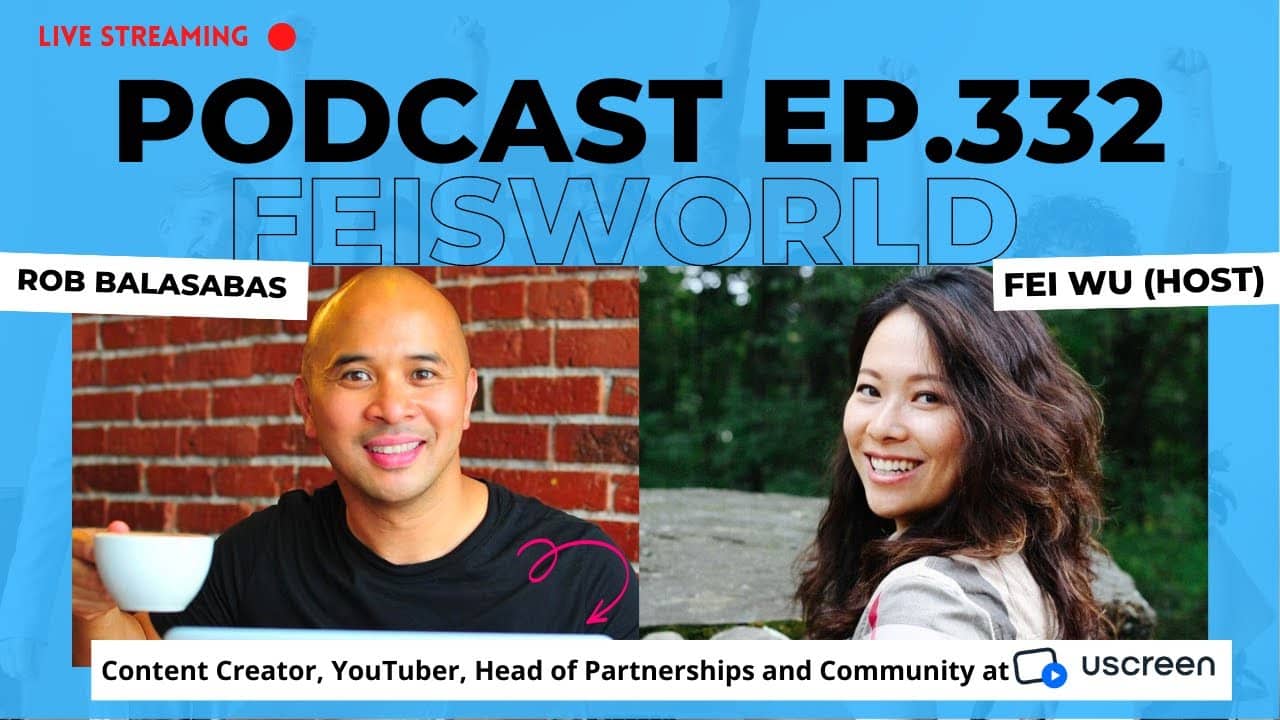
Our guest today: Rob Balasabas
Rob Balasabas @robertbalasabas is the Head of Partnerships & Community at @uscreen. He manages Uscreen’s Influencer Marketing Program, including Sponsorships, Content Collaborations, Conferences, and Events. Rob also oversees the Uscreen Community Team.
Rob is a content creator at heart, he publishes tutorial videos and livestreams on his personal Youtube Channel and social profiles. He also has a podcast called “Coffee with Content Creators” where he interviews successful content creators, influencers, and industry experts. He runs a private membership called “CreatorsTV”.
He’s an advocate for content creators and speaks about monetization, building revenue streams, and the latest news around the creator economy.
Rob attends and speaks at various conferences each year, such as VidSummit, FinCon, Podfest, Social Media Marketing World, The Brief by The Marketing Brew, and several others.
When he’s not working, Rob is a husband and a dad, loves to drink coffee, and explore new places with his family.
About Uscreen:
From individuals to fortune 500 companies, Uscreen helps brands of all sizes monetize & distribute videos online. Uscreen is a robust video monetization and membership platform, and an industry leader with a team of over 130 amazing individuals located all around the world that helps over 25,000 creators, brands, and businesses monetize videos and make money doing what they love. Learn more about Uscreen.
Watch Our Interview
Transcript
Transcript
Fei Wu: On Feisworld Media and we're finally making this happen with Rob BAAs, Sabas from you screen. And, uh, for those of you who are not familiar with his work, I'm gonna do a brief intro. I'm gonna jump into today's discussion. Sounds good,
Rob Balasabas: Rob. Works for me. Let's
Fei Wu: go. . Cool. So Rob Sabba is the head of Partnerships and community ad u screen, by the way, it's definitely one of my favorites, learning platforms. It helps you create these Netflix style online academies for our, you know, small businesses and even larger corporations. Our most recent clients is Alcott Checkout Alcott's Academy for sure. He manages U Screen's, influencer marketing program, including sponsorships, content collaborations, conferences and events. Rob also oversees a U Screen community team. He is the content creator at heart. He publishes tutorial videos and live streams on his personal YouTube channel and social profiles. He also has a podcast called Coffee with Content Creators, where he interviews successful content creators, influencers and industry experts. He runs a private membership called, uh, creators tv. He's an advocate for content creators, including myself, uh, and speaks about monetization openly including, uh, you know, revenue streams and the latest news around the creator economy. Rob attends and speaks at various conferences each year, such as Vid Summit, FinCon Pod Fest, social Media Marketing World, the Brief by The Marketing Brew, and several others. And when he is not working, he's a husband and a dad loves drinking coffee and explores new places with his family and. , all the links, uh, are below. Definitely welcome you guys to check it out and please do drop in for questions. We cannot really see how many people are on LinkedIn and all that jazz, but don't be shy, ask questions. We're here to serve creators and the creator community. We're here to answer a lot of questions. That's such a privilege to have you here, Rob, because you're on both sides being a criter. Mm-hmm. as well as on the brand side. Yeah.
Rob Balasabas: Welcome. Yeah, thank you Fay. Really nice to just catch up with you and hang out. I know it's been, it's been a couple months, but yeah, it's been really good to just catch up with you here. So I'm looking forward to the conversation and, and yeah, it's, uh, lots happening in the creator economy. So, uh, excited to dive in.
Fei Wu: Oh, me too. Me too. You are on all fronts. So, to clarify, for people who might have questions for these platforms, Rob is, you know, has his own YouTube channel. Obviously he over oversees the YouTube's, uh, uh, you screen's YouTube channel, which is also quite successful. Uh, it's hard to have a very successful product channels on YouTube. You know, you're recently on, you have memberships both on YouTube and also in Discord. Mm-hmm. . And am I missing something here? I mean, you're doing so much
Rob Balasabas: Yeah, yeah. You know, I, um, yeah, I like to understand what a creator's going through, even though I do work at a brand I'm creator as well, um, for the last few years now. And I really just wanted to understand what does a creator go through in terms of building a, building a follow. Building content, creating content, and then eventually trying to create a business around that. And so, you know, I've, I've really tried to practice what we preach in whatever, you know, um, platform company, SaaS company that I work at. Um, I really try to understand the, the creator and what they're going through, um, and, and how they see the landscape of the creator economy. You know, where the opportunities are when things change, right? When platforms change, Instagram changes rules, or YouTube launches something new, how does the creator react to that? And so being a creator myself has really helped me understand that. And so part of that is like trying to understand all of these different tools. , um, not just the platform that I work at, but there's so many platforms that a creator will use for different things. And so CK being one of them, you know, podcasting platforms like Anchor and all of those different tools, you know, um, editing tools, iMovie and Descript, and all of these things, it's, it's really helped me, uh, to be a creator. Working in the creator economy, um, you know, sort of understanding the people that I work with. So, so yeah, I'm, I'm constantly testing all of these things, you know? Yeah.
Fei Wu: Yeah. I feel like we're very similar, to be honest. I mean, this is, you know, way back when, I think we, we spoke, we met each other for the first time a couple years ago and, um, I know you're at, uh, two buddy at the time and I just absolutely love that tool. Mm-hmm. and I also used that mug. I love, uh, you know, using you screen or recommending it to my client. That's right. I even have like the hat and everything. Yeah. There we go. Yeah. You know, my mom was like the photographer and all that, and I. , you know, I love exploring, uh, as a creator cuz I think we learned so much. I think about the fact that I, the number of tools I picked up, the knowledge related to business, business acumen in the past seven years of running my own business is like 10 times the amount of knowledge I had gained working and consulting and advertising alone. So, um, what you just mentioned, Rob, like to kind of dive right in is related to platforms. The key a lot of people don't realize is that you really cannot just rely on a platform, whether that's, you know, YouTube subs and all that. So first of all, you know, how do you decide, maybe in this current moment, you're already a very, you know, mature creator. How do you decide where you need to be? Like how should people think about that? That's kind of step one, um, that blocks people.
Rob Balasabas: Yeah. Um, in terms of where to build your content, like Yeah, exactly. Which to build your content. Yeah. So, um, I guess if I was starting again, if I was starting over, you know, if I was just. Kind of getting into this, you know, creator economy thing and starting to create my own content and wanna do that, um, I would probably go to where I consume content the most. You know, if I, if I watch a lot of YouTube videos, I'll probably go to YouTube and start trying to figure out YouTube, start uploading some videos or live streaming. If I con consumed a lot of Instagram, if I'm always scrolling on Instagram, I'd probably go there. Um, if I go on LinkedIn quite a fair bit, you know, then I would probably start posting on LinkedIn and start engaging conversation. It's really one thing to create content and start creating content. It's really fun and exciting. After about a week or two, it becomes not really a chore, but it becomes a task. And so it helps when you are trying to create a platform or creating a following where you already like to spend time in, right? Mm-hmm. . And so don't, don't, you know if you like LinkedIn, LinkedIn, and then you, all of a sudden I wanna just go to YouTube and that's why I wanna build my audience. A, you probably don't understand YouTube all that much cuz you're not, not consuming content there. And then B, it's a, you're forcing yourself to go to, you know, you're going against the current, right? You're like, all right, I gotta go to YouTube, even though you don't spend a lot of time there. Mm-hmm. , I just gotta go there for whatever reason. And so I would always just say, start where you already consume content. Start there. I, when I first started, I, I built my audience or my personal brand on LinkedIn, ma you know, probably about four or five years ago. And I just, cuz I spent a lot of time on LinkedIn mm-hmm. . And so that's where I started posting content. Um, you know, I started getting comments and started connecting with folks over there. And so that's kind of where I built my community. And then from there I started branching out to Instagram and, and YouTube. But yeah, I would, I would start where you create or, or consume content already. .
Fei Wu: No, that's really, really, um, good advice I think. And also where you are already active, chances are part of your audience is already there, including your friends and family on Facebook, including right, if you're more focused on, you know, professional work on LinkedIn. So I know that you have been quite active on YouTube and I really like your content style and frankly, when I look at your content, um, you're welcome. And I think about like, I really wish more content creators will focus content like that, that's not so niche down. to kind of become very repetitive. You know, it's clearly so closely following the algorithm, whereas you have your podcast, you have your point of view, and you have your background as a, you know, a community and partnership manager working for these really big companies. Uh, to us it's very, very dynamic that way. So I wanna talk to you about like how and or when or how did you decide to YouTube? What was the
Rob Balasabas: beginning like? Yeah. The, the beginning of YouTube? Yeah. Um, the beginning of YouTube was very much, uh, a lot of collaborations like this, you know, live streaming like this, interviewing people that I already knew, um, you know, uh, Nick Niman and Dusty Porter and Jessica Stansberry and yourself, and like, just people that honestly had bigger audiences and established audiences already. But I knew that's, that their. is the type of audience that I wanna get in front of. And so they're generous enough to join me on a livestream on my channel when it had like a couple hundred people, you know, subscribe to it. Mm-hmm. and, and, and a, that's actually a really good takeaway away is that a lot of creators I learned were very generous with their time. Mm-hmm. , you know, you kind of look at some of these influencers and you're like, no, I can't approach them. Like, I can't ask them to come on my channel. I'm so tiny, I'm so little. Like, no, but why would they say yes? But to my surprise, um, they were very generous with their time. They said, yeah, no problem. Send me a calendar link. Let's do that. I'd love to. And so, um, that's how it started. I started doing livestream interviews and mm-hmm just going live and then keeping the video on the channel and that's how we did it. So I did that for about a year and a half or so, and then I started thinking about, okay, what else should I be doing? So I started creating a lot of tutorial content. That's when I started doing a lot of keyword research. Um, that's when I stumbled onto TubeBuddy. Before I even worked there, I stumbled onto TubeBuddy and I started using that tool for keyword research. And so my channel, you can see there, there's a lot of tutorial content, very keyword focused, search traffic focused, um, videos. And so that really helped grow the channel as well, because I was still doing the live streams. And so now I'm getting this community building live streams collaboration. and then keyword and search traffic was happening on YouTube as well. And so now the two were going and that's, that's kind of where it steadied off. Mm-hmm. , I then kind of got into this like third phase, I guess, of my channel where. I didn't wanna get bored. I think tutorial videos are great. I think at some point you can only talk about platforms so much, you know, and different tools so much. Right, right. I know you're laughing cuz you agree Probably. But um, you know, so then I started, okay. Well I think people, I would like to let people know what I think I started to have an opinion on how to do things and things like that and so, um, you know, I started, so I started creating a podcast and so the podcast really helped me have, you know, sort of build my voice and build my authority and my influence, I guess in, in, in a lack of a better term. Um, and that was more of a casual long form content, which I really enjoyed. . I love YouTube, but YouTube wants you to be very like, quick, like, you know, yeah. Cut, cut, cut, cut. You know, uh, retention time and watch time is very important. Um, podcasts, on the other hand, you can go deep, you know, 40 minutes, 60 minutes and talk about, you know, a couple of topics. Mm-hmm. and so I really enjoyed that as well. And still getting to have longer interviews and stuff like that. So that's really where my channel is now, is sort of the combination of, um, all of those things. A little bit less live streaming these days, but, um, still tutorials and podcast interviews, long form interviews.
Fei Wu: This is so cool. I can believe that I talked a lot about the three Cs content, collaboration, and community on my website for a couple of years, and you literally just went through
Rob Balasabas: all of that. Just follow you. I just follow you. Yeah. Yeah. , no,
Fei Wu: this is like Rob's original thoughts and I wanna break down a couple of things. And then you mentioned a keyword research, for instance, and TubeBuddy is a great tool for that. I talk about Tube Buddy a lot on this channel. And, um, how do you go about your research, uh, maybe using two Buddy alongside other tools like HFS or, you know, Uber suggests like how do you decide the videos you wanna create for maybe keyword and discovery purposes?
Rob Balasabas: That's a really good question. I, I still, I still do a little, a, a little bit of keyword research with podcasts, with a lot of the interviews now, there's so many topics. , like let's say in a 40 minute conversation, there's so many topics that are covered. Mm-hmm. . And so rather than like very much keyword research, like, you know, the five how to, how to get your first 4,000 subscribers on YouTube. Mm-hmm. in one week, you know? Mm-hmm. , very keyword research. Um, I tend to try to lean more on emotion. Trigger words, um, in the, in the title. Um, especially with, um, when I have guests or when I'm doing interviews. Um, I just find that that's more important. When I take the long form and turn them into shorter form clips, like two, three minute clips from the interviews, then yes, I will be very much, you know, because it's focused on one topic, that particular clip, then I will do a lot with keyword research. Yeah, I mean, I, I typically will just use YouTube search directly or TubeBuddy, um, you know, very straightforward. Um, you know, that's, that's, I try not to get too, uh, bogged down in the, in the research, but keyword research is important for sure. Um, and then of course the, the metatags and things like that. Um, spend a bit of time doing that as.
Fei Wu: Hmm. Good job. I just love how this conversation flows cuz we're in such a similar space, and, uh, you know, I noticed recently the, the power of short form content. Mm-hmm. , uh, you know, some, many of those are vertical content as well. Uh, nine by 16, specifically, if you're new to this YouTube shorts under 60 seconds TikTok these days, you can upload up to 10 minutes. I don't know who's exactly doing that, but a lot of, you know, uh, 62nd, you know, up to three minute type of content, but also Instagram reels. And so, uh, I was, you know, I realized, Rob, for me, I noticed there's, uh, such an organic uptick. Oh my goodness. On my YouTube channel, I would do a long form content, 10, 20, 50 views, a hundred views, and I'd do one short form. One of them could propel. 500, a thousand or even more. Um, and, uh, and I've done that for my clients, my mentors, Michael Leki and Dory Clark recently, and their channels are also growing. Literally give you a, give people a sense of a, after uploading two, three shorts over the course of a week or two, now their channels, like literally the traffic, the views, um, consumed from by, uh, shorts are now like, oh, well over 30%, you know? Wow. Yeah. Wow. It's, it's kind of crazy for sizing, just so you know, you know, Doris Channels over 6,000 subscribers. Michael's is, you know, in the hundreds, so mm-hmm. still, it's a significant portion of their views. .
Rob Balasabas: Yeah. Yeah. I mean, I think shorts are, um, YouTube between, I mean, for the last couple years, right? TikTok and YouTube shorts has been sort of the battle. Mm-hmm. , I think to some degree, YouTube, um, is kind of winning that battle. The battle is not for the viewers. The viewers is secondary to, in my opinion, the battle is for the creators, right? Where are creators uploading their content? So if, you know, if I'm a creator and I've got really good short form content, do I upload it on TikTok or do I upload it on reels? Do I upload it to YouTube? I upload it to, all right. You could, you could upload it to all, but if you want it to make it really exclusive, right? If you want to be exclusive, like, Hey, I'm a creator that people wanna follow. , I have really good content, you know, I'm just gonna, if I just upload it to YouTube, then my, my audience will likely follow and find it on YouTube. So now they're gonna go to YouTube. Mm-hmm. , they're gonna find my content, but they're also gonna find other content. You know, us, they're scrolling, they're gonna find other content, and then over time, the behavior of that consumer, that viewer will stay on YouTube. Mm-hmm. , that sounds really like, who cares? But the point is that now YouTube's business is to show ads. Mm-hmm. . So now there's more people viewing YouTube shorts, more people spending time on YouTube. So YouTube can sell more ads. So we have to kind of understand, you know, as a creator, you have to step back. This is what's happening. This is why, you know, there's, there's the TikTok Creator Fund and Instagram real fund. And YouTube is very big on trying to monetize shorts because they wanna attract the creator. They understand that if they attract the creator to upload content there, then the viewers will follow. and they can sell more ads and they can make more money. So, so yeah. So, um, yeah, I mean, we've been uploading, I've been uploading on reels and also on, um, shorts and mm-hmm. and yeah, it's, it's great. Like YouTube shorts is so good. Um, you know, they, they've mo they're starting to Monet monetize now, I think as of tomorrow, right? February they're gonna start monetizing shorts.
Fei Wu: True. We sign an agreement, all all of us. That's right. Uh, right. Monetize the YouTubers sign an agreement to think less than a month ago. And, uh, yes. Right. It's very exciting. So now I'm doing something kind of, uh, intriguing also because I manage my client's content. I get to see a variety of results, not just related to me, my content. Um, but at the same time, it's like my, my time is split between my work and, you know, client work and face world work, which we're gonna get into in a second. But yeah, I'm, you know, seeing some really interesting trends of uploading the exact same reels, like same. Same short videos onto, right now I'm testing TikTok, LinkedIn, YouTube, shorts, and, did I say reels already? There's, oh yeah. And then Instagram reels. Mm-hmm. . Yep. Have you done that? What are some of the results you're seeing? Because what I'm hearing from other people is like, either Liz or Dies, or like, uh, one platform's gonna stand out
Rob Balasabas: in such a great deal. Yeah, yeah, yeah. I just find it so random, honestly. Yeah, it's super random. Like sometimes a reels will do really well and then the shorts won't, or vice versa. They're both do really well. You know, it's just super random at the moment. I mean, there's, I'm sure that there's some. , A lot of it of, of course also has to do with the video. If the video, um, performs well, you know, is it, you know, people are watching and watch time and all those algorithms really will help. But, um, man, I do find that it is a bit random right now, to be honest. Um, yeah, so I think over time it will sort of work itself out. Mm-hmm. and there'll be more of a, a science, I suppose, to, to it, you know, same as, um, the way that long form content is now on YouTube. Like there's a bit of a science you can kind of know like, okay, this video will do well or not mm-hmm. , um, over time. Um, but you know, the way that I think of it is like, it's kind of a funnel, the way you look at short form versus long form mm-hmm. , it really is all kind of a funnel, right? Like, you know, all of the short form content hopefully will bring awareness to you as a creator to your content, to your channel, to a new audience. Mm-hmm. , right? Because. You'll see that your short form videos will go like Will really spike in views. All of these people that don't know you will see you Faye. Mm-hmm. . And they'll see like, okay, cool. Faye has some really cool content. Cool, great. Maybe they come back. YouTube will suggest more of your videos to them. Maybe one or two long form videos. And now they'll check out your long form content. , that's what they, they'll get to know you. Mm-hmm. , maybe they'll join you on a live stream. Now you're starting to build this relationship with them, and then down they're, they're, they're going down your funnel a little bit more. Mm-hmm. to the, you know, down to the point of like, maybe go, going to like, set up a call with you and, and you know, a coaching call and, and so on. Yeah. And so a bit, I think it, it is a bit of a funnel the way that you have to look at short form content. So, . Yeah,
Fei Wu: yeah, yeah. I love the, the fact that we're calling out randomness guys. Like I sometimes, you know here, right? Like somebody said in 2022, it's about whiff, and then 2023 is about the death and that relationship with a content creator. And I feel like I've been, not that I've been saying this so long, I've, I want to really live a life as a content creator where people can trust me, find it authentic, find content, they can't find it just everywhere else. I feel like you're trying to, you know, really carve out your own path, you know, at the same time, it is so tempting, right? To mimic styles that that works. But one thing I, I love what I think Vanessa Lao. Um, recorded a video about, not like the end high Alex Hormoze style shorts. Uh, it, it's, it's fascinating. It's all the quick words, yellow, big chubby fonts and like bunch of emojis popping out. So that was such a, like a wake up call for me as well to say, wow, I'm just starting my shorts journey and I really wanna create content that feels authentic to me. So for those of you guys, you're not obligated, but if you wanna check out my, you know, YouTube shorts lately, you're gonna see the style. It's not, I'm trying to figure that out. I think it's gonna be kind of an iterative journey. So I wonder, I, by the way, Rob, I didn't even expect to like all sudden jump into shorts, but it's no no's. Okay. I love it. Question. Yeah, yeah, absolutely. Like, have you, how do you decide the style of your video? And for those of you guys who are watching, I love Rob's thumbnail titling very emotional. Oh, thanks. The content of Flow the Back. , all that jazz, but how do you style your video, maybe in particular around shorts these
Rob Balasabas: days? Yeah, I think, um, you know, the style is, the style is important. I think you try to do the best, as best as you can. I do like the Alex, her Mosey style with the, like the, the slanted text and yellow, and it pops really fast, right? Mm-hmm. . Um, I like that style. Some people like a more calm style and you know, like the, the words are scrolling and it's slow and it's calm and there's background music and stuff. Mm-hmm. , um, I think it really depends, you know, I, I, I can't, I don't have any like, data on what does better, what does worse I think. I think as long as it's a, got a good message. Mm-hmm. , right? It's got a good message. There's, there's value, you're. Saying random words and just trying to say and fill the air. I think if you're sharing something of value, a big, uh, something that's a quick tip or a hack or a learning mm-hmm. that you had, or an experience like, Hey, I just went to this, you know, I went to a conference last week. You'll see, start seeing some shorts of things I learned at the conference. Right. Please share, I think. Yeah. Yeah. So, so yeah, we'll be sharing those, but I think the, the style is as, as long as it's, you're happy with it, I think I, whatever the stylist will work. The main thing is that the content resonates, it connects with your audience and that they're getting something from it, right? Mm-hmm. . And so that way when they see your face again, they don't remember what your style was. Mm-hmm. , but they'll remember your face, Faye, and you know, and mine, and they'll say, Hey, last time I saw Faye, she gave me a really good tip on like how to do this thing. Let me see what else she's got. Right. And this is, so now you're, you know, they're gonna keep coming back. They're gonna come back for the value. Um, you know, and so that's, that's, I think it's more important than anything.
Fei Wu: Mm-hmm. . Absolutely. And, uh, we kind of teased out this part and I wanna just call it out, emphasize it even more that, uh, in the past few years, whenever I work with a content creator, I often find that they tend to be, you know, fairly successful entrepreneurs, or oftentimes these small to medium sized business. I love the idea of using content to drive more awareness to your products and services in authentic ways. Mm-hmm. . And, um, you actually mentioned, you know, for instance, uh, Robbie mentioned you could have a short video. You could have a long form video where, you know, in the description or call to action in the end screen, you know, you could actually mention relate content or even a call to action to schedule a discovery call with you to send you an email, things like that. And people will follow this advice cuz all of a sudden you're not just creating content for the sake of content. People are like, I don't even know what, what does it mean to be a creator or creator? Mm-hmm. economy. Is it, you know, I spend a lot of money editing the video my, a lot of my time. Is it worth it? Well, if you make that connection, even if it's not for all your videos, but let's say a percentage of those videos are related to your products and services, some of those could be like, don't heart sell every time, but finding a percentage that that feels right. All of a sudden, you know, I, I feel like there's such a. Intricate. And then that's kind of a, also an obvious connection between content creation and running your business.
Rob Balasabas: Yeah, yeah, yeah. Absolutely. Yeah. I mean, again, going back to the funnel, your content as a funnel, your YouTube channel as a funnel at the end of the funnel, what is it that you want at the very bottom? Maybe you want a coaching call or discovery call, right? And so, very simple like funnel that I've seen really work really well, Faye. Mm-hmm. with shorts. And long form is like, for example, you could have a short that says like, Hey, you gotta meet, uh, you gotta check, you know, I talked to Faye, she's one of my. last year, she earned, you know, let's just say 500 grand last year. Helped her, you know, grow her YouTube channel. Look at her stats now. All right? If you wanna learn exactly what she did mm-hmm. , go check out the link in the bio. There's a full video on what we did. And so that goes to like a long form video of like, Hey, this is how we, you know, this is phase channel before I started working with her, and then we optimize her banner. Mm-hmm. and her videos, and then we make sure her thumbnails were on point and so on. And then now her views went from this to this, right? Mm-hmm. , you know, you see the chart on the analytics, like, Hey, if you wanna do something similar, if you really want to grow on YouTube and take it seriously, you know, let's, let's hop on a call. There's a link into description. Mm-hmm. , right? And so you take them from like, YouTube, short, long form video, and then down to like, all right, let's talk. Or like, Hey, join me on my, my next live stream. Mm-hmm. , you know, if you want me to, you know, take a look at your channel live, give you an audit. Mm-hmm. fill out this form. Fill out this form. Right? And so now you're taking them from shorts, right? And so again, How do we, this is something we talk about a lot, Faye, with creators is like, you know, views and likes and subscribers. It's all really good, but like, how does the business gears turn behind the scenes? Mm-hmm. , and, you know, surprisingly enough, there's a lot of creators that really don't, don't, don't, haven't figured that out quite yet. Mm-hmm. , and I think that's where you help a lot of creators. Um, but, you know, we wanna seek more creators have sustainable businesses, right? Mm-hmm. , the more sustainable businesses they have, the better content they can create and better for everybody. Better for the viewers as well. So, um, yeah, it's. happens a lot out there. .
Fei Wu: Well, speaking of what recently actually as of today, if you follow, uh, Rob on subs, the latest, um, podcast, which is a video podcast I love, is you interview another creator who is doing it full-time. So, um, you know, so don't, no kickoff just yet, but, um, what are some of the things, Rob, that you learned from full-time content creators out there? Like what are Yeah. Some of the tips and, and tricks that they have been able to do, uh, in order to become full-time content creators? I'm not, I'm about 50% phase world content, 50% client work. Um, so I would love to learn as well. .
Rob Balasabas: Yeah. Um, two things that stood out to me in most of the conversations with creators is that they, a, there's a word out there that all businesses understand, but creators are starting to understand now is distribution. Mm-hmm. , so distribution of their content, right? How you distribute free content to lower tier content, to, uh, higher tier, like higher ticket content, right? Content is somewhat all the same, but the way that they distribute it is very strategic in most, in most cases. So if you look back, right, again, you take a step back, you look at the creators that you follow, you know, you mentioned Vanessa Lau. She has free content, but she also has paid content. And then she also has content that you can only get when you go to her in-person, uh, summit, right? Mm-hmm. , um, with her like high ticket members. So there's content, but it's distributed. Differently, right? Mm-hmm. very strategically. And so content distribution is something that a lot of content creators that are full-time really think about. And so if you want to become full-time, you really have to think about, okay, what, what is my con? What if, what of my content? Which one is paid? Which one do people have to pay for? Or is it all free? This is, it happens so much, Faye, there's so many creators on TikTok and Instagram that only have free content on those platforms. They don't have any content. They don't have any coaching. Mm-hmm. , they don't do any, they don't, you know, they don't have anything paid. They're just relying on the platform. They're re relying on YouTube. Ad sense? Yeah. Or TikTok creator funds. That's very dangerous. As a business owner, imagine if you only relied on one revenue stream, right? Especially, it's not one that you control. , then that revenue stream goes away. You're kind of left in the dust. And so distribution is one that I see a lot of content creators really understand. Mm-hmm. also in this world now, there's so many content creators, and so I've found that even larger creators or full-time, large creators have gone smaller with the people that they work with, but they've gone much deeper. And so for that, they're able to charge more. Mm-hmm. . And so they're not having to have this like massive, you know, 50,000 member, you know, or like 50,000 customers, right? Mm-hmm. , they're working with a small group of people that are paying them a lot of money. Mm-hmm. , right? For their time and attention. And so, you know, and they use, again, distribution, they. YouTube and TikTok and Instagram, all these social platforms as a way to be discovered. Mm-hmm. by their target audience and then they take them off platform, you know, to monetize, um, those relationships. Yeah.
Fei Wu: Yeah, I know this is, uh, fantastic of such juicy topics, . That's something that
Rob Balasabas: very fun. It's actually is, it's such a hot topic these days. Yeah,
Fei Wu: it is hot guys. And by the way, if you were feeling confused, be like, whoa, I don't know what, you know, how do I distribute my content if I'm not creating anything just yet? We'll start creating. That's step one. And then you look back, you know, Rob and I, I mean I personally have been creating content since officially, publicly, since 2014. And, you know, eight, nine, you know, eight, nine years later, oh my God, it's been a decade almost. Oh, 300, you know, 50 episodes of podcasts, hundreds of YouTube videos. I got courses on Face World Academy. Then I have my higher ticket clients who work with me one-on-one. Mm-hmm. . So with that said, you know, the strategic. Distribution sounds like there's one, you know, one phrase thing. It really takes a lot of practice and yes, you do make mistakes too, right? Um, and that's okay. I think, um, the distribution, one of the mistakes that I have seen with a lot of clients is immediately go into paid content. I wanna course one, course seven figure course launch, like all these things. Mm-hmm. , you got a question? Like, how, how realistic are those? So you gotta start, you know, for me, from my experience, start creating free content building. Community and audience who trust you really like you, and then you can start upselling them. And it's also true, some people go immediately to high ticket products, but you can't just rely on, oh, I'm gonna close two to three people and that's all I need. So I would love to hear your thinking, strategic thinking behind the distribution of it, because you're in the, you're in the thick of it.
Rob Balasabas: currently. Yeah. Yeah. That's good. That's really good question. Um, I would say that you obviously have to set goals as a business owner. You have to set goals for yourself, right? Like what is, you know, and you kind of work backwards if you want to make a certain amount of revenue this year, you gotta have revenue targets first and then kind of work yourself backwards from there. Think of reverse engineering your revenue, right? And so, um, looking at your funnel thinking, okay, well I need this many people to, uh, at least reach out to me, right? To reach out for a discovery call. We're talk, if we're thinking like sort of a coaching, somebody out there that's doing coaching, Or consulting or services. Um, you know, you have to work yourself backers from your revenue goal and then how many clients you need, right? What's your average, um, sort of lifetime value for a client? What's your average value for a customer or a client? And then say, okay, well I need a hundred customers this year, or 50 customers this year, whatever that number is. Mm-hmm. . And then you kind of work yourself backwards. How many phone calls, how many meetings, how many, you know, discovery calls do you need? What's your ro, what's your closing ratio, right? Mm-hmm. . Um, and so now you understand how many people you need to reach out to you, right? And so now you can look at you all your different channels. You have your live streams. You have your podcast, you have your like social channels, Instagram reels, all those platforms. All right? Here are all the available channels for me to generate awareness and generate people to like come in inbound, right? We're not doing any ads, we're not doing any outbound. Here are all the different channels that I have. All right? So now you start creating the content and you start seeing who's reaching out, how are they reaching out? Okay? And then as you talk to them, you wanna make sure you ask, Hey, how did you learn about me? Oh, I learned about you on YouTube. I'll learn about me. Oh, I learned about you on YouTube. And if one platform keeps coming up, , you know, then you start looking at it, okay, well maybe I should invest more on YouTube. That's where most of the, you know, the inquiries come from. Mm-hmm. , if you're hearing that people are hearing you from other places. Right. If you're hearing that people are saying, like, I hear, I heard about you on YouTube, but those, uh, leads do not convert. They're saying like, you know, this is all really good. I really wanna do this, but I don't have the budget. I don't have the budget. I don't have the budget. Right, right. And then you gotta address that, right? Yeah. That's gotta be an issue. Maybe, maybe you're, you're, you're talking about, you know, uh, topics that are too beginner mm-hmm. for people that are not yet established, not yet ready. And so maybe your content needs to evolve a bit so that, um, it's more advanced so that it attracts people that are a little bit further ahead in their business, a little bit more established, have a budget. And so that's how you look at it. And so that's how you kind of start looking at it. The other thing with this is, as a creator, Fay, like, you know this, there's so many things you could do. Yeah. You could merch, you could do merch and memberships and summits and all this stuff. Virtual summits. Mm-hmm. , there's so many things. And so what I have found with a lot of creators is that for the most part, they've tried a lot of the different revenue streams and they, they, they are very quick to shut them down if they're not working right. Mm-hmm. , it's like, this is a distraction. We're not gonna do merchant anymore. That's a distraction. You know, we're not gonna do memberships. That's a distraction. We're not gonna do, you know, and so similar to how people will like, hire slowly, but fire fast or something like that. It's like, that's how I see creators when they're launching revenue streams and closing them down. Mm-hmm. , they will. , give it a really solid go to, like launch that revenue stream and grow it. But if it's not working after a certain amount of time, they're very quick to shut it down. And so they've really like, really boiled down the revenue streams to ones that really work and does perform. And so, um, so yeah, the more that you, you know, become a content creator in the full-time sense, um, the more strategic and picky you will be with, you know, the things that.
Fei Wu: That you brought up a good point. I think a lot of the work that we do really tests not only our creativity, but really our patients and our strategic thinking, our business mindset, mindset in general. Uh, you mentioned like how creators will launch new products and shut them down as a revenue stream, as a product very quickly. Uh, in general, what, how do you treat, how do you look at these things yourself, perhaps? I know you're creating different programs and packages. Um, what is considered too long or too short? Like, uh, duh, you waited one month, you know, some people I really, people's vision on timeline is really all over the place for me. Yeah. Like depending on what it is, I'm willing to give it six months to a year for a lot of the things that I do and for phase world is a pursuit of a lifetime. So that, that part was easy.
Rob Balasabas: Yeah. Yeah. Yeah. Yeah. That's great. That's a really good question. I would say everybody's different for me. Yeah. About six months is my sort of, time, like, all right, we're gonna do this and, and for six months. And, and it's also gonna be a quality six months. It's not like, all right, I'm gonna, you know, you say you're gonna do this, but you're not really, you're just kind of like, yeah, you made the website, or like you made the membership or something when you just kind of left it going by itself for five months after that, um, you know, you really give it a good, solid six months, you know, affiliate, you know, new affiliate relationships, that sort of thing. Mm-hmm. , let's give it six months. Let's see if the audience really catches on, it's a fit. If it's not, we just part ways, right? Mm-hmm. . Um, yeah, so six months is usually, you know, my, my, my timeline as well. . Mm.
Fei Wu: Uh, I love that. And, um, I can't wait to start talking about affiliate partnership as well for those who of you guys. Sure. Were creators and business who wanna learn more. Well, Rob is on our side too. He is the manager, community manager. Um, I do have one more question following up, please. Yes, please. Which is, you know, uh, Rob, you currently have a lot of different memberships. I know that I don't really have a paying membership on YouTube, for instance, on my content on YouTube is free. Mm-hmm. . But you do have something where people can go to the next tier. You have a Discord community. Now you have ck uh, for those people who are new to CK is a, uh, you have free content on CK but for not just you, for, for creators who publish on subs, you can also have, you know, a $5 tier. You can change the like $7, $10 tier if you choose to. So the question I guess is how do you, like, I know you're shifting your model a little bit. Could you maybe let people know what you have available? Uh, and then why you're making these decisions.
Rob Balasabas: Yeah. Yeah. I, you know, I'm, I've been really trying to figure out a way to serve, um, those that are really engaged. You know, it's just like, you know, just like anything, you know, like on YouTube, there's, you know, my, my YouTube channel, my personal YouTube channel has like eight, 9,000 subscribers now, not all eight, 9,000 are super engaged, right? Mm-hmm. , there's a varying range of engagement. Some people are like really learning. Some people are like, come by once in a while, and so I really want to find a way to like, Really help and actually move the needle for, for, you know, as many of those, you know, viewers and subscribers as I can. Mm-hmm. . And so the best way that I know how is through a membership, because of the nature of our business, it's kind of always ongoing. Mm-hmm. , there's really no end. It's not like, you know, um, I, I can't think of a really good example, but like, it's not like becoming a doctor, right? You takes somebody like, all right, now you're a doctor, like you, you know, send them off. We're done. Like, as a content creator, you're always changing. Cause the landscape is always changing. I mean, I'm sure doctors as well, things are always changing. There's always new find, but for us it's always ongoing. Right, Fay? And so, you know, with a membership that model, that recurring model of a membership mm-hmm. fits really well. Also as a business, it's really good to have predictable. . And so it's a revenue stream that I really enjoy, I really like. Um, also part of that is a community which I really love as well. I love having a community and like really engaging, getting to know people mm-hmm. . And so, um, so yeah, so platforms like YouTube, um, sub I just saw today, um, has, and also like buy me a coffee and there's Patreon. Wow. All of these are like, um, you know, my, my, my latest interview on the podcast is with j Klaus. He actually separates membership with patronage from patronage, membership patronage. Mm-hmm. . So patronage is kind of like YouTube memberships kind of like. Patreon where it's almost like a donation. It's not really a significant amount, it's like $2, $5 a month. Mm-hmm. and there's no real big expectation back from the creator mm-hmm. to get anything back. Maybe it's just like, oh, early access to your content or something like that. But that's very different from an actual true membership. Mm-hmm. , like a true membership has content, you know, it may have like private members only livestream, so there's exclusive content there. Mm-hmm. , but there's also usually a community aspect, right. Where it's like peer to peer. So if I'm a member, you're a member, I can connect with you, Faye, cuz I want to be mm-hmm. a part of, you know, a private community of like-minded people. And that's usually part of a membership. And usually memberships, um, can, you know, peop creators can charge way more for membership, $50 a month, a hundred dollars a month, $500 a month. Mm-hmm. . And so, um, so yeah, so for me, you know, I'm really learning that, um, going towards a model where it's more high ticket membership. Mm-hmm. is the way that I'll probably be going this year. You'll probably hear more about that. That's something I'm really trying to strategize right now, um, so that I can help more people. It's just, I mean, the way of the world now is just, you know, when people, people like follow their money. So if like, hey, I'm, I'm invest, they're investing, then they're likely to be there as well and mm-hmm. , then you have a better opportunity to actually help them. Mm-hmm. , uh, get results. Right. Um, so, so yeah, that's the direction that we're going this year. So we'll see how that goes.
Fei Wu: I am very supportive of that. I know that's not easy and um, I, I think it's so meaningful because one of the things I've been reflecting lately about, you know, what am I doing with YouTube strategy? Meanwhile, I see so many creators, young creators out there, you know, giving away a lot of free spreadsheets or selling products or checklists or $20. I just realized, like you said, Rob, when you don't have that one-on-one intimate, like really not holding you account. Really understand your business. I'm giving you a tailored playbook step by step as opposed to, oh, good luck with this p d f, it is for anybody, which is kind of for nobody at, at the end of the day. And, um, it's true that I often see much, much better, greater results with my one-on-one clients. And with that said, it's true, that is more of your time commit commitment as opposed to selling, you know, these $10 products or we're membership. So that's, I really wish you best of luck and I wanna definitely follow your journey.
Rob Balasabas: Thank you for that. Thank you. Thank you. Yeah. Yeah, I think a big part of it, uh, phase, like the accountability, you know? Mm-hmm. , it's just like anything, I think accountability is such a huge thing. You know, you can give me as much, um, information and resources and stuff, but like, if I'm not really accountable to anybody to actually use it. Yeah. I'm very unlike. not likely to use it. You know, and I think most people are that way. There's some that are very good. They're, you know, self-starters and they, you know, get resources and then do their thing. Mm-hmm. . But I think, you know, um, you know, compare, you know, if you compare apples to apples, somebody has accountability in a membership in a community, um, they're more likely to actually take action and be further, further ahead a year from now, you know? So, um, yeah. Love that.
Fei Wu: Yeah. So we have to talk about Yeah. Gonna pivot a little bit to talk about Sure, sure, sure. Affiliate programs, because, um, I would love for you to chat about your experience now working at multiple companies, working with other creators, and, um, as a lot of the questions do come up, you've probably heard a lot more of them than I have, which have been, you know, how do I price myself? How do. Choose the companies I wanna work with. Where do I just sit here and wait for them to arrive in my inbox? Mm-hmm. , uh, I've done both. And, uh, my strategies, you know, for instance has been just get it out is, you know, sometimes I do get a lot of, uh, requests, uh, in my inbox. Not all them are valid. On the other hand, the brands I really wanna work with, I simply just put together. Blog posts and I really, you know, create tutorials that are good, then I reach out to them. So my motto is pretty simple, but I wonder what are some of the things that you have seen unlearned and you like to advise creators, um, to do moving
Rob Balasabas: forward? Yeah, yeah, yeah. Affiliate programs are, are fantastic. I think, um, you know, any, any brand should have some form of, uh, rewards affiliate program, um, to incentivize people that wanna share it, you know, people are already sharing. Um, you know, that's, that's why we find a lot of the tools that we use, right? Faye, like we, we find them from friends that have made a video or mentioned it in their videos, um, you know, products like, you know, literally through other creators. That's how we find products. That's a channel that brands should definitely be investing in, in some form. Um, I think in my, this is just my opinion, especially here in U screen, is that as this creator economy gets bigger, it evolves. There's bigger creators, you know, you know, sort of being born every day, like they're getting bigger and bigger and their audiences are getting bigger and bigger. The, um, there have limited shelf space mm-hmm. in their content. And so if you're a brand and you're just relying on affiliate revenue mm-hmm. basically saying, Hey, talk about us if, if your video performs will pay you. Right? Mm-hmm. , so if you perform, your video performs we'll pay you. That deal doesn't work for a lot of creators these days. Right? Right. They're like, well, you know, I've got five other brands that are sponsoring my content. I don't think I can make this video. It's just not, and, and you can't blame them because they're business owners. They have, they're people, they have time. They, you know, they have limited time as well. Mm-hmm. and so, we start, we need to start, brands need to start looking at sponsorships. Mm-hmm. or, um, sponsorships with an affiliate, sort of passive affiliate revenue, um mm-hmm. mix, right? It just has to be that way. Um, if, if your industry's not there yet, it will get there very soon. Regardless, you know, nutrition or luxury cars or software, like more brands are spending money on influencer marketing as just a reality. That's, you know, they're taking money from TV ads and radio ads, and even Google ads and stuff like that, and they're starting to funnel them more and more into, you know, influencer marketing. . And so, um, that's the brand side. Like that's, that's what we're doing. You know, just that's just, you know, we can only speak to what we are doing. And so, you know, we do still have an affiliate program, but we're also very much investing into sponsorships now as well. Right. Influencer marketing. Mm-hmm. , not just on awareness as well, like not just awareness content for influencers, sponsorships, but also like, um, down funnel content. Mm-hmm. , you know, consideration and decision making sort of content. Um, now on the content creator side, this is also important to understand because you have to understand you have value as a content creator. You do have value, you have lots of value because you have an audience that's loyal to you, the trust you, Faye mm-hmm. what you say. If you recommend a software, they're gonna check it. And so this attention and this loyalty is something, distrust is something that is very important. A, you don't want to ever break that. You don't ever wanna seem like you're just taking an affiliate deal or a sponsorship deal because you got paid for, it doesn't make any sense for their, for them. Mm-hmm. or you don't even use it, you know, and there's plenty of brands to work with. So make sure that you are choosing the right, um, partners and sponsorships out there. Um, but yeah, the main thing that I always try to get to, to creators is that, hey, don't be afraid. Like even if you have like a thousand subscribers mm-hmm. that's great. Like, you know, there's gonna be people there that trust you and that's, that has a lot of value for a brand. Um, you know, micro and nano influencers are, are a very big thing, um, and has a lot of value even for us as brands. We look at that and say, Hey, okay, cool. Like we're not afraid to like sponsor that kind of content because typically, They have a very loyal, engaged, uh, following. So, um, so yeah, make sure you, you understand your value there.
Fei Wu: True. So nano and micro, I think it, it depends on the platform. I believe last time I checked on YouTube is like, is it under 10,000 subscribers? Generally a nano, maybe under five something. Yeah.
Rob Balasabas: Yeah. You know what? That, that really changes. But yeah, I think I'm, I'm kind of with you. Yeah. I heard somebody say last week, last week, um, at a conference. It was an influencer marketing conference. They. Nano influencer that, what is a nano influencer to you? Oh, like, oh yeah. Anybody under a hundred thousand. . . Like, oh my gosh. Um, that's not nano. That's not nano, but, okay. I guess so. Like, maybe in their world, right? Because they're, maybe they're, they're only playing with big players, but, um, yeah, I would say generally, like a micro influencer, I suppose would be like 10,000 or less. Nano, like a thousand or less, but Yeah. Yeah. Again, not just on YouTube, like look at all your platforms, right? Like there's people sponsoring on LinkedIn, like there's LinkedIn influencers now getting sponsorships, like, wow, you know, sub, sub influencers, right? Like, yeah. Content. Wherever you have content, it can be, it can be sponsored. Like there's email sponsorships, right? If you have an. Right? Mm-hmm. , learn the numbers, right? Learn. Learn things like CPM and like what is, you know, you gotta learn the value of what you have, right? So, yes. Yeah. LinkedIn influencers. Spotify is sponsoring creators, right? Like exclusive. Wow. Podcast on Spotify. So, um, money influencer marketing money is flying everywhere. So make sure you, you know, you understand your value there.
Fei Wu: I, I gotta quote a hundred thousand nano. Oh my goodness. What does a number even mean to you? So how I, I need to like, squeeze in this question, which is how to create, how can creators create better content for brands. Now I'm kind of putting that responsibility in our own hands. Like, there's certain things, criteria I think about when I create my content with brands or for brands. Um, what, what's good? What are some of the guidelines, guardrails, you know, so that people can do a good job. And there's also that relationship, which is be responsible, reply to your emails, commit to a time on actually deliver that, that's also very important. But content quality. Any thoughts?
Rob Balasabas: Yeah, yeah. The quality, you know, the. how to create a really good, uh, content for brands. Yeah. A have really good communication and build a relationship with whoever it is at the, in, you know, your contact of the brand. That could be the people like me, like the head of partnerships, partnership managers, that sort of thing. Um, really build that relationship, understand what their goals are. Mm-hmm. , um, ask them what they're measured on. Like, Hey, what is, you know, I really, I'm super excited. Don't just, if they, if you, if a brand says, Hey, I wanna do sponsorship, um, you just get really excited and you're just like, all right, cool. Awesome. Just leave it to me. You gotta understand they are, they're being measured on how you succeed. Right. So for me, I'm very, you know, as I look through, you know, the book of creators that we can work with, right? I like, I like to make sure that they understand our metrics. What are we looking to do? Are we looking just for awareness? We just want people to talk about you screen. Mm-hmm. , do we want people to click and visit the website, the homepage? Do we want people to, you know, download a free trial or start a free trial? , do we want people to just go to the pricing page? That's it. I just want people, as many people to go to the pricing page as possible. Um, you know, do you want people to go and like actually go and join our community? Maybe that's, so then that will really tailor, that will really change how you look and think about your creative, right? As a creator, you're like, okay, cool. Like, for you, screen, they want people to join their community. All right, so how do I do that? You know, based on my, based on my style and my audience and like, how, you know, then, then that's how you want to do that. So make, make sure you do that. Mm-hmm. , I mean the, the very basic thing is make sure you are representing the brand well. Mm-hmm. , right? Make sure you understand their culture. What are. what are the words that they use? Right. Um, you know, do they, do they talk in very like academic, you know, terms? Do they, are they more loose, you know, in the, in the way that they talk? Um, really understand their culture because they're usually going, this content will be seen by people that are then gonna start interacting with them. Don't change the way who you are. Mm-hmm. , but just understand, understand the target audience. . Um, and so, and then, and I think third is that understand the target audience. So I have a really, you know, as I talk to different creators that we're sponsoring and working with, they really do, do take the time, the ones that I, that do really well. Mm-hmm. take the time to understand, okay, cool. Who is your target audience? Tell me more about it. Okay. They're YouTubers okay. But like how many subscribers do they have? Like what niches are they in? You know, what kind of, kind of what kind of like who is this person? Like, really paint a picture so I can understand. Are they mostly males, females, are they younger, gen Z, millennial? Like, you know, are they, are they, you know, um, professionals? Are they stay-at-home moms? You know, like, what are they? Right? Um, and so you really need to understand so that you almost become. An extension of their marketing team. Mm-hmm. . Mm-hmm. and that way a, that, that does really well for the video. But then you also start building this long-term relationship with them, right? You're like, okay, cool, we did this sponsor video, but now we want to do a workshop. Can you host a workshop for us? You really understand our platform really well, right? And so I love that. . That is, that is, that's probably like some of the things that would help creators out there get more brand deals.
Fei Wu: Oh, this is so cool. I, I, sir, never thought about the being the extension of the marketing team. Well, there's one area. I feel like it's so fascinating and I can't believe that you're one of the first to actually talk about it and, um, which you did on your sub, which is, is it okay, is it a good idea for employees to have their own personal channels, you know, on, on top of just contributing maybe exclusively to the brand channels? I thought it was so fascinating, and maybe could you, like, break that down, what it means and, and whether you think it's well,
Rob Balasabas: what you think about it. Yeah, yeah, yeah. Yeah. Thanks for, yeah, thanks for asking that, Fay. I love that. I love that topic. Um, yeah, I mean, the short answer is yes. I think, yes, I think, you know, um, employees inside companies should definitely, um, be creating content. about, you know, their work or what they're passionate about or, you know, um, definitely tying it back if you, if you're able to tie it back to the company that you're working at, things that you're learning, right? Mm-hmm. , there's a, there's so many things that I can say about that, you know, um, things about like, you know, building publicly, right? As you learn publicly, like as you learn privately, things that you're learning about, you know, certain strategies, share it, right? Share it. A all of this to say the caveat is you make sure that you are, your company knows what you're doing. Don't go rogue, right? Don't say, Hey, Rob said on Face Channel that I could talk about whatever I want. No, you gotta make sure a, of course you're, you're still an employee, you still have guidelines, there's still brand alignment and all that. Mm-hmm. , you know, you wanna make sure that you're not throwing people under the bus , you know, you gotta make sure that you're doing the, you know, taking care of those things. But yes, I think that, um, , wherever you go. If you're talking about, especially on LinkedIn, right? Let's just focus on LinkedIn. That's where a lot of work, you know, talk happens. Mm-hmm. , um, wherever you go, you know, your brand follows you along. If you look at my post or anybody's post, you'll see like, Hey, it's Rob Sabba. Right below that, it says, head of Partnerships at you screen, right? Mm-hmm. , the brand will follow wherever you go. And so wherever your conversations, wherever your reach happens, um, it's fantastic. I mean, it's really good for you. It's really good for you as a thought leader in your, in your space, in your, in your niche. Um, . And then also it's really good for the company that you work for because now they're getting more exposure and more reach, um, to, you know, about their, about their business. Um, you know, um, but you know, there's, there's a, there's a line that I, there's a quote that I heard once. It's something to the effect of like, you know, uh, train people so well that they can leave, but treat them so well that they won't. Right. I think that's, if a brand is not afraid of that, if the brand takes care of their people, then they're not afraid to let their people have a, a, have a personal brand. I think that's kind of the fear for brands is like, for companies, is that like, well, we don't want people to create their own personal brands or like their own content, because what if they get so big they'll leave or they'll get po. Yeah. Then it's like, it's a very, well, like the opposite could happen then. You don't, then don't treat people well, then they'll just always stay. Don't let them grow, then they'll always stay. You don't have to have that fear, but hopefully you're, you're treating your people well. You're, you know, you're helping them level up and educate them and train them and mentor them that they do keep getting better. Mm-hmm. , but you treat them so well that they're not gonna go anywhere. They're happy where they are. They can do what they, you know, they can be who, who they are and, and share with their learnings and everything. Um, so yeah, I think everybody should be allowed to do that. Um, the brands that I see that do, that do really well. You know, you look on LinkedIn, there's so many brands represented by personal profiles. Mm-hmm. . Yeah. Like, it's the people inside the brands that are talking and sharing ideas, , um, and brand pages do not as well, in my opinion, on LinkedIn. Right. It's the personal. Personal
Fei Wu: brands. Yeah, so true. I mean, Elco Global is another great example. Yeah. About these content. It, it gets all, you know, just so much traffic and the brand also re-shares that. I think it's not either or, but both. So to respect your time, Rob, I know I booked one hour. We're just a couple of minutes, uh, running. I, we can talk about this for, I literally, we should, you and I should host a future like creator. Webinar and then we can just like talk for 24 hours. Um, . My, my last, my last question, I promise is related Tock. Is it worth it? It's still new to a lot of people. Uh, you've been on it, I know only for sure a while. It's, uh, you know, what is a relationship like?
Rob Balasabas: Yeah. I like, I, I like ck it, it takes care of my needs in terms of like, I've always wanted to have a more active email newsletter. I used to have, I used to use Mailer Light. Um, but you know, it's like a typical newsletter, uh, platform. You have to make the newsletter design in and send it. Mm-hmm. CK basically it's like a blog post and then when you post it, , it can go out to all your subscribers right by email. And so it's kind of like two for one blog posts and, uh, that they also have a podcast feature, but I don't use that. I still use Anchor. Um, and I just embed my anchor, um, you know, player or my Spotify player, sorry, into the CK Post. Mm-hmm. . And then also my YouTube video version of the podcast. I'll embed it as well. And so, you know, it, I I really do enjoy it. I think that there'll come a day when there's probably gonna be some ck um, you know, competitors out there as there always is, you know? Um, but um, I, I, I did hear, I think LinkedIn is trying to do something similar from what I heard with like their articles. You can essentially do everything. They have a newsletter capability as well on LinkedIn. So that was also another feature that I was thinking. I was like, maybe I'll use LinkedIn newsletters. but, um, you know, I saw CK is sort of like separate and, um, mm-hmm. , a lot of the thought leaders are using CK so I, I, I decided to check it out. So, yeah, so far so good. They, I can't, can't complain. I do like it. Um, hopefully the, the, the readers are enjoying that platform as well on my end, uh, on their end. Um, but yeah, I, I like it there.
Fei Wu: Cool. Definitely give it a shot. I think you can't, you can't really lose. It's fair. It's kind of free to sign off and see if you like it. So thank you so much Rob. Thank you so much for, you know, a bunch of people, I think few thousands of people hopped on and off during this recording. You can watch the whole thing afterward and if you wanna check out Rob's work included, uh, all his links in the description, wherever you're watching this, his personal channel as well as how you can access U screen. And, uh, I feel like we didn't really have much time to talk about you screen. Maybe we need to schedule a separate event and I am gonna do a tutorial video. I'm so excited to showcase, uh, how we use U screen and hopefully mobile apps later on for Elcot this year. Check it out. Um, yeah, so that's it. I'm gonna, uh, take us offline. Bye everyone. Thank you so much for today.
Rob Balasabas’ Web & Social Links
Youtube
Linkedin
Instagram
Twitter
Podcast
Private Membership
You might also enjoy…
Topics

Written by
Fei WuFei Wu is the founder and CEO of Feisworld Media, a Massachusetts-based digital media company helping brands get discovered by people and by AI. An Adobe Global Ambassador and brand partner to ElevenLabs, Synthesia, and 50+ other tech and AI companies, she hosts the Feisworld Podcast (400+ episodes, 500K+ downloads — guests have included Seth Godin, Steve Wozniak, Chris Voss, and Arianna Huffington) and co-created the documentary Feisworld: Live Your Art on Amazon Prime. Fei writes for CNET, Lifehacker, and PCMag, and her work has been featured in Forbes, Harvard Business Review, and WIRED. She has been publishing on the internet since 2014 — long before AI discoverability had a name.
View all posts by Fei Wu→Stay updated
Weekly insights on content, AI, and digital media.
Keep Reading
Related Articles
Joanne Lipman on Mentors, Untapped Talent and Why Women Should Stop Waiting to Be Perfect
Marc Randolph on Curiosity, Messy Starts and Why “Nobody Knows Anything”